


6,99 €
Mehr erfahren.
- Herausgeber: Corvus
- Kategorie: Gesellschafts- und Liebesromane
- Sprache: Englisch
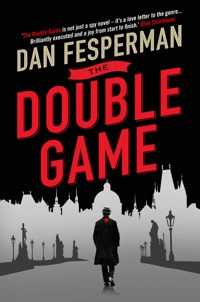
A few years before the fall of the Berlin Wall, spook-turned-novelist Edwin Lemaster reveals to young journalist Bill Cage that he'd once considered spying for the enemy. For Cage, a fan who grew up as a Foreign Service brat in the very cities where Lemaster set his plots, the story creates a brief but embarrassing sensation. More than two decades later, Cage, by then a lonely, disillusioned PR man, receives an anonymous note hinting that he should have dug deeper. Spiked with cryptic references to some of his and his father's favorite old spy novels, the note is the first of many literary bread crumbs that soon lead him back to Vienna, Prague, and Budapest in search of the truth, even as the events of Lemaster's past eerily--and dangerously--begin intersecting with those of his own. Why is beautiful Litzi Strauss back in his life after 30 years? How much of his father's job involved the CIA? Did Bill, as a child, become a pawn? As the suspense steadily increases, a long stalemate of secrecy may finally be broken.
Das E-Book können Sie in Legimi-Apps oder einer beliebigen App lesen, die das folgende Format unterstützen:
Veröffentlichungsjahr: 2012
Ähnliche



















Dan Fesperman’s travels as a writer have taken him to thirty countries and three war zones. Lie in the Dark won the Crime Writers’ Association of Britain’s John Creasey Mamorial Dagger Award for best first crime novel, The Small Boat of Great Sorrows won their Ian Fleming Steel Dagger Award for best thriller, and The Prisoner of Guantánamo won the Dashiel Hammett Award from the International Association of Crime Writers. He lives in Baltimore.
ALSO BY DAN FESPERMAN
Layover in Dubai
The Arms Maker of Berlin
The Amateur Spy
The Prisoner of Guantánamo
The Warlord’s Son
The Small Boat of Great Sorrows
Lie in the Dark
First published in the United States by Alfred A. Knopf, a division of Random House, Inc., New York.
Published in hardback and trade paperback in Great Britain in 2012 by Corvus, an imprint of Atlantic Books Ltd.
Copyright © Dan Fesperman 2012.
The moral right of Dan Fesperman to be identified as the author of this work has been asserted by him in accordance with the Copyright, Designs and Patents Act of 1988.
All rights reserved. No part of this publication may be reproduced, stored in a retrieval system, or transmitted in any form or by any means, electronic, mechanical, photocopying, recording, or otherwise, without the prior permission of both the copyright owner and the above publisher of this book.
This novel is entirely a work of fiction. The names, characters and incidents portrayed in it are the work of the author’s imagination. Any resemblance to actual persons, living or dead, events or localities, is entirely coincidental.
A CIP catalogue record for this book is available from the British Library.
Hardback ISBN: 978 0 83789 337 6 Trade paperback ISBN: 978 0 85789 338 3 E-book ISBN: 978 0 85789 339 0
Printed in Great Britain.
Corvus An imprint of Atlantic Books Ltd Ormond House 26–27 Boswell Street London WC1N 3JZ
www.corvus-books.co.uk
A PRECAUTION
I no longer believe what I read in books.
Unless, of course, the text states clearly that every word is made up, a product of the author’s imagination. I especially take notice when a novelist deploys that oft-used legal disclaimer, the one that says, “Any resemblance to actual persons, living or dead, events, or locales is entirely coincidental.”
Sure it is. That statement makes me perk up like a dog that has heard a distant whistle from a cruel and deceitful master. It means truth is about to appear in some elegant and artful disguise.
As for all those dusty “facts” piled in the vast remaindered bin known as nonfiction, well, I’ve exhumed quite a few such items in this autumn of foraging and funerals, and so many have proven to be false that I’ve lost faith in their authenticity. Along the dim corridors of the secret world I’ve come to know best, only the so-called inventions of fiction have ever shed any light of revelation.
But with light come shadows, and therein lies the rub. Shadows hide danger. They conceal death, even love. They must often be avoided, but never ignored. I arrived at these conclusions only recently, although I now suspect that at some deeper level I’ve known their truth all along.
Let me tell you why . . .
Contents
1
2
3
4
5
6
7
8
9
10
11
12
13
14
15
16
17
18
19
20
21
22
23
24
25
26
27
28
29
30
31
32
33
34
35
36
37
38
39
40
41
42
43
1
The Great Man himself was waiting for me on the phone. I say that without irony. In those days Edwin Lemaster was my hero, accomplished and unblemished, the very sort of fellow I aspired to be but never became. Even my wife, April, sensed the call’s solemn importance, although she’d never liked his books.
“Genre fiction,” she always sneered. “Spies and secrets, lies and betrayal, blah blah blah.”
“You mean like life?” I’d counter, little knowing we were touching on the dynamics of our coming failure.
Yet on that long-ago sunny morning she smiled in excitement and stretched the phone cord to its limit, as if it were a lifeline that might pull me to safety. I grabbed it.
It was June of 1984, Orwell’s year of reckoning. The Cold War, after a brief thaw, had safely returned to subzero, and the Berlin Wall remained rock solid. I was twenty-seven, a Washington journalist on the make, poised at roughly the halfway point of my life up to now. Opening my mouth to speak, I felt like a flustered fan who had finally reached the head of the autograph line.
“Uh, Mr. Lemaster? This is Bill Cage.”
“Bill, a pleasure. And call me Ed. My assistant Lenore forwarded your request. As you know, I don’t usually give interviews, but your letter was quite convincing.”
Of course it was. I’d spent hours on it, agonizing over every word. In my latter-day career as a PR flack, nothing I’ve written has ever matched its persuasive sincerity. Then again, I am no longer paid to be sincere.
“I’ll be coming down from Maine for the university lecture anyway,” Lemaster continued, “so why don’t we give it a try?”
I could barely draw breath to answer.
Why such excitement over a mere scribbler? I should explain. Not only was Lemaster the world’s premier espionage novelist, but he’d also been a spy for sixteen years at the height of the Cold War, back when spying was a glamorous profession. “Our le Carré,” the American critics called him, although to my mind le Carré was “Their Lemaster.”
But for me the appeal went further, and was deeply personal. Having grown up as a Foreign Service brat, I had come of age in the very capitals where Lemaster set his plots, at the very moment in history when they were unfolding. In those days, to walk the night streets of Berlin, of Prague, of Vienna, of Budapest, was to imagine that mysterious and exciting events were occurring just around the corner. And sometimes they were.
My father, also a fan, first put a Lemaster novel in my hands when I was twelve, as an antidote to a gloomy Saturday in Prague in 1969. Within days I was pillaging his shelves for the equally timely glories of John le Carré, Len Deighton, and Adam Hall. Eventually I turned to earlier classics by Maugham, Buchan, Ambler, and Greene. I even read the 1903 Erskine Childers book that supposedly gave birth to the modern spy novel, The Riddle of the Sands, its pages haunted by the knowledge that the author had eventually been hanged as a spy. My father had them all, a painstakingly assembled collection of more than two hundred espionage first editions, most of them signed by the author.
Whenever we moved—and in the diplomatic corps that happened about every three years—the books were my back-door passage to our new home, with the characters as my escorts. At a moment in history when other American boys were memorizing batting averages and home run totals, I was steeping myself in the lore of fictional spies. They were my Mays, Mantle, and Maris, and I aspired to emulate them. To be a spy was to survive by your wits in a dangerous foreign landscape, to seek to know everything about others while revealing nothing of yourself—an arrested adolescence in which you merited your country’s highest trust even as you traded in its deepest duplicity.
And the writer I always returned to with the greatest anticipation was Lemaster, who seemed more willing than the rest to take me into his confidence. He declassified the world I lived in, elegantly parting the curtains in all their varying shades of gray. So perhaps now you can understand why his promise of an interview left me momentarily at a loss for words.
“Bill?” he prompted. “Are you there?”
“Great,” I finally managed. “That would be . . . great.”
“Chancellor Stewart has kindly offered the use of his conference room. Shall we say four o’clock?”
“Perfect.” At least I’d moved on from “great.”
“In the meantime, Lenore will send you an advance copy of my latest. See you next week.”
“Wouldn’t miss it for the world.”
Wouldn’t miss it for the world? Had I actually said something so trite? I blushed as I hung up, and for the next hour I half expected Lenore to call back to cancel. Then, determined to make the most of the opportunity, I began finding out all I could about Lemaster’s life and times.
The basics were already known to me: He was divorced, childless, eldest son of a Wall Street lawyer. Groton ’51. Yale ’55. Then two years as a Rhodes Scholar at Oxford, where he became an incurable Anglophile before joining the CIA in 1957. Served throughout Europe. Began writing novels while still an Agency employee. Left the CIA in ’73, a month after his third book became a best seller.
I figured there would be plenty more. But in those days before Google and YouTube it was far easier to maintain a low profile, and that’s what Lemaster had done. I checked the clip file at the Post, the Lexis-Nexis database of publications from around the world, Who’s Who, the Reader’s Guide to Periodical Literature. My search turned up loads of book reviews, but only a few profiles, and those were skeletal. Only Time magazine and London’s Guardian had interviewed him at length, and even their stories were mostly about his books and characters. When Time asked about his career in spying, Lemaster was charmingly dismissive.
“Oh, I was quite unimportant. A cog in the machine, easily replaced. Anything I picked up for the novels came mostly from hearing what other fellows were talking about, the ones who were doing the interesting stuff.”
Frustrated, I retraced my steps, this time combing the material like an old-fashioned Kremlinologist, alert for significance in the backwash of minor detail.
He hunted, but only for birds, never mammals. Fished, but only with a fly rod and he tied his own lures. Liked Bordeaux reds, Alsatian whites. A Red Sox fan who had never been to Fenway, yet had twice been to Yankee Stadium (and if that isn’t the behavior of a natural-born spy, what is?). His thesis at Oxford was on the theme of courtly love in medieval poetry.
I looked up “courtly love.” It was all about a knight’s idealized, secretive devotion to a specially selected woman, never his wife, although possibly someone else’s. He pledged eternal loyalty even if she never loved him back, and wrote her letters under a code name.
It sounded an awful lot like espionage.
At the appointed hour I appeared at the chancellor’s oaken chambers with a fresh notebook and a microcassette recorder. Folded in my pocket was a list of forty questions, winnowed from fifty-seven the night before. I wore a jacket and tie, which in those days occurred about as often as sightings of Halley’s Comet.
Chancellor Stewart, who turned out to be a school chum of Lemaster’s, handled the introductions. His secretary kindly tried not to smile as I wiped a sweaty palm on my corduroys before shaking hands.
Lemaster was taller than I expected, even a bit imposing. But the craggy nose, the lined face, and the stray forelock, curling toward his brow like a comma, were exactly as advertised on his dust jackets. Both he and the chancellor wore tweeds. Stewart escorted us into the conference room, then departed.
“Where would you like to begin?” I asked nervously, feeling like a sycophantic fool.
“Wherever you’d like.” He sounded as though he meant it. “We don’t even have to talk about the new book unless you want to, although my publisher would probably send me to the gallows for saying so.”
His relaxed manner immediately put me at ease, and for the next two hours I enjoyed that rarest of pleasures—a much-anticipated event that exceeds expectations. His answers were witty and expansive, candid and unrehearsed. And although he continued to downplay his career with the CIA—seeming almost sheepish on the topic—in other areas he revealed details I had never seen elsewhere. He even described the exact moment he had dreamed up his greatest creation, frumpy spymaster Richard Folly, who had come to him out of the blue in 1967 as he rode a heaving tram car in Budapest, where I had actually been living at the time. Folly, a perennial loser in love and in office politics, had been the most sympathetic literary companion of my adolescence, and I’d always felt redeemed when he ultimately triumphed on the strength of his nimble, analytical mind.
But the best thing about the interview was that Lemaster spoke just the way he wrote—in complete and flawless paragraphs, rarely hesitating and never doubling back. I couldn’t help but compare the painstaking hours I’d spent on the letter, and I surmised enviously that for Lemaster writing must be almost like taking dictation.
Things went so well that the chancellor, with Lemaster’s blessing, invited me to join them afterward for dinner at the University Club, where a round of cocktails followed by two bottles of wine further loosened tongues. In those days I was too vain to consider that anything other than my winning personality had prompted his easy collegiality, but toward the end of the meal I learned otherwise. The chancellor had just excused himself to the men’s room, leaving the two of us alone for the first time since our interview. Lemaster leaned across the table.
“So tell me something, Bill.”
His tone was conspiratorial, and I edged forward. He paused for a swallow of claret, then sprang his surprise.
“How is your splendid father? We once knew each other well, you know.”
“You did?” The words were out before I could stop them.
“Oh, yes. We crossed paths here and there back in the day. He was a useful man for people like me. Very helpful.”
I had long known that my father’s embassy duties sometimes included assisting men who were, as he liked to say, “in a more delicate line of work.” I fancied I’d even met a few, on strange occasions when my dad chivvied me along after dark to some unfamiliar café, where we would share a back table with a fellow I’d never seen before and would never see again. None of those men ever stated his name, and at some point in the proceedings my father always suggested that I make a preemptive visit to the men’s room, which is probably when he and the mystery guest transacted the evening’s real business. I liked to believe then that my role was to help provide cover—a cozy father-son backdrop for some spook in transit. But in retrospect I may have embellished those memories, because at the time I was always waist-deep in some new find from my father’s spy shelves, and would have been highly susceptible to any suggestion that clandestine doings were afoot.
What I did know for certain was that Lemaster had never appeared at any of those trysts. And surely my father would have told me if he’d met the man. Autographed Lemaster novels held pride of place on his shelves, although Dad had led me to believe the signatures had all been obtained by enterprising booksellers.
Yet here was the author saying they were pals. Obviously I had missed something.
“Well,” Lemaster continued, “I shouldn’t be too surprised he never mentioned it. He was a good soldier that way. A real Joe, your dad, and you certainly couldn’t say that about everyone on the diplomatic side. A lot of them acted as if we were radioactive.”
Before I could respond he raised the stakes further.
“He always spoke well of you, Bill. His son the top student. His son the track star, beating all those strapping Austrian boys ’round the oval. Four minutes twenty-one seconds, wasn’t that your mile time? And that flap you got into with that pretty gal of yours down in Vienna, Litzi something or other? That’s why your letter was such a hit. Lenore usually tosses those things in the trash, but she made sure I saw yours right away.”
So even his assistant knew all these details? I was feeling hurtfully excluded, the foil of some long-running jest. You were right, Warfield. That lad of yours had no idea! My discomfort must have shown. Lemaster’s expression softened. Then, perhaps in atonement, he offered a small intimacy, just for me.
“Of course, in those days even your father didn’t know what I was really up to. No one did. I was keeping an eye out for the Don Tollesons of this world.”
Now that was interesting. Tolleson was the traitorous creation at the heart of Lemaster’s magnum opus, The Double Game, in which Folly unmasks his lifelong friend and colleague Don Tolleson as a Soviet double agent. Was Lemaster admitting that he, too, had been a mole hunter? None of his press clippings had even hinted at that.
“So did you ever find one?” I asked. “Who was your Don Tolleson?”
Lemaster frowned, as if realizing he’d said too much. He swallowed more claret, then launched into a paragraph on the nature of betrayal. This time the answer felt rehearsed, and it skirted my question. I tried again.
“But what about you personally? You wrote The Double Game while you were still with the CIA. It must have been a guilty pleasure to contemplate betrayal to such depths. Did you ever play with the idea of crossing the line yourself?”
“What, by defecting?”
“Or just by turning. Working for the other side. If only to find out what it was like.”
His eyes crinkled in amusement, and at that moment it was clear to me that Lemaster believed he was still talking solely to the son of his old friend Warfield Cage, and not to an ambitious reporter for the Washington Post.
He swirled the wine, and something about the way it eddied in the big glass reminded me of a crystal ball on the verge of revealing all. Maybe that was what stimulated my baser instincts as a newshound. Or perhaps I was still feeling stung by my dad’s secrecy, or emboldened by drink. Whatever the case, as Lemaster glanced downward, momentarily lost in thought, I slipped a hand inside the lapel pocket where I had stowed the microrecorder. Then, like one of Folly’s zealous young acolytes, I squeezed the red button for “Record,” setting the tape in motion without the slightest click. I casually withdrew my hand just before he looked up, and upon seeing he hadn’t noticed, I was giddy with a sense of accomplishment. For the only time that night, I was the smartest man in the room.
“As a matter of fact,” Lemaster said slowly, “yes. I did contemplate it. Not for ideological reasons, of course. And certainly not for the money. But it crossed my mind, and do you know why?”
I shook my head, not daring to speak. The revolving wheels of the recorder vibrated against my chest like a trapped bumblebee.
“For the thrill of it. The challenge. To just walk through the looking glass and find out how they really lived on the other side—well, isn’t that the secret dream of every spy?”
The words were barely out of his mouth when the chancellor rounded the corner from the men’s room, breaking the spell. Soon afterward the coffee arrived, and with it the first glimmers of the sobriety that would restore our previous distance. That night I slept deeply and dreamed for the first time in years of Cold War Vienna.
The next morning, a bit hung over, I agonized over how to handle Lemaster’s little bombshell. No doubt my family connection had allowed me to maneuver into a position of trust. Alcohol had also played a role. And any man unaccustomed to giving interviews was certainly more prone to a lapse. But weren’t such factors part and parcel of effective interviewing? Didn’t readers of the Post deserve the truth? And hadn’t I succeeded where even Time magazine had failed?
I was reminded of a Joan Didion line I’d read in college, something about how writing was always a matter of betrayal. That’s when I realized I couldn’t go through with it, not for something as ephemeral as a newspaper story. I felt immediate relief, albeit with a pang of disappointment, but my decision was made. I was too close to the story. I would keep the revelation to myself.
Or such was my intention when Metro Editor Kent Spencer approached my desk an hour later to ask how the story was coming. I described my approach. His downturned mouth indicated he was less than impressed. So, as a teaser, or maybe just to show him what a diligent little questioner I’d been, I found myself saying, “You know, right toward the end of the evening he mentioned something pretty interesting.”
Even as I told him I was calculating how to use the quote, after all, by sprinkling it into the final paragraphs. It would be an anecdote to unite the story’s major threads. A kicker, as we said in the business. That way I could provide the proper context—the drinks, the off-the-cuff mood, the devil’s advocate thrust of my question.
But Spencer was a step ahead of me.
“He said what? Are you telling me the author of The Double Game actually considered being a double agent? That’s a helluva story, Bill. I mean, it’s still kind of featury, but only if you go with a soft lead. Who knows? They might even want it out front.”
My stomach rolled over. The dangerous animal I had just released from its cage paused to bare its teeth, then leaped beyond reach. I tried to catch it.
“Really, Kent, it wasn’t like he was serious.”
“C’mon, a quote like that? You got it on tape, I hope.”
“Sure, but . . .” In my rush to chase down the beast I had just ensured its escape. If I’d told Spencer the remark wasn’t taped, I might have been able to downplay it, even bury it. Instead, my editor now knew it was not only usable but also lawyerproof.
“Great! Lead with it.”
“I was thinking more in terms of a kicker. It would make the perfect ending.”
“What, then have some turnip on the desk cut the story from the bottom? It’s called news, Bill. It goes at the top.”
So, with a dark sense of foreboding and, worse, of betrayal, I wrote a story saying that spy-turned-novelist Edwin Lemaster had once considered working for the Soviet Union. By the time Spencer and the copy desk finished with it, the tone was downright accusatory, and even my loudest protests couldn’t repair the damage.
It was a brief sensation, of course. The wires picked it up before the ink was dry, and by noon one UPI version had even reported that Lemaster “nearly defected.”
Lemaster never called, never wrote. He responded only through a press release in which, as I richly deserved, he condescendingly implied that a callow young hack had used an unguarded moment of tipsy speculation to fashion a mountain out of a molehill.
But the strangest reaction may have been my father’s. He phoned our apartment even before April was out of bed. He lived in Paris then, one of his last diplomatic postings. In those pre-Internet days he must have spotted the item in the State Department’s daily press summary, and then gotten someone in Washington to read him the text.
“Jesus, Bill, what have you done to our old legend Edwin Lemaster? You get him drunk or something?” His tone was strained, like he was trying to keep it light but not succeeding.
“You’re the one with some explaining to do. How come you never told me you were friends?”
There was a sharp intake of breath, followed by a pregnant pause. Then, in halting steps: “Did he . . . He told you that?”
“Yes.”
Another pause, the line crackling from across the Atlantic.
“What else did he say about, well, all that?”
“Hardly anything. Said you crossed paths a few times, that you were ‘a good soldier, a good Joe.’ Nothing specific. I would’ve thought you’d have mentioned it at least once.”
“There were security reasons. And you . . .” He sighed, groping his way through the static. “You’d have thought I was name-dropping.”
“Is that the best you can do?”
I tried to sound offhand, hoping for a laugh, or for more. Dad is a nimble conversationalist, and this was his opening. But he held his ground, and when we hung up a few seconds later it felt as if a veil of secrecy had been lowered between us. Worse, maybe it had been there all along.
But what I didn’t learn until recently was that elsewhere, my story had planted the seed of unintended consequences deep in the fertile soil of chance. Blowback, the wonks call it now. Reaping the whirlwind. Although by the time germination occurred, the matter had assumed the nature of a hybrid, its traits drawn literally from all those spy novels I had once read with such youthful interest.
Page by page, I would be lured back into an era when fact and fiction were virtually indistinguishable, yet with consequences that were anything but dated.
2
SEPTEMBER 2010
The envelope poked like a white tongue from my Georgetown mail slot, making it seem that the front door was taunting me as I approached my empty town house at dusk. I was wondering why the postman hadn’t shoved it on through until, plucking it free, I saw it was neither stamped nor addressed. Only the formal version of my name, “William D. Cage,” was typed on the outside. It was sealed.
Ignoring the bills and flyers piled on the rug, I took it to the living room chair by the window so I’d have enough light to read. I was about to tear it open when the refined quality of the envelope seemed to demand the use of a letter opener, so I rose to fetch a silver one from my writing desk before returning to the chair, feeling instinctively that this wouldn’t be something I’d want to read standing up.
Inserting the blade at the end, I flicked it down the crease with the skill of an assassin, releasing a scent that was strangely nostalgic.
Smells like . . . Europe, I nearly said aloud. But that seemed ludicrous, even impossible. So I raised it to my nose, and there it was again, unmistakable, a hint of all those grand way stations of my youth in the depths of their winter gloom—sulfurous coal smoke, hosed cobbles, the chill damp of a low gray sky—even though in Georgetown it was warm and muggy, a summery day at the end of September. Weird.
A single sheet was folded inside. The paper itself looked and felt oddly familiar, the sort of fine, sturdy bond you find only at better stationers. The contents were brief but remarkable:
Message posted for you concerning the whole truth about your onetime acquaintance, Mr. E.L. of Maine.
To retrieve, use Folly’s tradecraft, page 47. Then use book code, line 11. The dead drop will be known to you, just as it was to Ashenden from the very beginning. Welcome to the real DoubleGame.
Well, now.
E.L., obviously, was Edwin Lemaster, still living and still writing, way up in the north woods of Maine, where he no longer granted interviews. The idea that there might be some sort of “whole truth” yet to discover about him was intriguing, but so were the multiple literary references that jumped from the page. Folly was of course Lemaster’s Richard Folly, and the tradecraft prompt seemed to be directing me to page 47 of The Double Game, probably the hardback edition. Ashenden was an early hero of the espionage canon from the eponymous 1928 novel by Somerset Maugham, yet another author who had spied for his country. I assumed that the wording “from the very beginning” meant I should scan the book’s opening pages for some clue as to the whereabouts of the purported dead drop, which, in the spy trade, was a secret place for stashing messages.
The allusion to a book code was, for the moment, over my head. I knew what a book code was—a way for spies to communicate by using a shared literary passage as a decoding tool. But which book should I use? And on what page? And with what set of numbers for line 11? I turned over the note, but the other side was blank.
That’s when I noticed the ghostly watermark—the outline of an elaborate crest and the maker’s name, Gohrsmühle. Now I knew why it reeked of the Old World. The paper had been manufactured in Germany decades ago, and there was a box of it upstairs in the drawer of my bedside table. I had bought it after we moved to Berlin when I was seventeen, to write letters to a girlfriend I’d left behind in Vienna. My first love, and my first secret correspondence. Only seven sheets of it remained—six now, presumably—and the envelope had almost certainly come from the same box.
I then noticed irregularities in the typeface. Every i was slightly raised, and the upper chamber of each e was filled with ink. Meaning the note must have been typed on my old manual Royal, a keepsake I had appropriated long ago from a Post scrap pile during newsroom renovations. It, too, was upstairs, in a locked attic office.
I am not generally one for dramatics, but something like a shiver passed through me. Whoever left this message had not only been in my house, but he had also taken his time, digging up the stationery and then breaking into my office to type, raising a clatter you could have heard next door. For all I knew, he was still up there. Or maybe he’d made off with everything, my Royal and the whole box of stationery.
Worry turned to anger, and I ran up the stairs two at a time. A practical joke was one thing, a home invasion quite another.
No one was there. The box of stationery was safe in its drawer, minus a sheet and an envelope. The typewriter still sat on the desk. The door to the office was locked, and showed no signs of tampering.
Surely the front door of the house would tell a different story. My neighborhood was hardly immune to crime, and over the years I had invested in a stout deadbolt and an alarm system. But the status light on the system monitor still glowed a benign green, and the deadbolt was unmolested. So were the doorjamb, the kitchen door, and the slider in the back. Every window was secure.
I felt like one of Ian Fleming’s Bond martinis—shaken, not stirred. Returning to the kitchen, I poured three fingers of bourbon and drained half of it in two scalding swallows. Only when it began lighting up my nervous system did the real point of this elaborate intrusion occur to me:
It, too, in both style and substance, had been stolen from the pages of an old spy novel.
I stepped to the bookshelves by the fireplace, where it took me only seconds to locate A Fragment of Fear, a 1965 novel by John Bingham. While I was at it, I grabbed my yellowed paperback of Maugham’s Ashenden and the hardback of The Double Game, then took everything to the couch.
Flipping through the Bingham, I found what I was after in chapter three, a scene in which the main character receives a threatening note, then realizes it must have been typed on his own typewriter with his own stationery, even though his home showed no sign of a break-in. Bravo. I toasted the intruder’s ingenuity and drained the bourbon.
What made this little stunt even more fascinating was that Bingham was not just any author. A titled Brit also known as Lord Clanmorris, he, too, had spied for his country, and he was a fine writer. But his greatest claim to literary fame was by proxy. He was reputedly a model for fictional spymaster George Smiley, John le Carré’s very own Folly, and yet another fabled mole hunter. Not to mention that, to my mind, Bingham’s best work was a novel called The Double Agent. Someone had moles on the brain.
My earlier inclination had been to phone the police. I now dismissed the idea. Rattled as I was, my curiosity was stronger, and if the police got hold of these items I might never get them back. Plus, with no sign of a break-in, and all the materials coming from upstairs, they might even conclude I’d cooked it up myself. A publicity stunt from a man paid to create them.
One thing I could say with certainty—whoever did this either knew me well or had done plenty of research. I could think of only one person who would’ve spotted all the references in the note, and that was my father. But break-ins and practical jokes weren’t his style, and the topic of Edwin Lemaster remained off-limits.
Dad was retired now and still living abroad, although I’d seen him only a few weeks earlier at the funeral of a family friend, Wils Nethercutt. The service, oddly enough, had produced its own quirky Lemaster moment, which I couldn’t help but recall.
The burial was on Block Island. Getting there required a drive to Rhode Island plus a ferry crossing, and I arrived just as the doors of the church were closing. I slid into a pew up front where my father sat alone, two rows behind Nethercutt’s widow, Dorothy. The church was only a quarter full, a gathering dominated by stooped, white-haired men, some of whose faces were vaguely familiar. A few doddered up to the pulpit to tell old stories about the deceased—spy tales, it seemed, an impression reinforced when a fellow in the back stood to lock the church doors, then posted himself like a sentry.
“Bunch of old spooks,” my father whispered disapprovingly, but I was entertained. The stories were lighthearted, even funny, although the narrators kept names and locations to a minimum, as if still living by their old rules.
Toward the end of the service there was a brief stir when heads turned toward the sound of creaking floorboards in the balcony. No one had switched on the lights up there, so all you could see was a thin figure in gray, seated in the shadows. During the final prayer I saw him duck out a door, and he was gone well before everyone began filing out. There was no sign of him at the reception, but an agitated old fellow in a wheelchair insisted loudly that it must have been Edwin Lemaster.
“That pariah?” one of the few women in attendance answered shrilly. “Surely not.”
“Easy, Val,” someone cautioned. “Plenty of us are still on good terms.”
“Why a pariah?” I asked Dad. I was feeling both relieved and disappointed by having missed a fresh encounter with my onetime idol.
“Lemaster was never a favorite of some of the people here.”
“Like that woman Val?”
“Apparently. I’m not familiar with her, but she’s probably Agency.”
“Who’s the one in the wheelchair?”
“Giles Cabot. At one time, he and Nethercutt were practically joined at the hip, so no one was surprised when they both retired here. Good to see him out and about.”
“What did he do for the Agency?”
Dad surprised me with a direct answer.
“A top deputy in counterintelligence. For that paranoid old nut, Jim Angleton.”
“Is that what Mr. Nethercutt did, too?”
“You aren’t supposed to know that, but yes. Angleton’s people were always a little prickly and superior for my taste, even when they made the rounds of the embassies. But that was the required persona if you worked for Jim: Us Against the World.”
“How’d we end up being invited to this?”
“Wils was a year ahead of me at Yale, and our fathers were friends. But I imagine it was more a case of Dorothy trying to fill the pews. Not many old timers left from State or the Agency.”
“Dorothy looks familiar.”
“We used to see a lot of the Nethercutts those two years in Georgetown. You were pretty young then.”
I went for a drink. Dad sought refuge with a pair of old colleagues from State. They huddled with their backs to the ex-spooks like shipwreck survivors on a raft.
I wandered awhile, intending to mingle. But these were careful people, and every conversation dropped in volume the moment I moved within range. After a while it became mildly amusing, like making the signal come and go on an old radio by touching the antenna.
I worked my way back toward Dad just as a commotion erupted across the room, over by the bar. Once again Cabot, the fellow in the wheelchair, was in the thick of things, except this time a trim fellow in silver hair was leaning down into his face, gesturing emphatically. The tendons stood out in the man’s neck and his hands slashed the air. Someone off to the side in a bright blue suit tried to intervene.
“Honestly, Breece, what’s the harm in it!” The gesturing man wheeled on him.
“Goddammit, Stu. Stay out of this!”
Cabot spoke up, but his voice was too low for me to hear the words.
“The guy named Breece looks familiar,” I said. “Has he been in the Post, or on TV?”
“Not if he can help it. Breece Preston is allergic to publicity. But not to attention, as you can see. Poor old Cabot, Preston will eat him alive. Just look at the way he’s—”
Dad halted in midsentence. He looked away from the scene and placed a hand on my arm.
“Why don’t we get some air?” he said. “I see that the smokers have begun firing up their weapons of mass destruction.”
Something had upset him. Or maybe he’d had his fill of old farts refighting past battles. I followed him onto the porch, but not before watching Preston lean down and poke Cabot in the chest, which drew a swift reaction from a husky young man positioned behind the wheelchair. This in turn prompted a challenge from a stout fellow standing behind Preston, fiftyish but sporting a mullet, which made him stand out in this crowd like a carnival wrestler among retired professors. The last thing I heard as the door shut was raised voices, like on a schoolyard when a fight breaks out.
“Think they’ll come to blows?” I asked, out in the sea breeze. “The one in the mullet looked ready to rumble.”
Dad shook his head and stared out at the ocean. He looked a little pale, but maybe it was the light from the overcast sky. By the time we returned, order had been restored. Preston, Cabot, and their protectors were in separate corners. Nethercutt’s wife was off to the side, talking to the older woman, Val, who’d called Lemaster a pariah.
“So do you think that was Lemaster up in the balcony?” I asked.
“No idea.” He turned away toward the bar.
Later at dinner, when it was just the two of us down on the waterfront at the Mohegan Cafe, I tried to pry out more details about the various players.
“Was the guy in the electric blue suit Mr. Henson?”
“Stu never did know how to dress for the occasion.”
“Wasn’t he a CIA station chief in Europe?”
“Here and there.”
“What do you think Breece Preston and Giles Cabot were arguing about?”
“Haven’t the foggiest.” A pause, then a frown. “Breece was always a bully at heart.”
“Is he still with the Agency?”
“Goodness, no. But he’s still in the business.”
“Consulting?”
“You’ve probably heard of his outfit. Baron Associates. Contracts with the Pentagon, wherever the troops happen to be mired at the moment.”
“Intelligence gathering?”
“Of a sort. His type always goes private eventually.”
“Good money, probably.”
“That’s part of it. It’s more for the freedom. Once you’re outside the velvet rope you no longer have to play by the rules.”
“Wouldn’t that be breaking the law?”
“Where, in Afghanistan? Iraq? Some narco-state? Breece prefers to operate in places where the law has disappeared. If you ever spot one of his people in your rearview mirror, pull over to let them pass.”
“You mean like the guy with the mullet?”
Dad looked away, dabbing a napkin at his mouth as if he’d received a blow.
“Where’s our waitress?” he said. “I need a refill. Pass me that steak sauce, will you?”
I knew better than to press the point, especially when the next topic he raised was Redskins football, which he loathed and I loved. The next morning, before I was awake, he took the early ferry to catch his flight back to Vienna. I hadn’t seen him since.
I considered telephoning him. He would probably get a kick out of all this, especially the Bingham touch with its George Smiley connection. He might even have some leads on who’d done it. It would be midnight there, but he’d always been a night owl.
Then I recalled his continuing silence about Lemaster. In all the years since ’84 he still hadn’t explained their friendship to my satisfaction, despite plenty of opportunities. Let it wait, I decided. For the moment this secret would be mine alone.
The funny thing was, I hadn’t opened any of the cited books in ages, nor had I read a single spy novel. Dad and I both lost interest almost the moment the Berlin Wall came down in ’89. For a while I gamely kept up with Lemaster’s output. Maybe I felt obligated after having burned him in the Post. But he soon lost his edge, tilting toward rightist political themes and straying into techno-thrillers—beloved by the Pentagon but disdained by his oldest fans. Folly hadn’t made an appearance since ’91, and the title of that book, A Final Folly, says all you need to know about how the damn thing ended.
Friends whose literary judgment I trusted occasionally recommended new practitioners, authors who set their spies amid contemporary intrigue in Latin America, Asia, or in the so-called War on Terror. But something in the actions of those brave young men and women who hammered down the Wall seemed to have forever sealed my portal of fascination with the secret world. Spy novels, like the Cold War, lay entombed in my past.
Or so I told myself. For two hundred dollars an hour I suppose some shrink would have explained that fear was what really prevented me from returning, a fear of confronting everything else I’d left behind—my marriage to April, my newspaper career, my hopes of again living abroad, and my fond dream that perhaps one day I, too, might write something worthwhile, even lasting.
All had vanished without a trace, unless you counted our son, David, who lived with his mother and had just turned eighteen—voting age, big on Obama but not so big on his dad. Not that I’d given him much reason to be. It was shocking how little had been required to erase everything—a false step in Belgrade, a few foolish lapses in Washington, a cascade of misjudgment, and here I was.
Yet now, with this cryptic note staring up from my lap like a summons, I felt connected to that previous era in a way I hadn’t been in ages, and my emotions were in an uproar. Even if this turned into a glorified scavenger hunt, maybe it was time to start looking for answers. At the very least, I should try to find the dead drop.
Already I was transformed. Seated there, with full heart and empty glass, I was no longer just a lonely PR man with a big paycheck and a spent imagination. I was Folly, I was Smiley, I was page one of a fresh new first edition. I was the boy I had once been, and the man I had never become.
As I scanned the opening paragraphs of Ashenden, a flash of insight told me exactly what I needed to do next. So I stood, ready to turn the page. Ready to turn them all.
3
I was on my way to the dead drop. Was that possible? More to the point, was it advisable? In my PR job at Ealing Wharton Id warned off many a client from come-ons far more sophisticated than the cryptic letter that had just landed on my doorstep, and I was already wary of the senders motives. What sort of dirty work did he have in mind, and who would be ruined as a result? Perhaps he meant to do me harm.
Lesen Sie weiter in der vollständigen Ausgabe!
Lesen Sie weiter in der vollständigen Ausgabe!
Lesen Sie weiter in der vollständigen Ausgabe!
Lesen Sie weiter in der vollständigen Ausgabe!
Lesen Sie weiter in der vollständigen Ausgabe!
Lesen Sie weiter in der vollständigen Ausgabe!
Lesen Sie weiter in der vollständigen Ausgabe!
Lesen Sie weiter in der vollständigen Ausgabe!
Lesen Sie weiter in der vollständigen Ausgabe!
Lesen Sie weiter in der vollständigen Ausgabe!
Lesen Sie weiter in der vollständigen Ausgabe!
Lesen Sie weiter in der vollständigen Ausgabe!
Lesen Sie weiter in der vollständigen Ausgabe!
Lesen Sie weiter in der vollständigen Ausgabe!
Lesen Sie weiter in der vollständigen Ausgabe!
Lesen Sie weiter in der vollständigen Ausgabe!
Lesen Sie weiter in der vollständigen Ausgabe!
Lesen Sie weiter in der vollständigen Ausgabe!
Lesen Sie weiter in der vollständigen Ausgabe!
Lesen Sie weiter in der vollständigen Ausgabe!
Lesen Sie weiter in der vollständigen Ausgabe!
Lesen Sie weiter in der vollständigen Ausgabe!
Lesen Sie weiter in der vollständigen Ausgabe!
Lesen Sie weiter in der vollständigen Ausgabe!
Lesen Sie weiter in der vollständigen Ausgabe!
Lesen Sie weiter in der vollständigen Ausgabe!
Lesen Sie weiter in der vollständigen Ausgabe!
Lesen Sie weiter in der vollständigen Ausgabe!
Lesen Sie weiter in der vollständigen Ausgabe!
Lesen Sie weiter in der vollständigen Ausgabe!
Lesen Sie weiter in der vollständigen Ausgabe!
Lesen Sie weiter in der vollständigen Ausgabe!
Lesen Sie weiter in der vollständigen Ausgabe!
Lesen Sie weiter in der vollständigen Ausgabe!
Lesen Sie weiter in der vollständigen Ausgabe!
Lesen Sie weiter in der vollständigen Ausgabe!
Lesen Sie weiter in der vollständigen Ausgabe!
Lesen Sie weiter in der vollständigen Ausgabe!
Lesen Sie weiter in der vollständigen Ausgabe!
Lesen Sie weiter in der vollständigen Ausgabe!
Lesen Sie weiter in der vollständigen Ausgabe!
Lesen Sie weiter in der vollständigen Ausgabe!
Lesen Sie weiter in der vollständigen Ausgabe!




