


Erhalten Sie Zugang zu diesem und mehr als 300000 Büchern ab EUR 5,99 monatlich.
- Herausgeber: Musaicum Books
- Kategorie: Religion und Spiritualität
- Sprache: Englisch
William Blake's 'The Ghost of Abel' is a complex and thought-provoking work that delves into the themes of innocence, corruption, and the nature of good and evil. Written in a highly symbolic and visionary style, the book is a testament to Blake's unique approach to poetry and storytelling. The original illustrations included in the text enhance the reader's understanding of the intricate narrative and add a visual dimension to the work. Set against the backdrop of the biblical story of Cain and Abel, 'The Ghost of Abel' invites readers to explore philosophical and existential questions through the lens of Blake's imaginative and allegorical language. The book is a prime example of Romantic literature and provides a fascinating insight into the author's worldview and artistic vision. In this enriched edition, we have carefully created added value for your reading experience: - A succinct Introduction situates the work's timeless appeal and themes. - The Synopsis outlines the central plot, highlighting key developments without spoiling critical twists. - A detailed Historical Context immerses you in the era's events and influences that shaped the writing. - An Author Biography reveals milestones in the author's life, illuminating the personal insights behind the text. - A thorough Analysis dissects symbols, motifs, and character arcs to unearth underlying meanings. - Reflection questions prompt you to engage personally with the work's messages, connecting them to modern life. - Hand‐picked Memorable Quotes shine a spotlight on moments of literary brilliance. - Interactive footnotes clarify unusual references, historical allusions, and archaic phrases for an effortless, more informed read.
Sie lesen das E-Book in den Legimi-Apps auf:
Seitenzahl: 54
Veröffentlichungsjahr: 2017
Das E-Book (TTS) können Sie hören im Abo „Legimi Premium” in Legimi-Apps auf:
Ähnliche


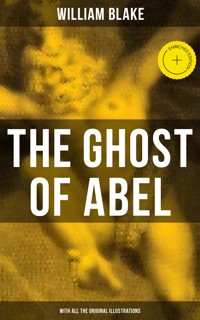
THE GHOST OF ABEL
(With All the Original Illustrations)
Published by
Books
Table of Contents
Introduction
A murdered brother returns as the unquiet pulse of memory, compelling the living to measure vengeance and forgiveness on the sharp edge where divine decree, human law, and imaginative vision collide, and in that collision to confront how violence seeks justification, how pity seeks power, and how the images we make—on copper, on paper, in the mind—govern what we dare to call justice.
The Ghost of Abel (With All the Original Illustrations) presents one of William Blake’s most concentrated meditations on moral and spiritual conflict. Composed late in his career, it revisits the biblical scene after the earliest fratricide, introducing a spectral witness whose presence exposes the stakes of judgment and mercy. The work is a brief prophetic drama, not a narrative retelling, and its power lies in the pressure it places on competing voices rather than in plot surprise. It is designed to be encountered as an integrated artwork in which text and image deepen, echo, and interrogate one another.
William Blake (1757–1827), poet, painter, and printmaker of the Romantic era, forged a singular method of “illuminated printing,” writing, designing, and engraving his books as unified visual-poetic artifacts. The Ghost of Abel belongs to his late period and was produced in 1822, within the final years of his life. By then Blake had refined a prophetic mode that couples visionary intensity with compressed theatrical dialogue. Here, as elsewhere in his oeuvre, he refuses to separate poetry from design, doctrine from imagination, or scripture from ongoing revelation, insisting that the form of a work is inseparable from its meaning.
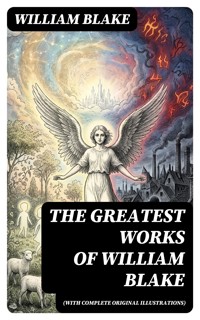
The phrase “with all the original illustrations” matters profoundly for this piece. Blake etched and hand-printed his pages so that figures, emblems, and textual ornaments would participate in the drama’s argument. The designs do not decorate a preexisting poem; they are part of its thinking, clarifying tensions, introducing counter-movements, and fixing the viewer’s attention on gestures or relations the words alone only suggest. To encounter the work in its original visual matrix is to witness how line, space, and typography become rhetorical devices, giving the play’s stark moral questions a body, a stage, and a felt atmosphere.
Though brief, The Ghost of Abel has a classic status because it distills Blake’s lifelong artistic revolution: the conviction that imagination is an active faculty of truth rather than a passive mirror. Its daring recourse to visionary drama—poetry spoken by emblematic voices under the pressure of scriptural history—helped shape later understandings of Romanticism as a movement of spiritual experiment and formal innovation. The piece stands alongside Blake’s prophetic books as a touchstone for how radical a small work can be, modeling an art that compresses expansive theology, ethics, and aesthetics into fiercely economical means.
At its center lies an enduring set of themes: the origin of violence, the claims of divine justice, and the possibility of mercy that does not collapse into mere excuse. By staging a return from the grave, Blake tests inherited interpretations of law and punishment against the transformations promised by vision. The questions posed here—What would true accountability demand? Can forgiveness be imagined without forgetting?—are never settled by fiat. Instead, the drama enacts the strain between accusation and redemption, inviting readers to inhabit precisely the uncertainty in which moral insight becomes possible.
Blake’s influence extends far beyond his lifetime, and works like The Ghost of Abel illuminate why later poets and artists found him indispensable. His fusion of text and image helped inspire nineteenth-century painters and illustrators, while his prophetic poetics resonated with symbolist and modernist writers who sought new forms for spiritual inquiry. The visionary intensity, the audacity to revise scriptural scenes, and the insistence on the reader as participant recur across generations. Even where this specific piece was not widely disseminated, its method and concerns exemplify the Blakean legacy taken up by admirers and critics alike.
Formally, the work is cast as a concentrated drama, with named speakers addressing one another in a charged, dialogic space. The concision of the exchanges heightens the stakes, creating an arena in which a single utterance can tilt the whole argument. Rather than expansive narration, Blake opts for confrontation, juxtaposing voices that embody competing orders of reality. The effect is theatrical without staging instructions, lyrical without conventional stanzaic scaffolding, and philosophical without abstraction, a rare mixture that demonstrates how Blake bends genre to the needs of his visionary inquiry.
Scripture provides the frame, but not a cage. Blake approaches the Genesis account not to paraphrase it but to expose its interpretive fault lines—between letter and spirit, judgment and restoration, history and vision. The drama becomes a kind of exegetical performance, showing how reading itself is an ethical act. In this, the piece belongs to a long tradition of creative engagement with sacred texts, yet it remains distinctively Blakean: fiercely personal, resistant to sectarian reduction, and animated by the belief that revelation is ongoing where imagination is alive.
The historical moment of composition also gives the work its edge. In the 1820s, after revolutionary hope and reaction had reshaped public life, debates about authority, conscience, and social order intensified. Blake’s artisanal practice—writing, engraving, and printing within a small circle—stood against mass production and orthodox consensus. The Ghost of Abel, made in that late style, feels both intimate and monumental: a single plate or page can bear the weight of an argument about humanity’s first wound, yet it does so with the hand-press immediacy of a studio artifact.
Reading this edition restores the work to the conditions Blake intended: a choreography of seeing and hearing in which figure, border, and letterform guide attention. Approach the images not as illustrations after the fact but as participants in the debate; notice how placement, posture, and emphasis echo or challenge the speech. Let the pacing remain slow. The drama’s brevity is deceptive, and its meanings unfold through repeated looking. In recombining the verbal and the visual, the book offers not only a text to interpret but a method for interpretation itself.




