


1,99 €
Niedrigster Preis in 30 Tagen: 1,99 €
Niedrigster Preis in 30 Tagen: 1,99 €
Mehr erfahren.
- Herausgeber: DigiCat
- Kategorie: Poesie und Drama
- Sprache: Englisch
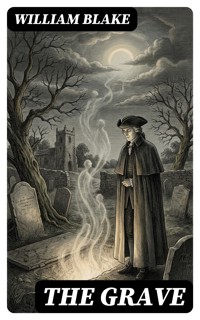
William Blake's "The Grave" is a profound exploration of mortality, spirituality, and the human condition, encapsulated in a unique blend of poetry and visual art. Written in the late 18th century, the work exhibits Blake's signature symbolic language and vivid imagery, which challenge conventional notions of death and the afterlife. The interplay between life and death is depicted through haunting verses that delve into themes of love, loss, and eternal connection, all set against a backdrop of Blake's visionary cosmology. It offers a rich narrative that resonates with the Romantic era's preoccupation with nature and the sublime, while simultaneously critiquing societal norms surrounding death and fate. William Blake (1757-1827) was a visionary artist and poet whose works frequently engaged with the tensions between the spiritual and the material world. His own life experiences—including the early loss of loved ones, deep personal convictions about the nature of the soul, and a profound connection to the mystical—guided Blake's creative process. The struggle for personal and artistic freedom in a constrained society heavily influenced his writing, a theme vividly embodied in "The Grave." This extraordinary work deserves a wide readership for its lyrical beauty and profound insights into existential themes. Readers interested in exploring the depths of human emotion and the complex relationship between life and death will find "The Grave" to be a powerful and enlightening experience. Blake's unique perspective encourages reflection on our own mortality and the enduring essence of love, making this a must-read for enthusiasts of Romantic poetry and spiritual inquiry.
Das E-Book können Sie in Legimi-Apps oder einer beliebigen App lesen, die das folgende Format unterstützen:
Veröffentlichungsjahr: 2022
Ähnliche






The Grave
Table of Contents
Introduction
A living imagination stands before the threshold of death, testing the darkness for shape and sense, and discovers that mortality is not merely an ending but a terrain where fear, faith, memory, and desire all insist upon being seen.
At the heart of this volume is Robert Blair’s The Grave, a long poem first published in 1743 by the Scottish minister whose meditation on mortality helped define the eighteenth‑century “graveyard” tradition. Composed in blank verse and addressed to common human experience rather than private anecdote, Blair’s work contemplates death’s certainty, the dignity of the body, and the accountability of the soul. Its premise is not a narrative twist but a sustained moral and spiritual reflection, inviting readers to weigh the claims of terror and consolation without dictating a single, easy resolution.
William Blake enters this story more than half a century later. Between about 1805 and 1808, the London engraver, poet, and painter designed a series of images to accompany Blair’s poem, commissioned by the publisher R. H. Cromek and engraved for the press by Louis Schiavonetti. Issued in 1808, the edition paired Blair’s text with Blake’s visionary inventions, bringing together two distinct moments in British art and letters. The result was a striking fusion: the calm, sonorous cadence of eighteenth‑century religious meditation illuminated by early Romantic imagery charged with spiritual drama and symbolic intensity.
Though modern descriptions sometimes call this an “illuminated manuscript,” it is not an illuminated book in the technical sense Blake used for his relief‑etched, hand‑colored works. Instead, readers encounter conventional letterpress printing accompanied by intaglio plates after Blake’s designs. The distinction matters because it situates the project within the commercial print culture of its time while still acknowledging the singular force of Blake’s visual language. His images lend a luminous, emblematic clarity to Blair’s themes, but they reached the public as finely engraved plates rather than as Blake’s self‑printed, color‑rich pages.
The Grave holds classic status for multiple reasons. Blair’s poem is a landmark of the graveyard school, a current that shaped tastes for reflective, nocturnal, and sepulchral themes in the decades before high Romanticism. Its measured voice, moral urgency, and insistence on universal human conditions secured a readership that endured through many reprintings. While later poets spoke in different accents, they inherited from Blair a vocabulary of solemn reflection, churchyard meditation, and ethical introspection that helped prepare the cultural ground for Romantic explorations of consciousness, nature, and the sublime.
Blake’s designs added a second, enduring claim to classic stature. They do not merely illustrate but interpret, staging the poem’s concerns as visionary scenes of meeting, parting, falling, and rising. The plates helped expand the audience for Blake’s art beyond the circles who knew his privately produced books, and they became an early public testament to his power as a religious and symbolic artist. That visibility, in turn, shaped later appreciation of Blake’s entire oeuvre and demonstrated how image and poem could deepen each other without collapsing their difference.
Without disclosing particulars, the poem surveys the human encounter with mortality: the dignity of the aged and the young, the shock of loss, the claims of conscience, and the hope of ultimate justice. Its perspective is Christian yet attentive to widely shared anxieties and consolations, exploring how fear and hope coexist in the face of extinction. Blake’s images amplify these tensions through emblematic gestures and thresholds—arches, gates, embraces, and luminous paths—that guide the reader from scene to scene while preserving the text’s reflective cadence and moral gravitas.
Reading this edition offers a double experience. Blair’s cadenced lines invite patient contemplation, while Blake’s plates arrest the eye with concentrated dramas that can be studied like sermons in pictures. Schiavonetti’s burin translates Blake’s characteristic vigor into a polished line suitable for the press, rendering figures and folds with clarity while preserving the designs’ spiritual charge. The volume historically circulated with an engraved portrait of Blake after a painting by Thomas Phillips, a detail that underscores the edition’s role in presenting Blake to a broader public as both originator of the designs and a figure of artistic interest.
Publication history forms part of the book’s meaning. Blair wrote in a milieu of devotional reflection and moral didacticism, crafting a poem that balanced doctrinal assurance with human sympathy. Decades later, in a bustling London print market, Cromek recognized that Blake’s visionary capacity could reframe Blair’s poem for a new generation. The project also bore the marks of collaboration and tension characteristic of the period’s publishing ventures, yet its final form—text and plates bound together—testifies to a successful, if complex, convergence of spiritual poetry and pictorial imagination.
The Grave also illuminates a passage in literary and artistic culture. The poem’s pre‑Romantic temperament foreshadows later preoccupations with individuality, feeling, and the sublime; its calm rhetoric opens pathways to the introspective lyric. Blake’s images, meanwhile, announce Romantic intensity: the body in eloquent gesture, space dramatized as moral arena, light functioning as spiritual sign. Together they show how eighteenth‑century moral reflection could be re‑imagined in a new visual key, shaping expectations for illustrated poetry and influencing subsequent readers, editors, and artists who sought a union of thought and image.
For contemporary readers, the value lies not only in historical position but in experiential depth. This book invites a deliberate pace—reading a passage, turning to the corresponding plate, then returning to the text with refreshed understanding. Its concerns are our own: grief and care, justice and mercy, the meaning of a life when measured against its end. In a time often inclined either to sentimentalize death or to hide it, the union of Blair’s measured voice and Blake’s visionary gaze offers clarity without evasions.
The Grave endures because it joins universal subject matter with two distinct yet harmonious arts. Blair’s poem steadies the mind before ultimate questions; Blake’s designs kindle the eye and imagination. Their partnership, forged across generations, reminds us that great books are living negotiations between text and image, tradition and renewal. In an age still searching for adequate language and symbols for mortality, this volume remains urgently present: sober, unsettling, consoling, and inexhaustibly suggestive of how the final boundary can instruct the life that precedes it.
Synopsis
This volume presents Robert Blair’s eighteenth-century meditative poem The Grave together with William Blake’s celebrated series of illustrations, first published with the poem in 1808. The pairing joins a sustained reflection on mortality and moral life with images that reframe its themes through visionary symbolism. The text unfolds as a sober address to readers contemplating the inevitability of death, the limits of earthly ambition, and the possibility of consolation. Blake’s designs, though created later than the poem, accompany its progression, amplifying its shifts in tone from admonition to awe. Read together, poem and images form a continuous argument about the uses of fear, memory, and hope in the face of the grave.
Blair begins in a churchyard, allowing the scene of graves, monuments, and quiet earth to guide a meditation on death’s universal claim. The setting levels distinctions, making kings and commoners alike subject to the same end. From this vantage, the poem challenges the vanity of pomp and the pursuit of reputation, treating such pursuits as fragile defenses against oblivion. The language moves deliberately, turning observation into moral counsel. The grave functions not only as a physical place but as an emblem, concentrating thought on the present choices that shape character. The opening frames the work’s guiding impulse: to convert somber contemplation into ethical clarity.
From the equalizing stillness of the churchyard, the poem personifies Death and the Grave, addressing them as agents that reveal the truth of human pretensions. Fear is acknowledged but probed for its instructive potential, shifting the mood from dread to discernment. The Grave appears not solely as negation but as a threshold that reorients attention from outward appearance to inner worth. The poem balances imagery of decay with language of vigilance, suggesting that a mindful confrontation with mortality steadies the will. This section prepares readers for contrasts between lives well governed and lives lived heedlessly, a contrast that becomes central to the poem’s ethical architecture.




