


0,49 €
Mehr erfahren.
- Herausgeber: DigiCat
- Kategorie: Religion und Spiritualität
- Sprache: Englisch
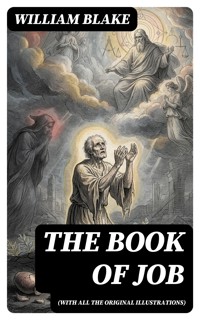
William Blake's adaptation of 'The Book of Job' is a profound reimagining of the biblical narrative, intermingling poetic lyricism with vibrant illustrations. This work encapsulates the existential struggle of humanity against suffering and divine justice while employing Blake's characteristic symbolic language. The fusion of text and image invites readers to explore the depths of Job's trials through a spiritual lens, urging a contemplative approach to life's uncertainties. The visual brilliance of the illustrations complements the scriptural text, offering a multi-dimensional exploration of faith, despair, and resilience, set against the backdrop of Blake's unique philosophical and religious views. Blake, a visionary poet, artist, and engraver of the 18th century, was deeply influenced by the theological and political upheaval of his time. His distinct mysticism and rebellion against institutional Christianity shaped his interpretation of biblical stories, positioning him as a critical figure in Romantic literature. Driven by his fascination with morality, spirituality, and the human condition, Blake's work serves as a manifestation of his beliefs and artistic vision, reflecting his quest for truth amid societal constraints. Readers are encouraged to delve into this masterful integration of text and illustration, as Blake's 'The Book of Job' speaks to the timeless struggle of faith and human suffering. This edition, adorned with all original illustrations, not only serves as an artistic treasure but also resonates deeply with those seeking philosophical insights and spiritual understanding.
Das E-Book können Sie in Legimi-Apps oder einer beliebigen App lesen, die das folgende Format unterstützen:
Veröffentlichungsjahr: 2023
Ähnliche





The Book of Job (With All the Original Illustrations)
Table of Contents
Introduction
A righteous man stands amid calamity he did not earn, while human explanations fray and a vaster, unseen order presses close, demanding that we learn to look as well as to listen.
The Book of Job (With All the Original Illustrations) by William Blake presents a rare convergence of ancient wisdom and Romantic vision: the timeless biblical drama set beside the complete sequence of Blake’s engravings. Far from ornament, these images are acts of interpretation, guiding the reader’s eye through postures, symbols, and scriptural citations that frame each scene. This edition invites a double reading—of words and of pictures—so that judgment, endurance, and humility become not only ideas to be understood, but experiences to be contemplated through design, gesture, and light.
The Book of Job is a classic of world literature and a pillar of the Hebrew Bible’s wisdom tradition, revered for its poetic intensity and philosophical reach. Its elegant structure—narrative framing a series of searching speeches—has shaped centuries of thought about innocence, justice, and the limits of human understanding. Writers, thinkers, and communities have returned to it for moral seriousness and imaginative daring, finding in its cadences and questions a durable resource. Its classic status rests not on answers it supplies, but on the fearless precision with which it presses readers to examine the grounds of their hope and fear.
William Blake’s illustrations have likewise secured classic standing in the history of art and bookmaking. A poet, painter, and printmaker of the Romantic era, Blake fused technical mastery with visionary symbolism, creating engravings whose lines carry both narrative clarity and spiritual resonance. His Job series is often regarded as among his most accomplished graphic works, a culmination of decades refining a personal visual language. Artists and writers across generations have admired the cycle’s compositional rigor and interpretive boldness, and its integration of image with text has influenced approaches to illustrated scripture, narrative sequencing, and the visual rhetoric of moral argument.
Blake (1757–1827) worked on the Job subject across decades. He produced an early watercolor series in the first decade of the nineteenth century and later returned to the theme in a set of copperplate engravings commissioned in the 1820s and published in 1826. This was one of his last completed projects, uniting his lifelong interests in scripture, typology, and the expressive potential of line. The present volume assembles those original plates in sequence, preserving the artist’s careful arrangement so that the reader can encounter the images as a sustained meditation rather than as isolated scenes.
The textual core is the Book of Job, an ancient Hebrew work traditionally included among the wisdom books. Its authorship is unknown, and its exact date is not securely established, yet its language and concerns situate it within a long, respected conversation about divine justice and human suffering. The book’s architecture marries prose and highly wrought poetry, carrying the reader from an initial narrative situation into reflective speech and back again. In most languages and traditions, it has been treasured for its dignified tone, sweeping metaphors, and disciplined structure, which together create a space for moral and spiritual attention.
The premise is stark: an upright, prosperous man is struck by sudden reversals and grievous pain. Friends arrive to reason with him, suggesting various frameworks for understanding what has befallen him, and he in turn voices both protest and patience as he seeks clarity. The exchanges test simple formulas and probe the meaning of integrity under pressure. The drama remains intimate—one person, one family, a circle of interlocutors—yet the questions it raises are vast, touching on the fabric of creation and the reach of wisdom. Outcomes and resolutions are best discovered within the reading itself.
Blake’s engravings converse with the text at every turn. He surrounds central images with marginal citations drawn from scripture, creating a visual gloss that aligns, complicates, or deepens the unfolding argument. Motifs recur—the curl of smoke, a musical instrument, a book, a storm—so that images speak to one another across the sequence. Gesture is a language here: hands plead or accuse, heads bow or harden, bodies gather or stand apart. Light modulates from clear delineation to dense shadow, tracing inward states that the literal words may only suggest. The result is a layered experience of seeing thought happen.
Technically, the plates are disciplined demonstrations of line engraving: crisp hatchings, controlled contours, and harmonized contrasts that lead the eye through foreground, figure, and frame. Composition serves meaning. Architectures confine or open space; trees bend with mood; the heavens, sometimes serene and sometimes turbulent, mirror the tensions of the human figures below. The borders are not mere decorations but integral arguments, training the reader to read the page as a whole, where image, scripture, and ornament combine to form an interpretive environment. Such unity gives the series a meditative cadence page after page.
The literary and artistic impact of this pairing has been notable. Blake’s reputation helped shape the sensibilities of later poets and artists, and these engravings have been admired by figures associated with nineteenth‑century artistic renewal as well as by twentieth‑century readers who rediscovered Blake’s visionary rigor. Editors and scholars have used the images to illuminate debates about irony, symbolism, and the reading of sacred texts, while illustrators have learned from their narrative economy. The Book of Job itself has continued to inspire commentary, sermons, and philosophical reflections animated by the exemplary clarity of its central dilemma.
That double classic status—an ancient poem in conversation with a modern master—explains the book’s enduring power. The themes are perennial: the strain between innocence and experience, the temptation to reduce mystery to method, the patience required to live with partial knowledge, and the discipline of compassion when words fail. Blake’s pages slow the reading, creating room for attention and care. They show how argument and image can temper one another, inviting a moral imagination that is neither credulous nor cynical, but awake, receptive, and exacting.
For contemporary readers, the appeal is evident. In an age negotiating suffering made visible across distance, competing voices of certainty, and the hunger for meaning that does not collapse into slogan, this volume offers a model of rigorous, humane attentiveness. The Book of Job grounds the questions; Blake’s original illustrations tutor the gaze. Together they ask us to read more completely—with mind, with eye, with conscience—and to carry that habit beyond the book, where the work of justice, humility, and wonder continues. That is why it remains, unmistakably, a classic.
Synopsis
The Book of Job (With All the Original Illustrations) by William Blake presents the biblical meditation on suffering and divine justice together with Blake’s celebrated engraved cycle, first published in 1826. The volume follows the scriptural sequence while offering a visual counterpoint that frames the drama in symbolic terms. Blake’s images accompany the movement from prosperity through affliction to searching dialogue, reinforcing themes of piety, conscience, and vision. As a whole, the edition functions as both narrative and commentary: the text unfolds in measured episodes, and the plates echo or intensify key moments, inviting readers to weigh the claims of faith, reason, and experience within a single, integrated encounter.
The opening establishes Job as a person of integrity, settled in a life marked by devotion and communal stability. A scene in the heavenly court introduces the adversary, who questions whether Job’s reverence is disinterested. Permission is granted for trials that test the bond between righteousness and reward. Blake’s imagery underscores this transition from order to uncertainty, contrasting calm domestic ritual with gathering turbulence. The initial blows fall swiftly, disrupting security and exposing the fragility of human prosperity. The narrative thus poses its central question early: can fidelity to the moral life endure when the visible structures of blessing and assurance no longer hold?
Affliction deepens as Job’s body is stricken, isolating him and sharpening the inner conflict between steadfastness and despair. His wife’s brief, pained exchange amplifies the tension between endurance and renunciation. Job breaks his silence with a lament that names the darkness without renouncing integrity, setting the tone for the searching debates to come. Blake’s plates heighten the contrast between physical suffering and a vast, inscrutable cosmos, situating personal pain within a wider order that remains hidden to human calculation. Friends arrive to console, their initial silence respectful, signaling the gravity of the crisis and preparing the stage for sustained moral argument.
Conversation becomes the engine of the book’s middle movement. The friends begin by offering a traditional moral calculus: suffering signals fault, and correction follows confession. Job answers with careful protest, refusing easy admissions while asking for a hearing before a just tribunal. The cycle of speeches establishes a rhythm of charge and rebuttal, as conventional wisdom meets lived innocence. Blake’s designs emphasize posture, gesture, and patterned borders with scriptural citations, casting the debate as both intimate and emblematic. Each exchange pushes beyond personal circumstance toward a general problem: how to reconcile moral order with the stubborn opacity of events.
As arguments continue, the friends intensify their claims, restating doctrine with sharper edges, while Job widens his appeal to the language of law, witness, and oath. The dialogue becomes a contest over the limits of knowledge, the reliability of tradition, and the legitimacy of questioning itself. Cosmic imagery begins to surface more prominently: the scale of creation, the courses of stars, and the boundaries of seas and night. Blake’s visual program mirrors this widening horizon, threading the panels with signs of the natural world and the moral imagination, hinting that any resolution, if it comes, must account for more than human retribution or reward.
Job articulates a comprehensive defense, holding together reverence and candor. He catalogues his conduct and demands clarity, not as defiance but as a plea for intelligible justice. The rhetoric of courtroom and covenant underscores his conviction that truth should be answerable and that wrong, if present, ought to be shown. Blake’s images accompany this legal and ethical strain with motifs of text and testimony, strengthening the sense that what is at stake is not merely private consolation but the coherence of moral speech. Throughout, the narrative maintains its tension: confidence in integrity meets the silence of ultimate causes.
A new voice, younger and previously silent, enters to redirect the discussion. This speaker reframes suffering less as straightforward punishment than as discipline and instruction, opening space for a reading in which hardship may educate rather than simply condemn. The intervention does not end the debate but prepares it for a different register, turning attention from human disputation to a larger horizon. In Blake’s sequence, the tonal shift is palpable, as the compositions temper accusation with expectancy. The narrative gathers itself for an answer that will not merely settle accounts but reorient the questions that have driven the exchanges thus far.
The response arrives from beyond the debate, not as a formula but as an overwhelming address. From the whirlwind, attention moves to the architecture of creation: foundations, constellations, wild creatures, and the untamable energies symbolized by figures such as Behemoth and Leviathan. The emphasis falls on scope, interdependence, and mystery, inviting humility before a world that exceeds human measure. Blake’s dramatic plates render this turn with dynamic motion and luminous detail, setting human speech against elemental forces. The focus shifts from blame to perspective, from adjudicating guilt to contemplating an order whose depths resist reduction to immediate moral arithmetic.
In closing movement, the work gathers its reflections on integrity, suffering, and the limits of understanding into a sober, expansive vision. Without dissolving the reality of pain, the book suggests that wisdom may arise not from neat explanations but from transformed attention to the world and to the divine. Blake’s original illustrations, read with the text, serve as an interpretive lens that keeps the questions open while guiding contemplation. The enduring significance lies in this balanced invitation: to hold fidelity and inquiry together, to resist simplistic theodicies, and to seek meaning in a dialogue that prizes honesty, reverence, and the breadth of creation.




