


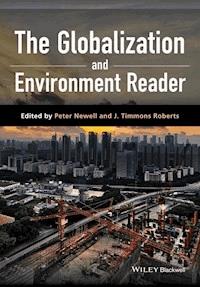
The Globalization and Environment Reader E-Book
29,99 €
Mehr erfahren.
- Herausgeber: John Wiley & Sons
- Kategorie: Geisteswissenschaft
- Sprache: Englisch
The Globalization and Environment Reader features a collection of classic and cutting-edge readings that explore whether and how globalization can be made compatible with sustainable development.
- Offers a comprehensive collection of nearly 30 classic and cutting-edge readings spanning a broad range of perspectives within this increasingly important field
- Addresses the question of whether economic globalization is the prime cause of the destruction of the global environment – or if some forms of globalization could help to address global environmental problems
- Features carefully edited extracts selected both for their importance and their accessibility
- Covers a variety of topics such as the ‘marketization’ of nature, debates about managing and governing the relationship between globalization and the environment, and discussions about whether or not globalization should be ‘greened’
- Systematically captures the breadth and diversity of the field without assuming prior knowledge
- Offers a timely and necessary insight into the future of our fragile planet in the 21st century
Sie lesen das E-Book in den Legimi-Apps auf:
Seitenzahl: 989
Veröffentlichungsjahr: 2016
Ähnliche




















Table of Contents
Cover
Title Page
Editors’ Introduction: The Globalization and Environment Debate
Introduction
Sustaining Development or “Sustainable Development”?
From Rio to Rio: The Rise of the Green Economy
Production, Labor, and the Environment
Globalizing Consumption
Outline of the Book
References
Part I: Going Global
Introduction
References
1 The Anthropocene
Introduction
Pre-Anthropocene Events
The Industrial Era (ca. 1800–1945): Stage 1 of the Anthropocene
The Great Acceleration (1945–ca. 2015): Stage 2 of the Anthropocene
Stewards of the Earth System? (ca. 2015–?): Stage 3 of the Anthropocene
References
2 Address at the Closing Ceremony of the Eighth and Final Meeting of the World Commission on Environment and Development and the Tokyo Declaration (1987)
World Commission on Environment and Development
3 Foxes in Charge of the Chickens (1993)
The Earth Summit debacle
Conflicting Interests, Differing Perceptions
The Threat of Environmentalism
The Threat of Economic Contraction
Containing Challenges
Capturing the Debate
UNCED’s Prescriptions: Further Enclosure
4 Can the Environment Survive the Global Economy? (1997)
Creating Consumers
Production for Export
Increased Transport
The Environmental Effects of Increased Competition
Competition and Environmental Disaster
Deregulation
Free-Trade Zones
The Environmental Effects of Structural Adjustment Programmes (SAPs)
Cross-Deregulation
Harmonizing Standards
References
5 Ecological Modernization and the Global Economy (2002)
1. Introduction
2. Ecological Modernization Theory
3. Challenging Ecological Modernization: Globalization and AntiGlobalization
4. Ecological Modernization and Neo-Marxism
5. Taming the Treadmill of Global Capitalism: Political Modernization
6. Taming the Treadmill of Global Capitalism: Economic Dynamics
7. Taming the Treadmill of Global Capitalism:Global Civil Society
8. Conclusions: Ecological Modernization Perspectives in an Era of Globalization
6 Environment and Globalization
The Five Propositions
Avenues for Action: What Can We Do?
Part II: The Nature of Globalization – Cases and Trends in Globalization
Introduction
References
7 The Value of the World’s Ecosystem Services and Natural Capital (1997)
Ecosystem Function and Ecosystem Services
Natural Capital and Ecosystem Services
Valuation of Ecosystem Services
Valuation Methods
Ecoystem Values, Markets and GNP
Global Land Use and Land Cover
Synthesis
Source of Error, Limitations and Caveats
Total Global Value of Ecosystem Services
Discussion
8 Sustainability and Markets
Sustainability and Collectivity
The Scale of the Sustainability Objective
Neoclassical Environmental Economics
Markets and the Concept of Sustainability
Markets and Structural Change
Markets and Instruments
Markets, Planning and the State
9 Crafting the Next Generation of Market-Based Environmental Tools (1997)
Market-Based Policy Instruments
Limited Experience
Mixed Performance
The Next Generation
10 Climate Fraud and Carbon Colonialism
Introduction
What is Emissions Trading?
Climate Fraud
Monitoring the Monitors
Carbon Colonialism
Might Makes Right
The 1992 Rio Earth Summit and Climate Change
The Role of Corporations
Co-opting NGOs
The Impact of the World Trade Organization on Emissions Trading
Environmental Justice
The Alternative
Conclusions
11 The Business of Sustainable Development (1992)
Sustainable Development
The Growth Controversy
The Business Challenge
“Eco-efficiency”
The Challenge of Time
Shaping the Future
12 The “Commons” versus the “Commodity”
Prologue
Introduction: The Triumph of Market Environmentalism?
Neoliberal Reforms and Resource Management: Clarifying the Debate
Debating Neoliberalization: Anti-privatization Campaigns and the “Human Right to Water”
Alter-globalization and the Commons
Conclusions
References
Part III: Explaining the Relationship between Globalization and the Environment
Introduction
13 Peril or Prosperity? Mapping Worldviews of Global Environmental Change (2011)
Four Environmental Worldviews
Market Liberals
Institutionalists
Bioenvironmentalists
Social Greens
Conclusion
14 Introduction to
World Development Report, 2003
Achievements and Challenges
15 The Political Ecology of Globalization (2012)
Which Globalization?
Which Political Ecology?
Conclusions
References
16 Institutions for the Earth
International Environmental Institutions
Advice to the New Secretary General
Contemporary Greenhouse-gas Negotiations
Sovereignty
Part IV: Governing Globalization and the Environment
Introduction
References
17 Trading Up and Governing Across
The Impact of Economic Interdependence
The Costs of Compliance
Exporting Production Standards
The Limits of Market Pressures
18 The WTO and the Undermining of Global Environmental Governance (2000)
The Green Critique of the WTO
The Race to a Polluted Bottom
Commodifying the Commons
Conclusion
19 Private Environmental Governance and International Relations
Supplanting, or Complementing, State Authority?
20 Managing Multinationals
Introduction: The Regulation of TNCs and the Environment
1
Power without Responsibility? The Limits of Existing Regulation
Civil Regulation: From Confrontation to Collaboration
Litigation against TNCs
Conclusion
References
21 Reforming Global Environmental Governance
World Politics in the Anthropocene
Forty Years of Debate on a World Environment Organization
Three Models of a World Environment Organization
Rio Plus 2012: The Case for Getting Serious about a United Nations Environment Organization
Summing Up
Part V: Can Globalization be Greened?
Introduction
References
22 Whose Common Future
I. The Commons
II. Development as Enclosure
III. The Encompassing Web
IV. Reclaiming the Commons
V. A Concluding Remark
23 Resisting ‘Globalisation-from-above’ Through ‘Globalisation-from-below’ (1997)
I. A Normative Assessment of Globalisation
II. The New Politics of Resistance in an Era of Globalisation
24 Picking the Wrong Fight
Why the Concerns? (or What’s New about the WTO?)
Environmental and Public Health Complaints in Context
Conclusions
25 What Every Environmentalist Needs to Know About Capitalism (2010)
Characteristics of Capitalism in Conflict with the Environment
Proposals for the Ecological Reformation of Capitalism
What Can Be Done Now?
Another Economic System Is Not Just Possible – lt’s Essential
26 Pathways of Human Development and Carbon Emissions Embodied in Trade (2012)
References
27 Introduction to
Towards a Green Economy: Pathways to Sustainable Development and Poverty Eradication
(2012)
Setting the Stage for a Green Economy Transition
28 Critique of the Green Economy
Blueprint For an Economy of Moderation
Social Commons as an Economic Factor
Index
End User License Agreement
List of Tables
Chapter 05
Table 5.1 Comparing Contrasting Perspectives on Environmental Reform
Chapter 06
Table 6.1 Environment and Globalization: Some Examples of Interaction
Chapter 07
Table 7.1 Ecosystem services and functions used in this study
Table 7.2 Summary of average global value of annual ecosystem services
Chapter 12
Table 12.1 Resource management reforms: examples from the water sector
Table 12.2 The commons versus commodity debate
Table 12.3 Water supply delivery models: the cooperative, the state, and the private corporation
Table 12.4 Neoliberal reforms and alter-globalization alternatives
Chapter 13
Table 13.1 Environmental perspectives
Chapter 26
Table 26.1 Regression results for the trend curves shown in Figs 26.1 and 26.3
Chapter 27
Table 27.1 Natural capital: Underlying components and illustrative services and values
List of Illustrations
Chapter 01
Figure 1.1 The change in the human enterprise from 1750 to 2000. [28]. The Great Acceleration is clearly shown in every component of the human enterprise included in the figure. Either the component was not present before 1950 (e.g., foreign direct investment) or its rate of change increased sharply after 1950 (e.g., population).
Chapter 07
Figure 7.1 Supply and demand curves, showing the definitions of cost, net rent and consumer surplus for normal goods (a) and some essential ecosystem services (b). See text for further explanation.
Chapter 14
Figure 14.1 Global population approaching stability
Chapter 26
Figure 26.1 Correcting for trade: how moving from territorial to consumption-based emissions changes the relation between carbon and human development. a,b, Each arrow represents a country/region moving horizontally from territorial (arrow base) to consumption-based (centre of arrowhead) carbon emissions, in the year 2004. The vertical axes are life expectancy (a) and income (b). The arrowhead size represents national population. [...]
Figure 26.2 Simultaneous visualization of international life expectancy, income and consumption-based carbon emissions in 2004. Three-dimensional representation of life expectancy (vertical axis), consumption-based emissions (horizontal axis) and income (colour scale [see online article for colour scale]). The inset is the ‘Goldemberg corner’, with life expectancy over 70 years and less than one tonne of carbon emissions per capita. The highest life-expectancy levels are attained at a wide range of carbon emissions and incomes.
Figure 26.3 National development trajectories 1990–2005 for life expectancy, income and territorial and consumption-based emissions. a,b, Territorial-emission trajectories are dark grey; consumption-based ones are pale grey, shown for life expectancy (a) and income (b), and contrasted with the global fit curves for consumption-based carbon in 1990 and 2005. The trajectories are upwards except when the arrows indicate otherwise. South Africa’s trajectory in b is clockwise.
Guide
Cover
Table of Contents
Begin Reading
Pages
iii
iv
1
2
3
4
5
6
7
8
9
10
11
12
13
14
15
16
17
18
19
21
23
24
25
26
27
28
29
30
31
32
33
34
35
36
37
38
39
40
41
42
43
44
45
46
47
48
49
50
51
52
53
54
55
56
57
58
59
60
61
62
63
64
65
66
67
68
69
70
71
72
73
74
75
76
77
78
79
80
81
82
83
84
85
86
87
88
89
90
91
92
93
94
95
96
97
98
99
100
101
102
103
104
105
106
107
109
111
112
113
114
115
116
117
118
119
120
121
122
123
124
125
126
127
128
129
130
131
132
133
134
135
136
137
138
139
140
141
142
143
144
145
146
147
148
149
150
151
152
153
154
155
156
157
158
159
160
161
162
163
164
165
166
167
168
169
170
171
172
173
174
175
176
177
178
179
180
181
182
183
184
185
186
187
188
189
190
191
192
193
194
195
196
197
198
199
200
201
202
203
205
206
207
208
209
210
204
211
213
214
215
216
217
219
220
221
222
223
224
225
226
227
228
229
230
231
232
233
234
235
236
237
238
239
240
241
242
243
244
245
246
247
248
249
250
251
252
253
254
255
256
259
260
261
257
258
262
263
264
265
266
267
268
269
270
271
272
273
274
275
276
277
279
281
282
283
284
285
286
287
288
289
290
291
292
293
294
295
296
297
298
299
300
301
302
303
304
305
306
307
308
309
310
311
312
313
314
315
316
317
318
319
320
321
322
323
324
325
326
327
328
329
330
331
332
333
335
336
337
338
339
341
342
343
344
345
346
347
348
349
350
351
352
353
354
355
356
357
358
359
360
361
362
363
364
365
366
367
368
369
370
371
372
373
374
375
376
377
378
379
380
381
382
383
384
385
386
387
388
389
390
391
392
393
394
395
396
398
399
401
397
400
402
403
404
405
406
407
408
409
410
411
412
413
414
415
416
417
418
419
420
421
422
423
424
425
426
427
428
429
430
431
432
433
434
435
436
437
438
439
440
441
442
443
444
445
446
447
448
449
450
451
452
453
454
The Globalization and Environment Reader
Edited byPeter Newell and J. Timmons Roberts
This edition first published 2017Editorial material and organization © 2017 John Wiley & Sons, Ltd.
Registered OfficeJohn Wiley & Sons, Ltd, The Atrium, Southern Gate, Chichester, West Sussex, PO19 8SQ, UK
Editorial Offices350 Main Street, Malden, MA 02148-5020, USA9600 Garsington Road, Oxford, OX4 2DQ, UKThe Atrium, Southern Gate, Chichester, West Sussex, PO19 8SQ, UK
For details of our global editorial offices, for customer services, and for information about how to apply for permission to reuse the copyright material in this book please see our website at www.wiley.com/wiley-blackwell.
The right of Peter Newell and J. Timmons Roberts to be identified as the authors of the editorial material in this work has been asserted in accordance with the UK Copyright, Designs and Patents Act 1988.
All rights reserved. No part of this publication may be reproduced, stored in a retrieval system, or transmitted, in any form or by any means, electronic, mechanical, photocopying, recording or otherwise, except as permitted by the UK Copyright, Designs and Patents Act 1988, without the prior permission of the publisher.
Wiley also publishes its books in a variety of electronic formats. Some content that appears in print may not be available in electronic books.
Designations used by companies to distinguish their products are often claimed as trademarks. All brand names and product names used in this book are trade names, service marks, trademarks or registered trademarks of their respective owners. The publisher is not associated with any product or vendor mentioned in this book.
Limit of Liability/Disclaimer of Warranty: While the publisher and authors have used their best efforts in preparing this book, they make no representations or warranties with respect to the accuracy or completeness of the contents of this book and specifically disclaim any implied warranties of merchantability or fitness for a particular purpose. It is sold on the understanding that the publisher is not engaged in rendering professional services and neither the publisher nor the author shall be liable for damages arising herefrom. If professional advice or other expert assistance is required, the services of a competent professional should be sought.
Library of Congress Cataloging-in-Publication data applied for
Hardback: 9781118964149Paperback: 9781118964132
A catalogue record for this book is available from the British Library.
Cover image: jalvaran/Getty
Editors’ Introduction: The Globalization and Environment Debate
J. Timmons Roberts and Peter Newell
Introduction
Just before the massive People’s Climate March in 2014, author and activist Naomi Klein released a book which argued that we as a global society face a choice: either unregulated capitalism, or a livable Earth. The book, This Changes Everything: Capitalism vs. the Climate (Klein, 2014), cited climate scientists who believe we are on a collision course and so must drastically and immediately change the direction of our development path. Klein put it in stark terms: “What the climate needs to avoid collapse is a contraction in humanity’s use of resources; what our economic model demands to avoid collapse is unfettered expansion. Only one of these sets of rules can be changed, and it’s not the laws of nature” (21).
Klein argued that the time for half-measures is past, having been lost in the 1990s and 2000s when the process of globalization was deepening and intensifying. “Gentle tweaks to the status quo stopped being a climate option when we supersized the American Dream in the 1990s, and then proceeded to take it global” (22). She argued that the profound changes that need to be made could build a more sustainable and fairer society, such as “radically cutting our fossil fuel emissions and beginning the shift to zero-carbon sources of energy … with a full-blown transition underway within the decade” (18). But, she concluded, “we are not stopping the fire,” because doing those things would “fundamentally conflict with deregulated capitalism … [and] are extremely threatening to an elite minority.” She continued that it was “our great collective misfortune that the scientific community made its decisive diagnosis of the climate threat at the precise moment … that marked the dawning of what came to be called ‘globalization.’”
Klein recounts the three policy pillars of the “market fundamentalism” of globalization that “systematically sabotaged our collective response to climate change …privatization of the public sphere, deregulation of the corporate sector, and lower corporate taxation, paid for with cuts to public spending” (19). She describes how globalization made it impossible for the United Nations negotiations on climate to succeed, and quotes a Canadian college student who spoke at the 2011 United Nations climate talks in South Africa: “You have been negotiating all my life” (11). This was not an exaggeration: as we’ll describe below, those talks began in the early 1990s in the build up to the 1992 UN Framework Convention on Climate Change. For Klein the overwhelming issue of climate change requires that we acknowledge its magnitude and horror, and think creatively about how we can reorganize society in a new and positive way. “Because of our lost decades, it is time to turn this around now. Is it possible? Absolutely. Is it possible without challenging the fundamental logic of deregulated capitalism? Not a chance.”
Lesen Sie weiter in der vollständigen Ausgabe!
Lesen Sie weiter in der vollständigen Ausgabe!
Lesen Sie weiter in der vollständigen Ausgabe!
Lesen Sie weiter in der vollständigen Ausgabe!
Lesen Sie weiter in der vollständigen Ausgabe!
Lesen Sie weiter in der vollständigen Ausgabe!
Lesen Sie weiter in der vollständigen Ausgabe!
Lesen Sie weiter in der vollständigen Ausgabe!
Lesen Sie weiter in der vollständigen Ausgabe!
Lesen Sie weiter in der vollständigen Ausgabe!
Lesen Sie weiter in der vollständigen Ausgabe!
Lesen Sie weiter in der vollständigen Ausgabe!
Lesen Sie weiter in der vollständigen Ausgabe!
Lesen Sie weiter in der vollständigen Ausgabe!
Lesen Sie weiter in der vollständigen Ausgabe!
Lesen Sie weiter in der vollständigen Ausgabe!
Lesen Sie weiter in der vollständigen Ausgabe!
Lesen Sie weiter in der vollständigen Ausgabe!
Lesen Sie weiter in der vollständigen Ausgabe!
Lesen Sie weiter in der vollständigen Ausgabe!
Lesen Sie weiter in der vollständigen Ausgabe!
Lesen Sie weiter in der vollständigen Ausgabe!
Lesen Sie weiter in der vollständigen Ausgabe!
Lesen Sie weiter in der vollständigen Ausgabe!
Lesen Sie weiter in der vollständigen Ausgabe!
Lesen Sie weiter in der vollständigen Ausgabe!
Lesen Sie weiter in der vollständigen Ausgabe!
Lesen Sie weiter in der vollständigen Ausgabe!
Lesen Sie weiter in der vollständigen Ausgabe!
Lesen Sie weiter in der vollständigen Ausgabe!
Lesen Sie weiter in der vollständigen Ausgabe!
Lesen Sie weiter in der vollständigen Ausgabe!
Lesen Sie weiter in der vollständigen Ausgabe!
Lesen Sie weiter in der vollständigen Ausgabe!
Lesen Sie weiter in der vollständigen Ausgabe!
Lesen Sie weiter in der vollständigen Ausgabe!
Lesen Sie weiter in der vollständigen Ausgabe!
Lesen Sie weiter in der vollständigen Ausgabe!
Lesen Sie weiter in der vollständigen Ausgabe!
Lesen Sie weiter in der vollständigen Ausgabe!




