


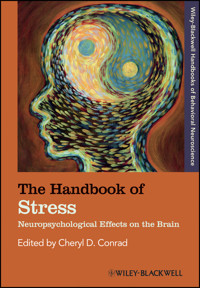
The Handbook of Stress E-Book
39,99 €
Mehr erfahren.
- Herausgeber: John Wiley & Sons
- Kategorie: Geisteswissenschaft
- Serie: Blackwell Handbooks of Behavioral Neuroscience
- Sprache: Englisch
The Handbook of Stress: Neuropsychological Effects on the Brain is an authoritative guide to the effects of stress on brain health, with a collection of articles that reflect the most recent findings in the field. * Presents cutting edge findings on the effects of stress on brain health * Examines stress influences on brain plasticity across the lifespan, including links to anxiety, PTSD, and clinical depression * Features contributions by internationally recognized experts in the field of brain health * Serves as an essential reference guide for scholars and advanced students
Sie lesen das E-Book in den Legimi-Apps auf:
Seitenzahl: 1410
Veröffentlichungsjahr: 2013
Ähnliche




















Table of Contents
Cover
Wiley-Blackwell Handbooks of Behavioral Neuroscience
Title page
Copyright page
Dedication
Contributors
Foreword
Preface
Acknowledgments
Abbreviations
Part I: Basics of the Stress Response
1 The Basics of the Stress Response
An Introduction to Stress
The Road to Conceptualizing Stress
Overview of Stress-response Physiology
Overview of Key Stress Response Mediators
Overview of the Stress Response Following Chronic Stress
Emotional Response to Stress
Stress and Cognition
Neuroanatomy of Emotional Regulation
Stress Pathology: Brain Structure and Function
Stress Resilience: Genes, Endophenotype, and Neuropsychological Functioning
Concluding Remarks
2 Central Nervous System Regulation of the Hypothalamic–Pituitary–Adrenal Axis Stress Response
The Problem of Stress
Acute Stress Responses
Chronic Stress Responses
Perspective: Stress, Chronic Stress, and Disease
3 Corticosteroid Receptor Involvement in the Stress Response
Basal and Stress-induced Secretory Patterns
Receptor and Action Patterns
Brain MRs
Brain GRs
MR and GR Polymorphisms
MR, GR, and CRH
Future Directions
Acknowledgment
4 Nongenomic Cellular Actions of Corticosteroids in the Brain
Introduction
Slow, Gene-mediated Effects of Glucocorticoids
Rapid, Nongenomic Effects of Glucocorticoids
Putative Mechanism of Action
Concluding Remarks
5 Stress Effects on the Brain
Introduction
The Inter-relationship of Stress and Cognition
NMDA Receptor-mediated Signaling and Neuroplasticity
Epigenetic Mechanisms in Gene Transcription
Emotional Challenges Result in Transcription-related Histone Modifications in the Brain
The Dentate Gyrus Shows Sparse Epigenetic Responses
Integration of Extracellular and Intracellular Pathways Signaling to the Chromatin
Significance of H3S10p/K14ac-associated Gene Expression in Dentate Gyrus Granule Neurons in Hippocampus-related Memory Formation
Concluding Remarks
6 Mechanisms of Glucocorticoid Receptor Regulation of Gene Expression
Introduction
Mechanisms of Glucocorticoid-regulated Gene Expression
Concluding Remarks
Part II: Stress Influences on Brain Plasticity and Cognition
7 Stress and Adult Neurogenesis
Adult Neurogenesis in the Dentate Gyrus
Effects of Aversive Experience on Adult Neurogenesis
Age, Species, and Sex Differences
Stress Effects on Adult Neurogenesis: a Role for Glucocorticoids?
A Role for Interleukin-1?
Paradoxical Effects of Stress on Adult Neurogenesis
Potential Functions of Adult Neurogenesis
Summary
8 Neurobiological Basis of the Complex Effects of Stress on Memory and Synaptic Plasticity
Progress in the Study of Stress, Memory, and Brain Function
Stress Effects on Memory Consolidation and Retrieval
Influence of Extrinsic and Intrinsic Stress on Memory
Stress-induced Modulation of Synaptic Plasticity
Stress, Memory, Synaptic Plasticity, and Corticosteroids
Stress and Multiple Brain Memory Systems
Temporal Dynamics Model of the Stress-induced Modulation of Memory
Extending the Temporal Dynamics Model to Address Stress Effects on Retrieval
Summary and Speculation on the Neural Basis of Traumatic Memory Processing
Acknowledgment
9 Acute Glucocorticoids Interact with Arousal State in Regulating Long-term Memory Formation
Introduction
Acute Glucocorticoid Effects on Memory Consolidation
Fast and Slow Glucocorticoid Actions
Role of the Amygdala in Mediating Glucocorticoid Effects on Memory Consolidation
Glucocorticoid Interactions with Noradrenergic Mechanisms in the BLA
Rapid Glucocorticoid Interactions with Endocannabinoid Mechanisms
Concluding Remarks
10 Chronic Stress Effects on Corticolimbic Morphology
Introduction
Hippocampus
Amygdala
Striatum
Prefrontal Cortex
Mechanisms of Stress-induced Dendritic Remodeling
Functional Implications of Stress-induced Dendritic Remodeling
Future Directions
11 Effects of Chronic Stress on Memory and Neuroplasticity: Animal Studies
Hippocampus-related Learning Processes: Spatial Learning
Amygdala-related Learning: Fear Conditioning
Learning Tasks Related to Prefrontal Cortical Function
Individual Differences
Latent Vulnerability to Stress across the Life span
Stress Effects on Neuroplasticity Mediating the Behavioral Effects: a Focus on the Neural Cell Adhesion Molecule
Conclusions
12 Stress and Glucocorticoid Effects on Learning and Memory
History and Definitions of Stress
The Stress Response: Catecholamines and Glucocorticoids
Stress Methodology
Emotions: an Important Modulator of Human Memory
Acute Effects of GCs on Memory
Is That the End of the Story?
Conclusion
Part III: Stress Effects Across the Life Span
13 Adolescence and Stress
Introduction
Stages of Development
Maturation of HPA Axis during the Juvenile to Adult Transition
Stress and the Hippocampal Formation
Stress and the PFC
Conclusions
14 Effect of Early Environment and Separation Animal Models on Neurobiological Development
Shaping Brain and Behavior Through Experience
Behavioral Effects of Social Isolation Rearing in Rodents
Neuroanatomical Correlates of Social Isolation-rearing
Postweaning Social Isolation and Central Neurotransmitter Function
Neuroendocrine Adaptations and Importance of Early-life Environment
Neuropeptide Neuromodulation and Early Social Environment
Other Paradigms involving Early-environment Manipulation
Conclusions
Acknowledgment
15 Clinical Implications of Childhood Stress
Introduction
Family Environment Stressors
Emotion Regulation
Common Family Stressors
Stress Inoculation
Methodological Considerations
Future Research
Concluding Comments
16 Chronic Stress and Hippocampus Vulnerability to Functional Changes and Health in the Adult
Introduction
Glucocorticoid Cascade Hypothesis and Recent Developments
Investigating Hippocampal Structural Changes Beyond Neuronal Loss
Hippocampal CA3 Dendritic Retraction: Consequences on Spatial Ability
Model for Chronic Stress and CA3 Dendritic Retraction in Spatial Ability
Hippocampal CA3 Dendritic Retraction: Consequences on Hippocampal Health
Glucocorticoid Vulnerability Hypothesis and Implications
Acknowledgment
17 Stress and Aging
Introduction
Neuroendocrine Mechanisms and Aging in Resilience and Vulnerability
Role of Cellular Plasticity Mechanisms in Stress and Aging
Potential Interventions that Might Increase Resilience to Stress and Aging: Caloric Restriction and Exercise
Conclusions and Summary
Part IV: Stress Involvement in Anxiety, Posttraumatic Stress Disorder, and Depression
18 Social Stress Effects on Defensive Behavior and Anxiety
Introduction
Resource Conflict as a Focal Feature of Social Stress
Social Stress from the Lack of Social Interaction
Defensive Behaviors and Anxiety
Defensive Behaviors and Anxiety Measures Following Social Stress
Social Stress and Glucocorticoids
Summary
19 Stress and Animal Models of Posttraumatic Stress Disorder
Animal Models of PTSD
Selected CBC-based Studies
Can PTSD Be Prevented?
Conclusions
20 What Can Fear Conditioning Tell Us About Posttraumatic Stress Disorder?
Introduction
The Neurocircuitry of Fear Conditioning
Biochemical Pathways and Synaptic Changes Underlying Fear Learning
Stress Hormones and Fear Conditioning
Extinction and Reconsolidation of Conditioned Fear
Conclusion
21 Stress and Glucocorticoid Effects on Memory
Introduction
Glucocorticoid Effects on Memory Consolidation
Glucocorticoid Effects on Memory Retrieval
Glucocorticoid Effects on Working Memory
Modulatory Effects of Glucocorticoids on Emotional Memory: Implications for Anxiety Disorders
Conclusion
22 Stress and Human Neuroimaging Studies
Lasting Effects of Traumatic Stress on the Brain and Behavior
Neural Circuits of Trauma-spectrum Disorders
Changes in Brain Structure in PTSD
Functional Neuroimaging Studies in PTSD
Neuroreceptor Studies in PTSD
Brain-imaging Findings in Other Trauma-spectrum Disorders
Summary and Conclusions
23 Chronic Stress and Depression
Introduction
Acute Versus Chronic Stress
Animal Models of Chronic Stress
Brain Cells Under Stress
Plasticity of the Mature Brain
Neuroplasticity at the Level of Gene Transcription
Sex-specific Differences in Reactions to Stress
Plasticity of Astrocytes
Conclusions
24 How Can Stress Alter Emotional Balance Through Its Interaction with the Serotonergic System?
Introduction
HPA Axis, Corticotropin-releasing Factor, and Corticosteroids
The 5-HT System and 5-HT Receptors Involved in Anxiety and Depression
Regulation of the Serotonergic System via the HPA Axis
Beyond the HPA–5-HT Interactions: Stress-related Changes in Neurotrophic and Epigenetic Factors
Overview
25 Stress, Prefrontal Cortex Asymmetry, and Depression
Overview of Prefrontal Cortical Involvement in Stress and Depression
Lateralization of Stress Regulatory Systems: Autonomic Function
Asymmetric Regulation of Neuroendocrine Function
Brain-imaging Studies, Depression, and Laterality
Brain Damage, Laterality, and Depression
Frontal Brain Asymmetry, Electroencephalographic Studies, and Depression
Transcranial Magnetic Stimulation
Some Relevant Animal Findings on Prefrontal Lateralization
The Question of Gender
Summary
Part V: Stress, Coping, Predisposition, and Sex Differences
26 Chronic Stress and Sex Differences on Cognition
Introduction
Chronic Stress: Daily Restraint Model
Spatial Memory Tasks in Rodents
Age Affects Cognitive Responses to Stress in a Sex-dependent Manner
Influence of Psychological and Performance Parameters on Cognitive Responses to Stress
Stress-induced Changes in Neural Processing/Strategies by the Sexes
Sex-dependent Neural Changes Following Chronic Stress
Conclusion
27 Effects of Stress on Learning and Memory
Introduction
Effects of Stress on Episodic Memory: Evidence for Sex Differences?
Effects of Stress on Working Memory: Evidence for Sex Differences?
Effects of Stress on Classical Conditioning: Evidence for Sex Differences?
Summary
When Do We See Sex Differences? Some Hypotheses
Outlook
28 Influence of Diet on Stress Response and Behavior
Introduction
Effects of Fat Diets on the Neuroendocrine Stress Response
Effects of Fat Diets on Behavioral Stress Response
Implication of Metabolic Regulators
Effect of Dietary Fat in Cognitive Function
Closing Remarks
29 Influence of Appraisal and Coping Following Extreme Stress
Introduction
Individual Differences in the Stress Response
A Model of Stress Coping
Conceptualization of Appraisal and Coping Processes
Neuroendocrine Consequences of Appraisal and Coping
Clinical Implications
Name Index
Subject Index
Color plates
Wiley-Blackwell Handbooks of Behavioral Neuroscience
The rapidly expanding field of behavioral neuroscience examines neurobiological aspects of behavior, utilizing techniques from molecular biology, neuropsychology, and psychology. This series of handbooks provides a cutting-edge overview of classic research, current scholarship, and future trends in behavioral neuroscience. The series provides a survey of representative topics in this field, suggesting implications for basic research and clinical applications.
Series editor: David Mostofsky, Boston University
The Handbook of Stress: Neuropsychological Effects on the Brain
Edited by Cheryl D. Conrad
Forthcoming:
The Handbook of the Neuropsychology of Language (2 Volumes)
Edited by Miriam Faust
The Handbook of Alzheimer’s Disease and Other Dementias
Edited by Neil W. Kowall and Andrew E. Budson
This edition first published 2011
© 2011 Blackwell Publishing Ltd.
Blackwell Publishing was acquired by John Wiley & Sons in February 2007. Blackwell’s publishing program has been merged with Wiley’s global Scientific, Technical, and Medical business to form Wiley-Blackwell.
Registered Office
John Wiley & Sons Ltd, The Atrium, Southern Gate, Chichester, West Sussex, PO19 8SQ, United Kingdom
Editorial Offices
350 Main Street, Malden, MA 02148-5020, USA
9600 Garsington Road, Oxford, OX4 2DQ, UK
The Atrium, Southern Gate, Chichester, West Sussex, PO19 8SQ, UK
For details of our global editorial offices, for customer services, and for information about how to apply for permission to reuse the copyright material in this book please see our website at www.wiley.com/wiley-blackwell.
The right of Cheryl D. Conrad to be identified as the author of the editorial material in this work has been asserted in accordance with the UK Copyright, Designs and Patents Act 1988.
All rights reserved. No part of this publication may be reproduced, stored in a retrieval system, or transmitted, in any form or by any means, electronic, mechanical, photocopying, recording or otherwise, except as permitted by the UK Copyright, Designs and Patents Act 1988, without the prior permission of the publisher.
Wiley also publishes its books in a variety of electronic formats. Some content that appears in print may not be available in electronic books.
Designations used by companies to distinguish their products are often claimed as trademarks. All brand names and product names used in this book are trade names, service marks, trademarks or registered trademarks of their respective owners. The publisher is not associated with any product or vendor mentioned in this book. This publication is designed to provide accurate and authoritative information in regard to the subject matter covered. It is sold on the understanding that the publisher is not engaged in rendering professional services. If professional advice or other expert assistance is required, the services of a competent professional should be sought.
Library of Congress Cataloging-in-Publication Data
The handbook of stress : neuropsychological effects on the brain / edited by Cheryl D. Conrad.
p. ; cm. – (Wiley-Blackwell handbooks of behavioral neuroscience)
Includes bibliographical references and index.
ISBN 978-1-4443-3023-6 (hardcover : alk. paper) – ISBN 978-1-118-07865-5 (ePDF) – ISBN 978-1-118-08322-2 (Wiley online library) – ISBN 978-1-118-07871-6 (ePub) – ISBN 978-1-118-08320-8 (mobi)
1. Stress (Psychology) 2. Anxiety disorders. 3. Brain. 4. Neuropsychiatry. I. Conrad, Cheryl D. II. Series: Wiley-Blackwell handbooks of behavioral neuroscience.
[DNLM: 1. Stress, Psychological–complications. 2. Anxiety Disorders–complications. 3. Brain Diseases–etiology. 4. Brain Diseases–physiopathology. WM 172]
RC455.4.S87H36 2011
616.9'8–dc22
2011006755
A catalogue record for this book is available from the British Library.
This book is published in the following electronic formats: ePDFs 9781118078655; Wiley Online Library 9781118083222; ePub 9781118078716; mobi 9781118083208
To my son and husband, Ely and Stuart, for your understanding in allowing me the guiltless pleasure to pursue my passion.
You are the Yin to my Yang.
Contributors
D. Caroline Blanchard, Department of Psychology, Pacific Biosciences Research Center, University of Hawaii at Manoa, USA
Robert J. Blanchard, Department of Psychology, Pacific Biosciences Research Center, University of Hawaii at Manoa, USA
Erik B. Bloss, Fishberg Department of Neuroscience, Mount Sinai School of Medicine, New York, USA
J. Douglas Bremner, Departments of Psychiatry and Behavioral Sciences and Radiology, Emory University, School of Medicine, Atlanta, USA
Patrizia Campolongo, Department of Physiology and Pharmacology, University of Rome “La Sapienza,” Italy
John A. Cidlowski, Laboratory of Signal Transduction, NIEHS/NIH/DHHS, Research Triangle Park, USA
Hagit Cohen, Beer-Sheva Mental Health Center, The State of Israel Ministry of Health, Anxiety and Stress Research Unit, Faculty of Health Sciences, Ben-Gurion University of the Negev, Beer-Sheva, Israel
Andrew Collins, Henry Wellcome Laboratories for Integrative Neuroscience and Endocrinology, University of Bristol, Bristol, UK
Cheryl D. Conrad, Department of Psychology and Division of Natural Sciences, College of Liberal Arts and Sciences, Arizona State University, USA
Jacek Dbiec, Department of Psychiatry, New York University School of Medicine – Bellevue Hospital Center, New York, USA
E. Ronald de Kloet, Division of Medical Pharmacology/LACDR-LUMC, University of Leiden, The Netherlands
Dominique J.-F. de Quervain, Department of Psychology, Division of Cognitive Neuroscience, and Psychiatric University Clinic, University of Basel, Switzerland
Roel H. DeRijk, Division of Medical Pharmacology/LACDR-LUMC, University of Leiden, The Netherlands
David M. Diamond, Medical Research Service, VA Hospital, Tampa, FL, Departments of Psychology and Molecular Pharmacology & Physiology, and Center for Preclinical & Clinical Research on PTSD, University of South Florida, Tampa, USA
Michael N. Dretsch, Cognitive Assessment and Diagnostics Branch, United States Army Aeromedical Research Laboratory (USAARL), Fort Rucker, USA
Gabriele Flügge, German Primate Center, Leibniz Institute for Primate Research, Göttingen, Germany
Eberhard Fuchs, German Primate Center, Leibniz Institute for Primate Research, Göttingen, Germany
Allison Jane Fulford, Centre for Comparative and Clinical Anatomy, School of Medical Sciences, University of Bristol, UK
Elizabeth Gould, Department of Psychology and Neuroscience Institute, Princeton University, USA
Femke Groeneweg, Department of Neuroscience & Pharmacology, Rudolf Magnus Institute of Neuroscience, UMC Utrecht, The Netherlands
María Gutièrrez-Mecinas, Henry Wellcome Laboratories for Integrative Neuroscience and Endocrinology, University of Bristol, UK
Michel Hamon, INSERM UMR S894, and UPMC Université Paris 06, France
James P. Herman, Department of Psychiatry and Behavioral Neuroscience, University of Cincinnati, USA
Marian Joëls, Department of Neuroscience & Pharmacology, Rudolf Magnus Institute of Neuroscience, UMC Utrecht, The Netherlands
Ilia N. Karatsoreos, Laboratory of Neuroendocrinology, Rockefeller University, New York, USA
Henk Karst, Department of Neuroscience & Pharmacology, Rudolf Magnus Institute of Neuroscience, UMC Utrecht, The Netherlands
Efthymia Kitraki, Department of Basic Sciences, School of Dentistry, University of Athens, Greece
Laurence Lanfumey, INSERM UMR S894, and UPMC Université Paris 06, France
François Laplante, Department of Psychiatry, McGill University, Montréal, Québec, Canada
Joseph E. LeDoux, Center for Neural Science, New York University, USA
Linda J. Luecken, Department of Psychology, Arizona State University, Tempe, USA
Victoria N. Luine, Hunter College of CUNY, Department of Psychology, New York, USA
Sonia J. Lupien, Centre for Studies on Human Stress, Fernand-Seguin Research Center, Louis-H. Lafontaine Hospital, Faculty of Medicine, Université de Montréal, Quebec, Canada
Marie-France Marin, Centre for Studies on Human Stress, Fernand-Seguin Research Center, Louis-H. Lafontaine Hospital, Faculty of Medicine, Université de Montréal, Quebec, Canada
Bruce S. McEwen, Laboratory of Neuroendocrinology, Rockefeller University, New York, USA
Onno C. Meijer, Division of Medical Pharmacology/LACDR-LUMC, University of Leiden, The Netherlands
Raymond Mongeau, INSERM UMR S894, and UPMC Université Paris 06, France
John H. Morrison, Fishberg Department of Neuroscience, Kastor Neurobiology of Aging Laboratories, Mount Sinai School of Medicine, New York, USA
Miranda Olff, Department of Psychiatry, Academic Medical Center, University of Amsterdam, The Netherlands
Collin R. Park, Medical Research Service, VA Hospital, Tampa, FL, and Department of Psychology and Center for Preclinical & Clinical Research on PTSD, University of South Florida, USA
Brandon L. Pearson, Department of Psychology, Pacific Biosciences Research Center, University of Hawaii at Manoa, USA
Catherine Purdom, Department of Psychology, Arizona State University, Tempe, USA
Johannes M. H. M. Reul, Henry Wellcome Laboratories for Integrative Neuroscience and Endocrinology, University of Bristol, Bristol, UK
Gal Richter-Levin, The Institute for the Study of Affective Neuroscience (ISAN), The Brain and Behavior Research Center, Department of Psychology & Department of Neurobiology and Ethology, University of Haifa, Israel
Russell D. Romeo, Department of Psychology and Neuroscience and Behavior Program, Barnard College of Columbia University, New York, USA
Benno Roozendaal, Department of Neuroscience, Section Anatomy, University Medical Center Groningen, University of Groningen, The Netherlands
Danielle S. Roubinov, Department of Psychology, Arizona State University, Tempe, USA
Carmen Sandi, Laboratory of Behavioral Genetics, Brain Mind Institute, Swiss Federal Institute of Technology (EPFL), Lausanne, Switzerland
Timothy J. Schoenfeld, Department of Psychology and Neuroscience Institute, Princeton University, USA
Alyson B. Scoltock, Laboratory of Signal Transductionk, NIEHS/NIH/DHHS, Research Triangle Park, USA
Ron M. Sullivan, Department of Psychiatry, McGill University, Montréal, Québec, Canada
Kenneth J. Thiel, Cognitive Assessment and Diagnostics Branch, United States Army Aeromedical Research Laboratory (USAARL), Fort Rucker, USA
Cara L. Wellman, Department of Psychological & Brain Sciences, Indiana University, Bloomington, USA
Oliver T. Wolf, Department of Cognitive Psychology, Ruhr-University Bochum, Germany
Joseph Zohar, The Chaim Sheba Medical Center, Sackler Medical School, Tel-Aviv University, Tel Hashomer, Israel
Phillip R. Zoladz, Department of Psychology and Sociology, Ohio Northern University, Ada, USA
Foreword
The superb book you hold in your hand concerns two domains of stress research. One domain is mechanistic in nature, with implications for understanding disease; the other domain is a remnant of a neurosis that plagued the field in its youth.
The mixed contribution first. Around the 1960s, stress physiology suffered a crisis of self-definition and self-confidence. From its start in the primordial ooze of Cannon and Selye, the field was just that—physiology. This was the era where the flashiest scientists obsessed over vaccines, microbes, and drug development. In contrast, the basic stress concept, the notion that generic “challenges” could result in generic “poor health,” felt squishy—less scientific. Thus, the early stress physiologists had a strong incentive to study hard-nosed things like whether there was a linear relationship between the magnitude of hypotension and the magnitude of the stress-response. Real science.
But then, the trauma of the 1960s, as room had to be made for psychologists and the fact that the magnitude of the stress-response could be modulated by things like whether an organism felt a sense of control over the stressor … by what the organism felt!
Despite becoming more reductive, the physiological tradition of stress research has still had to accommodate the embarrassing and growing relevance of the imprecise world of affect and subjectivity and personality.
This timely book summarizes an emerging détente. Mothering style causes epigenetic changes in an infant; depression alters telomere length; anxiety modulates gene transcription. Psychobiological and molecular approaches are utterly intertwined.
This book is also an advance in a second domain, helping to resolve a seeming paradox: a) stressful events in life, beginning with fetal life, can have adverse consequences that are life-long, even multigenerational; b) numerous environmental interventions mitigate against those life-long effects. In other words, lots of stress and you’re potentially screwed for a long, long time … but rarely irreparably. How to understand extremely persistent biological footprints that, nonetheless, can be erased? Understanding the biology of why humans develop with opposable thumbs but not antlers—easy. Understanding the biology of why muscle mass increases if you exercise—easy. But it’s not easy to understand how stress can have consequences as persistent as the days we will spend without antlers, while those consequences can be lessened by the equivalents of doing push-ups regularly.
And what this book does is present the cutting-edge mechanisms that enable the simultaneity of persistence and reversibility. Phosphorylation and dephosphorylation. Up- and down-regulation of receptors. LTP and LTD, synapses that come and go, dendritic atrophy and sprouting. And of course the two most exciting realms of plasticity—epigenetics and adult neurogenesis.
It is the duty of every writer of book forewords to argue that this is an especially auspicious time for progress in their field, so I might as well do the same, arguing that what once seemed “squishy” with mixed recognition is now center stage. That is, the pathogenicity of sadness, anxiety, or social isolation is fast becoming as much a molecular phenomenon as is the pathogenicity of, say, clogged arteries. And the specific knowledge being gained emphasizes the imperative of environmental—individual and societal—interventions that can lessen the impact of stress.
Robert Sapolsky
Preface
The purpose of this book is to serve as a comprehensive and authoritative guide to the central issues and state-of-the-art research on the effects of stress on brain health. It fills a void in the literature, coalescing works from leading international scholars in the field of stress and brain function. Contributing scholars investigate stress actions in the brain at all levels of analysis, stemming from those who work at the level of the molecular stage, the cellular phase, systems interactions, and function using animal models and clinical settings. The breadth of the topics covered include the basics of the stress response (Part I) to introduce the reader to terms and concepts that are used throughout the book, which are followed by the variety of ways that stress can influence brain plasticity and cognition (Part II) and its actions across the life span (Part III). Subsequent chapters cover pathological outcomes such as anxiety, posttraumatic stress disorder (PTSD), and depression (Part IV). The final chapters (Part V) reveal that many factors contribute to brain plasticity and pathology in response to stress, called resilience, and these include coping strategies, predictability, and genetic factors such as gender. This book is unique because it focuses on both the beneficial and detrimental effects of stress on brain health. Readers will gain an appreciation for the brain’s ability to adapt and respond to stress in ways that maximize brain function in a dynamic world, but will also come to understand that the brain has limits, with maladaptive outcomes occurring when exceeding these limits.
To conceptualize the theme of balance, the cover art of this book was chosen to visualize the integration of stress and the brain, to represent the universal theme of balance, or yin yang. Yin is characterized as soft, cold, wet, and tranquil. In contrast, Yang is hard, fast, edgy, and dry. These two forces are somewhat opposite, but they are not opposing: they balance each other. In a similar parallel, stress also has a balance: it is needed to produce energy and motivation so that an individual can survive challenges. However, persistent or unregulated stress can lead to maladaptive outcomes. The key is finding mechanisms that allow for harmony.
In Part I, Basics of the Stress Response, the fundamentals of the stress response are covered to allow readers the opportunity to become familiar with the terms and concepts that follow in the subsequent chapters. In Chapter 1 by Thiel and Dretsch, a historical context is presented before core themes in stress research are outlined. In Chapter 2, Herman presents the latest findings on the central nervous system regulation of the hypothalamic–pituitary–adrenal (HPA) axis. de Kloet, DeRijk, and Meijer (Chapter 3) discuss the role of the corticosteroid steroid receptors in endocrine regulation and behavioral balance. Joëls, Groeneweg, and Karst (Chapter 4), Reul, Collins, and Gutièrrez-Mecinas (Chapter 5), and Scoltock and Cidlowski (Chapter 6) present novel findings about nontraditional mechanisms for corticosteroid actions and processes by which the genome can be regulated through epigenetics; that is, the facilitation or hindrance of gene expression. Despite the introductory role of this section, the authors present some of the most novel and cutting-edge findings in the field of stress research today.
Part II is entitled Stress Influences on Brain Plasticity and Cognition. The effects of stress are discussed along many different levels of plasticity, from actions on hippocampal neurogenesis by Schoenfeld and Gould (Chapter 7) to actions on cognition, the latter of which falls along many dimensions. Zoladz, Park, and Diamond (Chapter 8) describe the neurobiological effects of stress on synaptic plasticity and memory in animal models. Campolongo and Roozendaal (Chapter 9) discuss how glucocorticoids influence memory as a function of arousal. Wellman (Chapter 10) introduces the consequences of chronic stress on limbic morphology and Sandi (Chapter 11) describes the consequences of chronic stress on memory. This section concludes with Marin and Lupien (Chapter 12) integrating the most recent studies on how stress and glucocorticoids influence learning and memory in humans.
The goal of Part III, Stress Effects Across the Life Span, is to demonstrate that stress has unique actions that depend upon the age of the subject. Sections were chosen to capture concepts across most developmental milestones and these include early life by Romeo and Karatsoreos (Chapter 13), Fulford (Chapter 14), and Luecken, Roubinov, and Purdom (Chapter 15). The effects of chronic stress on altering the brain, such as the hippocampus, are described by Conrad (Chapter 16) to emphasize that vulnerability to stress continues in adulthood. Finally, Bloss, Morrison, and McEwen (Chapter 17) conclude this section to highlight that stress and environment have a relationship that can increase or decrease pathology to disease.
Within the last decade, a huge number of research papers have shown connections between the stress system and pathology and these are showcased in Part IV, Stress Involvement in Anxiety, Posttraumatic Stress Disorder, and Depression. Pearson, Blanchard, and Blanchard (Chapter 18) summarize how social conflict and defeat can contribute to anxiety. Cohen, Richter-Levin, and Zohar (Chapter 19), Dbiec and LeDoux (Chapter 20), and de Quervain (Chapter 21) focus on parallels between stress and PTSD with unique niches: Cohen and colleagues use a unique model for a behavioral cut-off that allows for individual differences to be factored into outcome measures. Debiec and LeDoux present work with fear conditioning, a procedure that is simple with well described pathways and mediators. De Quervain offers insights for a glucocorticoid-mediated process in PTSD in humans. Bremner (Chapter 22) demonstrates changes in the human brain diagnosed with PTSD, based upon functional neuroimaging studies. The last three chapters focus on the connection between stress and depression. Despite depression being projected as the second leading cause of disability and disease burden throughout the world, according to the World Health Organization, little progress has been made in the last few decades to produce new antidepressant therapies. Fuchs and Flügge (Chapter 23) describe the latest findings on chronic stress and depression. Mongeau, Hamon, and Lanfumey (Chapter 24) draw parallels between chronic stress and depression through the serotonergic system. Last, Sullivan and Laplante (Chapter 25) discuss the link between stress and depression through lateralized alterations in the prefrontal cortex. These outcomes are not mutually exclusive and most likely demonstrate the numerous etiologies of stress-related pathology.
The last part, Part V on Stress, Coping, Predisposition, and Sex Differences, illustrates that the effects of stress on brain health occur with mitigating factors, as many variables contribute to brain plasticity, resilience, and pathology. These variables include sex/gender, which is described by Luine (Chapter 26) and Wolf (Chapter 27). Moreover, age of the subject is important as described by Luine (Chapter 26), as well as the type of diet consumed, as described by Kitraki (Chapter 28), and appraisal of the stressor and coping strategies employed as reported by Olff (Chapter 29). These reports highlight the importance in the multitude of variables that can significantly impact how stress influences the brain.
Cheryl D. Conrad
Tempe, Arizona
Acknowledgments
I give my heartfelt gratitude to David Mostofsky for initiating the process and inviting me to become the editor of this volume in the Wiley-Blackwell Handbooks of Behavioral Neuroscience series. This endeavor was the furthest from my mind when I was approached to embark on the project, but has evolved into one of the most gratifying intellectual experiences in my career. The process was not without its ups and downs, ironically reflecting a microchasm of the yin yang perspective. But as the project reaches its completion, I now reflect fondly upon the experience and am immensely proud of the final book. It is important to recognize that the book is a group effort, with every author deserving of my warmest appreciation and deepest respect. Each author showed a profound and dedicated work ethic toward the final goal, and each produced an outstanding chapter. I also want to recognize the help of my husband, Stuart Greenstein and my son, Ely Conrad Greenstein, for helping to conceptualize the cover art and allowing me time on weekends and late nights to work on the book, which has been long and reached nearly 2 years from its inception. Finally, this book could not have come to fruition without the enormous help from the Wiley-Blackwell publishing staff and freelance writers, which includes Christine Cardone, Constance Adler, Nicole Benevenia, Matthew Bennett, Nik Prowse, and Joanna Pyke.
Abbreviations
Aβ
amyloid-β
ACTH
adrenocorticotrophic hormone
AD
Alzheimer’s disease
ADX
adrenalectomy
AF
activation function
AMPA
α-amino-3-hydroxy-5-methyl-4-isoxazole propionate
AP-1
activator protein 1
APP
amyloid precursor protein
Arc
activity-regulated cytoskeletal-associated protein
ASR
acoustic startle response
avBST
anteroventral bed nucleus of the stria terminalis
AVP
arginine vasopressin
B
basal nuclei of the amygdala
BDNF
brain-derived neurotrophic factor
BLA
basolateral amygdala
BNST
bed nucleus of the stria terminalis
BPD
borderline personality disorder
BrdU
bromodeoxyuridine
BRG-1
Brahma-related gene 1
BSA
bovine serum albumin
CA
cornu ammonis
CaMK
calcium/calmodulin-dependent protein kinase
cAMP
adenosine 3′,5′-cyclic monophosphate
CARM
coactivator-associated arginine methyltransferase
CB1R
cannabinoid type-1 receptor
CBG
corticosteroid-binding globulin (also known as transcortin)
CBP
CREB-binding protein
CDK
cyclin-dependent kinase
CE
central nuclei of the amygdala
Lesen Sie weiter in der vollständigen Ausgabe!
Lesen Sie weiter in der vollständigen Ausgabe!
Lesen Sie weiter in der vollständigen Ausgabe!
Lesen Sie weiter in der vollständigen Ausgabe!
Lesen Sie weiter in der vollständigen Ausgabe!
Lesen Sie weiter in der vollständigen Ausgabe!
Lesen Sie weiter in der vollständigen Ausgabe!
Lesen Sie weiter in der vollständigen Ausgabe!
Lesen Sie weiter in der vollständigen Ausgabe!
Lesen Sie weiter in der vollständigen Ausgabe!
Lesen Sie weiter in der vollständigen Ausgabe!
Lesen Sie weiter in der vollständigen Ausgabe!
Lesen Sie weiter in der vollständigen Ausgabe!
Lesen Sie weiter in der vollständigen Ausgabe!
Lesen Sie weiter in der vollständigen Ausgabe!
Lesen Sie weiter in der vollständigen Ausgabe!
Lesen Sie weiter in der vollständigen Ausgabe!
Lesen Sie weiter in der vollständigen Ausgabe!
Lesen Sie weiter in der vollständigen Ausgabe!
Lesen Sie weiter in der vollständigen Ausgabe!
Lesen Sie weiter in der vollständigen Ausgabe!
Lesen Sie weiter in der vollständigen Ausgabe!
Lesen Sie weiter in der vollständigen Ausgabe!
Lesen Sie weiter in der vollständigen Ausgabe!
Lesen Sie weiter in der vollständigen Ausgabe!
Lesen Sie weiter in der vollständigen Ausgabe!
Lesen Sie weiter in der vollständigen Ausgabe!
Lesen Sie weiter in der vollständigen Ausgabe!
Lesen Sie weiter in der vollständigen Ausgabe!
Lesen Sie weiter in der vollständigen Ausgabe!
Lesen Sie weiter in der vollständigen Ausgabe!
Lesen Sie weiter in der vollständigen Ausgabe!




