


Erhalten Sie Zugang zu diesem und mehr als 300000 Büchern ab EUR 5,99 monatlich.
- Herausgeber: IVP
- Kategorie: Religion und Spiritualität
- Serie: Lutheran Hour Ministries Resources
- Sprache: Englisch
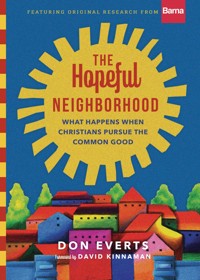
Are you tired of hearing people dismiss the church as an irrelevant relic? (Do you secretly wonder if they are right?) Don Everts explores an exciting reality that is revealed in Scripture, shown throughout history, and confirmed in the latest research: when Christians pursue the common good of the neighborhood, the world stands up and notices. It turns out this is exactly what we're called to do. When Christians make good things, we bring blessings and hope to our local community. With original research from the Barna Group and Lutheran Hour Ministries on how Christians relate to our neighborhoods, this book is filled with constructive, practical ways that Christians and churches bless those around us. As Christians join together for the common good, we bring hope to the world, credibility to the church, and glory to God.
Sie lesen das E-Book in den Legimi-Apps auf:
Seitenzahl: 208
Veröffentlichungsjahr: 2020
Das E-Book (TTS) können Sie hören im Abo „Legimi Premium” in Legimi-Apps auf:
Ähnliche

















To
all the neighbors
God has given me—
past, present, and future
Contents
FOREWORD
David Kinnaman
INTRODUCTION
Living Above Place
1 PURSUE THE COMMON GOOD
The Shared Work of All Humans
2 USE EVERY GIFT
The Process of Blessing Your Neighborhood
3 LOVE EVERYONE ALWAYS
The Power of Grace in Tough Seasons
4 GIVE GOD GLORY
The Joy of Promoting God’s Brand
5 JOIN THE REVOLUTION
The Hope of Uniting Around the Common Good
CONCLUSION
This Little Patch of Ground
ACKNOWLEDGMENTS
APPENDIX 1:Research Partners
APPENDIX 2:Research Methodology
APPENDIX 3:Definitions
NOTES
PRAISE FORHOPEFUL NEIGHBORHOOD
ABOUT THE AUTHOR
OTHER TITLES BY DON EVERTS
MORE TITLES FROM INTERVARSITY PRESS
COPYRIGHT
Foreword
David Kinnaman
President, Barna Group
I know dozens of people in my family and among close friends who will want to read this book—who will be getting this book as a gift from me. (Jeff, for one, you’re welcome.) The Hopeful Neighborhood grapples—in some of the most clear and accessible writing that I’ve yet read—with some of the questions and concerns that I’ve been hearing for years.
Helping Christians to live in natural, normal, and God-honoring ways in our communities is a big challenge in the church today. How do we genuinely demonstrate our faith in Jesus in the places where we live and to the people who live near us? After years of research at Barna Group, I am convinced that getting Christians to have a framework for living their faith locally—for being contributors to a hopeful neighborhood—is not only a challenge but a significant opportunity.
We let a lot of things hinder us in this regard. I believe we are burdened sometimes by the weight of the negative perceptions of Christians. We often live into the stereotypes that sadly we’ve helped to create: hypocritical, judgmental, more concerned about policies than people, sheltered. I’ve written a lot about these kinds of barriers with my friend Gabe Lyons (in books called unChristian and Good Faith). Christians are perceived to be irrelevant (we are unseen and unimportant) or worse, extreme (we are perceived to prioritize the wrong things that bring harm and hate to our communities).
But there is a way to shift those perceptions in a biblical, Christ-honoring way—by being part of a hopeful neighborhood.
Another barrier, which I see in the data all the time, is that churches and pastors are often complicit in keeping Christians churchbound. What I mean is that, for good motives and good reasons, a type of bargain is offered to keep Christians volunteering, serving, and giving in and through the local church. This isn’t all bad; the most resilient kinds of disciples are active and involved in and through their local churches.
Yet the most resilient of Christians are, in addition to their church engagement, also active in the world where God has placed them; they deeply concern themselves with poverty; they work to reverse injustices; they bring their soul with them to their workplaces; they contribute to hopeful neighborhoods.
Finally, the most concerning barrier to loving and serving in the places where we live is fear. We don’t want to say the wrong thing. We don’t want to be known for our frailties and faults. We are afraid of putting something at risk in our own lives—our time, our reputations, our hearts, our priorities. We are not so sure we want to follow a Jesus who asks us to wash others’ feet and get our hands dirty.
Still, the most hopeful neighborhoods are filled with people who believe that perfect love casts out fear. We can be those kinds of Christians, trusting in a God who says he does not traffic in fear but in love, power, and sound minds.
This book does such a beautiful job of preparing us for life on mission with Jesus in the place where we live and with the people who live near us, in our neighborhoods. And my friend Don shares so much of his own journey—he’s lived in thirty neighborhoods! He lovingly, carefully, persuasively guides us through the barriers to engaging and loving our neighbors as Christ calls. I hope you gain as much from the journey as I have.
Introduction
Living Above Place
My family and I live in the Pierremont neighborhood found in the subtle hills west of St. Louis.
When we moved into Pierremont twelve years ago, my wife Wendy and I did what came naturally to us as hospitable former missionary types—we went around to meet our new neighbors. This was mostly a pleasant and casual process until I met my next-door neighbor Michael for the first time.
I saw Michael working on his immaculate yard as I pulled into my driveway a week or so after we moved in. I waved and walked over to introduce myself. We shook hands and exchanged names and pleasantries—but as we did so, Michael got a sort of puzzled expression on his face. I found out why when he looked in my eyes and said, “You know, Don, you’re the first person on this block to ever shake my hand.”
“What?” I replied, “How long have you lived here?”
“Over twenty years,” Michael responded, nodding his head and looking thoughtful.
And thus began a pretty deep forty-five-minute conversation about Michael’s story in particular and about neighbors in general. I began to look at my new neighborhood, Pierremont, differently after that conversation.
Wendy and I continued to do our hospitality thing with vigor: we had neighbor families over for dinner (including Michael and his family), and our driveway and double garage became a knockabout area for our own kids and all the neighborhood kids as well. In the midst of all the good of Pierremont (Halloween is like one big block party) and all the bad of Pierremont (smoldering feuds between neighbors are not pretty), I remained saddened that someone could go decades in this neighborhood with no neighbor coming over to shake their hand. And I remained convicted that as for me and my family, we were going to be a blessing in our neighborhood.
Then something unexpected happened.
We began to disengage from our neighborhood. This wasn’t a purposeful or quick thing. It’s just that slowly, over time, we became more absorbed in our church and our jobs and our kids’ activities, which increasingly had little or nothing to do with Pierremont. I didn’t know it at the time or even have the language to describe it, but Wendy, our kids, and I were increasingly “living above place”—living our lives relatively detached from the place and people right around our home.
It turns out this is an increasingly common experience.1 But it took a cross-country trip and a great novel to help me realize it was happening with us, and to begin to wonder whether I was okay with that.
Swarmed in a Hay Maze
The trip was to Franklin, Tennessee. I went there to attend a funky little Christian conference called Hutchmoot. The novel was Jayber Crow, a rural tale written by Christian farmer and essayist Wendell Berry. I bought the novel at the conference bookstore and snuck away to a nearby hay maze during a break to get a little reading time and some needed solitude.
I was sitting on a dilapidated lawn chair in the exact center of the hay maze when I began reading this story of town barber Jayber Crow and his relationship to the place and people around him—the fictional river town of Port William, Kentucky. Berry’s novel is a vehicle for him to express his deep, human, Christian convictions about the importance of our relationship to the place and people around us.
Sitting in the middle of that hay maze I realized how hungry I was for just that. Berry’s rich description of Jayber’s steady connection to the place and people around him (Berry calls this web of interconnectedness “the membership”) made me realize how disconnected I had become from the place and people around me—my Pierremont neighborhood.
The membership: all the interconnected and interdependent parts of a place, including the people, the land, and all the creatures.
Sitting in that hay maze I began to realize how Wendy, the kids, and I had begun “living above place,” and I wasn’t sure how I felt about that. What Berry was describing in the novel felt so right to me, both as a human and as a Christian. And how I was living felt a bit wrong. As I sat in that fraying lawn chair, questions began to invade the hay maze like a swarm of locusts:
Was Berry being overly idealistic?Is it even possible to experience “the membership” in a subdivision?When Jesus said “love your neighbor,” did that include our literal neighbors?Did God create humans to be in relationship with the place and people around them?Did God call his people to relate to the place and people around them in a certain way?Should Wendy and the kids and I move to a small river town in Kentucky?Did this neighborly instinct get stunted in me because I moved so much when I was growing up?Is commuting evil?What does Jesus think about me and my neighborhood?Can you reengage with neighbors after mostly ignoring them for years?Is there anyone else in Pierremont who hasn’t had their hand shaken?These swarming questions were wonderful and heady and pesky and annoying all at the same time. I swatted them away like I would any buzzing summer insect. But here’s the thing: when I walked out of the hay maze, those questions followed me. They kept buzzing around my head, pesky and fascinating and persistent. They followed me on that long drive home back to my house in the slightly hilly subdivision west of St. Louis called Pierremont.
Looking for Answers
And thus began a journey for me. This journey was fueled by a profound curiosity: As Christians how should we interact with the place and people around us? What kind of relationship should we have with our neighborhoods?
This journey involved a fair amount of study. I dove into all parts of the Scriptures, into the pages of church history, into the writings of thoughtful Christians in topics like community development and urbanism and sociology and theology and mission and evangelism and farming and ecology. These various areas of study got me into all sorts of helpful conversations with experts and friends, family members and colleagues.
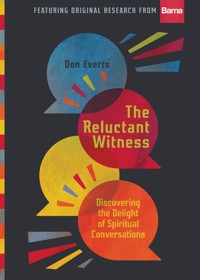
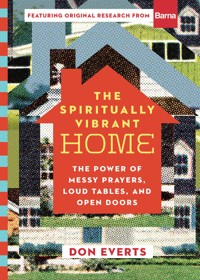
This journey also involved brand new research. I’ve had the privilege of working with sharp, thoughtful Christians at Lutheran Hour Ministries and the Barna Group in doing new research on a different important topic each year for the last few years. First, we researched the important topic of spiritual conversations, exploring how to winsomely and fruitfully share the good news of Jesus in conversation with others. (To find out what we learned, see my book The Reluctant Witness.2)In year two we pulled out from individuals to study whole households of faith, exploring how the Christian faith is nurtured and passed on within our homes. (Check out The Spiritually Vibrant Home to explore what we learned.3)
Over this last year we pulled out from households to research the relationship between Christians and their neighborhoods. In this third study we asked, How do Christians relate to the place and people around them, and How are Christians perceived by their neighbors? (The major statistical findings of this research can be found in our monograph for leaders, Better Together: How Christians Can Be a Welcome Influence in Their Neighborhoods.4) This third year of research rests on and presumes the findings from the first two years of research where we explored the importance of spiritual conversations and our households. In the same way, my own neighborhood journey may have been sparked at that hay maze, but it has been informed and shaped, in important ways, by what these first two research studies taught me about sharing my faith in conversation and nurturing the faith in my household.
Nomads and Neighborhoods
But my own journey didn’t end with study and research alone, it has also involved a deep season of introspection. The question sounds simple enough: How should Christians relate to the place and people around them? But this isn’t a theoretical question, it cuts to the heart of the story of my own life.
As I reflect on my own life story I feel simultaneously that I am the last person who should be bringing these research findings to light and that maybe my own story qualifies me in unique ways to do just that.
On the one hand, I don’t have deep roots in any neighborhood. I’ve lived a relatively nomadic life: living in eleven different neighborhoods while growing up and another twelve as an adult. The longest I’ve spent in any one neighborhood is the twelve years I’ve lived in Pierremont. I just haven’t experienced the long haul in any one neighborhood like Jayber Crow experienced in Port William. In other words, I’m no neighborhood expert.
Neighborhood: “the place where you live and sleep—it could be your block or the square mile where you live. It may or may not have a name.”5
On the other hand, I have experienced many different neighborhoods. I’ve lived in ten houses, six apartment complexes, three duplexes, two dorm rooms, one condo, and a trailer. I did the math and discovered I’ve lived in twenty-three different neighborhoods. Throw in seven other neighborhoods where I spent entire summers and I’ve gotten to live in thirty distinct neighborhoods during my life: some rural, some urban, some suburban. So perhaps I do have a type of neighborhood expertise.
At the very least, I can honestly say I have been personally wrestling with the very topic I and my partners have been studying and researching. Along the way I’ve been surprised by what I have read in the Bible (a book I like to think I’m fairly well acquainted with) and encouraged by the research (it turns out people want to make a difference in their neighborhoods and are looking for help in figuring out how to do that).
I’ve become increasingly convinced that significant hope is on the horizon for Christians and their neighborhoods throughout our country. It seems to me that in a day of isolation and loneliness, a simple path to relationship lies right in front of us. In a day of division, a path to unity lies right in front of us. And in a day when Christians and the church are being dismissed as irrelevant, a path to relevance lies right in front of us.
There is nothing new about this path, of course. Based on what is revealed in God’s Word and shown throughout church history I believe it is an ancient path that God is calling us to take: to pursue the common good of the place and people around us. And that’s exactly what this book is about.
The Hopeful Neighborhood
In chapter one, “Pursue the Common Good,” we will explore what is so exciting (and important) about Christians pursuing this thing called “the common good” of their neighborhood. What does the Bible have to say about the common good, and what has that meant for God’s people throughout history?
In chapter two, “Use Every Gift,” we will explore a simple but revolutionary process for pursuing the common good that has always been right there in God’s Word, even though we often default to a quite different (fairly unhealthy) process.
When God’s people are living through difficult times they are most tempted to isolate themselves from their neighbors, but their pursuit of the common good can be the most revolutionary and powerful. In chapter three, “Love Everyone Always,” we will look at this historical trend and practical implications for our current season.
Inevitably, any exploration of Christians’ pursuit of the common good must come around to spiritual matters. It’s one thing to love a neighbor with art or a conversation or a meal, but what about their spiritual needs? In this matter the Bible and history are unambiguous: Christians’ good works in their neighborhoods bring glory to God. We explore these joyful dynamics in chapter four, “Give God Glory.”
Finally, in chapter five, “Join the Revolution,” we’ll take a careful look at how important networks are in our pursuit of the common good. It turns out God has called us to such a grand mission that there’s no option but to partner with others in accomplishing it.
A Path to Hope
This is the path that The Hopeful Neighborhood will take you on. Along the way you will encounter lots of Scripture, stories of everyday Christians from hundreds of years ago and today, and brand new research from the Barna Group. You’ll also find some fiction, reflection and discussion questions, stories from my own life, and immediate practical steps—creative elements to help us not just learn something new but contemplate (and maybe even act on) what we are learning.
And so if you are tired of “living above place” and find yourself hungry for a more grounded and integrated life, keep reading. You may find that there is a way to bring the disparate pieces of your life together, no matter how long you’ve lived in your neighborhood.
If you are tired of the culture wars and find yourself hungry for a more kind and respectful way of influencing the world around you, keep reading. You may find that there is a more loving and effective way to change culture.
If you are tired of the church being dismissed as irrelevant and find yourself hungry for a compelling, attractive Christian presence in our country, keep reading. You may find that this ancient path can take the church back to the center of your community.
If you are tired of a consumer-oriented faith and find yourself hungry to create and bless and use the gifts God has given you to help others, keep reading. You may find that God has equipped every one of us with powerful gifts that are key to our neighborhoods.
If you are tired of being isolated in a Christian holy huddle and find yourself hungry for more real relationships with non-Christians, keep reading. You may find that you and your non-Christian neighbors have more in common than you think.
And if you are tired of despair, if you are tired of gloomy culture watchers who lament how the cause of Christianity is on an unrelenting downward spiral and find yourself hungry for some good news, keep reading. You may encounter what I have encountered during this journey: hope.
Hope is, after all, our birthright as followers of Jesus—no matter what neighborhood we live in.
1
Pursue the Common Good
The Shared Work of All Humans
The LORD God took the man and put him in the garden of Eden to work it and keep it.
Genesis 2:15
I was living in an apartment complex on the outskirts of Knoxville, Tennessee, when I first felt the weight of our common humanity. I was in first grade and the events of a single month in our apartment complex confronted my young heart with both the joys and horrors of our shared humanity.
First grade was a time of important firsts for me: I was introduced to Fruit Stripe gum and Star Wars action figures and the ins and outs of papier-mâché. But the whole common humanity realization (at least the joyful part) was triggered by an invitation from my teacher, Mrs. Love. She knew that one of the girls in my class lived in the same apartment complex that I did. She also knew (I realize in retrospect) that I was struggling to make friends in class and that my classmate was struggling with her reading. And so, the invitation: Would we spend an hour reading together when we got home from school each day?
And that’s exactly what we did. It felt as right as rain to sit together after school and take turns reading out loud from the same book. My older brother and sister sometimes lingered in the living room to hear the stories too. And not only did I enjoy reading and making a friend, but after a few weeks of this we got an unforgettable reminder of how important this kind of partnership was.
I remember Mrs. Love got everyone’s attention in class for “an important lesson,” having us all sit crisscross applesauce on the large classroom rug. The gist of her lesson: we are all in this together. Mrs. Love told us that we first graders were here to have fun and learn as a class. We were like a team. We were partners. And then she told everyone about my new friend’s and my afterschool reading partnership, and then (I could hardly believe what was happening) she invited my neighbor and me to visit the Treasure Box!
Mrs. Love kept a Treasure Box behind her desk, which was filled with all manner of toys and treats and delights. That Treasure Box occupied a special place in our first-grade minds. And that morning Mrs. Love underscored the joy of partnering together by inviting my new friend and me to each choose one item from the famed Treasure Box. This was my first visit to the Treasure Box, and the lesson was indelibly marked on my young heart: we’re all in this together. And that is something worth celebrating.
But then the horror part came. A couple of weeks later the news flew through the apartment complex: a young girl’s body had been found in one of the dumpsters in the parking lot. It was not my reading buddy. But it was unmistakably one of us—another student, surely someone’s classmate and partner.
I was so confused. I thought we were all in this together? Why would someone put one of us in the dumpster? I’m not sure I completely understood the death part of the situation (let alone the implications about murder) because I remember empathizing with the young girl, wondering what it must have felt like to be thrown away. How uncomfortable it must have been to lie with all the garbage in one of those stinky dumpsters in the parking lot. I was devastated.
This lesson, too, was indelibly marked on my young heart: we’re all in this together. And sometimes that is a weighty thing. Both the joy and the horror taught me, even in first grade, that I was a part of the human classroom, the partnership of humanity. I learned we were all in this together, and in both joyful and horrible ways that just felt right.
Of course, as I grew older I would feel the temptation to treat people like others and feel the small rush and petty elevation that came from treating other people like trash. But when I eventually got around to studying what the Bible has to say about the making of the human classroom, I discovered that Mrs. Love had been right back in first grade. We humans are all in this together, created as partners in a shared work.
Beautifully Created to Pursue the Common Good
The opening chapters of the Bible, which are all about the creation of earth and humanity and all that is, are unambiguous: all humans are created by God. God is the source of all life on earth, including all humans. There is only one Creator, and therefore all humans are fellow creations.
This much is commonly known. But when you spend unhurried time hanging out in the first pages of the Bible, you are likely to stumble upon a surprising fact of life in the Garden of Eden that has always been staring us in the face: humans were given work to do. As we read in Genesis: “The Lord God took the man and put him in the garden of Eden to work it and keep it” (Genesis 2:15).
The wording here implies that the land needed someone to cultivate it for it to be useful and habitable.1 “Gardens cannot look after themselves; they are not self-perpetuating.”2 Rather, they need someone to work them and keep them. These are interesting words used to characterize our shared human work.
First, God placed humans here on earth to work the land where we are standing. The Hebrew here literally means to “serve” the land, implying that we humans are designed to serve the place where we live, not be served by it.3 Second, humans are created to “keep” the place around us. This Hebrew word is rich in meaning, signifying “to take care of something” or even “to exercise great care” over something.4
Humans, the Bible tells us, are placed here on earth to serve and care for the place around us. This is humanity’s creation mandate.5




