


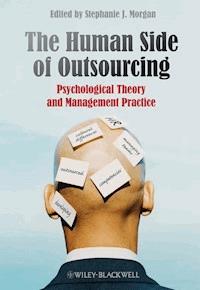
The Human Side of Outsourcing E-Book
68,99 €
Mehr erfahren.
- Herausgeber: John Wiley & Sons
- Kategorie: Geisteswissenschaft
- Sprache: Englisch
Outsourcing is now a strategic choice for many companies and a continuing issue for managers and consultants. The transfer, negotiation and ongoing management of outsourced contracts all demand a great deal of people management. Yet, while the implications for those directly affected may be numerous and wide-ranging, very little has been written on how to sensitively and successfully manage the transfer of such individuals – along with the emotional needs of those left behind.
This book considers The Human Side of Outsourcing, integrating theory and practice to offer state-of-the-art advice for those responsible for implementation in the field along with insightful analysis for researchers and students of work psychology. Examining problems and solutions from employee and employer perspectives, Stephanie J. Morgan provides an in-depth study of the psychological theory, management practice and level and type of support required to engage staff and improve outcomes. Real-world case studies illustrate all the key issues involved, along with their implications for HR, line management, organizational performance and employees themselves.
Sie lesen das E-Book in den Legimi-Apps auf:
Seitenzahl: 644
Veröffentlichungsjahr: 2012
Ähnliche




















Contents
Cover
Half Title page
Title page
Copyright page
Dedication
List of Figures and Tables
List of Contributors
Foreword
Preface
Acknowledgements
Part I: Outsourcing in Practice
Chapter 1: Introduction
References
Chapter 2: The Client Side – Retained Organization
Introduction
The Issue
Planning the ‘Deal’
Transition
Managing the Deal
So How Key Are the People?
Exiting/Renewal
So Why Insource?
So Where Do All the People Come From?
Postscript on Early Termination
Chapter 3: Outsourcing – A Provider’s Tale
Introduction
Private and Public Sector Outsourcing
Managing People Changes
The Importance of Transition Management
Culture Change and Employee Engagement
The Management of Change in the Employment Relationship and Organization of Work
The Hard Facts – Public to Private Terms and Conditions of Employment (UK)
Impact of Contract Length
Outsourcing versus Acquisitions
Implications in Practice
Further Information
Chapter 4: Sourcing for Outsourcing
Introduction and Background
Outsourcing and Recruitment
The People and Skill Requirements
Resource Management
Education and Training
Growth Areas and Trends
Considering Outsourcing as a Career?
Conclusion – Golden Rules of Recruitment
Chapter 5: Experiencing Cultures: An Automotive Engineer in the Middle Kingdom – Lessons in Life
Introduction
Outline
Outsourcing into China
Technical Problems and Quality Tools
Support for Those in Territory – the Role of Personnel
Cultural Differences – General
Cultural Differences and ‘Agreements’ – Business
Terminal Disease and Preventive Medicine
The Concept of ‘Face’
Politics
Summary
Part II: Theory and Evidence
Chapter 6: Introduction to Theory and Evidence
Downsizing and Mergers
Work Transitions
Organizational Socialization
Organizational Commitment
Organizational Identification
The Psychological Contract
Organizational Justice
References
Chapter 7: The Context and Narrative of Outsourcing
Introduction
Do People Matter at All?
The Context of Outsourcing
Outsourcing as Localized Practice
Rational Management
The Closed Narrative of Outsourcing
The Currency of Power
The Ownership of Competence
Rhetoric in Use
A Discourse of Exclusion
The Politics of Cost
The Capture of Value
The Asset Management of People
Disciplinary HR and the Management of Resistance
The Full Circle
References
Chapter 8: Cultural Differences in Outsourcing
Introduction
What Is Meant by Culture?
Overview of the Impact of Culture Types on Outsourcing
What Is the Definition of Success in the Context of Culture, Outsourcing and Business?
The Different Dimensions of Outsourcing – a Model
Conclusion
References
Chapter 9: Establishing Trust in Virtual Teams
Introduction
What Is a Virtual Team?
The Relevance of Virtual Teams for Outsourcing
The Challenges of Working in a Virtual Project Team
The Importance of Establishing Trust in Virtual Teams
Five Viewpoints on Trust
Introduction to the Research
Trust Strategies
A Two-Stage Process for Establishing Trust
Discussion of the Two-Stage Process
Some Limitations of This Research
Some Unanswered Questions About Stage One
The Implications for Managers
References
Further Reading
Chapter 10: Knowledge Transfer and Knowledge Sharing
Conclusion
References
Chapter 11: The Experience of Outsourcing Transfers – A Life-Cycle Approach
Introduction
The Forms of Outsourcing
The Rationale for Outsourcing
The Hidden Costs in the Life Cycle
Life-Cycle Stages in Outsourcing
The Outsourcing Stage: Scoping
The Outsourcing Stage: Preparation
The Outsourcing Stage: Negotiation and Selection
The Outsourcing Stage: Transition
The Outsourcing Stage: Maturity
The Outsourcing Stage: Re-Scoping
Conclusion
References
Chapter 12: Downsizing, Stress and Forgiveness: A US Perspective
Introduction
Being Downsized
Understanding the Individual’s Experience
Downsizing: A Historical View
Negative Health Outcomes
Terminology
Non-Specificity
Adaptation Energy as Finite
Good versus Bad Stress
Status of the Theory
Stress, Coping and Personality Variables
Interventions
Forgiveness
Positive Psychology
An Organizational Perspective
Conclusion
Acknowledgement
References
Secondary References
Chapter 13: Transitioning and the Psychological Contract
The Psychological Contract and Expectations
Expectations of NewCo
Promises
Conclusion
References
Chapter 14: Conclusion: Towards a Model of Responses to Outsourcing
Introduction
Events Influencing Attachment
Problems with Transition Models
Elsbach’s Expanded Model
Structuration Model of Identification
Additional Concepts
Towards a Process Model of Identification in Outsourcing
Form and Target of Identification Initial Transition Phase
Summary
Conclusion
References
Index
The Human Side of Outsourcing
This edition first published 2009© 2009 John Wiley & Sons Ltd.
Wiley-Blackwell is an imprint of John Wiley & Sons, formed by the merger of Wiley’s global Scientific, Technical, and Medical business with Blackwell Publishing.
Registered OfficeJohn Wiley & Sons Ltd, The Atrium, Southern Gate, Chichester, West Sussex, PO19 8SQ, UK
Editorial OfficesThe Atrium, Southern Gate, Chichester, West Sussex, PO19 8SQ, UK9600 Garsington Road, Oxford, OX4 2DQ, UK350 Main Street, Malden, MA 02148-5020, USA
For details of our global editorial offices, for customer services, and for information about how to apply for permission to reuse the copyright material in this book please see our website at www.wiley.com/wiley-blackwell.
The right of the editor to be identified as the editor of this work has been asserted in accordance with the Copyright, Designs and Patents Act 1988.
All rights reserved. No part of this publication may be reproduced, stored in a retrieval system, or transmitted, in any form or by any means, electronic, mechanical, photocopying, recording or otherwise, except as permitted by the UK Copyright, Designs and Patents Act 1988, without the prior permission of the publisher.
Wiley also publishes its books in a variety of electronic formats. Some content that appears in print may not be available in electronic books.
Designations used by companies to distinguish their products are often claimed as trademarks. All brand names and product names used in this book are trade names, service marks, trademarks or registered trademarks of their respective owners. The publisher is not associated with any product or vendor mentioned in this book. This publication is designed to provide accurate and authoritative information in regard to the subject matter covered. It is sold on the understanding that the publisher is not engaged in rendering professional services. If professional advice or other expert assistance is required, the services of a competent professional should be sought.
Library of Congress Cataloging-in-Publication Data
The human side of outsourcing: psychological theory and management practice / edited by Stephanie J. Morgan.p. cm.Includes bibliographical references and index.ISBN 978-0-470-71870-4 (cloth)1. Contracting out. 2. Contracting out–Management. 3. Personnel management.I. Morgan, Stephanie J.HD2365.H86 2009658.4′058–dc222009019205
A catalogue record for this book is available from the British Library.
Dedication
To my husband Roy and daughter Elizabeth – your love and support make all things possible.
List of Figures and Tables
Figure
Figure 1.1 Ouetsourcing types
Figure 11.1 Life-cycle stages
Figure 11.2 People life cycle
Figure 14.1 Process model of identification in outsourcing
Tables
Table 4.1 Skill requirement by contract stage
Table 8.1 Selected cultural dimensions and potential areas of impact
Table 8.2 Outsourcing supplier performance and likely impact on organizational culture
Table 8.3 High-level outsourcing/cultural differences impact model
Table 9.1 Interviewee roles, businesses and work locations
Table 9.2 Key characteristics of the two-stage process for establishing trust
List of Contributors
Jan Aylsworth
Jan has more than 20 years’ experience as a corporate communications writer-consultant and freelance journalist. She holds a B.S. in English, resides in Evansville, Indiana in the U.S.A., and is currently pursuing a master’s in organizational psychology through the University of London’s Birkbeck College. Her long-term goals are to help bridge the academic–practitioner divide by conducting theory- and evidence-informed small-group workshops that address career guidance at the individual and group levels of analysis. Her organizational psychology interests include downsizing, work and personality variables, career theory, social capital and reciprocity, and networking. She welcomes correspondence at [email protected].
Richard Blakeley
Richard has a BA (Hons) in Politics and Mdip in Organizational Behaviour. Recently appointed as Learning and Skills Policy Officer at the Trades Union Congress, he has several years of experience as a researcher working for the finance sector trade union, UNIFI (now part of UNITE), taking a particular interest in workforce development policy. Richard has also worked in local government during major restructuring and change programmes and has been actively involved in a number of projects to improve people management practices. Richard can be contacted on [email protected].
Irvine Caplan
Irvine has been a Director of the National Outsourcing Association for three years, with special responsibility for end users. Irvine is an economist by training, and professional Treasurer – a Fellow of the Association of Corporate Treasurers. With a professional career spanning over 30 years, he has worked in government (quangos), public and private sector organizations, and engaged in many aspects of commercial sourcing. Most recently with Royal Mail Group, and now working as an independent outsourcing advisor, Irvine has seen outsourcing from at least four sides as an end user: reviewing outsourcing business cases; contract managing, for 3½ years, what in 2003 was then the largest-ever IT outsourcing in Europe; vendor management; and managing a small RM subsidiary business totally dependent on outsourced services. Irvine can be contacted by email on [email protected].
Brigitte Cobb
Brigitte has many years’ experience helping organizations deliver major transformation programmes and has consulted on or managed the delivery of a variety of approaches to business transformation, including multi-tower shared services, outsourcing, process standardization and re-engineering, technology and culture change. Brigitte has a PGDip in Change Management, lectures on the MSc in Change and Consultancy at Birkbeck College and has done research on the successful management of organizational change. She is a practitioner of NLP and also works as an Executive Coach to managers charged with delivering transformation programmes. Brigitte can be contacted on [email protected].
Simone Hemingway
Simone has a BSc (Hons) First Class in Business Studies and an MSc in Organizational Behaviour from Birkbeck College, University of London. She has significant experience as a senior HR professional in a number of private sector organizations within healthcare, transport, banking, telecommunications, asset management and logistics, both in the UK and internationally. Over the past 10 years she has spent the majority of her career managing large-scale organizational change programmes, in particular involving outsourcing, offshoring and business restructuring. Most recently she has led on a number of major outsourcing contracts both as outsourcing provider for public sector services at Serco and from within the client organization at Barclays Bank. Now working within the private healthcare sector, Simone has more recently been involved in the acquisition and merger of two private equity owned providers of diagnostic imaging services in the UK as well as a number of smaller outsourcing contracts. Simone can be contacted via email at [email protected].
Royston Morgan
Royston has a BSc in Operations Research, MSc in Industrial Engineering, MBA in Technology Management, and an MA in the Management of Change in the Public Sector. He has many years’ experience in programme management and consultancy for a range of organizations, both public and private. This includes the Ministry of Defence, the National Health Service, the Royal Navy and many blue-chip companies. He has carried out research in technology change and business modelling and has developed the Crosslight cost-reduction programme, saving companies substantial sums whilst improving operations. Roy has written chapters and e- publications about outsourcing and on cost reduction. Roy can be contacted on [email protected] for consultancy and advice.
Stephanie J. Morgan
Stephanie has a BSc in Psychology, MSc in Organizational Behaviour and a PhD in Occupational Psychology, from Birkbeck, University of London. She is a Principal Lecturer at Kingston University Business School where she is Course Director for the Leadership & Management in Health programme. She also holds director positions at Crosslight Management Ltd and Decision Dimensions Ltd, and has worked as a non-executive director in both primary and secondary care NHS Trusts. A chartered psychologist, she consults and researches on various aspects of work, including outsourcing, staff motivation, technology-related change, and managing diversity. Stephanie’s early career was in the IT industry, and she has many years’ experience as a manager and consultant, including a number of international assignments. She has published in both academic and practitioner journals and has presented at a range of conferences. She can be contacted by email on [email protected] or [email protected].
Ian Pogson
Ian is married with three children and lives in Bromsgrove, Worcestershire. He is a Chartered Automotive Engineer who began his career in 1980 as a Graduate Trainee for Land Rover. He worked in many different senior roles in Competitor Analysis, Technical Research, Manufacturing Process Engineering, Logistics, Quality Improvement and Programme Management. As part of MG Rover’s last-ditch attempt to court an international partner, Ian worked in Shanghai, PRC, from the start of January 2005 to redundancy upon the collapse of MG Rover in April that year. He returned to work and live there over a one-year period from June 2005 to 2006, continuing as he does to work for SAIC in the UK Technical Centre. He liaises and trains Chinese engineers as part of his day-to-day responsibilities and used this to create the material in this book. Ian can be contacted on 07966 430 806 or [email protected] for copies of his own book Carry On Car-making, Life in China after Longbridge, published by Brewin, ISBN 978-1-85858-409-6, and for public lectures on living and working in China and the new TF.
Alex Watts
Alex has a BSc in Psychology and is working towards an MSc in Occupational Psychology from Birkbeck College, London. He has 25 years’ experience as an IT developer, tester and project manager and has worked as a consultant for a wide variety of organizations in both the public and private sectors and both the UK and the USA. Alex has published several technical IT articles in the past but this is his first management publication. His main academic interest is team dynamics, especially the areas of trust, empowerment, employee engagement and informal working practices. Alex can be contacted at [email protected].
Yvonne Williams
Yvonne is Managing Director, MDA – Executive Resourcing and Individual Training Director, National Outsourcing Association (NOA). Yvonne has worked in the recruitment industry for over 20 years and specializes in Human Talent Management and Acquisition. She has worked for a number of industry leaders and owned her own executive search firm. Highly experienced in technology, telecoms, outsourcing, professional services and finance, Yvonne has worked across most disciplines and recruited to CEO level and for board appointments. She has extensive experience of helping organizations to plan and manage their human capital resources, a vital component to the success of an outsourcing programme. An accredited fellow of the Independent Institute for Business, Yvonne has also stood for parliament, and served as a County Councillor in Surrey. She can be contacted on [email protected].
Foreword
Martyn Hart
Chairman, National Outsourcing Association
Outsourcing is often seen as difficult, prone to failure and vilified by the press, yet outsourcing goes from strength to strength; a growing number of people, organizations and countries embrace it; and it seems to bring many benefits wider than the simple one of a project well done.
In my mind there are only three ways of achieving a goal: do it yourself, do it along with someone else or let someone else do it for you. The complexity and difficulty grows as you move from left to right from DIY, through shared services to full outsourcing, and as you go vertically from a simple infrastructure to a complex full-blown business process. I can imagine a consultant’s 2 × 2 matrix, showing that the hardest part is the top right-hand corner, complex full-blown business process being fully outsourced!
But the continued growth of outsourcing demonstrates its maturity; now, areas that only a few years ago that were seen as ‘risky’ or ‘novel’ such as HR & Financial outsourcing are commonplace. But to reach true maturity outsourcing must now consider the most complex component of all: people!
If, like me, you think of outsourcing as a business practice, maybe the most challenging of all, you will recognize the importance of people in any business and this is where Stephanie Morgan’s book scores, as the people side has had the least exposure and research, until now. It is really a pace setter, as she sets out to combine and explain academic theory plus sections from eminent practitioners from the top of the outsourcing community (some are NOA members, of course!).
So you can’t really expect to understand how outsourcing will affect you or your customers until you understand its effects on people, from the customer side in terms of loss of control, to the staff transferred, or those expected to work with you in terms of establishing trust. This book doesn’t give prescriptions, it gives you the context in which you can choose the way forward, based on excellent academic references and the experience of its contributors. You will know why you are taking a direction and with these guides at your hand you can confidently approach situations and ensure that you will be able to operate at the very top right hand corner of that 2 × 2 matrix or scale business processes’ own Mount Everest!
I commend this book. It is easily accessible, each chapter could stand on its own, 300-plus pages might seem a lot, but think of them as 300 gold-plated references and a stepping stone for your future!
Martyn HartChairman, National Outsourcing AssociationWardour Street, London, 2009www.noa.co.uk
Preface
An outsourcing poem:
Sea saw Marjorie daw
Johnnie’s to have a new master
We don’t know
Where he’ll go
But we’ll come tumbling after!
In the 10 years that I have been carrying out research on outsourcing, the industry has grown substantially yet still little attention is paid to the people who make outsourcing happen – the men and women who are transferred from their chosen organization to a company chosen by their ‘Masters’. My interest in this aspect of outsourcing started whilst carrying out research on subcontracting. I found that a number of the staff interviewed had joined their current organization through an outsourcing transfer, and it was clear that this process had affected them deeply. Since then, I have carried out research on a range of people experiencing outsourcing transfers, and broadened this out to assess other human factors for those involved in most types of outsourcing. Questions around how outsourcing can be most effective, how staff experience transfers, how outsourcing negotiations ‘work’, whether cultural differences impact on outsourcing, how disparate teams from possibly multiple organizations work together, what type of people one should employ in outsourcing deals, and how one should develop the staff that stay behind, are all of interest to me and at least some of them are addressed in this book.
We also consider the issues that arise from more general forms of outsourcing, including offshoring and nearshoring, when staff transfers are not the issue, but people still make or break the contracts. Although HR is mentioned in a number of places, this book is not just for HR people, but for all those involved with negotiating, managing and developing outsourced processes.
Stephanie J. Morgan
Acknowledgements
The initial research for some of the chapters in this book was carried out under ESRC grant number R42200024292. I will always be grateful to Dr Gillian Symon at Birkbeck College, University of London for her supervision and support during those early years. Some aspects of my early research have been published in books and journals, all of which are acknowledged throughout. However, for this book, everything has been looked at with fresh eyes; this is the first time all of these areas have been brought together, and much of the research discussed has been carried out post these publications. Furthermore, I am extremely lucky to have been joined in this enterprise by the chapter authors, each of whom has brought their own research and/or practice to bear. We all wish to thank the people who took part in our research, giving up time to give interviews or fill in surveys. Finally, I would like to thank Professor Ruth Taplin, director of the Centre for Japanese and East Asian Studies, for asking me to write for her own book Outsourcing and Human Resource Management: An International Survey (2008, Routledge), which made me realize how little had been written on the broad subject of the psychological aspects of outsourcing.
Part I
Outsourcing in Practice
Chapter 1
Introduction
Stephanie J. Morgan
Outsourcing, however defined, is big business. Globally the outsourcing market was said to be around 1,500 billion US dollars for 2009. At the time of writing we are unsure of how long or how deep the current recession will be, yet many outsourcing organizations suggest that this ‘credit crunch’ will lead to a further increase in outsourcing as companies strive to achieve cost reductions. Views on the impact of this recession on outsourcing are mixed, with some suggesting an increase in bringing work back in-house and others arguing for an increase in offshoring. New locations, particularly in IT outsourcing, are likely to become popular,1 with all the issues that can arise with understanding cultural differences. All seem to agree that costs will drive the business decisions but that efficiency will be crucial. Yet we will argue that it is the human aspects that can make a difference to success or failure in outsourcing. As with all business processes, outsourcing depends on people to make it work, yet it is these people that receive the least attention when outsourcing deals are struck.
In this introduction I will outline the range of outsourcing contracts and some of the issues involved for people management. I will explain the rationale for this book and then introduce the chapters in Part I, emphasizing their contribution to our understanding of management practice. A brief overview of Part II will also be given, although this section also includes a separate introduction where a broad range of theory is outlined. Overall, this book focuses on the importance of human behaviour and relationships in outsourcing contracts, an aspect which in our view is not given sufficient consideration in current publications. Many books and articles have been written about the high-level decision-making processes, selecting suppliers and contractual aspects, but very few consider the relationships between people that make these happen, or the perspective of those whose jobs and careers are affected. Brown and Wilson (2005) do include a guide to an outsourcing career and tips for outsourcing entrepreneurs; however, these are aimed only at very senior managers – far more people are affected at the lower levels, and all are vital to the success of the contract.
The term outsourcing is used very broadly, often to refer to processes that would previously have been termed subcontracting; for example, Bartel, Lach, and Sicherman (2008) define it as ‘the contracting out of activities to subcontractors outside the firm’ (2008, p.1). For some researchers, a crucial point is whether the work would have been done internally before outsourcing (Domberger, 1998). Outsourcing is a particular form of externalization of employment, and in many cases involves an outside contractor taking over an in-house function (Purcell & Purcell, 1998). A broad range of activities have been transferred in this way, including catering, cleaning, and security, often termed ‘secondary’ or ‘non-core’ functions. However, professional services have also increasingly been outsourced, with IT being a large part of the market, with finance, HR and increasingly complex activities such as business process outsourcing (BPO) and knowledge process outsourcing (KPO) coming to the fore. Outsourcing is also very different from insourcing, when contractors are used to assist with work, for example supplementing internal capacity (although some of the people issues remain, we would argue that they are less problematic). Offshoring is also a major trend, as business processes, especially call-centric services, are handed over to organizations operating from parts of the world that enjoy a labour cost advantage over the local workforce. A range of risks specific to offshoring have been identified (e.g. Kliem, 2004) but although cultural differences are highlighted, they are rarely discussed in detail. Nakatsu and Iacovou (2009) found that language and cultural differences, along with lack of business or technical know-how by the offshoring team, were key risk factors in offshoring versus domestic outsourcing; again, these are all linked to the human aspects. Finally, as the market is maturing, the concept of back-sourcing (or re-sourcing) internal organizations must be considered, as more companies see the need to bring people and processes back under their control. Logan (2008) suggests that 25–30 per cent of outsourcing deals are brought back in-house, indicating a real need to understand the experience of staff in these circumstances. Figure 1.1 gives an overview of the different main forms of outsourcing. With these multiple aspects of outsourcing, most of which require people to be moved back and forth between different companies, no wonder there are some issues to be resolved.
Figure 1.1 Outsourcing types
Furthermore, contracts are becoming increasingly complex, with multisourcing, nearshoring, and other new variants arising. Although many of the clients are in the US and UK, the global nature of the outsourcing business is an important feature. India is well known for call centres but as the economy develops they are shifting to the higher end (e.g. BPO) where they can. China is moving out to ‘cheaper’ parts of China itself. Some suggest that organizations will become completely ‘virtual’, relying totally on a spread of outsourcing contracts to complete their business. In the public sector in particular, these changes raise issues around interoperability (sharing and integration of information and business processes), and, again, people are crucial to the sharing of information required (see Gottschalk, 2009).
All of this has implications for the people involved. There are issues of language, culture, legal and ethical differences that will need to be explored. There is increasing evidence that, particularly with transfers and outsourcing-related downsizing, the very health of staff can be affected (Gustafsson & Saksvik, 2005). My own research indicates that there can be a range of concerns for staff involved in transfers that may require understanding during career counselling (Morgan & Symon, 2006) and problems of anxiety linked to feelings of injustice and low engagement (Morgan, 2007). While the world of outsourcing contracts is likely to have changed even by the time this book is published, with new concepts and approaches likely, the basic people management principles will remain as important as ever. I hope that, thanks to this book, they may be better understood.
A wide range of stakeholders are involved, suppliers and clients, senior directors, managers, team leaders and staff. Lacity and Willcocks (2000) discuss the complexities of these relationships and warn against underestimating the importance of the staff aspects. A variety of departments should participate at all stages (including but not restricted to procurement and HR), which is good practice but again increases complexity.
All of these activities demand a new balance of skills. These include contractual and commercial understanding, coordination and control of suppliers, change management and strategic planning. These are all skills that can take a long time to develop, and are not easily found in organizations, particularly amongst staff who were previously running a department that has just been outsourced.
In situations where staff have been transferred to another organization, there is evidence that the anxiety and lack of control felt by the staff can lead to very low levels of morale and commitment and, related to this, reduced performance. This is not purely linked to job insecurity (indeed, for some, the only consolation is that they still have a job, although downsizing is often a factor in outsourcing transfers). The psychological stress caused by being out of control of the situation and the anxiety created by imposed change are important factors in the development of future work relationships. For the organization, research has shown that ignoring the human side of outsourcing can lead to the following issues after a transition:
lack of organizational learning and ‘memory’ (the intellectual capital has all gone);difficulties with relationships with (ex) colleagues;reduction in innovation and creativity;reduced long-term responsiveness from staff;misunderstanding of roles and resistance to the ‘client’;poor negotiating, linked to above, and cultural differences (both organizational culture and national culture, especially in offshoring);uncertainty regarding how to develop the skills of remaining staff (and which skills are really needed).There is evidence of financial losses due to contract misunderstandings and relationship history. As many outsourcing contracts are based on cost-savings and improved performance, this can be extremely problematic.
Even where the outsourcing deal did not include people transfer, issues have occurred during all stages. Negotiations can be fraught with problems, being reliant on suppliers requires ongoing relationship and contract management, and measuring the quality of governance and deciding when to change suppliers or bring work back in-house requires substantial time and resource to manage. Furthermore, there are still issues around the motivations of staff who are working on the contract, the trust between key negotiators and indeed the staff, and the difficulties in generating knowledge and expertise in-house when contractors are used – particularly if they are remote. Clearly, the people aspects of outsourcing need to be understood to increase the chances of success.
The first section of this book concentrates on the practice of outsourcing, and allows these different stakeholders or ‘voices’ to demonstrate the importance of people management based on their many years of experience. Irvine Caplan has been involved with the process for many years, working in senior management as a client of outsourcing. Although he explains issues that arise throughout the life cycle, he particularly emphasizes the issues with finding and using the right skills of those retained after an outsourcing contract has been signed, and the problems that this can create throughout the contract. Simone Hemingway has many years of senior HR management experience on the other side – for an outsourcing supplier. She too emphasizes the skills of the people involved, and the different types of ‘deals’ that take place. Simone also discusses the potential differences between types of contract, public and private being one key area. My own research indicates that although public sector employees do often have very specific values that are sometimes compromised when moving to the private sector, issues of identity are problematic for many staff who have come from large organizations, whether public or private. Simone outlines in particular the differences in contract negotiations between the public and private sectors. Yvonne Williams has worked for many years helping organizations to recruit for outsourcing contracts, from both sides, and gives some excellent tips for the type of people needed at different stages in the process. Finally, Ian Pogson gives first-hand experience of culture shock after being sent to China to assist during an outsourced contract. Again, Ian gives a number of tips for those who may be involved with outsourcing that requires regular visits to another country – particularly if the culture is very different.
What these practitioner voices share is a concern for understanding the other party, for enabling trust, and they also demonstrate a desire to work together to achieve the aims of outsourcing (usually to reduce costs and/or enhance performance). However, they also share similar views on the problems that arise when people have different expectations, are from different cultures (national or organizational), and perhaps lack the skills required to negotiate and manage within outsourcing contracts. While all these chapters provide us with useful tips around the human aspects of outsourcing, we argue that to gain a deeper understanding we need theory and supporting evidence. The second part of the book therefore gives us this grounding, which helps us to explain why these issues arise and how we can address them. Each of the later chapters also brings in examples of evidence, often based on in-depth interviews, of the actual experience of working in outsourcing contracts. It is also hoped that by presenting both practitioner and academic viewpoints, we do something to reduce the practitioner–academic divide – sadly, there is substantial evidence that practitioners tend not to use research, feeling it is not relevant to practice, and academics tend not to work with practitioners to address real-world problems (see Rynes, Bartunek, & Daft, 2001). We hope to increase the possibility that this book is used by practitioners in the field.
In Chapter 6 I outline the range of theory and related evidence that can inform outsourcing processes. An overview of research evidence related to downsizing, mergers and acquisitions is given, followed by a short discussion on theories of commitment, identification, identity, socialization, organizational justice, and the psychological contract. Other theories related to trust, knowledge management and culture are only touched upon as these are covered in much more detail in the following chapters. Important to all understanding is an awareness of the context within which we are working; the chapter by Roy Morgan ensures that this context is explained, along with the positioning achieved by discourses or narratives of outsourcing. Brigitte Cobb outlines how differences in national and organizational culture can impact upon outsourcing, and Alex Watts discusses the role of trust when operating remotely from others – virtual teams are increasingly used in outsourcing. Richard Blakeley and I give an overview of the theory and research behind knowledge management and knowledge transfer, demonstrating the problems that can occur when knowledge is power and knowledge sharing relies upon the goodwill of others, who may be feeling less than generous in some outsourcing contracts. Roy Morgan gives evidence based on experience of the full outsourcing life cycle, demonstrating how important it is to think through the implications of each stage for staff. Jan Aylsworth brings an American perspective to our understanding, as there are indeed differences in process due to each country’s employment law. Outsourcing and offshoring in the US have received a great deal of attention lately, and although there have been some attempts to prevent contracts, even through legislation, most argue that this is unlikely to succeed (see Earle, Madek, & Madek, 2007). Downsizing is even more likely to occur in the US, and in the US there are fewer situations where decision-bargaining is required (see Miscimarra & Schwartz, 1997), but many of the theories relevant to outsourcing are also found in downsizing, and Jan gives a good overview of the range of theory and research on the subject. After a discussion of the importance of understanding transitioning and the role of expectations and the psychological contract in moderating employee reactions, I conclude with a final chapter that develops a model of employee responses to outsourcing transitions. Although theoretically driven, all of these chapters in the second half include evidence from academic research and from the author’s own studies. Indeed, each of these ‘academic’ authors is a practitioner at heart, with their own experiences as well as rigorous research to underpin their discussions. It is hoped that by understanding employee reactions organizations can do more to ensure good practice during a transfer, and therefore reduce anxiety and enhance performance.
Much of the practitioner literature tends to cast an overly positive slant on outsourcing and, as highlighted in Chapter 7, few people wish to be associated with failure. Although we take a more critical view, we do not wish to make the mistake of being overly negative. There are outsourcing contracts that succeed, negotiations that result in all sides gaining, staff who improve their careers due to a transfer, and transitions that are carried out with full attention to justice and employee engagement. However, there are problems, as both our practitioner and academic chapters attest. Our intention is to highlight things that can go wrong to encourage more people to do things right.
References
Bartel, A., Lach, S., & Sicherman, N. (2008). Outsourcing and technological innovations: A firm-level analysis. London: LSE.
Brown, D., & Wilson, S. (2005). The black book of outsourcing: How to manage the changes, challenges, and opportunities. Hoboken, NJ: Wiley.
Domberger, S. (1998). The contracting organization: A strategic guide to outsourcing. Oxford: Oxford University Press.
Earle, B., Madek, G. A., & Madek, C. (2007). A finger in the dike? An examination of the efficacy of state and federal attempts to use law to stem outsourcing. Northwestern Journal of International Law and Business, 28, 89–123.
Gottschalk, P. (2009). Maturity levels for interoperability in digital government. Government Information Quarterly, 26, 75–81.
Gustafsson, O., & Saksvik, P. O. (2005). Outsourcing in the public refuse collection sector: Exploiting old certainties or exploring new possibilities? Work, 25, 91–97.
Kliem, R. (2004). Managing the risks of offshore IT development projects. IS Sourcing, Summer.
Lacity, M. C., & Willcocks, L. P. (2000). Relationships in IT outsourcing: A stakeholder perspective. In R. W. Zmud (Ed.), Framing the domains of I.T. management: Projecting the future, through the past (pp. 355–384). Cincinnati, OH: Pinnaflex Educational Resources.
Logan, M. (2008). Outsourcing working paper. London School of Economics.
Miscimarra, P. A., & Schwartz, K. D. (1997). Frozen in time: The NLRB, outsourcing, and management rights. Journal of Labor Research, XVIII (4).
Morgan, S. J. (2007). Employee engagement in outsourcing. In R. Taplin (Ed.), Outsourcing and HRM: An international survey (pp. 26–56). London: Routledge.
Morgan, S. J., & Symon, G. (2006). The experience of outsourcing transfers: Implications for guidance and counselling. British Journal of Guidance and Counselling, 34, 191–208.
Nakatsu, R. T., & Iacovou, C. L. (2009). A comparative study of important risk factors involved in offshore and domestic outsourcing of software development projects: A two-panel Delphi study. Information & Management, doi:10.1016/j.im.2008.11.005.
Purcell, K., & Purcell, J. (1998). In-sourcing, outsourcing, and the growth of contingent labour as evidence of flexible employment strategies. European Journal of Work and Organizational Psychology, 7(1), 39–59.
Rynes, S., Bartunek, J. M., & Daft, R. L. (2001). Across the great divide: Knowledge creation and transfer between practitioners and academics. Academy of Management Journal, 44, 340–356.
1 See for example www.noa.co.uk/index.php/noa/hartofoutsourcing/
Chapter 2
The Client Side – Retained Organization
Irvine Caplan
Introduction
In looking at the retained organization, the purpose is to explore many of the people issues and interrelationships through the life cycle of an outsourcing. Usually we plan for who does what to whom at the start, but then a host of people issues surface which can change the dynamics of an outsourcing. This chapter aims to give an insight into the sorts of change-management issues that an outsourcing will engender, arising merely as a result of a transfer of people from one organization to another, and highlights the issues and tasks of those retained. These are issues that cannot all be provided for in the contract or schedules, assuming that these issues can even be prescribed! Often commitments in this space will be based on ‘best endeavours’, ‘to be agreed’, or an ‘agree to agree’. One thing to take heed of here is the lawyer’s clinical advice to avoid any of these!
Lesen Sie weiter in der vollständigen Ausgabe!
Lesen Sie weiter in der vollständigen Ausgabe!
Lesen Sie weiter in der vollständigen Ausgabe!
Lesen Sie weiter in der vollständigen Ausgabe!
Lesen Sie weiter in der vollständigen Ausgabe!
Lesen Sie weiter in der vollständigen Ausgabe!
Lesen Sie weiter in der vollständigen Ausgabe!
Lesen Sie weiter in der vollständigen Ausgabe!
Lesen Sie weiter in der vollständigen Ausgabe!
Lesen Sie weiter in der vollständigen Ausgabe!
Lesen Sie weiter in der vollständigen Ausgabe!
Lesen Sie weiter in der vollständigen Ausgabe!
Lesen Sie weiter in der vollständigen Ausgabe!
Lesen Sie weiter in der vollständigen Ausgabe!




