


57,99 €
Mehr erfahren.
- Herausgeber: John Wiley & Sons
- Kategorie: Wissenschaft und neue Technologien
- Sprache: Englisch
Insects represent over half of the planet’s biological diversity. This popular textbook provides a comprehensive introduction to this extraordinary diversity, and places entomology central to the theory and practice of evolutionary and ecological studies.
Fully revised, this fifth edition opens with a chapter concerning the popular side of insect studies, including insects in citizen science, zoos and butterfly houses, and insects as food for humans and animals. Key features of insect
structure, function, behaviour, ecology and classification are integrated with appropriate molecular studies. Much of the book is organized around major biological themes: living on the ground, in water, on plants, in colonies, and as predators, parasites/parasitoids and prey insects. A strong evolutionary theme is maintained throughout.
There is major revision to the chapter on systematics and a new chapter, Insects in a Changing World, includes insect responses to, and the consequences of, both climate change and human-assisted global alterations to distributions. Updated ‘Taxoboxes’ demonstrate topical issues and provide concise information on all aspects of each of the 28 major groupings (orders) of insects, plus the three orders of non-insect hexapods. New boxes describe a worrying increase in insect threats to landscape and commercial trees (including eucalypts, palms and coffee) and explain the value of genetic data, including evolutionary developmental biology and DNA barcoding, in insect biodiversity studies.
The authors maintain the clarity and conciseness of earlier editions, and extend the profuse illustrations with new hand-drawn figures. Over 50 colour photographs, together with the informative text and an accompanying website with links to video clips, appendices, textboxes and further reading lists, encourage a deeper scientific study of insects. The book is intended as the principal text for students studying entomology, as well as a reference text for undergraduate and graduate courses in the fields of ecology, agriculture, fisheries and forestry, palaeontology, zoology, and medical and veterinary science.
Sie lesen das E-Book in den Legimi-Apps auf:
Seitenzahl: 1667
Veröffentlichungsjahr: 2014
Ähnliche




















Table of Contents
Title Page
Copyright
List of Colour Plates
List of Boxes
Preface to the Fifth Edition
Preface to the Fourth Edition
Preface to the Third Edition
Preface to the Second Edition
Preface and Acknowledgments for First Edition
About the Companion Website
Chapter 1: The Importance, Diversity and Conservation of Insects
1.1 WHAT IS ENTOMOLOGY?
1.2 The importance of insects
1.3 Insect biodiversity
1.4 Naming and classification of insects
1.5 Insects in popular culture and commerce
1.6 Culturing insects
1.7 Insect conservation
1.8 Insects as food
Further Reading
Chapter 2: External Anatomy
2.1 The cuticle
2.2 Segmentation and tagmosis
2.3 The head
2.4 The thorax
2.5 The abdomen
Further Reading
Chapter 3: Internal Anatomy and Physiology
3.1 Muscles and locomotion
3.2 The nervous system and co-ordination
3.3 The endocrine system and the function of hormones
3.4 The circulatory system
3.5 The tracheal system and gas exchange
3.6 The gut, digestion and nutrition
3.7 The excretory system and waste disposal
3.8 Reproductive organs
Further Reading
Chapter 4: Sensory Systems and Behaviour
4.1 Mechanical stimuli
4.2 Thermal stimuli
4.3 Chemical stimuli
4.4 Insect vision
4.5 Insect behaviour
Further Reading
Chapter 5: Reproduction
5.1 Bringing the sexes together
5.2 Courtship
5.3 Sexual selection
5.4 Copulation
5.5 Diversity in genitalic morphology
5.6 Sperm storage, fertilization and sex determination
5.7 Sperm competition
5.8 Oviparity (egg-laying)
5.9 Ovoviviparity and viviparity
5.10 Other modes of reproduction
5.11 Physiological control of reproduction
Further Reading
Chapter 6: Insect Development and Life Histories
6.1 Growth
6.2 Life-history patterns and phases
6.3 Process and control of moulting
6.4 Voltinism
6.5 Diapause
6.6 Dealing with environmental extremes
6.7 Migration
6.8 Polymorphism and polyphenism
6.9 Age-grading
6.10 Environmental effects on development
Further Reading
Chapter 7: Insect Systematics: Phylogeny and Classification
7.1 Systematics
7.2 The extant hexapoda
7.3 Informal group Entognatha: collembola (springtails), diplura (diplurans) and protura (proturans)
7.4 Class insecta (true insects)
Further Reading
Chapter 8: Insect Evolution and Biogeography
8.1 Relationships of the hexapoda to other arthropoda
8.2 The antiquity of insects
8.3 Were the first insects aquatic or terrestrial?
8.4 Evolution of wings
8.5 Evolution of metamorphosis
8.6 Insect diversification
8.7 Insect biogeography
8.8 Insect evolution in the pacific
Further Reading
Chapter 9: Ground-Dwelling Insects
9.1 Insects of litter and soil
9.2 Insects and dead trees or decaying wood
9.3 Insects and dung
9.4 Insect–carrion interactions
9.5 Insect–fungal interactions
9.6 Cavernicolous insects
9.7 Environmental monitoring using ground-dwelling hexapods
Further Reading
Chapter 10: Aquatic Insects
10.1 Taxonomic distribution and terminology
10.2 The evolution of aquatic lifestyles
10.3 Aquatic insects and their oxygen supplies
10.4 The aquatic environment
10.5 Environmental monitoring using aquatic insects
10.6 Functional feeding groups
10.7 Insects of temporary waterbodies
10.8 Insects of the marine, intertidal and littoral zones
Further Reading
Chapter 11: Insects and Plants
11.1 Coevolutionary interactions between insects and plants
11.2 Phytophagy (or herbivory)
11.3 Insects and plant reproductive biology
11.4 Insects that live mutualistically in specialized plant structures
Further Reading
Chapter 12: Insect Societies
12.1 Subsociality in insects
12.2 Eusociality in insects
12.3 Inquilines and parasites of social insects
12.4 Evolution and maintenance of eusociality
12.5 Success of social insects
Further Reading
Chapter 13: Insect Predation and Parasitism
13.1 Prey/host location
13.2 Prey/host acceptance and manipulation
13.3 Prey/host selection and specificity
13.4 Population biology—predator/parasitoid and prey/host abundance
13.5 The evolutionary success of insect predation and parasitism
Further Reading
Chapter 14: Insect Defence
14.1 Defence by hiding
14.2 Secondary lines of defence
14.3 Mechanical defences
14.4 Chemical defences
14.5 Defence by mimicry
14.6 Collective defences in gregarious and social insects
Further Reading
Chapter 15: Medical and Veterinary Entomology
15.1 Insects as causes and vectors of disease
15.2 Generalized disease cycles
15.3 Pathogens
15.4 Forensic entomology
15.5 Insect nuisance and phobia
15.6 Venoms and allergens
Further Reading
Chapter 16: Pest Management
16.1 Insects as pests
16.2 The effects of insecticides
16.3 Integrated pest management
16.4 Chemical control
16.5 Biological control
16.6 Host-plant resistance to insects
16.7 Physical control
16.8 Cultural control
16.9 Pheromones and other insect attractants
16.10 Genetic manipulation of insect pests
Further Reading
Chapter 17: Insects in a Changing World
17.1 Models of change
17.2 Economically significant insects under climate change
17.3 Implications of climate change for insect biodiversity and conservation
17.4 Global trade and insects
Further Reading
Chapter 18: Methods in Entomology: Collecting, Preservation, Curation and Identification
18.1 Collection
18.2 Preservation and curation
18.3 Identification
Further Reading
Taxoboxes
Glossary
Further Reading
References
Index
Appendix: A Reference Guide to Orders
Supplemental Images
Plate 1
Plate 2
Plate 3
Plate 4
Plate 5
Plate 6
Plate 7
Plate 8
End User License Agreement
Pages
ix
x
xi
xiii
xiv
xv
xvi
xvii
xviii
xix
xx
xxi
xxii
xxiii
xxiv
xxv
1
2
3
4
5
6
7
8
9
10
11
12
13
14
15
16
17
18
20
19
23
21
22
24
25
26
27
28
29
30
31
32
33
34
35
36
37
38
39
40
41
42
43
44
45
46
47
48
49
50
51
52
53
55
54
56
57
58
59
74
61
60
62
63
64
65
66
67
70
68
69
71
72
73
75
77
76
78
79
80
81
82
83
84
85
86
87
89
88
90
91
92
93
94
95
96
97
98
99
100
101
102
103
104
105
106
107
108
109
110
111
112
113
114
115
116
117
118
119
120
121
122
123
124
125
126
127
128
130
129
131
132
133
134
135
136
137
138
139
140
141
142
143
144
145
146
147
148
149
150
151
152
153
154
155
156
157
158
159
160
161
162
163
164
165
166
167
168
169
170
171
172
173
174
175
176
177
178
179
180
181
182
183
184
185
186
187
188
189
190
191
192
193
194
195
196
197
198
199
200
201
202
203
204
205
206
207
208
209
210
211
212
213
214
215
216
217
218
219
220
221
222
223
224
225
226
227
228
229
231
230
232
233
234
235
236
237
238
239
240
241
242
243
244
245
246
247
248
249
250
251
252
253
254
256
255
257
258
260
259
261
262
263
264
265
266
267
268
269
270
271
272
273
274
275
276
277
278
279
280
281
282
283
284
285
286
287
288
289
290
291
293
292
294
295
296
297
298
299
300
301
302
304
303
305
306
307
308
309
310
311
312
313
314
315
316
317
318
319
320
321
322
323
324
325
326
327
328
329
330
331
332
333
334
335
336
337
338
339
340
341
342
343
344
345
346
347
348
349
350
351
352
353
354
355
356
357
358
359
360
361
362
363
364
365
366
367
368
369
370
371
372
373
374
375
376
377
378
379
380
381
382
383
384
385
386
387
388
389
390
391
392
393
394
395
396
397
398
399
400
401
402
403
404
405
406
407
408
409
410
411
412
413
414
415
416
417
418
419
420
421
422
423
424
425
426
427
428
429
430
431
432
433
434
435
436
437
438
439
440
441
442
443
444
445
446
447
448
449
450
451
452
453
454
455
456
457
458
459
460
461
462
463
464
465
466
467
468
469
470
471
472
473
474
475
476
477
478
479
480
481
482
483
484
485
486
487
488
489
490
491
492
493
494
495
496
497
498
499
500
501
502
503
504
505
506
507
508
509
510
511
512
513
514
515
516
517
518
519
520
521
522
523
524
525
526
527
528
529
530
531
532
533
534
535
536
537
538
539
540
541
542
543
544
545
546
547
548
549
550
551
552
553
554
555
556
557
558
559
560
561
562
589
590
591
592
593
594
595
596
597
598
599
600
601
602
603
563
564
565
566
567
568
569
570
571
572
573
574
575
576
577
578
579
580
581
582
583
584
585
586
587
Guide
cover
Table of Contents
Preface to the Fifth Edition
Begin Reading
List of Illustrations
Figure 1.1
Figure 1.2
Figure 1.3
Figure 2.1
Figure 2.2
Figure 2.3
Figure 2.4
Figure 2.5
Figure 2.6
Figure 2.7
Figure 2.8
Figure 2.9
Figure 2.10
Figure 2.11
Figure 2.12
Figure 2.13
Figure 2.14
Figure 2.15
Figure 2.16
Figure 2.17
Figure 2.18
Figure 2.19
Figure 2.20
Figure 2.21
Figure 2.22
Figure 2.23
Figure 2.24
Figure 2.25
Figure 2.26
Figure 3.1
Figure 3.2
Figure 3.3
Figure 3.4
Figure 3.5
Figure 3.6
Figure 3.7
Figure 3.8
Figure 3.9
Figure 3.10
Figure 3.11
Figure 3.12
Figure 3.13
Figure 3.14
Figure 3.15
Figure 3.16
Figure 3.17
Figure 3.18
Figure 3.19
Figure 3.20
Figure 4.1
Figure 4.2
Figure 4.3
Figure 4.4
Figure 4.5
Figure 4.6
Figure 4.7
Figure 4.8
Figure 4.9
Figure 4.10
Figure 4.11
Figure 5.1
Figure 5.2
Figure 5.3
Figure 5.4
Figure 5.5
Figure 5.6
Figure 5.7
Figure 5.8
Figure 5.9
Figure 5.10
Figure 5.11
Figure 5.12
Figure 5.13
Figure 6.1
Figure 6.2
Figure 6.3
Figure 6.4
Figure 6.5
Figure 6.6
Figure 6.7
Figure 6.8
Figure 6.9
Figure 6.10
Figure 6.11
Figure 6.12
Figure 6.13
Figure 6.14
Figure 7.1
Figure 7.2
Figure 7.3
Figure 7.4
Figure 7.5
Figure 7.6
Figure 7.7
Figure 7.8
Figure 7.9
Figure 8.1
Figure 8.2
Figure 8.3
Figure 8.4
Figure 8.5
Figure 8.6
Figure 9.1
Figure 9.2
Figure 9.3
Figure 9.4
Figure 9.5
Figure 9.6
Figure 9.7
Figure 10.1
Figure 10.2
Figure 10.3
Figure 10.4
Figure 10.5
Figure 10.6
Figure 10.7
Figure 11.1
Figure 11.2
Figure 11.3
Figure 11.4
Figure 11.5
Figure 11.6
Figure 11.7
Figure 11.8
Figure 11.9
Figure 11.10
Figure 11.11
Figure 12.1
Figure 12.2
Figure 12.3
Figure 12.4
Figure 12.5
Figure 12.6
Figure 12.7
Figure 12.8
Figure 12.9
Figure 12.10
Figure 12.11
Figure 12.12
Figure 13.1
Figure 13.2
Figure 13.3
Figure 13.4
Figure 13.5
Figure 13.6
Figure 13.7
Figure 13.8
Figure 13.9
Figure 14.1
Figure 14.2
Figure 14.3
Figure 14.4
Figure 14.5
Figure 14.6
Figure 14.7
Figure 14.8
Figure 14.9
Figure 14.10
Figure 14.11
Figure 14.12
Figure 15.1
Figure 15.2
Figure 16.1
Figure 16.2
Figure 16.3
Figure 16.4
Figure 17.1
Figure 17.2
Figure 17.3
Figure 18.1
Figure 18.2
Figure 18.3
Figure 18.4
Figure 18.5
Figure 18.6
List of Tables
Table 1.1
Table 3.1
Table 3.2
Fifth Edition
THE INSECTS
AN OUTLINE OF ENTOMOLOGY
P.J. Gullan and P.S. Cranston
Research School of Biology, The Australian National University, Canberra, Australia & Department of Entomology and Nematology, University of California, Davis, USA
With illustrations by
Karina H. McInnes
This edition first published 2014 © 2014 by John Wiley & Sons, Ltd
Fourth edition published 2010 © 2010 by P.J. Gullan and P.S. Cranston
Third edition published 2005 by Blackwell Publishing Ltd
Second edition published 2000 by Blackwell Science
First edition published 1994 by Chapman & Hall
Registered office: John Wiley & Sons, Ltd, The Atrium, Southern Gate, Chichester, West Sussex, PO19 8SQ, UK
Editorial offices: 9600 Garsington Road, Oxford, OX4 2DQ, UK
The Atrium, Southern Gate, Chichester, West Sussex, PO19 8SQ, UK
111 River Street, Hoboken, NJ 07030-5774, USA
For details of our global editorial offices, for customer services and for information about how to apply for permission to reuse the copyright material in this book please see our website at www.wiley.com/wiley-blackwell.
The right of the author to be identified as the author of this work has been asserted in accordance with the UK Copyright, Designs and Patents Act 1988.
All rights reserved. No part of this publication may be reproduced, stored in a retrieval system, or transmitted, in any form or by any means, electronic, mechanical, photocopying, recording or otherwise, except as permitted by the UK Copyright, Designs and Patents Act 1988, without the prior permission of the publisher.
Designations used by companies to distinguish their products are often claimed as trademarks. All brand names and product names used in this book are trade names, service marks, trademarks or registered trademarks of their respective owners. The publisher is not associated with any product or vendor mentioned in this book.
Limit of Liability/Disclaimer of Warranty: While the publisher and author(s) have used their best efforts in preparing this book, they make no representations or warranties with respect to the accuracy or completeness of the contents of this book and specifically disclaim any implied warranties of merchantability or fitness for a particular purpose. It is sold on the understanding that the publisher is not engaged in rendering professional services and neither the publisher nor the author shall be liable for damages arising herefrom. If professional advice or other expert assistance is required, the services of a competent professional should be sought.
Library of Congress Cataloging-in-Publication Data
Gullan, P. J.
The insects : an outline of entomology / P.J. Gullan and P.S. Cranston ; with illustrations by Karina H. McInnes. – Fifth edition.
pages cm
Includes bibliographical references and index.
ISBN 978-1-118-84615-5 (cloth)
1. Insects. 2. Entomology. I. Cranston, P. S. II. Title.
QL463.G85 2014
595.7– dc23
2014013797
A catalogue record for this book is available from the British Library.
Wiley also publishes its books in a variety of electronic formats. Some content that appears in print may not be available in electronic books.
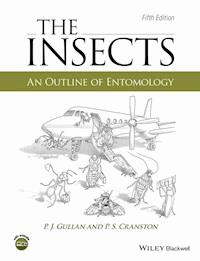
Cover image: A cartoon depicting some accidental passenger insects— a consequence of increased global commerce.
Cover design by Peter Cranston and Karina McInness.
List of Colour Plates
Plate 1
An atlas moth,
Attacus atlas
(Lepidoptera: Saturniidae), one of the largest of all lepidopterans, with a wingspan of about 24 cm and a larger wing area than any other moth; southern India and Southeast Asia (P.J. Gullan).
The moon moth,
Argema maenas
(Lepidoptera: Saturniidae), is found in Southeast Asia and India; this female, from rainforest in Borneo, has a wingspan of about 15 cm (P.J. Gullan).
Lord Howe Island stick-insect,
Dryococelus australis
(Phasmatodea: Phasmatidae), Lord Howe Island, Pacific Ocean, Australia (N. Carlile).
A female of the Stephens Island giant weta,
Deinacrida rugosa
(Orthoptera: Anostostomatidae), Mana Island, New Zealand (G.H. Sherley; courtesy of New Zealand Department of Conservation).
A Richmond birdwing,
Ornithoptera richmondia
(Lepidoptera: Papilionidae), and its cast pupal exuviae on a native pipevine (
Pararistolochia
sp.), eastern Australia (D.P.A. Sands).
Owl butterfly,
Caligo memnon
, with two common morpho butterflies,
Morpho peleides
(both Nymphalidae), Cali Zoo, Colombia (P.J. Gullan).
A cage of butterfly pupae awaiting eclosion, Penang Butterfly Farm, Malaysia (P.J. Gullan).
Plate 2
Palm weevil grubs,
Rhynchophorus ferrugineus
(Coleoptera: Curculionidae), reared for human consumption from ground palm mash and pig pellets, Thailand (M.S. Hoddle).
A “worm” or “phane”–the caterpillar of
Gonimbrasia belina
(Lepidoptera: Saturnidae)–feeding on the foliage of
Schotia brachypetala
, Limpopo Province, South Africa (R.G. Oberprieler).
Witchety (witjuti) grub, a larva of
Endoxyla
(Lepidoptera: Cossidae) from a desert
Acacia
tree, Flinders Ranges, South Australia (P. Zborowski).
Food insects at a market stall displaying silk-moth pupae (
Bombyx mori
), beetle pupae, and adult hydrophiloid beetles and water bugs (
Lethocerus indicus
), Lampang Province, northern Thailand (R.W. Sites).
A dish of edible water bugs,
Lethocerus indicus
(Hemiptera: Belostomatidae), Lampang Province, northern Thailand (R.W. Sites).
Edible stink bugs (Hemiptera: Tessaratomidae), at an insect market, Thailand (A.L. Yen).
Repletes (see
Fig. 2.4
) of the honeypot ant,
Camponotus inflatus
(Hymenoptera: Formicidae), on an Aboriginal wooden dish, Northern Territory, Australia (A.L. Yen).
Repletes of the honeypot ant,
Camponotus inflatus
, Northern Territory, Australia (A.L. Yen).
Plate 3
A tropical butterfly, the five-bar swordtail,
Graphium antiphates
(Lepidoptera: Papilionidae), obtaining salts by imbibing sweat from a training shoe, Borneo (P.J. Gullan).
A female katydid of an undescribed species of
Austrosalomona
(Orthoptera: Tettigoniidae), with a large spermatophore attached to her genital opening, northern Australia (D.C.F. Rentz).
Pupa of a Christmas beetle,
Anoplognathus
sp. (Coleoptera: Scarabaeidae), removed from its pupation site in the soil, Canberra, Australia (P.J. Gullan).
A teneral (newly moulted) giant burrowing cockroach,
Macropanesthia rhinoceris
(Blattodea: Blaberidae), Queensland, Australia (M.D. Crisp).
Egg mass of
Tenodera australasiae
(Mantodea: Mantidae) with young mantid nymphs emerging, Queensland, Australia (D.C.F. Rentz).
Eclosing (moulting) adult katydid of an
Elephantodeta
species (Orthoptera: Tettigoniidae), Northern Territory, Australia (D.C.F. Rentz).
Overwintering monarch butterflies,
Danaus plexippus
(Lepidoptera: Nymphalidae), Mill Valley, California, USA (D.C.F. Rentz).
Plate 4
A fossilized worker ant of
Pseudomyrmex oryctus
(Hymenoptera: Formicidae) in Dominican amber from the Miocene (P.S. Ward).
Female (long snout) and male (short snout) of the cycad weevil,
Antliarhinus zamiae
(Coleoptera: Curculionidae), on seeds of
Encephalartos altensteinii
(Zamiaceae), South Africa (P.J. Gullan).
The common milkweed grasshopper,
Phymateus morbillosus
(Orthoptera: Pyrgomorphidae), for which bright colours advertise toxicity acquired by feeding on milkweed foliage, Northern Cape, South Africa (P.J. Gullan).
Mine of a scribbly gum moth,
Ogmograptis racemosa
(Lepidoptera: Bucculatricidae), on trunk of
Eucalyptus racemosa
, New South Wales, Australia (P.J. Gullan).
Euglossine bees (Hymenoptera: Apidae: Euglossini) collecting fragrances from spadix of
Anthurium
sp. (Araceae), Ecuador (P.J. Gullan).
A bush coconut or bloodwood apple gall of
Cystococcus pomiformis
(Hemiptera: Eriococcidae), cut open to show the cream-coloured adult female and her numerous, tiny nymphal male offspring covering the gall wall, northern Australia (P.J. Gullan).
Close-up of the second-instar male nymphs of
C. pomiformis
feeding from the nutritive tissue lining the cavity of the maternal gall, northern Australia (P.J. Gullan).
Plate 5
Coccoid-induced gall of
Apiomorpha pharetrata
(Hemiptera: Eriococcidae): dark compound gall of males attached to green gall of female, with ants collecting honeydew at orifice of female's gall, eastern Australia (P.J. Gullan).
Aphid-induced galls of
Baizongia pistaciae
(Hemiptera: Aphididae: Fordinae) on turpentine tree,
Pistacia teredinthus
, Bulgaria (P.J. Gullan).
Rose bedeguar gall of
Diplolepis rosae
(Hymenoptera: Cynipidae) on
Rosa
sp. (wild rose), Bulgaria (P.J. Gullan).
A female thynnine wasp of
Zaspilothynnus trilobatus
(Hymenoptera: Tiphiidae) (on right) compared with flower of the sexually deceptive orchid
Drakaea glyptodon
, which attracts pollinating male wasps by mimicking the female wasp, Western Australia (R. Peakall).
A male thynnine wasp of
Neozeleboria cryptoides
(Hymenoptera: Tiphiidae) attempting to copulate with the sexually-deceptive orchid
Chiloglottis trapeziformis
, Australian Capital Territory (R. Peakall).
Myophily—pollination of mango flowers by a flesh fly,
Australopierretia australis
(Diptera: Sarcophagidae), northern Australia (D.L. Anderson).
Hummingbird hawk moth,
Macroglossum stellatarum
(Lepidoptera: Sphingidae), on a thistle, Bulgaria (P.J. Gullan).
Honey bee,
Apis mellifera
(Hymenoptera: Apidae), pollinating a passion flower,
Passiflora edulis
, Colombia (T. Kondo).
Plate 6
Ovipositing parasitic wasps (Hymenoptera): a eurytomid (Eurytomidae, top) and cynipid (Cynipidae, right), on an oak apple gall on
Quercus
, Illinois, USA (A.L. Wild).
Weaver ants,
Oecophylla smaragdina
(Hymenoptera: Formicidae), tending
Rastococcus
mealybugs (Hemiptera: Pseudococcidae), Thailand (T. Kondo).
The huge queen termite (approx. 7.5 cm long) of
Odontotermes transvaalensis
(Blattodea: Termitoidae: Termitidae: Macrotermitinae) surrounded by her king (mid front), soldiers and workers, South Africa (the late J.A.L. Watson).
A parasitic
Varroa
mite on a pupa of
Apis cerana
(Hymenoptera: Apidae) in a hive, Irian Jaya, New Guinea (D.L. Anderson).
Ant (Hymenoptera: Formicidae) interactions: the smaller Argentine ant (
Linepithema humile
) attacks the much larger red imported fire ant (
Solenopsis invicta
), Austin, Texas, USA (A.L. Wild).
An egg-parasitoid wasp,
Telenomus
sp. (Hymenoptera: Scelionidae), oviposits into an egg of an owl butterfly,
Caligo
sp. (Lepidoptera: Nymphalidae), Belize (A.L. Wild).
Plate 7
A cryptic grasshopper,
Calliptamus
sp. (Orthoptera: Acrididae), Bulgaria (T. Kondo).
A camouflaged late-instar caterpillar of
Plesanemma fucata
(Lepidoptera: Geometridae) resting on a eucalypt leaf so that its red dorsal line resembles the leaf midrib, eastern Australia (P.J. Gullan).
A female webspinner of
Antipaluria urichi
(Embioptera: Clothodidae) defending the entrance of her gallery from an approaching male, Trinidad (J.S. Edgerly-Rooks).
A snake-mimicking caterpillar of the spicebush swallowtail,
Papilio troilus
(Lepidoptera: Papilionidae), New Jersey, USA (D.C.F. Rentz).
An adult moth of
Utetheisa ornatrix
(Lepidoptera: Arctiidae) emitting defensive froth containing pyrrolizidine alkaloids sequestered by larval feeding on
Crotalaria
(Fabaceae) (the late T. Eisner).
A blister beetle,
Lytta polita
(Coleoptera: Meloidae), reflex-bleeding from the knee joints; the haemolymph contains the toxin cantharidin (the late T. Eisner).
The cryptic adult moths of four species of
Acronicta
(Lepidoptera: Noctuidae):
A. alni
, the alder moth (top left);
A. leporina
, the miller (top right);
A. aceris
, the sycamore (bottom left); and
A. psi
, the grey dagger (bottom right) (D. Carter and R.I. Vane-Wright).
Aposematic or mechanically protected caterpillars of the same four species of
Acronicta: A. alni
(top left);
A. leporina
(top right);
A. aceris
(bottom left); and
A. psi
(bottom right); showing the divergent appearance of the larvae compared with their drab adults (D. Carter and R.I. Vane-Wright).
Plate 8
One of Bates' mimicry complexes from the Amazon Basin involving species from three different lepidopteran families—the butterflies
Methona confusa confusa
(Nymphalidae: Ithomiinae) (top),
Lycorea ilione ilione
(Nymphalidae: Danainae) (second top) and
Patia orise orise
(Pieridae) (second from bottom), and a day-flying moth of
Gazera heliconioides
(Castniidae) (R.I. Vane-Wright).
A mature cottony-cushion scale,
Icerya purchasi
(Hemiptera: Monophlebidae), with a partly formed ovisac, on the stem of an
Acacia
host, attended by meat ants of
Iridomyrmex
sp. (Formicidae), New South Wales, Australia (P.J. Gullan).
Adult male gypsy moth,
Lymantria dispar
(Lepidoptera: Lymantriidae), New Jersey, USA (D.C.F. Rentz).
A biological control wasp
Aphidius ervi
(Hymenoptera: Braconidae) attacking pea aphids,
Acyrthosiphon pisum
(Hemiptera: Aphididae), Arizona, USA (A.L. Wild).
A circular lerp of the red gum lerp psyllid,
Glycaspis brimblecombei
, and a white lace lerp of
Cardiaspina albitextura
(Hemiptera: Psyllidae), on
Eucalyptus blakelyi
, Canberra, Australia; note the small brown eggs of
C. albitextura
attached to the leaf (M.J. Cosgrove).
An adult of the eucalypt-damaging weevil,
Gonipterus platensis
(Coleoptera: Curculionidae), Western Australia (M. Matsuki).
Adult beetle of the goldspotted oak borer,
Agrilus auroguttatus
(Coleoptera: Buprestidae), which threatens native oaks, southern California, USA (M. Lewis).
List of Boxes
Box 1.1
Citizen entomologists—community participation
Box 1.2
Butterfly houses
Box 1.3
Tramp ants and biodiversity
Box 1.4
Conservation of the large blue butterfly
Box 1.5
Palmageddon? Weevils in the palms
Box 3.1
Molecular genetic techniques and their application to neuropeptide research
Lesen Sie weiter in der vollständigen Ausgabe!
Lesen Sie weiter in der vollständigen Ausgabe!
Lesen Sie weiter in der vollständigen Ausgabe!
Lesen Sie weiter in der vollständigen Ausgabe!
Lesen Sie weiter in der vollständigen Ausgabe!
Lesen Sie weiter in der vollständigen Ausgabe!
Lesen Sie weiter in der vollständigen Ausgabe!
Lesen Sie weiter in der vollständigen Ausgabe!
Lesen Sie weiter in der vollständigen Ausgabe!
Lesen Sie weiter in der vollständigen Ausgabe!
Lesen Sie weiter in der vollständigen Ausgabe!
Lesen Sie weiter in der vollständigen Ausgabe!
Lesen Sie weiter in der vollständigen Ausgabe!
Lesen Sie weiter in der vollständigen Ausgabe!
Lesen Sie weiter in der vollständigen Ausgabe!
Lesen Sie weiter in der vollständigen Ausgabe!
Lesen Sie weiter in der vollständigen Ausgabe!
Lesen Sie weiter in der vollständigen Ausgabe!
Lesen Sie weiter in der vollständigen Ausgabe!
Lesen Sie weiter in der vollständigen Ausgabe!
Lesen Sie weiter in der vollständigen Ausgabe!
Lesen Sie weiter in der vollständigen Ausgabe!
Lesen Sie weiter in der vollständigen Ausgabe!
Lesen Sie weiter in der vollständigen Ausgabe!
Lesen Sie weiter in der vollständigen Ausgabe!
Lesen Sie weiter in der vollständigen Ausgabe!
Lesen Sie weiter in der vollständigen Ausgabe!
Lesen Sie weiter in der vollständigen Ausgabe!
Lesen Sie weiter in der vollständigen Ausgabe!
Lesen Sie weiter in der vollständigen Ausgabe!
Lesen Sie weiter in der vollständigen Ausgabe!




