


8,63 €
Mehr erfahren.
- Herausgeber: Seren
- Kategorie: Gesellschafts- und Liebesromane
- Sprache: Englisch
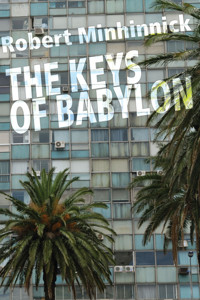
In Albania, Mexico, China, Iraq, Israel, Wales, the US, London… people are on the move; migration and immigration are key issues of the twentieth and twenty-first century. The Keys of Babylon is a collection of 15 linked stories by award-wining poet and author Robert Minhinnick, giving voices to migrants around the globe. Both a fictional record of, and an exploration into their lives, the migrants and the people with whom they interact reflect a comprehensive mix of hope, success, failure, fear, indifference and passion. And the stories of each of the main characters are drawn together in a final narrative which surveys their situation on a particular day.
Das E-Book können Sie in Legimi-Apps oder einer beliebigen App lesen, die das folgende Format unterstützen:
Seitenzahl: 422
Veröffentlichungsjahr: 2011
Ähnliche
















Seren is the book imprint ofPoetry Wales Press Ltd 57 Nolton Street, Bridgend, Wales, CF31 3AE
www.serenbooks.com
© Robert Minhinnick 2011
ISBN978-1-85411-564-5 (EPUB edition)
The right ofRobert Minhinnickto be identified as the author of this work has been asserted in accordance with the Copyright, Designs and Patents Act, 1988.
A CIP record for this title is available from the British Library.
All rights reserved. No part of this publication may be reproduced, stored in a retrieval system, or transmitted at any time or by any means electronic, mechanical, photocopying, recording or otherwise without the prior permission of the copyright holder.
This book is a work of fiction. The characters and incidents portrayed are the work of the author’s imagination. Any other resemblance to actual persons, living or dead, is entirely coincidental.
Inner design and typesetting by littlefishpress.com
Ebook conversion by Caleb Woodbridge.
The publisher works with the financial assistance of the Welsh Books Council.
Robert Minhinnick is glad to acknowledge a Creative Wales award that has enabled him to undertake the writing ofThe Keys of Babylon.
THE KEYS OF BABYLON
Robert Minhinnick
Contents
At a dictator's grave
In those days there were lions in Iraq
In Goliath’s country
A welcome for the river god
A bed on the prairie
The tunnel
The boy with the rock ’n’ roll gene
The dead-letter men
El Aziz: some pages from his notebooks
The wild strawberries
I say a little prayer
No matter how much I know I know I know nothing
FELLOW TRAVELLERS
Mic
Macsen
Maria
Nerys
Big little man
Juan
Fabien
El Aziz
Lloyd
Zuzanna
Rhiannon
Rachel
Postscript: a note from the neolithic
About the Author
At a dictator's grave
1
Mic remembered his father’s hand tousling his hair, or pulling him across the road. A hard hand, cracks in the thumbs filled with dirt. He loved to examine his father’s hands, to spread the fingers and trace all those roads worn in the skin, the whorls like the galaxies in the teacher’s big book.
That atlas of stars was the only book in the classroom. There was no paper, no pencils. The windows held no glass, only sometimes the stars and maybe those galaxies like the calluses on his father’s palms. On Friday afternoon, the teacher read from this single book. Mic could only remember that the sun was a yellow dwarf.
But his father was not a labourer. He worked in an office and his mother always said Dada had beautiful penmanship. His hands were hard because he had to break up the concrete gun emplacement behind their house, to grow vegetables on theland. The concrete was four feet thick, his mother said, and father a thin man, if wiry. Smashing the huge concrete mush-room was illegal, but there was no one left who cared.
They would walk to the cemetery. Two miles Dada always said, but it felt longer. His father didn’t talk much, but once, Mic remembered, he told him the name of a flower. It was growing in the grass at the side of the road.
Chicory, his father said. Remember chicory. Some people make their coffee with chicory.
Why do they do that?
Because they’re poor. Because it gives a taste.
Coffeeweed, his father then called it. That’s its other name.
Mic thought he would hate chicory, and scowled at the flower.
Usually they’d catch the bus back. A man used to sit at the stop chanting a poem. He never caught the bus. It was a great poem, he always said. Even the Greeks had forgotten it, the poem was so old. Dada would scrabble a few qindarka out of his trouser pocket for the fare but often the driver merely waved them aboard. On that bus journey back to the city Mic always hoped to meet Pjeter. Usually the bus was full of headscarved women with bundles of sticks and trussed chickens, and soldiers in their green uniforms winking at the girls. Sometimes Mic and Pjeter could sit together, whilst his father stood.
Pjeter wanted to be a priest. Mic made little of this. Pjeter was pale with big eyes. He was skinny and could climb trees and hang by his long legs, making faces.
Do priests play football? Mic asked.
Pjeter shrugged. Dunno.
I want to play for Roma, Mic said. Pjeter sneered. How many Albanians play in Serie A? he asked.
I will be the first. Anyway, what do priests do?
Pjeter shrugged again. Eat three meals a day, he said. Touch up the girls.
Once his father took Mic up the hill to the warehouse. A lorry had arrived, full of aid. It was Catholic aid, but the Muslims were getting some too. It must be equal, the lorry drivers said. No favourites. Everyone laughed at that.
They stayed in the warehouse all day, fetching, carrying. Mic had never seen such bounty. So many things. There was a mirror. He loved it at once, that cracked oval mirror with a rainbow at its edge. He stared at his face in its glass, scowled, smiled. He wished Pjeter was there to blow out his cheeks and look like a monkey.
Who gets the mirror, Dada? Mic called.
Not you, said a woman, flour on her hands from a burst bag.
Mic’s grandada was buried in the cemetery. That’s why they visited. One day, his father took him to another part of the graveyard. The plots here were edged with marble and there were low marble headstones.
Look, his father said. On one of the stones were two words in capitals: ENVER HOXHA. On the grave bed were vases with brown bouquets, and a jam jar with dandelions in the green water.
But the boy wasn’t interested. He was looking across the cemetery to where two young men were teasing one of the mad people. All the mad people had been chased out of the asylum and now everyone was scared of them. They wandered the streets begging for food. The mad people slept in doorways or down at the bus station. They were lost.
This mad boy was big as a bull. He was making strange bellowing sounds. The young men were pretending to beat him with bunches of dead flowers. Earlier his father had picked ox-eye daisies and placed them on Grandada’s unnamed plot. Now he was muttering to himself. Mic looked back to the three figures on the other side of the graveyard. They were pulling the mad boy’s trousers off.
His father had sat down by the grave and taken out his bottle. Now he would drink a little arak and continue talking to himself. Arak tasted of the worst things in the world. It smelt of rotten potatoes. Mic had seen his father spit a mouthful over Hoxha’s name.
Once Mic and Pjeter and Flutura and some friends were playing round the mushrooms in the park. The mushrooms were the concrete gun emplacements, and they were spread all over the city and countryside, over the hills and in the gardens. They were grey and round and looked like they had sprung up overnight, even though they had always been there.
Some people kept goats in the mushrooms. Some people even grew mushrooms in the mushrooms. He remembered Pjeter was on top, larking about, sliding down with his lanky legs, wearing out the seat of his pants. There were no socks in his shoes. And then a woman came out of the entrance. Get off, she said. Go away.
She was one of the mad people, she must have been. Or that’s what Mic thought. She was wearing a soldier’s overcoat tied up with string. Her hair was yellow as bonfire smoke and she had yellow eyes, like a goat’s in the dark.
Flutura screamed. They all scarpered because they thought she might have been a witch. A mad witch. You never knew what you’d find in the mushrooms. Dead bodies, guilty lovers. There were millions of mushrooms everywhere.
Another time, a man showed the gang his card.BBCit said. They took him round to see the tank traps, and he filmed them with his camera. He filmed the children too and wrote their names down. Once he told them to gather round, and opened a bag. It was full of chewies and sweets in their coloured cellophane. He gave everyone a handful, plus a dollar each. A dollar!
Mic ran home and showed his father, who came in with his sleeves rolled up and concrete dust on his shoes. But it was mother who took the dollar. She folded it up small as a postage stamp.
But where did you spend a dollar? Mother had only leks for the market. Sometimes she let Mic count the notes. Mic thought they must be rich, but the money was torn and dirty and smelled of dirty people like the witch with yellow eyes. Witches killed babies, Mic knew that. They could suck the breath out of children’s bodies. Pjeter had made one of his rubber faces at the witch as they ran away.
2
Mic preferred the tongs to the grabber. After an hour’s use, the grabber grew slack and was difficult to control. So it would be the tongs for Mic tonight.
The concert was supposed to end before midnight. That was the rule. But there was Paul McCartney running on to the stage, and there was Neil Young welcoming him, Neil Young with his ancient face, Neil Young, not a young man now but as ravaged as the alkies and the homeless Mic was supposed to roust from the park benches in the dark.
Not that Mic rousted anyone. Too dangerous. Because where would they go, those dangerous homeless men, the big Nigerians, the skinny Roma, the thin and whiskery Irish? They were sleeping in Hyde Park because they had no homes. Yes, that was the problem with the homeless. They never went home. And then on the big screen Paul McCartney was singing, singing his part of the song, his part ofDay in the Life. And Neil Young, fearsome as some Hyde Park vagabond, rolling his eyes like a horse, spittle on his lips, was also singingDay in the Life. Neil Young’s drummer, looking ill and decrepit, an older man the drummer, surely another homeless man there tonight in Hyde Park, a broken-down man, was drumming and drumming, and the song, thatDay in the Life, coming to a crescendo, its last chord building and building and taking so long to die away, and the crowd standing and cheering, none of them sitting now, everyone whooping and waving, and Neil Young playing the xylophone, no it was the vibraphone the crowd said, a mysterious sound, silvery and slinky, and then he was gone, Neil Young gone, Paul McCartney gone, the drummer with his broken-down face gone, all gone from the screen, the screen in Hyde Park, and they would be starting their party now somewhere in a fabled West End hotel, and the crowd was making its way home, the thousands, the tens of thousands, and only Mic to stay, Mic and Stanis and the others to stay and clean up after the crowd, after the party and the concert in Hyde Park, the last chord ofDay in the Lifestill echoing over the grass, still vivid in the crowd’s shining eyes.
Already Greendown’s electric trolleys and vans were travelling the park roads, and Mic was filling bags with polystyrene cartons and plastic glasses, cartons that had held Thai green curry and Thai red curry, glasses drained of Tiger and Kingfisher and Old Speckled Hen.
Mic wiped his brow under the floodlights. He stepped around figures in sleeping bags, figures in plastic bin liners, figures sprawled half-naked on the grass. People were not supposed to sleep in Hyde Park but he understood why they had to lie down. It had been so hot all day, hot throughout a day of uppers and downers until the downers won and the mind gave in.
Take your pick, Mic thought. And the sleepers had chosen, pot and coke and speed and kefatine and the blissful pethidine, the white tablets, the blue pills, the capsules full of rainbow granules, the Red Bull and the Jagermeister. Yes, they had chosen. Some of it, all of it, and these were the victims, the blithely dreamless sleepers under the Hyde Park trees.
Look, here was a couple asleep in one another’s arms, a couple who had collapsed against the mottled trunk of a plane tree, a tree Mic decided he could not like, a leper’s tree the plane tree, a couple asleep amongst the plane leaves fallen out of that parched midnight, a pale and sacrificial couple amidst the thousands and thousands of plastic water bottles that waited for his tongs.
So much food had not been touched. So much was abandoned half eaten. Mic and Stanis sat on the grass in the dark and shared a picnic. The red curry. The green curry. They drank from the plastic bottles and gathered the empties at their feet. Stanis had Yorkshire Spring, Tesco Fountainhead Spring, Surrey Down and Highland Spring. Mic found Hydr8 and Lomond Spring, Ty Nant and Ice Valley, Vivreau and Asda Farm Stores. Mic won because Stanis gave up and lay down under a hedge with his tongs and said he was too tired to work, too tired and his head was buzzing with the noise Neil Young and his evil drummer had been making. Yes, a wicked old man that drummer, someone he could imagine meeting in a forest, an old man who ate children, cooked them in a cauldron and ate them as the legends described.
Mic said don’t be stupid. The Greendown superintendents were all over the park. They would drive up silently on their electric trolleys, and Stanis would lose his job. Then he’d have to go to the hostel, and he knew what that was like.
Mic thought Stanis had taken some chemical and he pulled him up and put the tongs back in his hands and said at least pretend you’re working. But Stanis only laughed and wandered off with a plastic bag over his head towards the screen being taken down from the stage.
As dawn broke, Mic surveyed the scene. They had worked so hard but it still resembled a war zone. Paper and bottles everywhere, sheets of plastic grey and blue, as if the sky had fallen, a tattered sky in ruins upon the grass.
He picked up the silver stomach from inside a wine box. Half full. He picked up a pair of jeans with a belt made of rope. Yes, he would take the jeans home. He picked up a tee shirt with a picture of Neil Young, whose face was huge and cruel. Yes, a cruel god, Neil Young, who had made such a terrible noise. What could have possessed him to make such a din? But Mic took the tee shirt too. It was useful.
Dawn’s smoke rose in every direction. There were figures moving through the haze, Greendown’s cleaners in their dayglo tabards, barefoot girls creeping over the grass dressed in gauze and mist and almost nothing at all, barechested boys who wandered about in thought, as if they had mislaid something marvellous that had been there a moment ago.
At 7 a.m. the sun was shining and the new shift was arriving, Obi Wan and Obi Two were there. The Ivorian was there, tall as a tree. Mic and Stanis stowed their tongs in a trolley and walked to the Marble Arch exit and into Orchard Street, then north and east towards Pentonville and eventually Hermes Street. It took them ninety minutes to get home.
They shared a room at number 37. Mic went to the shower cubicle down the landing, then back to the room to change. Stanis was already asleep on his couch, still wearing the yellow tabard.
Mic made himself a cup of coffee and put a slice of bread on the hot ring. It burned before it toasted, but he was used to that. By 9 a.m. he was changed into different jeans and a clean shirt, and at 9.30 he was entering the Champagne Bar at St Pancras Railway Station.
He could see himself in the mirrors. Hair combed, face clean shaven. Thin, a thin man, but worth a look. Yes, the girls might look. Or the women now, some of them at least. And a few might catch his eye then glance away from that slim figure, the dark man with grey speckling in his hair. Greek, they might think. Italian perhaps. A waiter on his day off. But as with all waiters it was hard to say how old he was.
Mic never played for Roma. But he had visited the Emirates Stadium and the Arsenal Museum, heard the crowds marching down the Holloway Road and stepped out of their way. A few times he sat in that pub near Varnisher’s Yard and watched Sky Sports all morning, sometimesSerie A, sometimes the tall Totti leading the line, Francesco Totti who appeared in the mobile phone adverts.
Presto, Totti would say, Hey Presto, which made Mic laugh. Once Totti lay on the pitch after he scored a goal, the ball under his jersey in tribute to his pregnant wife.
How the crowd had roared, amazed. How Mic had cheered with the other Roma supporters in the bar, the rival Lazio fans shrugging it off, and everyone speaking their streetwise Romanesco in that London pub, and Mic happy for a moment. Because sometimes even an Albanian was allowed to cheer. Poor as an Albanian, that’s what the Italians said. In Italy, Albanians were scum.
But this was not Italy. This was London and everything was different. Mic lived in the centre of the world. King’s Cross was that centre, where the British queen was buried under platform nine of the railway station. The British queen who had fought the Romans, fought Totti’s people with scythes on her chariot wheels. And platform nine was where Harry Potter caught his train. Sometimes Mic went to watch the Japanese tourists who thought Harry was a real boy. How he pitied them.
Then she was there. Only a little late. Thirty minutes late, her average. Suddenly, on the stool beside him, sat Li, Li in red, a tight red dress, Li boyslim, smiling, smiling despite her sadness, Li with her tiny handbag, narrow as a knife, her teeth shining, her eyes bright as a blackbird’s even as she said hey, hey hello, hello to you, Mr Mic.
And Mic looked up and the barman came over once again and the bar hostess who has been watching him at last, looked away. How Mic wanted to order Dom Pérignon White Gold, 1995. Yes, a jeroboam. For £6500.00. That’s what the menu said.
Instead, he asked for De Nauroy Brut NV. Two glasses, please. It came in at £7.50 a glass. Li always said Chinese people could not drink alcohol, but perhaps one glass would be allowed. And Mic knew that Li would take one taste and leave the glass untouched for the next hour, and then finish the champagne in one gulp when it was flat, oily and flat, then splutter and shriek and complain that she was drunk. Yet it seemed to Mic that Li could get drunk on nothing at all, so brightly did her eyes shine for that hour they shared.
But Mic understood that Li needed the drink. Her work started at 11 a.m. and anything that helped her deal with work was welcome. Li took other things to help her cope because so many men wanted to visit her. Mic understood that.
They had met three times this way. Champagne was Mic’s idea, although the cost was cruel. But here they were at the Eurostar departure floor, and who could say they were not on their way to Paris with champagne flutes waiting aboard the train? Certainly none of the others who sat along the bar that curved for one hundred metres like a gleaming rail. None of them cared. Yes, the hostess cared, who saw everything and acted as if she knew everything. But Mic’s money was good.
Li went first. Always first.
Okay, she said. Okay. Once I remember we went all the way from Huangshan to the Yellow Mountains, up into the air on the cable car, higher than I ever thought I could go. How the cables groaned. The mountains had sharp points that came through the clouds. But the mountains were purple and green; I don’t know why we called them the Yellow Mountains. And we had our picnic and then it was time to come down. But it was a public holiday, said Li, and Mic thought her eyes were black moons. So more and more people had come up in the afternoon. The paths were too crowded. We walked on the ledges and were pushed to the very edge. And more and more people were coming down through the trees to our trails, and more and more people coming up the tracks to where we stood.
Soon we were stuck. There on the mountainside. No one could move and it was already evening and I remember the evening star above Golden Turtle View of the ocean. It was winking at us like a warning. Children were crying and women fainting. Some westerner had a panic attack right next to me, a tourist, a fat white man, weeping. That made me feel better. Feel strong.
And then I heard a voice. It was a young woman in uniform, party uniform, telling us what to do. She was telling us to sing and what songs to sing, and soon after that the pressure began to ease.
I knew we’d be safe then. How beautiful she was, the party girl, how gallant. We all loved her, up there in the mountains in the mist, so close to the edge. Yes, we loved her and her strong voice, singing about our heroes. It was a miracle. I was ten years old and in love with the party girl. The boy next to me, with his flat Mongol face, flat as a plate it was, he loved her too.
The party, laughed Mic. My father was in the party. Not that he cared. In the end nobody cared because only the black market made sense. Once he showed me the dictator’s grave and I saw him spit on it. At night in the capital we used to walk across Skanderbeg Square, my friends Pjeter and Flutura and me. Sometimes we saw Chinese people. They were the businessmen who were building our factories. My father said it couldn’t be right; it was crazy to have Chinese factories. But Li, maybe I saw your people from Huangshan, wandering the square.
Li’s eyes were heavy now. Something she had taken was wearing off. Or kicking in. But she roused herself.
Squares are dangerous places, whispered Li.
Under the few lights, Mic continued, the square looked like a frozen ocean. Pjetr said Tirana meant tyranny in English, and sometimes the army boys in their green uniforms would chase us away. It was something for them to do. It’s boring being a soldier.
But that’s what I always remember, looking out across the square and shivering. It was so empty, so huge. I felt crushed, but now I understand that’s what they wanted me to feel. And the dogs were barking in the night, the dogs with rabies, the dogs with mad eyes out there in the dark, the darkness where the witches lived, where everything was broken and spoiled and all used up.
But we still took the BBC man we met to a bar where he could buy arak. He bought everyone in the room a drink. Even us kids. All he had was a card that saidBBC, but to us he was like a god. I remember he took a quince from his coat pocket and gave it to Flutura. A golden quince. Like a magician he seemed to me then, that BBC man. And soon he was gone.
Mic looked around. The Champagne Bar was busy now, and the announcement for the Paris train was being made in French.
Li, he said. Li?
She was picking at a thread in her red dress. If Mic looked closely he knew he would see the dress was stained, that the crimson paint on her toenails was cracked, that there were scabs on the insides of her arms. Li’s fingernails were bitten to the quick. As to Mic, his hands were now his father’s hands. Mic had built the Tirana apartments, he had knocked them down. His shirt was from Age Concern, his jeans the blind shop. At least the hostess had moved away.
Li, he said. Li? Please marry me. Marry me, Li. You can escape and we’ll go to another part of London. London’s so huge no one will ever know where we are. We can go today, Li. Now. Go now.
He touched her arm.
Don’t go back, Mic said. One day they’re going to kill you.
Li raised her glass and sipped, gargled the warm champagne like mouthwash, swallowed and made a face.
I’m drunk, she said, getting up unsteadily from the stool. Mr Mic, you got me drunk again, you fucker.
In those days there were lions in Iraq
Poole in Dorset, that’s Dorset, UK, is not a strange place. But perhaps it’s a peculiar setting for this story.
I’m Macsen, Max to you, and I’ve been part of what you call the environmental movement for thirty years. That’s long before it became fashionable or cool. Or dreary.
Now, in those days, start of the 1980s, if you had told me that campaigning against new roads or pollution would become a career choice, offering a good pension, a car, ha ha, opportunity to travel and the rest of it, I’d have slapped your face.
Yet most of the people I’ve worked with over the last decade never did a day’s volunteering in their lives. They certainly haven’t waved a placard or organised a protest meeting. Or got down and dirty with a multinational trying to opencast a Scottish hillside.
Funny, isn’t it. We won the battle. People like me. We bloody won. We raised the profile of all things environmental. Showed how everything was linked – clean air, good food, humane values. Raised the awareness level to such an extent that there’s not a telly programme without some greenspeak in it. Chefs and weathergirls spouting off.
Well, great. Sort of. Sustainability rules. Now no one can claim ignorance of climate change or junk food. No councillor, no MP. Not anyone with power. We won.
And as proof of that, there are all those jobs in all those environmental organisations. Everybody saving the planet. But claiming time in lieu. Everybody with a computer and broadband someone else is paying for. With offices. With office cleaners for Christ’s sake. With parking spaces. With the internet to do their thinking for them.
Yeah, but without the remotest clue about the people who created it for them. The pathfinders. The originators. That’s right. People like me. And don’t tell me I’m wrong because you can’t. I was there. On the front line. And I don’t remember seeing you.
These days, if I walked into that new Greenpeace office there’s not a soul would know me. Friends of the Earth? They’d call security. Should have seen it coming, I suppose. But I was too busy saving your arse.
After a while I became more like your high-street green than a campaigning type. Fair trade, local and organic stuff. That was where the action was. I was part of a co-operative and we had this place in Cheam. Coffee bar, radical bookshop, performance space all in one. Ahead of its time? I’ll say. That’s been my curse.
Well, okay, after a couple of years, I left. Disagreement, you understand. Us greens are notorious for knifing one another in the back. And I was knifed. The Cheam place was awarded a Lottery grant and that really messed us up. There was money to pay a co-ordinator. Frankly, it should have been me. Unquestionably. What it created instead was internecine warfare. Divide and rule? Works every time.
Been around, haven’t I? Communes, squats. That tipi village in west Wales? Couldn’t stand another rainy summer there. Or the ayatollah who ran it. Tarifa? Extreme climate. It’s where Africa makes the jump into Europe. But try talking eco-politics with surfers and hang gliders.
Since then I’ve been writing, forResurgence, Grave New World. Had some luck too, and that’s what I want to do now. Writing’s giving me the biggest kick I’ve had in a long time. It feels good.
And that’s why I’m in Poole. Canford Cliffs to be precise, looking at how the new money is spent. Down there, in the harbour, are the bankers’ yachts. Above me, the bankers’ mansions and apartments, their second, third homes. Yes, Canford Cliffs is the place to be. An English Monaco. Paid for out of the credit crunch.
I’ve done a bit of filming too, with Earth First and others. There’s some great indie operations out there. But there would be wouldn’t there? Everything’s digital. Just point and press. Not like when I started.
So filming is where the story begins. In a way it is the story. Of the film I made once. And the man who made it possible. Because this is his story. Mine will be told another time. You haven’t got time for mine.
Ever hear of depleted uranium? DU? Back in 1996 I hadn’t either. But out of the blue comes an invitation. A friend of a friend knows somebody. This rich Egyptian, she’s a campaigner, a believer. She’s trying to get a team together to film in Iraq. I’m like, known to be up for things. Will give anything a go. And I can write, can’t I? I’m a journalist? Well, sort of. And I’ve all the green contacts haven’t I? Yes, well... Jonathon Porritt owes me a fiver.
A week later there’s blossom all over Queen’s Gate. The colour of old bones. My mouth is at a silver intercom. Then I’m in a room lined with portraits of Saddam Hussein. He’s saluting. Hand in greeting, hand on heart. In a corner is a TV tuned to the news, but we ignore that because a clerk is matching photographs to papers and then something is being printed in purple ink. It permits me to spend ten days in Iraq.
Two weeks later I’m in a Baghdad hotel room reading a manual on how to work a Sony movie camera. I’ve got it on charge but the electricity is dodgy. From the balcony I can see the Tigris. The green tigress I call her. I have this feeling I’m already out of my depth. That I could drown in Baghdad.
Well, I say to myself. It’s better than the tipi. Beats pissing out of a tree on Twyford Down. There’s a knock on the door. It’s Fatima, the Egyptian who’s paying for everything. Who believes I’m a BBC hotshot.
Max, I’d like you to meet Mohammed, she says. He’s our government guide.
Goon, I think. But next thing I remember I’m lying on a divan. I’ve just quit smoking this najila a yard long, hung with falcon feathers. Mohammed had chosen the pipe specially. You know, I thought I could take my draw. I stayed in Amsterdam’s Bar 98 for a while and even the white widow didn’t phase me as long as I kept off the wine. But that Baghdad hashish? I dreamed I was that falcon drifting over an ocean of dark stone. A black speck in the endless blue. Or maybe it was a 109 Tomahawk with a nosecone painted like a draughts board. Coming to a street near me, courtesy of McDonnell Douglas. And no, they don’t make shortbread.
Then the next thing I recall is I’ve got the runs and we’re filming an hour’s interview at the Department of Transport. Still got the complete thing on tape. Mohammed’s in the room. Mohammed has set it up. He’s our ticket to ride, our official heavy with influence. And when he smokes he tells jokes about Iran and the US. The stupid countries he calls them. Schools? hospitals? We film them. Crowd scenes? Safe on tape. Babylon? I’ve got Babylon coming out of my ears.
Had this Babylonian party once in a place in Cornwall. Films showing empty temples. Weird creatures on the walls. Euphrates kingfishers faster than Scuds. Look at this, I kept telling the guests. You won’t see this again. What you think this is, the Discovery Channel? This is fucking real.
Well, we made our uranium film. Ten hours cut to twenty minutes. So sometimes I think about what we left out. There was this British soldier we interviewed in Birmingham. Depleted uranium victim. His friends said his nickname was Prettyboy. Well, I tell you, Prettyboy wasn’t so pretty anymore. They’d given him thirty thousand pounds compo for everything that was wrong with him. Not that the words ‘depleted uranium’ were ever used.
Want to know what Prettyboy did with thirty thousand quid? He drank it. That could have been thirty thousand cans of Special Brew. Or ten thousand bottles of bad Rioja. Well, forget all that. Prettyboy cut to the chase. Necked five thousand litres of Krazy Kremlin. In three years. That’s why he’s not so pretty now. His mates told us they would take him to the Fox and Grapes in Digbeth and ask D U want another vodka? Good joke, eh?
With hindsight, he should have been in the film. With a lot of other material. Anyway, it was shown at CND meetings, a few arts centres. Didn’t win an Oscar. But did it make a difference? Of course it did. And still does. If you don’t believe that you might as well be a fossil. But as I keep saying, this is not my story. Or Prettyboy’s. My story comes later.
So I’m in Poole for a few days, billeted with friends out of town. The Canford Cliffs area is exclusive and I’ve become used to seeing the same people. But there is one man I notice having coffee on the cliff, surveying the ocean, who is differently familiar. One morning I decide to act. I take my cup to the next table on the patio and look out.
Hello, I say. A decent morning.
The man turns to me. He’s puzzled.
How are you these days? I ask.
He looks closely at me then.
Oh, he says finally. Takes him a while, like. I expect him to be embarrassed but he’s not.
The last time we saw each other, he says carefully, I believe I was crying. You might think that a difficult thing to admit. But it no longer matters.
We’re alive, Mohammed.
He lifts his cup in a brief toast.
Remember that hotel room in the madman’s capital, I ask. (I know that’s an odd thing to say but in Baghdad everyone told me never use the boss’ name. And don’t even think of pointing that camera at one of his statues.)
Yes, Mohammed replies. You and your companion laid out the money on the bed. Black dinars I wouldn’t wipe myself with. Royal Jordanian pounds that were more like it. But no dollars, my friend. Not a George Washington to be seen. And I needed dollars. All that work I had done. All the special services.
But the government paid you, I say.
Pistachio shells. But to repeat, it doesn’t matter now.
How did you get away?
From the insanity? Surprisingly easily.
We order more coffee.
Do you know, says Mohammed. I was in a restaurant in Amman when that fool, the Information Minister, came on television and said there were no Americans. And no American tanks.
What’s that then? the journalists asked. There was a Challenger coming down El Rashid Street behind this oaf. A Challenger tank with a barrel long as a palm tree.
Oh, pardon me, gentlemen, says the minister, I have an urgent appointment. And he disappears.
How we all laughed in that café. Or maybe I was still crying, but the coffee was very strong. Yes, that café was an excellent place. There were CIA there, braying and bragging, but I wasn’t afraid. Small fry, you see, I was never more than that. My picture wasn’t on their screens. Not one of the playing cards, not even close. A different game entirely.
How did you get here? I laugh. Poole!
Mohammed smiles again and looks into the harbour.
I live here, he says.
Now that just blew me away.
And I live well. You must come up to the apartment.
He looks at me tolerantly.
You will remember the museum? I had it opened especially for you and your friend.
It was unbelievable, I say.
Yes, a marvellous place. But walking with you there, something occurred to me. So before I left I paid the museum a visit. And then another visit. By the end I knew every corridor. The storerooms too, the crypts, and what they held.
It was a privilege, I say.
Now Mohammed produces his wallet and from it a plastic wrapper three inches square. Out of this he takes a piece of bubblewrap. Within it might be a dark coin.
It’s a stamp, he says. Or a seal. A stamp, a seal.
I look at the broken disc. He doesn’t let me touch it. There are designs of antelopes upon it and men who might be hunters.
Pretty isn’t it, he smiles. And, guess what?
What?
It is six thousand years old.
He sits back, the bubblewrap on the table between us, the disc catching the sun. It waits like a tip for the waiter.
Such a charming thing. And there is so much more, so much you wouldn’t believe. You see, we Mesopotamians are a civilised people. Six thousand years ago there were kings who craved such fine art. When your people were rubbing sticks together, our artists and craftsmen were learning their trade.
You looted the museum?
Loot? Of course not. I went with a friend who knows Nineveh, who understands how Babylon and Ur were built. Who knew what wouldn’t be missed and what the country could afford to lose. Oh, we were careful in that. We were scrupulous.
We both look down at the harbour.
You see, says Mohammed, we walked along the aisles of the museum and were the only people there. Just like when you paid your visit. No wardens. No professors muttering or students sketching. And no glass on the floor as there soon would be.
We came to a hall. In a cabinet was a copper mask, a king’s head. The king’s beard was cut in curls and ringlets. There was a copper crown upon his head. But his lips were a woman’s lips, red and royal and alive. I looked at that king in the twilight and thought, yes, I could love that man. For that man is an imperial leader, maybe a cruel man, perhaps a murderer of his people, a sacrificer of children, a lunatic, a psychopath. But here he is; here is the king. After five thousand years, here is the king.
And my hands were on that cabinet and I said we must take this, we must. And you know what my friend did? He touched me on the shoulder. Such a beautiful touch. It explained everything. And the passion passed. And we walked on through the museum and we left Nebuchadnezzar’s dragons and the Assyrian magicians with their square whiskers and we took what would not be missed.
Tiny gods. It was only the tiny gods we took. The smallest gods who never really mattered. Do small gods matter? To small people perhaps. We took not the gold gods but the alabaster gods. As tiny as chessmen, those gods. My gods now. And seals like this. Some tiles from Babylon. A sphinx from the back of a cupboard. And a red cheetah that fits my hand.
Because I am silent, Mohammed thinks I am critical.
I saved them, he says. I saved them for the world. Where is the great king now? Where are the lions of Uruk or the golden bulls? Where are the chariots? Where are the tablets with the world’s first writing? Gone my friend, gone with the smugglers who lacked my sensibility. Gone with the idiots who exchanged eternity for cigarettes. I sell what I took to dealers who make ten times the money I could ever do. But my tiny gods will be safe in Tokyo or Los Angeles when the rest of it is dust in the street.
Yes, I say. I agree with you. And I wish I had done the same.
And I smile because I remember now a statue of a woman. I had stood before it and seen my mother’s face, my mother’s 1950s’ hairdo frozen in Parthian limestone, the statue’s drapes my mother’s dressing gown, its inlaid eyes the eyes that would never grow old.
Another time, he says.
You mean for coffee?
No, says Mohammed. It was all another time.
He looks at me then.
Now, he says, you must come up. I want to show you my home.
We walk past a pub called The Nightjar which is opening its doors. I haven’t heard a nightjar in thirty years. I was on a dark road once, listening for footsteps behind me. Crossing a moor. I heard it then, the nightjar. An old, old song. A lonely song.
My grandfather used to say nightjars sounded like knives held to a grindstone. In Cheam there was this travelling tool sharpener who used to pop in for coffee. Don’t worry, all those trades are coming back. They have to.
Mohammed takes me into the foyer of an apartment block. The deskman calls him Mr Haifa. The lift feels as if it’s made of glass, but it’s burnished steel. I can see my own reflection, Mohammed’s cotton jacket, thin and a pale mauve. Jaeger, I’d say. He was pudgy over there and has put on more weight.
I remember our last meal, eggs and figs in the hotel. Tea in a glass. We were all agitated, Fatima and I scared we’d miss the Jordan bus. She’d spent all her money by then. Turns out she had medical training and the hotel staff used to consult her in her room. She gave them money. We’d brought in boxes of medicines because we knew there was nothing in the hospitals. That was breaking the UN embargo, by the way. So I’m a smuggler too. A badge of honour.
But that last day we were stony broke. Think of it, broke in Baghdad. Mohammed didn’t believe our backsheesh was enough and was sulking. I liked him better when there was coffee or hash inside him, and he told us stories. Mohammed was a survivor. Which means he must have been complicit in the murders, the disappearances. I had time to think about that on the way back through the desert. And, you know, I couldn’t bring myself to condemn him. A plump man in a sweat-stained white shirt. Little moustache. Say he was fifty. The skids already under him.
The corridor was silent. Like walking on a lawn. And his apartment? The same thick felt in emerald green. I saw armchairs, a divan. That first room had a view over the harbour and cliffs. We stood on the balcony.
Yes, he said. I love to sit here in the dark and watch the lights, listen to the boats’ rigging, the ships’ bells. Mournful music to some, but remember, the sea is a wonder to me. For a man such as I, the ocean is a dream.
Are you homesick? I ask.
Of course. Always. Such is life. You know, when I was a boy I’d sleep in summer on the roof of our house. Every night I’d look at the stars. In Iraq, each star has a story but I’d make up my own. Even in the heat I would shiver. But with excitement. It’s that excitement we feel homesick for. But I know I’ll never find it again.
The bathroom is decorated in gold and onyx. But everything’s black. There’s a black whirlpool air spa bath. The toilet I piss into is black. It makes me think of an eisteddfod chair. Mohammed’s bathrobe is black embroidered silk. When I come out I join him on the balcony.
What happened to the lion we saw? I ask. The great carved lion gnawing a slave?
No one knows, he says. But there are still people alive who remember lions in Iraq. So many of our artists have honoured lions. The sculptors of Babylon were hired out all over the world to make stone lions. Or lions of alabaster. Even gold lions. Dragons and lions guarded Babylon. But they couldn’t stop the tanks.
He pauses and smiles. Listen, you are the reason I am here. You and your companion.
We only wanted to film the museum, I say. But we cut it out of the film.
Yes, but history roared in my head, answers Mohammed. I was in the museum crypt. The lights were dim. There was silence. It was a holiday and even the scholars were absent. Dust floated in the air and lay underfoot. Only Haji Abid was there. He had worked in the museum for fifty years but if he understood what was going on, he didn’t say. Then there it was. A red lion on a desk. Its mouth open, its mane like armour. It sat like a cat watching me. A terracotta cat on a newspaper. I would have sworn it was alive. The museum cat, licking its chops.
Mohammed sips his tea.
I stroked that lion’s cold fur, he says. I’m told the statue was smashed in the looting. Knocked to the ground and trodden to pieces. All those idiots looking for riches. They didn’t have a clue what they’d done. Some used hammers and saws to break up statues too big to move.
But there were others, hired by high-ups in the party. They came with shopping lists and explosives to open vault doors, emptying whole cabinets into ministry cars. What could old Haji do, holding his broom? I found him once hiding in a pot discovered in the temple of the sun god at Hatra. Old Haji, like someone from theArabian Nights.
Mohammed and I come inside. On glass shelves are women, voluptuous in pale alabaster, men of clay like red chess pieces. A copy ofFI Magazinelies opened on a cream leather armchair at a picture of the new Ferrari.
How did you escape? I ask.
Mohammed inflates his cheeks. By then, he says, we were a nation of smugglers. I hired two men who owned a transit van. Cash, I said. One quarter now, three on delivery. It was a risk because I was using my savings. I told them we were going to Amman, so they had to have their papers. It was up to them if they came back. Neither turned a hair.
We actually used the museum’s own crates. The hired men didn’t understand what I was doing. Boxes of stone? The head of a boy with no eyes? At first I had the idea that we should hide it all. I was going to buy a load of watermelons and pretend we were farmers. Then I decided there was no need. Because I knew what would happen at the border.
Delay, I said. Two check points.
Yes, said Mohammed. I recall you were detained there. But on our side they didn’t care any more. Maybe they had never cared. All those grandmothers sitting in the dirt, looking through their bundles for a scarf to shield their eyes. And the children crying because of the wind, the men standing together, smoking, the buses unloading, reloading, the empty petrol tankers parked up.
Then no-man’s land, I said.
Indeed. That stinking part of the desert between two nations. As if both refused it. Razor wire, a burned-out car. Then more old people opening their cases. Doing it all again. Half the time the officials didn’t bother to look. They were dead with boredom, sick of that screaming wind full of grit. It sounded like metal tearing. What a place. The road was scattered with shredded tyres, there were glaciers of black sand behind black rocks. They knew what was going on and that there was no way of stopping it. Some people slaughter a sheep and look at its liver. No need there. We all understood what was coming.
The Jordanian troops were smarter than ours. Not hard. Our men were the scum of the army, illiterates off the streets. They lifted the sheets and opened one crate. Builders’ rubble? they asked.
To decorate a villa in Amman, I said.
They shrugged and waved us through. Jordan did the same. We were part of the convoy. The troops even made jokes with my companions.
After that we only stopped to take a leak. Why else would we? That’s a wasteland where nobody lives. Not a tree, not a house. I remember we passed a Bedouin shepherd. There must have been a wadi somewhere about, but God, that land looked as if it had never known rain. Everything the colour of ash. Pebbles like peachstones burned black.
The shepherd stared down at us from a rise, and I could feel it didn’t matter to him where the border was drawn. Because he was the desert king and his fathers had always been rulers there. They lived in some scrape of the ground. At night they were cold because there was no wood to burn. So they slept in goat skins. Maybe a lammergeyer would take a kid. But what did it matter if it was camels or tankers on the road? Bedouins don’t need roads.
As far as I was concerned he was welcome to his wilderness. Badiet esh Sham? It means the desert of the left hand. No Babylon there. No astronomy either, though the stars sparked like coals when a pipe is lit. Where would that shepherd find a wife and not a goat? I like houses and automobiles. A city glow spreading out before me, headlights heading home.
There was petrol where the road forks to Damascus and we reached Amman not long after dawn. It was like a dream, and everything since has been a dream. Amman, the white city out of the black land. Amman on its hills, as I think Athens must be. A big Marlboro sign. People at the roadside offering tea and coffee. We stopped on the outskirts and bought bread from some Palestinians. They had baked thyme into the crust and it tasted good. The first taste of civilisation.
Looking back, it was so easy. But everything was easy. I was a man of some importance. Sometimes I forget that. We drove to my cousin’s home who lived near the bus station in Abdali. I remember the van drawing up outside his apartment. The streets were busy, people were going to work. It could have been Athens. Or New York, maybe. Buy this chewing gum, a boy was shouting. Buy this chewing gum, he called at us, as if it was the most important thing in the world.
We took fifteen crates of Mesopotamian history up in the lift to the apartment. Nothing really heavy. My cousin’s wife had a feather duster, trying to brush away the dirt of the left-handed desert. Hey, what’s in the boxes, Mohammed? she asked. I need a food mixer.




