


2,99 €
Mehr erfahren.
- Herausgeber: Noel Gray
- Kategorie: Fantasy und Science-Fiction
- Sprache: Englisch
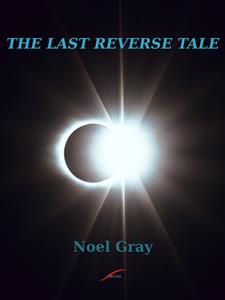
The Last Reverse Tale A collection of stories that trace the path of absurdity as it makes its way in the lives of several proto-rational human beings. The Last Reverse Tale is the author’s first publication in the recent genre, Sotto Realism: subterranean realities that inhabit the imagination, fading away to little more than a whisper at the birth of each ordered, rational thought.
Das E-Book können Sie in Legimi-Apps oder einer beliebigen App lesen, die das folgende Format unterstützen:
Veröffentlichungsjahr: 2016
Ähnliche
















Noel Gray
© Noel Gray 2016
ONDINA PRESS
www.noelgraybooks.com
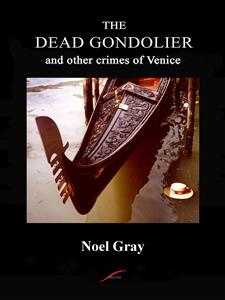
Book cover: original photograph by Matt Nelson, digitally altered by Ondina Press
Contents:
WARNING
THE DROP
CAFE QUIET
ANCIENT CARPETS
GLOBALIZATION
THE PAINTER'S EYE
TRACES
THE LEGEND
ONE WAY
STICKS AND STONES
THE PRESENT
OTHER SPACES
THE FIRST REVERSED TALE
WARNING
I have been to less than a few places in the world so I am not yet a seasoned traveller with countless tales to tell. For this reason I keep meticulous notes because memory fades faster than printing. Another reason is that foreign realities often disguise themselves as fantastic surfaces, keeping their ordinariness hidden from amateur visitors. It therefore pays to be alert - travel writing is a kind of frozen alertness, its thaw-date set for tomorrow. I have become so addicted to this form of alertness I now write ahead of my travels. It saves a lot of time and money, and the facts tend to be more interesting when they spring from the imagination rather than experience. After all, a good travel book captures the essence of a place, and facts have a habit of clouding this insight to the point of opacity. However, in keeping with the general tradition I will start with an actual experience and leave it to the reader to decide when I alter course and enter the world of pre-experiences.
THE DROP
My last travel note concerned the Brazilian National Gallery in Rio de Janeiro. In this grand colonial building, decked in lasting decay and within earshot of an Opera House atop an Assyrian decorated basement restaurant, was a copy of one of the hardest to find books on the planet. Its author was Professor Octavius von Hatzoff. Its title: The History of My Hair. After much haggling with the gallery's art librarian, I photocopied its contents and then planted myself in the Opera House restaurant, treating every word of von Hatzoff’s masterpiece as an aperitif to my lunch.
Similar to everyone, von Hatzoff started his life with hair, well, more or less. He initially arrived on the planet imitating the egg of his origin. However, when one is a baby it is still possible to have faith in nature’s cycles. So, by the time he was one-year-old von Hatzoff resembles a fat mop; from this age to when he was thirteen represents the happiest period of his infancy. He felt compelled to mention this in his book, because, had he known back then what was to follow he doubted his childhood would now be such a glorious memory.
In those innocent years he loved the wind. He was ecstatic with gales. The wind raking his hair into a coiffure of the theatre of the absurd, a style continuing to please the wind to this day, was for him pure delight. He even recalled laughing during the hurricane season. The rain he also loved. He would happily stand in any downpour and let his locks become dank and mattered. At such times he easily imagined himself a racing skipper, heroically crossing the finishing line through the sea’s crashing waves. He saw himself grasping the winner’s trophy with dripping hands, casually flicking his wet hair like a whip in the manner favoured by Galley Masters of long ago.
As for the faint possibility of grey hair making an early appearance in his youth, well, how even more dashing that would be. How sophisticated. How distinguished. When as an adult the grey did finally arrive, he secretly thought he looked more extinguished than distinguished. Fortunately, that morose observation was yet to come. Rather, in his youthful imagination grey strands marked him as a boy wonder, a genius, the infant Mozart of hide-and-seek. Did he ever use some talcum powder and dab a bit here and there so he could add weight to his dreams? Possibly.
Alas, turning fourteen brought the first crack in the heaven of this boy wonder. Some lad down the block told him, in front of all their mutual friends, that he looked like a snake with a gorilla’s head. He became blessed with the nickname, Boa Kong, and it stuck to him for a whole year. Beg as he would, Boa Kong could not convince his parents he had to have a haircut exactly like a famous gyrating rock star of the time. No son of mine is going to walk the streets looking like a monkey who has had its head in an oil sump, was what young von Hatzoff heard whenever he brought the subject up. Having your parents think you are a greased biped does leave its stains on the personality.
Luckily, the damage was not permanent. Relief was in sight. The day young von Hatzoff left home and started work, when he was fifteen, he vowed to use his first pay to get exactly the haircut he needed; and he did. Everything immediately improved. In the style of the time, one continuing with teenagers as I speak, he developed that essential skill of running his fingers from the front of his hair through to its back. Having executed this rebellious combing he then gave his head the obligatory flick. It was a great time in the history of his hair. Thick, luxuriant hair was a thing to flaunt.
The next crash came when it was necessary to look like a mop again. The hippie movement had started. Depression for young von Hatzoff was not far behind. Hair of course was a vital element in revolution. It was simply impossible to be a revolutionary with tidy hair. The two were basically incompatible. The logic behind this was obvious. Tidy hair belonged to the old guard, to parents, to fixed deposits. Alternatively, manic hair was the accepted badge of change. The problem for von Hatzoff was his hair turned fuzzy when it grew to any acceptable length.
Around this period young von Hatzoff left his job and enrolled at the university. On the one hand he was doing fine at his studies; on the other hand he looked as if he had recently been electrocuted. To imagine that each strand of his hair had a mind of its own would be wrong. Although his hair was still esoterically luxuriant, its rebel strands were not individually intelligent. To explain their wilful independence from each other he preferred to say that each one simply drew from his brain its own direction and destination. His philosophical education was indeed proving to be a wonderful thing.
However, fuzzy hair was not his only problem. Whenever he leaned against a concrete wall, several conservative strands of his hair had a tendency to grip the masonry. They did so with a vengeance. When he stood up, these rear-guard conservatives insisted on remaining behind. The pain and humiliation were indescribable. Several years of this left him with hair that looked like an unkempt lawn where someone had dug up, here and there, patches of weeds. Fearful the dreaded label of gorilla might make a comeback, the young scholar, after completing his studies and gaining a job at the same university, decided radical action was needed. In one brave moment he dashed around to the hairdresser and had his locks reformed into a more moderate style befitting his new profession.
For several years things proceeded nicely; his hair had regained its luxuriant look. As befitting a Professor of Philosophy, he gave up combing his hair with his fingers. Instead, he started to affect a slightly consistent rumpled look. One or two locks very graciously obliged this new fashion and often, at just the right moment, would drop down over one eye. On one occasion a lock caught fire when it fell into the bowl of his pipe, but this was a mere hiccup in an otherwise problem-free period. The good times were, however, coming to a close. Looming barely over the horizon were the Big Two in men’s hair dramas.




