


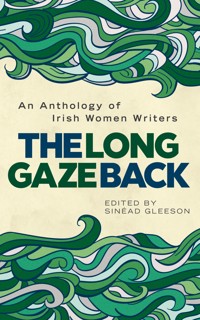
The Long Gaze Back E-Book
Erhalten Sie Zugang zu diesem und mehr als 300000 Büchern ab EUR 5,99 monatlich.
- Herausgeber: New Island
- Kategorie: Gesellschafts- und Liebesromane
- Sprache: Englisch
An instant classic, The Long Gaze Back, edited by Sinéad Gleeson, is an exhilarating anthology of thirty short stories by some of the most gifted women writers this island has ever produced. Featuring: Niamh Boyce, Elizabeth Bowen, Maeve Brennan, Mary Costello, June Caldwell, Lucy Caldwell, Evelyn Conlon, Anne Devlin, Maria Edgeworth, Anne Enright, Christine Dwyer Hickey, Norah Hoult, Mary Lavin, Eimear McBride, Molly McCloskey, Bernie McGill, Lisa McInerney, Belinda McKeon, Siobhán Mannion, Lia Mills, Nuala Ní Chonchúir, Éilís Ní Dhuibhne, Kate O'Brien, Roisín O'Donnell, E. M. Reapy, Charlotte Riddell, Eimear Ryan, Anakana Schofield, Somerville & Ross, Susan Stairs. Taken together, the collected works of these writers reveal an enrapturing, unnerving, and piercingly beautiful mosaic of a lively literary landscape. Spanning four centuries, The Long Gaze Back features 8 rare stories from deceased luminaries and forerunners, and 22 new stories by some of the most talented Irish women writers working today. The anthology presents an inclusive and celebratory portrait of the high calibre of contemporary literature in Ireland. These stories run the gamut from heartbreaking to humorous, but each leaves a lasting impression. They chart the passions, obligations, trials and tribulations of a variety of vividly-drawn characters with unflinching honesty and relentless compassion. These are stories to savour.
Sie lesen das E-Book in den Legimi-Apps auf:
Seitenzahl: 404
Veröffentlichungsjahr: 2015
Das E-Book (TTS) können Sie hören im Abo „Legimi Premium” in Legimi-Apps auf:
Ähnliche




















THE LONG GAZE BACK
THE LONGGAZE BACK
An Anthology of Irish Women Writers
Edited by Sinéad Gleeson
THE LONG GAZE BACK
First published in 2015 by
New Island Books
16 Priory Hall Office Park
Stillorgan
County Dublin
Republic of Ireland
www.newisland.ie
Editor’s Introduction © Sinéad Gleeson, 2015
Individual stories © Respective authors, 2015
‘A Bus from Tivoli’ by Kate O’Brien was originally published in Threshold, Vol 1 No 2, Summer 1957). Reprinted by the permission of David Higham as agents for the author.
‘When Miss Coles Made the Tea’ is from The Cocktail Bar by Norah Hoult, published by William Heinemann and reprinted by permission of the Random House Group Limited.
‘The Demon Lover’ is from The Demon Lover and Other Stories by Elizabeth Bowen, published by Jonathan Cape, reprinted by permission of the Random House Group Limited.
‘The Eldest Child’ is from The Springs of Affection: Stories of Dublin by Maeve Brennan, reprinted by the permission of Russell & Volkening as agents for the author. Copyright © 1997 by the Estate of Maeve Brennan.
‘In the Middle of the Fields’ is from The Stories of Mary Lavin: Volume III by Mary Lavin and is reprinted by the permission of the Estate of Mary Lavin. Copyright © 1985 by the Estate of Mary Lavin.
The authors have asserted their moral rights.
PRINT ISBN: 978-1-84840-420-5
EPUB ISBN: 978-1-84840-421-2
MOBI ISBN: 978-1-84840-422-9
All rights reserved. The material in this publication is protected by copyright law. Except as may be permitted by law, no part of the material may be reproduced (including by storage in a retrieval system) or transmitted in any form or by any means; adapted; rented or lent without the written permission of the copyright owner.
British Library Cataloguing Data.
A CIP catalogue record for this book is available from the British Library.
Contents
Editor’s Introduction
Acknowledgements
The Purple Jar Maria Edgeworth
Frank’s ResolveCharlotte Riddell
Poisson d’AvrilSomerville and Ross
In the Middle of the FieldsMary Lavin
Winter Journey (The Apparitions) Anne Devlin
The Meaning of Missing Evelyn Conlon
The Coast of Wales Éilís Ní Dhuibhne
The Crossing Lia Mills
The Cat and the Mouse Christine DwyerHickey
Three Stories About Love Anne Enright
As Seen From Space Susan Stairs
My Little Pyromaniac Mary Costello
Frogs Molly McCloskey
A Fuss Bernie McGill
SOMAT June Caldwell
Shut Your Mouth, Hélène Nuala NíChonchúir
I’ll Take You There Niamh Boyce
Beneath the Taps: A Testimonial Anakana Schofield
Somewhere To Be Siobhán Mannion
Through the Wall Eimear McBride
Multitudes
Editor’s Introduction
In 2001, I discovered a copy of Cutting the Night in Two: Short Stories by Irish Women Writers. Edited by Evelyn Conlon and Hans-Christian Oeser, it is a sizeable anthology of thirty- four writers, living and dead. I hadn’t encountered many all-female anthologies (of Irish writers), so I was intrigued. In my first years of discovering books, I was frequently drawn to the short story. Here was a form whose brevity belied the scale of thoughts and ideas within it. Anthologies are something of a gift for a curious reader: a chance to sit down in the company of several writers within one volume.
Until Cutting the Night in Two, nearly every anthology I opened – and I include books from all around the world – was heavily weighted towards male writers. Irish offerings were no different: pick up any anthology of Irish short stories published between 1950 and 1990, and there was a certain amount of predictability when it came to who was included. Scanning down the list of contributors, a reader would usually find that there were rarely more than five stories by women. Many anthologies had none, others had just two female writers, and it was always the ubiquitous names, the female stalwarts of the form like Mary Lavin, Edna O’Brien, Somerville and Ross, and Elizabeth Bowen. (Although one notable exception is Modern Irish Stories, edited by Caroline Walsh and published by The Irish Times in 1985. Of the thirty writers, sixteen are women.)
It’s only in the last three decades that we’ve seen a small number of collections focused solely on Irish women’s writing, including Janet Madden-Simpson’s A Woman’s Part: An Anthology of Short Fiction By and About Irish Women 1890–1960, The Female Line: Northern Irish Women’s Writers edited by Ruth Hooley, Virgins and Hyacinths edited by Caroline Walsh, Ailbhe Smyth’s Wildish Things: An Anthology of New Irish Women’s Writing and Territories of the Voice: Contemporary Short Stories by Irish Women Writers edited by Louise DeSalvo, Kathleen Walsh D’Arcy and Katherine Hogan. Personal taste and bias sways the choices made by any anthology editor, but in the past, selecting a comparable number of women to feature alongside their male contemporaries often wasn’t done, whatever the impetus for that was. The anthologies I mention prove that there wasn’t a shortage of female writers, but collections published before 1980 simply didn’t include them in large numbers. Visibility was once an issue, and in the last five years, regardless of gender, Irish writing has flourished and expanded. These writers are finding readers, winning prizes and creating a new collective: 2015 already feels like a very strong year for emerging Irish female voices, some of whom feature in this book. There is a palpable energy in Irish writing, and although many writers feel the pragmatic pull towards the novel, most are still enthusiastically committed to the shorter form.
Putting together an anthology can be construed as creating a canon, but many factors went into the selection of these stories. In choosing deceased writers, I tried to find stories that I both admired, and that hadn’t already been heavily anthologised. With the exception of ‘The Demon Lover’ by Elizabeth Bowen, most of these stories do not regularly, if ever, appear in anthologies. For a long time Maeve Brennan’s short stories were out of print, and ‘The Eldest Child’ originally appeared in 1969’s In and Out of Never Never Land. It wasn’t until a new collection, The Springs of Affection was reissued by Counterpoint Press in the late 1990s, that the story was republished. It’s even more difficult to locate the short stories of Norah Hoult – who appeared in Cutting the Night in Two – but London’s Persephone Books have kept her novel There Were No Windows in print. The story that appears here, ‘Miss Coles Makes the Tea’, appears in Hoult’s 1950 collection Cocktail Bar, which is out of print. Maria Edgeworth is better known for writing on social issues, and her novels, but she also wrote short stories. On the surface, ‘The Purple Jar’ is a cautionary tale of being careful what you wish for, or possibly the evils of capitalism, but one interpretation pitches it as a metaphor for menstruation.
I wanted this book to look back, as well as forward: to trace a line to the past when women publishing their writing was rare, and often discouraged. ‘Frank’s Response’ comes from Charlotte Riddell’s collection Frank Sinclair’s Wife: And Other Stories, but even though Riddell was a prolific writer, she wrote under the androgynous pseudonym of F. G. Trafford until her eighth book was published. Before the start of the twentieth century, writing was often only accessible to those of a certain class. The formidable duo of Somerville and Ross wrote from a different, ascendency position, and the story here, ‘Poisson d’Avril’, offers both historical context of a bygone era, as well as much comedy. One of the best-known stories in this collection is Elizabeth Bowen’s ‘The Demon Lover’. Is it a ghost story or an account of psychological breakdown? It also references both World Wars and the long-lasting effect each had on individuals and on the physical make-up of a city.
Much of the early work included here shows women straining against the gendered roles of the time. The young widow in Mary Lavin’s ‘In the Middle of the Fields’ tries to run the family farm while staving off grief and unwanted male attention. In Maeve Brennan’s ‘The Eldest Child’, Mrs Bagot, the bereaved mother of a newborn, battles grief and is instructed to be stoic and move on.
In some ways this book is a triptych: deceased classic writers sit alongside the feted names of the last two decades and the next generation of new voices. This is why the stories are published chronologically. As the title suggests, the book is rooted in the present with emerging writers, and looks all the way back to the flag bearers of Irish women’s writing. And it’s a long arc: there are 218 years between the oldest and youngest writer in the collection (Maria Edgeworth and Eimear Ryan, respectively).
The writers were not given a theme or any guidance as to what they could, or should, write about. As with any anthology, the diversity and range of issues raised is very broad. Certainly, there are examinations of inner lives and of things that only affect women – pregnancy, miscarriage, sisterhood – but within these stories there are universal truths. In Lucy Caldwell’s ‘Multitudes’, a new mother watches as her baby struggles to survive, while Eimear McBride’s reluctant mother in ‘Through the Wall’ handles maternity very differently. Siobhan Mannion’s character in ‘Somewhere to Be’ has a jarring experience in the sea, which recalls another recent trauma. In the second of Anne Enright’s ‘Three Stories about Love’, homesickness haunts a pregnant Irish woman living in Australia. ‘You’re not far away until you have a baby, and then you’re really, really far away,’ she says.
Leave-taking and distance is often a feature of Irish writing, from leaving behind a small town, in Lisa McInerney’s ‘Berghain’, or an entire country, in Belinda McKeon’s ‘Long Distance’ – although Evelyn Conlon’s ‘The Meaning of Missing’ focuses on those who are left behind when others emigrate. There’s the strange outsiderness of the woman obsessed with baths and plumbing in Anakana Schofield’s ‘Beneath the Taps’, and along with June Caldwell’s ‘SOMAT’, it’s one of the most experimental stories in the book in terms of language and form.
Several stories deal with lost potential, missed opportunities and what happens when other people impose their expectations on us. Hélène, the young American frontier girl in Nuala Ní Chonchúir’s story, wonders why she isn’t encouraged to go to school. Niamh Boyce’s protagonist is a grown woman, a wife, a neighbour, and yet her choices are thwarted. Many stories deal with the complexity of family relationships, including the mother and son trying to navigate a new life in ‘As Seen From Space’ by Susan Stairs.
There is as much overlap as there are distinct ideas among the thirty stories. Defiance and aspiration are motivators: in Norah Hoult’s story, Olive is determined not to let her deafness hold her back, while the mystery behind a young girl’s blindness in ‘The Cat and the Mouse’ by Christine Dwyer Hickey is finally revealed.
The writers are all Irish, or based here, but not all the stories take place in Ireland. Molly McCloskey draws on her US background and sets ‘Frogs’ in Portland for a reunion that offers promise only to turn into something else. Kate O’Brien lived away from Ireland for much of her life, and wrote many travel pieces. In ‘A Bus from Tivoli’, an Irishwoman abroad in Italy seeks solace and independence, only to find herself receiving unwanted attention. The heat and claustrophobia of ‘The Crossing’ by Lia Mills also echoes the crumbling marriage in the story.
There are mothers and daughters, pregnant women, and childless ones, young girls on the cusp of life and women at the end of it. In ‘The Coast of Wales’, a widow finds comfort in the routine and memory, while Eimear Ryan’s character in ‘Lane in Stay’ reinvents herself dramatically after her husband dies.
There are ghosts in these pages, some actual, some metaphysical, and many are generated by the fact that we all have a past, receding further and further in the rear- view mirror. In ‘My Little Pyromaniac’ by Mary Costello, sometimes the thing you want to escape most is literally on your doorstep. An ex-boyfriend makes a current one feel uneasy in E. M. Reapy’s ‘Gustavo’. The woman in Anne Devlin’s ‘Winter Journey (The Apparitions)’ has travelled all over Europe, but still is troubled by her youth. For another Northern Irish writer, Bernie McGill, a death in the present reawakens an unwanted scene from the past.
I hope that The Long Gaze Back finds new readers for the older writers included here, and that the new and existing voices reinforce the breadth and brilliance of Irish women’s writing. The book’s title is a quote from Maeve Brennan’s novella, The Visitor, and I hope captures the sense of looking back over the long arc of Irish women’s writing. Mary Lavin said there was a ‘large deal of detection in the short story’, and all of these stories are about figuring things out, exploration and questioning ourselves and all around us – something that fiction can encourage each of us to do.
Sinéad Gleeson,
Dublin,
Summer 2015
Acknowledgements
I’m indebted to Eoin Purcell, former commissioning editor at New Island, for agreeing to this idea after a random comment from me. Edwin Higel and Daniel Bolger have been very supportive of the project, and helped to get it over the finish line. Thanks to Mariel, Justin and all at New Island for their support of the book and for championing it. A special thank you to Hannah Shorten, who worked tirelessly to help locate stories and chase copyright clearance.
Many people offered advice on specific writers, works and anthologies, including Professor Margaret Kelleher, Evelyn Conlon, Cormac Kinsella, Rosita Boland and particularly Dr Eibhear Walsh.
Huge thanks to Martin Gleeson for all his work on the cover design and illustration.
Finally, thank you to the writers whose wonderful work makes up this collection.
Maria Edgeworth
Maria Edgeworth was born in Oxfordshire in 1768 but moved with her family to Edgeworthstown, Co. Longford when she was five. There, she wrote novels, short stories, children’s literature and essays on politics and social issues. During the Famine, she worked to help the starving, and wrote Orlandino – a children’s story – to benefit the Poor Relief Fund. She is best known for her novels, Castle Rackrent (1800), which garnered praise from Sir Walter Scott) as well as Belinda (1801) and The Absentee (1812). Edgeworth died in 1849 aged eighty-one.
The Purple Jar
Rosamond, a little girl of about seven years old, was walking with her mother in the streets of London. As she passed along, she looked in at the windows of several shops, and she saw a great variety of different sorts of things, of which she did not know the use, or even the names. She wished to stop to look at them; but there was a great number of people in the streets, and a great many carts and carriages and wheelbarrows, and she was afraid to let go her mother’s hand.
‘Oh! Mother, how happy I should be,’ said she, as she passed a toyshop, ‘if I had all these pretty things!’
‘What, all! Do you wish for them all, Rosamond?’
‘Yes, Mamma, all.’
As she spoke, they came to a milliner’s shop; the windows were hung with ribbons and lace, and festoons of artificial flowers.
‘Oh! Mamma, what beautiful roses! Won’t you buy some of them?’
‘No, my dear.’
‘Why?’
‘Because I don’t want them, my dear.’
They went a little farther, and they came to another shop, which caught Rosamond’s eye. It was a jeweler’s shop; and there were a great many pretty baubles, ranged in drawers behind glass.
‘Mamma, you’ll buy some of these?’
‘Which of them, Rosamond?’
‘Which? I don’t know which; but any of them, for they are all pretty.’
‘Yes, they are all pretty; but of what use would they be to me?’
‘Use! Oh, I’m sure you could find some use or other, if you would only buy them first.’
‘But I would rather find out the use first.’
Rosamond was very sorry that her mother wanted nothing. Presently, however, they came to a shop, which appeared to her far more beautiful than the rest. It was a chemist’s shop; but she did not know that.
‘Oh, Mother! Oh!’ cried she, pulling her mother’s hand. ‘Look! Look! Blue, green, red, yellow, and purple! Oh, Mamma, what beautiful things! Won’t you buy some of these?’
Still her mother answered as before, ‘What use would they be to me, Rosamond?’
‘You might put flowers in them, Mamma, and they would look so pretty on the chimneypiece. I wish I had one of them.’
‘You have a flower vase,’ said her mother; ‘and that is not for flowers.’
‘But I could use it for a flower vase, Mamma, you know.’
‘Perhaps if you were to see it nearer, if you were to examine it, you might be disappointed.’
‘No, indeed; I’m sure I should not. I should like it exceedingly.’
Rosamond kept her head turned to look at the purple vase till she could see it no longer.
‘Then, Mother,’ said she, after a pause, ‘perhaps you have no money.’
‘Yes, I have.’
‘Dear me! If I had money, I would buy roses, and boxes, and purple flowerpots, and everything.’ Rosamond was obliged to pause in the midst of her speech.
‘Oh, Mamma, would you stop a minute for me? I have got a stone in my shoe; it hurts me very much.’
‘How comes there to be a stone in your shoe?’
‘Because of this great hole, Mamma – it comes in there: my shoes are quite worn out; I wish you’d be so very good as to give me another pair.’
‘Nay, Rosamond, but I have not money enough to buy shoes, and flowerpots, and boxes, and everything.’
Rosamond thought that was a great pity. But now her foot, which had been hurt by the stone, began to give her so much pain that she was obliged to hop every other step, and she could think of nothing else. They came to a shoemaker’s shop soon afterwards.
‘There! There! Mamma, there are shoes – there are little shoes that would just fit me; and you know shoes would be really of use to me.’
‘Yes, so they would, Rosamond. Come in.’
She followed her mother into the shop. Mr Sole, the shoemaker, had a great many customers, and his shop was full, so they were obliged to wait.
‘Well, Rosamond,’ said her mother, ‘you don’t think this shop so pretty as the rest?’
‘No, not nearly; it’s black and dark, and there are nothing but shoes all round; and besides, there’s a very disagreeable smell.’
‘That smell is the smell of new leather.’
‘Is it? Oh!’ said Rosamond, looking round, ‘there is a pair of little shoes; they’ll just fit me, I’m sure.’
‘Perhaps they might, but you cannot be sure till you have tried them on, any more than you can be quite sure that you should like the purple vase exceedingly, till you have examined it more attentively.’
‘Why, I don’t know about the shoes, certainly, till I’ve tried; but, mamma, I’m quite sure I should like the flowerpot.’
‘Well, which would you rather have, that jar, or a pair of shoes? I will buy either for you.’
‘Dear Mamma, thank you – but if you could buy both?’
‘No, not both.’
‘Then the jar, if you please.’
‘But I should tell you that I shall not give you another pair of shoes this month.’
‘This month! That’s a very long time indeed. You can’t think how these hurt me. I believe I’d better have the new shoes –but yet, that purple flowerpot – Oh, indeed, Mamma, these shoes are not so very, very bad; I think I might wear them a little longer; and the month will soon be over: I can make them last to the end of the month, can’t I? Don’t you think so, Mamma?’
‘Nay, my dear, I want you to think for yourself: you will have time enough to consider about it whilst I speak to Mr Sole about my boots.’
Mr Sole was by this time at leisure; and whilst her mother was speaking to him, Rosamond stood in profound meditation, with one shoe on, and the other in her hand.
‘Well, my dear, have you decided?’
‘Mamma! – Yes – I believe. If you please – I should like the flowerpot; that is, if you won’t think me very silly, Mamma.’
‘Why, as to that, I can’t promise you, Rosamond; but when you are to judge for yourself, you should choose what will make you the happiest; and then it would not signify who thought you silly.’
‘Then, Mamma, if that’s all, I’m sure the flowerpot would make me the happiest,’ said she, putting on her old shoe again; ‘so I choose the flowerpot.’
‘Very well, you shall have it: clasp your shoe and come home.’
Rosamond clasped her shoe, and ran after her mother: it was not long before the shoe came down at the heel, and many times was she obliged to stop, to take the stones out of her shoe, and often was she obliged to hop with pain; but still the thoughts of the purple flowerpot prevailed, and she persisted in her choice.
When they came to the shop with the large window, Rosamond felt her joy redouble, upon hearing her mother desire the servant, who was with them, to buy the purple jar, and bring it home. He had other commissions, so he did not return with them. Rosamond, as soon as she got in, ran to gather all her own flowers, which she had in a corner of her mother’s garden.
‘I’m afraid they’ll be dead before the flowerpot comes, Rosamond,’ said her mother to her, when she was coming in with the flowers in her lap.
‘No, indeed, Mamma, it will come home very soon, I dare say; and shan’t I be very happy putting them into the purple flowerpot?’
‘I hope so, my dear.’
The servant was much longer returning home than Rosamond had expected; but at length he came, and brought with him the long wished-for jar. The moment it was set down upon the table, Rosamond ran up with an exclamation of joy.
‘I may have it now, Mamma?’
‘Yes, my dear, it is yours.’
Rosamond poured the flowers from her lap upon the carpet, and seized the purple flowerpot. ‘Oh, dear Mother!’ cried she, as soon as she had taken off the top, ‘but there’s something dark in it – it smells very disagreeable: what is in it? I didn’t want this black stuff.’
‘Nor I neither, my dear.’
‘But what shall I do with it, Mamma?’
‘That I cannot tell.’
‘But it will be of no use to me, Mamma.’
‘That I can’t help.’
‘But I must pour it out, and fill the flowerpot with water.’
‘That’s as you please, my dear.’
‘Will you lend me a bowl to pour it into, Mamma?’
‘That was more than I promised you, my dear; but I will lend you a bowl.’
The bowl was produced, and Rosamond proceeded to empty the purple vase. But to her surprise and disappointment, when it was entirely empty, she found that it was no longer a purple vase! It was a plain white glass jar, which had appeared to have that beautiful colour merely from the liquor with which it had been filled.
Little Rosamond burst into tears.
‘Why should you cry, my dear?’ said her mother; ‘it will be of as much use to you now as ever for a flower vase.’
‘But it won’t look so pretty on the chimneypiece. I am sure, if I had known that it was not really purple, I should not have wished to have it so much.’
‘But didn’t I tell you that you had not examined it, and that perhaps you would be disappointed?’
‘And so I am disappointed indeed. I wish I had believed you beforehand. Now I had much rather have the shoes, for I shall not be able to walk all this month: even walking home that little way hurt me exceedingly. Mamma, I’ll give you the flowerpot back again, and that purple stuff and all, if you’ll only give me the shoes.’
‘No, Rosamond, you must abide by your own choice; and now the best thing you can possibly do is to bear your disappointment with good humour.’
‘I will bear it as well as I can,’ said Rosamond, wiping her eyes, and she began slowly and sorrowfully to fill the vase with flowers.
But Rosamond’s disappointment did not end here: many were the difficulties and distresses into which her imprudent choice brought her before the end of the month. Every day her shoes grew worse and worse, till at last she could neither run, dance, jump, nor walk in them. Whenever Rosamond was called to see anything, she was pulling up her shoes at the heels, and was sure to be too late. Whenever her mother was going out to walk, she could not take Rosamond with her, for Rosamond had no soles to her shoes; and at length, on the very last day of the month, it happened that her father proposed to take her and her brother to a glasshouse which she had long wished to see. She was very happy; but, when she was quite ready, had her hat and gloves on, and was making haste downstairs to her brother and father, who were waiting at the hall door for her, the shoe dropped off; she put it on again in a great hurry; but, as she was going across the hall, her father turned round.
‘Why are you walking slipshod? No one must walk slipshod with me. Why, Rosamond,’ said he, looking at her shoes with disgust, ‘I thought that you were always neat. Go, I cannot take you with me.’
Rosamond coloured and retired. ‘Oh, Mamma,’ said she, as she took off her hat, ‘how I wish that I had chosen the shoes! They would have been of so much more use to me than that jar: however, I am sure – no, not quite sure – but I hope I shall be wiser another time.’
Charlotte Riddell
Charlotte Riddell was born in Carrickfergus, Co. Antrim in 1832 and wrote numerous novels and short story collections. Her works include The Moors and the Fens (which appeared under the pseudonym F. G. Trafford, as did her first eight novels), The Rich Husband, Fairy Water and A Struggle for Fame. She also published short stories (including several ghost stories) and her collections include Frank Sinclair’s Wife: And Other Stories, Weird Stories, Idle Tales and The Collected Ghost Stories of Mrs J H Riddell. Riddell was the first author to be paid a pension by the Society of Authors and died in 1906.
Frank’s Resolve
One summer’s evening, ten years after his marriage, Frank Sinclair left his office with the intention of walking home. It was pleasantly cool after the heat of the day, and as he had scarcely moved from his desk since early in the morning when he came into the City, the prospect of a walk, even through familiar thoroughfares, between endless rows of houses, seemed pleasant to him.
No person who has not been in a struggling business, can imagine the relief of mind it is to a man to feel that even for one hour the pressure is relaxed, that toward to-morrow he need not look forward with dread; and after years of anxiety, after days and nights of hard thought and painful work, Frank Sinclair was able at last to say, ‘The battle is over, and I have won.’
For the battle was over, and the fight won so far as this, that in pecuniary matters he was the day forward instead of the day behind; that he had the typical five-pound note in hand without which no City man can be pronounced happy, that he was, still to speak allegorically, able to hatch his chickens before going through the process of counting them. Consequently, so far as a tranquil mind concerning business could tend to make him happy, Frank Sinclair might that summer’s evening have been so called.
But he had other and nearer causes for anxiety than any mere pecuniary affair; and now that the strain of business pressure was relaxed, that the entangled skein of commercial matters had been made comparatively smooth, the man could not help thinking about home and home sorrows; about his wife who was no helpmate; about his children who were neglected; about his house which was wretched; about domestic extravagance which had added in no small degree to increase the troubles he had been daily called upon to endure, in that modern pandemonium where men pant out their lives and peril their souls, not for wealth, not even for competence, but just for the sake of a mere subsistence, the bread of which is bitter to the palate, and the waters whereof are briny to the taste.
It takes a man or woman a long time to confess that he or she has made just that one mistake which is utterly irrevocable. Old recollections, the fond memories of tender words whispered when the dusty roads of life were still untraversed, when it was all greensward underfoot, and blossoming roses overhead; the very dread, it may be, of the thought of the way still to be traversed with an uncongenial companion: all these things conspire to induce human beings to make the best of their bargain and to lay the fault of domestic unhappiness, as long as possible, on any cause save that of utter unsuitability.
Frank Sinclair had striven to do this, at any rate, and even as he walked home that evening he made excuses for the woman who was his wife, and vowed, if it lay in his power to make a better thing of the future, the future should be better than the past had proved.
Only, how was he to set about it? Between them there had grown up insensibly a barrier, strong in precise proportion as it was indescribable.
Arabella had indeed, as Patty stated, fallen amongst people whose friendship (save the mark!) and sympathy (that a good word should ever come to be so misapplied!) were effecting infinite harm.
There were persons who, never having done a day’s real work in their lives, had no faith in the real work of others; who, just as every man thinks he can drive a gig through London, believed there was nothing difficult in conducting a business; who had a general contempt for men, their uselessness, their selfishness, their exacting ideas. Even the males amongst that clique had a way of saying, ‘If you want a thing done well, get a woman to do it,’ whilst all the time the women did nothing except complain about the shortcomings of the rival sex.
Those were the days before ‘Women’s Rights’ was discussed either privately or publicly. ‘Women’s Wrongs,’ a much more prolific and dangerous subject was then the popular question in certain circles. Ladies who were married, and ladies who were single, alike agreed in condemning the arrangements of Providence as regarded mankind.
People may object to the institution of women’s rights, and the open discussion of their fitness for this or that trade and profession, but there can be no question that an open sore is better than one falsely healed; and that if women think themselves unfairly treated, it is better they should say so in the market-place than beside the domestic hearth; that the question should be decided by the experience of the world, rather than sulked over between husband and wife, father and daughter.
If it gives the smallest pleasure to a gentlewoman to go out and earn her own bread instead of letting some one more competent earn it for her, there cannot, I apprehend, be any reason why she should be prevented from doing so. England is a free country, which means that we reside in a land where one human being has full liberty to annoy another to his heart’s content, and why should woman be an exception to this rule? The times in which a father could exercise a certain control over his son’s career have had their day, and are gone; and if modern daughters develope a taste for ‘cutting their own grass,’ to use an inelegant but expressive phrase, paterfamilias may be quite certain it is much more to his interest they should do so, than sit at home in that fearful state of idleness which obtains in modern English homes – thinking of the author of their being as a surly creature, who delights not in the latest costume dress, in the sweetest hat that ever came out of a milliner’s shop, or in the heaviest plaits of hair that ever were bought ‘cheaper than cheap,’ through the kind offices of a friend in Germany.
For my own part, if women choose to go out and work with and like men, it seems to me that it is simple folly to raise any objection.
Years ago, a widower, burying his second wife, loudly expressed his intention of flinging himself into the grave after her coffin, and was indeed, only restrained from doing so by the strong arms of his friends, who with difficulty prevented the execution of his project.
The scene was a suburban burial-ground, where people were buried daily by the score; and as familiarity breeds contempt, or at least indifference, the officiating clergyman proceeded with the service, unmoved alike by the man’s grief and the bystanders’ expostulations.
Suddenly, however, his noisy lamentations becoming quite unendurable, the curate very mildly remarked, ‘If the gentleman wishes to get into the grave, there is nothing to prevent his doing so,’ which unexpected permission at once ended the scene.
The gentleman did not jump in after his wife, any more than a certain other gentleman died on the floor of the house of Commons; and it is the firm belief of the present writer that if women’s rights had never met with the smallest opposition – had a wise public said, ‘You shall take men’s work if you desire it; you shall hedge and ditch; you shall walk four miles to your work in the winter mornings; you shall go down into the sewers; you shall drive dust carts; you shall have businesses, and leave your homes every morning at eight o’clock, so as to reach office by nine; you shall have full liberty to go out, no matter how ill you feel; you shall forget your sex, and let men forget it too, and treat you as they would men, peremptorily and roughly; you shall have households to keep, and incompetent husbands if you like, boring you when you come home for money; you shall go out in all weathers, and face all difficulties, and take all responsibilities, since such is your pleasure’ – we should never have had another word of women doing men’s work, or wanting to do it either.
It was the gross ignorance of women concerning the battle of life that made them ever wish to go out into it; and I hope and trust the day may come, though writer or reader may not live to see it, when, for the sake of England’s honour and England’s glory, her daughters, wearied of the world’s clamour and the world’s unkindness, may thankfully creep back home, and tell to their grandchildren and their great-grandchildren how much better and happier a thing it is to rule a household aright, and to make bright a fireside for a man’s return, than to go forth through the mud and the rain, the melting heat and the suffocating dust, without a dear face and kindly smile looking forth from the open door to welcome one’s return.
It is dangerous to preach an old religion when a new is abroad; and, therefore, to moderate the fury of the storm with which these remarks are certain to be assailed, I will just add in all honesty, that I believe the last state of English society to be far more healthy than that which preceded it. The sore long concealed has been exhibited at last. Instead of women saying over their tea, ‘Men do no real work,’ they are crying aloud in the streets, ‘Give us work!’ and the only matter for real regret in the whole business is that there cannot be found work enough to give them, since it would prove better for women to learn sympathy with men from actual experience than for them to refrain from sympathy altogether.
But, as has been said, on that especial summer evening when Frank Sinclair left the City in order to walk home, women’s rights had not been thought of – not in England, at least, save vaguely.
The preliminary notes of war had sounded, it is true, and were carried to human ears like voices from a far distance; but what had actually come to pass was this – that wives were looking distastefully on former occupations, without having taken courage to lay hold on new; that daughters were taking part with their mothers against the stinginess which refused them unlimited credit, and insisted that a ten-pound note should last them, oh! for ever so long; that the willing service, the loving thoughtfulness of a previous generation had become a mere memory of the past, and that women had left their own especial sphere without actually aspiring to shine in that of man.
It was an uncomfortable transition state, that, in which it fared very hardly with many a man who had really very few sins of his own to answer for, and who was merely made the unhappy scapegoat, destined to bear the real or fancied transgressions of previous generations of husbands, forth into the wilderness.
The result to each male who chanced to be selected for this purpose was uncomfortable, and for a long time previously Frank had found his domestic situation unpleasant; and as he walked along, thankful at heart for the pecuniary ease time had brought, his thoughts recurred over and over again to home troubles, and he began marvelling if the fault lay at all with him, and if so, how he could remedy it.
Once more he recalled the past, carefully weighing each step, and asking himself how matters would have been had he acted in this way, or in that. Had he been too reserved? Had he been moody, irritable, apparently ungenerous? Might his wife not have mistaken his ill-concealed anxiety, for temper, his desire for economy, for meanness, his abstraction, for want of love? Putting aside the memory of that bright sunshiny time at Mulford, before they twain became one, he could not, even for the children’s sake, endure that the mother of his girls and his boys should drift any further away from his affection.
He would make an effort to come to a thorough understanding with her. Sitting in the soft evening light, he would make the experiment of taking her fully into his confidence, and trying to make her understand the precise nature and extent of the difficulties which he had encountered and overcome.
Somerville and Ross
Edith Somerville (1858–1949) and Violet Florence Martin (Martin Ross, 1862–1915) were cousins who wrote collaboratively as Somerville and Ross. As a writing duo, they published fourteen stories and novels, including The Real Charlotte, In the Vine Country, Through Connemara in a Governess Cart and The Experiences of an Irish R. M. Their first book, An Irish Cousin, was published in 1889. When Violet died in 1915, Edith often wrote under their dual name, and published a further nine novels herself from 1919 to 1949, including Mount Music, The Big House at Inver, An Incorruptible Irishman and Maria and Some Other Dogs, published in 1949, the year that she died at the age of ninety-one.
Poisson d’Avril
The atmosphere of the waiting-room set at naught at a single glance the theory that there can be no smoke without fire. The stationmaster, when remonstrated with, stated, as an incontrovertible fact, that any chimney in the world would smoke in a south-easterly wind, and further, said there wasn’t a poker, and that if you poked the fire the grate would fall out. He was, however, sympathetic, and went on his knees before the smouldering mound of slack, endeavouring to charm it to a smile by subtle proddings with the handle of the ticket-punch. Finally, he took me to his own kitchen fire and talked politics and salmon-fishing, the former with judicious attention to my presumed point of view, and careful suppression of his own, the latter with no less tactful regard for my admission that for three days I had not caught a fish, while the steam rose from my wet boots, in witness of the ten miles of rain through which an outside car had carried me.
Before the train was signalled I realised for the hundredth time the magnificent superiority of the Irish mind to the trammels of officialdom, and the inveterate supremacy in Ireland of the Personal Element.
‘You might get a foot-warmer at Carrig Junction,’ said a species of lay porter in a knitted jersey, ramming my suitcase upside down under the seat. ‘Sometimes they’re in it, and more times they’re not.’
The train dragged itself rheumatically from the station, and a cold spring rain – the time was the middle of a most inclement April – smote it in flank as it came into the open. I pulled up both windows and began to smoke; there is, at least, a semblance of warmth in a thoroughly vitiated atmosphere.
It is my wife’s habit to assert that I do not read her letters, and being now on my way to join her and my family in Gloucestershire, it seemed a sound thing to study again her latest letter of instructions.
‘I am starting to-day, as Alice wrote to say we must be there two days before the wedding, so as to have a rehearsal for the pages. Their dresses have come, and they look too delicious in them—’
(I here omit profuse particulars not pertinent to this tale)—
‘It is sickening for you to have had such bad sport. If the worst comes to the worst couldn’t you buy one?—’
I smote my hand upon my knee. I had forgotten the infernal salmon! What a score for Philippa! If these contretemps would only teach her that I was not to be relied upon, they would have their uses, but experience is wasted upon her; I have no objection to being called an idiot, but, that being so, I ought to be allowed the privileges and exemptions proper to idiots. Philippa had, no doubt, written to Alice Hervey, and assured her that Sinclair would be only too delighted to bring her a salmon, and Alice Hervey, who was rich enough to find much enjoyment in saving money, would reckon upon it, to its final fin in mayonnaise.
Plunged in morose meditations, I progressed through a country parcelled out by shaky and crooked walls into a patchwood of hazel scrub and rocky fields, veiled in rain. About every six miles there was a station, wet and windswept; at one the sole occurrence was the presentation of a newspaper to the guard by the stationmaster; at the next the guard read aloud some choice excerpts from the same to the porter. The Personal Element was potent on this branch of the Munster and Connaught Railway. Routine, abhorrent to all artistic minds, was sheathed in conversation; even the engine-driver, a functionary ordinarily as aloof as the Mikado, alleviated his enforced isolation by sociable shrieks to every level crossing, while the long row of public-houses that formed, as far as I could judge, the town of Carrig, received a special and, as it seemed, humorous salutation.
The Time-Table decreed that we were to spend ten minutes at Carrig Junction; it was fifteen before the crowd of market people on the platform had been assimilated; finally, the window of a neighbouring carriage was flung open, and a wrathful English voice asked how much longer the train was going to wait. The stationmaster, who was at the moment engrossed in conversation with the guard and a man who was carrying a long parcel wrapped in newspaper, looked round, and said gravely—
‘Well now, that’s a mystery!’
The man with the parcel turned away, and convulsively studied a poster. The guard put his hand over his mouth.
The voice, still more wrathfully, demanded the earliest hour at which its owner could get to Belfast.
‘Ye’ll be asking me next when I take me breakfast,’ replied the stationmaster, without haste or palpable annoyance.
The window went up again with a bang, the man with the parcel dug the guard in the ribs with his elbow, and the parcel slipped from under his arm and fell on the platform.
‘Oh my! oh my! Me fish!’ exclaimed the man, solicitously picking up a remarkably good-looking salmon that had slipped from its wrapping of newspaper.
Inspiration came to me, and I, in my turn, opened my window and summoned the stationmaster.
Would his friend sell me the salmon? The stationmaster entered upon the mission with ardour, but without success.
No; the gentleman was only just after running down to the town for it in the delay, but why wouldn’t I run down and get one for myself? There was half-a-dozen more of them below at Coffey’s, selling cheap; there would be time enough, the mail wasn’t signalled yet.
I jumped from the carriage and doubled out of the station at top speed, followed by an assurance from the guard that he would not forget me.
Congratulating myself on the ascendancy of the Personal Element, I sped through the soapy limestone mud towards the public-houses. En route I met a heated man carrying yet another salmon, who, without preamble, informed me that there were three or four more good fish in it, and that he was after running down from the train himself.
‘Ye have whips o’ time!’ he called after me. ‘It’s the first house that’s not a public-house. Ye’ll see boots in the window – she’ll give them for tenpence a pound if ye’re stiff with her!’
I ran past the public houses.
‘Tenpence a pound!’ I exclaimed inwardly, ‘at this time of year! That’s good enough.’
Here I perceived the house with boots in the window, and dived into its dark doorway.
A cobbler was at work behind a low counter. He mumbled something about Herself, through lengths of waxed thread that hung across his mouth, a fat woman appeared at an inner door, and at that moment I heard, appallingly near, the whistle of the incoming mail. The fat woman grasped the situation in an instant, and with what appeared but one movement, snatched a large fish from the floor of the room behind her and flung a newspaper round it.
‘Eight pound weight!’ she said swiftly. ‘Ten shillings!’
A convulsive effort of mental arithmetic assured me that this was more than tenpence a pound, but it was not the moment for stiffness. I shoved a half-sovereign into her fishy hand, clasped my salmon in my arms, and ran.
Needless to say it was uphill, and at the steepest gradient another whistle stabbed me like a spur; above the station roof successive and advancing puffs of steam warned me that the worst had probably happened, but still I ran. When I gained the platform my train was already clear of it, but the Personal Element held good. Every soul in the station, or so it seemed to me, lifted up his voice and yelled. The stationmaster put his fingers in his mouth and sent after the departing train an unearthly whistle, with a high trajectory and a serrated edge. It took effect; the train slackened, I plunged from the platform and followed it up the rails, and every window in both trains blossomed with the heads of deeply interested spectators. The guard met me on the line, very apologetic and primed with an explanation that the gentleman going for the boat-train wouldn’t let him wait any longer, while from our rear came an exultant cry from the station-master.
‘Ye told him ye wouldn’t forget him!’




