


6,99 €
Mehr erfahren.
- Herausgeber: Corvus
- Kategorie: Gesellschafts- und Liebesromane
- Sprache: Englisch
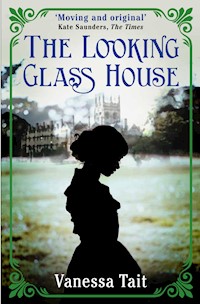
LONGLISTED FOR THE HWA DEBUT CROWN AWARD Oxford, 1862. Poor, plain Mary Prickett takes up her post as governess to the daughters of the Dean of Christ Church. When Mary meets Charles Dodgson, a friend of the family, she is flattered by his attentions and becomes convinced he plans to propose marriage. But it is also clear that he is drawn to the little girls in Mary's care, and on a boating trip one sunny day Mr Dodgson tells the story of Alice's Adventures in Wonderland a curious tale about the precocious Alice Liddell As Mary waits for her life to change, she becomes increasingly suspicious of Alice's friendship with Mr Dodgson. Before long, everything Mary believes is turned topsy-turvy, and her determination to get to the truth will have lasting consequences for all involved...
Das E-Book können Sie in Legimi-Apps oder einer beliebigen App lesen, die das folgende Format unterstützen:
Veröffentlichungsjahr: 2015
Ähnliche



















The Looking Glass House
Vanessa Tait
ATLANTIC BOOKS
London
Copyright page
Published in hardback in Great Britain in 2015 by Corvus, an imprint of Atlantic Books Ltd.
Copyright © Vanessa Tait, 2015
The moral right of Vanessa Tait to be identified as the author of this work has been asserted by her in accordance with the Copyright, Designs and Patents Act of 1988.
All rights reserved. No part of this publication may be reproduced, stored in a retrieval system, or transmitted in any form or by any means, electronic, mechanical, photocopying, recording, or otherwise, without the prior permission of both the copyright owner and the above publisher of this book.
This novel is entirely a work of fiction. The names, characters and incidents portrayed in it are the work of the author’s imagination. Any resemblance to actual persons, living or dead, events or localities, is entirely coincidental.
1 3 5 7 9 10 8 6 4 2
A CIP catalogue record for this book is available from the British Library.
Hardback ISBN: 978 1 78239 654 3
Trade paperback ISBN: 978 1 78239 682 6
E-book ISBN: 978 1 78239 655 0
Printed in Great Britain
Corvus
An imprint of Atlantic Books Ltd
Ormond House
26–27 Boswell Street
London WC1N 3JZ
www.atlantic-books.co.uk
Dedication
For my mother,
whose middle name is also Alice.
Contents
Chapter 1
Chapter 2
Chapter 3
Chapter 4
Chapter 5
Chapter 6
Chapter 7
Chapter 8
Chapter 9
Chapter 10
Chapter 11
Chapter 12
Chapter 13
Chapter 14
Chapter 15
Chapter 16
Chapter 17
Chapter 18
Chapter 19
Chapter 20
Chapter 21
Chapter 22
Chapter 23
Chapter 24
Chapter 25
Chapter 26
Chapter 27
Chapter 28
Chapter 29
Chapter 30
Chapter 31
Chapter 32
Chapter 33
Chapter 34
Epilogue
Postscript
Chapter 1
The expectation of a party, more perfect than the thing itself; the music room was alive with it. All day the bell had been ringing and boys from the vintner’s coming in with boxes of wine and canary and stacking them noisily on the sideboard. All day the housemaid had been on her knees at the fireplace until the orbs of the firedogs reflected the whole room in queasy miniature: the table cluttered with silver boxes, Mrs Liddell’s embroidered scene of Cupid, and the Dean’s chair sagging with scholarship and commandeered from his study for the evening.
On the sideboard sat a large bowl of fruit punch, the rafts of cut oranges and lemons half submerged. Next to it a cold collation: a tart of ox’s tongues, which rippled out like a choppy pink sea; a minaret of stuffed larks in cases and three trembling turrets of prawns in aspic.
From above: footsteps. Across the ceiling and down the stairs they came. As the door opened, the candles juddered in their sconces and the ivy on the wallpaper swayed on its stems. A woman entered, pushing three girls in front of her, she dressed in black, they in white and each carrying a basket of posies.
‘We are in a jungle, look how the wallpaper moves!’ said Alice.
‘What, in England?’ the governess said. ‘And anyway, your mother’s party is as far away from a jungle as I could imagine. Do not touch anything.’ Mary carried on the instructions she had begun upstairs. ‘Do not touch, do not rub your dresses. Hands by your sides. Do not fiddle! Especially with your hair. Only speak when you are spoken to. Look pleasant. Be polite.’
The three girls shuffled into place in front of her, three heads in descending order of size. Ina, who was thirteen, was the prettiest; her straight hair had been curled and held back with violet ribbons. Alice, who was ten, had a blunt fringe and a white pencil-line parting drawn down the middle of her head; no ribbons at all – too plain in Mary’s opinion. Edith, the youngest at nine years old, had red curly hair that reached to her shoulders. Mary reached down and tucked a lock of it behind Edith’s ears; she was shy, she must not hide behind it.
Mary had brushed her own hair until the blood had drained away from her wrists and her hair spread out down her back in a shining mass. Then she had gathered it up into a thick tail and wound it into a coil. Her mouth in the looking glass was full of pins. She had pinned it up into a bun, then more pins round the edge so that no strands would fall loose. Larger pins in the middle to keep it secure. Clips everywhere else for control and tightness. And for her cheeks a pinch, hard enough to bring tears to her eyes.
The fire snapped and spat and pushed out a smell of cloves and smoke. The collar of Mary’s new dress was already rubbing. She bent her neck the opposite way to try to relieve the pressure, but the collar was too tight.
The door flung open again with an exhalation and the children’s mother entered in a blaze of crimson: rubies scattered in her hair, diamonds piled round her neck, the points of light from the room reflected in them all.
‘My darlings, my dear ones, you all look divine!’ Mrs Liddell pressed her gloves to her bosom. ‘How proud I am. Now you will all be quite quite good, won’t you, for me, for your mama. Oh, Miss Prickett, please don’t stand by the cold collation, it is not a good backdrop for the children. Too much pink. Stand by the chest.’
Mary blushed. ‘Yes, ma’am.’ The children’s bones, under the stiff material of their dresses, felt frail, like those of birds.
‘The first guests are approaching, I heard their carriage,’ said Dean Liddell, coming in, brushing off his sleeve. ‘I had banked on a few more moments’ peace.’ He took up position just behind his wife, the long fingers that extended from the sleeves of his dinner jacket rubbing against each other irritably.
The doorbell rang. Mary breathed in inside her corset, her ribs grating against the whalebone struts. Now it would begin, she thought. Her life.
‘Mr and Mrs Farquhar,’ rang out the butler’s voice.
Her life up until this moment had not been what Mary had expected, or had been led to believe to expect from her books. But now that she had been taken on as the governess to the most important family in Oxford (she always italicized these words to herself), it must begin to take on a weight and a motion. A velocity in fact. And this party was the first sign of it.
The diamonds that hung beneath Mrs Farquhar’s ears were heavy enough to draw lines in her ear lobes. Mr Farquhar was as tight in his jacket as a fat beetle in its shell.
Mary would meet a different sort of person now, maybe even tonight. She might (she had thought of it all through the preceding night as she fell asleep in her unfamiliar bed) find herself exchanging some brief but deeply felt words. She might even leave an impression, now that she was here. She who had spun through life like a burr looking to hook its edges in.
It happened in literature; it could happen in life.
And, of course: the Queen. Someone from a fairy tale. She was the reason for all of this.
Tonight, Mary – plain, poor, obscure and little – was to breathe the very same air as the Queen and her consort, come to visit the Prince of Wales, who was matriculating at Christ Church.
In the music room looking glass Mary saw that, in spite of her efforts, her face proffered out of her collar like a dish of pork and potatoes. Her mouth was too big, looming above her high black ruffle. She pursed her lips to try and compress them into a rosebud. But she looked horrible, aggrieved, and she let them go slack. Mary was always being asked what the matter was, and had concluded that the problem lay in the shape of her lips when in repose.
The doorbell rang again and again. Nobody wanted to be early, nobody wanted to be late, so as a result they all arrived together. Soon the music room was crammed with people. They stood or sat, with flushed cheeks and brightly coloured dresses: carmine, turquoise and vermilion silks. Cigar smoke floated above them all in an acrid sea. Mary and the children found themselves pressed back more and more on the tea chest.
‘Dear me, have you moved from this spot yet? I thought not! Circulate, please, Miss Prickett. I want my children seen,’ said Mrs Liddell.
Mary blushed again. She pushed the children forward a step. But there was no one to circulate towards. Out of all of them she recognized only old Lady Tetbury, who still wore her spaniel curls though the fashion for them had long died out, and the Vice Chancellor, Mr Arundell, with his beard that projected from his chin as a solid thing. Neither of them was approachable, either for her or the children.
Mary turned and steered them all towards the middle of the crowd. She might find someone in there, in the hubbub, the hoots of laughter, the glint and the glare. Because governesses married, all the time. Just because she had been taken on in this capacity did not mean she could not find a position in another. In fact she thought it more likely that she would find a husband now that she was a governess to the Liddells than when she was sitting at home. She was twenty-eight years old now; she had done all the sitting at home she could manage.
Circulate, Mrs Liddell had said, as if they were all air and could easily pass through this mass of human bodies, with their chattering mouths and their smell of violets and sweat. Mary gripped the children by the shoulders and pushed them in front of her, heading for the middle of the room.
Ina twisted her head back. ‘Where are we going?’
Mary gestured to the centre of the room. ‘We must find someone.’
‘Who?’
‘Someone to talk to. Someone to receive your posies.’
Mary’s throat was dry. A servant appeared from somewhere with a tray of Madeira. A small glass of sherry would soothe it. She gulped it down and replaced the glass on the tray with a clatter that was lost in the noise of the room.
She squeezed her way through the crowd, pushing the children ahead. A handsome woman turned her face towards her; thin red veins criss-crossed the sides of her nostrils.
‘How nice to see you. Are you well?’
Mary blushed. ‘Yes, thank you.’
‘I saw your father the other day. He tells me your mother is sick. I was sorry to hear it.’
Her mother was not sick. Even if she were, her father, a steward at Trinity College, would never be friends with this woman, with her emeralds clustered round her neck. A burst of heat erupted over Mary’s face.
‘Oh,’ said the lady. She had noticed the children around Mary’s skirts; now she took in the plain black dress and the collar that bristled at Mary’s chin, and her hair, not ringleted, not jewelled.
All the pleasantness drained from her face. ‘Excuse me, I mistook you.’
The V of the woman’s back that was revealed by her dress contained two large flat moles. There was another tray to her left, on the table. Mary grabbed a glass from it. Above her head the glass drops of the chandeliers were polished to a dagger’s point. A halo of pain throbbed above her eyebrows. She ought not to have pulled her hair so tight.
There was always adversity in the opening chapter. It would not make sense otherwise.
Mary put on her smile again. She must find somebody standing on their own who looked interesting, at least to have some destination. She could perhaps catch their eye and smile, then come to rest quite naturally nearby.
But the children were already talking to somebody, a man, although he was not the destination she had had in mind. This man was slight and lopsided and his skin was as smooth as a child’s. His hair was long and lacquered; Mary could smell the sweetness of it. It ran smoothly over his head until it reached his ears, where it bubbled out like water over rocks.
‘I have no recollection of saying such a thing!’ Alice was saying to him.
‘Well, if it was not you then it must have been the cat who said it. Although I have not yet heard a cat talk, it does not mean that they reliably cannot, I suppose.’ He turned and put out his hand to Mary. ‘You must be the new governess; Miss Prickett, is it?’
His fingers were dry and smooth, but they had a surprising grip. Mary was about to say yes, and add something else that she had not yet thought of, but just then the noise in the room dropped away, as if off a cliff, and everyone turned towards the door.
Two men backed into the room dressed in crimson robes with the white fur of three or four small animals lining the collars; and two others in three-quarter-length silver coats, also with their backs to the party and bowing deeply. Next someone who could be a footman, in a jacket ribbed with gold and festooned with a complicated system of buttons, drawn up to his full height. ‘Her Majesty the Queen, Prince Albert and the Prince of Wales!’ he cried, and in they swept, surrounded by ladies-inwaiting, the Queen smiling pleasantly.
Mary had stopped breathing. She could not make them out properly amongst the jostling; she fully expected them to be magnificent. But Alice’s friend bent down and said to her:
‘I must say I didn’t expect the Queen to be so short. She may even,’ he framed the word with a certain relish, ‘be called dumpy.’
Mary stared. No one could ever have suspected that this odd man had just made such a remark; he was smiling pleasantly just like everyone else, even standing on his toes for a better view. The Queen and the Prince of Wales were moving slowly through the room.
Alice said, quite loudly: ‘She does not look how a Queen ought to look at all. And I have been so looking forward to meeting her.’
‘Be quiet!’ said Mary.
The man whispered: ‘But one must never judge by appearances. The Queen is the most powerful person in the world, despite what she looks like. Did you know she could have any one of those courtiers’ heads off whenever she pleases?’
‘Whenever she pleases, Mr Dodgson?’ said Alice.
‘If she doesn’t like the look of them at breakfast, their heads will be off by dinner.’
Mr Dodgson was the name of him then. Mary would not forget it.
‘Oh good,’ said Alice.
Mary shifted again. She had collected stamps when she was a child, had pasted Queen Victoria’s ageless profile into her book every week. She did not want to hear this man talking, this man whose eyelashes were only just darker than his lids, whose left eyelid drooped, whose lips were too pale and too smooth and uneven, with one corner hitched higher than the other. And he was thin, excessively so, and his shoulders had something irregular about them too, so that the whole impression of him was uncomfortably asymmetrical.
Where was the royal party? She strained to see over the rows of heads. They had stopped to admire the tableau vivant. A child was feigning sleep on a daybed, a string of pearls round her neck, her hair spread carefully over a cushion. The Prince, played by a child of about eight, was in the act of surprising the young Princess with a kiss, down on one knee, a cape thrown over his shoulder.
‘We did so enjoy “Sleeping Beauty” when we were young,’ said the Queen. Her voice was thin and sharp and cut through the cigar smoke.
The royal party moved off to sit on the three golden chairs that had been placed at the top of the room for them, and gradually the party resumed its chatter. But Mr Dodgson remained still with his hands folded in front of him as if to protect himself. ‘I must try to gain access to the Prince. I think the Equerry will be willing to introduce me.’ He stood for a few moments, neatly contained in the riot of the room.
Mary looked at him in surprise. Perhaps he worked at the college, in some junior position, and was desperately trying to improve himself.
She moved to go, to find someone more suitable, but as she stepped forward she found herself pressed in by a group of men discussing the theories of Mr Darwin, the Dean among them.
‘My part in the Science Museum has finished now that it is built,’ said one with a riot of hair that curled out from his temples and reached in one unbroken mass all the way to below his chin. In the middle of it his lips were a pair of small red cherries. ‘I can have nothing to do with what goes on in it. I abhor that Mr Huxley. Quite like a monkey himself. I am lucky enough to be able to perceive God in Nature – a rare gift and one that I am grateful for. Every part of a cliff or cave, or a falcon for that matter, thrills me. Mr Darwin sees in nature a seething Godless struggle.’
The Dean studied his glass. ‘His idea of Nature, it seems to me, is that she selects only for that of the being which she tends, whereas Man selects only for his own good. In that respect at least Nature may be allied to a benevolent higher power, for although her means of selection can be ruthless, the end towards which she works is nothing short of a better planet.’
‘My dear Henry, an elegant theory,’ said the man, who, Mary realized, was probably Mr Ruskin. ‘It sees the good in everything – as you do. But natural selection is clearly an absurdity.’ He smiled and separated his hands with a broad gesture. ‘What would the human race resemble if blushing young maidens had held a predilection for blue noses when selecting their mates? Your party would look very different. You are lucky, though; under Darwin’s terms you are successful. Four children, attractive ones.’ He grabbed on to Alice’s hand with one of his own, his port jostling darkly in the other. ‘Is there a more perfect expression of vitality and beauty in all the world?’
That Mary could be related to an ape, even distantly, was repellent. Living in the jungle, doing exactly as they pleased. No morals; fornicating and hooting and killing. Careering about naked and free, no work, no need for work, feasting on fruits of the forest. Mary closed her eyes. She felt hot, dizzy even. She had seen a chimpanzee at London Zoo once, a few years ago. It had been, as the pictures showed, all over hair, except for its black face and broad nose and lips that seemed to be another appendage. It had been eating a banana in a desultory way, squatting on a branch, haunches spread apart. With no change of expression, it had slowly defecated, reaching round with its other hand to catch it. Then it had sauntered off (Mary thought she had caught glee on the creature’s face at the humans’ gasps and shrieks) still holding the sausage-like form in its hand, to store it somewhere she supposed; it looked as if it had an aim in mind.
No, Man – Mary opened her eyes – civilization at its peak, could not have come from that.
Mr Ruskin had caught Alice awkwardly round the knuckles; the tips of her fingers were turning red in his fist.
‘Perhaps you would like a posy?’ Alice said, putting her basket between them.
‘A posy!’ said Mr Ruskin. He laughed. ‘Yes. Yes, I will, I will fly in the face of convention – who could not accept such an offering from such a child?’ He reached into Alice’s basket and plucked a bunch of lavender out, then swooped down and pressed his lips to the top of Alice’s head.
‘And here is another man with no progeny,’ said Mr Ruskin, looking up again. ‘And happier for it, I dare say. Good evening, Mr Dodgson.’
‘I have all I need in the progeny of others,’ said Mr Dodgson, drawing himself up, making himself taller and thinner, if that were possible.
‘And what do you think of Mr Darwin’s theories?’ said Mr Ruskin. ‘Are we to be ape men?’ He grinned and leaned towards Mr Dodgson, to the other man’s visible distaste. Mary could see a speckle of Mr Ruskin’s white saliva glistening on the shoulder of Mr Dodgson’s coat, where it bubbled disconsolately for a moment before melting away.
‘Perhaps you have seen my photograph,’ said Mr Dodgson. ‘The skeletons of humans and apes. They are very similar.’
Mr Ruskin spread his fingers and said: ‘Ah, so you are—’
Mr Dodgson cut him off with a prim turn of his mouth: ‘And yet, of course, completely dee-dee-dee-different.’
Mr Ruskin grunted and turned away. As he did so, his elbow knocked against Mary and tipped her towards Mr Dodgson.
Mary tried to step back but lost her balance, enough for the wine in her glass to splash out and down on to the back of Alice’s white dress, where it quickly bloomed into a red stain.
But nobody had noticed. Not Mr Dodgson, not Alice, not Mrs Liddell.
Mary’s head was heavy and hot. Her feet throbbed in time to the pulse behind her ears.
‘Good evening, Mrs Liddell,’ said Mr Dodgson. ‘What a party you have given. It will go down in the history books.’
Mrs Liddell laughed, showing her small white teeth. ‘I doubt that. History books are for the doings of men. But thank you, Mr Dodgson, all the same. Dearest Edith, go to Mrs Cornelius and her daughters, say hello. I have told them you will be coming.’
The skin behind Edith’s freckles turned red. ‘Must I?’
‘Yes, dear, you must. Alice, please thank Mr Ruskin for your drawing lesson – he does it only out of the goodness of his heart and I think you have seen him this evening without thanking him. Ina, no one has yet presented Her Majesty with a posy. Her lady-in-waiting has indicated that the Queen may accept it.’
Mary stood waiting for her own instructions. ‘And I will circulate,’ she said.
Mrs Liddell turned to her in surprise.
‘With the children,’ Mary added, her cheeks hot.
‘The children have destinations, as I have just said. But when they return, you may take them upstairs to bed.’
The party was still exhaling gusts of laughter as Mary lay upstairs in her bedroom. Her head was spinning. She put a hand on her forehead – burning, as she thought. It was all the excitement, most likely, or perhaps she had a fever.
Thoughts hit the inside edges of Mary’s skull with a heavy brightness. The Queen, but even as she saw her again in all her power, the word dumpy sprinted across the upper part of her forehead. She closed her eyes and faces immediately came bursting through the darkness. The Queen’s soft jowls, so shockingly familiar; Mrs Liddell’s mass of dark hair; Mr Dodgson’s uneven smile, Alice’s eyes beneath her fringe. All began to jiggle up and down and then follow each other in a figure of eight.
Ah well, plenty more chances.
As Mary began to review it in her head, she told herself that the party had in fact gone very well. She had not made a fool of herself. She had not lost control of the children. And most importantly, she had been there.
‘A terrible crush in here,’ said Mr Dodgson, as the whole room seemed to shrink.
The mouths, the moustaches, the pinked cheeks.
The tea chest pressed in against her calves, the ceiling down on her head.
My life has begun, my life has begun, my life.
The party spooled away in circles, away and away until Mary stopped remembering the various elements of it and only felt the rhythm of the unravelling. And then she slept, and had some memory, in the morning, of snoring.
Chapter 2
Mary sat at the front of the classroom, a sparse room perched at the top of the Deanery with four desks in it. She was staring out of the window at the elm tree, its bare branches knobbed with buds. An early fly was already trapped on the windowsill, on its back and frantically buzzing.
Mary, said Mrs Liddell, when she was engaged as governess, had only to continue where the last governess had left off: more reading, neater writing, general knowledge, and manners. The eldest, Harry, was away at boarding school. The girls left behind would have tutors for French, music, mathematics and art.
Mary’s experience of education had so far consisted only of her own schooling: a school for girls run by another governess not much older than her, in one bare room at the top of a house. Her teacher had had a voice that never varied its register, and she’d relied entirely on books. Indeed, Mary found it hard to recall her face; it was always pointed downwards, or sometimes obscured altogether. Although if she perceived impudence or laziness, she suffered an abrupt change of character, springing out from behind her desk and leaping on the girl in question. In the winter it had been so cold that the ink froze in its pots; they had had to wear gloves to write, and it was difficult to stop the pens from slipping to the floor. And if Mary bent too many nibs she would have to go without for several weeks – which was meant to be a punishment but was not. In summer the room grew oppressively hot and airless and the droning voice of the governess made it difficult to stay awake. Once Mary had actually fallen asleep, for no more than a second, but had awoken to the irate face of her teacher, and her mouth, opened extraordinarily wide – it had been that that Mary focused on; she had never seen her open it wider than the width of a pencil before – screaming at her to wake up. She was a useless, lazy girl to whom nothing good would ever happen. She had been beaten on the back of the thighs with a cane, so hard that she had had to stand for a week.
It was silent in Mary’s classroom, except for the children’s nibs scratching across paper, and the fly. Each spin a desperate buzz, each buzz a desperate spin. The sound of it began to drill into Mary’s forehead.
‘Ina, have you finished writing out “Harriet and the Matches”?’
‘Yes, Miss Prickett.’
‘Stand up then, please.’
Ina stood up, smoothed down her pinafore and cleared her throat:
‘But Harriet would not take advice:
She lit a match, it was so nice!
It crackled so, it burned so clear –
Exactly like the picture here.
She jumped for joy and ran about
And was too pleased to put it out.
‘So she was burnt, with all her clothes,
And arms, and hands, and eyes, and nose;
Till she had nothing more to lose
Except her little scarlet shoes;
And nothing else but these was found
Among her ashes on the ground.’
‘The moral?’ said Mary.
‘Do not light matches.’
‘And?’
‘Always listen to your elders.’
‘Good. Thank you, Ina.’
Mary got up and went to the window. The fly seemed to sense her coming and with a desperate effort righted itself and began to blunder up and down against the pane, its back glossy with black fur, its head with its great red helmets for eyes.
Outside, daffodils stood out on the grass, mouthy and bright. A man walked through her gaze, across the bright expanse of lawn, his clothes and hat so dark Mary could not initially see his features. His back was very straight and he moved quickly, but there was something uneven about his legs; perhaps one was longer than the other. She recognized him as Mr Dodgson, the man from the party. She had the impression that his body and legs were not properly attached. He was carrying a large object with similarly long disjointed legs; she could not see what it was but the strangeness of them both caught at her.
‘May I be finished now?’ said Alice.
‘Have you done all that I asked?’
‘Yes. I have done it all before anyway.’ Alice stuck out her bottom lip and blew the air upwards, deranging her fringe.
In the three weeks Mary had been at the Deanery, she had noticed that the child was full of sighs. And more than that, her sighs seemed theatrical – illustrations of sighs, meant to draw attention to the fact that she was sighing.
Her hair was bright and shiny and as waterproof as a bird’s. When she was reprimanded, she shook the words off. Only the tip of one toe touched the floor; the other foot curled round her leg.
‘Alice, it is not ladylike to blow out so much air. In future, if you have the desire to sigh, please hold your breath.’
‘But I’ll suffocate!’
‘It is not possible to suffocate yourself, as you know. Just hold your breath until the desire to sigh has faded.’
‘But if I hold my breath I will only want to sigh more, shan’t I, when I release it?’
‘Well then, when you release it, hold it again. Or breathe regularly; you must know how to do that. All this sighing is off-putting for Edith and Ina. Let me see your book.’
Alice’s lips were very red, her lashes long and thick. Ink splotches littered the page.
‘You have blotted your copybook! Your writing must be neater.’ Mary grasped Alice’s hand in her own and forced the pen along over her own pencil marks. ‘You must keep an even pace. I have told you this. And it must go exactly as high as below. D’you see? A child half your age could do it. Write out ten more.’
‘Yes, Miss Prickett.’
Not a crease, not a mole or thread vein or mottle intruded into the porelesss curve of Alice’s cheek, but Mary saw that its natural rosiness had deepened into a darker red of anger or shame, she could not tell which.
She was, for a moment, glad. And then she was ashamed of her gladness and tried to make it up to the girl by putting her hand awkwardly on Alice’s head, but Alice shrank away.
Mary turned to look out of the window once more. Mr Dodgson was there again, carrying what looked like glasses, or tubes made of glass, awkwardly, his fingers inserted into the mouths of them so that they resembled giant glass hands.
She looked at the clock. Still half an hour to go, then perhaps they could all go to the garden for some fresh air.
She turned back towards the window. The fly was perpetrating a frantic V up and down the pane. Mary reached over to Alice’s desk and grasped her schoolbook, rolled it up, and brought it down with a sharp smack, twice, on the window pane. A heavy body dropped to the sill, leaving a smear on the glass.
Mary returned the book to the child and went back to her desk. The weight of her new skirts, the swish of them as she walked, still felt strange. She touched the tip of her finger to the raw patch on her neck where her collar had rubbed at the party.
Edith was gazing up at the phrenology chart Mary had put up on the schoolroom wall. It was more for Mary’s benefit than the children’s, though it was worthwhile to introduce them to scientific principles, if the last governess had not. Mary liked the rational world suggested by the chart; that this or that character trait could be illustrated by the concurrent area of the brain bulging up and pushing out the skull.
Order in chaos. Answers in an unfathomable world.
It was a map, she always thought, of all the different sides of human nature. She imagined the various sins simmering beneath the skull, and as each one came to the boil – laziness, or avarice say – the relevant part of the skull would pop out like an excrescence.
Dean Liddell had a very large forehead, an illustration of his brain expanding in general, due to all his scholarship. Mrs Liddell, Mary noticed, had enlargements in the area assigned to mirth, but also destructiveness. There did not seem to be any related to insolence, but children’s heads were growing all the time, and were harder to read.
‘What shall I do now, Miss Prickett?’ asked Edith.
‘Have you finished your spellings?’
‘Yes, Miss Prickett.’ Edith had red wavy hair and a small nose dotted with freckles. She often pulled down her hair to cover her eyes, so that she was unknowable.
‘I will read to you all then.’ Mary reached over and pulled a heavy black volume towards her. She had found that Magnall’s Historical and Miscellaneous Questions for the Use of Young People was very useful during her lessons with the children. When she had emptied herself of knowledge, the closely crammed pages had it in abundance.
‘“Chapter Seven. Canaan, or the Holy Land. This once populous country, the peculiar object of Divine Providence, was first called the ‘land of Canaan’, from Canaan, the grandson of Noah.” Please study the map.’
The children looked at her.
‘The map of Canaan! Come forward.’
Mary turned the book towards the small heads of the children. She had never herself been to a foreign land. It was strange to think that God had sent Jesus to so barren a place. England would have been so much more welcoming.
When the children’s heads were bent over the book, Mary allowed herself to look out of the window again. Mr Dodgson’s body was bent over into the shape of a C. On the inside of the curve there was a large brown box.
‘“The posterity of Canaan was numerous. His eldest son, Sidon, founded the city of Sidon and was father to the Sidonians and Phoenicians. Canaan had ten other sons who were the fathers of as many tribes dwelling in Palestine and Syria; namely the Hittites, the Jebusites, the Amorites, the Girgashites, the Hivites, the Arkites, the Sinites, the Arvadites, the Zemarites, and the Hamathites. ”’
She read on and on, cramming what remained of the lesson with a torrent of words and facts, until the whole schoolroom was full up with them. She stumbled a little over the unfamiliar names, but after the first few minutes she began pronouncing them as she liked; no one would know to correct her.
It was not warm, but the spring sunshine was sharp. Mary had left her bonnet off and she had to squint. She knew it was unbecoming, especially in a face as thin as hers, but she was helpless against it.
The children ran on ahead, their legs stirring their new white dresses into foam.
‘Girls!’ she shouted into the wind, louder than she meant to. But it seemed they did not hear her and ran on. Perhaps the wind had snatched her voice away.
She strode round the hedge, her mouth hooked halfway open on the first guh, her eyes narrowed, and even though she had been expecting to see him, it was a shock to almost run into Mr Dodgson, her cheek moments away from his jacket.
He let out a startled hummnnnng! Her fingertips grazed the rough wool of his jacket. They both reared back their heads and stepped outwards. An aroma of chemicals emitted from his jacket.
‘I’m sorry to sta-sta-startle you,’ he said. ‘I thought Mrs Liddell—’
‘No, oh! I am so sorry, my own clumsiness. I was – I was chasing the girls.’
‘Mrs Liddell has given me – us – permission to use the garden to-to try-try – to try for a photograph of the children. I beg your pardon! I thought perhaps she wa-wa-wa . . .’ Mr Dodgson swallowed. ‘She WOULD have told you.’
Mary stepped back another pace. ‘She would have told me?’ She had lost track of the conversation.
‘She would have tah-tah . . .’
She must not stare at his mouth, but she couldn’t stop herself. It was open, it ought to be singing by the look of it, but no sounds were coming out. Above it his eyes stared at her helplessly. He had not suffered from this disease, if that was what it was, at the party. Perhaps it came on sporadically, like a coughing fit.
‘She would have told you I was here!’
‘Oh.’ Mary dragged her mind to Mrs Liddell. ‘No, she did not!’
‘Oh, Mr Do-Do-Do-Dodgson,’ said Alice, coming round the corner. ‘Have you come to photograph me?’
‘Yes, dear Alice. Look, I am all ready.’ He indicated a table with a striped cloth over it and a chair in the middle of the lawn.
Ina said: ‘I didn’t know we were sitting for another photograph.’
‘It won’t take long, Ina dear. Look, I have a broom handle for you to use so that your arm won’t get tired.’ As he was talking, he pushed the children gently towards the furniture. ‘I want you to pretend to feed Alice some cherries.’




