


0,00 €
Niedrigster Preis in 30 Tagen: 0,00 €
Niedrigster Preis in 30 Tagen: 0,00 €
Mehr erfahren.
- Herausgeber: DigiCat
- Kategorie: Geisteswissenschaft
- Sprache: Englisch
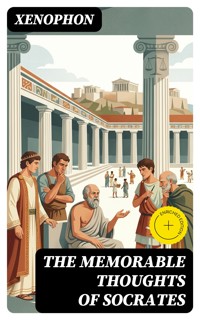
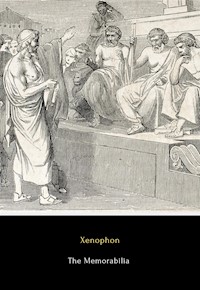
In "The Memorable Thoughts of Socrates," Xenophon presents a series of dialogues that capture the essence of Socratic philosophy, revealing the profound ethical and practical wisdom of Socrates. Unlike Plato's more dramatic portrayals, Xenophon adopts a straightforward narrative style, emphasizing clarity and accessibility while embedding deeper philosophical inquiry within everyday conversations. This work serves as both a companion piece to Plato's dialogues and a standalone exploration of Socratic thought, addressing themes such as virtue, education, and the nature of the good life, all framed through Socrates' distinctive method of questioning and dialogue. Xenophon, an Athenian historian and philosopher, was a student of Socrates who later became a general and a prominent figure in the ancient Greek world. His experiences in the tumultuous political landscape of Greece, combined with personal encounters with Socratic teachings, informed his perspectives on leadership, ethics, and the nature of knowledge. Recognized for his clear prose and practical insights, Xenophon offers a unique portrayal of Socrates that complements the more idealized depiction found in other philosophical texts. I highly recommend "The Memorable Thoughts of Socrates" for anyone interested in ancient philosophy, ethics, or the foundations of Western thought. Xenophon's work not only illuminates Socratic wisdom but also invites readers to engage in their own reflective practice on the nature of morality and personal conduct in contemporary society. In this enriched edition, we have carefully created added value for your reading experience: - A succinct Introduction situates the work's timeless appeal and themes. - The Synopsis outlines the central plot, highlighting key developments without spoiling critical twists. - A detailed Historical Context immerses you in the era's events and influences that shaped the writing. - An Author Biography reveals milestones in the author's life, illuminating the personal insights behind the text. - A thorough Analysis dissects symbols, motifs, and character arcs to unearth underlying meanings. - Reflection questions prompt you to engage personally with the work's messages, connecting them to modern life. - Hand‐picked Memorable Quotes shine a spotlight on moments of literary brilliance. - Interactive footnotes clarify unusual references, historical allusions, and archaic phrases for an effortless, more informed read.
Das E-Book können Sie in Legimi-Apps oder einer beliebigen App lesen, die das folgende Format unterstützen:
Veröffentlichungsjahr: 2022
Ähnliche









The Memorable Thoughts of Socrates
Table of Contents
Introduction
Against the noisy court of public opinion, Xenophon sets the quiet persistence of memory as a defense of a teacher’s life. The Memorable Thoughts of Socrates, often known as the Memorabilia, presents a portrait of Socrates formed not by abstract doctrine but by recollected encounters. Its energy lies in the tension between accusation and example: a city condemns, a pupil remembers, and the reader is invited to judge by evidence of conduct. In place of spectacle, Xenophon offers everyday scenes, practical counsel, and steadiness of character. The result is a work where moral clarity contends with misunderstanding, and reflective inquiry contests public suspicion.
Xenophon, an Athenian soldier, historian, and student of Socrates, wrote this work in the early fourth century BCE, after the philosopher’s trial and death. Known also for the Anabasis and Hellenica, Xenophon brings to Socrates the same lucid, unfussy prose and attention to action that mark his historical narratives. His aim here is not to stage philosophical fireworks but to exhibit a life lived under examined principles. As an author who knew Socrates personally, he arranges recollections to show what kind of person Socrates was, how he conversed, and why his presence benefited friends and city alike.
The book’s central premise is straightforward: through conversations and episodes, it sets out to display Socrates’ character and the practical reach of his teaching. Rather than constructing a continuous biography, Xenophon gathers instances—counsel offered to companions, responses to criticism, guidance on work and obligation—that suggest a method rooted in everyday reason. The composition belongs to the classical Athenian milieu, crafted in Greek prose and preserved through the manuscript tradition. It does not seek to rehearse courtroom drama; instead, it invites readers to observe habits of inquiry, measure, and self-control, forming a cumulative case about wisdom in ordinary life.
This work is a classic because it is one of antiquity’s principal sources on Socrates and because its literary design serves a lasting moral purpose. By shaping recollection into a coherent defense, Xenophon creates a distinctive form of philosophical narrative, somewhere between biography and apologia. The clarity of his style, the restraint of his characterization, and the consistency of themes—justice, piety, moderation, friendship—give the book an enduring architecture. Readers across centuries have returned to it not for technical argument but for a model of ethical attention, where thought is inseparable from action and conversation is a training in character.
Within the broader Socratic tradition, Xenophon’s treatment complements other portraits by offering a grounded, practical emphasis. If some accounts dwell on metaphysical puzzles or dramatic settings, the Memorabilia centers on the discipline of daily choices. Socrates here questions in order to connect knowledge to usefulness, urging interlocutors to align purpose with capacity and duty. That focus makes the book indispensable: it shows how philosophical examination can be woven into work, family, and civic life. The result is a record of philosophy as a lived craft, with the Socratic method expressed less as disputation and more as responsible deliberation.
Xenophon’s narrative art underpins this effect. He stages brief, crisp scenes, identifies the relevant problem, and lets Socrates’ inquiry proceed through accessible examples. The tone is temperate, the arguments orderly, and the images concrete—drawn from household management, trades, military practice, and friendship. This economy of means strengthens the apologetic frame: rather than relying on abstract claims about virtue, the text shows how Socrates elicited better judgment in others. The cumulative weight of these episodes produces a literary impression of steadiness, the kind of reliability that forms the core of moral persuasion in prose.
The book’s influence is evident in its role as a touchstone for understanding Socrates and in its contribution to later ethical writing. Antiquity’s biographical and doxographical traditions repeatedly drew on Xenophon’s portrait when assessing Socrates’ habits, tone, and aims. Because it demonstrates philosophy at work in civic and domestic settings, it provided a model for prose that teaches by example. Through centuries of transmission and study, it helped anchor the image of Socrates as a guide to responsible living, not merely a controversial defendant, and encouraged later writers to shape moral instruction through scenes rather than treatises.
Thematically, the Memorabilia examines what it means to benefit one’s companions and city while remaining faithful to conscience. It treats virtue as something nurtured in conversation, standards clarified through questions, and choices refined by comparison of ends and means. The virtues emphasized—justice, moderation, piety, and prudence—appear less as slogans than as habits practiced under pressure. Socrates emerges as one who connects universal claims to particular duties, reminding interlocutors that knowledge is accountable to action. The book thereby invites readers to test their own assumptions about usefulness, loyalty, and the demands of fairness.
A striking feature of Xenophon’s Socrates is his insistence that reasoning should be fitted to the task at hand. He often begins with what a person seeks to accomplish, then examines whether the tools, time, and skills are suitable. This deliberative pattern is practical without being narrow: it trains attention to consequences while preserving a sense of what is honorable. By aligning intention with competence and responsibility, the text illustrates how intellectual discipline becomes ethical effectiveness. The reader encounters not detached speculation but a method for choosing well amid competing claims, limited resources, and public scrutiny.
The contrast with other Socratic portrayals is therefore instructive. In Xenophon, metaphysical speculation recedes; daily conduct, mutual obligation, and governance of self come forward. This does not diminish the philosophical weight of the work; rather, it illuminates a complementary aspect of Socrates’ legacy. By setting counsel within recognizable situations, the author makes complex questions legible without simplification. The Memorabilia thus enables readers to triangulate the figure of Socrates by comparing witnesses, and it affirms that philosophy’s credibility depends on its fruits in the texture of a life shared with others.
Reading the book today, one can attend to its arrangement as an argument by examples. Scenes cluster around recurring concerns—work and stewardship, friendship and advice, instruction and correction—so that repetition becomes reinforcement. The steady voice of Xenophon, neither polemical nor sentimental, allows the material to persuade by consistency and poise. Approached in this spirit, the Memorabilia offers more than historical reportage; it becomes a manual in attentive living. Its value lies in cultivating habits of inquiry that withstand fashion, and in showing how moral clarity arises from honest questions brought to concrete circumstances.
The contemporary relevance of The Memorable Thoughts of Socrates is unmistakable. In an age of rapid judgment and public misrepresentation, it models patient evaluation of character and claims. Where expertise can be divorced from responsibility, it insists that knowledge serve common good. When civic trust falters, it depicts a form of leadership rooted in self-command, fairness, and service. Xenophon’s restrained art keeps the focus on what endures: integrity tested by conversation and time. That durability is why the book remains a classic—its themes continue to guide readers who seek a measured, humane, and practicable wisdom.
Synopsis
The Memorable Thoughts of Socrates, often known as Memorabilia, is Xenophon’s four‑book recollection of conversations and examples intended to defend and clarify Socrates’ life and teaching. Composed after Socrates’ trial and death in classical Athens, it presents a pragmatic, steady portrait rather than an abstract system. Xenophon organizes scenes and arguments to show how Socrates cultivated virtue in himself and others, especially through questions that turn companions toward practical wisdom. The work moves from a formal rebuttal of the charges against Socrates to wide‑ranging discussions of piety, self‑discipline, friendship, leadership, and knowledge, emphasizing how ethical insight guides daily choices and public conduct.
Book I frames the whole as an answer to the indictment that Socrates corrupted the young and did not honor the city’s gods. Xenophon portrays a man devoted to lawful conduct and piety, attentive to a personal divine sign that cautioned him, and careful to promote virtue in his companions. Socrates distinguished his activity from that of paid teachers, practicing a free exchange founded on mutual improvement. Through concise cases, Xenophon argues that Socrates steered associates away from reckless impulses, urged obedience to just laws, and encouraged moderation, thereby challenging the plausibility of the formal accusations.
This opening defense blends into examples of Socrates’ ethical guidance. He recommends examining one’s desires, keeping promises, managing anger, and honoring family and civic obligations. He treats justice as something that must be understood through precise inquiry and steady practice, not mere slogans. By probing definitions and confronting contradictions, he trains companions to discover what they do and do not know. Xenophon shows Socrates balancing frank criticism with personal example, living simply and temperately while inviting others to test their views in conversation. The cumulative effect is a portrait of moral supervision expressed in ordinary situations rather than in courtroom rhetoric.
Book II turns to daily conduct and the skills of living well. Socrates explores how self‑mastery supports freedom, how diligence surpasses idle cleverness, and how prudent management of one’s affairs builds independence. He compares fleeting pleasures with the lasting benefits of discipline, urging habits that sustain health, usefulness, and reliability. Friendship receives special attention: he examines the grounds of trust, mutual benefit, and character, arguing that relationships thrive when rooted in shared virtue rather than convenience. These discussions remain concrete, linking ethical claims to choices about work, recreation, and the distribution of time and resources.
A recurring concern in Book II is Socrates’ method and stance as an educator. He refuses fees, contending that teaching should awaken responsibility rather than create dependence. He prefers questions to lectures, pressing interlocutors to define terms and test claims by looking to purpose and function. Analogies from crafts and everyday labor illustrate how expertise demands training and standards, and he applies the same rigor to moral concepts. Conversation thus becomes a discipline: by learning to name things accurately and trace consequences, companions acquire a measure of self‑command that supports both personal stability and civic usefulness.
Book III widens the lens to public life and leadership. Socrates examines what qualifies a person to command, insisting that knowledge, justice, and self‑control count for more than wealth or pedigree. He distinguishes courage from rashness and shows how planning, training, and accountability underpin successful enterprises, whether military or civic. Through practical comparisons, he argues that the principles of good management apply across contexts: leaders must judge competence, motivate followers, and align means with ends. The emphasis stays empirical and ethical at once, asking how character and skill combine to produce reliable outcomes in shared endeavors.
Book IV deepens the inquiry into piety and knowledge. Socrates reasons from observable order and usefulness in nature to the existence and care of the gods, advocating gratitude, prudent prayer, and practical reliance on divine guidance without superstition. He urges seeking advice where expertise exists and warns against presumption. A prominent episode follows an ambitious youth who trusts in study without self‑examination; through questioning, Socrates reveals the gap between collecting information and understanding justice, law, and benefit. The argument links theology, ethics, and method: reverence and self‑knowledge are requisites for sound deliberation.
Xenophon closes by consolidating Socrates’ character as a teacher and citizen. He lives simply, exercises restraint, endures hardship without complaint, and treats friends steadfastly, offering counsel tailored to their capacities. His famous inner warning serves not as an oracle of success but as a check against imprudence. The scenes aim to show that his influence cultivates responsibility rather than rebellion. Without relying on technical theories, Socrates’ practice of definition, analogy, and cross‑examination equips companions to govern themselves. The defense thus rests on lived evidence: a pattern of conduct consistent with piety, justice, moderation, and helpfulness.
Taken together, the four books present a coherent image of Socratic ethics as a practical art: examine yourself, train your desires, honor the divine, and contribute to the common good with competence and integrity. Xenophon’s restrained narrative complements other ancient portrayals by highlighting usefulness and example over speculative doctrine. The work endures as both testimony and invitation: testimony to a life oriented by measured inquiry and steady virtue, and invitation to readers to test their own assumptions through clear definitions, honest dialogue, and deliberate action. Its broader message is that sound character and sound reasoning reinforce each other in private and public life.
Historical Context
Xenophon’s Memorabilia, often translated as The Memorable Thoughts of Socrates, emerges from classical Athens in the late fifth and early fourth centuries BCE. The setting is a populous, commercial city-state whose dominant institutions included the Assembly, the Council (Boulē), and large popular juries drawn by lot. Citizenship, military service, and participation in festivals and sacrifices structured public life. Socrates (c. 469–399 BCE) lived and conversed in this environment; Xenophon (c. 430–354 BCE), his junior and later defender, wrote after Socrates’ execution. The book’s portraits of daily conversation, civic duty, and piety are framed by this institutional world and the strains that followed decades of war and political upheaval.
The Peloponnesian War (431–404 BCE) between Athens and Sparta set the crucial backdrop. It devastated populations, disrupted trade, and fostered political extremism. The Athenian plague (c. 430–426 BCE) undermined morale and leadership; later, the catastrophic Sicilian Expedition (415–413 BCE) deepened the crisis. In this context, Memorabilia’s praise of self-control, endurance, and practical reasoning speaks to a city recovering from defeat and scarcity. Socrates’ ethical focus, as Xenophon presents it, resonates with a postwar need to rebuild civic character and personal resilience after military setbacks and economic strain that affected artisans, farmers, and citizens across Attica.
Athens’ democracy, at once participatory and volatile, shaped both Socrates’ life and the reception of his ideas. The imperial democracy had drawn tribute from allies in the Delian League and funded grand projects and stipends. Judicial processes empowered mass juries; public speech and persuasion were essential civic skills. Memorabilia frequently contrasts measured inquiry with the pressures of popular opinion and courtroom rhetoric. Xenophon’s portrait underscores the tension between reasoned moral counsel and the unpredictable judgments of large assemblies and courts, suggesting how a philosophic life could be misunderstood or misrepresented within a system that prized eloquence and rapid decision-making.
The sophistic movement influenced education and public life. Traveling teachers offered instruction in rhetoric, argument, and civic success, often for fees. Their techniques proved useful in law courts and politics, yet critics accused them of valuing victory over truth. In Memorabilia, Xenophon highlights Socrates as a counter-model: he charged no fees, urged moral improvement, and pressed interlocutors to examine their aims. By depicting exchanges with named figures associated with intellectual fashions, Xenophon situates Socrates among the era’s educational entrepreneurs, while signaling a principled difference between ethical inquiry and paid training oriented toward prestige or litigation.
Socrates’ trial and execution in 399 BCE anchor Xenophon’s defense. The charges—impiety and corruption of the young—arose in a climate still recovering from oligarchic violence and defeat. Associations with controversial figures like Alcibiades and Critias were well known and could color perceptions. Xenophon disputes the allegations by documenting Socrates’ beneficial influence and civic-minded counsel. Without rehearsing every procedural detail, the Memorabilia consistently addresses the accusations’ substance: it portrays a figure who honored the laws, strengthened companions’ character, and neither subverted worship nor taught irreverence, countering suspicions that attached to his name after the war.
Athenian religion organized civic identity through festivals, sacrifices, and oaths. Oracles and seers guided decisions, from private matters to state policy. Impiety (asebeia) was a serious public offense, policed through legal prosecution. Xenophon underscores Socrates’ conformity with customary worship, including sacrifices and consultation of divination, while also reporting Socrates’ personal “sign” as a divine warning. By stressing observance of the city’s cult and portraying piety as practical wisdom—knowing when to seek divine guidance—Memorabilia aligns Socrates with traditional religiosity, rebutting claims that he introduced novel divinities or undermined the city’s sacred norms.
Everyday Athenian life was structured around the household (oikos), with distinct roles for citizens, resident foreigners (metics), and enslaved persons. Agriculture, small workshops, and trade supported the economy; liturgies and taxes funded public needs. Memorabilia reflects this environment in its attention to prudence, friendship, and work. By celebrating moderation, Socrates’ conversations echo concerns of householders coping with postwar austerity. Xenophon’s emphasis on practical virtue—keeping order in one’s affairs, choosing reliable companions, and using resources wisely—mirrors the material realities of a city recalibrating to reduced revenues after the loss of its maritime empire.
Military service pervaded the citizen experience. Hoplite duty and naval campaigns formed part of male citizenship, and many Athenians saw combat during the long war. Socrates himself served as a hoplite in several campaigns; Xenophon, too, was a seasoned soldier. Memorabilia draws on virtues admired in wartime—endurance, courage, self-restraint—to present Socrates as a model citizen-soldier in habits if not rank. The stress on disciplined living, training, and readiness to help friends aligns with a society in which martial values remained salient even in peace, and where personal character was judged partly by one’s reliability under pressure.
Athens experienced sharp political swings, including oligarchic coups. The regime of the Thirty Tyrants (404–403 BCE), led in part by Critias, imposed repression before democracy was restored in 403 BCE under a broad amnesty. Although the amnesty restricted reprisals for past acts, political memory persisted. Xenophon, aware of this fraught history, addresses how Socrates advised young men and distanced himself from lawlessness. By assembling episodes that emphasize lawful conduct and civic loyalty, Memorabilia responds to an atmosphere where philosophical associations could be read through the lens of recent civil strife and fears of subversion.
After Athens’ defeat, Sparta dominated Greece for a time. The Corinthian War (395–387 BCE) challenged Spartan hegemony, and the Peace of Antalcidas (387/6 BCE) reshaped interstate politics. Xenophon, having joined Spartan campaigns and fought at Coronea (394 BCE), lived for years under Spartan patronage at Scillus, near Olympia. His exile from Athens, and later residence possibly in Corinth, likely influenced the timing and tone of his Socratic writings. Memorabilia’s pragmatic ethics and admiration for disciplined leadership harmonize with fourth-century debates over civic renewal, whether under Spartan dominance or amid shifting alliances and regional rivalries.
Athenian legal culture was highly formalized yet susceptible to persuasion. Large juries decided cases without professional judges; public indictments could be brought for religious or civic offenses. Concerns about sycophancy—malicious prosecution—were longstanding. Memorabilia’s portrait of Socratic conversation contrasts a slow, probing search for the useful and the just with the pressures of public prosecution and adversarial rhetoric. By portraying Socrates as careful in oaths, witnesses, and religious practice, Xenophon implicitly critiques a system where character could be overshadowed by forensic performance and where a citizen’s reputation might be undone by insinuation amid public anxiety.
Education (paideia) combined music, gymnastics, literacy, and, increasingly, rhetorical training. Ambitious youths sought guidance to succeed in assembly and courts. Memorabilia situates Socrates as an alternative educator who sharpened judgment rather than taught set speeches. Xenophon presents him leading interlocutors—often young men of standing—toward self-knowledge, urging attention to utility, justice, and temperance. The setting of informal conversations in gymnasia, workshops, and private homes reflects how learning crossed social spaces in Athens. This educational competition with fee-charging sophists underscores the book’s claim that moral formation, not verbal display, undergirds true civic competence.
Economic conditions in the early fourth century BCE were unsettled. The war had disrupted trade networks and reduced Athenian revenues; silver from Laurion and customs duties mattered, but resources were tighter after the empire’s collapse. Households diversified incomes through farming, rental, and craft. Xenophon’s interest in management and thrift—evident across his works—illuminates Memorabilia’s stress on work, moderation, and trust. Friendship networks, patronage, and mutual aid functioned as social capital in lean times. The book’s concrete counsel about choosing tasks well and avoiding idleness addresses an audience attentive to economic recovery and wary of speculative ventures or lavish consumption.
Philosophically, the fifth and fourth centuries BCE saw a shift from cosmological speculation toward ethical inquiry. While earlier thinkers probed nature’s principles, Socrates became known for examining virtue and how to live. Memorabilia reinforces this shift by depicting Socrates shunning natural science debates that had drawn charges of irreligion against some thinkers. By emphasizing practical ethics—justice, piety, self-control—Xenophon distances his Socrates from potentially impious inquiries into the heavens, thereby countering the legal accusation of impiety and aligning philosophical practice with civic expectations about reverence and usefulness.
Xenophon’s chosen form—apomnēmoneumata, “recollections”—claims credibility by assembling episodes over time. He writes as a contemporary who knew Socrates and other witnesses, while acknowledging that not every conversation was personally heard. The work’s episodic structure serves a forensic aim: to demonstrate a consistent pattern of benefit. Compared with Plato’s more dramatic, metaphysical dialogues, Xenophon’s vignettes are plainer and didactic. This stylistic difference reflects authorial intention and audience: a practical defense aimed at readers interested in character and example, rather than elaborate philosophical argument or literary experimentation.
Socratic networks multiplied after 399 BCE, producing diverse interpretations. Followers associated with Antisthenes, Aristippus, and the Megarian school emphasized different aspects of Socrates’ legacy. Public debate about his meaning remained a live issue across the fourth century, as Athens, Sparta, and later Thebes contended for leadership. Memorabilia participates in this debate by presenting a civic Socrates whose usefulness—advising friends, honoring gods, training reason—could be readily verified. The text thus intervenes in a regional discourse about what kind of knowledge strengthens cities and whether philosophical practice should be judged by its social fruits.
Culturally, Athens remained vibrant with theater, festivals, and intellectual exchange, even amid political uncertainty. The same city that tried Socrates financed drama, sculpture, and public rituals binding citizens to shared myths and laws. Memorabilia situates Socrates within this milieu as a public presence—visible in the Agora, gymnasia, and homes—whose speech was part of everyday civic life. Xenophon’s emphasis on conversation, rather than seclusion, underscores that philosophy in Athens unfolded amid artisans, officials, and youths. The city’s dense social fabric made reputation consequential; thus the book’s case turns on what Socrates consistently did and counseled before many witnesses. The Memorabilia functions as both mirror and critique of its age. It mirrors Athens’ institutions—democracy, courts, religion—by showing how a citizen navigated them with piety and prudence. It critiques prevailing priorities by subordinating rhetorical victory, wealth, and ambition to self-mastery and utility. In defending Socrates against the definitive legal judgment of 399 BCE, Xenophon also interrogates the era’s standards for wisdom and civic trust. The book distills a wartime and postwar Athens into lessons on character, suggesting that stable communities depend on habits of inquiry, restraint, and reverence.
Author Biography
Xenophon of Athens (c. 430–354 BCE) was an Athenian-born soldier, historian, and writer whose works straddle history, philosophy, and practical instruction. Active in the late Classical period, he is best known for Anabasis, the gripping account of a Greek mercenary army’s retreat from the Persian interior, and for Hellenica, a continuation of Greek history from where Thucydides left off. He also preserved an influential portrait of Socrates in several writings. Renowned for plain, lucid Attic prose and a pragmatic ethical outlook, Xenophon has long been read for insights into leadership, civic life, and the institutions of Sparta and Athens.
Little is securely recorded about Xenophon’s early years beyond his Athenian origin and association with Socrates. Ancient testimony presents him as a member of the Socratic circle, attentive to questions of virtue, self-mastery, and practical wisdom. His interests included horsemanship and the skills of command, recurring themes in his later treatises. The blend of Socratic ethical inquiry with a soldier’s concerns for discipline and utility shaped his mature style: observational, example-driven, and oriented toward the improvement of character. Homeric epic and the civic traditions of classical Athens further informed his narrative sense and moral vocabulary.
Xenophon’s public career was transformed by the campaign of Cyrus the Younger against the Persian king. He joined the expedition of Greek mercenaries and, after the defeat at Cunaxa and the loss of senior commanders, he assumed a prominent role in organizing the army’s retreat to the Black Sea. Anabasis narrates this march with vivid topographical detail and attention to logistics, morale, and deliberation in council. The work combines an eyewitness soldier’s view with a moral interest in prudence, resilience, and leadership under pressure, and it remains a central source for the political and military geography of the Achaemenid world.




