


5,99 €
Mehr erfahren.
- Herausgeber: WriteLife Publishing
- Kategorie: Ratgeber
- Sprache: Englisch
Book Six in Motivated Series by Brian E. Howard.
There are over 120 pieces of sage advice quoted throughout the book on how to effectively conduct a job search, write a powerful resume and LinkedIn profile,cover letters, and other communications.
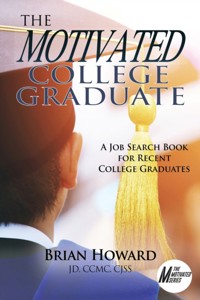
The Motivated College Graduate is the most comprehensive job search book written for the recent college graduate. It discusses real life job search issues facing today's college graduate.
The book provides unprecedented insight and advice from some of the most credentialed and experienced career coaches and resume writers in the industry. These coaches and resume writers have specialized practices and work with recent college graduates. You will learn how to conduct an effective job search, stand out among your competition, get interviews, and job offers!
Go inside the minds of these coaches and resume writers. Learn how they've coached other college graduates to land fulfilling career-level positions. Understand how the resume writers think about keywords, titling, branding, accomplishments, color, design, and a plethora of other resume writing considerations as they create winning resumes.
Based on his extensive experience in the job search industry and by tapping into the collective knowledge of career coaches and resume writers who work specifically with college graduates, Brian Howard has written a comprehensive job search book that surpasses all other job search books written for the recent college graduate.
Das E-Book können Sie in Legimi-Apps oder einer beliebigen App lesen, die das folgende Format unterstützen:
Veröffentlichungsjahr: 2019
Ähnliche

















The Motivated College Graduate
© 2019 Brian E. Howard. All rights reserved.
No part of this book may be reproduced in any form or by any means, electronic, mechanical, digital, photocopying, or recording, except for the inclusion in a review, without permission in writing from the publisher.
The external links are being provided as a convenience and for informational purposes only; they do not constitute an endorsement or an approval by BQB Publishing of any of the products, services or opinions of the corporation or organization or individual. BQB Publishing bears no responsibility for the accuracy, legality or content of the external site or for that of subsequent links. Contact the external site for answers to questions regarding its content.
Published in the United States by WriteLife Publishing
(An imprint of Boutique of Quality Books Publishing Company)
www.writelife.com
Printed in the United States of America
978-1-60808-209-4 (p)
978-1-60808-210-0 (e)
Library of Congress Control Number: 2018967992
Book design by Robin Krauss, bookformatters.com
Cover design by Ellis Dixon, ellisdixon.com
First editor: Caleb Guard
Second editor: Michelle Booth
LinkedIn, the LinkedIn logo, the IN logo and InMail are registered trademarks of LinkedIn Corporation and its affiliates in the United States and / or other countries. Screenshots contained in this book are used for informational and educational purposes.
The Certified Career Management Coach (CCMC) and the Certified Job Search Strategist (CJSS) designations are sanctioned by The Academies, as approved by the International Coach Foundation (ICF).
The Certified Professional Resume Writer (CPRW) designation is sanctioned by the Professional Association of Resume Writers.
Other Books by Brian E. Howard
The Motivated Job Search
The Motivated Networker
Over 50 and Motivated!
The Motivated Job Search Workbook
Motivated Resumes & LinkedIn Profiles
Disclaimer: The information and recommendations in this book are presented in good faith and for informational purposes only. Every effort has been made to ensure the materials presented are accurate and current. All information is supplied on the condition that the reader or any other person receiving this information will perform their own due diligence and make their own determination as to its suitability for any purpose prior to the use of this information. The purpose of this material is to educate. The author, Brian E. Howard, and/or any affiliated companies, shall have neither liability nor responsibility to any person or entity with respect to loss or damage caused, or alleged to have been caused, directly or indirectly, by the information contained in this book.
Message from the Author
Graduating from college is an achievement that will be with you for your entire life. It has been estimated that in a world of seven billion people, only 6.7 percent have a college degree.1 That’s elite company. I congratulate you for achieving something truly special!
As completed chapters in your life close, new ones open. You are about to begin a new chapter in your life: becoming a responsible, financially self-sustaining adult. The path to that goal starts by getting a job. Not the kinds of jobs you may have had before, but rather a professional-level career job . . . the kind that requires a college degree.
Securing your first professional-level job will require a job search. This is a process that most college graduates are wholly unprepared for. Gone are the days of walking into a business, asking for and filling out an application for an hourly job. A job search in the professional world is an entirely different process. This book will teach you how to do it and in ways that will make you stand out in the eyes of potential employers. You will have a competitive advantage!
I know for a fact that the process I teach in this book works! At its core, it is the same process I promote to tenured professionals who have read my other job search books as they have secured new jobs . . . thousands of them.
More importantly (and perhaps more persuasively), the process in this book was used by my college-aged children to get internships, summer jobs, and their first professional-level jobs. You could say they were the “beta test” (I prefer guinea pigs), in testing the process for recent college graduates. Both of my college-aged kids used the techniques in this book to get summer jobs (with large corporations), internships, and their first career-level job. The benefit you have is the process has been refined with additional insight from experts who focus on helping recent college graduates find professional-level jobs. You will benefit from their knowledge as you read through the book.
It is my hope that the contents of this book put you on a career path where you can benefit most from your academic achievement . . . a college degree!
To your success!
Brian E. Howard
_______________
1 Lancaster, Julie. “Who in the World Holds a College Degree,” College America, October 9, 2011, https://www.collegeamerica.edu/blog/who-in-the-world-holds-a-college-degree.
Table of Contents
Introduction
Welcome to the Real World
How to Use This Book
Meet Your Coaches and Resume Writers
Part I – Preparation and Messaging
Chapter 1: Things to Know About Your Job Search as a Recent College Graduate
Job Search Methods
Your Job Search Arsenal: Considerations, Tools, and Tactics
Clean Up All Social Media Before Starting a Job Search
What Employers Look for and Discover on Social Media
How Important is Your GPA When Searching for a Job?
How Important to Your Career is Your First Job After College?
What Employers are Looking for When Hiring New College Graduates
Who Hires New College Graduates?
Common Job Search Mistakes of Recent College Graduates
A Gap Year and Your Job Search
Dealing with a Criminal Record
The Psychology of Persuasion and Your Job Search
Getting Off to a Successful Start
Chapter 2: Essential Job Search Topics and Tools
Job Skills, Professional Qualities, and Character Traits
Understanding the Employer’s Mindset
Knowing What an Employer Wants in an Open Position
Matching Experience and “Word Clouds”
Accomplishments
Success Stories
Personal Branding
Elevator Speech
Business Cards
Chapter 3: Impactful Resumes
What a Resume is Not
So, What is a Resume?
Time is of the Essence
Your Resume is Your Marketing Brochure
Use of Keywords
Resume Formats
Parts of a Resume
Use of Recommendations on a Resume
Highlighting a Unique Qualification or Achievement on Your Resume
Information NOT to be Included on a Resume
Testing the Impact of Your Resume
Attaching Your Resume to Your Online Profile
Infographic Resume
Creating Your Own Resume
Resume Checklist
Chapter 4: LinkedIn
Use of Keywords
Your LinkedIn Profile-Sections
Introducing LinkedIn Optimization
How does it work . . . How Does an HR Recruiter Use LinkedIn to Find Candidates?
The Goal of Optimization
Keyword Location
Keyword Stuffing
Completeness
Connections
Compelling
Job Alerts
The Open Candidates Feature on LinkedIn
Measuring the Effectiveness of Your LinkedIn Profile
What Do You Do with Your LinkedIn Profile After You Get a Job?
Keep Your Profile Current
Sample of an Optimized College Graduate LinkedIn Profile
Chapter 5: Cover Letters and Other Written Communications
Types of Cover Letters
The Cover Letter Success Formula
Adding a P.S. (Post Script)
Thank-You Letters
Thank You Letter When You Are Not Selected for the Job
Email Follow-Up Letters
Something to Think About
Another Idea
Some Final Words about Written Communications
Shifting Gears
Part II – Generating Job Leads
Chapter 6: On-Campus Career Fairs
Get Mentally Prepared
Use of Resumes and Business Cards
Elevator Speech
Do Your Research
Dress Appropriately
Get a Portfolio and Take Notes
Hit the “B” List First to Warm Up
What Career Fair Company Representatives Look For
Chapter 7: Professional Networking
Defining What Networking Is
Why Networking is so Effective in a Job Search
Embrace a Networking Mentality
Types of Networks
Who to Network with as a Recent College Graduate
Fear of Networking
Networking and the Use of LinkedIn
Spreading the Word – Networking for a Job as a Recent College Graduate
Alumni Associations
Professional Associations
Association/Industry Conferences
Associations – Local Chapters
Icebreaker Questions for Conferences and Events
Goals of the Networking Conversation
Face-to-Face Networking as an Introvert
Chapter 8: Social Media: Twitter and Facebook
Chapter 9: Proactively Marketing Your Collegiate Credentials
Introduction to the Direct Approach
The Work
Determine Your Target Employers
Identify the Talent Acquisition Professional and the Hiring Executive
Research Email Addresses
Using the Telephone
The Positive Impact of Using the Phone
Excuses for Not Using the Phone in a Job Search
Phone Zone
Phone Phear: The Pre-Game Jitters
Who to Contact
The Marketing Call Script
Responses to Objections
Ask One Question After the Objection
Dealing with Rejection
Handling the Gatekeeper
Leaving a Voicemail Message
Email Marketing Your Collegiate Credentials
Sending Your Marketing Email
Email Marketing Through LinkedIn
Follow-Up Calls
Drip Email Marketing
The Research Interview
Using Videos or YouTube as a Part of Your Messaging
When All Else Fails
How to Honestly Measure Your Progress
Part III – Interviewing and Making a Positive Impression
Chapter 10: Interviewing
How Much Are Interviews Worth?
How an Employer Views an Interview
Strategy for a Successful Interview
Strategy for Opening the Interview
First Impressions
Interviews: Progression
Interview Preparation
Interview Formats
Practice (Mock) Interviews
Answering Traditional Interview Questions: The UPAC Method ™
Telephone Interview
The Unannounced Telephone Interview
Webcam or Skype Interview
Screening Interview Conducted by a Talent Acquisition Professional
Meal Interview
Behavioral Interview
Preparing for and Answering Behavioral Interview Questions
Your Interview Wardrobe
Closing the Interview
General Interviewing Tips
Debrief Yourself
Write a Thank-You Letter
Second and Home Office Interview Strategies
Common Interviewing Mistakes
Not Getting the Job: Handling the Disappointment
Chapter 11: References
Who to Ask to be a Reference
The Unsolicited Third-Party Affirmation
Part IV – Job Offers and Other Important Information
Chapter 12: Negotiating a Job Offer
Receiving the Offer
Your Negotiating Leverage
Research Salaries
Get Benefits Information
Having Another Offer
Negotiating Other Things
Negotiations: Establish a Tone of Cooperation and Justify Your Requests
Silence is Golden
Close Negotiations and Reach an Agreement
Sample Negotiation Script
Accepting the Offer: Be Timely
Get Final Offer in Writing
Declining an Offer of Employment
Chapter 13: Starting Your New Job
How to Make a Great First Impression When Starting Your New Job
What You Want to Achieve in Your First Job
Chapter 14: Required Job Search Skills for Long-Term Career Employment
The Seven Job Search Skills You Must Know
Your Career . . . Your Responsibility
Chapter 15: My Personal Letter to You about Career Management
Chapter 16: More Job Search Insights and Stories of Inspiration
Part V – Resume Samples and Other Written Communications
Chapter 17: Resume Samples and Other Written Communications
Provided by Your Coaches
Introduction
Don’t bunt. Aim out of the ballpark.
Aim for the company of immortals.
— David Ogilvy2
Welcome to the Real World
You are about to embark on a job search. To be successful, you must grasp some very important concepts about the real world. By understanding these elementary concepts, you will have a distinct advantage over your peers who may not fully appreciate these realities.
The Business World
First, a company exists to make a profit. Companies make a profit by selling their products or services for more than the costs to produce those products or services. A company will cease to exist if it is not profitable.
Second, a job within a company must either make or save money for the company. If it does not, it will be eliminated. As a college graduate job seeker, you must present your skills in a way to make or save the company money and contribute to the profitability of the company. If there is no perceived value in hiring you, you will not receive a job offer. Thereafter, your performance on the job must provide value beyond the cost of your employment.
The Non-Commercial Professional World
Careers in non-commercial fields have similar realities and value evaluations. As a recent college graduate, you must present your skills and background to further the mission of the organization (governmental agency, public entity, non-profit and so on). Once hired, your job performance must meet or exceed expectations or you are at risk of losing your job.
These are real-world realities. Too many college graduates fail to understand, let alone truly appreciate, these realities. They believe that every company or organization is nothing but an entity that can afford to give them a job. Clearly understand this concept: All companies must be profitable to survive. All entities in other fields must meet their mission to continue to exist. And, all employers are sensitive to the productivity of their employees. If your productivity (the value you bring as an employee) falls below the cost of having you, or you fail to meet the minimum standards of performance, you will be fired. Sound harsh? Welcome to the real world.
However, understanding these realities can work to your advantage during your job search. Why? When you understand these real-world realities, you can present yourself to employers by speaking their language. You will be able to sell your abilities in a way that a hiring executive will see value in hiring you. It’s a matter of appealing to the mentality of the hiring executive who can offer you a job. Much of this book is about teaching you how to present yourself in a way that displays your value.
Let’s talk about another reality. Do the “best” qualified college graduates always get the best jobs? No, they don’t. Let me explain: To get a career-level job as a recent college graduate, you must certainly be qualified for the open positions in your field of endeavor. However, with increasing frequency, the college graduates that get the better jobs are those that execute a better job search. In other words, you can out-flank your peers with higher GPA’s and perhaps better experience when you execute a more effective job search.
Realize that employers value initiative, perseverance, work ethic, effort, and a host of other professional characteristics (to be discussed further in the pages that follow). When you execute an efficient, self-motivated job search, you put those professional character traits on display, with your qualifications. You will do better than you think against your competition and perhaps get more job offers by effectively executing a job search better than they do.
How to Use This Book
This job search book is written for the motivated college graduate who wants a proven methodology on how to effectively conduct a job search in today’s competitive marketplace.
As you read this book, have a highlighter and a pen available. Study the book and highlight concepts you want to remember. Write in the margins. Fold the page corners. Use a notepad to write down thoughts and to-do’s as they occur to you. Then, after your job search is underway, review this book to stay motivated and on track. Be careful! There are several things during a job search that can cross the line from being productive to just doing busy-work disguised as productivity. Ask yourself: Am I being productive with my time and effort, or am I just doing busy-work, thinking that I am being productive? You’ll know the answer.
Pay particular attention to the stars ★ throughout the book. These useful, powerful job search topics or techniques will differentiate you from other recent college graduates and shorten your job search.
Remember that a successful job search is about presenting yourself in a professional manner, engaging in conversations with those that can help and hire you, providing hiring executives and talent acquisition professionals in interviews with your college record, examples of your skills, accomplishments, and character traits. When you do, you heighten your chances of landing job offers for opportunities you want.
_______________
2 “David Ogilvy Quotable Quote,” Goodreads, http://www.goodreads.com/quotes/262108-don-t-bunt-aim-out-of-the-ballpark-aim-for-the (accessed May 28, 2015).
Meet Your Coaches and Resume Writers
The following professional career coaches and resume writers will be providing you with additional advice and insight throughout the book. They were selectively chosen based on their experience and professional credentials.
The career coaches and resume writers have graciously donated their time and their work. They did not receive any compensation to be included in this book.
If you believe it would be beneficial to your job search to have a professional career coach, you are encouraged to reach out to these coaches. They are experienced in coaching recent college graduates with their job search.
Additionally, if you choose to have your resume professionally written, please consider contacting the resume writers in this book whose work appeals to you or perhaps located closest to you. Each resume writer has provided samples of their work (see Chapter 18).
Understand that resume writing is an art form. It takes time and focused concentration. What you may see in the samples may not completely align with the instructional section of this book. However, each sample resume was written with a specific job, strategy, or goal in mind. You have the wonderful advantage of having the education of the instructional part of this book with their insight and the resume samples to blend and create your own unique resume. Or, you may decide that a professionally prepared resume is the right way to go.
Bryan Lubic, M.A., J.D., CCMC, CJSS
(650) 427-9265
linkedin.com/in/bryanlubic
Bryan Lubic is a strengths-based career and professional development practitioner with a background in the leadership and administration of career services in higher education. He earned certifications as a Certified Career Management Coach (CCMC) and Certified Job Search Specialist (CJSS) and has completed advanced training in helping people identify, connect, and communicate their amazing value to potential employers easily and effectively.
Cheryl Minnick , M.Ed., Ed.D, CCMC, NCRW University of Montana – Academic Enrichment
(406) 243-4614
Passionate, lively and engaging, Dr. Cheryl Minnick is career counselor/internship coordinator at the University of Montana with nearly thirty years’ experience in higher education, twenty of those in the area of career counseling. She holds both a masters and doctorate with specialization in career counseling. Trained by top industry experts, she is one of less than fifty Nationally Certified Resume Writers in the country. Cheryl is a guest instructor with Career Thought Leaders, a think tank for the now, new, and next in careers; teaches webinars for the Career Academy; and sits on the NRWA Certification Board for resume writing certification. Over a three-year period, she partnered with the Montana Department of Labor to train employment professionals statewide on best practices in resume creation, cover letter writing, and applicant tracking systems.
Cheryl is a certified Academies Career Management Coach whose career advice has been featured on AOLJobs, Voice America radio, CareerSparx and Resume Writer’s Digest; who has published career development research in the Journal of Academic Administration in Higher Education and The New Accountant; and who’s resumes and cover letters are published in books including, Motivated Resumes & LinkedIn Profiles, Modernize Your Resume: Get Noticed – Get Hired, Designing the Perfect Resume, How to Pop your Resume, Gallery of Best Cover Letters, The Twitter Job Search Guide and 101 Job Seeking Tips for Recent College Grads. If not on campus working with students, she can be found helping mid-level to senior-managers through her boutique career consulting business, The Paper Trail. Cheryl has successfully helped hundreds of students and professionals successfully navigate careers and achieve professional success.
Ellen Steverson, NCRW, GCDF, CEIC
(843) 832-4567
www.linkedin.com/in/ellensteverson
Ellen Steverson is the President and Founder of StartingBlock Career Services (SBCS) LLC, a career management firm specializing in career advancement services. SBCS offers customized writing and coaching services specifically designed to meet clients’ needs. Working collaboratively with clients, Ms. Steverson writes resumes, cover letters, bios, LinkedIn profiles, and other career documents. Her coaching helps clients articulate their value, ace interviews, and generate offers. From personalized, targeted resumes to coaching services, Ms. Steverson tailors her approach and services to help clients move to their next great opportunity faster.
Ellen Steverson is a Nationally Certified Resume Writer, 1 of only 55 nationwide, and has over ten years of experience helping clients worldwide. She is a Global Career Development Facilitator and a Certified Employment Interview Consultant. After graduating with a Bachelor’s degree in Business, Ellen had a successful sales career and then moved into executive recruiting. As a former executive recruiter, Ms. Steverson understands the hiring process from the perspective of both the hiring manager and the job seeker. She combines her sales and recruiting expertise to help position clients for job offers and promotions. Her clients expect quality products, and she delivers. SBCS has grown through loyal customers who return for updates and send referrals.
Ms. Steverson’s unique client approach and passion for educating clients empower people to understand and communicate their value and talent to hiring managers with confidence. From college grads to executives, in a broad range of industries, she provides the tools, information, and documents needed so clients can take charge of their careers.
Jered Lish, M.S., Gallup-Certified Strengths Coach, GCDF Associate Director of Career Education
(970) 491-5126
Currently, Jered Lish serves as the Associate Director of Career Education at the Colorado State University, Career Center. Previously, Jered worked at UC San Diego overseeing the pre-med/pre-health advising program and has a passion for developing compassionate and patient-centered future health professionals. Jered additionally helps students with establishing tangible and actionable steps towards their personal and professional career goals and finds his work with college students to be fulfilling and rewarding. On the side, Jered is a music composer and writes strings arrangements for a variety of television commercials and local bands. He additionally enjoys using his certifications as a Gallup Strengths Coach and MBTI instructor to consult organizations and companies on how best to inspire and optimize performance using a strengths-based approach to employee motivation.
Juliet Murphy, MBA
(714) 642-3777
www.julietmurphy.com
Juliet Murphy, MBA and MA – Career Development, is the President of a career management company, Juliet Murphy Career Development (JMCD), delivering career solutions to young adults, executives and corporations. Her specialties include millennial career development, with Juliet having a strong background in working with new college graduates. Her website is: www.julietmurphy.com
Lorraine Beaman, MA, ACRW, CARW, NCRW, CEIC, MCD
(866) 966-2665
www.interview2work.com
www.linkedin.com/in/lorrainebeaman/
www.facebook.com/interview2work/
Twitter: @interview2work
Instagram: Interview2work
Interview2Work grew out of a passion to bring the most innovative job search strategies to college graduates working “survival” jobs because they were not successful securing jobs in their fields. During her thirty years of experience working with college students and serving as the director of career services for a regional business college, Ms. Beaman discovered it is not a lack of knowledge of their fields that cause new graduates to be underemployed, rather a lack of job search skills.
After multiple successful job placements among new college graduates, Ms. Beaman expanded Interview2Work’s services to include coaching on salary negotiation and how to effectively transition into a new job. Through these services, many of her clients have received starting salaries higher than they imagined and gained the skills necessary to successfully navigate their first days on the job.
Ms. Beaman holds several certifications including the prestigious AWRA, CARW, and NCRW in resume writing. She is a Certified Employment Interview Consultant and AAUW Salary Negotiation Facilitator. She also holds certificates in Negotiation and Leadership from Harvard University, job search applications of social networking, and strategies for those dealing with employment barriers. She is a member of Career Directors International, National Resume Writers Association, and Career Thought Leaders.
Ms. Beaman holds a Master’s degree from California State University, Chico, and a Bachelor’s degree from the University of California, Berkeley.
Mary Jo King, NCRW Alliance Resume and Writing Service
(262) 681-5682
Mary Jo has written more than 5,000 resumes for college graduates, mid-career professionals, STEM careers, and executive clientele. Her work at Alliance Resume and Writing Service is characterized by in-depth personal consultations and ongoing client support. As a former hiring authority, she is also able to offer insight to employer recruiting perspectives.
Her thirty-year career in professional writing began in 1982 as the Denver franchise owner of a national resume writing company. In her first year with the company, she was recruited to serve—ultimately for six years—as Regional Director of a five-state region with twenty-three offices.
After leaving Professional Resume Service, she enjoyed a consulting and media career working with business owners to enhance operations and develop marketing solutions. In 2010, she returned to her own resume writing practice, where she create resumes, cover letters, LinkedIn profiles, biographies, performance profiles, and other marketing tools.
Mary joined the National Resume Writers’ Association in 2011, where she earned the prestigious Nationally Certified Resume Writer (NCRW) credential. She is currently in her sixth year of board service for this nonprofit organization.
As the name of her company suggests, Mary likes to build long-term partnerships. You are the expert in your field, and she is the expert in hers. Together, she creates your compelling value proposition. Your satisfaction is both paramount and guaranteed.
Paula Christensen, CPRW, CJSS, CCMC Strategic Career Coaches
(920) 264-0806
strategiccareercoaches.com
www.linkedin.com/in/paulachristensen1
As a Certified Professional Resume Writer, Interview Coach, Career Coach, and Certified Job Search Strategist, Paula’s expertise is helping job seekers land jobs they love. What makes Paula different? She cares about their successes. Paula loved her corporate recruiting job but was sometimes frustrated because she knew with a bit of fine-tuning, new graduates could be more successful. Her main strength is connecting with people to help identify their differentiators, thereby making them more marketable. She loves her job and can’t imagine doing anything else.
Whether you are ready for help landing that first internship or job after graduation, Paula is here to assist with resume writing, interview preparation, and developing job search strategies.
Paula’s background is in Corporate Recruiting and Human Services. She is excited to help people find jobs. As a former Human Resource Pro-fessional, she knows what companies are looking for in applicants. After interviewing thousands of candidates over the course of a decade, she’s learned what makes job seekers stand out.
Tina Kashlak Nicolai, PHR, CPBA, CARW Resume Writer’s Ink
(407) 578-1697
www.resumewritersink.com
www.linkedin.com/in/tinakashlaknicolai
www.facebook.com/resumewritersink
Twitter: @tinanicolai
Resume Writers’ Ink was founded in 2010 by Tina Kashlak Nicolai. She offers her clients a strategic, trifecta approach by combining her unique background weaving together pragmatic client results with creative marketing.
Tina’s trifecta approach comes from having a tenured career:
• Hiring leader for several Fortune 100 companies (including Disney World)
• Full cycle recruiter (20+ years and currently working in talent acquisition)
• Journalist and Marketing expertise
Tina holds two degrees from Duquesne University in Pittsburgh, PA; BA Journalism and BA Media Communications. Additionally, she holds the following certifications:
• Certified Behavioral Coach, CPBA
• Lominger/Korn Ferry Certification
• Certified Advanced Resume Writer, CARW
• PHR SHRM
Additionally, Tina is sought out on an ongoing basis by leading industry career journalists and media where she contributes best practices, tips, and advice in major media streams, including, Business Insider Careers, Forbes Careers, International radio groups, and Monster Careers. She’s been featured in numerous book publications as well as sought out for keynote speaking and career motivation talks.
PART I
Preparation and Messaging
Chapter 1
Things to Know About Your Job Search as a Recent College Graduate
In the end, what we regret most are the chances we never took.
—Frasier Crane3
Job Search Methods
There are four generally accepted job search methods for recent college graduates that generate the most job leads:
1. On-Campus Career Fairs
2. Networking (through various means and sources)
3. Direct - Proactively Marketing Your Collegiate Credentials to Employers
4. Job Boards and Online Job Applications
All four methods could lead you to your next career position. However, some are more effective than others.
On-Campus Career Fairs
The on-campus career fair is one of the time-efficient job search strategies available to you. Career fairs are convenient and allow you to interact with a number of employers in a reasonably short period of time. For the employers, there is already a general interest in meeting you and your peers, otherwise the employer would not be attending.
Networking
Networking is an effective job search method. It is estimated that 60 to 80 percent of all jobs are found through some form of networking.4 However, networking as a recent college graduate presents some challenges because most graduates do not have a developed network of professional connections to tap into. Nonetheless, there are ways to successfully use networking as a recent college graduate.
Direct - Proactively Marketing Your Collegiate Credentials to Employers
This is a method where you approach an employer directly regardless of whether there is a known job opening. It can be very effective when properly executed. This requires preparation and effort, and it will differentiate you from the vast majority of other recent college graduates.
Job Boards and Online Job Applications
This method tends to be the least effective and the statistics are not promising. It’s been referenced that for every online posting there are 118 applicants.5 The odds of you getting a job from an online job posting are less than one percent.
Should you even bother to apply to jobs posted online? Yes, though selectively. If you find a posted job opening that you are clearly qualified for, attempt to identify the actual hiring executive. Contact that person directly using the techniques described in this book (from the Direct approach referenced above). If that is unsuccessful, then apply for the position online.
If you know the specific industries you are interested in, follow specialized job boards used by employers in those industries. This can increase your chances of success.
But most importantly, control your expectation of success when applying for jobs posted online (job boards) and do not rely upon it as your main job search method.
This method will not be specifically discussed in the book except by occasional reference.
What the Coaches Say:
In your experience, what are the most effective job search methods for recent college graduates? (E.g. On-campus career fairs, networking, job boards, etc.)
Regardless of career level, new college graduate or chief executive officer, a recent survey reveals 85% of ALL jobs are filled via networking (LinkedIn Recruiting & Hiring, 2/29/16). College students can network at campus career fairs, yes, but their best strategy is to identify, nurture and grow their “Circle of Champions,” friends, family, colleagues and peers within their network. Then, add Prospects, 2nd and 3rd level connections and Activators, 1st connections, in targeted companies to their network. Other ways to build a Circle of Champions are to join industry associations as a student member, network at community events, and connect and interact with alumni via LinkedIn. Use the Circle of Champions to ask for introductions to 2nd or 3rd level connections or to people in their Circle.
Dr. Cheryl Minnick, NCRW, CCMC, CHJMC, CAA
I recommend all students attend job fairs to start talking to a broad range of potential employers. They should have a great introduction about themselves (elevator pitch) and have a plan prior to attending since many colleges post which employers will be there in advance. I also recommend students join associations in their career field, as many will have reduced membership fees or none for college students. For example a student wanting to be in Human Resources should join the Society for Human Resources Management (SHRM). Networking is always critical. New grads, like all people, should be networking their inner and outer circle.
Ellen Steverson, NCRW, GCDF, CEIC
Your Job Search Arsenal: Considerations, Tools, and Tactics
The following is a reasonably comprehensive, though not necessarily an exhaustive list of considerations, tools, and tactics for a college graduate job search. The checklist is designed as a visual reminder of the tools and tactics at your disposal. Use it as a checklist as you prepare for your search as well as action items as you proceed. Read the chapters in this book for in-depth information.
It’s recommended that you review this list every once in a while as a reminder of what you should be doing or can be doing to advance your job search.
Item
Comments
Check off
Cleanse all social media sites
All inappropiriate pictures and comments must be deleted.
Emotions - positive attitude
Stay away from negative throughts / feelings. Keep a positive attitude.
Resume
It is imperative to have an impactful resume.
LinkedIn profile
Like a resume, an optimized LinkedIn profile is imperative to your job search.
Business cards
Select the one(s) you will use in your search:
• Traditional
• Networking
• Resume
• Infographic
Keywords
Know the keywords that apply to you especially for your LinkedIn profile and resume.
Job Alerts
Get a flow of job openings by setting up job alerts.
Master job description
Doing this helps you think like the hiring executive.
Accomplishments
Know what differentiates you.
Transferrable skills and professional qualities
Those skills and qualities that make you truly unique and are often sought after by employers.
Success stories
Pre-write three. Helps in interviews and answering behavior based questions.
Personal branding
Those words and statements that announce to the market who you are and what you offer.
Elevator speech
Who you are, accomplishments, start a conversation, scripted and practiced.
Cover letter
Write a template. Then modify. Use as a marketing email.
List target employers
Create a list. Add new employers when they are discovered.
Short-list of networking contacts
People you can reach out to about your job search.
Networking
A high percentage of all jobs are found through some form of networking.
Ice breaker questions
Prepared in advance of on-campus career fairs, networking events. Having them reduces anxiety in conversations.
Proactively marketing your collegiate credentials by phone
• Script marketing call
• Voicemail script
• Responses to objections
• Script for handling the gatekeeper
This approach is the most direct method for getting interviews and job leads.
Proactively marketing your collegiate credentials by email
This approach can be easier to execute but follow up calls must be made.
Drip marketing
Used to stay in touch with a hiring executive with new information.
Last ditch effort email
Last email contact to a hiring executive that is not responding.
Interviewing
• Scripted answers to common questions
• Research
A lot of information about interviewing in the book. Prepare for common or anticipated questions. Do research before every interview.
References
Wisely chosen and listed. Unsolicited third party affirmation technique.
Direct U.S. mail contact to hiring executives
Traditional approach. Can be useful for hard-to-reach hiring executives or as a last ditch effort.
Career fairs
Useful for some college job seekers.
Emotion - rejections
Disappointments will happen. Continue to move forward. Don’t get stuck!
Effort
Stay busy!
Avoid busy-work
Focus on those tasks that truly advance your search.
★ Clean Up All Social Media Before Starting a Job Search
Take this fact very seriously: Around 33 percent of employers have rejected candidates based on information discovered on social media.6 This is significant! Consider the ramifications—you put in years of effort, focus, and perseverance towards your college degree. You got good grades and worked as a summer intern. But a potential employer rejects you (and you may not even know it) for unprofessional or inappropriate information on your social media sites. All of your time and effort is blown. And, there’s no recovery once it happens.
Today, it is imperative that you clean up all of your social media sites before you start a job search. It is recommended that the cleansing process begins a few months in advance of actual job search activities. This allows for plenty of time for deleted information to cleanse itself out of cyber-space. Then, after you have cleansed your social media sites, wait awhile and again, before engaging in active job search activities, double check all social media for inappropriate information. Re-cleanse as necessary.
Part of this cleansing process includes getting “tagged” into inappropriate conversations. You may need to inform your friends or block them from tagging you if necessary. If you have a pseudo (secondary) account under another name, perhaps it is time to close and delete it. Ask yourself, is it worth the risk of discovery to get passed over for a job, or even possibly fired? The answer is obvious.
Cleaning up your social media sites is not hard, but you must be thorough. Start by running a Google search on your name. Delete all inappropriate photos and written content wherever you find it. Consider tightening your privacy settings as necessary after all inappropriate photos and content have been removed. Run a search for yourself in each and every social media site which you have an account. Cleanse everything everywhere you find it! There are now services that will scan and scrub your social media for harmful posts. Check into www.repnup.com and www.scrubber.social.
Begin professionalizing your social media sites. Post new photos that represent you in a positive light. All new content should also have a positive spin or be professionally appropriate.
Your college life is evolving into your professional career life. Along with that, you must evolve your social media life to support your professional career life.
What Employers Look for and Discover on Social Media
It is undeniable that social media will play a role in your job search. The significance of that role depends largely on how much you use social media. But employers also use social media.
To help you better understand the role of social media in your job search, CareerBuilder. com conducts a yearly survey that asks hiring managers and human resource professionals if, how, and why they incorporate social media into their hiring process.
The results from a recent survey found that out of the 2,300 hiring managers and human resource professionals 70 percent of employers use social networks to screen potential job candidates (this trend has consistently grown over the years).7 That means more and more companies browse your social media profiles to evaluate your character and personality. What they find about you will influence their hiring decision.
In the survey, employers that chose not to pursue a job applicant after researching social media sites indicated the following reasons:
• Job seeker posted inappropriate pictures, videos or information
39 percent
• Found evidence of job seeker’s use of alcohol or drugs
38 percent
• Job seeker made negative remarks about previous employer or fellow employee
30 percent
• Discriminatory comments made about race, gender, religion, etc.
32 percent
8
• Poor communication skills
27 percent
• Lied about qualifications
27 percent
• Linked to criminal behavior
26 percent
• Shared confidential information from a previous employer
23 percent
• Screen name or handle was inappropriate or unprofessional
22 percent
• Lied about an absence
17 percent
However, over 44 percent of hiring executives discovered information that improved a job seeker’s candidacy, including:
• Job seeker’s background matched qualifications of position
38 percent
• A professional image
36 percent
• Creativity
35 percent
• Communication
37 percent
9
According to the research, employers utilize social media to gain additional insight into your behavior and personality outside the interview. They use all tools available to help ensure a good hire.
What the Coaches Say:
What is your advice about cleaning up social media sites before starting a job search?
Once, in an appointment with a student, I was talking about the importance of googling their own name in preparation for job searching in order to ensure all outward facing social media was in alignment with the image they wanted to portray professionally. The student shared, “I haven’t checked that in a long time, let’s see what my name generates.” I agreed and we googled their name. In the process of searching the search engine, a YouTube video popped up of the student, and he immediately turned red in the face. He then proceeded to tell me not to click on the icon, and I, of course, laughed with the student because it was a case and point of the importance of knowing what exists out there, and to “clean up” anything that could be deemed questionable by a future employer. Long story short, I encourage students and recent graduates to reflect on how they desire to present themselves professionally through social media, and remembering whatever they put out to social media is a representation of their values, identities, belief systems, and that ultimately, they don’t get to control how a person interprets what they see. It is better to be conservative and “clean up” their social media in order to present a polished and professional, outward facing image.
Jered Lish M.S., Gallup-Certified Strengths Coach, GCDF
Before beginning a job search, conduct a 30-day social media cleanse. Check your social media privacy settings; add a vanity URL to LinkedIn, as well as an updated professional headshot and an un-polarizing picture to Facebook; confirm your contact data is correct. Pull or delete any political rants, unbecoming photos and content shares. Next, google yourself—potential employers do and they learn more about us through our social media which leads to judgment and application rejections. Identify and build a brand, market and manage that brand via your professional behavior, headshot, character, integrity, appearance, tweets and posts.
Dr. Cheryl Minnick, NCRW, CCMC, CHJMC, CAA
How Important is Your GPA When Searching for a Job?
The short answer: It depends.
A strong GPA (3.5 and above on a 4.0 scale) is clearly an advantage when searching for your first career-focused job. If you have achieved this level of academic success, congratulations! Your hard work has paid off. You’re in a good spot!




