


7,49 €
Mehr erfahren.
- Herausgeber: aaha! Books
- Kategorie: Gesellschafts- und Liebesromane
- Sprache: Englisch
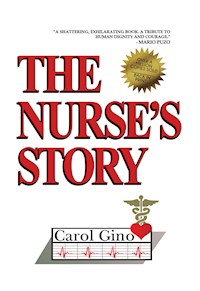
The Nurse’s Story is a unique amalgam of real experiences and true stories, creatively merged into the character of Teri Daley, a young nurse with idealism, who feels a genuine “calling” to help others. Teri is a new nurse, a real nurse - a nurse like you - who encounters people and situations she could never have imagined when she dreamed of being a nurse. Teri wanted to help people, to save people, but what she found was unimaginable and heartbreaking, yet in the end was nothing short of inspirational.
"Passionate and emotionally riveting, this story is one you won’t want to end."
With uncompromising honesty, Carol Gino strips away the TV image to reveal the gritty truths of a nurse's life from it's early, optimistic, beginnings to the harsh realities (and incalculable rewards) that sustain her even in the face of a nurse's greatest professional hazard: BURNOUT.
★ How can she help the family of a terminally ill patient when the doctor can do nothing more?
★ What can she do for a 10 year old burn victim for whom most of consciousness is pain?
★ How does she convince the doctor of her intuition that the patient cannot survive surgery?
★ And how can she leave all of this behind at the end of her shift?
Sie lesen das E-Book in den Legimi-Apps auf:
Seitenzahl: 634
Veröffentlichungsjahr: 2022
Ähnliche



















Also by Carol Gino
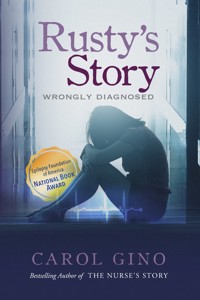
Rusty’s Story
Then an Angel Came
There’s an Angel in My Computer
The Yardsale of Life: The 8 Coats of Meaning
Where Dreams Come True
The Family by Mario Puzo (completed by Carol Gino)
Me & Mario: Love, Power & Writing with Mario Puzo, author of The Godfather
The Nurse’s Story
Carol Gino
Published by aaha! Books
New York and Texas
www.carolgino.com
www.aahabooks.com
Copyright © 1997, 2015, 2022 by Carol Gino
Linden Press edition, 1982, Bantam edition, 1983
All rights reserved. This book or any portion thereof may not be reproduced or used in any manner whatsoever without the express written permission of the publisher except for the use of brief quotations in a book review.
ISBN 13-PB 978-1-936530-11-3
ISBN 13-ePUB 978-1-936530-09-0
ISBN 13-Kindle 978-1-936530-08-3
Library of Congress Number: 96-095308
Printed in the United States of America
0 2 4 6 8 9 7 5
Praise
THE NURSE’S STORY
"She knows the front lines of nursing through and through . . . her stories are almost invariably unsettling. But she is always honest. In public and in private hospitals alike, people die daily in ways we don't want to imagine; and when the rewards no longer compensate for the pain and frustration, tough, caring people like Gino are lost to the profession. A graphic, hard-line testimonial."
-Kirkus Review
"The Nurse's Story does make one a believer in second chances."
-Denver Post
"The Nurse's Story speaks with honesty, vigor, eloquence and sensitivity to the essentially human daily experience of Every nurse, tales that are so intertwined in the mysteries of life and death that they are rarely admitted and heretofore never publicly told even as myth."
- Dolores Krieger, Ph.D., R.N. Professor of Nursing, New York University
"Gritty and honest . . . it has a fierce compassion."
-Martha Lear
Author of HEARTSOUNDS
"Riveting, wrenching. Few nurse's have experienced the range of cases this dedicated woman describes: cancer, burn unit, emergency ward, birth, brain damage . . . The writer is a vigorous optimistic, caring woman. And she exudes frankness."
-Los Angeles Times
Contents
Author's Note
Prologue
Chapter 1
Chapter 2
Chapter 3
Chapter 4
Chapter 5
Chapter 6
Chapter 7
Chapter 8
Chapter 9
Chapter 10
Chapter 11
Chapter 12
Chapter 13
Chapter 14
Chapter 15
Chapter 16
Chapter 17
Chapter 18
Chapter 19
Chapter 20
Chapter 21
Chapter 22
Chapter 23
Chapter 24
Chapter 25
Chapter 26
Chapter 27
Chapter 28
A Note to Nurses
I walked back into her room and closed the door behind me. I turned off the alarm on the respirator, detached her and started blindly to do her dressings. I refused to look at the monitor. And then, for the first time, I held her small body tight against me. I hugged her, rocking. After I laid her down and fixed her bed, I straightened the entire room. Finally, I looked at the monitor. Straight line.
I opened the chart to see what the doctor had written. It read: "Patient died while on respirator. Pronounced dead at 6:45 A.M."
- For my mother and father and all the rest of us -
Author's Note
It's been many years since I first wrote "The Nurse's Story" and in that time much has changed, in nursing, or in the medical system. Almost everything has changed in my life. The healthcare system we have now is not one that heals. Still, as I read this book over again from the perspective of time and experience, I see a love here that for me has never been matched.
The nurse in this book is not only me, but when Teri Daley's experiences were my own, and when her patients were mine, like Yves and Rachael and Robin and Steve—and of course, Melody, I found myself amazed at how much of each of them had stayed alive within me over all this time. I remember how each looked and sounded, I still remember the touch of their skin, the way they smelled, the sound of their voices—their essence. I can see now that it was in helping these special people and watching them fight their battles, that I was inexorably molded and eventually armed for my own life's journey.
Now, from this vantage point, I can sometimes laugh at the young nurse in this book: she's so angry, so passionate, so self righteous even, but I am grateful that with all her flaws, she took me to very deep places in my heart which helped prepare me for the difficulties that I would encounter in my own life.
I write this note to all of you, especially those of you who are caretakers; whether nurses, doctors, mothers, husbands, wives, or children to let you know that even after all this time, what I've learned most about life are the lessons I learned as a nurse.
Most important of all, my patients taught me that Life was a very special gift to be lived to its fullest and that only when we welcome life completely–with both its joys and tragedies–can we let it go with grace at the time of our own Death.
I believe with all my heart that nursing is a calling, and that especially in this time of corporate agendas in the health care system, with all the changes that will be invented and enforced, the most important thing to remember, and the most healing component of that system is still the "caretaker," the nurse who is willing to risk loving a patient– because it’s in that connection that healing will take place no matter what the outcome.
I also know now, without a doubt, that caring for others is the greatest gift of all—and when done with love and compassion, it heals the healer as well.
Nursing is a hero’s journey and can be one of the greatest adventures in Life. I offer this to you with love,
Carol Gino
Prologue
THE LITTLE GIRL'S SCREAMS MADE ME FURIOUS. I wanted to slap her. She was lying in a "monster crib," a chrome basket covered with a large plastic bubble to keep her from climbing out.
She was a beautiful baby, chubby, with wispy corn-silk curls. But her fair pink skin was now blotched from her crying and rubbing on the sheets. Each of her little arms was trapped, taped to a green paper-covered board and hooked to the mattress by huge safety pins. Each of her legs was tied with gauze at the ankle and pulled tight to the side of the crib. Spread-eagled.
Above the disposable diaper, her small chest heaved from the force of her screams. I could see the fluid drip slowly from the intravenous bottle overhead, down the tubing, and through the IMED, or drop regulator. The machine monitored the rate and amount of solution to be infused and would warn of any malfunction with a high-pitched, insistent beep. A light in the upper right-hand corner of the box-shaped computer winked like a red eye when it was working properly.
I watched myself watching the child. I was sitting in the corner of the small darkened hospital room, the light from the slightly cracked bathroom door molding shadows on the wall which crowded me into the high-backed vinyl chair. I leaned back and thought about what the evening nurse had told me at report: "Beth Casey. Two years old. Fever of unknown origin; possible meningitis; Isolation. Seizures."
Beth began to toss her head back and forth, still screaming and crying. I shut my eyes tight to try to blot out the sound, but when I opened them she was sneaking her blond head sideways and down her arm, trying to bite the tubing that carried the fluid through the needle into her vein. When I jumped up to stop her, I pushed her head away with more gentleness than I wanted to.
She looked terrified as I stood by the crib.
"Beth, what's wrong?" I asked, trying to soothe, as I lowered the side rail of the crib.
The tossing of her head got more frantic, and suddenly her gray eyes flickered and rolled upward. Only the whites showed. Before I could grab the tongue blade fastened to the wall by adhesive tape, her teeth came down hard on the side of her tongue. Almost instantly, her legs began to tremble in an exaggerated chill, and violent tremors ran upward until they had her body in an arch that threatened to crack her back.
I struggled to unpin one of her arms so that I could turn her on her side, but both flew up and away from the mattress, pulling hunks of sheet with them. The boards slammed down hard only once before the force of her jackknifed arms broke them. The IV needle ripped out, leaving a ragged tear. She was having a grand-mal seizure.
I strained to reach the call bell for help, but Beth was coughing, choking on saliva and blood, from her bitten tongue, that had reached the back of her throat. Quickly, I grabbed the tubing from the wall suction machine and pushed the switch on. I shoved her on her side with my free hand, hoping the secretions would run out of her mouth. Then I tried to push the clear-plastic tubing past her clenched teeth toward the back of her throat. I couldn't. She was gurgling, her lips turning blue, as I forced the tubing down one of her tiny nostrils. Instantly, a large amount of pink frothy fluid was sucked up the tubing toward the glass bottle on the wall. My hands trembled as I tried to stop the bleeding from the wound in her arm the IV needle had left.
Beth's body relaxed long enough for me to tear the taped syringe of Phenobarbital off the chrome bedrail of the crib and give an injection in her thigh before her muscles stiffened again. As the second seizure started, I managed to fit the gauze-covered tongue blade between her teeth and push the blankets against the bars of the crib to keep her from hurting herself. The tremors hit again, less violently than before, and lasted only seconds before she relaxed. She was white and pasty looking. Her lips were colorless. I placed my stethoscope on her chest and listened to the speeding gallop of her heart, fast but regular.
God, was I hot! Encased by the nylon uniform I wore under the sterile yellow paper gown, I could feel the perspiration running down between my breasts, itching my skin. I tore the green filter mask from my face so that I could breathe more easily and bent closer, parting Beth's eyelids with my fingers to see her widened pupils. She moved her head away slowly and opened her eyes, still dazed.
There was blood smeared all over Beth's face: it trickled from her nostril because I hadn't had time to lubricate the tubing, and she was still dribbling blood from the cut on her tongue. The bed was a mess. Her arm had bled profusely and she had urinated past her diaper. I knew I should change the sheets, but I didn't want to move her for fear the seizures would begin again.
My palm felt the heat of Beth's soft belly. I wondered if she really did have meningitis, or if it was just a seizure disorder. Just a seizure disorder? If she was one of my kids, would I think just? Maybe I would. – after all, epilepsy isn't terminal, and with medication most people can live normal lives. Meningitis can cause permanent damage, and it can be terminal: Another theory of relativity.
"Beth, Beth?" I whispered. She wasn't alert yet. As I stared at her, I could feel my eyes fill. What's happening to me? I wondered. I never used to fall apart like this. And her screaming or crying never would have annoyed me or made me angry before. I would have played with her, petted her, hugged and kissed her. I would have walked with her for hours, no matter how many machines she was attached to. I would have held her and rocked her. Up until now, I would have done anything and everything to help her be less frightened, but all I could do now was sit in a chair watching her. I wouldn't harm her—even now, I was at least competent; but all the special, all the me, was gone from my nursing tonight.
The smell of Beth's urine burned my nose, bringing me back, and I knew I had to clean her up. Only then did I notice the blind red eye and hear the constant beeping of the IMED as the liquid from the bottle poured through the torn tubing and made a large sticky puddle on the floor. I pushed the off button, and the bleating stopped. Then I threw a sheet on the floor so I wouldn't slip, and pulled the side rail of the crib up until I heard it click. The noise startled Beth and she opened her eyes. I smiled at her and pushed back her wet curls. I wanted to kiss her, but I felt my eyes fill again.
Suddenly I was outside myself again; watching me again as I bent to clean the floor. Teri, I told myself, cut it out! Are you losing your mind tonight? You're supposed to be a professional. I bent down and pulled some sheets, a washcloth and a towel from under the brown Formica cabinet. Then I went to fill a stainless-steel basin with water.
Beth jumped, her eyes widening momentarily, when the side rail clicked as I lowered it. Her forehead felt hot, so I reached into the drawer of the cabinet for the glass thermometer. I turned her over and inserted it, rubbing her back as I waited for it to register. Even before I removed it I could see that her fever was over 103. Working fast, I tore the foil wrapper on a Tylenol suppository with my teeth and inserted that. Then I washed her and changed her bed, gently moving her limp body from side to side. The phenobarb had knocked her for a loop.
I had to call the doctor to restart Beth's IV, and although she was sleeping, breathing regularly, I was still afraid to leave her alone even for a few minutes. I looked into the hallway, but it was deserted, so I stood in the doorway calling out occasionally. Finally, frustrated, I rang the call bell.
After more than an hour, I saw one of the floor nurses at the far end of the hall and motioned to her. She was an older woman, about four foot ten and heavy. One hip was thrown out to the side, making her limp. Her dyed brown mop with bangs looked inappropriate over her coarse and wrinkled face. When she smiled, her one gold tooth flashed. Ronnie Berdger, LPN, announced her blue-and-white plastic badge.
"What the hell is happening around here?" I asked her, "I've been ringing for an hour."
"There are only two of us on, and a cystic kid went out," Ronnie said apologetically, breathing hard. "They're still working on him. Though God only knows why," she added, as she rubbed an alcohol sponge up and down her hands, trying to clean them. She shook her head. "The kid's been breathing like he's got a pillow over his face for years . . ."
"I need the doctor for an IV," I said more civilly, and when she nodded I added, "Do you think you could cover me so I can get something to eat later?" I knew she thought I was a crazy person, moaning about getting away from one patient when she had twenty, but even though I felt guilty I couldn't stay on the floor without a break that night.
"Do what I can," Ronnie said with more grace than I would have. She limped down the hall, peering into the rooms as she passed. She would have scared the hell out of me if I was a sick kid and caught her gazing at me over a flashlight in the middle of the night. Yet I found myself smiling at her good-natured answer.
After she disappeared, I went back into the room to sit. I tried to read but found the silence, broken only by machines, oppressive. The skin on the back of my neck prickled when I felt a shadow over my shoulder, and I jumped. But nothing was there, so I leaned back again and tried to force myself to relax. For the thousandth time I wondered why, in every hospital, there was so little staff on this shift. . .
Night leaves a hospital a deserted camp, with only a skeleton crew to watch for signs of invasion, as Death sneaks quietly and Disease rummages. Darkness covers an aneurysm, the silent grenade, and a man can blow from sleep to death without a sound. –
–one missed buzz, as coma stuns another––taunting us with creeping fear and brutal dreams of unseen struggles, unheard screams. There are so few of us on guard at night, and we run one step in front of our own lurking panic.
I shook my head hard and looked at my watch. Two A.M. Only three hours into the shift. Five more to go. I stood up, paced around, and finally walked aimlessly into the small steel-and-porcelain utility room that connected Beth's room with the one next to it. As I stared through the glass panel into the other room, all I could see was a pile of flannel blankets, a monitor and a huge blue-and-gray metal respirator. I couldn't see the child, who I knew lay in the bed, but as I watched the bellows squeeze inexorably up and down my mind went back to Melody.
Melody was the first person I ever gave to Death. I took her off a respirator long before euthanasia was a recognized ethical dilemma. Poor little Melody would have been more than happy to settle for seizures.
My legs were stiff and my unseeing eyes still focused inward when I heard Beth moan and remembered where I was. I walked quickly out of the utility room. Beth seemed restless, but her eyes were still closed. In her sleep she turned over onto her stomach, put her thumb into her mouth and began sucking it greedily.
I walked over to the crib, then walked away again, around the room, pacing, thinking. It must have been horrible for her to have been tied down like that, not to be able to suck her thumb. Stuck in this small room in a strange place without anyone familiar to comfort her, and not understanding any of it. Only knowing that every new person caused her pain.
I was starting to hope that the doctor would not get the message to restart her IV. It would at least give Beth a while longer to suck her thumb, and if I had to call him to remind him, it would give us even more time.
As I walked toward the window, I stopped suddenly and thought: give us more time? Shit! I was supposed to fight to get the damn stuff restarted. I knew that if we were dealing with bacterial meningitis, antibiotics were imperative. The more quickly we stopped the infection, the less damage done. So whose side was I on? Mine, obviously, not hers.
But, I thought, if it's viral meningitis, we might be sticking her for nothing. I looked over at the little girl. I was smart enough to know that sticking her with needles for an IV wasn't going to kill her––not sticking her could. I had to get the doctor as quickly as possible.
I walked over to the doorway again and looked down the dim hallway. Still deserted. I could hear the hiss, hiss of a respirator, the soft whimpering of a child crying for his mother, and an occasional loud bang as something fell on the floor. I wanted to leave the room to check on the crying child, but couldn't. Not because of Beth—she was still sleeping—but because she was an isolation case and I had been told firmly that she was the only one I was to touch that night. If it was meningitis, it would be disastrous to spread it on a pediatric ward. Trapped, I walked back into the room and closed the door behind me. If I couldn't help, I didn't want to hear anything.
I squeezed my arm through the bars and touched Beth's stomach lightly. She was cooler. Then I stuck my finger into her diaper: she was wet, so at least her fever hadn't dehydrated her. When she woke up I would change her.
I sat down in the high-back chair again, very quietly. I didn't want to do anything to awaken her. I couldn't listen to her cry again . . . and if I picked her up and held her, if I patted her butt and stroked her back for any length of time, if I let myself smell her hair and kiss her cheek, I would be sucked into loving her. I knew I couldn't afford it. Not tonight.
All at once, Ronnie pushed open the door noisily and enthusiastically announced, "Go to lunch. I'm here to cover." She was dressed in sterile gear, including gloves and paper boots.
My eyes darted to Beth. She had pulled her legs under her stomach and was rocking frantically, butt in the air. I put my finger to my lips, grabbed Ronnie by the hand and dragged her into the small tiled bathroom, closing the door behind us before I spoke. "Jesus! Am I flaky tonight." She patted my shoulder as I told her about Beth.
"Kid somebody special?" she asked.
"Nope, just another kid. But for some reason my nerves are shot. Maybe I didn't get enough sleep today." The excuse sounded feeble even to me.
Beth was rocking more gently as we walked out. I tore off the paper gown, rolled it up and threw it into the red plastic hamper. Before I left the room, I scrubbed my hands hard.
On my way to the elevators I saw a priest and several people standing outside the room at the end of the hall. The cystic kid that Ronnie had told me about must be in there. In the doorway, a young woman was crying on an older man's shoulder, and the priest was talking in whispers to a distraught-looking father. I dreaded walking past them, dreaded looking more closely at their pain.
In my white uniform, I felt partially responsible for the defeat. I walked quickly, staring at the gray polished floor as I tried to quiet the squeaking of my shoes, to make myself invisible. I decided to take the stairs to get off the floor as quickly as possible.
Downstairs, the long corridor was especially dreary in the dim light, and I hesitated before walking through the eerie shadows. No one was in sight. The hall was dotted with the varnished wooden doors of administrative offices, radiation rooms, labs, and medical-records rooms. I looked over my shoulder constantly.
The thick smell of formalin oozed from under the door to the morgue, forcing my thoughts back to Elmwood Hospital, where I had first started working as a nurse. Once, I had accidentally walked in on an autopsy, just as someone was throwing a woman's liver onto a stainless-steel meat scale. I had frozen at the sight. No one noticed me, and the pathologist in his bloody white lab coat laughed as he removed the other organs and threw them on the scale, shouting the weight with the impersonality of a butcher. On the white enamel table lay a young woman, cut open like a chicken, blobs of yellow fat exposed through the long bloodless slice that ran from chest to pubis. The pathologist finally looked up and asked, "What lab are you looking for, honey?" He seemed not at all surprised to see me there and acted as though my uniform was armor.
"Hematology," I stammered, and he continued to cut and weigh as he gave me directions. I nodded, stunned, and left to find the other lab.
Afterward I went to lunch. And as I stood on the long line with giggling, chattering nurses waiting to be served, I kept seeing the young woman on the enamel slab. When my turn came to be served, I looked at the large stainless-steel tray of corned-beef hash complete with potatoes that looked like blobs of yellow fat, and thought of the stainless- steel scale. I walked away from the counter immediately.
Though it had been years since my horror burned that experience into my brain, I still shuddered whenever I walked past a hospital morgue.
Now, the lights shone brightly as I turned the corner onto the green Astroturf carpeting which ran along the hall outside the coffee shop and cafeteria.
I stopped in front of the large glass windows of the closed coffee shop to look over the book titles on the paperback display rack and was shocked for a minute when I saw my reflection. I moved closer as I ran my fingers over my cheeks. They looked almost hollow to me. I knew I had gotten thinner lately, but I hadn't noticed until now that even my new uniform was loose. I reminded myself, as I took one last look, to go easy on the eyeliner. The dark brown of my eyes and the black of my lashes made my eyes look huge. When I reached up to fix my hair, it felt straighter than usual and I could see that it had lost its shine. It looked sort of dusty black. Have to get a perm, I thought as I grabbed a lipstick out of my pocket. I put it on as I walked slowly down the long empty corridor. The silence was deceptive. It seemed so far from the sufferings on the wards above.
I heard the clatter of dishes and smelled the bacon cooking before I opened the heavy wooden door to the cafeteria. As I walked in, I noticed several scattered groups of people sitting around long tables, talking and laughing a little too loudly.
I wasn't hungry, but I had to eat. Reluctantly, I went up to the counter to buy a hamburger and French fries from a grouchy old lady who always looked as though she was doing you a favor when she made it for you. I smiled at her; I tried to break her down with my smile. Then I tried to outrun her grouch with some pleasantries. She didn't buy it.
"One dollar," she rasped as she plunked my order onto the counter.
I lifted my tray and carried it over to the large metal soda machine. Struggling to balance the tray between my hip and the ledge of the machine, I fished through my pocketbook to find a quarter. After I deposited it, I watched as the cup fell crooked and my coke washed foamily over the outside. I got it upright in time to capture half.
When I scanned the room again, with its white stucco walls, shiny high-glossed floor, white Formica table tops and glaring fluorescent lights, it struck me as too neat. Neat and clean and sterile-looking. Then, with relief, I noticed the bent, half-full tinfoil ashtrays; cigarette butts smashed with speed and tension.
Somebody laughed and I focused again on the same motley groups of people. I couldn't figure out why they seemed so motley on this particular night. It should have been my first clue. I decided I didn't want to sit with anyone. Another clue. I liked people; also, I hated to sit alone. But I continued to ignore the flickering warning light going off in my head, and told myself that I was just beat.
Finally, after standing for what seemed like an eternity, I walked over to a long empty table and sat down. But I couldn't get comfortable. So I got up and walked over to a smaller table. Still no good. Restlessly, I searched the room until my eyes fixed on a large red neon exit sign. It seemed to beckon directly below to a tiny table with only two chairs.
Once there, I sat with my back toward the room. I stared into the corner, pulled out a book from my purse, and hid behind it. Slowly, it began to seep into my consciousness that even for me this was strange behavior.
Maybe I'm tired, I thought again, or maybe I just don't want to be on. I had been working a lot lately. Loved three patients who had just died on me. Three in a row. Gave it all I had, and still they died. Oh, well, I thought, the hell with it.
I put down my book. Absently I picked up a French fry, dunked it in some ketchup, but on the way to my mouth my hand stopped. . . French fry frozen . . . ketchup dripping
. . . and I suddenly knew: I didn't want to be a nurse anymore.
For twelve years I had loved it, and now I thought, I'll never be able to do it again. Puzzled, I looked around me, as though someone else had said it. Silently I asked,
"How come?" "What happened?" Automatically I answered, "You don't believe in it anymore." Still confused, I wondered what it was that I didn't believe in. Then slowly I began chewing on my French fry while my whole life was changing.
Within minutes, I started to get really pissed; as though someone had put something over on me. Nursing had been my life for twelve years. And now, without warning, suddenly it was different. The passion I had for medicine, the belief I had in medicine, were gone. I knew they were gone. What had happened to them? I lost them while I was chewing on a French fry?
I felt miserable as I stared into my plate. I wanted fireworks. I wanted music. I wanted big black horses pulling white marble coffins. This was no ordinary passion; this passion had saved my life. When I had nothing left to believe in, when I had outgrown religion, when my husband had walked out on me, when I had two kids to support and didn't know how, when I had nobody to love enough and when nobody loved me enough, there had always been nursing.
Then in a flash, without my even knowing it, it had changed. I miss it already, I thought, as my mind raced on. Sure, I'll probably be able to take care of patients again, might even be able to hug and kiss them, because they'll still be people, but it will never be the same. I thought I'd be able to change something. Save people. But, one after the other, the people I came to love because I was taking care of them, because I took responsibility for them, went and died anyway. I had watched them suffer.
Sure, I had helped relieve some of their pain; but still they died . . . after I'd given it all I had.
With instant clarity, I knew I'd never be able to repeat, with the same kind of passion, anything else I did. And so I was angry. Outraged because I was almost too grown-up ever to love anything that much again . . . ever to trust anything that much again . . . ever to let it be everything in the world to me.
I slumped down in my chair. It was so tangible, my loss, that I wanted people to come up to me and tell me how sorry they were.
I turned my head, looked over my shoulder. Only a few people remained. Everyone else had gone back to the floors. I lit a cigarette and smoked it slowly, stalling. When I put it out on the Styrofoam plate, I held it until it burned through.
Blindly, I pulled my makeup mirror out of my pocketbook and as I looked at myself I said, "Jesus, Teri, you were playing Don Quixote all those years. You were fighting windmills. Do you know how crazy that makes you?" I shook my head, laughing at my own absurdity, and closed the mirror. I could feel the lump in my throat as I thought, Oh, but do you know how lucky that makes you? You were fighting for something you believed in, and sometimes you did win, then you believed in it more. That was a terrific present. There's so little to believe in anymore and you believed and trusted nursing totally.
Then my mind flew back . . . years. I remembered standing in a hospital corridor looking out the huge plate-glass windows as the red sun came up in the red, red sky, making everything in the hospital lobby pink. The smell from the operating room came sneaking through the doors; came running up my nose screaming Hope. We were going to Save people! We were going to do Big things! At the beginning of that day, my first working day, I stood by the elevators, thinking, I'll never be this happy again. This is where I belong. Somebody should have turned me into salt.
I stood, picked up my tray and walked over to the trashcan. And as I scraped the tray and watched the cup and plate fall into the garbage pail, I thought, goddammit! How come it slipped away so quietly? If it had even spurted a little, like a cut artery, I might have been able to wrap a tourniquet around it or apply some pressure to it and save some of the hope, some of the belief, some of the passion. But instead it sloughed off like dead skin, causing no more pain than a peeling suntan. It didn't even hurt.
I heard nothing and saw nothing as I left the cafeteria, and I walked with my head down, scuffing my shoes against the floor. I felt as though I must look different, the way I did after the first time I had sex; I had expected to have green spots or something. This time, I was sure I looked like a skeleton. Nursing had beat the hell out of me. I kept getting up as it knocked my teeth out, scratched my eyes out and tore holes in my heart, but I had loved it as I never loved anything before and as I'd never love anything again. No man or woman ever meant to me what nursing did, and whenever I heard the word "passion," while everyone else thought it meant sex, I thought it meant nursing.
No one was in sight as I got off the elevator and walked slowly down the hall to Beth's room. The rest of the night seemed endless. I paced, got the doctor to restart the IV and did little else. Beth had no more seizures, and her fever was normal by 6 A.M. I dragged my body around the room tidying up, talking to Beth when she woke, still not able to stay close enough to hug or kiss her. If the phenobarb hadn't snowed her so much that she didn't cry, I probably would have cried with her.
As the end of the shift approached, I motioned to Ronnie, who came over to the door long enough for me to tell her that I wasn't coming back.
When I gave report on Beth to the day nurse, I was aware that I was jumping from one thing to another without my usual precision. I waved and walked out the door, with the nagging feeling that I had forgotten something. Even after I checked for my glasses, my keys, my sweater—they were all there—the feeling that I had left something behind remained.
As I walked down the long white hospital corridor toward the elevators, I stared intently at the shiny polished floors. Remember this, I told myself. Then I took a deep breath, filled my head with the smell of alcohol, and thought how strange it was that some people preferred the smell of flowers. Right then, I knew I had to freeze everything and store it in my brain for later. So I was cramming, filling myself with the smell of baby powder, ether, disinfectant, even the smell of sickness, and fixing it in my head. I just knew I was never coming back.
I heard the voices of children crying, "Nurse . . . nurse," as though from some faraway war zone, and walked right through, dazed, to the elevators. There were several other nurses waiting to leave at the same time, and as the doors opened everyone piled in. I waited. Their chatter and laughter, the thought of being crowded into a small space with other people, made me uneasy. I didn't want to have to smile or speak to anyone.
Waiting for the next elevator, I leaned against the wall and watched absently as a nurse down the hall ran from a room in the Coronary Care Unit. She looked frantic. I heard her call to me, but I couldn't hear what she said. Instantly alert, I knew what she wanted. But instinctively my whole body rebelled. I could feel my head shaking a silent "no" even as I pulled my anchored feet slowly forward. I looked around, not believing what was happening. As I reached the door to the room she had run from, I knew I had been right.
An elderly man lay flat in the bed, his eyes staring upward, his skin stark white with already bluing lips. "I don't want to do this," I heard myself say as I pushed my fingers hard into the side of his neck to check his carotid pulse. I felt none. I leaned down and placed my face next to his nose and mouth to feel his breath, and when I felt nothing I muttered, "Damn!" There wasn't any chest movement. I shoved my fingers into his slackened jaw to see if anything had lodged in his throat. It felt clear. I didn't have time to look for a stethoscope, so I couldn't listen to his heart, but I was willing to bet it had stopped. The few seconds it took to do all this seemed like hours, and I looked again to see if anyone else had arrived. No one.
I had no choice but to start pumping. I wanted to run. No one knew who I was. I wasn't responsible for him; I wasn't even covered if something went wrong. What do I care, goddammit, if one more poor sick human being goes to his grave without heroics .
. . mine, anyway. Jesus Christ, somebody else save this poor bastard—I don't want to help anyone anymore.
I pulled the footboard off the bottom of the bed and struggled to shove it under his body for support. I was getting panicky as I knelt on the bed and placed my hands, one over the other, on his lower chest. One, two, three . . . I pumped. No one around yet. It must be at least two minutes, I thought . . . I'll have to do mouth-to-mouth resuscitation, "I'm not going to do it," I said aloud as I heard the loudspeakers calling the code. I had hated breathing for an adult ever since I saw a man vomit into a nurse's mouth on one cardiac arrest; the thought alone gagged me. I jumped off the bed, put one hand behind the old man's head and tried to pull his jaw forward to get his tongue out of the way. I pinched his nose to keep the air I was going to blow into his mouth from escaping from his nostrils instead of going into his lungs. Soon there will be other people here, I assured myself as I bent down and placed my mouth over his. But as soon as I felt the cold and clammy touch of his skin on my lips I knew I couldn't do it.
I backed away from the bed just as the Code Team came running into the room.
Within seconds the room was filled with people. The anesthesiologist quickly and deftly pushed the metal airway down the man's throat and hooked on an "ambu" bag. The large black balloon filled and forced air into the man's lungs as I watched his chest rise and fall. Someone asked me to jump on the bed again and start pumping, but I recoiled in horror, mumbling something about being a "private nurse." I was out the door and on my way back to the elevators, all the time hearing the one. . . two. . . three. . . breathe. . . as the ambu bag was squeezed.
As I waited impatiently for the elevator, pushing the red button again and again, afraid that something else would happen that would keep me from escaping, I wondered who the man was on whose chest I had pounded, what his life had been, what his prognosis was and whether he would make it back this time. And if he didn't, how much of it was my fault?
The air outside was so cold it stung my cheeks and made my eyes tear. I walked quickly, almost ran, moving away from the hospital, moving against the wind, looking behind me . . . afraid that at any minute I would be vacuumed back, swallowed alive. When I reached the car the door lock was frozen, and as I held the lighter to try to thaw it my hands shook so badly I almost dropped it. Finally, after several frantic pulls and a few hard kicks, the door opened. I slid in and collapsed on the front seat. My smoky breath fogged the windows as I turned the key in the ignition, but I managed to drive out of the parking lot without once looking back.
ChapterOne
When I was seven years old my grandmother died.
One rainy day, I was standing, nose pressed against the window pane in her large bedroom, waiting for her to get out of her white uniform. Gram was a nurse who worked in Harlem, drove around in a blue Packard, and carried a gun in her black doctor's bag. Mom, Dad and I had lived with her ever since she had divorced my grandfather years before.
I was trying hard not to blink at the huge drops crashing on the foggy pane in front of my eyes when Gram broke through my concentration by saying, "Teri, I have to go away." She was sitting on her bed, thick orange cotton stockings half pulled down.
"Why?" I asked. I could see she wasn't angry. "Because I'm sick," she answered softly.
I walked toward her. "I could get you an aspirin," I offered.
She shook her head. "I have a lump," she explained as she took my hand and ran it across her breast over her pink satin slip. I felt something hard. "I have to be operated on," she added more gently, "and I won't be able to come back."
"Gram, don't go away," I said, crying as I hugged her, "I'll be good. And if you're sick, I'll take care of you."
She kissed me and held me tight, but when I looked at her again I knew that nothing I could say or do would make it different.
"Now," she said firmly, tears glistening in her blue eyes, "remember that I love you and I'll miss you as much as you miss me." I nodded and sniffed until she held a handkerchief to my nose and ordered, "Blow." Then she added, "Don't forget: Never go out of your way to hurt anyone, but trust yourself and try to do what makes you happy." After one more tight squeeze, she winked and said, "Go play."
I watched from the doorway as Gram slowly got into bed and lay down, her back toward me. For the first time, I noticed the graying roots through her auburn hair and how bent her back was. When she turned her head to look over her shoulder at me, I saw dark circles under her eyes. She looked pale and tired as she waved me away. Impulsively, I ran to the bed and kissed her cheek. It was very soft.
They didn't tell me right away, and they never let me see her. I never saw them in black; it was all very secret. For days my mother was closed in a room, and as I paced up and down the long hall outside I could hear her crying. When I put my ear to the large oak door, I heard her say, "They let her bleed to death."
A friend of Gram's cried, "No, no, she died in shock."
Then my mother sobbed, "But, my God, she was only fifty-two!"
All that day, as people entered or left the room, I tried to see my mother through the crack in the door, but someone always pushed me away.
Finally I walked outside, opened the front gate and looked down the street toward the bus stop. I could almost see Gram, running as usual, tall with the sun bouncing off her short curly hair, eyes sparkling with laughter, as she raced to me mumbling something about having to go to the bathroom. But when I blinked, she had disappeared. On one leg, I hopped over the cracks on the cement walk until I reached the front stoop. I sat staring at the large green bush covered with enormous blue and white pompons. Gram loved those flowers.
"But," I thought, "she didn't love me enough to stay."
Then I remembered the Easter Sunday, just weeks before, when I was all dressed up waiting outside for my mom and dad to get ready for church. It had rained and the sun had painted a beautiful rainbow over a large puddle. When I tried to sneak up and grab a color, I slipped and landed flat in the mud. "Sloppy! Clumsy!" my mother had shouted as she scooped me out of the water. Then Gram had appeared and I ran to bury my face in her clean flowered skirt. She never flinched as she lifted me and felt my muddy hands around her neck. My eyes were still shut tight, my face hidden in her shoulder, when I heard her say softly to Mother, "Mud washes off much more easily than insults."
Now, suddenly, I hated her for dying and leaving me; and I hated my mother and father for letting it happen, for not making her stay. She had gone and I didn't know where.
In a fury, I got up, ran over to the pompon bush and started to tear the flowers off, one by one.
My next big separation came fifteen years after Gram died. And it was then that my unconscious, not knowing death from divorce, spun me headlong into nursing.
"and they lived happily ever after," ended all the fairy tales my father had read me as bedtime stories. So for years, each Saturday as I washed the blinds, scrubbed the bathrooms, dusted and vacuumed, I waited impatiently for the time when I would be spirited away by some wonderful prince who would save me from housework, protect me from danger and take care of me forever.
Finally, when I was sixteen, at my first dance, it happened. The casting was perfect. Shawn was tall, with finely chiseled features, blue-black hair and catlike crystal-green eyes which made him look more pretty than handsome. He was wearing a Navy dress uniform, and by the time he asked me to dance it was already too late. I was prepared to be transported to the castle immediately.
I had memorized all of Aesop, all of Grimm’s – and in not one of them did the prince, after he married, have a drinking problem; in not one did he disappear periodically, leaving the frightened princess with two screaming children she couldn't support.
Even after years with Shawn, I had such an elaborate denial system—in other words, I still believed so strongly in the happily ever-after ending—that I hung on and kept trying to spin straw into gold.
"One last chance?" Shawn asked. And so we gathered up the last five years and packed everything into the back of his white station wagon—away from New York, away from the rat race, away from all the pressures that Shawn hated, to a place he believed was Shangri-la.
Ohio. Back to nature, back to grass, back to where Shawn grew up.
Four-year-old Niki crawled all over me for ten hours; we had to stop the car six times so that she could pee and get something to drink. The baby, Spinner, wiggled and cried while my arms ached from holding him. Finally, when my nerves were as tight as guitar strings, Shawn pulled up in front of an old cedar house fixed on the side of a hill, in the center of a patch of barren brown land.
"Home," Shawn said proudly. Stricken, I couldn't believe we were seeing the same thing.
Shawn got out of the car and picked up Niki, throwing her over his shoulder playfully. Then he walked around to open my door. I was so stiff I felt as though my hinges had rusted. I could hardly unbend my legs. Spinner started to whimper, and I shoved his thumb into his mouth, hoping Shawn wouldn't see.
We walked through the dry wilted weeds covering the path. The weatherbeaten front door creaked noisily as soon as Shawn touched the handle. "There are no locks on the door," he told me apologetically, "but I can do that in no time."
Inside, from where I stood, I could see a huge old room with wooden floors and peeling lavender walls. As we walked through, our footsteps echoed. Even Niki was quiet, eyes wide.
"The ceilings are high," I said, groping for something uncritical to say. Shawn just looked at me; then he put Niki down and she began to stomp loudly through the living room into the dingy, barnlike dining room––beige walls, also peeling.
"Oh, Shawn," I wailed, "it's scary. It's so big and empty–– and ugly." There were several holes in the walls with lumps of plaster underneath: dribbled oatmeal on an old man's chin.
I followed Shawn into the grimy kitchen. "I hate it," I said softly, and Shawn turned, dark brows knit disapprovingly over his eyes, and took Spinner out of my arms. He walked away, rocking the baby gently.
All the white enamel counters sloped downward and were badly pitted and chipped. Thick green slime covered the bottom of the sink, except for where the dripping faucet had carved a rusty exclamation mark.
On the verge of tears, I asked, "Do we have to live here?"
Shawn just motioned me to follow him up the stairs. On the second floor were three more enormous rooms, all with dusty gashes in the old wooden floors and scaling, flaking paint hanging off the walls.
"I didn't see all this when I looked at the place," Shawn said, shaking his head and running his hand around the inside of one of the larger jagged holes in the wall. "The furniture must have covered most of it." Suddenly he looked so overwhelmed, I knew I'd have to cheer him up or he'd start drinking again.
"It will probably look fine with some new paint or wallpaper," I said, moving closer to him and leaning my head on his shoulder.
"We can pick up some furniture at the Salvation Army," he said, sounding a little more hopeful, "and maybe some curtains, cheap."
Later, when the car had been unloaded, Shawn and I sat together on the bottom step of the stairs.
"It's a few days before I have to start working at the phone company," Shawn said softly. "By then I can do most of the cleaning up."
I nodded. I was exhausted at the thought of setting up another new home. We had done it so many times before. Shawn unpacked some sandwiches and handed me one. We sat chewing soundlessly.
"Wish I had a beer," he said casually, but I almost choked.
He caught my look, and, exasperated, shouted, "Teri, you promised you wouldn't get hysterical about this. I told you I wouldn't drink anymore. I was just wishing out loud."
"I know," I said softly, trying to keep the panic level in my voice down. "It's just that if you leave me and the kids here . . . I don't know anybody or anything."
Shawn jumped up from the step, green eyes glaring, like a cat's, and growled, "You have no faith in me."
For the next three weeks, Shawn and I painted, cleaned and wallpapered. He seemed happy and I was getting used to the place. But the night of his first paycheck was disaster. He was defeated again: though the pressure in Shangri-la was less, so was the pay.
"It'll be okay," I said, leaning over in bed to hug him that night. He hadn't wanted to make love to me since we moved, so when he pulled me close and kissed me hard I tried to remember to do everything he liked in bed so that he would make love to me more often. Later, I lay awake a long time with a lump in my throat, wondering why I still felt so lonely.
The following morning, Shawn left for the Laundromat to wash Spinner's diapers and never came back. That night I jumped out of bed a thousand times. Every time I heard a car door slam, I jumped up. Every time I heard someone talk outside, I jumped up. When the door blew open, I leaped out of bed ready to forgive Shawn anything he had done, as long as he'd not abandon me and the kids again. But it was only the wind. By morning I was exhausted and scared to death.
"Where's Daddy?" Niki asked, rubbing her sleepy eyes. She started to crawl into bed with me, but I bolted up.
"Gone again," I answered with an insensitivity I wouldn't dare use on anybody but my own kids.
"Who's going to feed me breakfast, then?" she asked.
I had to cook Niki's oatmeal with water because I was trying to save the remaining milk for Spinner. "Mommy, this stuff is lumpy and gooey," she complained, stretching the gluey cereal in as long a string as she could before it broke away from the dish. Ugh! I thought, but I was too depressed even to yell at her.
After several minutes, Niki put her spoon down and sat with her head in her hand, imitating my pose. Then she reached over and touched my arm. Frowning, she asked, "What are we going to do, Mommy?"
The next night I sat for hours on the tattered blue velvet couch we had bought from the Salvation Army, trying to decide. How the hell could he do this to me again? I fumed. What am I supposed to do here, with no money, two kids, no car and no food? I didn't even have a phone. I had no profession, no training, and I wasn't emotionally prepared to live alone. I was haunting myself with questions, when my eyes started to burn. Within minutes I started to sneeze madly.
I watched numbly, unbelieving, as the large black iron grate in the middle of the living room spewed forth soot and smoke like a wounded locomotive. In seconds I couldn't see my hand in front of me. That damn coal furnace, I cursed, as pictures flashed through my mind of me running from room to room trying to decide which of my children to save first.
I circled the black grate as though it was a snake pit, listening to the clanking and banging from the cellar below. When the smoke kept coming, I knew I'd have to go down. I was wide awake, my heart beating like a primitive bongo. "Please, Shawn, come back," I pleaded in an angry whisper, and then because I was desperate, willing to try anything, I knelt on the floor and prayed. But right in the middle of my big bargain with God there was a huge thunderclap from the furnace that scared the hell out of me. Jumping up, I remembered one of my father's famous little chestnuts: "Pray to God, but row for shore."
I took a deep breath and started to walk carefully down the narrow wobbly staircase. The smell of cold dank air hit me, and cobwebs crawled over my face as I tried to find the light switch. There was none. The creak of my feet as they hit one step after another was like a scene out of an Alfred Hitchcock movie.
At the bottom of the stairs a cold wind hit me, and I wrapped my sweater closer around me. The cellar door had blown open. As my eyes adjusted to the dark, I could see that snow covered everything. Niki's stuffed animals, piled in the corner of the basement, had an eerie glow; Shawn's bicycle had been transformed into a crouching Abominable Snowman.
I can only stay scared for so long before I get mad, and now I was furious. I stamped through the water from the melting snow and groped my way along the wet, mold- covered wall until I found the light socket. The string gone, I had to stand on my toes and screw in the bulb. Serves him right if I get electrocuted, I thought as I felt the water up around my ankles. As the light went on, huge red rings clouded my view of the immense black furnace. The Iron Monster. Gingerly I reached down and tugged at his jaw. With a grinding screech, the gargantuan mouth opened wide.
I couldn't figure out what had made all that noise: only a few red embers remained of the fire inside. "Crap!" I said aloud, and started to search the cellar until I found a shovel. I lifted it with both hands and moved toward the darkened coalbin. Snow covered that too. Suddenly, as I watched, several pieces of coal seemed to jump from the top of the pile. I stopped short when I heard what sounded like scratching against a blackboard, more jumping coal, the sound of scurrying. And while I just knew the next thing I would see would be a mummified human hand stretching up from the debris, I wasn't prepared for the squeak that came from the large gray animal that ran over my feet, darting frantically, trying to escape my shovel.
"Shit! Shit! Shit!" I screamed, "I hate rats!" That made me feel better. Hollering always made me feel less alone. But I was very shaky after that. The only thing that kept me down in the cellar was knowing that my parents would kill me if my kids froze to death. Because I was more afraid not to do it than to do it, I spent the next six hours fighting that lousy furnace. The shovel was leaden, and with more than three pieces of coal on it I could hardly lift it. Several times when the coal was wet, the fire went out. Several times when the fire went out, I cried. Eventually, I had to burn some of my books and one of the wooden kitchen chairs to restart it.
Finally, back upstairs, exhausted, I checked the kids and found them both sleeping peacefully. So I threw myself down on the couch again and tried to figure out what I was going to do the next day. I was practically out of food, and almost all of Spinner's diapers were in the back of Shawn's car.
My mind started to drift when a sudden movement caught my eye. A lady in an old- fashioned long woolen dress was pacing up and down in front of me. She seemed to be searching for something along the baseboard of the wall opposite me. Bent over, really looking. She wore a very dusty rust-colored cape; her hair was piled on top of her head, wisps falling around her smudged, dirt-streaked face.




