


1,99 €
Mehr erfahren.
- Herausgeber: Quickie Classics
- Kategorie: Gesellschafts- und Liebesromane
- Sprache: Englisch
The Odyssey traces Odysseus's arduous nostos from Troy to Ithaca, interweaving the Telemachy with episodes of wonder and peril—Cyclops, Circe, the Sirens, Scylla and Charybdis, Calypso, the Phaeacians. Composed in dactylic hexameter and launched in medias res, it marries ring composition to expansive Homeric similes and formulaic epithets. Exploring xenia, marriage, and justice, the poem contrasts metis with brute force as Athena aids and Poseidon obstructs. Layered narration—Odysseus recounting his wanderings—situates the epic at the heart of archaic Greek poetics and as a counterpoint to the Iliad. Attributed to the shadowy Homer, likely an Ionian aoidos of the late eighth or early seventh century BCE, the poem crystallizes an oral tradition. A bardic milieu of seafaring communities, colonial ventures, and courtly performance shaped its themes and mnemonic art. Whether by one master singer or successive redactors, The Odyssey bears the imprint of a performer attuned to social codes—oaths, guest-friendship, reputation—and to the ethics of cunning in a world of shifting alliances. Readers seeking a foundational epic of adventure, moral inquiry, and narrative brilliance will find The Odyssey indispensable—equally rewarding in the classroom and at leisure, and renewed with each translation, commentary, and re-reading. Quickie Classics summarizes timeless works with precision, preserving the author's voice and keeping the prose clear, fast, and readable—distilled, never diluted. Enriched Edition extras: Introduction · Synopsis · Historical Context · Author Biography · Brief Analysis · 4 Reflection Q&As · Editorial Footnotes.
Das E-Book können Sie in Legimi-Apps oder einer beliebigen App lesen, die das folgende Format unterstützen:
Veröffentlichungsjahr: 2026
Ähnliche








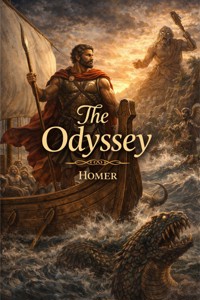

The Odyssey (Summarized Edition)
Table of Contents
Introduction
At once a homecoming and a meditation on the price of return, The Odyssey charts the fragile line between human ingenuity and forces—divine, natural, and moral—that threaten to unmake the traveler, asking whether the promise of belonging can endure storms of distance, memory, temptation, and violence, as it follows a veteran of war whose wits are tested on restless seas, in contested halls, and within the shifting chambers of his own identity, while the institutions that should shelter him—family, law, hospitality, even story itself—prove both saving and precarious, their codes binding strangers and kin yet vulnerable to pride, forgetfulness, and the whims of the gods.
Composed in archaic Greece and traditionally attributed to Homer, The Odyssey is an epic poem rooted in the oral tradition and set in the aftermath of the Trojan War. Likely dating to around the eighth century BCE, it unfolds across the islands and coasts of the Mediterranean, with the island of Ithaca as its moral and geographic center. It is written in dactylic hexameter and moves between seafaring adventures and domestic tensions. The poem’s world is one where gods intervene in human affairs, customs govern encounters with strangers, and honor and survival are negotiated through cunning as much as strength.
The story follows a seasoned commander striving to return home while his household, left in prolonged uncertainty, contends with mounting pressures. The poem opens in medias res and circles back through recollection, interweaving a youth’s search for news with the father’s hard-won progress over sea and shore. Its voice blends elevated ceremony with swift narrative momentum, punctuated by expansive similes, repeated epithets, and ritual scenes that mark the rhythms of an oral performance. The tone is at once adventurous and contemplative, attentive to hospitality and ritual, to the costs of absence, and to how memory, rumor, and storytelling shape reputation and fate.
At its core lies the drama of homecoming, not merely as arrival but as the recovery of self, status, and mutual recognition after long fracture. The poem probes the boundaries between identity and disguise, strength and restraint, bravery and prudence, testing whether wit can right what brute force or chance has unsettled. Hospitality emerges as an ethical measure: how people receive strangers, honor pledges, and remember obligations reveals the health of community. The gods’ partialities contrast with human perseverance, pressing questions about agency, prayer, and responsibility. Leadership here entails persuasion and restraint as much as command, balancing private longing with public obligation.
In contemporary terms, The Odyssey speaks to experiences of return from crisis, migration, and the rebuilding of lives after disruption. Its portraits of resilience and craft illuminate how communities welcome or mistreat outsiders, asking readers to consider the responsibilities of hosts, guests, and leaders in unstable times. The poem’s attention to rumor, persuasion, and performance resonates in an age saturated with narrative: reputations turn on stories told well or badly, and decisions depend on how convincingly truth is framed. The domestic stakes—care, loyalty, patience, and the negotiation of time apart—remain recognizable, rendering distant myth a mirror for private endurance and civic trust.
Readers may find that the poem rewards attention to its music and patterning: recurring epithets, ritual scenes, and extended similes create an architecture as important as any single episode. Because it was shaped in oral performance, repetition functions less as redundancy than as emphasis and memory aid, casting themes into relief. The narrative’s shifts between expedition and household produce alternating tempos—urgency at sea, slow suspense at home—so that action and waiting inform each other. Approaching the work as both adventure and meditation helps, as does noticing how characters negotiate speech, gifts, and ritual to claim standing, build alliances, and test the limits of trust.
Ultimately, The Odyssey endures because it binds motion to meaning: journeys outward reveal obligations inward, and the quest for home measures what a person owes to others and to themselves. Its world accepts uncertainty yet insists that choice, counsel, and care matter, even when forces beyond human control loom. As a foundational work of Western literature and a living inheritance of the Mediterranean imagination, it continues to inspire retellings and debates about justice, belonging, and resilience. Read now, it offers not an antique monument but a capacious companion, asking what it takes to return responsibly—and what kind of homecoming is worthy of remembrance.
Synopsis
The Odyssey is an ancient Greek epic poem attributed to Homer, long central to the classical tradition. It follows the aftermath of the Trojan War through the intertwined journeys of Odysseus, king of Ithaca, and his household awaiting his return. Blending adventure, divine intervention, and domestic crisis, the narrative alternates between distant seas and the besieged halls of Ithaca. The poem opens in medias res, assuming the Trojan War’s end and foregrounding the obstacles that delay homecoming. It examines how intelligence, endurance, and the obligations of hospitality shape human fortunes, while the gods’ rivalries and preferences repeatedly alter the course of mortal plans.
In Ithaca, Odysseus’s palace is occupied by suitors pressing his wife, Penelope, to remarry and consuming the estate. Their arrogance disrupts social order and tests the norms of hospitality. Odysseus’s son, Telemachus, comes of age amid this pressure. The goddess Athena, favoring the house of Odysseus, adopts disguises to guide the young heir. She urges him to gather the people, challenge the suitors, and seek news of his father. Telemachus calls an assembly, receives cautious support, and prepares a discreet voyage. His uncertainty and resolve introduce the poem’s secondary arc: a search for identity and legitimacy in the shadow of a missing parent.
Telemachus travels first to Pylos to consult Nestor, renowned for wisdom, then to Sparta to visit Menelaus and Helen, survivors of Troy’s long siege. The princes recount events following the war and relay rumors of scattered commanders. Telemachus hears that Odysseus has not perished in battle but has been detained far from home. These meetings teach him customs of proper hospitality and the value of measured speech. He gains confidence without gaining certainty, and he learns how fame and rumor complicate truth. As he returns toward Ithaca, his journey has sharpened his judgment, even as dangers gather in his absence.
Meanwhile, the divine council weighs Odysseus’s fate. Athena persuades Zeus that the veteran has suffered long enough, though Poseidon remains hostile over a prior offense at sea. Hermes delivers Zeus’s decree to Calypso, a nymph who has kept Odysseus on her secluded island. She reluctantly releases him and provides tools for a raft. Odysseus endures storms stirred by Poseidon and survives with unexpected aid to reach the shores of Scheria, land of the Phaeacians. There, the princess Nausicaa discovers the shipwrecked stranger and, honoring decorum, ensures he receives protection. Odysseus remains cautious and anonymous as he seeks a sympathetic audience.
As a guest among the Phaeacians, Odysseus is prompted to recount his wanderings. He describes how, after leaving Troy, he raided the Cicones at Ismarus and then narrowly escaped the Lotus-Eaters, whose fruit dulled his crew’s desire to return. On a rugged island he encountered the Cyclops Polyphemus, who scorned the laws of guest-friendship. Odysseus’s cunning secured an escape, but the victory carried a cost: a provoked god and an oath of vengeance that would shadow his voyage. The episode crystallizes the poem’s contrast between brute force and strategic intelligence, and between the obligations of hospitality and the perils of violating them.
Odysseus next sought favorable winds from Aeolus, guardian of the air, who granted a bag to restrain the blasts. A lapse among the crew squandered this gift, driving the ship back into hardship. They entered the harbors of the Laestrygonians, whose attack destroyed most of the fleet, leaving Odysseus with a single vessel. On Circe’s island, an enchantress transformed his men into animals until divine advice enabled him to confront her. Circe restored the crew and extended generous hospitality. Their stay, lengthy yet restorative, ended with counsel: to consult the shade of the prophet Tiresias for guidance on the route home.
In the land of the dead, Odysseus learned from Tiresias how to placate powers he had angered and how to avoid fresh disasters. He met familiar shades who deepened his understanding of glory, loss, and the fragile boundary between life and reputation. Returning to the living world, he passed the Sirens by careful preparation, steered between Scylla and Charybdis at great cost, and warned his men against harming the sacred cattle of Helios. Hunger and disobedience brought divine retribution, and a storm scattered the survivors. Alone on the sea, Odysseus drifted until he arrived at Calypso’s island, his long delay explained.
Odysseus’s tale completed, the Phaeacians observe hospitality’s highest demands and arrange passage. The narrative then returns to Ithaca, where Athena disguises Odysseus to protect him and to test loyalties. He finds shelter with the loyal swineherd Eumaeus and gradually reveals himself to select allies. Telemachus, newly matured, rejoins his father, and together they assess the insolence of the suitors crowding the halls. Penelope’s steadfastness, exemplified by delaying tactics that preserve her agency, intensifies the sense of threatened order. Plans take shape as the poem draws domestic and adventurous strands together, preparing a reckoning grounded in justice, restraint, and restored balance.
The Odyssey’s lasting power lies in its synthesis of homecoming, identity, and ethical conduct under pressure. It interrogates what it means to be a worthy guest or host, a prudent leader, and a faithful spouse or child, while acknowledging chance and divine will. Storytelling itself becomes a means of survival, as memory and reputation sustain hope across distance. Without disclosing its final turns, the poem suggests that endurance, tact, and communal norms can heal disorder left by war and wandering. Attributed to Homer, it remains a foundational meditation on resilience, responsibility, and the complex pathways by which one finally returns.
Historical Context
The Odyssey is an archaic Greek epic poem composed in dactylic hexameter, generally dated to the late eighth or early seventh century BCE. Traditionally attributed to Homer, it preserves features of oral composition and a language blend of Ionic and Aeolic forms. Its narrative looks back to a mythic past following the Trojan War, yet its material culture reflects the transition from the Late Bronze Age to the early Iron Age. The poem’s geography centers on the Aegean and wider Mediterranean seaways. It emerges from a society rebuilding after the collapse of the Mycenaean palatial system around 1200 BCE, when palace economies gave way to smaller chiefdoms.
Political and social organization in the poem reflects a world of basileis (chieftains), councils, and assemblies, rather than fully developed city-states. Authority is rooted in the oikos, the household, with land, livestock, and movable wealth signaling status. Feasting, gift-exchange, and the institution of xenia (guest-friendship) structure relations among elites and strangers. Enslaved people appear as domestic labor and war captives, illustrating dependence on servitude within households. Women manage weaving and stores, arrange marriages, and guard family property, roles consistent with archaic norms. Martial prowess, persuasive speech, and prudent counsel are prized virtues, shaping expectations of leadership and justice in communal life.
The poem presumes a shared Greek memory of the Trojan War, the foundational conflict of the epic tradition. By antiquity, a cycle of songs about the war and its aftermath, including the Nostoi (Returns), circulated widely, though most are now lost. The Odyssey participates in this larger narrative by focusing on the challenges of returning from a distant campaign and restoring order at home. This focus connects the poem to a Panhellenic storytelling network that linked diverse communities through common myths, heroes, and places. It also frames questions of honor, spoils, and responsibility that haunted veterans and their households in early Greek society.
Religion in the poem reflects practices of archaic Greek worship: sacrifice at altars, libations, vows, and consultation of signs and oracles. The Olympian gods are portrayed as powerful and interested in human behavior, rewarding piety and punishing arrogance or oath-breaking. Sanctuaries and cult centers, such as Dodona, figure within the cultural horizon, and seafaring communities seek divine favor for safe travel. Omens, dreams, and prophetic speech reinforce a world governed by customary justice (themis) under divine oversight. The poem’s religious texture aligns with archaeological evidence for expanding sanctuaries and festival networks in the eighth century BCE, linking distant communities through shared rites.
The economic backdrop blends subsistence agriculture with maritime exchange. The poem depicts herding, farming, and craft production, alongside shipbuilding, rowing, and coastal navigation. Early Iron Age Greeks renewed contact with Levantine traders; references to Phoenicians in the poem mirror intensifying Mediterranean commerce. Goods such as textiles, bronze, iron, wine, and oil circulate through markets, gifts, and plunder. Wealth is displayed through metal vessels, fine clothing, and banquet hospitality. The adoption of the Greek alphabet from a Phoenician model in the eighth century BCE facilitated record-keeping and, eventually, textual fixation, even as oral performance remained the principal mode of preserving epic knowledge.
The Odyssey’s artistry reflects the oral-formulaic technique: repeated epithets, type-scenes, and flexible phrasing that aid performance in dactylic hexameter. Professional singers (aoidoi) initially performed such epics in elite settings; later, rhapsodes recited them in public venues. By the Classical period, Homeric recitation featured at festivals such as the Panathenaea in Athens, confirming the poems’ Panhellenic authority. Written texts multiplied in the Hellenistic age, as attested by papyri from Egypt, and scholarly editors in Alexandria compared versions. These processes stabilized a fluid tradition, enabling the poem to serve as a common educational resource for language, ethics, and exemplary narrative.
During the eighth and seventh centuries BCE, Greeks founded colonies from the Black Sea to Iberia and Sicily, expanded trade routes, and formed institutions characteristic of the polis. Early lawmaking, communal cults, and hoplite organization gradually reshaped political life. The Odyssey, however, presents a landscape of islands, small kingdoms, and guest-friend networks rather than formal civic structures. Its emphasis on negotiation with strangers, seaborne risk, and the defense of household order resonates with an era of mobility and settlement. The poem thus addresses concerns arising from travel, piracy, and shifting alliances, while preserving memories of earlier aristocratic leadership and customs.
As a cultural artifact, the epic mirrors and evaluates its age. It elevates hospitality, oath-keeping, and measured speech as safeguards of community, while depicting greed, hubris, and abuse of guests as offenses inviting social and divine sanction. Leadership is defined by prudence in council, mastery at sea, and care for the household. The poem’s repeated trials at borders—shorelines, thresholds, and foreign courts—probe the limits of law and reciprocity during a period of intensified contact. In presenting the restoration of rightful order after wartime disruption, The Odyssey articulates ideals for a changing Greek world and cautions against violations of shared norms.
Author Biography
Homer is the name traditionally given to the ancient Greek poet credited with the Iliad and the Odyssey, the foundational epics of archaic Greece. Most scholars place the crystallization of these poems in the late eighth or early seventh century BCE. Little about the poet’s life is securely known, and ancient biographical anecdotes are late and conflicting. Whatever the author’s identity, the poems stand at the center of Greek literature and education, shaping ideas of heroism, gods and mortals, and communal memory. Their influence has extended across languages and eras, making “Homeric” a byword for epic scale, stylistic grandeur, and probing exploration of human motives and fate.
Ancient traditions variously located Homer in Ionia or other Greek regions, and some portrayed him as a blind singer. These details cannot be verified and likely reflect efforts by later audiences to explain the poems’ authority. The language of the epics—an Ionic base enriched with Aeolic forms—points to a cosmopolitan poetic koine rather than a single local dialect. In this milieu, poetry was performed orally by skilled singers before audiences at festivals and gatherings. The cultural training that shaped Homeric verse thus lay less in formal schooling than in mastery of shared myths, formulaic diction, and musical recitation.
The Iliad and the Odyssey exemplify an oral-formulaic art that balances spontaneity with tradition. Composed in dactylic hexameter, they employ recurring epithets, type-scenes, and extended similes to organize and animate performance. Modern oral-poetry studies, notably in the twentieth century, illuminated how such techniques enable large-scale composition without writing. The poems’ artistry lies not only in narrative sweep but also in precise structuring—ring composition, thematic echoes, and careful modulation of pace. Their expansive catalogues, speeches, and descriptive set pieces serve both mnemonic and aesthetic functions, giving the epics a texture at once ceremonial and dramatically immediate.




