



Erhalten Sie Zugang zu diesem und mehr als 300000 Büchern ab EUR 5,99 monatlich.
- Herausgeber: Daunt Books
- Kategorie: Gesellschafts- und Liebesromane
- Sprache: Englisch
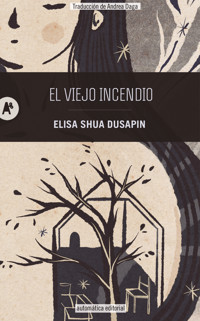
'A touching, mysterious novel, imbued with the beauty and strangeness of a fairy tale.' Ayşegül Savaş In the wake of her father's death, Agathe leaves New York and returns to her childhood home in the French countryside, after fifteen years away. Agathe and her sister Véra have not seen each other in all that time apart. Now, they must empty their home before it is knocked down. Véra stopped speaking when she was six, and as the pair clean and sift through a lifetime's worth of belongings, old memories and resentments surface. Tender, melancholic and evocative, The Old Fire is Elisa Shua Dusapin's most personal and moving novel yet. An exploration of time and memory, of family and belonging, of the unsaid and the unanswered, it is also a graceful and profound exploration of how loss and grief can live alongside life and abundance.
Sie lesen das E-Book in den Legimi-Apps auf:
Seitenzahl: 157
Veröffentlichungsjahr: 2026
Das E-Book (TTS) können Sie hören im Abo „Legimi Premium” in Legimi-Apps auf:
Ähnliche


















i‘A touching, mysterious novel, imbued with the beauty and strangeness of a fairy tale.’ Ayşegül Savaş
‘A bewitching meditation on tenderness and violence, intimacy and estrangement, The Old Fire will transport you to an ancient and wild place … A breathtaking achievement from one of my favourite living writers.’ Tess Gunty
‘Dusapin observes her characters with anthropological curiosity and great sensitivity. Her wisdom will astound you.’ Sanaë Lemoine
‘Dusapin combines acuity and depth with straight-shooting sentences that belie their profound emotional complexity. This is a subtle, propulsive, immensely powerful novel.’ Marina Kemp
‘Prickly and compelling.’ Lizzy Stewart
ii
Also by Elisa Shua Dusapin
Winter in Sokcho
The Pachinko Parlour
Vladivostok Circus
iii
iv
v
For my sistersvi
Contents
THE OLD FIRE
2
3
6 NOVEMBER
The rain was coming down so hard I missed the sign for the village. It had smudged the tyre tracks, flattened out the ruts. In the end I couldn’t see where I was going and had to pull over to the side of the road. All that water hammering down on the bonnet. It started raining yesterday and hasn’t stopped. I haven’t seen a soul since I left the autoroute. There were warnings on the radio not to drive but I didn’t have any choice. It’s evening now, seven o’clock, the sky almost black. I haven’t worked out how to adjust the angle of the seat, so I’m sitting upright, waiting, stunned by the noise of the rain. 4At least the rental van I’m driving seems solid. It looks a bit like a road-sweeper van, orange-coloured. I told the hire company I wanted something practical.
An hour goes by. At last the downpour begins to ease. I turn the key in the ignition. The satnav leads me deeper into the forest. Before long, the canopy is so dense that neither rain nor light can penetrate. I switch the headlights to full beam. It’s hard to steer. I drive slowly for several kilometres, guessing at the position of the track beneath the undergrowth. Eventually I emerge at the foot of a steep slope. Above me the familiar sight of the gates at the top of the slope comes into view. I put the van into first gear and gun the engine, just as my father used to do. I’ve never done this before. The tyres skid over the rocky terrain but the van holds the road. The gates are open and I pull in and stop in front of the house. I turn off the ignition. The security lighting comes on. A rabbit scampers into the undergrowth.
The building looks tired, the ivy-covered roof sagging above the brickwork, like a weary giant gasping for breath. There’s a car parked under the hazelnut tree. Bracken forces its way between the cracks in the front steps. Through the window, I can see a light inside. I press one eye to the spy hole in the front door 5and immediately pull away. I wasn’t expecting to see my sister’s face, fish-eyed, her forehead enlarged, eyebrows spread, her features magnified by the lens. My father installed it the wrong way round, deliberately, he claimed. We had nothing to hide, he said, no reason to be afraid. We had inner riches and the whole world should know that this was the home of the most beautiful people.
‘Hi!’ I say as Véra opens the door. I sound like I’m shouting. Véra grins in response, her smile too wide for her mouth. She takes my suitcase from my hand, puts it down by the stairs in the kitchen. It’s all so familiar, the stone floor, the wooden furniture, the bathroom door almost hidden by the fireplace. The chimney is stopped up, the fireplace filled with books. That’s new. A birdcage hangs above the table, where the light fixture used to be, slabs of cheese visible through the bars.
Véra points at the stairs, then indicates that she’s working at the kitchen counter, I should get settled in while she puts the final touches to the meal. She seems very organised, she used to be so chaotic. I say something complimentary. She types on her phone, shows me the screen:
To make you feel welcome.6
I reply curtly that we’re sisters, it’s my home too, we don’t need to stand on ceremony. She lights the gas hurriedly.
‘Especially since we’re not keeping any of this stuff,’ I say, unable to stop myself.
My socks make a swishing sound on the stairs. I tread carefully, not wanting to slip. The door to our parents’ bedroom is open. I stand on the threshold, feeling the draught from the poorly sealed French doors. Dark wood flooring. The double bed in the centre of the room, the mattress bare, stripped of sheets and blankets. I still don’t understand how my parents managed to sleep without a wall behind their heads. I close the door, feeling vaguely relieved. I’m not sure what had been worrying me the most, the thought of sleeping in their bed or the prospect of sharing our old room with my sister. We’re not children anymore.
Her sickly-sweet perfume irritates my throat. She’s kept our bunk beds. The sight of them makes me feel sad. The metal frame seems too fragile to support two fully grown women. The bureau and chest of drawers haven’t moved, still salmon pink, their rounded shapes the same as ever. 7
I check my internet connection. I’m going to be here for nine days, I need to be able to communicate with my colleagues. My phone shows only one bar, sometimes none at all.
Leaning out of the window I can see the van. The orange colour makes me laugh, it looks like a giant bumble-bee. How absurd. The whole situation is absurd, my sister and I together again like this for the first time since my father died five years ago.
Downstairs, Véra has poured two glasses of wine. She’s used the crystal glasses. I’m so put off by all this formality that I tell her I don’t drink. She raises an eyebrow, pours the wine back into the bottle, spilling some of it onto the table. I wipe it away with my sleeve. All of a sudden I feel hot and decide to take off my jumper. Bamboo dishes. I haven’t seen those before. Véra shows me the packaging for the cheese, decorated with chestnuts, then points proudly to the fireplace. Smoked cheese. I try not to think about it being made with raw milk. She’s made an endive salad with figs and walnuts. I ask her if she’s given any thought to how we’re going to approach the task of emptying the house over the next 8few days. I haven’t had a moment to plan, I’ve been so busy. She types out:
Well done for your prize.
I mumble that it’s kind of her to remember.
I’m curious as to how she knows about the prize. I write film scripts for a living. The latest won a prize recently at a festival in Italy. I didn’t go to the festival and I certainly wouldn’t have said anything to Véra about it.
‘Have you heard anything from Octave?’ I ask her in what I hope is a neutral voice.
She nods, yes, of course – the figs, the walnuts, they’re from him. I don’t wait for her to finish. As far as I’m concerned, I say, there’s nothing I want to keep from the house. She can sort out the things she wants for herself and we’ll take the rest to the tip. Her fingers tighten around her phone. She tilts her chin in the direction of the armoire, the kitchen, the bathroom. I look up. We’re not going to sort through all that, are we? The phone’s screen throws light on her face.
Up to you.
I feel myself starting to relax a little. It’s just that I have a lot of work right now, I tell her. I’ve fallen behind. I’ll need some time alone to write while I’m here. She points at the screen again: 9
Up to you.
She makes it all seem so simple, it’s disconcerting. Then she asks me what I’ve been up to. I say something about my latest commission, adapting Georges Perec’s novel, W or the Memory of Childhood. Véra listens, smiling as I speak. I hint at the prestige of this production, doing my best to appear nonchalant about the famous actors lined up, the well-known screenwriters I’m working with. We have six episodes to write. Filming is due to begin in two years. Applause from Véra. It’s not an easy work to adapt, I add. And I’m only involved in the dialogue. I start to say something about Perec, she nods vigorously, yes, she knows, she’s read A Void.
‘You read things like that?’
She pulls a face, of course she does.
‘I don’t know. My father …’
Silence.
‘Papa, I mean. He didn’t say.’
Still smiling, Véra serves me the last of the figs.
I was fifteen when I left for the US. Véra was twelve. I went there for high school and lived with a host family. Véra had stopped speaking long before I left. I knew that she managed to keep up at school most of the time but I’d assumed her reading hadn’t progressed beyond a 10basic level. I certainly didn’t think she’d be up to reading Perec.
‘What about you? How are things with you?’ I say, realising that I haven’t asked her about herself once since I arrived. The last time we communicated was a year ago when she moved to Périgueux. She’d been living in this house, our childhood home, with my father and stayed on after he passed away. Last year she found a furnished studio flat and I’d been giving her advice at long distance. She tells me she didn’t take anything from the house – she didn’t want to take things without my approval. Now that the sale of the house has been finalised, she is counting on me to help her clear it out.
I’m reading over her shoulder. She gestures annoyance, tells me not to rush her. I apologise, help myself to some more salad.
Our house used to be part of the estate of neighbouring château, Le Pigeon Froid, owned by Octave’s family. But the boundaries have been redrawn. The house is in need of updating. To conform to modern safety standards we’d have to redo the roof and modernise the central heating and electrical installation. We don’t have the money to do any of this and we’ve accepted an offer from a company that wants to knock down the house 11and set up a campsite. Octave is hoping to salvage some of the stone from the house and use it for the restoration of the château’s pigeonnier, the tower where the pigeons used to be housed.
Véra waves her phone at me. She was bored with her job working in a shop, she says. Now, she’s doing a course in flower stabilisation.
‘Stabilisation?’
I create flowers that never fade, with the help of chemistry.
I give her a look that says I’m interested.
‘And is it successful?’
It depends on the flowers.
‘I mean commercially. Do they sell?’
She shrugs:
People can’t be bothered anymore.
We clear away the dishes in silence.
‘Well,’ I say flatly, ‘it’s November. Not the best time of year for flowers.’
Véra goes straight to bed. I linger downstairs in the lounge. Darkness is encroaching, the floor lamps cast dim haloes. I feel ill at ease in their warm glow. No 12curtains on the windows. I see myself reflected in the glass, seated on the sofa, framed by darkness, the fridge purring in the background, the smell of cheese – Véra has put it back in its birdcage. I feel oppressed by it all, the blocked-up fireplace, the walls festooned with prints of Van Gogh’s sunflowers. My father collected posters from theatre productions and art exhibitions. He had no particular interest in the artists and never went to see the plays. It was the images he loved. He chose them for their bright colours and pinned the posters up all over the house.
I feel exhausted just thinking about the task of clearing out all this mess. If we set fire to the books, there’d be nothing left. Except the stones the house is made of. They’re the only things we need to preserve anyway. How much simpler that would be.
I put off sorting through my emails until tomorrow and spend the evening poring over my text messages feeling increasingly anxious as I scroll through and find none from Irvin. It’s almost evening in New York, plenty of time for him to have messaged me. I’m tempted to wait until I hear from him first, then decide that would be childish. 13I let him know I’ve arrived, say goodnight to him. I pause, hesitate for a moment, then tell him I miss him.
The bathroom is as I remember it, cavern-like with bare stone walls and floor. Véra has left a towel for me, neatly folded on the worm-eaten chest of drawers. Even though I know the wood’s been treated, I’ve always found this chest of drawers repellent. She’s left her jewellery here. Handcrafted bits and bobs, feathers, shells. I open one of the drawers. It’s stuffed with amber, necklaces, brooches. Pushing the wet bathmat aside with my foot, I step into the shower and watch Véra’s hair being sucked down the drain, hoping it won’t cause a blockage.
I stand for a long time under the stream of scalding water. My hair is brittle, crinkled from where the elastic tie was. My hormone levels have been all over the place. I don’t know when my period will start again. I turn around to face the stone wall, still instinctively looking for something to lean against and trying not to look down at my belly. Irvin claimed he didn’t notice it swelling. He says it was all in my head. I know he’s only trying to reassure me. I can’t blame him. He didn’t have to watch his insides being emptied out down his legs, 14turning the water red and disappearing down the pipes. He knows nothing of my body.
The harder I try not to make a sound, the more the stairs creak. The bedroom is lit by the greenish glow from our two phones charging. Véra is under the covers, only her head visible, her hands cupped on her chest. Her clothes are rolled up on the chest of drawers. The ladder to the top bunk squeaks, the sheets make a rustling sound. I fall asleep instantly, bathed in the smell of fresh laundry.
15 7 NOVEMBER
I’m sorting things into categories – items to be thrown out, those to be given away. I can’t help smiling as I realise I’m following the advice of decluttering influencers. A cold light filters in through the window. Spiders are clustered in corners and all around the stove. They don’t seem to have spun any webs. I find dead ones in pots and pans and dispose of them. I’ve decided to start in the kitchen, somehow it has fewer associations than other rooms. Anything that’s passed its sell-by date goes straight into a bin bag. Mustard, tomato concentrate. A jar with a lump of something white – duck fat. 16A whole shelf of cheeses. The fridge shudders as I launch my attack. The freezer compartment needs defrosting. The plastic has cracks in it. Since she moved out, Véra’s only been back here once a month. Potatoes in the vegetable drawer have sprouted. The smell from the cheese makes me feel nauseous. I work quickly. Mouldy jam, almost empty packets of butter, bunches of wilted herbs.
Véra is busy in our bedroom. Her presence in the house unsettles me. I listen for sounds from her. She came downstairs a little while ago to make herself some coffee just as I was sniffing a jar of stewed fruit. She asked me if I wanted some. I didn’t know if she meant coffee or stewed fruit and dumped the jar of fruit into the bin, like a rabbit caught in the headlights throwing itself under the car.
Véra’s making progress too. I’m worried we’re going to end up having too much time on our hands. What will I do with her for another six days? I make a conscious effort to work more slowly.
The kitchen is a mess. It looks more like the Véra I remember. I prefer that to the way the living room was when I arrived, all neat and tidy. Oil has leaked all over the counter. I clean up the pools of fat and lumps of grease. As I’m wiping the cloth over the bottom of a 17cupboard I feel a loose panel. It comes away easily when I press harder. Behind the panel there’s a space the size of a vegetable crate cut into the stone wall. It’s full of bottles of strong spirits, packets of sugar. I call Véra. She wasn’t aware of this alcove either. Does she think perhaps our father was …? She shakes her head, probably not. I agree, I never saw him drinking either.
‘And Maman?’
Véra looks thoughtful. I pick up one of the bottles. Quince liqueur. When I go to put it in the bin, she stops me, mimes us drinking it from the bottle. I shake my head but put it back and close the secret hiding place. I turn my attention to the sink – globs of jam floating in brackish water. I have to plunge my arm right in to fish them out.
Véra seems impressed by my system of organising. She looks at me, tugs at her jumper and points to the stairs: she wants me to go up and sort through my clothes.
‘I’m giving them all away.’
She insists. I’m conscious of her watching me as I climb the stairs. I can feel the weight of her gaze, it makes even the most trivial gestures seem significant.
My side of the chest of drawers is the same as it was before I left for the US, minus one or two jumpers. 18




