


15,59 €
Mehr erfahren.
- Herausgeber: Independent Thinking Press
- Kategorie: Bildung
- Sprache: Englisch
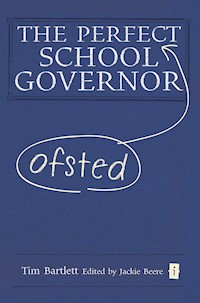
Each of the 20,000 schools in the UK has a governing body who are an integral part of the school's major decision making processes, the results of which directly affect our children. For this reason it is essential that governors make clear and informed decisions in order to implement the best educational framework for young people. This latest addition to the hugely successful 'Perfect Series', The Perfect (Ofted) School Governor written by a seasoned professional with 17 years' of head teacher experience, aims to be the most conclusive, easy-to-read, education jargon-busting and essential guide for teachers, governors (new and old) and school boards alike. It covers everything a governor needs to be the best that they can be, including the history of the education system in England, preparation for Ofsted inspections and their impact, leadership and governance, handling complaints, a checklist for effective governor meetings; guides to interpreting data correctly and much, much more!
Das E-Book können Sie in Legimi-Apps oder einer beliebigen App lesen, die das folgende Format unterstützen:
Veröffentlichungsjahr: 2013
Ähnliche

















To my perfect daughter
Contents
Acknowledgements
Many people have generously contributed ideas, sample documents and time: time to talk with me, to read drafts and to make comments. I thank them all; and, of course, any errors are mine. John Beasley provided the learning walk in science and Matt Lynch provided the reasons for including policy review in the book. If you spot something you know I should have given you credit for, please forgive me – and let me know! The truth is I’m a magpie: as a school governor, I have collected brilliant things over the last 24 years and I use them to help make our schools even better places for our children and young people. Here they all are …
Government policy and legislation, as far as we understand them, are correct up to 31 March 2013. It has been possible to make some small amendments during the final stages of production.
Foreword
It has never been more important to attract as governors people who can add value to schools. Having worked as a governor myself, and worked with governors as a head teacher, I know that they can be a support or an irritation, an inspiration or an obstacle to the success of a school. Governors need to rise above the everyday concerns and ask the big questions about strategy and results. They need to be confident enough to raise issues with the head teacher and to engage with staff and children during school contact time. They need to know how to work as a team of professionals who believe in a set of shared values that will deliver the shared vision for a successful school. All of this, for no financial reward – as yet – and a huge quantity of paperwork and procedures to wade through at every meeting. Make no mistake, this is a demanding role, but also an immensely satisfying contribution to any community.
Some governors will come to their first meeting having no more knowledge of the world of education than their own schooling and perhaps the gossip from the school gate or horror stories from their children. How empowering to have the chance to see beyond this into the complex world of school improvement! Governors begin to realise how staffing decisions are made, school budgets are spent and feel the pressure of school accountability when Ofsted arrives.
The days of governors meeting once or twice a term and making the occasional appearance at the school show are over. Now governors are held responsible, as part of the school leadership, during inspection. They are expected to know how well the school is performing and show that they know what is being done to improve it. This requires governors to be able to observe lessons, understand complex performance data and contribute to school development plans.
Governors give their time, their expertise and, crucially, a different perspective to the challenges schools face, ensuring, together with the school leadership, that our schools work hard for every child. In many areas, local authorities no longer play a central role in monitoring and improving schools and academies, so it is even more important that governance can provide the support and challenge that delivers a high quality education. This is a huge expectation and a learning journey for everyone who joins a governing body. Governors who have an open mind, a mission to understand and who are open to learn are the very best assets that a head teacher can have to help deliver outstanding outcomes for children.
What governors need in order to do all this successfully is a practical, readable, handy guide with all the crucial information to hand, which they can dip into and learn from as needed. Tim, with all his wealth of experience to draw upon, has produced that guide in this little book. Its strengths are in its attention to detail, readability and useful resources – and in the confidence it will give governors to do a brilliant job for their school community.
Jackie Beere, Tiffield
Introduction
We become governors with various levels of knowledge and many different experiences – that’s part of the value of governing bodies. It is a vital job and someone has to do it! It is also a powerful job, as the purpose of a governing body is to challenge and support the leadership of your school (yes, your school, now). The aim of this book is to help you become the very best governor you can be.
This Introduction includes a quick-start guide as an overview of the governor’s role – this chapter is chiefly aimed at first-time governors. This is followed by six chapters which are aimed at all governors who wish to demonstrate best practice. Each begins with a brief summary which allows you to gain an overview to select your priority areas for more detailed reading.
Quick-start guide
This section provides:
An introduction to educational jargon and acronyms
Advice on how to approach your first meeting as a governor
Terms used in the book
Throughout this book I have used the following terms: governor, governing body, head teacher, school, parent, pupil and student. This is to make reading this book as simple as possible and because these seemingly straightforward words hide all sorts of complexities, as explained below.
Governor covers an increasing range of different titles used in schools, such as trustee, board member, local governor, company director, member of an interim executive board. The vast majority of governors gift their time and expertise to the school.
Governing body similarly covers a group of governors who have, between them, a wide range of expertise. What governing bodies all have in common is that they are responsible for the school over the long-term and for ensuring that the school provides the highest possible standards of education. They are part of the formal organisation of the school and offer support and challenge to the staff. This book emphasises this role of support and challenge.
The head teacher may be called a principal, proprietor, executive head, chief executive, high master or head mistress.
School covers many different types of organisation – it might be an academy, specialist college, university technology college or an independent, community, foundation, free or studio school. What they all have in common is that they exist to educate children, usually called pupils in primary schools or students in secondary schools.
Parents covers foster parents, parents who live apart from each other, step-parents, carers or even a local authority. They all have a legal duty to educate the children in their care.
Jargon busting
If education terminology is new to you, then take this book with you, especially to your first meeting. A photocopy of the jargon-buster pages may be unobtrusive – or use your tablet computer if you have one. Laptops have largely failed to gain a foothold in meetings – the screen seems to act as a physical barrier – and if you keep looking at your smartphone your colleagues might think you are texting for someone to come and rescue you!
Firstly, here is some information about the different types of school. If nothing else, reading this section will persuade you that the education system in England is very varied. A word of warning: you are about to be served quite a large bowl of alphabet soup.
Jargon-buster 1: School funding arrangements
One key difference between schools is their funding source. Private schools charge fees. State schools do not charge fees. They are publicly funded by one of the following bodies:
The Education Funding Agency (EFA), which is an agency of the Department for Education (DfE).
The local authority where they are located. In a county council area that will be the local authority; elsewhere, it will be the unitary authority.
State schools can be referred to as independent schools in that they are independent of control by a local authority. More usually, however, the term ‘independent school’ is used to mean a private school.
Jargon-buster 2: Different types of school
Academy. An independent state school and always funded by the EFA. Academies are schools for pupils of all abilities. Secondary academies can opt to have a specialism and select up to 10% of their pupils who must show an aptitude for that speciality. The specialisms are: physical education or sports, performing arts, visual arts, modern foreign languages, design and technology and information technology. Academies can be self-standing or operate as part of an academy chain.
In general, all state schools that are not community/maintained schools are academies, even if that is not in their name. Schools that that are not academies and that ‘fail’ an Ofsted inspection must close and reopen as a sponsored academy; that is, join a DfE-approved external organisation that will promote rapid improvement.
Academy chain. These are groups of academies with an overarching organisation which has a contract with the DfE. These organisations, which are not-for-profit charitable trusts, charge their member schools a maximum of 5% of their budget to provide services and leadership. Chains vary in how they establish governing bodies for individual schools and how they delegate authority to them.
Community/maintained school. A state school that is usually owned and always funded (maintained) by the local authority.
Free school. A state independent school set up in response to a request from the local community.
Grammar school. State secondary school which selects its pupils by means of an examination taken at age 11. There were 164 grammar schools in England and a further 69 in Northern Ireland at the time of writing.
High school. A secondary school that can be an alternative state school in areas where there are grammar schools, a state school that precedes an upper school (14–18-year-olds), or a private school.
Lower/first school. Part of the three-tier school system. These schools take children aged from 5–8 or sometimes 5–9.
Middle school. Part of the three-tier school system. These schools take children aged from 8–12 (i.e. primary) or children aged 9–13 or 10–13 (i.e. secondary). Pupils transfer from middle to upper or high schools.
Nursery school. State funded service for children over 3. Private voluntary or independent (PVI) nursery education is also available throughout the UK and varies between structured pre-school education and services offering child-minding facilities.
Preparatory school. Private primary schools, often abbreviated to ‘prep’ schools. Pupils are usually preparing for transfer to private secondary schools at age 11, 13 or 14.
Primary school. State school for children aged 5–11. These are sometimes split into reception (ages 4–5), infant (ages 5–7) and junior (ages 7–11).
Pupil referral unit. PRUs provide education for pupils who have been excluded (expelled) from a mainstream school or who are unable to attend a mainstream school for some other reason, such as ill health. PRUs can be academies, private or community schools.
Special school. These provide for pupils with special educational needs (SEN) and may be academies, private or community schools
Studio school. A state independent school for 14–19-year-olds of all abilities. The curriculum is designed to integrate the world of work closely into the pupils’ learning activities and will admit up to 400 pupils. The unique element is the focus on enquiry-based learning. Often the students’ two workplace specialisms are determined by the local economy (e.g. aeronautics, engineering, health, social care, tourism).
University technology college. UTCs are state independent schools for 14–19-year-olds of all abilities, run by a partnership between further education colleges and universities. They can admit up to 800 students and have at least two specialisms (e.g. engineering, construction, event management, environmental services) which are geared towards the skills needed for the local economy.
Upper/high school. Part of the three-tier school system These schools take children aged from 13–18 or 14–18.
Jargon-buster 3: High-frequency terminology for your first meeting1
AST. Advanced skills teacher – a senior member of staff, externally assessed for promotion on the basis of their teaching ability.
Cover supervisor. A member of staff who supervises a class when their regular teacher is absent. Teaching staff can only be required to cover for each other’s absence in exceptional circumstances.
CPD. Continuing professional development – the school’s training programme.
EYFS. Early Years Foundation Stage (ages 0–5).
HLTA. Higher level teaching assistant.
HMI. One of Her Majesty’s Inspectors, a small group of independent school inspectors who now work for Ofsted.
HMCI. Her Majesty’s Chief Inspector or the head of Ofsted.
Key Stage 1 (KS1). Years 1 and 2 (ages 5–7).
Key Stage 2 (KS2). Years 3–6 (ages 7–11).
Key Stage 3 (KS3). Years 7–9 (ages 11–14).
Key Stage 4 (KS4). Years 10 and 11 (ages 14–16).
LSA. Learning support assistant – works with a teacher in the classroom.
Ofsted. National inspection organisation covering all providers of services for children and young people – from Early Years to adults up to the age of 25 with special needs.
PPA time. Planning, preparation and assessment – teachers are guaranteed no less than 10% of the time they are scheduled to teach pupils to use for PPA and cannot be called on during this time except in emergencies.
QTS. Qualified teacher status.
SDP. School development plan – usually covers priorities for the next three years.
SEF. Self-evaluation form – an internal, objective assessment (usually using the same criteria applied in school inspections) in a format the school chooses to meet its own needs.
SLT. School/senior leadership team.
Support staff. School staff other than teachers.
TA. Teaching or teacher assistant.
Schools today: the governing body
A governing body is a critically important ‘middle tier’ – filling the vacuum between schools and national government This vacuum is the result of the accelerating dispersal of the previous powers and duties of local authorities to schools and national government.
Fortunately, their key legal responsibility can be summarised in a nutshell: ‘The governing body has general responsibility for the conduct of the school with a view to promoting high standards of educational achievement.’2
The 2012 version of the Department for Education’s Governors’ Guide to the Law ran to 210 pages.3 This list from the table of contents is worth reading because it really does give a complete overview of the areas of responsibility of governing bodies:
Academy conversion
The Early Years Foundation Stage and the national curriculum
Children with special educational needs and other vulnerable children
The school budget
School premises and capital investment
Staffing
School improvement partners and school self-evaluation
Admissions
Behaviour and attendance
Inspection
Schools causing concern
Health, safety and welfare
Equalities
Organisational changes to the school
Trust schools
Parent councils
Control and community use of school premises
Extended activities in schools
Charging for school activities
Providing information
Sometimes these responsibilities are shared between a school’s governing body and one which is responsible for a group of schools. The DfE’s 2013 version is much shorter.
Ofsted
Ofsted inspections focus on five areas:
Overall effectivenessAchievement of pupils at the schoolQuality of teaching in the schoolBehaviour and safety of pupils at the schoolQuality of leadership in, and management of, the school (including governance)Ofsted grades each area separately as either:
OutstandingGoodRequires improvementInadequateA grade 3 school will be monitored by Ofsted, including further visits to the school. A school with an overall grade of 4 will be judged either to have ‘serious weaknesses’ or to require ‘special measures’. Each of these brings a higher level of monitoring, support and intervention to ensure rapid improvement. Schools with either of these judgements are often referred to as being ‘in an Ofsted category’.
Your first governors’ meeting
Joining any team is a challenge. Even if the context is familiar, the relationships and ways of working together vary between different groups, plus the use of language can be baffling. You know that what you are hearing is in English but you can only vaguely recognise the meaning!
It is unlikely that the chair will ask you to express a view at your first meeting without having a word with you beforehand. However, expect to be invited to introduce yourself, so prepare a sentence or two on how you became a governor and what you hope to contribute.
The next problem is that the agenda for the meeting is ‘work in progress’ – a combination of what went before and what is to come. Agendas are full and time is short: you are leaping onto a roller-coaster. This can be exciting but also daunting, so the best advice is to cling on and try to enjoy the ride. There will be moments when the pace slows and you will just be feeling you’ve got the hang of an item on, for example, providing additional activities at lunchtime; and there will be times when you will be over the top and hurtling down with an item on comparing year-on-year data on attainment. Having just worked out what attainment means, the words progress, achievement, floor targets and benchmark will fly by in a blur. Just hang on! Jot down the terms you’re unfamiliar with and, if you’ve not already been allocated a mentor – a governor to call your own – now is the time to make a note to ask the chair of governors for a suggestion.
Who’s who?
A full governing body meeting will include the chair of governors, vice chair, head teacher, clerk and the other governors – some of whom will have specific roles, for example, chair of the finance committee. There might also be observers present – members of the leadership team and other staff may be invited for all of the agenda or to join the meeting for a particular matter.
The clerk to the governors is almost always paid for the time they give and will be able to advise the governing body on legal and procedural issues. They are responsible for recording the meeting and preparing minutes from their notes.
What matters is that all governors are equal and act together to discharge their legal responsibilities. The chair of governors and chairs of committees will exercise some authority and have a closer working relationship with the head teacher than other governors. That authority is granted by the governing body, not by the position. The governing body may also delegate functions to an individual.
Pamela Hutchison, head teacher of Elizabeth Woodville School, Northamptonshire, provides these top tips for governors:




