


15,59 €
Mehr erfahren.
- Herausgeber: Independent Thinking Press
- Kategorie: Bildung
- Sprache: Englisch
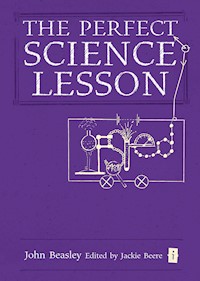
Have you ever sat in a science classroom as either a pupil or an observer and been bored? John has, but it should never have happened. Science can be the most absorbing, engaging, gross, fascinating, smelly, exciting, practical, electrifying, challenging and explosive subject in the curriculum. No other subject can - literally - make your hair stand on end! John draws on his years of experience as a science learner, teacher and trainer to reveal the habits and mindsets of great science learners and teachers - and shows how these mindsets and habits can be taught. He gives clear guidance (referenced to Ofsted advice on outstanding practice) on engaging starters, success criteria, motivational lesson activities, effective plenaries and powerful feedback which will show that crucial progress over time. This book really will make your lessons go with a bang! For all primary and secondary science teachers. Essential reading whether you are a trainee teacher, newly qualified or more experienced and looking for fresh ideas. The Perfect (Ofsted) Science Lesson shows you how to: hook pupils into learning, deliver consistently engaging lessons, get more from your curriculum time, establish routines and good learning habits, keep motivation and attainment levels high, make your practicals more productive, use feedback effectively, re-invigorate your practice, and deliver consistently outstanding lessons.
Das E-Book können Sie in Legimi-Apps oder einer beliebigen App lesen, die das folgende Format unterstützen:
Veröffentlichungsjahr: 2014
Ähnliche










Praise for The Perfect (Ofsted) Science Lesson
Excellent ideas and practical tips on how to make this core subject manageable alongside an already over-crowded curriculum. The ideas about running science alongside the maths and English curriculum are well thought out and meet Ofsted’s demands for a truly integrated curriculum that combines knowledge and skills equally.
Lucy Westley, AST in maths and assessment
An essential read for all training science teachers. A toolkit with ideas to try out – really useful for trainees hungry for suggestions. I like how it relates to metacognition and the use of learning conversations in relation to peer assessment. This book makes good reference to the relevant literature, whilst making it accessible. It also highlights the important of science in society and positive role models to make it relevant.
Dr Jo Anna Reed Johnson, University of Warwick
The useful and informative guidance in this book should form part of the armoury of all teachers who want to ensure that they deliver effective, informative and enjoyable science lessons. It clearly demonstrates not only the knowledge delivery but also the strategies that practitioners can employ to make learning enjoyable and relevant to their students, regardless of age.
Ian Fergus, Ofsted Inspector and former Head Teacher
For the four women in my life: my wife Jackie and our three daughters Kirstie, Lucy and Carrie. Each in their own way has been a role model for all that is best in this book about how to approach learning, and life.
Contents
Acknowledgements
To all my teaching colleagues in the past, and to all those who still strive to make teaching more enjoyable and rewarding for all – especially my wife, Jackie. Thanks also to Crown House Publishing for all their help and support.
Foreword
As a child my favourite toy was my chemistry set. It seemed like magic to discover how heat, potions and powders created reactions that you couldn’t always predict, and it made me feel powerful and grown up. Consequently, when I started secondary school, I loved science lessons and planned to work in a research lab, wearing a white coat and designing experiments that would change the world. That dream lasted well into my second year when science became separate subjects. My teachers did, indeed, wear white coats, but they started speaking a language that confused and frustrated me. The main activity seemed to be taking down copious notes and drawing Bunsen burners. During those years I lost my love of science and failed to connect it to my world.
Inspiring children through scientific exploration and connecting the science curriculum with the real world is an essential aspect of being an excellent science teacher. But sometimes the grind of exams, an overloaded curriculum and the pressure of Ofsted expectations can wear down even the most enthusiastic teacher. In this book science teachers can find practical ideas to use in their lessons and to establish the link between great teaching, professional development and Ofsted expectations. Great science teachers continually reflect on their practice, sustain rapport by getting feedback from pupils and, above all, sustain and develop a love of science in them by connecting science to the real world. Whatever stage you are at in your teaching career, it is vital to top up your vision and passion by reading some inspiring blogs or a book like this one.
The Perfect book series has delivered examples of good classroom practice linked to the latest research and to the feedback from various Ofsted reports and guidance. Often this guidance makes perfect sense, such as all subjects delivering on literacy, ensuring that learning is deep (not just for exams) or having no set structure for lessons.
The Perfect books also want to promote the idea that the quality of your teaching is dependent on your mindset and the habits you develop and model for the pupils. In this book, you can really see the connection between great teaching and great habits of learning, an ideal learning environment and relationships that enhance learning.
Whether you are new to teaching, in your early years as a teacher or are highly experienced, whether you are a primary or secondary teacher reflecting on your practice, this book will offer you the chance to stand back and consider what is working and how you can tweak your practice to improve and maybe even break unhelpful habits.
If you put a frog in a pan of boiling water it will immediately jump out and save itself. However, if you place it in a pan of cold water and very slowly bring the water to the boil the frog will die. Sometimes we don’t notice when, gradually, we develop habits in our teaching that we aren’t even aware of: the grumpy registration voice, tick and flick marking, asking the same pupils for answers or using dialect expressions that don’t model standard English.
Then someone from Ofsted comes along and gives us feedback about our teaching that we don’t recognise and we get angry because we think they are wrong. You can save yourself from this experience by taking the temperature of your teaching on a regular basis, as John suggests in this book. Self-awareness gives you the gift of immediate hindsight – you know your impact and you know what to do about it. As a scientist this will appeal to your own curiosity – and the very best teachers are endlessly curious about learning and how it works in their classroom.
My own science lessons delivered an exam result but eroded my curiosity about how things work. However, a fascination with how learning works is at the heart of great teaching. The changes in the examination framework mean science teachers have to find ways to help their pupils retain huge amounts of content through deeper learning and be able to transfer skills and understanding. To do this, the natural curiosity which is at the heart of science needs to be nurtured from the early years. The challenge for science teachers is to sustain and grow curiosity by modelling it. Some of the very best lessons I have ever observed have been science lessons that do exactly this.
Jackie Beere, Tiffield
Introduction
There is no ‘perfect’ lesson, not least because there are no perfect teachers or perfect pupils. However, that doesn’t mean that we, and our pupils, shouldn’t strive for perfection.
Ofsted have their version of this Holy Grail set out in the inspection framework and in the descriptors for outstanding in the inspection handbook. This book aims to give some practical advice to help science teachers along the road to perfection – or at least as far as outstanding. It describes the attributes of ‘perfect’ teachers and how, with a growth mindset, you can work towards acquiring all of these. The book shows how you can develop great relationships with your pupils and how you can teach them the habits of effective learners, so that they can get closer to becoming ‘perfect’ pupils, and so become better scientists.
As Ofsted recently said:
‘For pupils to achieve well in science, they must not only acquire the necessary knowledge, but also understand its value, enjoy the experience of working scientifically, and sustain their interest in learning it. Pupils in schools need to discover the concepts revealed through observing scientific phenomena and conducting experimental investigations for themselves. Then they are more likely to continue to study science and use that learning for work, for family, and to contribute as informed citizens.’
Ofsted (2013: 4)
Science teachers have the privilege of teaching a subject about which children are naturally curious. It is the subject that answers that great question ‘Why?’ and opens up pupils’ minds to the wonders of both the microcosm and the macrocosm.
Chapter 1
Science Teaching: The State We’re In
The intention of this opening chapter is to raise awareness of the issues faced by some primary and secondary schools (and the pupils in them). I describe pitfalls to avoid when teaching now and also when planning the introduction and teaching of the new science curriculum. There is a chance, finally, for good practical work (which pupils love) to become an integral part of learning about science, and for schools to develop a curriculum which truly values the subject and thereby produces model scientists. Let’s take this chance and not repeat the mistakes of the past!
Even better if …
Primary schools saw the end of statutory assessments in science in 2009 and, worryingly, the latest Trends in International Mathematics and Science Study (TIMSS) survey (Martin et al., 2012) showed that the performance of 10-year-olds in science had declined in English schools, relative to their previous survey in 2007. Concerns were also being voiced at this time by employers, higher education and professional scientific bodies that too many pupils were leaving secondary school with poor practical, investigative and analytical skills.
Against this background, Ofsted conducted a review of science teaching in both primary and secondary schools and published a report in 2013 entitled, Maintaining Curiosity. The report described the best way of raising achievement in science:
‘The schools visited that made science interesting for their pupils, both primary and secondary schools, raised achievement in science. In both phases the most effective approach seen was through practically based investigations. Pupils experienced the scientific phenomena for themselves and then used that experience to raise their own further questions, thereby maintaining curiosity.’
Ofsted (2013: 40)
The report celebrated good teaching practice and underlined how important practical work is to maintaining pupils’ interest and future success in the subject. This is why practical work features so prominently later on in this book. Being an Ofsted report, it also described poor teaching practices. As you read on, consider whether or not you see any of these practices in your school, and also bear in mind that most (69%) of the science teaching seen was at least good!
There are indications, however, that some pupils are not always getting the best experience of this wonderful subject. I deal with concerns about the primary phase first, but as many of the issues raised are common to both phases, these should also be read by secondary teachers.
Poor primary (practical) practice
In the Maintaining Curiosity report, Ofsted noted this concern:
‘Most teachers in the [primary] schools visited no longer provided pupils with time to revise and review their science knowledge, and most prioritised English and mathematics above science, which is still a core subject in the National Curriculum. This is a worsening of science provision since 2011, with about half of the school leaders in the report citing the removal of SATS as the main reason they no longer paid as much attention to science.’
Ofsted (2013: 9)
Worrying enough, but some primary teachers and pupils actually saw science as a sort of respite from English lessons and as a subject where pupils didn’t need to write much.
‘At its worst, inspectors heard pupils say: “We like science because we do not have to write anything.”’
Ofsted (2013: 10)
They also found that:
‘Almost half of the schools visited were not setting science targets. This emphasises starkly the decline of science, yet targets were set for English and mathematics because leaders and managers knew that this could bring about improvement in outcomes for pupils.’
Ofsted (2013: 21)
Teaching English and maths at the expense of science is short-sighted because science can be an excellent vehicle for teaching these subjects and frees up curriculum time. So, use science to teach English and maths!
The main issues raised in the report, and some possible solutions, are set out in the table below.
Use science as a vehicle for teaching literacy and numeracy (e.g. use science content as material for reading and writing non-fiction, use experimental data for graphical and other numeracy skills, make explicit connections between science and literacy). This practice shows clear evidence of better science and literacy outcomes for pupils (Ofsted, 2013: 10). When the same teacher teaches these subjects to the same pupils, and knows their strengths and weaknesses, why wouldn’t they use science as a vehicle to do so if it improves outcomes and frees up time?




