


50,99 €
Mehr erfahren.
- Herausgeber: John Wiley & Sons
- Kategorie: Wissenschaft und neue Technologien
- Sprache: Englisch
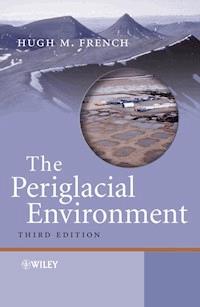
The Periglacial Environment, Third Edition, provides an authoritative overview of the worldâ??s cold, non-glacial environments. Emphasis is placed upon the North American and Eurasian polar lowlands, but examples are also drawn from Antarctica, the Qinghai-Xizang (Tibet) Plateau, and the northern mid-latitudes. First published in 1976 and subsequently revised in 1996, the text has been the international standard for over 30 years.
The Third Edition continues to be a personal interpretation of the frost-induced conditions, geomorphic processes, and landforms that typify periglacial environments. The text is divided into four parts. Part One discusses the periglacial concept and its interactions with geomorphology, geocryology and Quaternary science. It also outlines the range and variability of periglacial climates and the degree to which landscapes are in geomorphic equilibrium with prevailing periglacial conditions. Part Two describes present-day terrain that is either underlain by permafrost or experiencing intense frost action. The roles played by cryogenic weathering, ground ice, mass wasting, running water, wind action, snow and ice, and coastal processes are systematically analysed. Part Three summarizes evidence for the existence of periglacial conditions during the cold periods of the Pleistocene, with special reference to the mid-latitudes of Europe and North America. Part Four illustrates the geotechnical problems associated with human activity and resource development in periglacial environments, and discusses the potential impact of global climate change in the northern high latitudes.
This excellent textbook is an invaluable resource for second and third year undergraduate students of Physical Geography, Geology, Environmental Science and Earth Science. The Periglacial Environment, Third Edition is also an informative reading for professionals, researchers and lecturers working and teaching in the field.
Sie lesen das E-Book in den Legimi-Apps auf:
Seitenzahl: 864
Veröffentlichungsjahr: 2013
Ähnliche



















Contents
Preface to First Edition
Preface to Second Edition
Preface to Third Edition
Acknowledgments
Part I The Periglacial Domain
1 Introduction
1.1 The Periglacial Concept
1.2 Disciplinary Considerations
1.3 The Growth of Periglacial Knowledge
1.4 The Periglacial Domain
1.5 The Scope of Periglacial Geomorphology
Advanced Reading
Discussion Topics
2 Periglacial Landscapes?
2.1 Introduction
2.2 Proglacial, Paraglacial or Periglacial?
2.3 Unglaciated Periglacial Terrain
2.4 Relict Periglacial Landscapes
2.5 Conclusions
Advanced Reading
Discussion Topics
3 Periglacial Climates
3.1 Boundary Conditions
3.2 Periglacial Climates
3.3 Ground Climates
3.4 Periglacial Climates and the Cryosphere
Advanced Reading
Discussion Topics
Part II Present-Day Periglacial Environments
4 Cold-Climate Weathering
4.1 Introduction
4.2 Ground Freezing
4.3 Freezing and Thawing
4.4 The Ground-Temperature Regime
4.5 Rock (Frost?) Shattering
4.6 Chemical Weathering
4.7 Cryogenic Weathering
4.8 Cryobiological Weathering
4.9 Cryopedology
Advanced Reading
Discussion Topics
5 Permafrost
5.1 Introduction
5.2 Thermal and Physical Properties
5.3 How Does Permafrost Aggrade?
5.4 Distribution of Permafrost
5.5 Relict Permafrost
5.6 Permafrost Hydrology
5.7 Permafrost and Terrain Conditions
5.8 The Active Layer
Advanced Reading
Discussion Topics
6 Surface Features of Permafrost
6.1 Introduction
6.2 Thermal-Contraction-Crack Polygons
6.3 Organic Terrain
6.4 Rock Glaciers
6.5 Frost Mounds
6.6 Active-Layer Phenomena
Advanced Reading
Discussion Topics
7 Ground Ice
7.1 Introduction
7.2 Classification
7.3 Ice Distribution
7.4 Cryostratigraphy and Cryolithology
7.5 Ice Wedges
7.6 Massive Ice and Massive-Icy Bodies
Advanced Reading
Discussion Topics
8 Thermokarst
8.1 Introduction
8.2 Causes of Thermokarst
8.3 Thaw-Related Processes
8.4 Thermokarst Sediments and Structures
8.5 Ice-Wedge Thermokarst Relief
8.6 Thaw Lakes and Depressions
8.7 Thermokarst-Affected Terrain
8.8 Human-Induced Thermokarst
Advanced Reading
Discussion Topics
9 Hillslope Processes and Slope Evolution
9.1 Introduction
9.2 Slope Morphology
9.3 Mass Wasting
9.4 Slow Mass-Wasting Processes
9.5 Rapid Mass Wasting
9.6 Slopewash
9.7 Frozen and Thawing Slopes
9.8 Cold-Climate Slope Evolution
Advanced Reading
Discussion Topics
10 Azonal Processes and Landforms
10.1 Introduction
10.2 Fluvial Processes and Landforms
10.3 Eolian Processes and Sediments
10.4 Coastal Processes and Landforms
Advanced Reading
Discussion Topics
Part III Quaternary and Late-Pleistocene Periglacial Environments
11 Quaternary Periglacial Conditions
11.1 Introduction
11.2 The Time Scale and Climatic Fluctuations
11.3 Global (Eustatic) Considerations
11.4 Pleistocene Periglacial Environments of High Latitudes
11.5 Pleistocene Periglacial Environments of Mid-Latitudes
11.6 Conclusions
Advanced Reading
Discussion Topics
12 Evidence for Past Permafrost
12.1 Introduction
12.2 Past Permafrost Aggradation
12.3 Past Permafrost Degradation
12.4 Summary
Advanced Reading
Discussion Topics
13 Periglacial Landscape Modification
13.1 Introduction
13.2 Intense Frost Action
13.3 Intense Wind Action
13.4 Fluvial Activity
13.5 Slope Modification
Advanced Reading
Discussion Topics
Part IV Applied Periglacial Geomorphology
14 Geotechnical and Engineering Aspects
14.1 Introduction
14.2 Cold-Regions Engineering
14.3 Provision of Municipal Services and Urban Infrastructure
14.4 Construction of Buildings and Houses
14.5 Water-Supply Problems
14.6 Roads, Bridges, Railways, and Airstrips
14.7 Oil and Gas Development
14.8 Mining Activities
Advanced Reading
Discussion Topics
15 Climate Change and Periglacial Environments
15.1 Global Change and Cold Regions
15.2 Climate Change and Permafrost
15.3 Other Responses
15.4 The Urban Infrastructure
15.5 Conclusions
Advanced Reading
Discussion Topics
References
Index
Copyright © 2007 John Wiley & Sons Ltd, The Atrium, Southern Gate, Chichester,
West Sussex PO19 8SQ, England
Telephone (+44) 1243 779777
First Editon published in 1976 by Longman Group Limited © Longman Group Limited 1976
Second Edition published by Addison Wesley Longman Limited 1996 © Addison Wesley Longman
Limited 1996
Email (for orders and customer service enquiries): [email protected]
Visit our Home Page on www.wiley.co.uk or www.wiley.com
All Rights Reserved. No part of this publication may be reproduced, stored in a retrieval system or transmitted in any form or by any means, electronic, mechanical, photocopying, recording, scanning or otherwise, except under the terms of the Copyright, Designs and Patents Act 1988 or under the terms of a licence issued by the Copyright Licensing Agency Ltd, 90 Tottenham Court Road, London W1T 4LP, UK, without the permission in writing of the Publisher. Requests to the Publisher should be addressed to the Permissions Department, John Wiley & Sons Ltd, The Atrium, Southern Gate, Chichester, West Sussex PO19 8SQ, England, or emailed to [email protected], or faxed to (+44) 1243 770620.
Designations used by companies to distinguish their products are often claimed as trademarks. All brand names and product names used in this book are trade names, service marks, trademarks or registered trademarks of their respective owners. The Publisher is not associated with any product or vendor mentioned in this book.
This publication is designed to provide accurate and authoritative information in regard to the subject matter covered. It is sold on the understanding that the Publisher is not engaged in rendering professional services. If professional advice or other expert assistance is required, the services of a competent professional should be sought.
Other Wiley Editorial Offices
John Wiley & Sons Inc., 111 River Street, Hoboken, NJ 07030, USA
Jossey-Bass, 989 Market Street, San Francisco, CA 94103-1741, USA
Wiley-VCH Verlag GmbH, Boschstr. 12, D-69469 Weinheim, Germany
John Wiley & Sons Australia Ltd, 33 Park Road, Milton, Queensland 4064, Australia
John Wiley & Sons (Asia) Pte Ltd, 2 Clementi Loop #02-01, Jin Xing Distripark, Singapore 129809
John Wiley & Sons Canada Ltd, 6045 Freemont Blvd, Mississauga, Ontario, L5R 4J3, Cananda
Wiley also publishes its books in a variety of electronic formats. Some content that appears in print may not be available in electronic books.
Library of Congress Cataloging-in-Publication Data
French, Hugh M.
The periglacial environment / Hugh French. – 3rd ed.
p. cm.
Includes bibliographical references.
ISBN-13: 978-0-470-86588-0
ISBN-13: 978-0-470-86589-7
1. Frozen ground. 2. Glacial landforms. 3. Cold regions. I. Title.
GB641.F73 2007
551.3'84–dc22
2006022730
Anniversary Logo Design: Richard J. Pacifico
British Library Cataloguing in Publication Data
A catalogue record for this book is available from the British Library
ISBN 978-0-470-86588-0 (HB)
ISBN 978-0-470-86589-7 (PB)
Preface to First Edition
This book is intended for use by second- and third-year level geography students in universities or colleges of higher education in the United Kingdom. It is also suitable as a text for an undergraduate course on periglacial geomorphology at the honors level in Canada and the United States. On a more general level, the book may prove useful to high school teachers and other individuals interested or specializing in the physical geography of cold regions. I have assumed, however, that the reader will already possess some understanding of the physical environment, such as might be provided by a first-year physical geography or elementary geomorphology course.
In writing this book I had two aims in mind. The first was to give a realistic appraisal of the nature of the geomorphic processes and landforms in high-latitude periglacial environments. The second was to provide some guide to the recognition and interpretation of periglacial features in the now temperate regions of North America and Europe. The regional emphasis is oriented towards areas of which I have personal field experience, notably the western Canadian Arctic, central Siberia, southern England, and central Poland. Thus, the overall focus is more towards lowland, rather than alpine, periglacial conditions. Notwithstanding this comment, I have attempted to give a balanced world picture; important literature pertaining to other areas has been incorporated.
The reasons for writing this book are also twofold. First, the majority of students will never have the opportunity to experience, at first hand, high-latitude periglacial environments. However, since cold conditions prevailed over large areas of middle latitudes at several times during the last one million years, the appreciation of such conditions is essential for a balanced interpretation of these landscapes. Second, the vast northern regions of North America and Siberia are assuming an ever-increasing importance in man’s quest for natural resources. Their development will be possible only if we understand the terrain and climatic conditions of these regions. For both these reasons, I hope this book will serve a useful purpose.
I have divided the book into three parts. Part 1 is a general introduction to periglacial conditions in which the extent of the periglacial domain and the variety of periglacial climates are briefly considered. Part 2 presents a systematic treatment of the various geomorphic processes operating in present-day periglacial environments. Wherever possible, I have attempted to show the relationship between process and form and to stress the multivariate nature of many landforms. The sequence of chapters is important since they are planned to be read successively. Part 3 serves only as an introduction to Pleistocene periglacial phenomena. Emphasis in this part is upon forms rather than processes and their interpretation in the light of our understanding of similar phenomena in present-day periglacial environments.
I have not attempted to be comprehensive in my treatment of the literature. By selecting information, I have attempted to give a viewpoint. Inevitably, this viewpoint is biased to reflect my own prejudices and field experience. For example, if I had worked extensively in alpine rather than high-latitude lowland environments, probably I would not have given the same emphasis to permafrost, ground ice and thermokarst as I do. However, I believe a viewpoint is necessary since my experience with students is that they require some guidance in coping with the increasing volume of literature which appears each year.
I would like to acknowledge the help and encouragement given me by a number of individuals and organizations, without which this book would not have been written. The late Professor Jan Dylik of the University of Lódź, Poland, provided me with much inspiration and encouragement in the early stages, as well as friendship and hospitality. He was instrumental in planning the organization of many of the chapters and it is to be regretted that his untimely death in 1973 did not permit him to see the final product. Professors Ron Waters and Stan Gregory of the University of Sheffield, England, were also extremely helpful in encouraging me to write this book and identifying its basic thrust. In Canada, the opportunity to work in the Arctic since 1968 has been made possible by the active support of the Geological Survey of Canada and the Polar Continental Shelf Project. Numerous individuals both in Canada and the United Kingdom have helped in many ways, by discussion, providing material, and reading some of the early draft chapters; they include R. J. E. Brown, M. J. Clark, J. G. Fyles, P. G. Johnson, D. Mottershead, A. Pissart, D. A. St-Onge, R. J. Small, and P. Worsley. To all, I extend my thanks.
Last, and most important of all, the unfailing encouragement and support of my wife, Sharon, is acknowledged with deep gratitude and affection.
Hugh M. FrenchOttawa, 1976
Preface to Second Edition
When I drafted the first edition of The Periglacial Environment over twenty years ago, I had worked in the cold, non-glacial regions of the world for only six years, mostly in the Canadian Arctic. Having previously completed my graduate studies upon the Pleistocene periglacial phenomena found on the Chalklands of Southern England, I looked to the polar region of North America as a natural analogue for the cold-climate conditions which had largely fashioned the Chalk landscape. Now, after nearly twenty more years of field work in many of the so-called periglacial regions of the world, I am not sure that a simple analogue exists. Instead, I am impressed by the complexity and diversity of periglacial environments, both today and in the past.
The last twenty years has also seen a dramatic expansion in our understanding of the geomorphic conditions, especially permafrost, which typify these environments. A distinct process-oriented geomorphology, termed geocryology or permafrost science, has developed in North America and elsewhere, building largely but not exclusively upon Russian concepts and principles. There has also been an integration into periglacial geomorphology of modern instrumentation and technology. At the same time, rapid advances in Quaternary dating techniques mean that our understanding of Pleistocene events is now more precise.
Underlying much of our interest in the cold non-glacial regions of the world is an appreciation of the natural resources known to occur in such regions. For example, the oil and gas resources of the Western Siberian Plain, some of the largest in the world, necessitate an understanding of the tundra and taiga environments. Modern environmental protection attitudes dictate that the exploitation of these resources is undertaken in a manner which minimizes harmful impacts upon the terrain, flora, fauna, and indigenous peoples of these regions. The same is true in North America, and in many of the alpine periglacial regions of the world. Finally, the significance of the cryosphere, of which the periglacial domain is an important component, is now being examined in the context of ongoing and predicted global changes. For various reasons, it is thought that global climate changes will be first apparent and most magnified in the high latitudes. Hence, there is an urgent need for the monitoring of change in the boreal forest, tundra, and polar desert environments.
For all these reasons, a second edition of my earlier work is justified. My aim has been to incorporate the results of these new developments while at the same time not altering the overall level, scope and organization of the book. I have tried to maintain the original flavor and style; however, many chapters are new and others have been entirely rewritten. The volume also looks different since I have deliberately tried to incorporate a large number of new or different diagrams and photos. As with the first edition, my selection of material is deliberately subjective; I have not attempted a comprehensive coverage of the literature, and the book is certainly not meant to be reference text. Rather, the second edition continues to be my own personalized view of the cold non-glacial environments of the world. There is a heavy emphasis upon those areas with which I have familiarity, such as the North American and Eurasian polar and mid-latitude lowlands. The alpine, high-altitude periglacial environments of middle and low latitude are not neglected but, because there is a relative abundance of accurate up-to-date information available elsewhere, I feel justified in my lack of emphasis in this area. A second omission in the coverage of this book, also apparent in the first edition, is the relative lack of examples from the southern hemisphere, especially the ice-free areas of Antarctica. Here, I plead my partial ignorance. Finally, the extensive periglacial region of the Qinghai-Xizang (Tibet) Plateau has so far not been adequately described in the western literature, yet it is the same size as the North American or Eurasian periglacial regions. Thus, I have attempted to incorporate, wherever appropriate, data from this unusual environment.
Throughout my academic career I have taught in the Departments of Geography and Geology at the University of Ottawa. This has been a fruitful and productive milieu for pursuing my periglacial interests. I have been fortunate in supervising, over the years, a number of talented and energetic graduate students and employing undergraduate field assistants, all without whom my visits to the Arctic would have been much lonelier and certainly less productive. In this regard, special mention and warm appreciation must be given to the stimulus provided by Paul Egginton, Toni Lewkowicz, David Harry, Wayne Pollard, Dana Naldrett, Lorne Bennett, Julian Murton, and Baolai Wang. They have contributed much to my understanding of the geomorphology and Quaternary geology of the cold non-glacial regions of the world. At the same time numerous colleagues, both in Canada and elsewhere, have encouraged me, or collaborated with me; these include Mike Clark, Jan Gozdzik, Cheng Guodong, Charlie Harris, Stuart Harris, Alan Heginbottom, Alfred Jahn, Johannes Karte, Vyacheslav Konishchev, Eduard Koster, J. Ross Mackay, Derek Mottershead, Troy Péwé, Albert Pissart, Anders Rapp, Nikolai Romanovskii, Mike Smith, and Link Washburn. Several colleagues, sadly no longer alive, have also influenced me: the late Roger J. E. Brown was instrumental in encouraging me to become more involved in the geotechnical aspects of permafrost, and in the administration of permafrost science and engineering in Canada; the late Brian Rust, my longtime friend and colleague in Geology at the University of Ottawa, always provided critical support and fostered in me an appreciation of Pleistocene and Recent sedimentation. Finally, NSERC and PCSP have generously provided operating grants and Arctic logistics respectively over a twenty-five year period, and I have received close support and cooperation from many officers of the Geological Survey of Canada and from the Department of Indian and Northern Affairs, both agencies located in Ottawa.
My secretary, Pierrette Gouin, has provided outstanding service in the preparation of the text.
To all mentioned above, I owe a debt of gratitude since this second edition is as much their work as it is mine.
Hugh M. FrenchOttawa, 1995
Preface to Third Edition
It is more than 30 years since I wrote the first edition of this text. In hindsight, that was a bold, possibly premature, venture that justified the Second Edition in 1996. Now, the last 10 years has witnessed continued advances in periglacial geomorphology, geocryology and Quaternary science. These have been combined with a growing awareness of the importance of high latitudes in the context of global climate warming. It is now widely accepted that high latitudes will be significantly impacted. Several positive feedback mechanisms will accentuate climate warming. These include progressive shrinkage of the snow and sea-ice covers and the thaw-degradation of permafrost. The latter will release increasing amounts of greenhouse gases (CO2, CH4) into the atmosphere. A different group of recent concerns relate to the nine million or more people, mostly in Russia and northern Eurasia, who live in the periglacial environments. Their future health and economic well being are issues that need to be addressed. Closely linked is the fact that high latitudes contain significant natural resources, notably hydrocarbons and minerals, the future exploitation and development of which is almost inevitable. For all these reasons, there is a continued need to understand the periglacial environment, and a third edition is required.
Although the overall plan of the book remains the same, all chapters have been rewritten or reorganized. However, the balance of the text remains unchanged. There is a deliberate emphasis upon cold-climate weathering, permafrost, ground ice, and thermokarst (Chapters 4–8). This is because I believe these topics lie at the heart of periglacial geomorphology and supply the solid scientific base upon which the discipline rests.
The third edition continues to be my personalized view of the landscapes of the cold, non-glacial regions of the world. As before, it does not attempt a comprehensive coverage of the literature. At the same time, I have attempted to give a balanced interpretation. The professional reader may find fault in my treatment of certain controversial topics, such as cold-climate weathering, the relative importance of azonal versus permafrost-related processes, and global climate change. The geotechnical reader will find my treatment of ground freezing, certain geomorphic processes, and the engineering aspects, to be descriptive and somewhat superficial. Likewise, techniques of investigation, either in the field, laboratory, remotely-sensed, or involving numerical simulation, are brief. On the other hand, I hope that my treatment is sufficiently provocative and in-depth as to stimulate further research.
There are some areas where I have deliberately not ventured far. As in earlier editions, I have continued to emphasize high latitude, at the expense of alpine, periglacial environments. This is because other colleagues have more in-depth experience of the latter, especially in the mid-latitudes of the world, and of mountains. Glaciers, and surface snow and ice in general, I also leave to others, yet an understanding of these topics is clearly relevant to modern periglacial geomorphology. I am also conscious of the vast amount of Quaternary knowledge now available and the sophistication of dating and other techniques. Therefore, I view my treatment of Pleistocene periglacial environments in Part III as merely an introduction to a highly specialized field that deserves separate treatment. The same must be said for Part IV. I have always been aware of the need to apply periglacial knowledge and believe that periglacial geomorphology should not be a narrowly focused academic discipline. Part IV serves as an introduction to a field that deserve separate and much fuller treatment elsewhere.
For nearly forty years, I have conducted field work in the cold, non-glacial environments of the high latitudes. Since publication of the Second Edition, I have undertaken additional fieldwork in Antarctica and Svalbard. I am grateful to the Italian Antarctic Program (PNRA) for providing the opportunity to work in Southern Victoria Land in the late 1990s, and to GAP Adventures for allowing me to visit the Falkland Islands, South Georgia, and many localities in the Antarctic Peninsula in 2005–2006. As regards Svalbard, I thank UNIS and Professor Ole Humlum for inviting me each spring between 1999 and 2004. In recent years, I also commenced Pleistocene periglacial investigations in the mid-latitudes of eastern North America, notably the Gaspésie Mountains of Québec, Canada, and the Pine Barrens of Southern New Jersey, USA. I have attempted to incorporate all these recent experiences into the third edition.
The Second Edition owed much to the research of my Arctic graduate students at the University of Ottawa. A number continue to provide me with inspiration. Equally important, in my role as Editor-in-Chief of Permafrost and Periglacial Processes (PPP) between 1990 and 2005, my interaction with numerous authors, reviewers and Editorial Board members has broadened significantly my understanding of periglacial geomorphology, geocryology, and Quaternary science. Finally, I have received invaluable support, guidance and encouragement from numerous good friends and colleagues, several of more than thirty years standing. The latter include the late Alfred Jahn, J. Ross Mackay, the late Troy Péwé, Albert Pissart, and Link Washburn. To all the above, I express my sincere thanks because you have all contributed, in numerous ways that you cannot recognize, to the third edition.
Finally, I thank Jill, who patiently allowed me the time to read, write, and travel in the periglacial world.
Hugh FrenchOttawa, 2006
Acknowledgments
A number of individuals have generously allowed use of their photographs and other material in this edition. These are: Professor L. Eissmann (Figure 12.2), Dr J. Gozdzik (Figure 13.6), Professor O. Humlum (Figures 6.9B, 6.12), Professor V. N. Konishchev (Figure 4.12), Professor A. G. Lewkowicz (Figure 9.13), Professor J. R. Mackay (Figures 5.4, 7.3, 7.17), Professor D. N. Mottershead (Figure 13.3B), D. Nasagaloak (Figure 10.2C), Professor T. L. Péwé (dec.) (Figure 6.2), Professor M. Seppälä (Figure 6.8), Professor H. Svensson (Figure 12.5), Dr S. C. Zoltai (dec.) (Figure 6.20B), Dr R. Zurawek (Figure 13.3A).
PART I
The Periglacial Domain
1
Introduction
1.1. THE PERIGLACIAL CONCEPT
The term “periglacial” was first used by the Polish geologist Walery von Lozinski in the context of the mechanical disintegration of sandstones in the Gorgany Range of the southern Carpathian Mountains, now part of central Romania (Lozinski, 1909, 1912). Subsequently, at the XI Geological Congress in Stockholm in 1910, he introduced the concept of a “periglacial zone” to describe the climatic and geomorphic conditions of areas peripheral to the Pleistocene ice sheets and glaciers. Theoretically, this was a tundra zone that extended as far south as the treeline. In the mountains, it was a zone between timberline and snowline (Figure 1.1).
Almost certainly, Lozinski was influenced by the Swedish geologist J. G. Andersson, who, a few years earlier (1906, pp. 94–97), had summarized his observations on mass-wasting on Bear Island (latitude 74° N), a cold, wet, and windswept island in the North Atlantic. It was Andersson who introduced the term “solifluction” to the scientific literature. He also described the “stone runs,” or quartzite blockfields, that characterize the valley-side slopes of the equally cold and damp Falkland Islands, located in the South Atlantic (Andersson, 1906, pp. 97–101). On hearsay alone, these phenomena had already been compared to the “rubble-drift” and “head” deposits of southern England by James Geikie (1894, pp. 722–723), who attributed the latter to a cold climate “more severe than the present.”
Lozinski referred to his rock-rubble accumulations as periglacial facies. He observed that similar deposits occurred on many of the upland massifs of central Europe. In subsequent years, coarse angular rock-rubble accumulations on upland slopes and summits were widely reported in the scientific literature. Today, they are usually referred to as blockstreams, blockfields, felsenmeer, or kurums.
Two criteria are regarded as diagnostic of periglacial environments. First, there is ground freezing and thawing. According to J. Tricart, “the periglacial morphogenetic milieu is that where the influence of freeze–thaw oscillations is dominant” (Tricart, 1968, p. 830). Second, there is the presence of perennially-frozen ground, or permafrost. According to T. L. Péwé, “permafrost is the common denominator of the periglacial environment, and is practically ubiquitous in the active periglacial zone” (Péwé, 1969, p. 4).
Figure 1.1. Schematic diagram illustrating limits of the periglacial zone: (A) high latitudes; (B) alpine areas.
Periglacial geomorphology developed rapidly in the 1950–1970 period as a sub-discipline of a European-dominated climatic geomorphology (Büdel, 1963, 1977; Tricart, 1950, 1963; Tricart and Cailleux, 1967). During this period, the International Geographical Union (IGU) supported a Periglacial Commission under the leadership of Professor J. Dylik between 1952 and 1972. An international journal, Biuletyn Peryglacjalny, was started in Łódz´, Poland, in 1954.
In hindsight, there were several weaknesses associated with the growth of periglacial geomorphology. First, there was a largely uncritical acceptance of mechanical (frost) weathering and of rapid cold-climate landscape modificiation. Second, the variability, duration, and severity of cold-climate conditions, both today and during the Quaternary, were not fully appreciated. Another concern was that insufficient consideration was given to the influence of lithology in controlling landforms. A final concern related to terminology. Although “cryo” terminology had been proposed earlier to reflect the cold-climate (cryogenic) processes involved (Bryan, 1946, 1949; Capello, 1959), the Pleistocene orientation of periglacial geomorphology led to acceptance of the term “periglacial” (Dylik, 1964a; Dylikowa, 1962; Hamelin, 1964). This raised criticism because the term was used to refer to both processes and areas. The apparent misuse of the term led to the suggestion that it be replaced by more specific terms such as permafrost, ground-ice, or soil-ice environment (Linton, 1969). More recently, cryological terminology has been reintroduced (ACGR, 1988) in order to accommodate a major semantic problem posed by the thermal and physical states of water. The problem appears simple. Unfrozen water can exist in soil or rock at temperatures below 0°C due to the presence of mineral salts, pressure, or other causes. Because of this, “perennially-frozen ground” (i.e. ground at a temperature >0°C, or “cryotic” in nature) may not, in fact, be “frozen”. Thus, cryotic ground can be either “frozen” or “unfrozen” depending upon the amount of unfrozen water present. It follows that not all permafrost is necessarily frozen!
These terminological problems persist today. An obvious example is in the definition of the active layer proposed by the ACGR (1988). Traditionally, the active layer was defined as the near-surface layer above permafrost which thaws during summer (see Chapter 5). The ACGR definition would include the uppermost part of permafrost in those situations where either salinity or clay content allows permafrost to thaw and refreeze annually, even though the material remains cryotic (below 0°C). Under this definition, it is argued that the active layer cannot be determined consistently in time and space (Burn, 1998b) and the term is impossible to use effectively in the field. A partial solution has been to recognize a “transient layer” at the top of permafrost and at the base of the active layer (Shur et al., 2005). The active layer and the transient layer are discussed in detail in Chapter 5.
Today, the utility of the periglacial concept requires careful assessment. Lozinski referred to a specific and limiting environment that is not typical of the vast majority of periglacial environments today. In fact, few, if any, modern-day analogues can be identified (French, 2000). Lozinski also used the term to refer primarily to areas or regions. However, one may argue that typical “periglacial regions” do not exist, and, if they do, lack well-defined boundaries. Thus, André (1999) explicitly questions the effectiveness of freeze–thaw in fashioning the periglacial landscape and refers to the “smokescreen of the periglacial scenery.” In a similar vein, French and Thorn (2006) suggest that periglacial areas are cold-climate “zones” in which seasonal and perennial frost, snow, and normal azonal processes are present to greater or lesser degree. The reality is that many periglacial landscapes inherit the imprint, in varying degrees, of either glacial or non-cold-climate conditions.
A further complication is that so-called “periglacial” conditions often extend south of the latitudinal treeline and below the altitudinal timberline (Figure 1.2). This is because many areas of northern boreal forest are underlain by relict permafrost and, in alpine regions, glaciers may extend below timberline and into the forest zone. Finally, the treeline is a zone rather than a line and may extend over a latitudinal distance of ∼100–150 km.
To summarize, therefore, modern usage of the term “periglacial” refers to a range of cold, non-glacial processes. We can define periglacial geomorphology as the sub-discipline of geomorphology concerned with cold non-glacial landforms. Because permafrost is a central, but not defining, element, much of the core of periglacial geomorphology is also a component of geocryology. However, periglacial geomorphology also includes the impact of seasonal freezing and the roles of seasonal snow, and of ice of a uvial, lacustrine, and marine nature. Finally, periglacial geomorphology must embrace the azonal processes such as running water, wind, and waves that exhibit distinct characteristics in cold-climate environments.
Figure 1.2. Relationship between the periglacial zone, the treeline and the timberline. (A) Forest limits and tree-lines according to Hustich (1966). (B) The plant type distribution, from tundra to polar desert, and from lowland to alpine (upland) environments, according to Billings and Mooney (1968).
1.2. DISCIPLINARY CONSIDERATIONS
Periglacial geomorphology currently maintains a bridging position between geomorphology, geocryology, and Quaternary science. Here, the disciplinary overlaps are considered. They are illustrated schematically in Figure 1.3.
1.2.1. The Growth of Geocryology
Geocryology, or permafrost science, is one of the cryospheric sciences. Clearly, the cryolithosphere (i.e. perennially and seasonally cryotic – that is, below 0°C, – ground) is central, and the cryohydrosphere (i.e. snow cover, glaciers, and river, lake, and sea ice) less central, to periglacial geomorphology.
For several reasons, the relations between geocryology and periglacial geomorphology are complex. First, for many years, permafrost studies were conducted in North America and the former Soviet Union (Russia) not only in relative isolation to each other but also in isolation from mainstream (geographical) geomorphology. Second, Russian and Chinese geocryology adopt holistic all-encompassing approaches whereas North American permafrost studies are characterized as being either “science” or “engineering” in nature. Thus, there is no North American text that equals the breadth and depth presented by the most recent Russian and Chinese texts, General Geocryology (Yershov, 1990) and Geocryology in China (Zhou Youwu et al., 2000). Third, permafrost studies sit awkwardly between the disciplines of geography and geology. For example, in North America and much of Europe, periglacial geomorphology is taught usually in geography departments while permafrost is within geology, geophysics, or earth science departments. Similar fractionation occurs in Russia and China.
Figure 1.3. Diagram illustrating the disciplinary interactions and overlap of periglacial geomorphology. (A) The relations between physical geography, geomorphology, and periglacial geomorphology. (B) The relation between periglacial geomorphology and geocryology and the interactions of these disciplines with Quaternary science and other natural sciences. (C) Periglacial geomorphology and its overlap with the cryospheric sciences. Note: all the disciplinary boundaries are porous and those marked by broken lines are particularly so.
The most obvious areas of overlap between periglacial geomorphology and geocryology lie in the problems associated with ground freezing and the occurrence of ground ice.
1.2.2. The Changing Nature of Quaternary Science
Advances in Quaternary science, and in particular the expansion and proliferation of sophisticated dating techniques, mean that studies involving paleo-environmental reconstruction no longer rely solely upon the morphological and stratigraphical evidence (Büdel, 1951, 1953; Poser 1948; Smith, 1949) that was typically used in traditional Pleistocene periglacial studies. Instead, a broader range of evidence now includes biological phenomena such as fauna and ora, arboreal and non-arboreal pollen, temperature-sensitive insects such as beetles (coleoptera sp.), and geochemical indicators such as isotopes. Stratigraphy is increasingly being supplemented by the study of ground ice, or cryostratigraphy. Thaw unconformities, truncated ice bodies, and cryostructures are now used to infer previous freezing and thawing events or early Holocene climate change (Burn, 1997; French, 1999; Melnikov and Spesivtsev, 2000). One must conclude that much of traditional Pleistocene periglacial geomorphology has been largely replaced by cryostratigraphy and cryolithology.
1.2.3. Modern Periglacial Geomorphology
As noted by M. Church (2005), geomorphology is no longer the preserve of geographers and geologists. However, periglacial geomorphology continues to be identified as a process sub-discipline of geomorphology that is distinct from both geocryology and Quaternary science. The key processes are those associated with seasonal and perennial frost.
While geocryologists concentrate upon the thermal implications of terrain and the presence of ice within the ground, periglacial geomorphologists emphasize the associated landforms, and their growth and modification through time. Obviously, there is considerable overlap between the two. For example, the recognition of anti-syngenetic wedges on hillslopes (Mackay, 1990a, 1995b) is an illustration of the overlap between landscape evolution (geomorphology) and permafrost-related processes (geocryology). Likewise, as discussed above, there is a complex overlap between periglacial geomorphology and Quaternary science via cryostratigraphy and cryolithology.
Permafrost cannot be the only diagnostic criterion for periglacial geomorphology. This is because permafrost is a thermal concept while geomorphology is concerned with land-forms that are not controlled by ground temperature alone. On the other hand, permafrost and ground ice must be central to periglacial geomorphology in the same way that hillslopes and running water are central to geomorphology at large.
It is easy to forget that the broad features of cold-climate terrain are largely influenced by lithological variability, the nature and distribution of ice contained within bedrock or surficial materials, and the enhanced action of azonal processes. The earlier editions of this text, like that of A. L. Washburn (1979), gave insuffcient attention to the geological control over periglacial landscapes.
1.3. THE GROWTH OF PERIGLACIAL KNOWLEDGE
Even before Lozinski proposed his periglacial concept, a scattered body of geomorphic knowledge was available concerning the cold non-glacial regions of the world.
As might be expected, many of the earliest observations were by the European explorers of the vast sub-arctic regions of North America and Eurasia. These were casual, opportunistic, and non-scientific. For example, in Russian Alaska, the peculiarities of frozen ground were observed in 1816 by members of the Otto von Kotzebue expedition (von Kotzebue, 1821) as they traveled through the Bering Strait region (Figure 1.4). The presence of massive bodies of ground ice, portrayed in Figure 1.4, was to subsequently become a major component of periglacial study in the latter part of the twentieth century. Elsewhere in Russia, Karl Ernst von Baer, an Estonian–German naturalist who had traveled to Novaya Zemblya and Lapland in 1837, was the first to report (Baer, 1838) upon the excavation of a well in perennially-frozen ground at Yakutsk, central Siberia. Subsequently, Alexander von Middendorf, Karl Baer’s younger traveling companion from his expedition to Lapland, descended the shaft, known today as Shergin’s Well. The temperatures that he measured (Middendorf, 1862) are the earliest published information on the thermal regime of what is now termed permafrost. Middendorf correctly interpreted the ground temperature variations with depth and recognized what is now referred to as the “depth of zero-annual amplitude.”
In North America, the eighteenth-century employees of the Hudson Bay Company occasionally made observations related to the terrain over which they traveled. Then, in 1839, Dr John Richardson, the physician who accompanied the explorer John Franklin on his expeditions of 1819–22 and 1825–27, presented observations upon frozen ground in North America (Richardson, 1839, 1841). Later, he sketched one of the distinctive pingos of the Mackenzie Delta region, known locally today as Aklisuktuk (“the little one that is growing”) (Richardson, 1851, p. 234; see Mackay, 1981c). Following upon the disappearance of John Franklin’s 1848–49 expedition to the Arctic and the numerous Franklin searches and other expeditions in the subsequent decades, data on the depth of frost penetration at various latitudes on the North American continent were published in a series of reports by the Royal Geographical Society in Great Britain (Lefroy, 1887, 1889a, b).
Figure 1.4. Members of the privately-financed Russian expedition led by Otto von Kotzebue examine exposed ground ice on Kotzebue Sound in 1816. ‘Vue des Glaces dans le Paris’, 1822, plate IX. Painting from the Rasmuson Library Collection, University of Fairbanks-Alaska, donated by the National Bank of Alaska.
The beginning of the twentieth century saw a sharp increase in knowledge concerning the cold non-glacial regions of the world. This was the time of the 1898 Klondike gold rush in northwestern Canada and the subsequent migration of many of its miners to Alaska in 1901–1903. It was also the time of heroic exploration in Antarctica, culminating in the race to reach the South Pole between Scott and Amundsen in 1910–11. Many of the individuals involved in these historic activities made observations upon the frozen ground, and the harsh, cold-climate conditions that they experienced.
In the Klondike, miners had to remove a frozen overburden (“muck”), often many meters thick, in order to reach the placer gold that rested upon bedrock. Typically, a fire was built on the surface and the thawed ground beneath was progressively removed, thereby creating vertical pits through to the underlying bedrock. Alternatively, streams were damned and water diverted across the claim, thereby causing “natural thawing” of the ground beneath. The early Canadian government geologists who were assigned to the area reported typical rates of thaw of 5–10 cm per day (McConnell and Tyrrell, 1898). These methods, known as “frost prospecting,” were attributed to earlier Russian mining practices in the Ural Mountains (Perrett, 1912). Later, steam thawing was used. Ultimately, the most efficient method of thawing frozen ground was found to be through the application of cold running water (Weeks, 1920). The relevance of these early mining experiences to our understanding of thermokarst and related processes is now obvious but at the time, seemed obscure.
In Antarctica, the scientific reports prepared by members of the heroic expeditions are also of great interest. For example, there is considerable anecdotal evidence concerning the exceptional strength of the katabatic winds blowing off the Antarctic ice sheet. C. E. Borchgrevink (1901, pp. 128, 140) first commented on the ability of strong and persistent wind to transport sediment particles, small boulders, and even objects such as heavy boots, over considerable distances. Observations by members of Scott’s Northern Party, who spent two winters of incredible hardship in Northern Victoria Land in 1910–11, confirm this: “pebbles were flying about the beach like small bullets…” and “the sea ice was strewn with pebbles up to half an inch in diameter” (Priestley, 1914, p. 139). Almost certainly, comments like these contributed to a general acceptance of the importance of wind in periglacial environments. R. E. Priestley was also the first to record, in popular writing (Priestley, 1914, p. 290), the audible sound of thermal-contraction cracking, a process that, a few years later, was to be corrected inferred as the cause of ice wedges in northern Alaska (Leffingwell, 1915, 1919). Griffith Taylor, another member of the 1910–13 British Antarctic Expedition, was the first to describe the large polygons (“tesselations”) of the McMurdo Sound region (Taylor, 1916, 1922) that were subsequently identified as sand wedges by T. L. Péwé (1959).
Given this context, it is not surprising that the periglacial concept was enthusiastically embraced by European geologists in the years following Lozinski’s presentations at Stockholm in 1910. Several influential benchmark papers soon followed. Cold-climate patterned ground was described by W. Meinardus (1912) and the importance of frost-shattering of rocks was highlighted by B. Högbom (1914).
Because of the inaccessibility of most northern regions at that time, it was perhaps inevitable that periglacial geomorphology subsequently developed as a branch of a European-dominated climatic geomorphology. The primary aims were Pleistocene paleo-geographic reconstruction and global regionalization (Büdel, 1944, 1953; Cailleux, 1942; Dylik 1953, 1956; Edelman et al., 1936; Poser, 1948; Troll, 1944). From the privileged viewpoint of history, it is now easy to see how the concept of a “periglacial environment” or a “morpho-climatic zone” (Büdel, 1951, 1977; Peltier, 1950) became popular. In later years, a trend towards study of the northern polar region can be discerned (Büdel 1963; Jahn 1975; Tricart and Cailleux 1967).
The early 1970s witnessed a dramatic increase in awareness of the high latitudes in North America and the USSR. This was partly for geopolitical reasons but also the result of the search for natural resources, notably oil and gas. An increase in geotechnical engineering prompted an upsurge in the study of permafrost-related processes, and permafrost science, or geocryology, became a priority research discipline in the United States, Canada, Scandinavia, and the USSR. Often, there was substantial government involvement. As a result, traditional Quaternary-oriented periglacial studies became overshadowed. Texts by A. Jahn (1975), H. M. French (1976a), and A. L. Washburn (1979) document the changes in periglacial geomorphology in this period. Others, by V. A. Kudryavtsev (1978) and the Desert Research Institute of the Chinese Academy of Science (Academica Sinica, 1975), summarize Soviet and Chinese advances.
Over the last 40 years, a series of international permafrost conferences, held first in 1963 and then at five-year intervals since 1973, progressively record increasing international collaboration in periglacial geomorphology. Of special significance was the formation of the International Permafrost Association (IPA) in 1983. Several summaries of periglacial geomorphology during this period are available (Pissart, 1990, Thorn, 1992, Barsch, 1993).
The last 10 years have seen further growth. An international peer-reviewed journal, Permafrost and Periglacial Processes, was launched in 1990. A Chinese journal, Bing-chuan Dongtu (Journal of Glaciology and Geocryology), first published in 1978 by the newly-formed Lanzhou Institute of Glaciology and Geocryology of the Chinese Academy of Sciences, now publishes four issues a year as part of a reorganized Cold and Arid Regions Environmental and Engineering Research Institute (CAREERI). In Russia, an international journal, Earth Cryosphere, was launched in 1997 by the Institute of Earth’s Cryosphere (Tyumen), Siberian Branch, Russian Academy of Sciences. Since 1988, the IPA has published an annual newsletter, Frozen Ground, and in 1993 it created a Periglacial Working Group that coordinated with an IGU Periglacial Commission that continued to be active from 1980 until final dissolution in 2004.
Other international journals that record advances in periglacial geomorphology include Earth Surface Processes and Landforms, Journal of Quaternary Science, Geografiska Annaler, Geomorphology, Progress in Physical Geography, Polar Geography, Arctic, and Arctic, Antarctic and Alpine Research.
1.4. THE PERIGLACIAL DOMAIN
The periglacial domain refers to the global extent of the so-called periglacial zone. Based upon the spatial association of certain microforms and their climatic threshold values, several different periglacial zones can be recognized (Figure 1.5). They occur not only as tundra zones in the high latitudes, as defined by Lozinski’s concept, but also as forested zones south of treeline and in the high-altitude (i.e. alpine) regions of temperature latitudes. They include (a) polar desert and semi-desert (frost-debris zones) of the High Arctic, (b) tundra, (c) boreal forest, and (d) sub-arctic areas of either maritime or continental nature. Not included in Figure 1.5 is the vast high-elevation Qinghai-Xizang (Tibet) plateau and its surroundings. Also not included are the alpine periglacial zones that occur in the various mid- and low-latitude mountain ranges. A similar map of the southern hemisphere would include the higher elevations and southern tip of South America, the sub-antarctic islands, the Antarctic Peninsula and the various ice-free areas on the Antarctic continent.
Figure 1.5. The regional extent of the periglacial domain in the northern hemisphere according to Karte (1979; Karte and Liedtke, 1981). Reproduced by permission of Bochumer Geographische Arbeiten.
It should be emphasized that there is no perfect spatial correlation between areas of intense frost and areas underlain by permafrost. For example, a number of sub-arctic, maritime, and alpine locations experience frequent freeze–thaw oscillations but lack permafrost. Furthermore, the fact that relict permafrost underlies extensive areas of the boreal forest in Siberia and North America makes any simple delimitation of periglacial environments difficult. In practice, the relict permafrost of Siberia and North America extends the periglacial domain beyond its normal (i.e. frost action) limits.
Using the diagnostic criteria presented earlier, a conservative estimate is that approximately 25% of the Earth’s land surface currently experiences periglacial conditions. There are all gradations between environments in which frost processes dominate, and where a whole or a major part of the landscape is the result of such processes, and those in which frost processes are subservient to others. Having said this, there are two complicating factors. First, certain lithologies are more prone to frost action than others, and hence more susceptible to periglacial landscape modification. Second, many periglacial landscapes show the imprint of previous glacial conditions or, less frequently, of non-glacial (i.e. temperate or tropical) conditions.
During the cold periods of the Pleistocene, large areas of the now-temperate middle latitudes experienced reduced temperatures because of their proximity to the ice sheets. Permafrost would have formed, only to have degraded during later climatic ameliorations. In all probability, an additional 20–25% of the Earth’s land surface experienced frost action and permafrost conditions at some time in the past.
In summary, the present-day periglacial domain extends over two major vegetation types: (1) sub-arctic and boreal forests and (2) arctic tundra and polar deserts. The periglacial domain includes high-latitude areas in both northern and southern hemispheres. It includes the high-altitude, or alpine, zones which exist in many mountain ranges of the world, the largest of which is the Qinghai-Xizang (Tibet) plateau. The periglacial domain must also include the ice-marginal areas adjacent to modern glaciers and ice sheets.
1.5. THE SCOPE OF PERIGLACIAL GEOMORPHOLOGY
The components of modern periglacial geomorphology can be summarized under four headings, as outlined in the following subsections.
1.5.1. Permafrost-Related Processes and Landforms
Processes that are unique to periglacial environments relate to ground freezing. These include the growth of segregated ice and associated frost heaving, formation of permafrost, development of cryostructures and cryotextures, thermal-contraction cracking, and growth of frost mounds. Although the cryostratigraphic study of frozen earth material, especially the amount, distribution, and origin of the ice that is contained within it, is not strictly geomorphological in nature, it is uniquely relevant to understanding permafrost history, the interpretation of permafrost-related landforms, and to making inferences as to past climate.
A number of frost-action processes operate in the near-surface layer subject to seasonal thaw (the active layer), the near-surface permafrost located above the depth of zeroannual amplitude, and the zone of seasonal freezing and thawing in non-permafrost regions. These processes include moisture migration within frozen ground and those associated with repeated freezing and thawing (soil churning or cryoturbation, frost creep, solifluction and gelifluction, the upfreezing of stones, and particle-size sorting).
1.5.2. Azonal Processes and Landforms
A number of important periglacial processes center upon the seasonal freezing of soil and bedrock. These include the weathering of rock by either mechanical (frost) wedging or the complex of physical, biochemical or physico-chemical processes. Better known are those associated with running water, wind, snow, and waves, all of which assume distinctive characteristics under cold-climate conditions.
Some azonal processes are of especial interest to periglacial geomorphologists. For example, snow is an important source of moisture and an abrasive agent at low temperatures. Furthermore, it can act as a local source of soil moisture for ground heaving and frost action. Wind is also of special interest to periglacial geomorphology because the paucity of vegetation in cold regions provides wind with important erosional and transportational abilities. Finally, sea ice and river ice (commonly referred to as “ice-infested waters”), by restricting the time duration of wave action and/or open-channel ow, and through ice-pushing, ice-jams, and other impacts, can produce relatively distinct coastal, river channel, and lake conditions.
One aim of geomorphology is to create models of landscape evolution. These embody assumptions as to the processes involved, their speed of operation, and the manner in which surface morphology changes. In the case of periglacial geomorphology, the peculiarities of frozen ground and intense frost action impart a unique landform response. For example, slopes that are frozen, or are thawing, experience relatively unusual conditions associated with pore-water expulsion and thaw consolidation. These may promote mass failures that are distinct from the more well-known failures that occur on slopes that evolve under non-frozen conditions.
1.5.3. Paleo-Environmental Reconstruction
The growth of cryostratigraphy, when combined with the increased sophistication of Quaternary science, is largely replacing traditional Pleistocene periglacial geomorphology as a component of modern periglacial geomorphology. Morphological and stratigraphic evidence is now interpreted within the context of a more realistic appreciation of permafrost terrain and its climatic significance combined with, and constrained by, the use of isotopic and other absolute dating techniques and by proxy data sets.
1.5.4. Applied Periglacial Geomorphology
Many components of periglacial geomorphology are of applied significance and have societal relevance. For example, the periglacial environments of the world are home to over nine million people, mostly in northern Russia and Eurasia, and their health and economic well-being are of concern. The provision of water, municipal services, housing, roads, and other forms of infrastructure must take into account the nature of the cold-climate environment. Also, natural resource development in the northern polar region requires an understanding of the peculiarities of permafrost terrain. Human-induced thermokarst and other disturbances need to be minimized through appropriate geotechnical engineering, and by sound management and regulatory practice. The fact that climate change may first become apparent at high latitudes, and that permafrost can be regarded as an archive of past temperatures, has promoted long-term monitoring of the thickness of the active layer and of permafrost temperatures. In the sub-arctic, the potential thaw of permafrost is a concern to human and economic activity in general. In alpine regions, the increased utilization of upper slopes for recreation activities, and the potential for slope instability consequent upon permafrost thaw, has promoted studies of mountain permafrost. Likewise, the thinning of sea ice and the potential expansion of arctic shipping lanes has prompted international attention towards cold-climate coasts.
ADVANCED READING
André, M.-F. (2003). Do periglacial landscapes evolve under periglacial conditions? Geomorphology, 52, 149–164.
French, H. M. (2000). Does Lozinski’s periglacial realm exist today? A discussion relevant to modern usage of the term “periglacial”. Permafrost and Periglacial Processes, 11, 35–42.
French, H. M. (2003). The development of periglacial geomorphology: 1 – up to 1965. Permafrost and Periglacial Processes, 14, 29–60.
Thorn, C. E. (1992). Periglacial geomorphology. What? Where? When? In: Dixon, J. C., Abrahams, A. D., eds., Periglacial Geomorphology, John Wiley & Sons, Chichester, pp. 1–30.
DISCUSSION QUESTIONS
2
Periglacial Landscapes?
This chapter critically examines the concept of a “periglacial landscape.” Many such landscapes do not contain typical periglacial landforms because they have only recently emerged from beneath Quaternary ice sheets. As such, periglacial processes are merely modifying already-existing glacial landscapes.
Two cold-climate landscapes are described from the western Canadian Arctic. Both were never covered by moving continental ice sheets during the Quaternary and can be regarded, therefore, as models to which landscapes might evolve under prolonged periglacial conditions. Two landscapes are also described from now-temperate mid-latitude regions where there is also no glacial legacy to consider. These are regarded as largely relict periglacial landscapes because, for special reasons, each has experienced relatively little subsequent modification.
Lesen Sie weiter in der vollständigen Ausgabe!
Lesen Sie weiter in der vollständigen Ausgabe!
Lesen Sie weiter in der vollständigen Ausgabe!
Lesen Sie weiter in der vollständigen Ausgabe!
Lesen Sie weiter in der vollständigen Ausgabe!
Lesen Sie weiter in der vollständigen Ausgabe!
Lesen Sie weiter in der vollständigen Ausgabe!
Lesen Sie weiter in der vollständigen Ausgabe!
Lesen Sie weiter in der vollständigen Ausgabe!
Lesen Sie weiter in der vollständigen Ausgabe!
Lesen Sie weiter in der vollständigen Ausgabe!
Lesen Sie weiter in der vollständigen Ausgabe!
Lesen Sie weiter in der vollständigen Ausgabe!
Lesen Sie weiter in der vollständigen Ausgabe!
Lesen Sie weiter in der vollständigen Ausgabe!
Lesen Sie weiter in der vollständigen Ausgabe!
Lesen Sie weiter in der vollständigen Ausgabe!
Lesen Sie weiter in der vollständigen Ausgabe!
Lesen Sie weiter in der vollständigen Ausgabe!




