


1,99 €
Mehr erfahren.
- Herausgeber: Cervantes Digital
- Kategorie: Lebensstil
- Sprache: Englisch
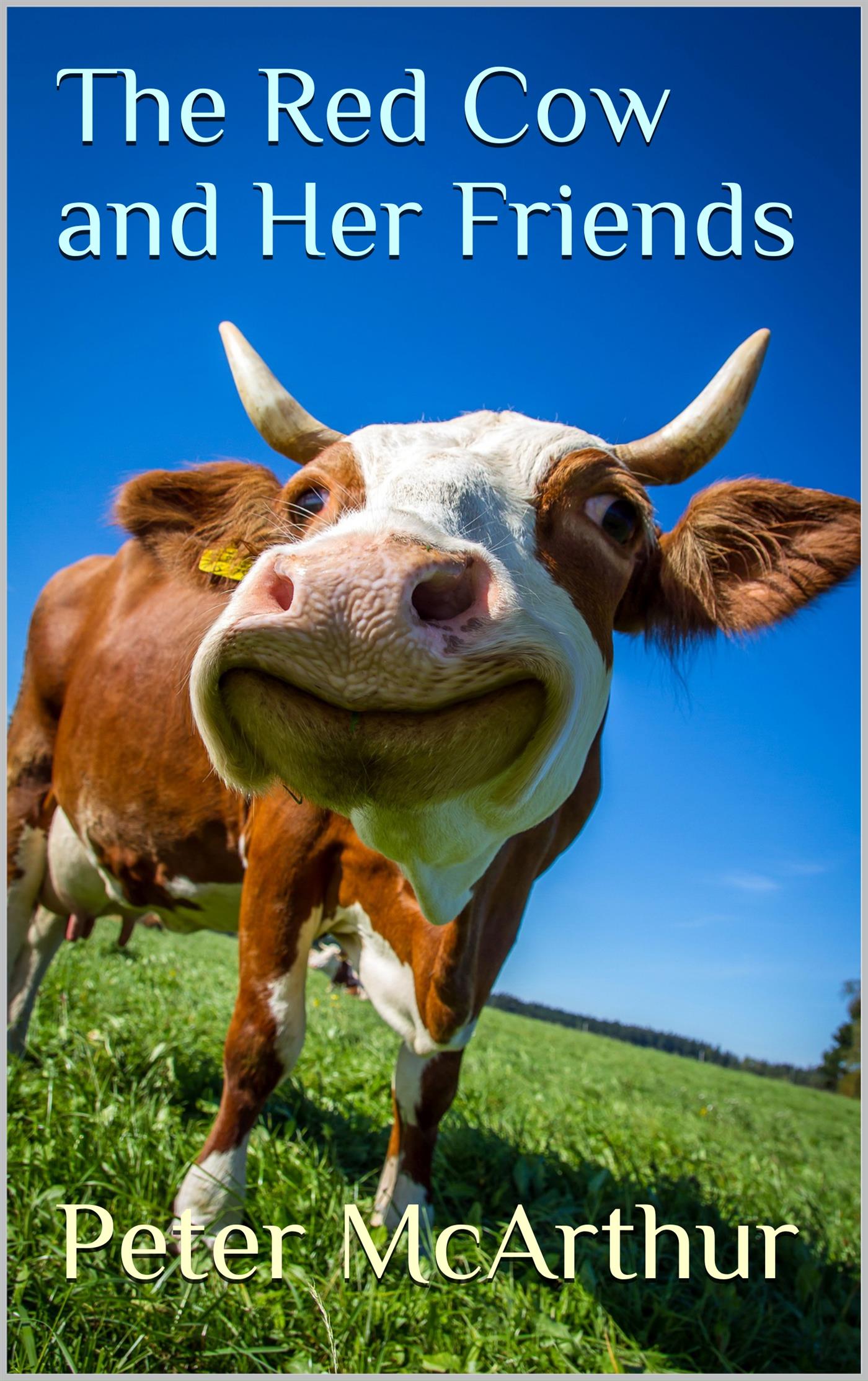
Peter McArthur in this book put together some interesting information about cows and some other farm animals including sheep, pigs, turkeys, dogs, cats, and others. This book discusses the nature of these farm animals in an understandable and relatable manner.
Das E-Book können Sie in Legimi-Apps oder einer beliebigen App lesen, die das folgende Format unterstützen:
Veröffentlichungsjahr: 2019
Ähnliche
















Copyright 2023
Cervantes Digital
All rights reserved
COWS
Fenceviewer I. a cow of parts,Aggressive, competent and bold,At every milking gives twelve quartsAnd doesn't give a—hoot!—(don't scold!)My Kerry cow, as good as gold;Fenceviewer II.—(boss, they say)La Veau, turned three; Beans, two-year-old—These are the cows I milk each day!
When Phœbus shoots his morning darts,Or wet or dry, or hot or cold,One to the dewy pasture startsWith clanging pails and pants up-rolled.Again when evening doth enfoldThe earth and sky in twilight grey,Him at that chore you may behold—These are the cows I milk each day!
Although unskilled in dairy artsI've soaked some lore by experts doled,With gentle words that win their heartsMy cows from kicking I've cajoled;And of all cattle, horned or polled,Pure-bred or grade, own them who may,Mine suit me best. They'll not be sold—These are the cows I milk each day!
ENVOY
Prince, if you ever in the woldAt milking time should chance to stray,I'll let you drink all you can hold—These are the cows I milk each day!
I.—A Sick Cow
This week the monotony of the winter has been broken. I have been sitting up with a sick cow. Fenceviewer I. has suffered the first check in her career of rapacity, voracity and capacity. A couple of days ago it was noticed that she was off her feed—that she only nibbled at the blue grass when it was put in her manger. Knowing that in her normal condition she is an incarnate appetite—"A belly that walks on four legs"—I knew that something was the matter. I could not imagine her refusing to eat until Death had "clawed her in his clutch," so I took the matter seriously from the beginning. I also noticed that she did not take kindly to water, but stood over it and shivered. There was no doubt about it. She was a sick cow. After a hasty consultation it was decided to give her a dose of salts, and I commandeered all that we had in the house—almost a pound. After it had been dissolved in about a quart of warm water I took some further advice and added to it, for her stomach's sake, a couple of tablespoonfuls of a sovereign liniment and embrocation, good for man and beast, and paramount for poultry, a remedy for all ills that any kind of flesh is heir to, may be used internally or externally at any time of the day or night without regard to the phases of the moon or the signs in the almanac. All I know about this remedy is that it is a red fluid made of red pepper, red whiskey and all the other red-hot things in the Pharmacopœia. It is the stuff that was once given to an ailing coloured woman, and when she was offered a second dose she declared with vigour, "No thankee! Ah've done made up ma mind never again to take nuttin' that wattah won't squench." Having added this mixture to the salts I put it in a quart bottle, called for help, and proceeded to put the red dose into the red cow.
We did the trick in the most approved fashion. I caught her by one horn, slipped my thumb and finger into her nose, and elevated her head so that the other man could pour the mixture down her throat. After the last drop had gurgled down I turned her loose and stepped back to watch results. She shook her head, rattled her chain, lashed her tail, wriggled her backbone, coughed and sneezed and showed other unmistakable signs of wrath and discomfort. She did not seem to appreciate our efforts in her behalf, and after I had thought it over for a minute I realised what she was objecting to. I put myself in her place. What would I want to do if any one had forced a dose like that down my throat? I would want to spit, of course. That was what was the matter with old Fenceviewer. She wanted to spit, but the limitations of a cow are such that she couldn't do it. If she were only able to do it she would spit like a cat. I felt truly sorry for her, but as I had done everything for the best I didn't do any worrying. While watching her I noticed that she grunted faintly every time she breathed, so I decided that we needed some expert advice and called in a neighbour who has had much experience with cows. After he had pressed his ear to her side for a while he diagnosed her case as pleuro-pneumonia. It had never occurred to me before that dumb animals could have diseases with Latin names and that probably needed high-priced treatment. He advised calling in the farrier at once, and I dispatched a boy to the nearest telephone to do this, and we went to the house to await his arrival. The boy reported that the farrier was out, but that he would come as soon as he could. While waiting we talked about all the sick cows we had ever known, and as most of them had died I found the conversation somewhat depressing. I can honestly say of Fenceviewer I., "With all thy faults I love thee still." She is the progenitor of the whole flock, and her strain is the kind I need. She can rustle for herself except when she is chained up, and if she had to do it she could get through the winter by licking the moss off the trees. She is no stall-fed exotic, but a hardy annual who in spite of her good breeding has a touch of the qualities that made the pioneer cows endure hardships and give rich milk. I could ill afford to lose her from either a financial or scientific point of view. We whiled away several hours with gloomy forebodings, occasionally taking the lantern to go to the stable and look her over. But there was nothing we could do for her, and she grunted rhythmically every time she breathed, sometimes standing up and sometimes lying down. About twelve o'clock we decided that the farrier was not coming, and the neighbour went home and I went to bed. Just as I got sound asleep the household was aroused by shrill whistling, and I got up to find that the farrier had come. Getting into my clothes as quickly as possible I took the lantern and hurried to the stable. The farrier examined her, confirmed my neighbour's diagnosis and added that the attack was complicated by a serious case of "impaction of the rumen." I was glad that he didn't say that she had appendicitis or adenoids, for I had made up my mind that I was neither going to pay for a costly operation nor to send her south for her health.
While the farrier was mixing another dose—he had approved of the one I had given—I enquired cautiously about her ailment. When the big words had been simplified for me I found that what she was suffering from chiefly was indigestion and pains in her tripe. This gave me much relief, for I felt that if there ever was a cow that deserved to have indigestion it was old Fenceviewer. Some of you may remember that a couple of years ago she gave me a scare by eating a bushel or so of corn. But she got away with that without any bad results, so I was puzzled as to what she could have eaten that had disagreed with her. I knew that she had not had too much of anything, for she is kept tied up most of the time. Then I remembered that when feeding the bottom of the stack of cornstalks I had noticed that the butts of some of the sheaves were mouldy. As the tops of them were fresh and good I had fed them, thinking that the brutes would know enough not to eat the parts that were damaged, but it doesn't do to bank on the intelligence of even the brightest cows. The farrier agreed that that had probably started the trouble, and I felt somewhat disgusted with myself. When I didn't know enough not to feed such stuff I need not expect the cows to know enough not to eat it. It was a wonder that more of them were not ailing.
After the farrier had filled the quart bottle with a mixture that smelled suspiciously like doses I have had to take myself when my stomach has been out of order, we went through the exercise of holding up her head and pouring it down her throat. This time she tried so hard to spit that she almost did it and I wished that she had been able, for I know what nux vomica and such stuff tastes like. The farrier then mixed a bunch of powders to be given her in a bran mash, every night and morning, and judging from the way she goes at the bran she has forgiven him everything. I may say, by the way, that the bran is now about the most expensive part of the dose, and if prices keep on as they are going we will soon have to get our bran for sick cows at the drug store instead of at the flour and feed emporiums. I am glad to be able to report that at the present writing Fenceviewer I. is taking her feed standing up, and chewing her cud between times, so I guess she is going to pull through all right

II.—Cow Troubles
I know I should have a silo for the cornstalks or at least a cutting box, but I haven't either, and the result is that I have trouble. How to get ten-foot stalks into a four-foot manger is a problem that I have to wrestle with every day and I am no nearer the solution than I was at the beginning of the winter. I have to stand them on end in front of the cows and as the soft ears were all left on the stalks, the cattle go at them wildly and toss them all over the place in their hurry to get the ears. The result is that every few days I have to clean out the rejected stalks from the mangers and the front of the stalls and that makes more trouble. I wish some one would tell me why it is that the tines of a fork will slip through cornstalks so easily and are so hard to pull out. I do not find very much trouble in getting a good forkful of the stalks but when I carry them out to the hole in the barnyard where I am piling them in the hope that they will rot some time I have a wrestle with them that starts me quoting poetry:
"On Astur's throat HoratiusRight firmly placed his heel;And thrice and four times tugged amain,Ere he wrenched out the steel."
When I have thrown down my load I find that every tine has three or four stalks on it so that it looks like Neptune's trident entangled with seaweeds. But though it is a nuisance clearing out the stalks in this way I have a vivid recollection of trying to pitch manure that had cornstalks mixed with it and I have made up my mind that that will never happen again. I try to keep them out of the manure as far as possible, even though I may be robbing the "stercoraceous heap" of some of its most valuable fertilising constituents.
The more I work among cows and study their ways the more puzzling they become to me. Sometimes when I am feeling a bit conceited I think I understand them pretty well and then something happens that puts me entirely out of countenance. One warm day last week, when I had let them out to water, I thought I would let them stand out and sun themselves for a while before driving them back to their stalls. I half remembered that the gate to the young orchard had been opened when the snow was deep and left opened, but I did not give it a thought. The government drain had been flooded and was covered with slippery ice that I was sure they could not cross, and I felt that everything was serene for a pleasant sunbath for the cows. Half an hour later I took a look to see where they were and every last one of them was in the young orchard picking at some long grass that had been brought into sight by the thaw. There was no waiting about starting to get them out, for you know the way cows have of rubbing their necks against young trees and breaking off limbs. Luckily they had not started rubbing and had done no damage, but I had to do some rushing around before I finally got them out of the orchard. But when I got them back to the icy government drain there was all kinds of trouble. You never saw such a timid bunch of cows in your life. It was absurd to think that they could walk on ice like that and what was more they wouldn't do it. But I knew that they couldn't fly and that they had crossed that ice on the way to the orchard and I was just as stubborn as they were. Gritting my teeth with determination I went at those cows and in a few minutes each one of them had been personally conducted across the ice by an earnest man who was earnestly twisting her tail. I then made the discovery that twisting a cow's tail puts a lot of ginger in her for when the last one was across they began to romp around the field. I saw that I would have trouble getting them into the stable and went to the house to get some one to help. I don't think I was in the house five minutes, but when I went out again with reinforcements, those wretched cows were on the other side of the government drain again and headed towards the orchard gate. Apparently it was no trouble at all for them to cross ice when on the way to mischief. I may say that on the return trip they did not wait for much tail twisting. Possibly the second twist hurts more than the first. Anyway they hustled back and didn't stop to argue with me.
III.—Fly Time
As a rule old Fenceviewer hasn't much faith in me. Of course, this is entirely due to her independent and predatory nature. She is accustomed to rustling for herself and apparently does not feel the need of cultivating a thankful spirit for anything I do for her. I even suspect that she would renig at milking time if it were not more comfortable to play the game and give down. Up to the present we have continued to live on the same farm without serious disagreement, and yet without any bond of affection being established. She goes her way as far as the fences will allow, and I go my way. But there are signs of a change. During the past week her actions have indicated that she thinks I may be of some use after all. This is because the flies are unusually bad this year. The cattle have been simply covered with them. When we took them into the stable at milking time they were in such misery and so restless that it was almost impossible to milk them. They were all the time lashing their tails, swinging around their heads and trying to paw up hooffuls of dust and dirt against their sides. Though we have ingenious little contraptions for holding their tails it seemed positively cruel to use them when they were being pestered and bitten, so, after due consideration, we bought a spray pump and a gallon of some coal tar by-product that smelled like a political investigation. After milking we proceeded to spray the cows thoroughly with the vile smelling stuff, and if they had not been thoroughly chained the trick could not have been managed. But though the operation seemed unpleasant to every one concerned it was most unpleasant of all for the flies. Hundreds of them fell to the ground stupefied, and those that kept on the wing kept at a distance from the cattle. After the cattle had been sprayed a few times they objected less and less, and old Fenceviewer seemed to get it through her head that the spraying was being done for her comfort. Although some of the younger cattle still struggle she lowers her head and wiggles her ears and stands perfectly still. Apparently she understands that the spraying rids her of the flies, and the look in her eye when I come along with the spray pump is positively friendly. In fact, she doesn't seem happy till she gets it and I suspect that if I missed it any morning she would bawl for it. But all nonsense aside, spraying the cattle to keep off the flies strikes me as being not only a humane but a profitable thing to do. They cannot be expected to do business as usual in the way of giving milk when they are tormented by hordes of flies. We are also spraying the calves at feeding time and they seem much more comfortable.

IV.—The Red Cow's Calves
Talk about excitement! When I came home from the excitements of the city to enjoy the quiet life on the farm I ran into more excitement than I had met with on my travels. Although it was after dark when I got home nothing would do but I should go out to the stable to see the new calf. Although I wanted to have my supper first I was over-ruled and I followed the lantern, with the whole family at my side. I might have suspected that there was something unusual about Fenceviewer's new calf, but I put down the enthusiasm of the children to the fact that it was a brand new calf. The little comedy was properly staged. I was not allowed to see anything until I had reached the calf pen. The lantern was then swung in front and every one yelled at once. I got the situation at a glance, and I guess I yelled too. The red cow had given birth to twins! There they were, as nice a pair of red calves as any one would wish to see. I couldn't blame the little folks for being excited. According to those who know, this is the first pair of twin calves that ever was born on the farm. But what interests me is this further development of the red cow strain. You may remember that when summing up their good qualities I recorded the fact that Fenceviewer and her progeny give me aid in farm work by testing the fences every spring so that I put them in good shape for the summer. Moreover, they almost invariably bear heifer calves, so that the flock increases rapidly. To these excellent qualities is now added the unexpected pair of twins. The strain is developing steadily, and some day Fenceviewer and her descendants will force the authorities to give them a corner in the herd book.
V.—Insurgent Cows
These are the days when the cattle become discontented with their pasture and begin to go on a rampage. Fenceviewer I. and her brood are running true to form and living up to their best traditions, but I have lived with them too long to be taken entirely unawares. As soon as the pasture withered with the long drought they began to take an undue interest in the cornfield. Although it is a comparative failure it still looks green and succulent compared with everything else on the farm, and the cattle have been stretching their necks over the fence and bawling. The first to get through and enjoy a feed were Fenceviewer's twins. Although they are small they are thrifty and seem to inherit much of their mother's resourcefulness. Already they are taking a lively interest in the fences. Although I felt quite safe on that point, it happened that during the haying a board was broken in a gate. The twins found it and worked their way through and had their first feed of stolen corn. After they had been driven out and the gate had been mended I felt secure again, but it was a false security. A few days later I happened to notice a commotion among the cows and saw at once that Fenceviewer II. was beyond the fence and making straight for the corn. The Government drain was dry and she had managed to push through where the ice had loosened the wires that were used for a home-made flood-gate. But would she go out where she got in? Not if she knew it. She seemed to have an idea that if she fooled us about that hole she could get through some other time. She was evidently working alone when she found it for even her piratical mother had not noticed it, and had failed to follow, though she bawled with surprise to see her daughter so near the cornfield. After three or four attempts to make her go out through the ditch we finally had to give up and drive her out through the gate. Then we fixed the hole and now we are waiting for the next outbreak.
The cattle had not attracted our attention all summer except at milking time, but a few days ago the alarm was raised that Mars—the yearling steer—was in a well, and the whole family had to be assembled to get him out. The well is not really a well, but a drinking place that has been fixed so that the cattle can help themselves. There is a low place in the woods where there is a quicksand bottom about four feet from the surface and for many years it has furnished an unfailing supply of water. Many years ago a shallow well was scooped out from which the cattle can drink at all times simply by having a plank left off the top so that they can drink as from a trough. As there is a pond nearby which supplies them during the rest of the season they do not use the well except when other supplies fail. This year the other supplies failed completely and the drinking well was fixed for them with scantlings nailed across the opening a couple of feet apart. It was looked upon as quite safe, but apparently when a yearling steer ventures to go for a drink before his betters he is likely to be taught a lesson. Mars must have been down on his knees drinking when one of the big cows came along and poked him right through. When found he was not worrying a bit. He was standing in about two feet of cold spring water contentedly chewing his cud. He didn't seem to care whether he was rescued or not. As the day was unusually hot I could understand his feelings exactly. But for the good of the water supply he had to be disturbed. We found that all we needed to do was to enlarge the opening, give his tail a twist and let him do the rest. Then we cleaned out another well of the same kind so that the water came clear and cold from the quicksand and closed the first one so that nothing could get in. I know that a quicksand bottom is not considered a good thing on a farm, but there is only this spot of it, and in a dry season it seems like a dispensation of Providence.
On the way home I had an experience that I had not enjoyed since returning to the farm. While we were busy cleaning out the well clouds began to gather, and even though a thunderstorm did not develop, rain began to fall. It was a sun shower of the kind that used to make children sing:
"Rain, rain sunshine!Sure to rain to-morrow!"
We had no time to make a dash for the house, so we took shelter under some spreading beech trees at the edge of the woods. There used to be a tradition that lightning never strikes a beech tree, but that was not our reason for choosing them. They had the thickest branches and most plentiful leaves and offered a better umbrella. At the beginning of the shower tree-toads began to call, and many kinds of birds sounded notes that were unfamiliar. Everything seemed too happy to keep still. The cattle in the pasture stopped eating as if to stand and enjoy the cooling, shower bath. The sunlight filtered through the falling rain and altogether the scene was one that offered Nature at her best. But before long the rain began to drip through our roof and we had to do a lot of stepping about before we found a comfortably dry spot under the thick trunk of a leaning maple. As there was no lightning there was no objection to leaving the beech trees. Presently the shower passed and we walked home with everything greatly refreshed. But when I looked at the thermometer and found that it stood at ninety-six in the shade I almost wilted. If I had known it was so hot I wouldn't have dreamed of undertaking so strenuous a job as cleaning out a well.
VI.—Cow Troubles
Say, what do you do when a cow swallows a rubber ball? I don't mean one of the hollow kind, but a solid rubber ball about the size of a small Ben Davis apple—one of the kind that used to sting our fingers when we played "Long Injun" with them at the old school. I hadn't seen one for years, but this spring an old one was ploughed up in one of the fields, and as it still retained its shape and would bounce the children used it to play with. Well, last night one of the boys went to bring up the cows, and when a cow strayed apart from the bunch and stood still he threw the ball at her. He missed her, but as the ball rolled past she ran after it and grabbed it, apparently under the impression that it was an apple or a potato, or something good to eat. I was in the stable when the boy came to tell me about it as a great joke, and I was inclined to think that the joke was on him, for I felt sure that as soon as the cow found that she had been fooled she would drop the ball. But when I went out to the gate to let in the cows I found "Beans," granddaughter of old Fenceviewer, with her head and neck stretched out, doing her best to chew and swallow something that was stuck in her throat. She was half choked, for her eyes were popping out, and she was red in the face—or at least had the same expression that a human being has when red in the face. With my customary presence of mind I rushed to her side and began to slap her on the back the same as we do to the children when they choke on something or when something "goes down the wrong way." But it did no good, and the slapping made her bolt to her stall in the stable. I immediately began to feel her throat, and was not long in discovering a lump that seemed about the size of the missing rubber ball. I then followed my usual practice when in real trouble. I sent for a neighbour.
By the time my neighbour had arrived the cow had stopped her frantic swallowing, and I had become suspicious that the lump I had been feeling in her throat was not a lodged rubber ball, but the end of her wind-pipe. My neighbour confirmed this suspicion, but he could not suggest what I should do under the circumstances. That is the trouble with my cattle. They are all the time doing things that are outside of the common fund of experience. Other people's cattle seem to confine themselves to ailments that can be treated according to recipes given in the Veterinary Guide, or in the back numbers of "The Farmer's Advocate," but mine are all the time doing something unexpected. Still, I got a line on what was an entirely new wrinkle to me. A person of experience brought me a beetle ring and told me that the way to dislodge a substance from a cow's throat was to open her mouth and keep it open with the beetle ring. Then I could slip my hand through the ring and remove the obstruction with my fingers, or take a piece of rubber hose and poke it down her throat. That sounds to me like a very plausible method, but as the little cow had stopped gagging and had commenced chewing her cud, it was considered unnecessary to try the operation. And speaking of her cud—she should not be in any danger of "losing her cud" in the near future. That rubber ball should provide her with just about the most serviceable cud that a cow ever had. Whenever the pasture gets short she can bring up her reserve rubber cud and keep herself contented with it until the pasture grows. Seeing that most of our young people seem to find it necessary to provide themselves with cuds of durable, rubbery gum on which they chew during most of their waking hours, isn't it just possible that our cows would be more contented and give more milk if we provided them with rubber cuds? If I could only get scientific endorsement for the scheme I would have no trouble in promoting a company to supply rubber cuds for cows. Anyway, "Beans" seems to have suffered no inconvenience from having swallowed that indurated knob of gutta percha. When I was driving her back to the field after milking she hastily picked up a nice clean corn-cob and put it down as dessert to the rubber ball—all of which leads me to believe that she inherits her grandmother's digestion as well as her appetite. I am willing to bet that a post mortem on Fenceviewer would reveal a collection of junk that would give impaction of the rumen to an ostrich. Still, if any authority on cows thinks that having a rubber ball in her midst may be injurious to "Beans," I wish he would write and tell me what I should do.
And now having asked for help, there should be no objection if I offered a couple of suggestions that seem to me to be valuable. Of course, they may be quite well known, but there are sure to be a few backward farmers like myself who will be glad to be enlightened. The first deals with the value of the old-style wire fences when feeding calves. The most annoying thing about feeding calves in a pen is that when trying to teach a new calf to feed without the finger a man usually has to step inside. While he is wrestling with the beginner other calves will try to get into the pail or to get nourishment from his coat-tail, occasionally administering a bunt to express dissatisfaction with the taste of the cheap dyes they now use in cloth. If you have the right kind of wire fence around your calf pasture you can keep on your side of it and let the calf stick his head through. As his head is the part you really have to deal with you can gradually teach him to take his milk without inhaling too much, and at the same time you have less trouble in slapping interfering calves on the nose. The wire fence has robbed calf-feeding of half of its terrors for me. So much for that suggestion. The other has to do with greedy horses. One of our horses usually tries to get all her oats in one mouthful, and, when she tries to chew them she scatters them all over her manger and stall. On advice, we have put several corn cobs in her feeding box, and now when she is given her oats she has to take reasonably sized mouthfuls and there is no waste.




