


94,99 €
Mehr erfahren.
- Herausgeber: John Wiley & Sons
- Kategorie: Wissenschaft und neue Technologien
- Sprache: Englisch
Introduces all of the essential cell biology and developmental biology background for the study of stem cells This book gives you all the important information you need to become a stem cell scientist. It covers the characterization of cells, genetic techniques for modifying cells and organisms, tissue culture technology, transplantation immunology, properties of pluripotent and tissue specific stem cells and, in particular, the relevant aspects of mammalian developmental biology. It dispels many misconceptions about stem cells--especially that they can be miracle cells that can cure all ills. The book puts emphasis on stem cell behavior in its biological context and on how to study it. Throughout, the approach is simple, direct, and logical, and evidence is given to support conclusions. Stem cell biology has huge potential for advancing therapies for many distressing and recalcitrant diseases, and its potential will be realized most quickly when as many people as possible have a good grounding in the science of stem cells. * Content focused on the basic science underpinning stem cell biology * Covers techniques of studying cell properties and cell lineage in vivo and in vitro * Explains the basics of embryonic development and cell differentiation, as well as the essential cell biology processes of signaling, gene expression, and cell division * Includes instructor resources such as further reading and figures for downloading * Offers an online supplement summarizing current clinical applications of stem cells Written by a prominent leader in the field, The Science of Stem Cells is an ideal course book for advanced undergraduates or graduate students studying stem cell biology, regenerative medicine, tissue engineering, and other topics of science and biology.
Sie lesen das E-Book in den Legimi-Apps auf:
Seitenzahl: 608
Veröffentlichungsjahr: 2017
Ähnliche


















The Science of Stem Cells
Jonathan M. W. Slack
This edition first published 2018© 2018 John Wiley & Sons, Inc.
All rights reserved. No part of this publication may be reproduced, stored in a retrieval system, or transmitted, in any form or by any means, electronic, mechanical, photocopying, recording or otherwise, except as permitted by law. Advice on how to obtain permission to reuse material from this title is available at http://www.wiley.com/go/permissions.
The right of Jonathan M. W. Slack to be identified as the author of this work has been asserted in accordance with law.
Registered OfficesJohn Wiley & Sons, Inc., 111 River Street, Hoboken, NJ 07030, USA
Editorial Office111 River Street, Hoboken, NJ 07030, USA
For details of our global editorial offices, customer services, and more information about Wiley products visit us at www.wiley.com.
Wiley also publishes its books in a variety of electronic formats and by print‐on‐demand. Some content that appears in standard print versions of this book may not be available in other formats.
Limit of Liability/Disclaimer of WarrantyThe publisher and the authors make no representations or warranties with respect to the accuracy or completeness of the contents of this work and specifically disclaim all warranties; including without limitation any implied warranties of fitness for a particular purpose. This work is sold with the understanding that the publisher is not engaged in rendering professional services. The advice and strategies contained herein may not be suitable for every situation. In view of on‐going research, equipment modifications, changes in governmental regulations, and the constant flow of information relating to the use of experimental reagents, equipment, and devices, the reader is urged to review and evaluate the information provided in the package insert or instructions for each chemical, piece of equipment, reagent, or device for, among other things, any changes in the instructions or indication of usage and for added warnings and precautions. The fact that an organization or website is referred to in this work as a citation and/or potential source of further information does not mean that the author or the publisher endorses the information the organization or website may provide or recommendations it may make. Further, readers should be aware that websites listed in this work may have changed or disappeared between when this works was written and when it is read. No warranty may be created or extended by any promotional statements for this work. Neither the publisher nor the author shall be liable for any damages arising here from.
Library of Congress Cataloguing‐in‐Publication Data
Names: Slack, J. M. W. (Jonathan Michael Wyndham), 1949– author.Title: The science of stem cells / Jonathan M. W. Slack.Description: Hoboken, NJ : Wiley, 2018. | Includes bibliographical references and index. |Identifiers: LCCN 2017028793 (print) | LCCN 2017030609 (ebook) | ISBN 9781119235231 (pdf) | ISBN 9781119235255 (epub) | ISBN 9781119235156 (hardback)Subjects: LCSH: Stem cells. | BISAC: SCIENCE / Life Sciences / Cytology.Classification: LCC QH588.S83 (ebook) | LCC QH588.S83 .S575 2017 (print) | DC 616.02/774–dc23LC record available at https://lccn.loc.gov/2017028793
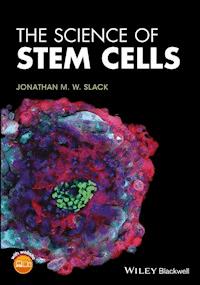
Cover Design: WileyCover Image: Gist F. Croft, Alessia Deglincerti, Ali Brivanlou, The Rockefeller University
About the cover: Optical section through a day 12 human embryo which has developed in vitro. The epiblast (OCT4: green) has formed an amnion‐like cavity. The trophectoderm has become cytotrophoblast (KERATIN 17: lilac) and multinucleated synciotiotrophoblast (hCG beta, acqua). DNA is stained red, showing cell nuclei. Image kindly supplied by Dr Ali H Brivanlou, Rockefeller University.
Preface
This book originates from a widespread perception that many students studying stem cell biology, and even many junior workers in stem cell research labs, lack essential knowledge of the scientific underpinnings of the subject. This can lead to undesirable consequences, most notably the tendency for clinics to offer to patients “miracle cells” whose injection can cure all ills rather in the manner of a medieval elixir. Such unrealistic attitudes are also, unfortunately, highly prevalent among the general public. Excellent educational work is done by bodies such as the International Society for Stem Cell Research, which has an accurate patient website open to all. However, a correct perception among the public about the capabilities of stem cell therapy cannot be expected until the practitioners themselves have a clear idea of what sort of cells they are working with and what these cells can, and cannot, be expected to do. This book seeks to improve the situation by exploring the scientific basis of stem cell biology in a concise and accessible manner. It is designed to be suitable for all students studying stem cell biology at undergraduate or graduate school level.
The book deals with basic science and so does not cover the current clinical applications of stem cells. I considered that to include clinical material would make the book too long, lose focus, and cause it rapidly to become out of date. However, because of the inevitable demand for such information the book has an online supplement which summarizes briefly the state of play in each clinical application of stem cells to date, and this may be found at www.wiley.com/go/slack/thescienceofstemcells.
The “parent science” of stem cell biology is, to a large extent, developmental biology. Embryonic stem cells were discovered by developmental biologists, and the methods used for controlling their differentiation rely heavily on our knowledge of the normal mechanisms of regional specification and cell differentiation in the embryo. So developmental biology is necessarily an important part of this book. However, this is by no means just another textbook of developmental biology: it is primarily a book about stem cells and the concepts, technology, and experimental facts needed to understand them properly.
Because the focus is on the discussion of approaches and concepts the level of molecular detail has been kept fairly basic. Modern molecular life sciences are all very fact‐heavy and comprehension can be obscured by too many facts. However, where readers require more detail on specific topics than is given here, it can always be acquired by reading recent review articles or key primary papers, a selection of which are cited at the end of each chapter. Although I have been sparing with molecular detail, I have listed where possible the major gene products that are indicative of the particular cell types which are of interest to stem cell biologists, and also some of the key physiological properties of these cell types. Familiarity with these criteria for cell identification is very important when assessing the results of experiments involving the directed differentiation of pluripotent stem cells or the direct reprogramming of one cell type to another.
A further type of detail that is worth paying careful attention to is the difference between species. Most of the experimental work in this area has been done on the mouse, but stem cell biology is inevitably oriented toward developing eventual applications for human patients. I have been careful where possible to distinguish normal events in human and mouse, and also occasional results from other model organisms such as the zebrafish, so that students are not misled by an exclusive focus on the mouse. In keeping with normal convention the names of genes are italicized when they refer specifically to the gene or the RNA, and are in normal type when they refer to the protein.
The central message of the book is that there is nothing magic about stem cells. In fact, it turns out that stem cell behavior is more important than the stem cells themselves. Certain cell populations in the body may adopt a stem cell type of behavior under particular circumstances, depending on their developmental history and their environment. So being able to work with stem cells successfully means being aware of how cells behave in different contexts and understanding how to characterize and manipulate them properly.
In the long term, stem cell biology does have huge potential for generating novel therapies for many common and recalcitrant diseases, and this potential will be realized most easily when all students and practitioners can become real masters of the science of stem cells.
Jonathan M. W. Slack
Bath 2017
About the Companion website
This book is accompanied by a companion website:
www.wiley.com/go/slack/thescienceofstemcells
which summarizes the current clinical applications of stem cells.
1What is a Stem Cell?
In the popular media and even in some medical circles, stem cells are presented as miracle cells that can do anything. When administered to a patient with some serious disease they will rebuild the damaged tissues and make the patient young again. Alas, in reality there are no such cells. However, there are cells that exhibit stem cell behavior and the future of regenerative medicine will undoubtedly be built on a good scientific understanding of their properties. In this chapter these properties are briefly outlined, and in the remainder of the book each of them will be underpinned by an explanation of the relevant areas of science and technology.
A list of characteristics of stem cell behavior that is generally agreed upon is the following:
Stem cells reproduce themselves.
Stem cells generate progeny destined to differentiate into functional cell types.
Stem cells persist for a long time.
Stem cell behavior is regulated by the immediate environment (the niche).
This is shown diagrammatically in Figure 1.1




