


6,99 €
Mehr erfahren.
- Herausgeber: Open Book Publishers
- Kategorie: Wissenschaft und neue Technologien
- Sprache: Englisch
The Scientific Revolution Revisited brings Mikuláš Teich back to the great movement of thought and action that transformed European science and society in the seventeenth century. Drawing on a lifetime of scholarly experience in six penetrating chapters, Teich examines the ways of investigating and understanding nature that matured during the late Middle Ages and the Renaissance, charting their progress towards science as we now know it and insisting on the essential interpenetration of such inquiry with its changing social environment. The Scientific Revolution was marked by the global expansion of trade by European powers and by interstate rivalries for a stake in the developing world market, in which advanced medieval China, remarkably, did not participate. It is in the wake of these happenings, in Teich's original retelling, that the Thirty Years War and the Scientific Revolution emerge as products of and factors in an uneven transition in European and world history: from natural philosophy to modern science, feudalism to capitalism, the late medieval to the early modern period.With a narrative that moves from pre-classical thought to the European institutionalisation of science – and a scope that embraces figures both lionised and neglected, such as Nicole Oresme, Francis Bacon, Thomas Hobbes, Isaac Newton, René Descartes, Thaddeus Hagecius, Johann Joachim Becher – The Scientific Revolution Revisited illuminates the social and intellectual sea changes that shaped the modern world.
Das E-Book können Sie in Legimi-Apps oder einer beliebigen App lesen, die das folgende Format unterstützen:
Veröffentlichungsjahr: 2015
Ähnliche



















THE SCIENTIFIC REVOLUTION REVISITED
The Scientific Revolution Revisited
Mikuláš Teich
http://www.openbookpublishers.com
© 2015 Mikuláš Teich
This work is licensed under a Creative Commons Attribution 4.0 International license (CC BY 4.0). This license allows you to share, copy, distribute and transmit the work; to adapt the work and to make commercial use of the work providing attribution is made to the author (but not in any way that suggests that they endorse you or your use of the work). Attribution should include the following information:
Teich, Mikuláš, The Scientific Revolution Revisited. Cambridge, UK: Open Book Publishers, 2015. http://dx.doi.org/10.11647/OBP.0054
Please see the list of illustrations for attribution relating to individual images. Every effort has been made to identify and contact copyright holders and any omission or error will be corrected if notification is made to the publisher. For information about the rights of the Wikimedia Commons images, please refer to the Wikimedia website (the relevant links are listed in the list of illustrations).
In order to access detailed and updated information on the license, please visit: http://www.openbookpublishers.com/isbn/9781783741229#copyright
Further details about CC BY licenses are available at http://creativecommons.org/licenses/by/4.0/
Digital material and resources associated with this volume are available at http://www.openbookpublishers.com/9781783741229#resources
ISBN Paperback: 978-1-78374-122-9
ISBN Hardback: 978-1-78374-123-6
ISBN Digital (PDF): 978-1-78374-124-3
ISBN Digital ebook (epub): 978-1-78374-125-0
ISBN Digital ebook (mobi): 978-1-78374-126-7
DOI: 10.11647/OBP.0054
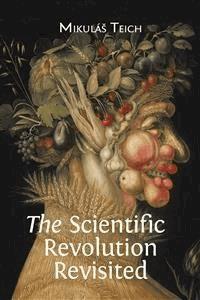
Cover image: Giuseppe Arcimboldo, The Summmer (1563), http://commons.wikimedia.org/wiki/File:Giuseppe_Arcimboldo_-_Summer_-_Google_Art_Project.jpg
All paper used by Open Book Publishers is SFI (Sustainable Forestry Initiative) and PEFC (Programme for the Endorsement of Forest Certification Schemes) Certified.
Printed in the United Kingdom and United States by Lightning Source for Open Book Publishers
To the memory ofAlistair Crombie (1915-1996)Rupert Hall (1920-2009)Joseph Needham (1900-1995)Roy Porter (1946-2002)scholars most learned and friends most loyal
Contents
List of Illustrations
ix
Note on Terminology and Acknowledgements
1
Preface
3
Introduction
5
1
From Pre-classical to Classical Pursuits
11
2
Experimentation and Quantification
29
3
Institutionalisation of Science
55
4
Truth(s)
75
5
The Scientific Revolution: The Big Picture
83
6
West and East European Contexts
101
Epilogue
119
References
125
Index
139
List of Illustrations
1
Image of heliocentric model from Nicolaus Copernicus’ De revolutionibus orbium coelestium (c. 1543). Wikimedia Commons, http://commons.wikimedia.org/wiki/File:Copernican_heliocentrism.jpg
13
2
Palaeolithic painting, Chauvet-Pont-d’Arc Cave (southern France), c. 32,000-30,000 BP. Wikimedia Commons, http://commons.wikimedia.org/wiki/File:Etologic_horse_study,_Chauvet_cave.jpg
17
3
The Prague Astronomical Clock (Prague Orloj) in Old Town Square, Prague, Czech Republic. © BrokenSphere/Wikimedia Commons, http://commons.wikimedia.org/wiki/File:Prague_Orloj_1.JPG
34
4
Portrait of Nicolaus of Cusa wearing a cardinal’s hat, in Hartmann Schedel, Nuremberg Chronicle (1493). Wikimedia Commons, http://commons.wikimedia.org/wiki/File:Cusanus_schedel_chronicle.jpg
39
5
Georg Ernst Stahl. Line engraving (1715). Wellcome Trust, http://wellcomeimages.org/indexplus/image/L0008079.html
40
6
Portrait of Robert Boyle by Johann Kerseboom (c. 1689). Wikimedia Commons, http://commons.wikimedia.org/wiki/File:Robert_Boyle_0001.jpg
49
7
View from above of Gresham College, London, as it was in the eighteenth century. By unknown artist, after an illustration in John Ward, Lives of the Professors of Gresham College (1740). Wikimedia Commons, http://commons.wikimedia.org/wiki/File:PSM_V81_D316_Old_gresham_college.png
56
8
Portrait of an old man thought to be Comenius (c. 1661) by Rembrandt. Florence, Uffizi Gallery. Wikimedia Commons, http://commons.wikimedia.org/wiki/File:Portrait_of_an_Old_Man,_Rembrandt.jpg
59
9
Spherical burning mirror by Ehrenfried Walther von Tschirnhaus (1786). Collection of Mathematisch-Physikalischer Salon (Zwinger), Dresden, Germany. Wikimedia Commons, http://commons.wikimedia.org/wiki/File:Spherical_burning_mirror,_Ehrenfried_Walther_von_Tschirnhaus,_Kieslingswalde_(today_Slawonice,_Poland),_1786,_copper_-_Mathematisch-Physikalischer_Salon,_Dresden_-_DSC08142.JPG
65
10
Title page of New Atlantis in the second edition of Francis Bacon’s Sylva sylvarum: or A naturall historie. In ten centuries (London: William Lee at the Turks, 1628). Wikimedia Commons, http://commons.wikimedia.org/wiki/File:Bacon_1628_New_Atlantis_title_page.png
75
11
A diagrammatic section of the human brain by René Descartes, in his Treatise of Man (1664). Wikimedia Commons, http://commons.wikimedia.org/wiki/File:Descartes_brain_section.png
80
12
A page from Song Dynasty (960-1279), printed book of the I Ching (Yi Jing), Classic of Changes or Book of Changes. National Central Library, Taipei City, Taiwan. Wikimedia Commons, http://commons.wikimedia.org/wiki/File:I_Ching_Song_Dynasty_print.jpg
89
13
Zheng He’s Treasure Ship. Model at the Hong Kong Science Museum. Wikimedia Commons, http://commons.wikimedia.org/wiki/File:Zheng_He%27s_Treasure_Ship_1.jpg
94
14
David Gans, Ptolemaic cosmological diagram (planetary circles surrounded by Zodiac constellations) in Hebrew, from his Nechmad V’Naim (1743). Wikimedia Commons, http://commons.wikimedia.org/wiki/File:Galgalim_gans.JPG
106
15
Emperor Franz Stephan (sitting) together with his natural science advisors. From left to right: Gerard van Swieten, Johann Ritter von Baillou (naturalist), Valentin Jamerai Duval (numismatist) and Abbé Johann Marcy (Director of the Physical Mathematical Cabinet). Wikimedia Commons, http://commons.wikimedia.org/wiki/File:Kaiserbild_Naturhistorisches_Museum_cropped.jpg
112
Note on Terminology and Acknowledgements
In a book about the much debated Scientific Revolution, problems unavoidably arise with terminology. They pertain to terms such as science/normal science/modern science, and social/societal, among others. I regret possible ambiguities in their employment despite efforts to be consistent. There is also the question of references. They are given in full but I apologise for inadvertent omissions. This also applies to the bibliography relevant to the debate.
I am indebted to Dr Albert Müller, who read a large part of the early version of the book, and Professor Sir Geoffrey Lloyd, who commented on chapters 1 and 2 in draft. It is a pleasure to pay tribute to discussions with Professors Kurt Bayertz, Herbert Matis, Michael Mitterauer, Dr Deborah Thom and Professor Joachim Whaley. Deep thanks for support are due to Dr Ian Benson, Alison Hennegan, Professor Hans-Jörg Rheinberger and the late Professor William N. Parker. Dr Alessandra Tosi provided invaluable editorial guidance. Ben Fried proofread the manuscript and commented on it most helpfully. Lastly and firstly, my warmest words of gratitude go to my family, above all to Professor Alice Teichova and our daughter Dr Eva Kandler – without their assistance the book would quite literally not have seen the light of day. The responsibility for the published text is mine.
Preface
In 1969, after taking up a Visiting Scholarship at King’s College, Cambridge, I was approached by the Department of the History and Philosophy of Science, Cambridge University, to give a public lecture. The subject-matter I chose was ‘Three Revolutions: The Scientific, Industrial and Scientific-Technical’. When it was announced in the University Reporter (100 (1969-1970), p. 1577), for some reason the Scientific-Technical Revolution metamorphosed into the Scientific-Industrial.
I gave the lecture on 4 May 1970, and in it I attempted to convey that the Three Revolutions were products of, and factors in, historically far-reaching societal transformations, and that the place of science and technology cannot be left out of the societal picture. It was this perspective that led me to return to the subject-matter and address it now in book form.
Apart from underestimating the difficulties of presenting a short account of the issue, other commitments prevented me from focusing solely on the project. When I reached my 90th birthday, it occurred to me that if I was to contribute to the debates regarding these three great movements of thought and action, a viable course would be to produce the work in three separate parts, of which The Scientific Revolution Revisited is the first. It turned out to be a thorny journey; the other two parts are in preparation.
Autumn 2014
Introduction
http://dx.doi.org/10.11647/OBP.0054.08
I
This book is about interpreting the Scientific Revolution as a distinctive movement directed towards the exploration of the world of nature and coming into its own in Europe by the end of the seventeenth century. The famed English historian Lord Acton (1834-1902) is said to have advised that problems were more important than periods. If he held this opinion, he ignored that problems are embedded in time and place and do not arise autonomously. The inseparability of problem and period has been amply demonstrated in six collections of essays, examining the ‘national context’ not only of the Scientific Revolution but also of other great movements of thought and action, which Roy Porter and I initiated and co-edited.1
In general terms, one way of encompassing the world we live in is to say that it is made up of society and nature with human beings belonging to both.2 It is reasonable to connect the beginnings of human cognition of inanimate and animate nature (stones, animals, plants) with the ability to systematically make tools/arms within a framework of a hunting-and-gathering way of life, presently traceable to about 2.5 million years ago. It is also reasonable to perceive in the intentional Neanderthal burial, about 100,000 years ago, the earliest known expression of overlapping social and individual awareness of a natural phenomenon: death.
While the theme of the interaction between the social, human and natural has a long history, there is scant debate over the links between perceptions of nature and perceptions of society from antiquity to the present. This is crucial, however, not only for understanding the evolution of our knowledge of nature as well as our knowledge of society, but also for gauging the type of truth produced in the process. An inquiry into the relationship between science and society takes us to the heart of the issue highlighted by the late Ernest Gellner, noted social anthropologist and philosopher, when he stated that ‘The basic characteristics of our age can be defined simply: effective knowledge of nature does exist, but there is no effective knowledge of man and society’.3
This assertion, indeed Gellner’s essay as a whole, gives the impression of a despondent social scientist’s cri de coeur, made before he sadly passed away with the text yet to be published. By then, Gellner had undeniably come to believe that social knowledge compared badly with natural knowledge. He particularly reproved Marxism because it
claimed to possess knowledge of society, continuous with knowledge of nature, and of both kinds – both explanatory and moral-prescriptive. In fact, as in the old religious style, the path to salvation was a corollary of the revelation of the nature of things. Marxism satisfied the craving of Russia’s Westernizers for science and that of the Russian populist mystics for righteousness, by promising the latter in terms of, and as fruit of, the former.4
It is noteworthy that this critique contrasts with Gellner’s position five years before the demise of communism in Central and Eastern Europe, a development which he clearly had not envisaged:
I am inclined to consider the reports of the death of Marxist faith to be somewhat exaggerated, at least as far as the Soviet Union is concerned. Whether or not people positively believe in the Marxist scheme, no coherent, well-articulated rival pattern has emerged, West or East, and as people must need to think against some kind of grid, even (or perhaps especially) those who do not accept the Marxist theory of history tend to lean upon its ideas when they wish to say what they do positively believe.5
This was in line with what John Hicks noted a year after receiving the Nobel Memorial Prize for Economics (in 1972). Venturing to develop a theory of history ‘nearer to the kind of thing that was attempted by Marx’, he declared:
What remains an open question is whether it can only be done on a limited scale, for special purposes, or whether it can be done in a larger way, so that the general course of history, at least in some important aspects can be fitted into place. Most of those who take the latter view would use the Marxian categories or some modified version of them; since there is so little in the way of an alternative version that is available, it is not surprising that they should. It does, nevertheless, remain extraordinary that one hundred years after Das Kapital, after a century during which there has been enormous developments in social science, so little else should have emerged. Surely, it is possible that Marx was right in his vision of logical processes at work in history, but that we, with much knowledge of fact and social logic which he did not possess, and with another century of experience at our disposal, should conceive of the nature of those processes in a distinctly different way.6
‘Learning from history’ is invoked by politicians at will, but avoided by historians. They could do worse than to heed Hicks’s observation regarding Marx’s approach to encompassing and deciphering human social evolution. It has not lost its force when it comes to analysing the roots of the contemporary troublesome state of world affairs, fuelled by globalisation.
II
There is no point here in recapitulating what is argued in the book. But, as I have found the strongly-disputed Marxist conception of a period of transition from feudalism to capitalism a useful framework within which to locate the forging of the Scientific Revolution, it may be worthwhile to dwell on it briefly.
According to the Marxist historian Eric Hobsbawm,
the point from which historians must start, however far from it they may end, is the fundamental and, for them, absolutely central distinction between establishable fact and fiction, between historical statements based on evidence and subject to evidence and those which are not.7




