


1,49 €
Mehr erfahren.
- Herausgeber: Books on Demand
- Kategorie: Fantasy und Science-Fiction
- Sprache: Englisch
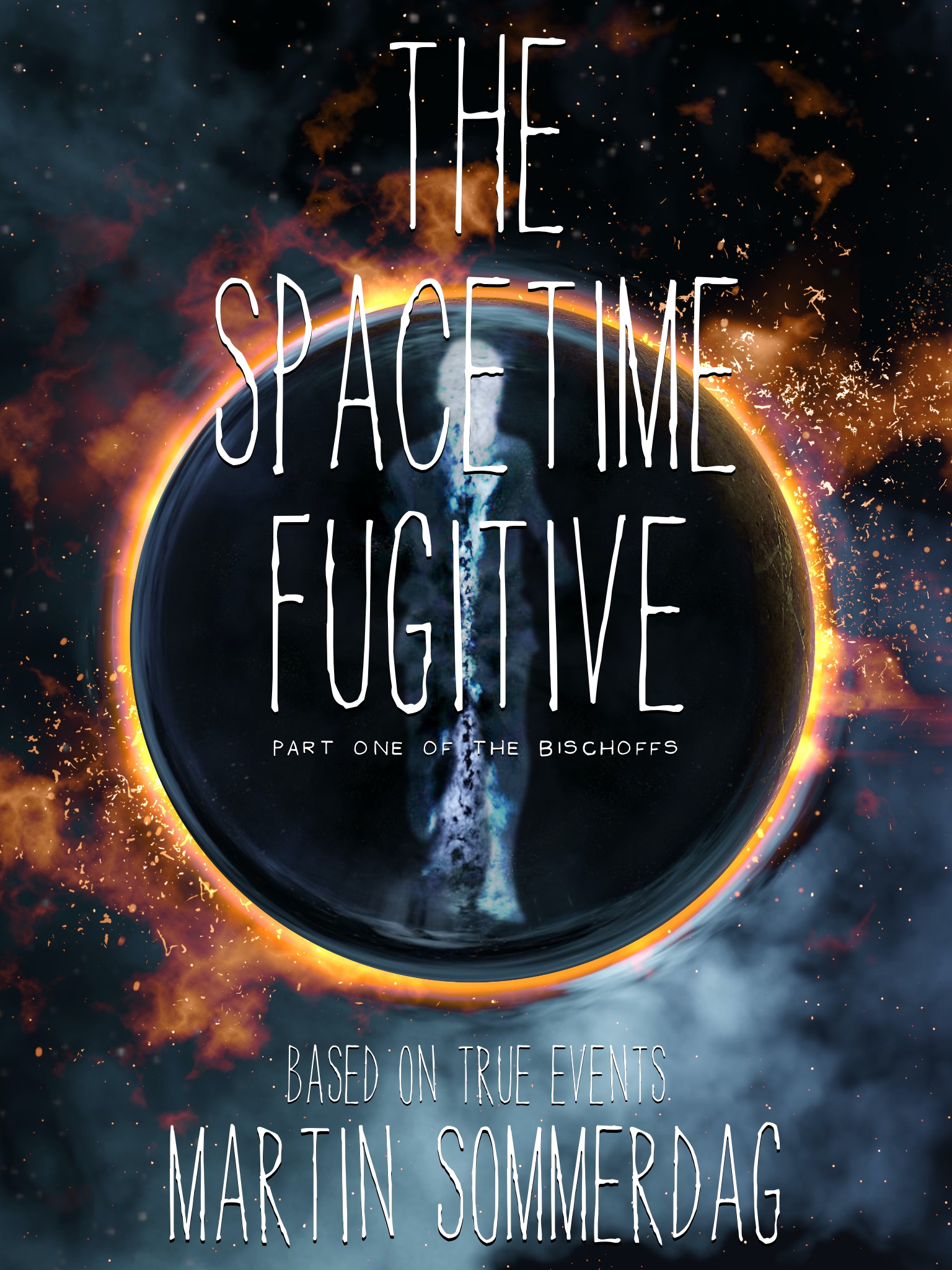
It all began with hijacked airplanes on September 11th, 2001; it was the beginning of the end. In 2003, the U.S. government initiated an invasion of Iraq to retrieve an ancient artifact from the desert, a weapon of mass destruction that bends the fabric of space-time. A wanted whistleblower from the future, tries to save the world, by recording a videotape in 1986, that reveals classified information about the legendary artifact, but he is being traced by the corrupted Kopfmann administration from the future. The confession is based on true events. Save the planes; save the world.
Das E-Book können Sie in Legimi-Apps oder einer beliebigen App lesen, die das folgende Format unterstützen:
Seitenzahl: 42
Veröffentlichungsjahr: 2020
Ähnliche




















The spacetime fugitive
April 26th, 1986December 21st, 2012January 7th, 2088September 11th, 2001May 2nd, 2033February 18th, 2040To be continuedCopyrightApril 26th, 1986
As all worn videotapes do, this one starts with a bit of static. It fuzzes across the screen in shades of white and gray. That sideways snow and the crinkling sound from the eighties. Then, very briefly, a purely blue screen with a white PLAY symbol glitches in the top-left corner.
Another hiss of static follows, and the image smears, revealing a grungy room. Three walls, speckled with grime and damp with water seepage, are peppered with graffiti, its language unclear. Too stylized, too bizarre. The concrete floor is filthy, with dirt and rusty metal pieces in different shapes and forms.
On the wall directly across from the video camera, offset slightly to the left, is a corroded metal door, shut tight.
The dim light in the room loses the corners in shadow. The light source hides behind the camera, perhaps directly above it, and it seems electrical. An aluminum chair with a worn teal cushion and a patina backrest in front of the camera sits alone like an article of virtue of the forgotten past.
The vintage VCR playing this tape becomes very loud in comparison to the footage. The narrow strip of magnetized plastic film twists around the helical scan drum inside the video cassette recorder. The videotape is clicking and whining along as it unspools. The worn tape is a bad copy of the original, pocked with analog noise and a degradation in the colors.
This is the first time it’s seen. No one knows the duration of the footage.
As with a lot of tapes made by camcorders, the date and time are displayed in the lower third right corner of the screen. The time is 2:06 AM on the very first frame of the recording. The date is April 26th, 1986. The battery level seems to be fully charged. Maybe the converter is plugged in the mains.
The room could be anywhere in the world. Siberia or Europe, Shanghai or Copenhagen. There are abandoned places like this in every corner of the planet, where humans have lived or worked for longer than a couple of decades.
But finally, as the time ticks over to 2:07, something draws close to the camera. It’s a heavy grunt, a sigh from some tired male person. He sounds old. Suddenly, a man hobbles into view, away from the camera, having almost just hit the record button. The auto focus is adjusting, and his back is still towards the camera. His calloused right hand grasps the head of a cane, an old wooden stick with a curved handle that helps him walk. He has a limp on his right leg. His shoulders are draped in a frayed dark brownish and cable knit cardigan with pockets. His golden-brown trousers, in relaxed fit, of cotton and woolen corduroy are shabby, full of little holes and stains. He limps farther away from the camera. He wears no shoes; he is barefoot. An eerie undertone permeates the recording.
The man continues limping, past the chair, toward the corroded door. He stops about halfway between the camera and the door and stands there for several seconds, working his head back and forth, trading the cane between hands as he shakes out his fingers. He coughs twice, pats the pockets of his cardigan and trousers as though to make sure he hasn’t lost whatever is held in them. And then, with a long, dry sigh that is barely audible over the general white noise of the tape, he turns toward the camera.
The worn face of a man in his late seventies, early eighties, greets. His hair color is slightly black but mostly grey; curly, short swirl in the front and messy in the back, a hairstyle that doesn’t follow a snazzy path. A long, sharp nose. An exaggerated mouth that can’t seem to make up its mind what expression it’s going for. He gives the camera a wry smile or a look of retired irritation. Beneath his old-fashioned cardigan, he wears a standard checked flannel shirt, long sleeves, with a pattern of dusty orange, beige, and brown. He has some pens and papers in the front pocket.
The man is Caucasian. He looks Scandinavian or a little German, maybe. He shuffles forward with his cane, coming closer to the camera, and sits down in the chair with a heavy sigh. The image of the person is cropped just below his knees and just above his head, a half total framing.
He holds both hands on the cane at first, and his eyes shut as he gathers his thoughts. Then he flicks the cane up deftly, setting it against the chair.
He reaches into his trouser pocket and obtains a small plastic bottle with pills, an amber prescription vial with a white cap. The label is partly missing, another absent piece of potential evidence. He opens it, shakes a single ovoid tablet into his hand, then tucks the small bottle between his legs. He finds a classic stainless steel flask in his cardigan pocket. Due to the poor video quality, it’s nearly impossible to read, but the engraving on the flask reads: ʻTo my white tulip’. He swallows the pill with a long pull of the unknown liquid in the flask. “The flask was my grandfather’s,” he says and puts everything back where it came from.




