


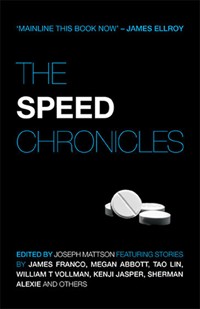
The Speed Chronicles E-Book
Erhalten Sie Zugang zu diesem und mehr als 300000 Büchern ab EUR 5,99 monatlich.
- Herausgeber: No Exit Press
- Kategorie: Krimi
- Sprache: Englisch
Deprived of the ingrained romantic mysticism of the opiate or the cosmopolitan chic of cocaine or the mundane tolerance of marijuana, there is no sympathy for this devil. Yet speed - crystal meth, amphetamines, Dexedrine, Benzedrine, Adderall; crank, spizz, chickenscratch, oblivious marching powder, the go-fast - is the most American of drugs: twice the productivity at half the cost, and equal opportunity for all. It feels so good and hurts so bad. The first contemporary collection of all new literary short fiction on the drug from an array of today's most compelling and respected authors. These are no stereotypical tales of tweakers - the element of crime and the bleary-eyed, shaky zombies at dawn are here right alongside heart-wrenching narratives of everyday people, good intentions gone terribly awry, the skewed American Dream going up in flames, and even some accounts of pure joy. Featuring brand-new stories by: James Franco, Sherman Alexie, William T. Vollmann, Megan Abbott, Jerry Stahl, Beth Lisick, Jess Walter, Scott Phillips, James Greer, Tao Lin, Joseph Mattson, Natalie Diaz, Kenji Jasper, and Rose Bunch. CONTENTS How to Go to Dinner With a Brother On Drugs - Natalie Diaz War Cry - Sherman Alexie Bad - Jerry Stahl Labiodental Fricative - Scott Phillips Osito - Kenji Jasper Amp is the First Word in Amphetamine - Joseph Mattson Addiction - James Franco Wheelbarrow Kings - Jess Walter Tips 'n' Things by Elayne - Beth Lisick Pissing in Perpetuity - Rose Bunch 51 Hours - Tao Lin Everything I Want - Megan Abbott The Speed of Things - James Greer No Matter How Beautifully It Stings - William T. Vollmann
Sie lesen das E-Book in den Legimi-Apps auf:
Seitenzahl: 278
Veröffentlichungsjahr: 2012
Das E-Book (TTS) können Sie hören im Abo „Legimi Premium” in Legimi-Apps auf:
Ähnliche




















About the Editor
JOSEPH MATTSON is the author of the story collection Eat Hell and the novel Empty the Sun (A Barnacle Book), which was a finalist for the 2010 SCIBA Fiction Award. He lives in Los Angeles.
Praise forThe Speed Chronicles
‘Just reading the table of contents for this fucker makes me want to hop in my time machine, zoom back to 1966, and find those two dubious physicians who used to write me scripts for Dexedrine, even though I was too tall and skinny to live already. Mainline this book now! ‘ - James Ellroy
‘All told, The Speed Chronicles deserves great praise for the audacity of the topic, the depth of the discussion, the diversity of its voices, and plain, old, good storytelling’ - New York Journal of Books
‘Akashic launches a new series of crime anthologies, each focused on a different controlled substance, with this addictive volume’ - Publishers Weekly
EDITED BY JOSEPH MATTSON
This book is dedicated to the liver -the vital organ and the daring spirit
TABLE OF CONTENTS
Title Page
Copyright Page
Introduction
PART I: MADNESS
How to Go to Dinner with a Brother on Drugs
N
ATALIE
D
IAZ
War Cry
S
HERMAN
A
LEXIE
Bad
J
ERRY
S
TAHL
PART II: MACHINATION
Labiodental Fricative
S
COTT
P
HILLIPS
Osito
K
ENJI
J
ASPER
Amp Is the First Word in Amphetamine
J
OSEPH
M
ATTSON
Addiction
J
AMES
F
RANCO
PART III: METHODOLOGY
Wheelbarrow Kings
J
ESS
W
ALTER
Tips ’n’ Things by Elayne
B
ETH
L
ISICK
Pissing in Perpetuity
R
OSE
B
UNCH
51 Hours
T
AO
L
IN
PART IV: MEDICINE
Everything I Want
M
EGAN
A
BBOTT
The Speed of Things
J
AMES
G
REER
No Matter How Beautifully It Stings
W
ILLIAM
T. V
OLLMANN
It shines in Paradise. It burns in Hell. - Gaston Bachelard, The Psychoanalysis of Fire
I started hearing whispers from the people in the bedspread and in the window glass, and though I was a little embarrassed at first, I answered them, thinking, why deny anything? - William S. Burroughs, Jr., Speed
The Bible never said anything about amphetamines. - “Fast” Eddie Felson in The Color of Money
introductionsome gods, some panthers
by joseph mattson
B ecause some gods made work, ennui, depression, deadlines, and pain, and some gods (perhaps the selfsame mothers) made adventure, rapture, elation, creativity, and orgasm - and especially because some gods made dopamine - some gods made speed. The answer to some deserts is some jungles. While some panthers skulk breathily to rest after the hunt, some panthers hide out in the bush mad to live, licking their chops along with their wounds, transforming lovely day into lustful night, and they do speed.
Speed: the most demonized - and misunderstood - drug in the land. Deprived of the ingrained romantic mysticism of the opiate or the cosmopolitan chic of cocaine or the commonplace tolerance of marijuana, there is no sympathy for this devil. Yet speed - amphetamines (Dexedrine, Benzedrine, Adderall) and especially methamphetamine*; crystal, crank, ice, chickenscratch, Nazi dope, OBLIVION marching powder, the go fast - is the most American of drugs: twice the productivity at half the cost, and equal opportunity for all. It feels so good and hurts so bad. From its dueling roots of pharmacological miracle cure and Californian biker gang scourge to contemporary Ivy League campuses and high school chem labs, punk rock clubs to the military industrial complex, suburban households to tincan ghettos, it crosses all ethnicities, genders, and geographies - from immigrants and heartlanders punching double factory shifts to clandestine border warlords undermining the DEA, doctors to bomber pilots, prostitutes to housewives, T-girls to teenagers, Academy Award–nominated actors to the poorest Indian on the rez - making it not only the most essentially American narcotic, but the most deceivingly sundry literary matter.
Some shoot for angst-curing kicks, some snort for sad endurance, some for explosive joyrides into the unknown, because no matter how delicious dying young might seem, they want to live forever.
The subject of speed is so innately intimidating yet so undeniably present that it begs to be written about. It is no secret that the drug has historically tuned up the lives of writers, including Jack Kerouac, Susan Sontag, Philip K. Dick, and scores more. Too rarely, though, has it been written of, and as California and the West, the Pacific Northwest, and now the Midwest, the South, and the East Coast toss for the crown of Speed Capital, U.S.A., its jolt to the bones of the American landscape continues to peak as it creeps onward into the farthest nooks of our physiography and consciousness. Wherever there is either something or nothing to do - wherever there is need for more gasoline on the fire - there is speed.
The majority of you, dear readers, have likely seen before-and-after anti-meth photo campaigns and have been at least brushed if not inundated with depictions of the horrors of the Crystal Death, but speed, like all sources of addiction, whether any of the brethren narcotics or food, sex, consumerism, and otherwise, is initially a wellspring for bliss. There are reasons people are willing to put the residue of acetone, lithium batteries, the red phosphorus of match heads, and other inorganic and toxic compounds the liver is not sure what to do with into their bodies: It feels good. You get results. The ancient longing to inhabit supernatural powers and kiss the orbits of gods is realized. The panther becomes superpanther with the rifle of a medicine cabinet. Anything is possible (giving credence to the old slogan, Speed Kills - rarely is ingesting speed a mortal wound; respectively, more people die or equally damage themselves from the feral, madcap things they do on speed than from the toxicity of the drug itself - except, of course, the lifers). Yes, it gets ugly, so ugly. But before your sex organs revert to embryonic acorns and your teeth fall out and feasting on your malnutrition are insects for your eyes only, it’s a rush of pure euphoria and a seeming godsend to surmount all of life’s daily tribulations.
Some panthers’ antiphon to some gods’ will.
Because speed is first and foremost an amplifier, the sparking ebullience and potential wretchedness it projects are possibilities already seeded in the human order, just waiting for the right drop of dew and hit of sunshine to come along and juice it up.
The fourteen stories in this book reflect not only both ends of the dichotomy above, but, more crucially, the abstractions within and between. Merely demonizing the drug would be the same crime as simply celebrating it. Condemning it outright and defending all recreational use are equal failures against illuminating the drug’s complexity. The panther worships the god in a kaleidoscopic mayhem of alchemical felicity, and in real sorrow too. Though you’ll find exultation and condemnation interwoven, these are no stereotypical tales of tweakers - the element of crime and the bleary-eyed zombies that have gone too far are here right alongside heart-wrenching narratives of everyday people, good intentions gone terribly awry, the skewed American Dream going up in flames, and even some accounts of unexpected joy. Juxtaposed with circumstances inherent to the drug (trying to score, the sheer velocity of uptake, the agony of withdrawal, death, etc.) are nuances often elusive but central to speed’s mores: camaraderie, compassion, and charm.
Together with Scott Phillips’s tale of Frank Sinatra’s mummified penis as leverage in a surreptitious bulk cold medicine deal and Kenji Jasper’s meth murder-run by way of Capitol Hill, you’ll find Megan Abbott’s benevolent doctor injecting fast relief into disenchanted townsfolk and Jess Walter’s bumbling brothers-in-arms too innocuous for high crime. With Jerry Stahl’s no-punches-pulled, I mean the de facto nightmare scenarios through amphetamine hell, and my own rendering of Hollywood psychosis (the district in Los Angeles and, in part, its Tinseltown abstract) gone to fanatics and sacrificial death-dogs, you’ll find William T. Vollmann’s empathetic transsexual portrait of meth as vitamin supplement and Beth Lisick’s suburban housewife’s giddy eagerness for validity and subsequent triumph. There’s James Franco’s metafictional take on the cautionary tale and Rose Bunch’s story of Ozark yard wars together with Tao Lin’s disaffected New York City hipsters quietly pandering for significance and Natalie Diaz’s haunting embrace of a sibling addict; Sherman Alexie’s meth-induced war dancer razing everything in his path, and James Greer’s investigation of the existential magical realism inherent in eliminating sleep from one’s diet.
I thank the authors - gods some, panthers some, and titans all - for their incredible contributions. The dream roster has come to fruition, and I remain ever humbled and appreciative of their interest, generosity, trust, and guts to tango with the beast.
Because some gods have ridden the rails, some panthers rail the ride, ’scripts and spoons and straws raised like torches to Rome. Let us now go unto stories of them and those whose lives they touch - let’s go fast.
Joseph MattsonLos AngelesSeptember 2011
*Though MDMA/Ecstasy is chemically part of the amphetamine family, it has a singular place in the world and deserves a collection of its own (the forthcoming The EcstasyChronicles) and is not covered in the following stories. Conversely, Provigil (modafinil), while not structurally a part of the amphetamine family, is included for its eerily similar functionality to pharmaceutical amphetamines - new speed that works in part like old speed, and neoteric enough to find a home here.
NATALIE DIAZ was born and raised in the Fort Mojave Indian Village in Needles, California. She is Mojave and Pima. After playing professional basketball in Europe and Asia, she completed her MFA degree at Old Dominion University. She lives in Mohave Valley, Arizona, and directs a language revitalization program, working to document the few remaining Elder Mojave speakers. Her poetry and fiction has been published in the Iowa Review, Bellingham Review, Prairie Schooner, Crab Orchard Review, Narrative, North American Review, Nimrod, and others. Her first poetry book is forthcoming from Copper Canyon Press.
how to go to dinnerwith a brother on drugs
by natalie diaz
I f he is wearing knives for eyes, if he has dressed for a Day of the Dead parade - three-piece skeleton suit, cummerbund of ribs - his pelvic girdle will look like a Halloween mask.
“The bones,” he’ll complain, make him itch. “Each ulna a tickle.” His mandible might tingle.
He cannot stop scratching, so suggest that he change, but not because he itches - do it for the scratching. Do it for the bones.
“Okay, okay,” he’ll give in, “I’ll change.” He will return to his room, and as he climbs each stair, his back will be something else - one shoulder blade a failed wing, the other a silver shovel. He has not eaten in months. He will never change.
Still, you are happy he didn’t come down with a headdress of green quetzal feathers, iridescent plumes dancing like an emerald blaze from his forehead, and a jaguar-pelt loincloth littered with mouth-shaped rosettes - because this beautiful drug usually dresses him up like a greed god, and tonight you are not in the mood to have your heart ripped out. Like the bloody-finger trick your father constructed for you and your brothers and sisters every Halloween - cut a hole in a small cardboard jewelry gift box, hold it in the palm of your hand, stick your middle finger up through the hole, pack gauze inside the box around your middle finger, cover the gauze and your finger in ketchup, shake a handful of dirt onto your finger, and then hold it up, your bloody-ketchup finger, to every person you see, explaining that you found it out in the road - it has gotten old, having your heart ripped out, being opened up that way.
He comes back down, this time dressed as a Judas effigy. “I know, I know,” he’ll joke, “It’s not Easter. So what?”
Be straight with him. Tell him the truth. Tell him, “Judas had a rope around his neck.”
When he asks if an old lamp cord will do, just shrug. He will go back upstairs, and you will be there, close enough to the door to leave, but you will not. You will wait, unsure of what you are waiting for. While you wait, go to the living room of your parents’ home-turned-misery-museum. Explore the perpetual exhibits - “Someone Is Tapping My Phone,” “Como Deshacer a Tus Padres,” “Mon Frère” - ten, twenty, forty dismantled phones displayed on the dining table, red and blue wires snaking in and out, glinting snarls of copper, yellow computer chips, soft sheets of numbered rubber buttons, small magnets, jagged, ruptured shafts of lithium batteries, shells of Ataris, radios, and television sets cracked open like dark nuts, innards heaped across the floor. And by far the most beautiful, “Why Dad Can’t Find the Lightbulbs” - a hundred glowing white bells of gutted lightbulbs, each rocking in a semicircle on the counter beneath your mom’s hanging philodendron.
Your parents’ home will look like an Al Qaeda yard sale. It will look like a bomb factory, which might give you hope, but you ought to know better than to hope. You are not so lucky - there is no fuse for you to find. For you and your family, there will be no quick ticket to Getaway Kingdom.
Think, all of this glorious mess could have been yours - not long ago, your brother lived with you. What was it you called it? “One last shot,” a three-quarter-court heave, a buzzerbeater to win something of him back. But who were you kidding? You took him into your home with no naïve hopes of saving him, but instead to ease the guilt of never having tried.
He spent every evening in your bathroom with a turquoise BernzOmatic handheld propane torch, a meth-made Merlin mixing magic, chanting, “I will show you fear in a handful of dust,” then shape-shifting into lions and tigers and bears and pacing your balcony, licking the air at your neighbors’ wives and teenage daughters, fighting with the Hare in the Moon, conquering the night with his blue flame, and plotting to steal your truck keys, which you kept under your pillow.
Finally, you worked up the nerve to ask him to leave. He took his propane torch and left you with a Glad trash bag of filthy clothes and a meth pipe clanking in the dryer. Two weeks after that, God told him to do several things that got him arrested.
But since he is fresh-released from prison and living in your parents’ home, you will be there to take him to dinner - because he is your brother, because you heard he was cleaning up. Mostly because you think you can handle dinner, a thing with a clear beginning and end, a specified amount of time, a ritual that everyone knows, even your brother. Sit down. Eat. Get up. Go home. You are optimistic about this well-now-that’s-done-and-I’m-glad-it’s-over kind of night.
If your brother doesn’t come back down right away, if he takes his time, remember how long it took for the Minotaur to escape the labyrinth, and go to the sliding-glass window looking out onto the backyard. This is the exhibit whose fee is always too high, the reason you do not come to this place: your parents.
Your father will be out there, on the other side of the glass, wearing his luchador mask. He is El Santo. His face is pale. His face is bone white. His eyes are hollow teardrops. His mouth is a dark “Oh.” He has worn it for years, still surprised by his life.
Do not even think of unmasking your father. That mask is the only fight he has left in him. He is all out of planchas and topes. He has no more huracanranas to give. Besides, si tuvieras una máscara, you would wear it.
Your father, El Santo, will pile mesquite logs into a pyre. Your mother will be out there too - wearing her sad dress made of flames - practicing lying on top of the pyre.
“It needs to be higher,” she’ll complain, “I’ve earned it.”
See the single tower of hyacinth she clutches to her breast as she whispers to the violet petals, “Ai, ai, don’t cry. No hay mal que dure cien años.” But the hyacinth will already have gone to ash, and knowing she is talking to herself, your throat will sting.
Your father will answer her as always, “Oh,” which means he is imagining himself jumping over a top rope, out of the ring, running off, his silver-masked head cutting the night like a butcher knife.
Do not bother pounding against the glass. They will not look up. They know they cannot answer your questions.
Your brother will eventually make his way down to the front door. The lamp cord knotted at his neck should do the trick, so head to the restaurant.
In the truck, avoid looking at your brother dressed as a Judas effigy, but do not forget that a single match could devour him like a neon tooth, canopying him in a bright tent of pain - press the truck lighter into the socket.
The route will take you by a destroyed field - only months before, that earth was an explosion of cotton hulls - your headlights will slice across what remains of the wasted land, illuminating bleached clods of dirt and leftover cotton snagged here and there on a few wrecked stalks. The only despair greater than this field will be sitting next to you in the truck - his eyes are dark but loud and electric, like a cloud of locusts conducting a symphony of teeth. Meth - his singing siren, his jealous jinni conjuring up sandstorms within him, his harpy harem - has sucked the beauty from his face. He is a Cheshire Cat. His new face all jaw, all smile and bite.
Look at your brother. He is Borges’s bestiary. He is a zoo of imaginary beings.
When he turns on the radio, “Fire” or “Manic Depression” will boom out. He will be your personal Jimi Hendrix. No, he will be your personal Geronimo playing air drums for Jimi Hendrix - large brown hands swooping and fluttering in rhythm against the dashboard like bats trapped in the cab of your truck, black hair whipping in the open window, tangling at the ends and sticking to the corners of his wide-open mouth shiny as a freshly dug hole, wet teeth flashing in the rearview mirror as he bobs his head to the beat.
Sigh. He is not Geronimo. Geronimo held out much longer. Your brother has clearly given up.
The sun is bound to lose its grip on the horizon, and when it does, the sky will burn red. It will be something you understand.
Search the road for something dead - to remind you that he is still alive, that you are ungrateful - a skunk whose head is matted to the faded asphalt, intestines ballooning from a quick strip of black and white like a strange carmine bloom.
“This is what it’s like,” you’ll say aloud, “to be splayed open,” but you will mean, This is what it’s like to rest.
He will not hear you over the war party circling his skull - horses, hooves, drums, and whooping. “Ai, ai, ai.” He will smell the skunk and say, “Smells like carne asada.”
Your brother’s jaw will become a third passenger in your truck - it will flex in the wind, resetting and rehinging, opening and closing against his will. It will occur to you that your brother is a beat-down, dubbed Bruce Lee - his words do not match his mouth, which is moving faster and faster. He is the fastest brother alive.
The next thing you’ll know, you and your brother will be on Han’s island, trapped in a steel chamber - being there with him, being there together, in that impossible cage, makes you root for him, makes you understand that you could lose him at any moment, so you love him.
When you were ten, your brother took you to the powwow down the street. He held your hand as you walked up to the open tailgates of the pickup-truck vendors and bought you and him each a pair of black wooden nunchucks with gold and green dragons up the sides. Bruce Lee was his hero. Back then, your brother was Fists of Fury. He was Enter the Dragon. He was Game of Death I and II. But back then was a long time ago. Now is now, and now you are here with a brother faster than Bruce Lee. Bruce Lee is dead. In a way, so is your brother. But you cannot forget how hard he practiced that summer. How he took his shirt off and acted out each scene in front of the bathroom mirror - touching his imaginary bloody lip with his fingertips, then tasting that imaginary blood, and making that “Wahhhh” Bruce Lee face as he swung his nunchucks over and under his shoulders. Remember the welts across his lower back and ribs? Remember how he cried when he hit himself in the chin?
Admit it - that was another brother. This brother is not Bruce Lee. This brother is Han. He is Han’s steel chamber. Keep an eye on him - be prepared if he unscrews a metal hand at the wrist and replaces it with a metal bear claw. It would not shock you. He has done worse things. Face it. You are not here with him. You are here because of him. Do not be ashamed when it crosses your mind that you could end him quickly with a one inch punch.
Your brother’s lips are ruined. There is a sore in the right corner of his mouth. His teeth hurt, he says, his “dead mountain of carious teeth that cannot spit.”
At the stop light, he will force you to look into his mouth. You hate his mouth. It is Švankmajer’s rabbit hole - a bucket you’ve tripped over and fallen into for the last ten years. One of his teeth is cracked. He will want to go to the IHS dentist. “My teeth are falling out,” he’ll say, handing you a pointy incisor, telling you to put it under your pillow with your truck keys. When he says, “Make a wish,” you will.
When you open your eyes, the light will be green, and he will still be there in front of you. His tooth will end up in the ashtray.
On the way there, he will wave to all the disheveled people walking along and across the roads - an itchy parade of twisting arms and legs pushing ratty strollers with big-headed, alien-eyed babies dangling rotten milk bottles over the stroller sides, a marching band of cheap cigarettes and dirty men and women disguised as an Exodus of rough-skinned Joshua trees, whose grinning mouths erupt in clouds of brown yucca moths that tick and splatter against your windshield.
Take a deep breath. You will be there soon.
Pull into the restaurant parking lot. Your brother will not want to wear his shoes inside. “Judas was barefoot,” he will tell you.
“Judas wore sandals,” you answer.
“No, Jesus wore sandals,” he’ll argue.
Not in that moment, but later, you will manage to laugh at the idea of arguing with a meth-head dressed like a Judas effigy about Jesus wearing sandals.
Night will be full-blown by the time you enter the restaurant - stars showing through like shotgun spread. Search your torso for a wound, a brother-shaped bullet hole pulsing like a Jesus side wound beneath your shirt. Even if you don’t find it, remember that there are larger injuries than your own - your optimistic siblings, all white-haired and doubled over their beds, lost in great waves of prayer, sloshing in the belly of a dark whale named Monstruo, for this man who is half–wooden boy half-jackass.
Your brother will still itch when you are seated at your table. He will rake his fork against his skin. If you look closely, you will see that his skin is a desert - half a red racer is writhing in the middle of the long road of his forearm, a migration of tarantulas moves like a shadow across his sunken cheek.
Slide your fork and knife from the table. Hold them in your lap.
He will set his hands on the table - two mutts sleeping near the salsa, twitching with dreams of undressing cats.
He will lick his shattered lips at the waitress every time she walks by. He will tell you, then her, that he can taste her. If you are lucky, she will ignore him.
Pretend not to hear what he says. Also, ignore the cock crowing inside him, but if he notices that you notice, “Don’t worry,” he’ll assure you, “the dogs will get it.”
“Which dogs?” you have to ask.
Your brother will point out the window at two dogs humping in an empty lot across the way - slick pink tongues rolling and unrolling, hips jerking and trembling. Go ahead. Look closer, then clarify to your brother, “Those are not dogs. Those are chupacabras.”
“Chupacabras are not real,” he’ll tell you, “brothers are.”
The reflection in your empty plate will speak: “Your brother is on drugs. You are at a dinner that neither of you can eat.”
Consider your brother. He is dressed as a Judas effigy admiring a pair of fuck-sick chupacabras - one dragging the other across the parking lot.
The waitress will come to take your order. Your brother will ask for a beer. You will pour your thirty pieces of silver onto the table and ask, “What can I get for this?”
SHERMAN ALEXIE is the best-selling author of War Dances, winner of the PEN/Faulkner Award for Fiction. He is also the author of Reservation Blues, Indian Killer, The Toughest Indian in the World, Ten Little Indians, Flight, The Lone Ranger and Tonto Fistfight in Heaven, The Business of Fancy-dancing, and The Absolutely True Diary of a Part-Time Indian, winner of the National Book Award for Young People’s Literature. Also a filmmaker, stand-up comic, and public speaker, Alexie lives in Seattle, WA, with his wife and two sons.
war cry
by sherman alexie
Forget crack, my cousin said, meth is the new war dancer.
World champion, he said.
Grand Entry, he said.
Five bucks, he said, give me five bucks and I’ll give you enough meth to put you on a Vision Quest.
For a half-assed Indian, he sure talked full-on spiritual. He was a born-again Indian. At the age of twenty-five, he war danced for the first time. Around the same day he started dealing drugs.
I’m traditional, he said.
Rule is: whenever an Indian says he’s traditional, you know that Indian is full of shit.
But not long after my cousin started dancing, the powwow committee chose him as Head Man Dancer. Meaning: he was charming and popular. Powwow is like high school, except with more feathers and beads.
He took drugs too, so he was doomed. But what Indian isn’t doomed? Anyway, the speed made him dance for hours. Little fucker did somersaults. I’ve seen maybe three somersaulting war dancers in my own life.
You war dance that good, you become a rock star. You get groupies. The Indian women will line up to braid your hair.
No, I don’t wear rubbers, he said, I want to be God and repopulate the world in my image. I wondered, since every Indian boy either looks like a girl or like a chicken with a big belly and skinny legs, how he could tell which kids were his.
Anyway, he was all sexed-up from the cradle.
He used to go to Assembly of God, but when he was fifteen, he made a pass at the preacher’s wife. Grabbed her tit and said, I’ll save you.
Preacher man beat the shit out of him, then packed up, and left the rez forever. I felt sorry for the wife, but was happy the preacher man was gone.
I didn’t like him teaching us how to speak in tongues.
Anyway, after speed came the crack and it took hold of my cousin and made him jitter and shake the dust. Earthquake - his Indian name should have been changed to Earthquake. Saddest thing: powwow regalia looks great on a too-skinny Indian man.
Then came the meth.
Indian Health Service had already taken his top row of teeth and the meth took the bottom row.
Use your drug money to buy some false teeth, I said.
I was teasing him, but he went out and bought some new choppers. Even put a gold tooth in front like some kind of gangster rapper wannabe. He led a gang full of reservation-Indians-who-listened-to-hard-core-rap-so-much-they-pretended-to-be-inner-city-black. Shit, we got fake Bloods fake-fighting fake Crips. But they aren’t brave or crazy enough to shoot at one another with real guns. No, they mostly yell out car windows. Fuckers are drive-by cursing.
I heard some fake gangsters have taken to throwing government commodity food at one another.
Yeah, my cousin, deadly with a can of cling peaches.
And this might have gone on forever if he’d only dealt drugs on the rez and only to Indians. But he crossed the border and found customers in the white farm towns that circled us.
Started hooking up the Future Farmers of America.
And then he started fucking the farmers’ daughters.
So they busted him for possession, intent to sell, and statutory rape. Deserved whatever punishment was coming his way.
Hey, cousin, he said to me when I visited him in jail, they’re trying to frame me.
You’re guilty, I said, you did all of it, and if the cops ever ask me, I’ll tell them everything I know about your badness.
He was mad at first. Talked about betrayal. But then he softened and cried.
You’re the only one, he said, who loves me enough to tell the truth.
But I knew he was just manipulating me. Putting the Jedi shaman mind tricks on me. I wouldn’t fall for that shit.
I do love you, I said, but I don’t love you enough to save you.
As the trial was cooking, some tribal members showed up at the courthouse to demonstrate. Screaming and chanting about racism. They weren’t exactly wrong. Plenty of Indians have gone to jail for no good reason. But plenty more have gone to jail for the exact right reasons.
It didn’t help that I knew half of those protesters were my cousin’s best customers.
But I felt sorry for the protesters who believed in what they were doing. Who were good-hearted people looking to change the system. Thing is: you start fighting for every Indian, you end up having to defend the terrible ones too.
That’s what being tribal can do to you. It traps you in the teepee with murderers and rapists and drug dealers. It seems everywhere you turn, some felon-in-buckskin elbows you in the rib cage.
Anyway, after a few days of trial and testimony, when things were looking way bad for my cousin, he plea-bargained his way to a ten-year prison sentence.
Maybe out in six with good behavior. Yeah, like my cousin was capable of good behavior.
Something crazy: my cousin’s name is Junior Polatkin, Jr. Yes, he was named for his late father, who was Junior Polatkin, Sr. Yeah, Junior is not their nicknames; Junior is their real names. So anyway, my cousin Junior Junior was heading to Walla Walla State Penitentiary.
Junior Junior at Walla Walla.
Even he thought that was funny.
But he was terrified too.
You’re right to be scared, I said, so just find all the Indians and they’ll keep you safe.
But what did I know? The only thing I knew about prison was what I saw on HBO, A&E, and MSNBC documentaries.
Halfway through his first day in the big house, my cousin got into a fight with the big boss Indian.
Why’d Junior fight him?
Because he was a white man, Junior said, as fucking pale as snow.
And he had blue eyes, Junior said.
My cousin wasn’t smart enough to know about recessive genes and all, but he was still speaking some truth.
Anyway, it had to be shocking to get into prison, looking for group protection, and you find out your leader is a mostly white Indian boy.
I tried to explain, my cousin said, that I was just punching the white guy in him.
Like an exorcism, I said when he called me collect from the prison pay phone. I think jail is the only place where you can find pay phones anymore.
Yeah, Junior Junior said, I was trying to get the white out of him.




