


Erhalten Sie Zugang zu diesem und mehr als 300000 Büchern ab EUR 5,99 monatlich.
- Herausgeber: Corvus
- Kategorie: Gesellschafts- und Liebesromane
- Sprache: Englisch
Zoe and Ollie Morley tried for years to have a baby and couldn't. They turned to adoption and their dreams came true when they were approved to adopt a little girl from birth. They named her Evie. Seven years later, the family has moved to Yorkshire and grown in number: a wonderful surprise in the form of baby Ben. As a working mum it's not easy for Zoe, but life is good. But then Evie begins to receive letters and gifts. The sender claims to be her birth father. He has been looking for his daughter. And now he is coming to take her back...
Sie lesen das E-Book in den Legimi-Apps auf:
Seitenzahl: 486
Veröffentlichungsjahr: 2017
Das E-Book (TTS) können Sie hören im Abo „Legimi Premium” in Legimi-Apps auf:
Ähnliche
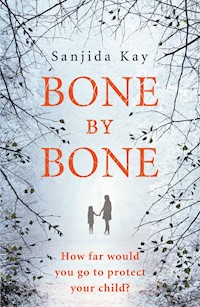

















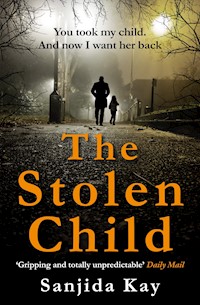
THE STOLEN CHILD
Sanjida Kay is a writer and broadcaster. She lives in Bristol with her daughter and husband. Bone by Bone was her first thriller.
To Jasmine
Come away, O human child!
To the waters and the wild
With a faery, hand in hand,
For the world’s more full of weeping than you can understand.
‘The Stolen Child’, W. B. Yeats
Contents
Title Page
Dedication
London
May
Seven Years Later
August, Saturday
September, Monday
Tuesday
Friday
Saturday
Monday
Tuesday
Wednesday
Two Weeks Later
Thursday
Friday
Saturday
October, Friday
Saturday: The Day After
Sunday: Two Days After
Monday: Three Days After
Tuesday: Four Days After
Wednesday: Five Days After
Five Months Later
March
Acknowledgements
Also by Sanjida Kay
Copyright
LONDON
MAY
She’s coming! She’s going to be early! I half knew it, felt it in my bones. Thank goodness Ollie believed me and helped me get the nursery ready. We have all the essentials: a cot, a buggy, a pile of nappies, Sudocrem, an adorable rabbit with Liberty-print ears. Babygros. A Moses basket. Blankets. Bottles. A mobile that sings and cascades coloured lights across the ceiling.
‘Zoe! The taxi’s here!’ Ollie shouts.
He’s standing looking out of the window of our first-floor flat. He has his coat on already and is holding mine for me.
As he carefully slides my jacket over my outstretched arms, I say, ‘I haven’t finished the mural!’
The mural is my way of trying to keep calm during the pregnancy and I wanted it to be finished and perfect before she arrived. It’s on the nursery wall and it’s of Ilkley Moor, where I grew up: the Cow and Calf rocks at sunrise, a friendly giant called Rombald striding through the purple heather. Ollie kisses my cheek.
‘It looks wonderful. She’ll love it just as it is. And you’ll have time to finish it when she’s here.’
We already know we’re having a girl.
‘I won’t!’ I say, my voice rising in pitch. ‘Babies never sleep. They’re up all night. I’ll be too tired to paint!’
‘Newborns sleep all the time. Especially bottle-fed ones,’ says Ollie, steering me towards the door, his arm around my waist.
He’s the youngest child in his family and I have no siblings, so what do we know? But Ollie has read the most enormous stack of books about babies so maybe he’s right. I tried, but it made me even more stressed. What if she gets colic, roseola? Has a febrile seizure?
‘The bag!’
‘I’ve got it,’ he says. He packed it weeks ago, just in case.
‘What about—?’
‘I’ve put your handbag in and I’ve got money and my phone. I’ll grab the car seat. We don’t need anything else.’
He smiles gently at me. The seat is already by the door. Ollie said we should bring it just in case we can take our baby home straight away. Ollie researched the best one to buy online. He joined forums on Mumsnet and BabyCentre and took out a subscription to Which?. I found one in a charity shop, but he was horrified and made me take it back. Apparently it’s not safe to buy second-hand baby car seats.
‘I can manage,’ he says, carrying everything. ‘Careful on the stairs.’
He’s noticed the tears blurring my vision. In the car he holds my hand. He tells the driver we need to get to hospital as fast as possible. The man looks at me in the rear-view mirror and then at the baby seat. He looks puzzled for a moment, and then he smiles.
‘Hold on to your hats, ladies and gentlemen,’ he says. He’s wearing a turban.
We drive past a kebab shop, a Polish grocer, a newsagent with red peppers and oranges stacked in Tupperware bowls outside, and then he veers abruptly down a side street, hurling us over the speed bumps. Red-brick blocks of flats merge into white and brown Victorian semis with palm trees and mock orange trees in the gardens and we shoot onto Chatsworth Road opposite a storefront full of succulents and Kilner jars and a Spanish deli with jamon in the window. Just before the traffic lights, past a pizza restaurant that looks like an upmarket pub, the driver takes a sharp right. The baby seat tilts forwards. I glance in the window of a toy shop with a pink wooden castle, all fairy-tale turrets and gold flags, on display.
I’ve lost my bearings.
‘Almost there,’ says Ollie, squeezing my arm.
The young woman at the hospital says, ‘It’s going to be an emergency Caesarean.’ She leans forward. ‘The baby is at risk if we don’t operate.’
‘She’s premature,’ I say. ‘Four weeks. It’s too early—’
‘They’ll take good care of her. She’ll be put straight into an incubator.’ She takes my hand in both of hers. I try and recall her name. Sarah. That’s it. I should have remembered.
She says softly, ‘We did warn you this was likely to happen, Zoe.’
I nod and gulp back hot tears. Ollie passes me a tissue. I blow my nose. I don’t want my baby to be cut out. Surgically removed as if she were a tumour. Put into a box. I want to hold her in my arms, still slick with blood and mucus.
‘We’re prepared,’ he says, and takes my hand, lacing his fingers through mine.
The wait is interminable. The smell of boiled eggs and slightly burnt mince drifts down the corridor from the cafeteria. It makes me feel even more nauseous. I grip Ollie’s hand so hard my nails cut his palm. He winces and gently removes it from my grasp. He puts his arm round me instead.
‘It’s going to be okay,’ he says, whispering into my hair.
I squeeze my eyes shut and push away the pain of those years of longing and miscarriages; forget the blood, ‘Scissor Sisters’ playing on the radio as the surgeon bends over me, tears running into my ears. That’s all in the past. It’s finally happening. This is what we’ve always wanted. We’ve been together for eight years, since I was nineteen and Ollie was twenty, and now we’re going to have a baby at last. We’re going to be a family.
I can’t stop myself. ‘What if. . .’ I say.
We’ve been over this endlessly, with each other, with officials and doctors. We’ve been told all the risks. It’s been brutally spelled out to us. She’s so premature she might die. She could be brain damaged. They told us to wait before we gave her a name. They said if we named her, it would make it harder. But we ignored them. We’re going to call her Evelyn Catherine Morley. Catherine after my mother; Evie for short.
I remove Ollie’s arm so I can look at him properly. He has blue eyes and dirty-blonde hair that flops over his forehead. Mine would be the same colour but I’ve been dying it since I was at university. ‘Natural blonde’ it says on the packet. I’ve just done my roots because I know, once Evie is here, I won’t have time. Ollie’s expression is kind. He’s listened to me and reassured me patiently for months.
‘Don’t worry,’ he says again. ‘It will be all right.’
How does he know? It was far from all right in the past.
The room we’re in is painted white with grey linoleum and terrible pastel-coloured paintings on the wall. I imagine telling my daughter about those paintings one day, when she’s old enough to understand how we waited for her to be born with such love and hope: Stippled, like the French Impressionists, I’ll say, but fake, modern, vacant. Do you know what I mean? When you’re waiting for someone as important as your baby to be born, you want everything to mean something. And she’ll open her eyes wide and say, Did you know, Mummy, some artists even use scribbling as a technique?
‘I love you,’ Ollie says.
‘I love you too.’
‘It’s going to be okay.’ He kisses me on the forehead. ‘We’re going to take our daughter home very soon.’
I can’t believe how tiny she is. Her entire body could fit in one of Ollie’s hands. We press our faces against the incubator.
Ollie has tears in his eyes. ‘Evie Cathy Morley,’ he says. ‘Our daughter.’ He hugs me tightly. ‘We did it,’ he whispers.
We aren’t allowed to touch her yet. She’s encircled by tubes. There are flashing lights and beeping monitors next to her trolley. She’s wearing a cream cap to keep her head warm. It would fit a doll. She’s turned away from us, so I can’t see her face. Her body is emaciated, arms and legs like sticks, ribs winging out with each strenuous breath. She’s covered in downy hair. I walk round to the other side so I can look at her properly. I feel a hot flare in my chest: fear or love. I can’t tell.
I bend down so I’m level with her and peer in. It’s so hot in here, I can barely breathe. A shock of black hair juts out from beneath her hat. There’s something odd about her features. Something is not quite right. I struggle to inhale. Something is wrong. Seriously wrong. Evie opens her eyes for the first time since we saw her. They’re large and unfocused, enormous in her minute face. They’re too far apart and a colour I can barely describe. But they’re definitely not blue. Her skin is pale brown. She doesn’t look like our child. She doesn’t look like a baby at all. Not a human one. Sarah puts her hand on my shoulder. I’m hyperventilating.
‘She may have Foetal Alcohol Syndrome,’ she tells me. Sarah has been our case worker throughout the pregnancy. ‘It’s normal in a situation like this. We’ll run tests later, when she’s stable. Right now,’ she says, ‘Evie is being treated for drug addiction.’
Ollie is openly weeping. We knew it was likely, but we still hoped she’d be okay. He reaches for me, tries to pull me closer.
‘Is she going to make it?’ he asks.
Sarah hesitates. ‘We don’t know yet. But the team here will do everything they can to save her. To cure her. It’s why we chose this hospital,’ she reminds us. ‘They specialize in treating the babies of drug addicts.’
I stand up abruptly. I need some air. I have to get out of here. I’m shaking with rage.
I could kill Evie’s mother.
SEVEN YEARS LATER
ILKLEY
AUGUST, SATURDAY
Ben’s helping and I can feel my stress levels rise. He’s managed to smear icing from his wrists to his elbows and his chocolate grin is as wide as the Joker’s. I glance at the kitchen clock. In forty-two minutes the first guests will arrive. We’re still icing Ben’s birthday cake. I’m trying to get the buttercream to stick to the sponge and not my knife without ripping off the surface; Ben is sucking the beater. I haven’t changed out of my jeans that sag at the knees and Dad’s old shirt yet and there are still balloons to be blown up, party bags to be filled, cocktail sausages and cheese-and-pineapple sticks to be skewered. I sprinkle sugar stars randomly over the top of the cake and plonk two candles in the middle. Ben looks happy.
It’s a far cry from Evie’s second birthday. By then she was already talking in full sentences, demanding a princess cake. Ollie ordered one from Bettys. It cost a fortune and it was beautiful – pale pink icing fell like folds of fabric, a tiny sugar princess rising from the midst of her Victoria sponge ballgown. The cake was so sweet it set your teeth on edge. I look up, hoping to see Evie. The kitchen is at one end of the house. When we moved in, Ollie had the partition wall knocked down and now the whole downstairs space is open. Light floods through from Rombald’s Moor behind us and the hills on the far side of the valley. I’d hoped she’d help – enjoying her role as a big sister; cutting the crusts off cheese sandwiches and wrapping up the yo-yo and the bubbles for pass-the-parcel – but she’s nowhere to be seen.
‘Evie! Evie?’ I shout.
She loves making cakes. And it’s not like her to miss out on the chance of licking the bowl. There’s no sign of her and I feel uneasy. She’s been behaving oddly round Ben for the past few months now.
Bella, who’s finished lapping icing sugar off the chair Ben is standing on, clicks across the polished wooden floor towards the garden. We always had English springer spaniels when I was growing up; after my mum died, I bought a liver and white puppy to remind me of her.
I rinse out the dishcloth and wipe Ben with it. It’s not hygienic, but I’m running out of time.
‘Chocolate,’ he says happily, pointing to his mouth.
I’ve invited too many toddlers. What is it that BabyCentre says? You should have the same number of guests as the age of the child? It seemed a bit unfair for Ben to have only two kids at his party and I couldn’t just invite some of his friends and not others. In the end, I asked everyone at his nursery – and nearly all of them are coming. Is there any point in changing Ben? I roll his sleeves down and smooth his blond hair flat. The cowlick curl at the front bounces up. I give him a cuddle and kiss his fat cheek and he wriggles away from me, desperate to run after Bella. Unlike Evie, who was always so still as a small child. Almost unnaturally so.
I look at the clock again. Where the hell is Ollie? He said he had to go back to work. On a Saturday. On the day of Ben’s party. I’d protested as I was wrestling with the Sellotape and flowery wrapping paper that was all I could find in the house at 10.30 last night. He’d made a face and said it was unavoidable.
‘I’ll go early, catch the first train. I’ll be back, don’t worry,’ Ollie had said.
He didn’t say whether he’d be back in time to help or if he was planning to arrive as the party was going to start. He’d left before I’d stirred, shutting the front door too hard, waking Ben and sending Bella into a flurry of barks. I clear up the chocolate icing and streaks of butter from the work surface. The entire kitchen is stainless steel – the tops, dishwasher, fridge. Ollie insisted and it looked brilliant until the kids got their hands on it. Now it’s covered in smeary fingerprints. I chuck the bowl and beater in the dishwasher and I’m just making a start on chopping the cheese into cubes, when the doorbell rings. I swear and wipe my hands on my trousers. In my head, I’d imagined myself welcoming the first parents and their children with Ben clinging to one leg, wearing his tractor top, Evie in that polka-dot dress I love, and I would look chic, with glossy hair, in kitten heels, skinny jeans and my new Breton top. Some chance.
Before I can reach the hall, Andy shouts, ‘It’s only us,’ and half falls in with his two children, Sophie, who is Evie’s best friend, and eight-month-old baby Ellen.
‘So lovely to see you,’ I say, embracing Gill, his wife.
‘We thought you might need some help,’ she says. ‘Sophie. Go and find Evie.’
Gill unpacks her bag. She’s brought brownies and flapjacks, all home-made and chopped up into bite-sized squares, a bumper pack of Hula Hoops and a huge, almond-studded fruit cake from Bettys.
‘For the grown-ups,’ she adds.
I feel as if I’ve known Gill and Andy forever. We met at Leeds University. Andy studied History of Art with me. I used to be Gill’s best friend but I hardly ever see her these days. She’s a lawyer.
‘I don’t know how you found the time,’ I say, taking a flapjack. Gill works even longer hours than Ollie.
‘Ollie’s working?’ she says, looking around for my husband.
I make a face. He hasn’t replied to my texts asking him when he’ll be here.
‘I’ll do this while you change,’ she adds, eyeing my outfit, and getting mugs, a cafetière and coffee out of the cupboard. ‘Andy, love, put the party playlist on.’
I can’t find my stripey top so I end up wearing my favourite shirt that’s worn a bit thin in patches, and ballet pumps. I had my hair cut short after Ben was born and now it’s grown into a ragged bob. It’s still blonde but my beige roots are showing through. It’s definitely not glossy. I give my hair a quick brush and tuck it behind my ears. Gill’s hair is immaculate: recently highlighted, smooth and as shiny as oiled teak.
By the time I come back downstairs, the first families have already arrived. Andy is surrounded by toddlers and is blowing up balloons. Songs from The Jungle Book are playing, Gill has laid the rest of the party food out on paper plates on one of the worktops in the kitchen. Ben is shrieking with delight and wiggling to ‘I Wanna Be Like You’. Ollie hasn’t arrived and there’s still no sign of Evie but I assume she’s in her bedroom with Sophie.
‘Let’s play musical statues!’ I say, cranking up the volume so the toddlers will start dancing. I begin twirling and stamping my feet until they join in.
I pass the remote to Andy and take the laundry basket – now full to the brim with presents for Ben – upstairs so they’ll be out of the way of little people who might be tempted to start opening them. I catch sight of Sophie, curled up in an armchair, watching something on the iPad.
‘Sophie? Where’s Evie?’
She shrugs and doesn’t look at me. ‘She didn’t want to play with me.’
‘Evie?’ I call.
I can’t hear anything. When was the last time I saw her? I leave the presents on the landing and climb the stairs to her room, but she’s not there. I check my studio, the bathroom and our bedroom, but there’s no sign of her.
‘Evie!’ I shout more loudly, in case she’s hiding somewhere and can’t hear me above the sound of ‘Colonel Hathi’s March’.
I push open the door to Ben’s room. I give a little scream, floored by the sight that greets me. Evie is hard to spot at first. She’s at the far end of the room, balancing on the end of Ben’s bed. She looks guilty for a second and then defiant.
‘Evie! What have you done?’
I can’t quite make out what it is at first. The room is full of streamers criss-crossing the space from Ben’s bed to the wall and back again – like those crazy webs made by spiders given drugs. There are things hanging from them. I duck under one. She’s unwound balls of wool in all different colours and tied the ends to the furniture. She’s attached postcards to the skeins with yards of Sellotape and, dangling from the bottom of the cards, are socks. She’s stapled one of Ben’s socks to every card! A jumble of thoughts goes through my mind all at the same time: it’s so bright and dense I feel as if it’ll bring on a migraine; it’s going to take a hell of a long time to clear up; Ben’s socks are ruined. A less logical part of me is applauding the unbridled creativity of the sock-stapling. I also feel like shaking her. Hard.
She jumps down from the bed.
‘It’s a surprise for Ben,’ she says.
‘Evie. It’s Ben’s party.’ I try not to shout. ‘Why are you doing this when you could be downstairs joining in?’ Is it really something she thinks Ben will like (he probably will) or is she being deliberately naughty and attention-seeking because it’s his birthday? I sigh. ‘What is the matter with you?’
She shakes her long brown hair over her shoulder and frowns at me.
‘You always ruin everything,’ she mutters.
‘Come with me, right this minute.’
I take her hand and pull her along, giving her a little push towards Sophie when we get back to the sitting room. I’ll have to talk to her after the party. I call Ollie but it goes straight to voicemail. I leave him an angry message.
An hour or so later, all the children are sitting in a line at small wobbly tables and chairs that I’ve borrowed from several parents. They’ve exhausted themselves with pass-the-parcel and musical chairs, they’ve burnt off their sugar rush and they’re reaching the end of lunch. It’s suddenly quiet. Even the parents have stopped talking. I light the candles on the birthday cake and carry it over. Late summer sunlight, angling off the steep moors behind us, slants through the French windows. The children look up and start to sing.
Ben is shouting, ‘Cake!’ over and over.
He’s my longed-for son, the one I felt I’d waited a lifetime to meet, the baby I thought I’d never have, the child I love so much I feel my heart might burst. I’m singing and smiling and my eyes are filling with tears, and then I look up and catch sight of Evie. She’s standing, half in the shadows, where the old dining-room wall used to be, wearing a dress I’ve never seen before. She’s watching me and she’s scowling.
I set the cake down and Ben rounds his rosy cheeks and blows. He looks like a pudgy blond cherub from a Michelangelo fresco. One candle flickers and wavers and Ben tries again, showering spit over the cake. Everyone cheers. Evie folds her arms over her thin chest. She’s scrawny, with bony knees. Her hair is dark, her skin is the colour of milky tea and her eyes are streaked green and brown. She doesn’t look like anyone else in my family. Normally adoption agencies like to match children to parents who could be their real ones – but after the initial shock, it never bothered me – she’s my daughter and I love her. Then Ben arrived, long after we’d given up trying to have kids of our own, with his eyes like his dad’s and a dimple in his chin the same as mine. Maybe it’s started to matter to her. I want to hug her tightly, but Ben shouts, ‘Chocolate! Mine!’ and suddenly I’m surrounded by toddlers sticking fat fingers into the icing and grabbing sugar stars.
Everyone leaves shortly afterwards, clutching cake in sticky napkins and a party bag, the parents hyped on caffeine.
‘That lasted a lifetime,’ I say to Gill and Andy, laughing. ‘Will you stay for a glass of wine?’
Gill hesitates. Her free time must be so precious, but Andy is already looking for glasses. I pull a chilled bottle of Chardonnay out of the fridge and unscrew it. The first few sips go straight to my head. I didn’t manage a proper breakfast, just Ben and Evie’s leftover toast, and since then I’ve been snacking on a healthy combination of Gill’s fruit cake and Hula Hoops.
‘Leave it. I’ll do it later,’ I tell Gill, who’s started to pick up hummus-smeared plates.
I throw open the French windows and we walk out into the garden. It’s such a gorgeous day.
Our house is the last one on Rombald’s Lane. It’s tall and thin and made from the dark millstone grit that all the factories round here are built from. The garden is long and thin too, and at the end of it is a small bridleway that runs past the golf course, and beyond that is Rombald’s Moor, the famous Cow and Calf rocks on the skyline, threatening to topple over and tumble down the hill.
Andy cradles Ellen on one hip, holding his glass with the other hand. Sophie, overcome with tiredness, folds herself onto Gill’s knee as she sits at the trestle table. Bella’s tail thumps against my leg. Ben races around on a bright yellow digger. I’m relieved it’s over and glad it went well. I try not to let my annoyance with Ollie mar this perfect moment, this small oasis of calm. It’s early afternoon, but it feels much later. It’s as if autumn is already upon us and yet it’s still August. The last day of August. My late summer baby, I think, looking at Ben, his halo of hair gleaming golden in the sunshine.
‘She’s been a bit out of sorts,’ says Andy.
I think he’s talking about Sophie, but he nods his head towards Evie, who’s playing at the far end of the narrow garden.
‘She’s probably just jealous of all the attention Ben had today,’ says Gill.
‘You could be right. It was okay when he was a baby and he was small and cute but now he takes her toys, wants to play with her—’
‘Tell me about it! She thinks she’s too grown up to be with a little one,’ says Gill, giving Sophie an affectionate squeeze.
I look at Andy. He knows Evie better than Gill does. He wrinkles his brow. He doesn’t think that’s the real reason for Evie’s behaviour.
‘She has been asking a lot of questions about her parents too. Her biological ones.’ I lower my voice and hope Sophie doesn’t understand what we’re talking about.
‘Yeah, she’s at that age where she could be starting to think about the, you know, her place in your family, why she looks different.’
He looks awkward as if he might offend me.
‘I hope I haven’t been spending too much time with Ben,’ I say, biting my lip.
Gill snorts. ‘You could spend twenty-four hours a day with them and it wouldn’t be enough.’
‘Like you do, love?’ Andy says lightly.
I take my glass of wine and walk over to Evie. There’s a tree in the corner – I’m not sure what kind – but it has a fat, knobbly trunk and low branches. Evie loves it and is always making dens in its split innards; now she’s swinging from one of the branches and talking to herself. I can’t remember if she ate anything at the party.
‘Evie, sweetheart,’ I call.
She jumps and turns. Her eyes are wide apart and she looks like a startled animal, a cat maybe; there are grass stains on her knees. She’s wearing a blue and silver dress – I think it’s a copy of Elsa’s, the princess in Frozen. I didn’t buy it for her. I want to ask her where she got it from, but I don’t want to upset her. She’s frowning at me. Maybe she borrowed it from a friend? I hold out my arms, trying not to spill my wine, but she backs away.
‘What is it?’
‘Nothing. I’m playing a secret game. I don’t want you to come over here.’
‘Can I play too?’
‘It wouldn’t be a secret then, would it?’
I change tack. ‘Did you enjoy the party?’
‘Not really.’
‘I’m sorry you didn’t have fun. You love icing cakes and parties! Weren’t you feeling well?’
‘No! Can’t you even give me five minutes peace?’
I’m startled to hear Ollie’s phrase being repeated by a seven-year-old and I want to laugh, but that would make her feel undignified.
I carefully set my wine glass down on the lawn and it promptly topples over, spilling my Chardonnay. I lunge at Evie and grab her and tickle her, trying to dispel her bad mood. She screams and kicks and not in a playful way. And then she bites me. I cry out and let go. I look down at the wet patch on my shirt and feel raised welts of teeth marks in my skin. I’m about to tell her off when Ollie steps into the garden.
‘Hello, everyone,’ he calls. ‘Christ, it looks like we’ve been hit by a tornado. How can a few toddlers make that amount of mess?’
I follow his gaze and see that from one end to the other, the house is a chaos of wrapping paper and bits of rubber from burst balloons. The mini chairs are upended, there are heaps of messy plates on every surface and half-eaten bits of pineapple and sausages and crushed crisps strewn across the floor. He’s frowning – presumably because we haven’t cleared up and we’re out here drinking wine. I scowl at him – he can hardly turn up after the party’s over and complain about the state of the dining room. I want to ask him why the hell he didn’t get back in time, but I need to deal with our daughter first.
‘Evie. . .’ I say.
She runs away from me, her shiny dress slippery against my palm as I reach for her. When she’s upset she normally goes to Ollie, but she races past him and into the house. I hear her clatter up the stairs. Those high-heeled silver sandals aren’t hers either.
‘I’m sorry I’m late,’ says Ollie. ‘Work was manic. We’ve got a deal going through and I couldn’t get away.’ He raises his eyebrows at me. ‘What’s the matter with Evie?’
‘She’s—’
‘Being Evie?’
Ollie retrieves my toppled glass and refills Andy’s. He doesn’t catch my eye. He doesn’t want me to make a fuss or tell him off for missing the party in front of our friends.
‘Cheers!’ he says, chinking a bottle of beer against Andy’s glass, and he kisses Gill on the cheek.
He’s right. I should let it go. He said he couldn’t help it. And Evie is just a little jealous. She’ll be fine after she’s had a slice of cake and Ollie’s made a fuss of her. Ben has had a brilliant time. My husband hands me my glass, full to the brim with green-gold wine, and I stifle my resentment and attempt to smile at him. I mustn’t lose sight of what we have – two beautiful children; an amazing house that I never, in a million years, thought we’d be able to afford; Gill and Andy, my best friends – and this perfect day. I take a deep breath and feel my shoulders relax. I can smell the faintest trace of heather, drifting down from the moor.
I don’t get Ben to bed until almost 8.30 p.m. That’s after clearing up the detritus from the party, unravelling the carnage Evie had created in his bedroom, two hours of putting him in his bed, finding him wandering down the landing, cuddling him, tucking him back in. In the end, I ignored him and he fell asleep curled round his tractor at the bottom of the flight of stairs to Evie’s bedroom. I carry him gently back to his own room. For a moment I kneel by his bed and rest my head on the duvet. I tell myself it’s just to check he’s still sleeping. He snores loudly and snuffles and grunts like a hedgehog. I’m so tired I could stay here. Ben has dropped his afternoon nap and, because he’s sleepy, he’s cranky in the afternoons and I have no respite – no chance to catch up on emails or even have a cup of tea, go to the toilet or have a shower by myself – and he’s not going to bed on time either. It makes no sense – he needs to rest. On the worst nights I find myself pleading with him to go to sleep. Ollie won’t get up with Ben because he says he has to have a clear head for work. I’m an artist and somehow Ollie thinks it’s okay for me to paint even when I feel slightly insane.
I force myself to rise and tiptoe out of his bedroom. I go downstairs and pour Ollie and me a large glass of Merlot. Ollie’s lit the first fire of the year – it’s already chilly now the sun has set.
He glances at his watch and does a double take that would be funny if he were smiling. ‘Jesus. I’m meant to be at The Bar.’
‘You’re going out?’
‘Work,’ he says, patting his pockets for his phone and wallet. ‘I’m sure I told you. Thank God I persuaded them to meet me in Ilkley and not Leeds. I won’t be late. Sorry, darling. I know I left you to deal with the party on your own.’
His tone implies it was some dreadful chore, and not a joyful occasion he should have wanted to be there for.
‘Do you have to go?’
‘Yes. Sorry.’
‘But you’ve already been out all day. You missed your son’s second birthday!’
‘I said I was sorry. I told you, I’ve got an important deal I need to finalize. Believe me, I’d much rather lie on the sofa with you.’
He kisses me on the cheek.
I bite my lip. I don’t want to become one of those women who nags or moans. I pour his wine into my glass and put on my favourite movie, Gone with the Wind, to stop myself from feeling angry with him. I kick off my slippers and curl up alongside Bella in the corner of the sofa. I bury my hands in her soft fur and she sighs contentedly. I sip my wine and congratulate myself on surviving a two-year-old’s birthday party without a jot of help from my husband.
SEPTEMBER, MONDAY
A shaft of sunlight angles into the kitchen and lights up Evie’s pale green eyes as she sits at the table eating her cereal. She looks beautiful and ethereal. How did she come to be my daughter? What did I do to deserve her as well as Ben? I lean over and kiss her.
‘Mummy!’ she says. ‘You’ve just wiped yogurt on my face.’
The mornings are always stressful. Since Ollie leaves before anyone is awake, I get no help from him. Today I’m even more distracted than usual – I need to go and see my agent at the gallery in Ilkley. I have a solo exhibition in early spring. I’ve fallen so far behind in the amount of paintings I need to produce, I have heart palpitations thinking about it.
I was beginning to be recognized at least – by other artists and the owners of art galleries – when I unexpectedly fell pregnant with Ben. Now, although having a family of my own was all I ever wanted, I don’t want to lose my status as an artist, such as it is. I’m finding it hard to balance painting and looking after the two of them. Ben goes to nursery every morning at the school Evie attends, but by the time I get home, clear up the wreckage in the kitchen and take Bella for a walk, I barely have an hour or two at most. Some days it feels as I’ve only just picked up my brush before I have to set it down again.
I’m feeding Ben Weetabix and it’s going everywhere, running down the inside of his bib and onto his clean clothes. Bella is whining and scratching at the front door. Evie finally finishes her cereal and stirs the milk round and round, closely examining the concentric ripples she’s creating.
‘Evie,’ I say, more sharply than I intend. ‘Go and get ready for school. Make sure you’ve washed your face and brushed your teeth.’
She slides off her seat. I start wiping the beige mush off Ben’s face and am dimly aware of Bella’s tail thumping, which means Evie is with her and not getting ready. I look up and see Evie in the hall. She’s put her coat on, wrapped a scarf round her neck, and is sitting on the floor, trying to jam her boots on. Her hat is lying next to her.
‘Evie!’ I shout.
‘What?’
‘You haven’t even brushed your —’ And then I stop.
‘But you said, you said, get ready for school!’
She flings her hat at the front door, her face crumples and she starts that sobbing-howl I’m so familiar with.
I take a breath. It’s my fault. I said it in the wrong order. She’s obeying me exactly – getting ready for leaving the house first and then she would have gone upstairs and brushed her teeth. And now she’s crying because she’s done something wrong and she’s not sure what or why I’m angry. I lift Ben down from his high chair and go and give her a hug. Ben puts his arms around her too but she pushes him away. I dry her tears and unwind her scarf and help her out of her coat.
‘Go to the bathroom, give your face a wash with soap and brush your teeth for two minutes using the egg timer. And then come down here and we’ll both get ready to go to school together,’ I say gently.
She takes a juddering breath and nods. I start bundling Ben into his all-in-one suit. There isn’t a name for what’s wrong with Evie. It’s as if she has fragments of disorders. I think this one – having to hear everything in the right order and having difficulty processing information – is a touch of dyspraxia. And maybe she has an element of dyslexia too. The doctors can’t find anything wrong with her and, I hate to admit it, if she’d been my biological child, I would probably have laughed it off as Evie’s quirkiness, which is what Ollie does. Instead, I blame her real mother. She’s damaged Evie in some indefinable way.
It amazes me how children live entirely in the present. By the time I’m wheeling Ben in the buggy down Rombald’s Lane, Bella on the lead attached to one handlebar, Evie is dancing alongside me, singing and chatting. The resentment towards Ben over his party has gone, there’s no trace of her tears a few minutes before and she’s back to being my lively, lovely, sunny daughter, bestowing magic kisses on her brother.
‘Evie kiss,’ he laughs, and blows a raspberry back at her.
She skips almost all the way to school. At the gates, she gives me a bear hug, almost crushes Ben with an affectionate squeeze, and races off, waving over her shoulder. Her teacher, Jack Mitchell, is waiting at the door to her classroom, welcoming the children.
‘Hey, Evie!’ he shouts. ‘What did you make this weekend?’
He crouches down next to her and I can hear her telling him in great detail about the chaos she created in the Ben’s bedroom. Evie loves Jack. He’s one of those gentle, kind, funny men that children gravitate towards. He’s a child-man, I think, his development arrested somewhere along the line so that he’s perfectly in tune with under-nines. Jack has known her since she was about Ben’s age as he used to work in the nursery and he often babysits in his spare time. It’s not the done thing, I know, but in a small town like this, everyone is grateful to him for his help.
‘It sounds like an installation piece,’ he says, and she nods gravely.
Jack completely ignores me – he’s so focused on Evie – but I’m used to that now and I’m grateful. Who else would listen to her endless tales of Meccano and magic? This year Jack’s got a new teaching assistant, Hannah White. She’s talking to the children inside the classroom. I don’t know her that well yet but Evie seems to get on with her too. Hannah looks up and sees me.
‘Mrs Morley? Have you got time for a quick word?’ she asks.
I think of Jennifer Lockwood, my agent, waiting for me, and nod reluctantly. It’s bound to be about Evie’s spelling. Or her maths.
‘Perhaps you could come inside for a moment? I can’t leave the children and Mr Mitchell has agreed to keep Evie occupied,’ she adds, smiling at me. Her teeth are small and perfectly straight.
She turns to go into the classroom. If she and Jack have already arranged this between them, perhaps it’s more worrying than I thought. I take Ben out of the buggy and he rushes in excitedly, heading straight for the piles of boxes meant for junk modelling. Hannah hands me Evie’s exercise book. She’s curvy, her waist is tiny: a perfect hourglass figure. She’s wearing a brocade dress, with short, square sleeves in a demure navy. Her legs are bare, even though there’s a slight chill in the air and her sandals are tan. It’s the perfect take on the practical yet professional look. I stifle my jealousy. If I cared enough, I’d do something about it, I tell myself.
The book is open at a story Evie’s illustrated with a princess in a thin, spiky castle. On the next page the princess is holding the hands of a man and a woman who are on either side of her and she’s beaming. I try not to be shocked at Evie’s atrocious spelling.
It begins, ‘wuns up on A tim thEr wuz a PrinSEs…’
Is Hannah going to remonstrate with me about the amount of time I spend practising spelling with Evie? I continue to read. The princess lives with her nasty, wicked stepmother and father. Instead of being rescued by a prince, she sets off across the moor in search of her real parents. She’s accosted by a giant and a witch, but she defeats them with her magic wand that turns into a sword, and finds her true mother and father. Everyone lives happily ever after.
‘It’s so imaginative, don’t you think?’ says Hannah. She smoothes one lock of her long straight blonde hair behind her ear. She has green eyes. Her cheeks are round and plump with youth. She looks as if she’s barely out of college but she must be in her mid-twenties. ‘Even her spelling has improved.’
‘Hmm,’ I say.
‘What do you feel about the content?’ she says, her expression serious.
I flush. I feel as if it’s an obscure test and I’m failing.
‘I was thinking,’ Hannah says slowly, ‘that Evie must be working out some of the issues she has?’
‘Issues?’
‘Yes. With being adopted.’
‘Oh.’
I look back at the story. The princess has dark hair and green eyes. Her parents have yellow hair and blue eyes. Even the wicked witch and the giant are blonde. When the girl finds her real parents, they all line up at the end, like peas in a pod, with identical sparkling emerald eyes and long black hair.
‘We adopted Evie as a baby. She hasn’t known anyone else in her life apart from us.’
My voice has taken on a defensive note. I glance over Hannah’s shoulder. Ben has strewn cardboard boxes and polystyrene bits all over the carpeted area at the back of the classroom.
‘Research shows that children who are adopted from birth still feel a sense of loss,’ Hannah says. ‘After all, they’ve known their real mother since conception. They form a bond with her in the womb and that’s cemented during birth.’
‘She’s just feeling a little insecure and jealous about Ben, that’s all,’ I snap. ‘It was his birthday at the weekend.’
How could Evie have ‘formed a bond’ with the woman who tried to kill her when she was a foetus?
A girl comes and wraps herself around Hannah’s leg and the teaching assistant bends down and hugs the child and says softly, ‘Sweetie, I’m talking to Evie’s mummy. I’ll be with you ever so soon.’
Hannah’s smile is filled with empathy and concern and I immediately feel bad for speaking sharply.
‘We could try play therapy with Evie if you like?’ Hannah says.
‘Play therapy?’
‘I worked with kids in a developing country before, before I came here. Their lives are really tough, you know, in comparison… I mean, many of them had lost their parents or their brothers and sisters to disease or war. And the abuse, especially of the girls… It’s a safe way of getting kids to act out what happened or how they feel using play to express their emotions.’
‘Oh. That must have been quite hard for you though. To hear what happened to those children?’
I hadn’t realized Hannah had worked overseas. It sounds a million miles away from the middle-class angst in Ilkley.
‘Yes, it was. Heartbreaking.’ She gives a little sigh and a half shrug as if shaking off terrible memories. ‘We could have a go with Evie. I could do some role-playing with dolls or get her to write another story?’
I hesitate. I don’t want Evie to feel it’s a legitimate concern, for teachers to start making a fuss because she’s been adopted.
‘We love Evie just as much as if she were our biological daughter,’ I say.
Hannah inclines her head. ‘Of course, you do, Mrs Morley.’
‘Zoe, please. And thank you for bringing this to my attention,’ I add, feeling awkward when she’s only trying to help. ‘Just, you know, keep an eye on her. Let me know if anything else like this comes up.’
‘I will,’ she says, but her words are drowned out by Ben, who’s fallen over and has started crying.
Hannah walks me to the door.
‘By the way, Mr Mitchell says to tell you that next Saturday is fine. And I wanted to say that I’m also happy to do any babysitting if he’s busy and you need someone.’
Jack has agreed to take the children on Saturday afternoons to give me more time to paint, since Ollie seems to be working longer hours at the weekends, but any extra help is always welcome.
‘Thank you. I’m sure Evie would be delighted,’ I say, and Hannah beams.
After I’ve dropped Ben off at nursery, I head to Brook Street. I want to reassure Jennifer Lockwood that the painting is going well. As I approach the gallery, I feel anxious. If someone other than me has noticed that Evie is behaving oddly, perhaps something really is wrong? I’m also nervous because, if I’m honest, I’m a bit intimidated by Jenny. She’s warm, but also efficient and businesslike. Ollie describes her as an iron fist in a velvet glove. I badly want this exhibition to be a success.
I tie Bella up outside and go in. The gallery is beautiful: a white, open space. It’s flooded with light sliding off the moor: clear and chill. In my waxed Barbour jacket and paint-streaked jeans, I feel dowdy compared to Jenny. As usual, she’s in navy, wearing her signature red lipstick. She’s talking to someone so I look around. It’s an exhibition by an artist who paints birds in meticulous detail; every feather seems to glow. The backgrounds are an impressionistic blur of colour, the paint running and seeping across the canvas. The cobalt-blue of a sunbird; the lime-yellow of a spiderhunter, all impossibly exotic here in the heart of Yorkshire.
The man Jenny was talking to is staring at me. He’s tall and broad, built like a soldier, not an artist or a dealer. He has dark hair in rough curls and he’s unshaven. His green-brown eyes are piercing. There’s something leonine about him. He’s scowling and I wonder if I’ve inadvertently interrupted his chat with Jenny or maybe Bella has upset him, scratching at the gallery door.
Jenny appears from behind a huge vase of proteas and kangaroo paws. ‘Let me introduce you two. This is Harris, one of my artists, and this is—’
‘Zoe Butterworth.’
He has a Bradford accent. He strides forward and holds out his hand. He clasps mine firmly. His palm is warm, his fingers calloused.
‘Oh,’ I say, flustered. ‘How did you know?’
‘I like your work,’ he says.
‘How are you, Zoe?’ asks Jenny, giving me a kiss on the cheek.
‘Very well, thanks. I hope I’m not interrupting.’
Harris says, ‘We’re done.’
‘I came to show you a couple of photos I took on my phone of my latest painting. I’m sorry I didn’t answer your emails—’
‘I know you’re busy, Zoe.’ Jenny smiles. ‘I’m not concerned. Your paintings are wonderful and I’m sure you’ll get them done on time.’
She still holds her hand out for my mobile though. I give it to her and, to my surprise, Harris stands next to Jenny and leans over to look at the screen.
‘It’s good.’ His tone is terse but I find myself welcoming this one word of praise more than any effusive outburst.
Jenny nods in agreement. ‘Get in touch when you’re ready to bring them in,’ she says. ‘I can’t wait to see them all together.’
Harris follows me out of the gallery. As the door swings shut behind him, he says, ‘Do you want to go for a coffee?’
I look at him in astonishment and he regards me calmly. He still hasn’t smiled. He doesn’t explain himself or try to persuade me further. He strokes Bella’s head and undoes her lead from the hook on the wall, before passing it to me. He’s waiting for a response.
‘Okay,’ I say. ‘That would be lovely.’ I grin foolishly.
He turns and marches down the street and I almost have to skip to keep up with him. I dodge passers-by, trying not to get in a tangle with Bella’s lead. He doesn’t ask me where I want to go. He passes Costa and Bettys – I imagine they would be too twee for him – and The Bar, where I would have gone if I wanted a decent coffee, and veers sharply down a little side street. I’m curious now, I can’t think where he has in mind. He ducks swiftly through the last doorway before the mini arcade along Back Grove Road. It’s a tiny cafe I’ve never noticed before. There are only three small booths with wooden benches and on the short counter there’s a lemon-yellow plate with chocolate brownies and a blue one of coconut macaroons; a spiral of cucumber slowly spins in a jug of water. That’s it. But the smell is overwhelming: there are at least eight different kinds of coffee in burlap sacks with labels saying which fazenda they’re from.
‘How do you take your coffee?’ he asks.
‘I’ll have a latte.’
He looks disgusted and then, not hiding his distaste, says, ‘Do you want a cake?’
I shake my head, although I would quite like a macaroon, and slide onto one of the benches. Bella ducks underneath and sits on my feet. Harris squeezes himself in on the other side and stares frankly at me. I start feeling uncomfortable. What am I doing here with this strange man? I should be at home painting. I calculate how much time I have left before I need to pick up Ben. Harris’s coffee is black with a thin skin of froth on the surface; it looks lethally strong.
‘What kind of painting do you do?’
He shakes his head and his curls tremble.
‘I’m a sculptor. I make things out of scrap metal. Things you might find on the moor. Or not find.’ I look puzzled and he says, ‘When you look at one of my sculptures, you could imagine discovering it on the moor. It wouldn’t be out of place. Like it belonged. Or it grew. Or the earth ejected it.’ He shrugs. ‘Hard to describe, isn’t it? One’s art.’ He reaches into his jacket pocket and pulls out a flyer. ‘My exhibition opens soon. Will you come to the preview?’
He pushes it towards me. There’s a picture of him in black and white, looking brooding, and a photo of one of his sculptures, raw and rusty and somehow tortured. His hand, stretched across the table, his fingertips still touching the corner of the flyer, are like something sculptural too – the digits long and sturdy, covered in a web of cuts and scars and callouses. I want to reach out and touch him. I’m still looking at the invitation, wondering how to respond. Is he being so forward because I’m an artist too, represented by the same gallery? I want people to come to my exhibitions but somehow I can’t muster the chutzpah to invite random strangers let alone the parents I know from the school run. And when they do come, I’m so nervous I can’t bring myself to promote my art properly.
He laughs suddenly and I look up. His teeth are very white against the olive of his skin. Is he from here? Perhaps he’s spent years abroad and developed this sun-baked, wind-burnt look.
‘Too soon?’ he says, sliding his hand back and gripping his coffee mug. ‘I’ve only just met you but I feel like I’ve known you forever. I’ve been following your work. Jenny took me on recently – poached me from another gallery – and I saw she represented you too. I thought I’d run into you sooner or later.’
‘Following my work?’ I echo.
‘Aye. I can see the connection we have to the moor. It runs through everything you do. There’s something stark about your work. Dark – even in the paintings with the prettiest colours. Sunset over the Twelve Apostles. Dawn at Black Beck.’
He’s quoting the names of paintings I did four years ago. The Apostles are twelve stones set in a circle at the peak of Rombald’s Moor, dating back to Neolithic times. They might have been part of a ritual to worship the sun. In my picture, the silhouettes of the granite blocks are set against a sky suffused with salmon-pink and primrose. Jenny had told me I needed to lighten my work up a bit, use a greater tonal range. I’d sell more, she’d said.
‘It doesn’t matter how bright the sky, you can feel the crushing emptiness of your life faced with that wide, open space,’ he says, as if reading my mind. He leans forward. ‘When I look at your paintings, I can sense it. The danger. The way you can lose yourself on the moor. Slip silently into a peat bog. We have so little wilderness left – but there’s some that’s wild and untamed right here.’
I nod. It’s exactly what I believe, what I try to portray in my work. The unthinking cruelty of nature, running alongside our so-called civilization.
‘People usually talk about the colours; they buy my paintings to remind them of Yorkshire or because the sky goes with their sofa,’ I say. ‘They don’t see the brutality. They say things like, “You must really love the moors.” I don’t. I don’t love them or hate them.’
‘It’s got nothing to do with liking. They’re always there, as much a part of you as your bones or the blood in your veins.’
I look at him in surprise. It’s as if he’s finished my sentence for me. And then I can’t help myself. I beam at him, and Bella, as if sensing my change in mood, wags her tail against our legs.
‘I’ve been watching your progression as an artist,’ Harris continues, stroking Bella’s head. ‘It was all there at the start – the ideas, the concepts. But you’re bringing it all together. Making it come alive.’
‘Yes!’ I say. ‘It’s as if it’s become, not easy, because it’s never easy, but harmonious. I don’t mean the colours—’
‘No,’ he agrees. ‘The concept. It’s fused. There’s no discord between what you’re trying to achieve and the composition of your pictures.’
I can’t remember the last time I was able to speak to anyone about my work properly – maybe at university? Just afterwards when I was at that shared studio? Ollie is and always has been supportive, but he doesn’t get it. He doesn’t see any real difference between me and one of his clients – who freezes flowers and photographs them – except I make less money. Jenny sells my pictures at a high price, but I don’t paint fast enough to be rich. It’s not about the money, even if that’s all that matters to Ollie.
‘Aye, you’re a rare talent, Zoe Butterworth,’ he says, and I glow with pride.
For all his gruffness, Harris is surprisingly easy to talk to – and, I have to admit, I’m stupidly pleased that another artist has taken the time to look at my paintings. I finish my latte and start to think about getting back. He notices immediately.
‘Can I get you another?’
I should go. But it’s so wonderful to talk about art I can’t bring myself to leave.
‘I’ll get it,’ I say, starting to rise.
‘No.’
He orders another latte, returning with two coconut macaroons.
‘Must be hard trying to work with two little ones.’
I look at him in surprise. How does he know?
‘Article in the Telegraph magazine.’
I remember it. There was a photo of me with Evie, holding Ben. He was about six months old at the time, and I was feeling this desperate need to get back to my painting – but I didn’t have any childcare: Ben seemed far too little to put in a stranger’s hands. It had been Jenny’s idea – to increase people’s desire to own one of my paintings precisely when I couldn’t supply any. And it worked. People are clamouring for another Zoe Butterworth picture, she tells me. When I married Ollie, I took his name – Morley – but kept my own for my art work. I like the distinction. The photographer, who was local, had made us stand in Well’s Walk, me leaning against one of the little bridges over the beck, Ben on my hip; Evie had looked like a jungle sprite, peering through the foliage of a giant agapanthus.
‘It’s tough if you can only work in the mornings when your daughter’s at school and your son’s at nursery.’
I nod, biting into a macaroon.
‘What about your husband? Can he help out?’
I shake my head. ‘Ollie’s an accountant. His clients are artists – people in fashion, music, art – interesting careers but sporadic incomes. A nightmare for the tax man. I’m sure you know what it’s like. He’s away a lot,’ I add.
The macaroon is delicious, crisp on the outside and meltingly gooey in the middle. Bella can smell it and whines. I give the last bit to her.
‘We used to go out together – you know, fashion shows, book launches – but he’s taken on a lot of celebrity clients. When I have gone with him, they act like I’m less than nobody. The wife of their accountant…’ I tail off. I can’t believe I’ve told all this to a complete stranger. There’s something about Harris though – the quality of the way he listens, perhaps.
‘So he’s got money but he won’t help you,’ he says, and I catch my breath because the way he’s put it sounds brutal. ‘It’s not just about the time, is it? It’s the headspace. As an artist, you need the freedom to think and feel. Switching from being a mother to a painter for a couple of hours and back... Can’t be easy.’
I nod. Harris leans forward and stares at me so intensely I want to look away but I’m unable to.




