


Erhalten Sie Zugang zu diesem und mehr als 300000 Büchern ab EUR 5,99 monatlich.
- Herausgeber: Luath Press
- Kategorie: Lebensstil
- Serie: Ultimate Scotland
- Sprache: Englisch
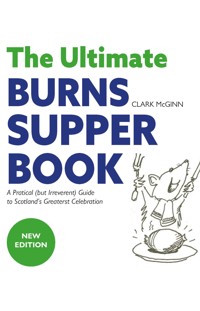
Clark McGinn, one of the foremost Burns Supper speakers in the world, presents The Ultimate Burns Supper Book; containing all the information you need to enjoy a Supper, whether as host, speaker or guest. It includes: complete run through of what to expect on the night, with a list of courses and speeches; what to wear; how to prepare and present speeches; common Burns Supper questions (and their answers!); Burns' greatest poems, including a full English verse translation of the Address to a Haggis and answers to your worries about eating haggis and drinking whisky. Auld Scotland wants nae skinking ware, That jaups in luggies; But if ye wish her gratfu' prayer, Gie her a Haggis! Address to a Haggis, ROBERT BURNS With detailed descriptions and instructions by a recognised and widely credited Burns supper speaker, this is a guide to a widespread and popular social event that has been practiced for 200 years. It is also an informal, light hearted introduction to an event that non Scots might otherwise find confusing or intimidating. BACK COVER: Everything you need to enjoy or arrange a Burns Supper - just add food, drink and friends. Clark McGinn, one of the foremost Burns Supper speakers in the world, presents The Ultimate Burns Supper Book. Containing all the information you need to enjoy a Supper, whether as host, speaker or guest, this book is full of advice, anecdotes, poetry and wit. Robert Burns is one of Scotland's greatest gifts to civilisation (along with whisky) and his poetry is rightly celebrated across the globe. The odds are you'll be invited to a Supper at some point in your life and you may even want to host a Supper of your own. Whatever the case, this book will provide you with all the information you need to have great fun at every Burns Supper as guest or host.- A complete run through of what to expect on the night, with a list of courses and speeches - Advice on what to wear - A section on how to prepare and present speeches - A list of common Burns Supper questions (and their answers!) - A selection of Burns's greatest poems, including a full English verse translation of the Address to a Haggis - Answers your concerns about eating haggis and extols the pleasures of drinking whisky. Some hae meat and canna eat, And some wad eat that want it, But we hae meat and we can eat, And sae the Lord be thankit - The Selkirk Grace, Robert Burns
Sie lesen das E-Book in den Legimi-Apps auf:
Seitenzahl: 199
Veröffentlichungsjahr: 2013
Das E-Book (TTS) können Sie hören im Abo „Legimi Premium” in Legimi-Apps auf:
Ähnliche















CLARK MCGINN was born in Ayr and started talking at an early age. He’s hardly stopped since. Educated at Ayr Academy and Glasgow University, he passed enough exams in-between speeches and debates to become a banker (in London and New York). He is happily married to Ann and currently lives in exile in Harrow-on-the-Hill. Since 1976 Clark has performed at Burns Suppers every year, delivering the Immortal Memory across the world, sharing his passion for the world’s favourite poet.
In 2009, Burns’s 250th anniversary year, Clark served as President of The Burns Club of London (No 1 on the roll of the Burns Federation) and gave the Address to the Poet at the Commemoration Service in Westminster Abbey on 25 January at Poets’ Corner.
Luath has also published hisThe Ultimate Guide To Being ScottishandThe Luath Kilmarnock Edition(where he contributed the Afterword), and his insider’s view of the financial crisis,Out of Pocket: How collective amnesia lost the world its wealth, again.
The Ultimate Burns Supper Book
A Practical (but Irreverent) Guide to Scotland’s Greatest Celebration
This Book Contains Everything You Need To Enjoy or Arrange a Burns Supper – Just Add Food, Drink and Friends
CLARK McGINN
LuathPress Limited
EDINBURGH
www.luath.co.uk
First published 2006
Reprinted 2007
New revised edition 2010
Reprinted 2012
eBook (this edition) 2013
ISBN (print): 978-1-906817-50-3
ISBN (eBook): 978-1-909912-33-5
Illustrations © A. Martin Pittock
Text © Clark McGinn 2006, 2010
The author’s right to be identified as author of this book under the Copyright, Designs and Patents Act 1988 has been asserted.
Contents
Acknowledgements
Brief Thoughts On A Second Edition
Foreword
SECTION ONE – THE HISTORY
‘Vehement Celebrations’ – Why do we bother in the first place?
The History of the Burns Supper – How did we get here?
The Man Himself
SECTION TWO – THE BURNS SUPPER
Before You Sit Down
Invitations
Dress – The kilt question (No, the other kilt question)
Paraphernalia – Is there a Scots word for kitsch?
Seating Plan and Tables
The Burns Supper in Order
The Menu (or Bill o’ Fare)
The Grace
Food
Soup and Starters
The ‘Address to a Haggis’
The Haggis Course
The Main Course
Sweets and Puddings
Cheese
Coffee
Drink
Wines
Aperitifs
At last, the Whisky!
Speeches
The Queen
The Immortal Memory
The Toast to the Lassies
The Reply to the Toast to the Lassies
Other Speeches
Music (How many pipers does it take to fill a semi?)
Entertainment
Poems and Songs
Music and Dance
Auld Lang Syne
SECTION THREE – YOUR DUTIES
As Audience
As Chairman/Organiser
As Speaker or Performer
SECTION FOUR – VARIATIONS ON A THEME
Buffeted by Circumstances
St Andrew’s Night and Tartan Day
Hogmanay
SECTION FIVE – A FEW LAST THOUGHTS
The Top Controversies
Having Fun!
APPENDICES
I ‘Address to a Haggis’ – A new verse translation
II Helpful Websites
III Sample Running Order
IV Some of the Great Poems for Reciting
To A Mouse
Holy Willie’s Prayer
My Love is Like a Red, Red Rose
A Man’s A Man For A’ That
Tam o’ Shanter
V Some Apposite Quotations
FOOTNOTES
To Ann
Acknowledgements
To Ann. Full Stop.
At least, that’s what I’d always promised myself I would write as a dedication if ever one of my writing projects actually got published, thus avoiding the ‘there are too many people to thank: Mrs Mackay, Mrs Macleod for her cakes…’ school of thanksgiving.
Then the temptation came to add a quip and my children, so it became:
To Ann, who feeds my sporran with milk and my ego with regularity, without whom this would not have happened, and to Claire, Eleanor and Emma, without whom this extra job would not be necessary. Then my Mum (who had the good sense to deliver me in Burns’s home of Ayrshire). But what about William Reid, my Rector at Ayr Academy, who gave me my first booking in 1976? Or the University of Glasgow (both the institution and its people) who taught me the way, the truth and the life? I can’t leave out Glasgow University Union, the pre-eminent student debating union in the world, whose training allowed me to win theObserverMace and whose ethos gave me the earth to plant the seed that grew into the World Student Debating Competition. The Union also gave me my partnerships with Jimmy, Liam and Charles, and their friendship. Not forgetting the English-Speaking Union. I, like so many others, am truly grateful to them for providing the opportunities and experience of the US Debating Tour, in my case happily with Mark. Of course, as always, I think of my good friends (who have heard the stories so many times before) and give especial thanks to Murray for providing the big picture and to Anne for drawing the wee pictures. My thanks, too, to Gavin, Cat and the Luath team.
Have I forgotten anyone? I could pad this out, but will reduce it to one last category and one last person: thank you to the relatively many people in the audience who have laughed at the relatively few jokes and thanks to Dad (as RB would have described him: ‘A gentleman who held the patent of his honours directly from Almighty God’) who, in his combined roles as a freemason and caterer probably saw more haggises addressed than any man alive.
Thank you.
Clark McGinn
Brief Thoughts On A Second Edition
Thank you to everyone who has made suggestions and comments about new ideas and old traditions that can help make a Burns Supper even more fun.
As we approach the end of Homecoming Year marking the 250th anniversary of RB’s birth in 1759, more people than ever before, in more countries than Burns could have imagined, have joined in the fun of the Burns Supper.
The explosive growth of folk joining in over the last decade is largely because we’ve realised that you can hold a great party with friends to celebrate the life and works of Scotland’s national poet in almost any size or shape of event – there isn’t a one-size-fits-all Burns night. I believe that the key ingredients are toasting Burns, sharing a Haggis and enjoying his songs and poems: everything else should match the people attending. Burns had a chameleon character which appealed to peasants and nobles, to rich and poor, to professors of the Scottish Enlightenment and bar room philosophers. His birthday party should be equally eclectic.
Enjoy it!
Clark McGinnDec 2009
Here’s a bottle and an honest friend!
What wad ye wish for mair, man?
Wha kens, before his life may end,
What his share may be o’ care, man?
Then catch the moments as they fly,
And use them as ye ought, man;
Believe me, happiness is shy,
And comes not aye when sought, man.1
Foreword
BURNS SUPPERS HAVE BEEN in existence for over 200 years, and there are probably more taking place now than at any time in their history. They are a unique phenomenon: the celebration of the life and work of a poet by companies, societies, schools and families across the globe. Some folk are dismissive of them, and some are protective of them, making them sound difficult and only for time-served Scots or those of Scots descent. Both groups are wrong. Burns aimed to speak for everyone who appreciates the fact that ‘the best-laid plans of mice and men’ are not to be relied on, the sad truth that ‘Man’s inhumanity to man / Makes thousands mourn’, the deep feeling of ‘My love is like a red, red rose’, or the sheer unwillingness so many have experienced on having to leave a pub at closing time. No other poet is celebrated across the world as Burns is, so he succeeded in that aim. He has over 1,000 clubs and societies dedicated to him; his books have been translated 3,000 times into more than 50 languages. Every Burns Supper has an Immortal Memory, because that is what each of them is: an immortal memorial to ‘Ranting, roving Robin’.
As that name Burns gave himself suggests, though, Burns Suppers are not meant to be po-faced affairs, but parties of good fellowship, where the speeches are short, the pleasure long, and we may be briefly ‘o’er all the ills of life victorious’. Holding a Burns Supper is easy and fun, and holding the Ultimate Burns Supper isn’t too difficult either. Not everyone who reads this book will want to hold an Ultimate Burns Supper every time, but after reading it, I can guarantee they will be able to hold one any time.
Clark McGinn, the author of this book, is one of the foremost Burns Supper speakers in the UK. But more to the point, he is also a peerless host and extremely experienced in Burns evenings of every kind, from the celebrations of hundreds to family occasions. We may not all have his energy, his wit or his verve, but here they are in print: an unfailing source of reference, a pocket guide to everything from neeps to sporrans, alike informed by his Ayrshire roots and adult experience of the Burns circuit in England, the US and elsewhere. Read Clark’s book and you will know what was wrong if you’ve ever been to a boring Burns Supper organised by someone else, and you’ll also make sure you never have a dull moment at one run by yourself. This is the best, the clearest, the sharpest, the only guide you will ever need.
Robert Burns is a global poet, an excuse for a worldwide party, and a major tourist business. When David Stenhouse of BBC Scotland commissioned World Bank Economist Lesley Campbell to conduct research on how much ‘Burns the Brand’ is worth to the Scottish economy, the answer was £157.25 million. If your Burns Supper is a corporate event, it’s not only a party: it’s a contribution to a continuing and growing business. Yours of course, but also that of Robert Burns.
Enjoy this book: you’ll laugh out loud – at least I did, and I’ve heard all the jokes before. Enjoy your Burns Supper: it will be better fun than ever after this. Enjoy Burns and his poetry, which, like his appeal, lives after him. A toast to all who buy this book to celebrate the Immortal Memory of Robert Burns.
Murray Pittock
Bradley Professor of English Literature and Dean of the Faculty of Arts, The University of Glasgow
SECTION ONE
The History
‘Vehement Celebrations’ – Why do we bother in the first place?
There was a lad was born in Kyle,
But whatna day o’ whatna style,
I doubt it’s hardly worth the while,
To be sae nice wi’ Robin2,3
SO – YOU HAVE BEEN invited to a Burns Supper, maybe for the first time, perhaps for the fiftieth – but what is it all about?
The first Burns Supper was held in 1801 just a few years after Burns’s death and since then the number of people – Scots and others – celebrating the birthday of Scotland’s national poet has grown and grown. On or about the anniversary of the birthof Robert Burns on 25 January, men and women of Scots birth, or Scottish descent, who are alumni of Scots universities and schools, who serve in Scottish regiments4or work for Scottish companies, who play golf, who like poetry, who revere Burns, who respect freedom and human spirit, who have a fondness for Scotland, who like wholesome food and good drink, who need little excuse for a party in good company; all these people meet in congregations from three or four to over a thousand folk, to celebrate the life, the works and the philosophy of Robert Burns.
Without a doubt, this is unique. There are no other spontaneous celebrations of poetry in the world,5while only one other historical figure (Lord Nelson6) receives the accolade of an annual toast to his ‘Immortal Memory’7(albeit on the anniversary of his glorious death, rather than of his humble birth). This personal cult is occasionally attacked by a school of academia that sees it as unstructured sentimental gush, but that’s flying in the face of a storm. Many speakers at Burns Suppers enlighten us, while many performers illuminate the words of the poems and songs. It is a great and, in the best of both senses, popular tradition.
The best book about the history and development of the Burns Supper is John Cairney’sImmortal Memories8and his extensive collection of speeches and stories is pretty definitive. So, the next question must be, ‘even if the Burns Supper is important – why another book?’
Fair point, dear Reader (though if you’re reading this it’s odds-on you’ve bought the blessed thing – but let’s pretend you haven’t for a couple of minutes).9
Many, upon receiving their first invitation to a Burns Supper, think of the upcoming event as a cold, boring, formal dinner-jacketed lecture where an elderly, male audience (suitably10lubricated by whisky) performs unintelligible traditional rituals to the sound of the bagpipes. This is enough to put many off – but unfairly. There are many ways to commemorate Burns and to enjoy a Burns Night – which should be a synonym for good food, good drink and good company arranged to celebrate the genius of the poet.
If a Burns Supper is about anything, it is about capturing the vital spark that Burns left and, for an evening at least, living with a greater insight into what it is not just to be Scottish, but to be human.
I hope that this book will do two things:
Explain, for those of you who are going to your first Burns Night (and for those who’ve been many times before, and still wonder about some aspect or other of the proceedings), the whys and hows of the evening, helping you enjoy your attendance by de-mystifying the events you will see and share in,and
Give practical advice, without preaching,11to those of you prompted (or delegated) to arrange a Burns Supper (whether for four or 400, in a hall or at home) and to those due to speak, recite, sing or perform.
In each case, I hope the end result will be a truly enjoyable and memorable evening.
Is this small volume definitive? No! But I have been travelling on the Burns road since addressing my first haggis in 1976 at Ayr Academy. So after thirty years I feel like Sergio McLeone – I know the Good, the Bad and the Ugly when it comes to Burns Suppers. That’s what I want to share with you – one Ayrshireman’s experiences and suggestions – in the hope that you’ll enjoy your party (however big or small) all the more. When studying at Glasgow, my Professor, Robin Downie, taught me about ‘The Adam Smith Problem’ – which arises out of Adam Smith’s two greatest works:An Inquiry Into The Nature And Causes Of The Wealth of NationsandThe Theory Of Moral Sentiments. The former is known as the bible of capitalism but the latter shows a common sense and communitarian approach to morality based on his concept of sympathy. How could one author believe both? Because the first isdescriptiveof the world today as we pass through it and try to make sense of it; the second isprescriptiveof how we should run the world tomorrow. This therefore is a merely descriptive book.12If some of the ideas strike a chord remember them. If none do, abuse them.
But in any case – whether as guest, entertainer or arranger – this will help you enjoy your own Burns Supper.
There are many traditions, accidents and quirks which make up anyone’s idea of the great Burns Supper, and so there are many points of disagreement and rival procedures or formats. I, for one, am glad that it is important enough to us to generate these controversies and novelties. I think this tradition of conflicting approaches is why Walt Whitman called Burns Night the ‘vehement celebrations’.13
Since 2000, about half my Immortal Memories have been given outside the UK (mainly in the USA, but also in Europe, the Middle East and Australia), where sometimes no one has been to a Burns Supper before – and one of the great happinesses I have is seeing those guests come back a second or third time to share in our big Burns party.
Robert Burns is worthy of remembrance: as a poet, first and foremost; as a man who faced the challenges and difficulties of life; as the National Bard of Scotland (whatever that might mean); and in many other contexts. I have been honoured to speak in many different countries and there has never been a time when the members of the audience, ‘the folk in the body of the kirk’, be they Burnsians or novices, Scots or foreigners, literary or drunk, haven’t thought for a moment, reflected on the truth, and seen something in their own lives or in the world opened up by the words and the immortal poetry of Robert Burns.
In a world of haste and thoughtlessness that’s no bad thing.
The History of the Burns Supper – How did we get here?
I lang hae thought, my youthfu’ friend,
A something to have sent you,
Tho’ it should serve nae ither end
Than just a kind memento:
But how the subject-theme may gang,
Let time and chance determine:
Perhaps it may turn out a sang;
Perhaps, turn out a sermon.14
After the sermon of the first section, let us join in the song of the Burns Supper. The aim of this small book is not to set rules or precepts on how a Burns Suppermustbe held, but to give an introduction to the many parts for those who are unfamiliar; to add a few side swipes at many who believe themselves ‘expert’; and to help you have an enjoyable and memorable evening in conjunction with the hundreds of thousands of folk across the globe who celebrate the Burns Supper.
The very first supper, held in Burns Cottage itself in 1801, saw nine ‘honest men’ of Ayr sit at table.15With a simple genius, the Reverend Hamilton Paul, who organised the celebration, hit on all of the key ingredients which we still see today:
Addressing the Haggis– and a big bowl of haggis, neeps an’ tatties for all.
The Toast to theImmortal Memoryof Robert Burns.
Goodfood, plenty ofdrinkand convivialcompany.
Recitationandcelebrationof the works of our poet.
Within a few years the great and ancient Burns Clubs grew across Scotland – originally at Greenock and Paisley16– and within ten years, the Burns Supper was a common January occurrence in cities, towns, corporations and institutions, Masonic lodges and church halls. Over the years many barnacles have become attached to the Supper Ship but I feel that you and your mate could form a perfectly canonical Burns Night eating haggis suppers17in a chippie off the Gallowgate in Glasgow with two cans of Tennents to wash them down. (The wee chippie man might get a bit worried about the addressing knife – but if you’re relatively discrete you should manage to escape a night in the Glasgow Constabulary’s hospitality.)18
The single, most important purpose of the Burns Supper is to bring enjoyment in the spirit of Burns’s life and poems. So here are the only three precepts I would lay down to guide you through this short and helpful book:
Have as many or as few people as you want to invite.
Have as much food and drink as you can afford.
Have as much or as little formality as you all feelcomfortable with. (But don’t forget a haggis, a poem and a toast to RB!)
In the next section, we will look at Burns’s life, after which the plan is to go through a typical Burns Supper in chronological order – from sending out or receiving the invitations, to the proceedings of the night both in terms of the dinner and the entertainment. At the end we will look at smaller suppers and ways to adapt the format to any shape or size of company.
So with those ground rules, as they say in Glasgow: ‘Let’s get tore in’…
The Man Himself
For me, I’m on Parnassus’ Brink,
Rivin’ the words to gar them clink;
Whyles daez’t wi’ love, whyles daez’t wi’ drink
Wi’ jads or Masons,
An’ whyles, but ay owre late I think,
Braw sober lessons.19
This is the most difficult chapter as I want to give a short biography of the phenomenon we know as Robert Burns. I logged on to Amazon to see how many books on, and biographies of, RB were in print – an extraordinary 5,385! And each has a slightly different view. There’s the
Plowman/Poet/Radical/Wha Daur Meddle Wi’ Me School.
Demon Lover/Drinker/Writer School.
Romantic/Lay Me Doon an’ Die School.
National Bard of Scots Wha Hae School.
Which is the true reflection of the man and his works? That is one of the appeals and challenges of Burns – each of us needs to take time and thought (whether by listening to Immortal Memories or reading or discussing) to reach our own view of his many facets. But that’s secondary – the first and most important thing is the immediacy, the initial appeal of his poems.
This brief outline of RB’s life is too short and my excuse (believe it or not) is that I’ve endeavoured to make sure that everyone feels it’s insufficient. Maybe that will encourage you to find out more!
1759 In Alloway, beside Ayr, on 25 January, in a small clay-walled, thatched cottage, Robert Burns is born to a Kincardineshire gardener and his wife – William Burnes20and Agnes Brown Burnes. Over time, the family grows to four boys and three girls.
1765 William, in the self-help tradition still popular in Scot-land, hires a young schoolmaster, John Murdoch, to teach RB and his younger brother, Gilbert. They spend three years under his care. (RB may have been a ‘ploughman poet’ but don’t ever assume that he was uneducated.) RB attends school off and on over the coming years.
1766 In an attempt to expand his business, William decides to give up the market garden beside the cottage and become a tenant farmer. He rents Mount Oliphant farm (this proves to be a disastrous choice). Robert and Gilbert are needed to work the farm but William teaches them himself while RB enjoys his mother’s singing of old Scots songs and rhymes.
1772 Murdoch returns to Ayr to teach at Ayr Academy21and RB joins him for three weeks, mastering Grammar, helping in a dramatic production, and learning basic French.
This year’s harvest sees RB working the fields beside an older girl, Nellie, who has been given a poem by another boy. RB trumps this offering in his first poem, ‘Handsome Nell’.
1774/76 Mount Oliphant yields little as a farm – hardly enough to keep the Burnes family alive. The hard work and privation begin to tell on William Burnes, and many think that these years took their toll on RB’s health as well.
1777 William has the opportunity to break the lease at Mount Oliphant as a neighbour wants to increase his farm. The family move to a new tenancy at Lochlea.
1779/80 While the first farm was in the back of beyond, Lochlea is near the rather cheerful town of Tarbolton, easily within reach for the older Burnes children. RB enjoys the company in the various taverns (probably exaggerating the amount he drinks).22




