Table of Contents
The Blackwell Philosophy and Pop Culture Series
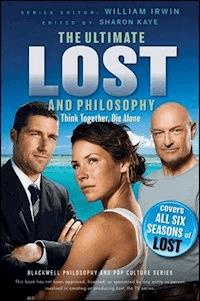
Title Page
Copyright Page
Introduction
Part One: F Is for Fortune
Part Two: O Is for Origin
Part Three: U Is for Unity
Part Four: N Is for Necessity
Part Five: D Is for Destiny
PART ONE - F IS FOR FORTUNE
Chapter 1 - LOST IN LOST’S TIMES
Losing the Plot
Constants and Variables
We’re All in This Together
“We Have to Go Back”
The Course of the Future
The Shape of Things to Come
Whatever Happened, Happened
The Total Experience
NOTES
Chapter 2 - IMAGINARY PEANUT BUTTER
Building the Orchid Station: Basic Concepts of Time Travel
Whatever Happened, Happened
We’re the Variables
Loop, Dude
One Miles? Two Miles? How Many Versions of Miles Can There Be?
There’s No Place Like Home
Well, What Goes Around, Comes Around
None of It Matters Anyway, Then, Does It?
Chapter 3 - IT DOESN’T MATTER WHAT WE DO
The Metaphysics of Time Travel
Shooting Benjamin Linus
The Man in Black: Manipulating Time Travel
The Incident
The Rules Don’t Apply to You
Time Travel Ethics in Lost
NOTES
Chapter 4 - IF SAWYER WEREN’T A CON MAN, THEN HE WOULD HAVE BEEN A COP
Counterfactual Reasoning
Counterfactuals Count
Closeness among Possible Worlds, or Why It Just Seems Wrong That Jack Fathered ...
NOTES
PART TWO - O IS FOR ORIGIN
Chapter 5 - LOST IN DIFFERENT CIRCUMSTANCES
Just Testing
What a Bunch of Characters!
The Ball’s in Your Court!
Life Goes On
NOTES
Chapter 6 - “DON’T MISTAKE COINCIDENCE FOR FATE”
Take Your Chances
Take Your Pick
Jung and Locke
The Birthday Paradox
It’s a Small World, After All
Coincidence vs. Conspiracy
Jacob Have I Loved
It’s Hurley
NOTES
Chapter 7 - LOST AND THE QUESTION OF LIFE AFTER BIRTH
Why Are We Here?
How Does It All Make Sense?
Is This Life the Whole of What There Is?
Art and Entertainment
NOTES
Chapter 8 - SEE YOU IN ANOTHER LIFE, BROTHER
The Man of Science
The Man of Faith
The Failsafe
It Worked
PART THREE - U IS FOR UNITY
Chapter 9 - LOST’S STATE OF NATURE
Lining Up for Peace
Human Nature and Natural Man
Amid the Wreckage
The Longer Haul
Over or Under the Language Barrier
Confidence and the Con Men
Roles and Rules
Tit for Tat
Gaining Trust from the Past
NOTES
Chapter 10 - FRIENDS AND ENEMIES IN THE STATE OF NATURE
Locke: Reason, Rights, and Torture
Rousseau and Hume: Friendship and Feeling
Who Needs Hobbes?
About Schmitt
The Final Solution
NOTES
Chapter 11 - IDEOLOGY AND OTHERNESS IN LOST
Ideology: Drinking the Kool-Aid
Ideology and the Dharma Initiative: A Snow Globe
The Others
Fearing the Others: “Run, Hide, or Die”
Recognizing the Others: “There’s a Line”
Becoming the Others: “The Good Guys”
“Lost”
PART FOUR - N IS FOR NECESSITY
Chapter 12 - ESCAPING THE ISLAND OF ETHICAL SUBJECTIVISM
How Important Are Jack’s or the Man in Black’s Approval or Disapproval?
Tolerance and the Importance of Disagreement
Why neither Hurley nor the Dharma Initiative Can Make It So
If Not on the Island of Ethical Subjectivism, Then Where?
Chapter 13 - LOST TOGETHER
“You Don’t Have What It Takes”
“You’re Not Wanted”
What Do Jack, Locke, and the Rest of Us Owe Our Parents?
“Hey, Freckles”
“I’m Not One of His Friends”
The Source?
“I’ve Done Everything You Wanted Me to Do!”
“Dead Is Dead” (or Is It?)
NOTES
Chapter 14 - SHOULD WE CONDEMN MICHAEL?
The Character
The Theory
The Button: How Prima Facie Duties Work
Saving Walt: Prima Facie Duties, Actual Duty, and Equilibrium
Meet Kevin Johnson
“Hey, Hurley ... If You See Libby Again ... Tell Her I’m Very Sorry”
We Never Really Go It Alone
NOTES
Chapter 15 - THE ETHICS OF OBJECTIFICATION AND THE SEARCH FOR REDEMPTION IN LOST
You Kant Take It with You
Milling Around
The Virtue of Virtue
Redemption Redeemed
Real World Island
PART FIVE - D IS FOR DESTINY
Chapter 16 - THE NEW NARNIA
Myth, Not Allegory
Into the Mythic World
Tested by Crisis
“It Has Never Been Easy”: The Struggle for Faith and the Quest for Redemption
The White Witch vs. Asian and the Man in Black vs. Jacob
“Live Together, Die Alone”: Redemption and New Community
NOTES
Chapter 17 - I ONCE WAS LOST
“I Know There’s Someone There”
“Welcome to the Wonderful World of Not Knowing the Hell What’s Going On”
“We’re Going to Have a Rational Conversation Regarding Our Next Move”
“I’m a Coward”
“So Much for Fate”
“You’re More Lost Than You Ever Were”
“I Believe in What I Can See”
“I Have Made My Peace”
“The Universe Has a Way of Cross-Connecting”
“Free Will Is All We Really Got, Right?”
NOTES
Chapter 18 - THE TAO OF JOHN LOCKE
“I’m Good at Putting Bits and Pieces Together”
“This Is Destiny. This Is My Destiny.”
Man of Science, Man of Faith
“I Was Looking for Something ... It Found Me”
NOTE
NINETEEN - LOST METAPHYSICS
Lost’s Narrative Structure
Lost Metaphysics
Annihilation of Oppositions
Keep the Needle on the Record
APPENDIX - Who are Locke, Hume, and Rousseau? The Losties’ Guide to Philosophers
CONTRIBUTORS
INDEX
The Blackwell Philosophy and Pop Culture Series
Series Editor: William Irwin
South Park and PhilosophyEdited by Robert Arp
Metallica and PhilosophyEdited by William Irwin
Family Guy and PhilosophyEdited by J. Jeremy Wisnewski
The Daily Show and PhilosophyEdited by Jason Holt
Lost and PhilosophyEdited by Sharon Kaye
24 and PhilosophyEdited by Jennifer Hart Weed, Richard Davis, and Ronald Weed
Battlestar Galactica and PhilosophyEdited by Jason T. Eberl
The Office and PhilosophyEdited by J. Jeremy Wisnewski
Batman and PhilosophyEdited by Mark D. White and Robert Arp
House and PhilosophyEdited by Henry Jacoby
Watchmen and PhilosophyEdited by Mark D. White
X-Men and PhilosophyEdited by Rebecca Housel and J. Jeremy Wisnewski
Terminator and PhilosophyEdited by Richard Brown and Kevin Decker
Heroes and PhilosophyEdited by David Kyle Johnson
Twilight and PhilosophyEdited by Rebecca Housel and J. Jeremy Wisnewski
Final Fantasy and PhilosophyEdited by Jason P. Blahuta and Michel S. Beaulieu
Alice in Wonderland and PhilosophyEdited by Richard Brian Davis
Iron Man and PhilosophyEdited by Mark D. White
True Blood and PhilosophyEdited by George Dunn and Rebecca Housel
Mad Men and PhilosophyEdited by James South and Rod Carveth
30 Rock and PhilosophyEdited by J. Jeremy Wisnewski
The Ultimate Harry Potter and PhilosophyEdited by Gregory Bassham
This book is printed on acid-free paper.
Copyright © 2011 by John Wiley & Sons. All rights reserved
Published by John Wiley & Sons, Inc., Hoboken, New Jersey Published simultaneously in Canada
No part of this publication may be reproduced, stored in a retrieval system, or transmitted in any form or by any means, electronic, mechanical, photocopying, recording, scanning, or otherwise, except as permitted under Section 107 or 108 of the 1976 United States Copyright Act, without either the prior written permission of the Publisher, or authorization through payment of the appropriate per-copy fee to the Copyright Clearance Center, 222 Rosewood Drive, Danvers, MA01923, (978) 750-8400, fax (978) 646—8600, or on the web at www.copyright.com. Requests to the Publisher for permission should be addressed to the Permissions Department, John Wiley & Sons, Inc., 111 River Street, Hoboken, NJ 07030, (201) 748-6011, fax (201) 748-6008, or online at http://www.wiley.com/go/permissions.
Limit of Liability/Disclaimer of Warranty: While the publisher and the author have used their best efforts in preparing this book, they make no representations or warranties with respect to the accuracy or completeness of the contents of this book and specifically disclaim any implied warranties of merchantability or fitness for a particular purpose. No warranty may be created or extended by sales representatives or written sales materials. The advice and strategies contained herein may not be suitable for your situation. You should consult with a professional where appropriate. Neither the publisher nor the author shall be liable for any loss of profit or any other commercial damages, including but not limited to special, incidental, consequential, or other damages.
For general information about our other products and services, please contact our Customer Care Department within the United States at (800) 762-2974, outside the United States at (317) 572—3993 or fax (317) 572—4002.
Wiley also publishes its books in a variety of electronic formats. Some content that appears in print may not be available in electronic books. For more information about Wiley products, visit our web site at www.wiley.com.
Library of Congress Cataloging-in-Publication Data:
The ultimate Lost and philosophy : think together, die alone / edited by Sharon Kaye.
p. cm.—(The Blackwell philosophy and pop culture series ; 35)
Includes index.
ISBN 978-0-470-63229-1 (paper : alk. paper);ISBN 978-0-470-93073-1 (ebk);ISBN 978-0-470-93075-5 (ebk);ISBN 978-0-470-93078-6 (ebk)
1. Lost (Television program) I. Kaye, Sharon M.
PN1992.77.L67U48 2010
791.45’72—dc22
2010028339
INTRODUCTION
Lostand F.O.U.N.D.
As an avid fan of Lost, I’ve been trying to figure out what it is about this show that has such a hold on me. Other fans I’ve talked to feel the same way. It sinks its teeth into you and won’t let go. After wondering about it for some time now, I think I finally figured out what it is. And so I have a question for you.
Have you ever been lost? Or rather, how did you feel when you were lost? Because you have been. We all have. Few of us have been stranded on a tropical island, but we have all had those moments when, far from home, we are suddenly struck by the horror that we will never find our way back.
[Fade to flashback.]
It’s a meltingly hot, sunny day, June 1974, and we’re at the annual summer carnival. The carnival comes to Madison, Wisconsin, for ten days every summer. It is the highlight of the year. Kids spend long, grueling hours babysitting, mowing lawns, and begging their parents for cash to buy the longest possible strip of tickets. One ticket will only get you on a baby ride; the best rides—the ones that gave you bat belly and bring you closest to mystical transcendence—cost four.
[Carnival music. Chillingly alluring. Then children’s voices.]
“Are you going on the Zipper this year?”
“No way!”
“Wus!”
“Well, not if they have that same guy strapping people in.”
“It’s never the same guys.”
“That’s true. Okay, I get the outside seat ...”
At the carnival there are dangers of every kind, and each child is called on to perform at least one truly outstanding feat of bravery. I didn’t know any of this, though. I was only three years old, tagging along with the big kids for the first time.
True, I spent most of my time with my parents, observing my sisters and their friends, sampling the cuisine, and taking in the occasional baby ride. But my special challenge came at the end of the day.
There were seven of us, all sweaty and a bit dazed but still chattering away, as we trooped through the converted farmer’s field back to our car. It was a 1967 Volvo. A midnight-blue two-door with a brick-red vinyl interior and no seatbelts. This was the age of innocence, when you packed as many people into cars as you could fit, the littlest ones perching on the biggest ones’ laps.
Getting everyone in was a bit of a trick that day, with all of our carnival paraphernalia and the seats being hot enough to burn striped patterns on your butt right through your terry-cloth short shorts. Everyone vied for the best positions, and there was some bickering. Yet soon enough the little Volvo was on its way. Windows were cranked all the way down, and a windy discussion of the plan for the rest of the evening commenced.
Then, halfway home, Marcy, our neighbor, suddenly said, “Where’s Sherri?”
“She’s in the front.”
“No, she isn’t. She’s in the back.”
“Come on, quit kidding around.”
“We’re not kidding. She isn’t here.
“Oh, my gosh! We left her.”
It never occurred to anyone, not even to my parents, that I may have been snatched up by a pervert. (Such was the age of innocence.) Their only theory was that I must have somehow been hit by a car. As they sped back to the fairgrounds, my mother scanned for emergency vehicles. Everyone was asking the same question: Why didn’t she get in the car?
Why, indeed. It remains a mystery.
There were no emergency vehicles in the parking lot, and I was nowhere to be seen amid the cars. On reentering the carnival gates, however, my dad soon spotted me. I was sitting serenely on a bench between two old ladies. They had apparently found me wandering and bought me a soda. Although I was not crying, my face was red and streaked.
When I heard my name and caught sight of my family, a crushing wave of mixed emotions passed across my face. I welcomed their enthusiastic hugs and kisses, but I didn’t answer anyone’s questions, and I was quiet for the rest of the night. Once you have been lost, you are never quite the same.
The ABC hit drama Lost speaks to our deepest fear: the fear of being cut off from everything we know and love, left to fend for ourselves in a strange land. This fear is a philosophical fear, because it speaks to the human condition. It forces us to confront profound questions about ourselves and the world.
Why am I here? Does my life matter? Do I have a special purpose? Can I make a difference?
[Fade to flash-sideways. More carnival music.]
How can it already be time to go home?
I am watching my feet as I shuffle along the fairgrounds. Bits of hay and interesting pieces of garbage are scattered about everywhere.
I stop to examine a paper boat containing a half-eaten hot dog. Though it looks just like many hot dogs I have eaten before, I strongly suspect I will not be allowed to taste it. I glance up to see if anyone is watching.
“Sherri, come on!” my sister shouts.
She does not see me pick up the hot dog. I grip it tighter and hurry along. I will bide my time and find the right moment for at least a taste.
My cheeks feel hot from a long afternoon in the sun, and the cotton candy sugar high that had me singing “Baa Baa, Black Sheep” at the top of my lungs not long ago has crashed hard, leaving me lethargic and irritable.
We reach the front gate of the carnival. My parents turn to see that everyone is in tow. My sister stops to take my hand. I shake her off, whining, “No!”
“Well, come on, then.”
Everyone is heading for the Volvo. I know that once we reach it, my salty, greasy treat will be discovered. I look around desperately for cover.
A white van is parked not far ahead. The side door slides open. Just inside sits the clown who made me a kitty cat out of a long skinny pink balloon earlier today. He is eating a hot dog and looking right at me.
I slow to a stop, staring. He beckons me to come to him.
I cast a glance at my family, already loading the detritus of our day into the trunk, and begin to angle toward the van.
As I think about how tragic that day at the carnival might have turned out, I begin to wonder more about the two old ladies who saved me. Who were they? Was one of them me—time traveling from the future? What if they were two different future flash-sideways versions of me teaming up to make sure that I didn’t come to an untimely end?
As I ask myself these questions, I begin to feel that my life may be important in ways I have not yet realized. Once you have been found, you are never quite the same.
The nineteen essays contained in this volume search for answers through the deepest philosophical labyrinth ever portrayed on television. We published the first version of this volume, Lost and Philosophy, in 2008, after the show’s third season. The ultimate guide you now hold in your hand updates its best chapters in light of the second half of the series and adds six new chapters. I have organized them loosely into five main groups.
Part One: F Is for Fortune
The first set of essays probes the issue of time travel and alternate time lines, which became such an integral component of the show. Great thinkers throughout history have suggested that time travel is possible. What about the resulting metaphysical paradoxes, though? Metaphysics is the branch of philosophy that concerns phenomena that lie beyond the explanation of science—but not beyond our philosophers.
Part Two: O Is for Origin
The second set of essays explores crucial epistemological issues raised by the show. Epistemology is the branch of philosophy that concerns the nature and extent of human knowledge. What have our survivors learned about the capacities and limits of the human mind?
Part Three: U Is for Unity
The third set of essays looks at the most pressing social and political issues raised by the show. Social and political philosophy concerns all of the difficulties that arise when humans try to live together and form a unit larger than the individual. The island is a microcosm of the power dynamics we observe in our own communities.
Part Four: N Is for Necessity
The fourth set of essays examines the most heart-wrenching ethical issues raised by the show. Ethics is the branch of philosophy that concerns values, along with the nature of right and wrong. Being in such extreme circumstances, the characters on Lost face difficult decisions that reveal insights for the rest of us to consider in our own moral lives.
Part Five: D Is for Destiny
The fifth set of essays investigates the most intriguing religious issues raised by the show. Philosophy and religion are historically two sides of the same coin. By applying a rational analysis to some of the mystical moments portrayed on Lost, we can more fully appreciate their significance.
As a bonus, a handy appendix that gives you the lowdown on the philosophers’ names that crop up on the show is included at the end of this volume. I hope you enjoy it as much as I did. On behalf of the authors, let me wish you the best of luck in your search for answers.
PART ONE
F IS FOR FORTUNE
1
LOST INLOST’S TIMES
Richard Davies
Lost and Losties have a pretty bad reputation: they seem to get too much fun out of telling and talking about stories that everyone else finds just irritating. Even the Onion treats us like a bunch of fanatics. Is this fair? I want to argue that it isn’t. Even if there are serious problems with some of the plot devices that Lost makes use of, these needn’t spoil the enjoyment of anyone who finds the series fascinating.
Losing the Plot
After airing only a few episodes of the third season of Lost in late 2007, the Italian TV channel Rai Due canceled the show. Apparently, ratings were falling because viewers were having difficulty following the plot. Rai Due eventually resumed broadcasting, but only after airing The Lost Survivor Guide, which recounts the key moments of the first two seasons and gives a bit of background on the making of the series.
Even though I was an enthusiastic Lostie from the start, I was grateful for the Guide, if only because it reassured me that I wasn’t the only one having trouble keeping track of who was who and who had done what.
Just how complicated can a plot become before people get turned off? From the outset, Lost presented a challenge by splicing flashbacks into the action so that it was up to viewers to work out the narrative sequence. In the fourth and fifth seasons, things got much more complicated with the introduction of flash-forwards and time travel. These are two types of narrative twists that cause special problems for keeping track of a plot and that also open a can of philosophical worms about time itself.
Lesen Sie weiter in der vollständigen Ausgabe!
Lesen Sie weiter in der vollständigen Ausgabe!
Lesen Sie weiter in der vollständigen Ausgabe!
Lesen Sie weiter in der vollständigen Ausgabe!
Lesen Sie weiter in der vollständigen Ausgabe!
Lesen Sie weiter in der vollständigen Ausgabe!
Lesen Sie weiter in der vollständigen Ausgabe!
Lesen Sie weiter in der vollständigen Ausgabe!
Lesen Sie weiter in der vollständigen Ausgabe!
Lesen Sie weiter in der vollständigen Ausgabe!
Lesen Sie weiter in der vollständigen Ausgabe!
Lesen Sie weiter in der vollständigen Ausgabe!
Lesen Sie weiter in der vollständigen Ausgabe!
Lesen Sie weiter in der vollständigen Ausgabe!
Lesen Sie weiter in der vollständigen Ausgabe!
Lesen Sie weiter in der vollständigen Ausgabe!
Lesen Sie weiter in der vollständigen Ausgabe!
Lesen Sie weiter in der vollständigen Ausgabe!
Lesen Sie weiter in der vollständigen Ausgabe!
Lesen Sie weiter in der vollständigen Ausgabe!
Lesen Sie weiter in der vollständigen Ausgabe!
Lesen Sie weiter in der vollständigen Ausgabe!
Lesen Sie weiter in der vollständigen Ausgabe!
Lesen Sie weiter in der vollständigen Ausgabe!
Lesen Sie weiter in der vollständigen Ausgabe!