


Erhalten Sie Zugang zu diesem und mehr als 300000 Büchern ab EUR 5,99 monatlich.
- Herausgeber: Independent Thinking Press
- Kategorie: Bildung
- Sprache: Englisch
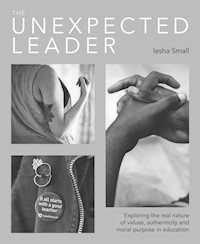
Iesha Small's 'The Unexpected Leader: Exploring the real nature of values, authenticity and moral purpose in education' is for school leaders who want to make a difference but feel they aren't obvious leadership material.This is a book about people. A book that humanises school leaders and tells their stories. A book in which school leaders reveal their authentic selves and their journeys to leadership. Iesha set about writing 'The Unexpected Leader' as a senior leader who looked around and struggled to find role models whose experiences she could learn from. She wanted to speak honestly with like-minded individuals about being what others didn't expect in a leadership package - introverted, unassuming, open about their mental health. Iesha did, however, manage to identify and interview nine such school leaders - and in this book she relates their stories alongside her own, in words and photographs, to explore how thinking or acting differently need not be a barrier to school leadership, but can actually prove to be an invaluable asset. In doing so she shatters the myths and conventional ideas around who/what makes a good school leader, and champions a more humane brand of leadership which is true to the individual and still benefits the students and staff they serve. Furthermore, Iesha offers insights into themes such as imposter syndrome, integrity, failure and ambition, and frames them in relation to her own leadership journey in order to empower and encourage all leaders - including leaders-in-waiting - to step up and set out on their own individual pathways.Each chapter starts by inviting you, the reader, to consider your own circumstances and feelings, before Iesha's own experience is briefly outlined so you know you aren't alone. This is followed by an exploration of the leadership journey of the interviewed school leader, featuring key episodes that delve into how they have taken ownership of their professional and personal lives. The transferrable lessons and practical takeaways from their experiences are then discussed in order to guide you towards more effective leadership, while being unashamedly who you are. Finally, each chapter concludes with a final message or thought from the school leader in question.Suitable for anybody in or aspiring to school leadership.
Sie lesen das E-Book in den Legimi-Apps auf:
Seitenzahl: 267
Veröffentlichungsjahr: 2019
Das E-Book (TTS) können Sie hören im Abo „Legimi Premium” in Legimi-Apps auf:
Ähnliche



















Praise for The Unexpected Leader
The Unexpected Leader is a quite remarkable book full of subtle and important insights. Using the professional and personal life stories of a range of leaders, Iesha shines a light on the varied routes into leadership roles. The beautifully crafted accounts of individual stories combined with her own experiences create a rich hinterland to the motivations, the fears and the joys of this work. It is an important read for all in education and will be particularly helpful for young leaders who might be doubting themselves. Heart-warming, inspiring and insightful in equal measure.
Mary Myatt, writer and school improvement adviser
Honest, open, insightful and, above all, fascinating. Iesha Small has written a seriously important book about educational leadership.
Jeffrey Boakye, teacher and author of Hold Tight: Black Masculinity, Millennials and the Meaning of Grime
Iesha Small’s quiet strength shines through this book via the conversations she has with others who may not fit the more commonly held preconceptions of what people who run schools are actually like. Providing a fascinatingly human insight into what it takes to manage (in more ways than one) in an educational setting, Iesha talks to those who have followed their own paths to positions of leadership and also offers her own unique story as a way of broadening the narrative around the people who take on this great responsibility.
Tom Starkey, education consultant and writer
What teachers need now is a frank and open discussion on the ways in which teaching can impact upon them as individuals, and The Unexpected Leader is full to the brim with the sheer humanity of the profession – with the highs and the lows laid out for us all to share.
Authenticity has always been Iesha Small’s watchword – it doesn’t get much more authentic than this book. A must-read.
Bennie Kara, Deputy Head Teacher, Aureus School
While hundreds of titles have already been published on the demands and complexities of school leadership, this brave and honest book explores the issues of workload, imposter syndrome and mental health through the stories of real people. Between these accounts and Iesha’s own personal insights, the implications of the challenges facing the education system – such as funding, accountability and teacher recruitment and retention – are all brought to life. Iesha’s refreshingly simple yet convincing narrative challenges the stereotypical view of what makes a great leader and tells us it’s okay to be different. The experiences she has collated, together with her analysis of the lessons we can learn from them, make The Unexpected Leader an invaluable resource for teachers, leaders and policy makers alike.
Natalie Perera, Executive Director and Head of Research, Education Policy Institute
Every now and again a book grips you. You start reading out of curiosity and find it was written for you. The Unexpected Leader is one of those books. Iesha Small draws you in to a conversation around the complexity of the stories we tell ourselves about our value, challenges your own inconvenient truths and then signposts a way to deeper authenticity and fulfilment. It’s disarming and empowering in equal measure, and it’s the book I wish I’d had at the start of my own leadership journey.
Jaz Ampaw-Farr, “Resilience Ninja” at Why First Ltd
The Unexpected Leader is a must-read for those who find themselves thrust into an unfamiliar leadership role where they don’t quite “fit”. Iesha’s honest account of her own journey into leadership is humbling and uplifting, offering hope to those who may be struggling with the challenges that the role can bring. And by carefully weaving her own experiences around the narratives of other “unexpected” leaders, her moral integrity shines through as she shares a set of key principles to help leaders lead with values-driven integrity, even during the toughest of times.
Iesha’s alternative model of what leadership can look like is much needed, helping us to recognise that leaders don’t have to fit into a pre-defined mould. It is the perfect antidote to the many management books that offer off-the-shelf solutions to improving standards without paying due attention to the fact that leadership is a messy, difficult and sometimes fraught experience.
I hope that as more people read this book, it brings them the tools and confidence to fully embrace their strengths as unexpected leaders. There is plenty here for the education sector as a whole too as it grows in its ability to recognise and nourish these individuals on their journeys.
Anna Trethewey, Deputy Director, LKMco CIC
With startling frankness and openness Iesha Small uses her own experience in school leadership as the starting point for an inquiry into the challenges, the obstacles and the possibilities for leaders in education. What follows is a series of in-depth interviews which, like the best conversations, stay with you long after they are over.
Darren Chetty, Teaching Fellow, UCL Institute of Education
Preface
I left the hall where the whole staff were attending a training day on our first day back after the summer holidays and went into the car park, where I began to cry uncontrollably. Huge, body-racking sobs. I don’t cry very often and it seemed that I did all my crying for the year to that point in one go. I rang my partner and told her that something was wrong, but I wasn’t quite sure what. All I can really remember saying is, “I can’t do this again … I can’t do it again …” as I sat on the curb, distraught and inconsolable. I can’t remember much detail of that conversation, but I did try to go back into work later that day, and again the next, and had the exact same reaction for no obvious reason. Just stepping onto the premises seemed to trigger it. It became apparent that I was temporarily not in a fit state to lead a department, let alone teach my classes. In fact, I really shouldn’t have been at work at all. Shortly afterwards, I was signed off sick by my doctor. I can look back now and appreciate that this was the start of a major breakdown, which ended up lasting several months, but I don’t think I could have identified that at the time. I had permanently left that school by the end of the calendar year.
* * *
After my breakdown, I decided that I never wanted to be the cause of anybody I led feeling that way, or experiencing any form of work-related stress, anxiety or depression due to poor management or unrealistic working expectations. I regrouped and found a new school, where I took a sideways move into a similar position as head of maths. I felt trusted, so I took chances and created space for my team to do the same where possible. I was managed well and I learnt how to be a better manager myself. I found ways to reduce my team’s workload so that they could concentrate on what was most important, great teaching.
I discovered that I could help people improve their performance without holding a metaphorical stick all the time, and was delighted to uncover the strengths of team members who had previously been underdeveloped or written off. I watched them gain confidence and thrive, as my own confidence also rebuilt. This environment – where I was accountable but trusted, listened to and given autonomy – gave me the building blocks of a more compassionate working philosophy. I was promoted internally but it was on a fixed-term basis – and when that ended, it felt like time to move on, so I took up an assistant head position in a different secondary school in the Home Counties. For a while, things were good, but then they started to unravel again.
It slowly begun to dawn on me that something wasn’t quite right. If you’d asked me then, I’m not sure I could have given articulate, specific reasons why I felt the way I did. There was a lot going on in various aspects of my life and, whatever the particulars were, it all added up to me realising that I just wasn’t happy.
I remember waking up one day, possibly during February half term, thinking, “If my life were to continue like this for the next five years, would I be happy?”
The answer was a resounding no. The thought made me want to cry.
“What about if it were just for one more year?”
I felt exactly the same sinking feeling. Even the thought of moving schools again and starting the new school year in September somewhere else, but with all aspects of my life as they were, made me feel real despair. Still, I kept going, putting one foot in front of the other because there wasn’t anything obviously wrong. I had a nagging feeling that it didn’t quite seem like I was going the right way. Like I may have taken a wrong turn or lost my bearings on the map. But the scenery was familiar and other people were telling me that this was the right direction. What was the problem? What was wrong with me?
* * *
As I write this preface, I am sitting overlooking my parents-in-law’s garden, watching the wind blow through the trees when I look up from my computer screen. My personal life is happy and full of laughter, and the episode that I describe at the start feels like it happened to another person. During the time I spent off work after my breakdown, I slowly started to feel better and slightly less numb, despondent and overwhelmed. This slow process led to me re-evaluating all aspects of my life. To improve my mental health I decided that I needed to be more creative, so I started using photography to tell the stories of ordinary people who have experienced depression in some way. I’ve always been interested in people’s stories, and I began to wonder about the experiences of other school leaders and how they cope with the demands of the job. I got talking to people in my network and soon realised that feelings of being personally out of sync with your working life and with the expectations of others were, sadly, more common than I’d realised. I set out to gather the stories of other leaders that I could identify with in some aspect. In sharing them, I hope to show people that they are not alone, as I have often felt.
It seems only fair that in a book in which each interviewee – each one involved in school leadership – has given me hours of their time to share the highs and lows of their professional and personal selves that I should mirror their generosity and candour by sharing my own journey. This is not a book about having the answers, although you will find insights and advice along the way. None of the leaders here has all the answers, and I certainly don’t. You could say that part of the process of writing this book was to help me find some, or at least to help me work out what my next step might look like. I hope that by reading my story, and those of the leaders I interviewed, you will recognise us all as fellow vulnerable travellers and perhaps take away lessons from our collective experience that will help you to lead more effectively, while being unashamedly who you are.
All the interviewees have been very generous in sharing their stories with me to help others in their leadership journeys. Some names in a few of these stories have been substituted with pseudonyms in order to protect either their own privacy or that of other people in their lives.
Acknowledgements
First, thank you to each of the school leaders who agreed to be interviewed for this book. It would not exist without your generosity and honesty. Your stories have helped me and I know that they will help others.
Second, a practical thank you goes to Claire and Chris Nicholls, as well as Steve Powers and Liz Watkins, who kindly provided me with a quiet place in their homes to write the draft which started to look like the finished version of this book, and kept me fed and hydrated at regular intervals as I disappeared into my writing cave. Special thanks also to Ted Reilly and Sarah Hudson for providing a room with a view in principle.
Thank you to Shaun Connell and Niall McDiamid, who have both long been supportive of my photography and helpful sounding boards about visual matters as well as creative sources of inspiration.
I would like to thank everybody who has given me support or opportunities throughout my career and life to date. There are too many people to mention here by name, but know that you have influenced me. William Owusu, you may not think that you are on this list but I’ll never forget your kindness at a very difficult time: you helped me to understand how important creativity was to me.
A special shout-out goes to HipHopEd, who were the first network of educators with whom I really felt at home and whose events were where I first started speaking about education and authenticity. Keep up the great work, Darren Chetty, and thanks for your ongoing support and championing.
Caroline Peden-Smith, thanks for thinking that I had something useful to say to the world, even if it took me three years to work out what.
This book has been through many iterations. Thank you, Mel, for listening to my ideas, for reading and proofreading most of the versions, and for keeping the munchlets out of the conservatory when I was trying to stick to my daily writing target. Also a special thank you for being there throughout all of the experiences that have contributed to my journey as an unexpected leader, only some of which have made it into the book.
Anna Trethewey, Claire Nicholls, David McQueen and Mary Myatt, you were the first people who I shared a readable draft of this book with. Thank you for your time, comments and improvements.
I now know that a book, or any major piece of writing, doesn’t really become its best without the work of an editor. Loic Menzies, you have made me a better writer via your comments and feedback on my reports and articles at work. Ian Gilbert, you understood who I was trying to help with The Unexpected Leader and gave me patient and insightful advice to turn it from a generic leadership book into one that only I could have written. Louise Penny, you helped beat my manuscript into a publishable book even though it was painful for me at times. I have improved as a writer as a result of your input. Thank you to the rest of the team at Crown House Publishing for getting this book off my computer and out into the world.
Special thanks also go to a group of people who will probably never read this book: the young people who have been affected by my teaching and leading. Thanks for the occasional frustration and frequent laughter, and for making the journey worthwhile.
Finally, Elodie, Gabriel and Seren, thanks for just being.
Contents
Introduction
To get my most recent senior leader positon, part of the two-day interview process included something which I could never have prepared for but had, on reflection, been preparing for my whole life.
I had been interviewed by each of the people who would eventually become my colleagues in different combinations and had to do various tasks that tested my suitability as an individual and against other candidates. Then the head, my future boss, invited me into his office. He was there alone and beckoned me to take a seat in a chair opposite him across his huge desk. Behind him, through the first-floor window, I could see the backs of the houses that overlook part of the school grounds. I was nervous and tired.
“Iesha,” he said, “tell me about your background. Who are you? What’s brought you to this point?”
I was momentarily stunned. That’s not the line of questioning I was expecting. Where was, “Describe how you’ve implemented a whole-school initiative” and other such senior leadership interview classics?
He told me to relax. I thought for a bit and then I just started talking. I told him about my childhood and the importance that my extended family, as economic migrants, had placed on education. I spoke of the opportunities that I had enjoyed as a result of my education and why I’d entered teaching. I spoke of mistakes that I’d made, and learnt from, and what had led to me being sat in that chair, in that school, at that moment.
Later, quite some time after I’d been appointed, my boss told me that what I’d said when it was just the two of us in his office that day was what had sold it for him. I’d already performed well on the other tasks, but my personal story had been the thing that made him want me, specifically, on his team, because – despite some of our obvious differences – we shared similar beliefs and that’s what he thought more important.
* * *
Education is fundamentally a human endeavour. It is about more than exam results and data, it’s about people. It’s about identifying and cultivating the talents, character and unique attributes of the children and young people in our care and equipping them with the skills and knowledge they’ll need to thrive in the world. However, I often fear that, under various pressures, the system is not allowing teachers to develop as happy and rounded people in the same way that we hope our students will. Every teacher will have a story about what drew them into the profession, a personal philosophy about education and different life experiences to date. Every school leader has to work within the system and navigate accountability, the workload, the data, the expectations of others and their own values. This can easily lead to feelings of alienation, conflict and dissonance. Of feeling like an imposter in a role that doesn’t quite fit, doesn’t quite feel right.
My own sense of professional and personal incongruence has led to me taking time out and making sideways moves within the world of teaching and school leadership at various points in my career. It was what I needed to do to avoid total burnout. Interested in how others may have navigated this, I did what will become a key theme later in the book and reached out to my network.
The nine teachers whose stories are featured here are peers and role models that I have sought out from the north, south, east and west of England. They are all school leaders with a wealth of different experiences, and they are each a little different from how we might expect a leader to be. They are contacts that I have built over my fourteen years of teaching and leading. I want to share their insights with you, as your personal mentors and role models, as you build your own network of people to challenge and inspire you. Through the process of researching and writing this book, and discussing my emerging ideas with my interviewees, I have realised that – while sometimes it might feel like it – I am not alone. If you are reading this, neither are you. I hope our stories may inspire you, teach you or energise you to teach and lead another day.
I have spent my life and career being told that I am different. Sometimes it’s a compliment. Sometimes it’s not. Sometimes it’s neither, just an observation. It can be easy to downplay difference and see it as a barrier. I’m a confident person generally but, on bad days, I used to feel like that about many of the traits that I possess as a leader and as a person. I tried to fit in. Not rock the boat. Live up to someone else’s idea of how I should be. But I have learnt that this is the wrong approach. As such, this book is something of a letter to my younger self as it contains stories and advice from experienced leaders that I wish somebody had given me when I started in education. These are now the mantras that I live by:
* Know what makes you different.
* Find out how to use it as a strength.
* Find others who see it as a strength.
* Use your uniqueness to add value.
In various ways my interviewees epitomise these principles. They are leaders who think differently, just like you. Sometimes their colleagues have advised them to tone down aspects of themselves in order to be more successful – whatever successful means. They might listen respectfully, but they are mindful of when and in what ways they are unwilling to compromise their own values and integrity. In sharing their stories, I hope to offer a connection to the ideas of like-minded people within education. To show that there is room for diversity of thought, approach and opinion in schools. This book draws on my experiences and wider reading, as well as what these school leaders have to say about authenticity, effectiveness and a life well lived. It combines my interest in education with my love of photography, creativity and understanding other people. In reading it, I hope that you better understand your own story and are able to use it positively to inform your future path and find your best fit.
The leaders featured in this book are each unique in their own way and they have been successful in education at different levels. However, this is far from a collection of tales of infallible superheads who are afraid to admit their own humanity. They have all been open and generous in sharing times when they have made mistakes or failed. Their honesty, candidness and vulnerability has been humbling and, in my eyes, brave. I hope that I have done their stories justice by being equally brave when telling my own, which I offer alongside theirs in each chapter.
These leaders do have something in common, however: each has a very clear personal story about what drew them to teaching. Many had clear reasons about why they now lead in particular types of schools, with particular types of students. Hearing them share this was very powerful. It’s not something that many people reflect on, especially at the start of their careers when it’s natural to focus on the day-to-day demands of the role, but all of the most impressive and socially minded leaders I’ve met inside, and outside, education have had very clear reasons why they:
* do what they do
* do it where they do
* do it how they do
Knowing yourself well and finding an organisation which allows you to live out your values seems to be an important common key to success. Before we begin to explore how each of these leaders has sought to do this, let me start by telling you a little more about myself.
When you are a class teacher or a middle manager you might expect that being a senior leader will bring you the freedom to do what you want. But a particular role might not be the same in every school, even if the title is. Your actual experience of the role will depend on the school, the ethos and the people. Sometimes, even the same role in the same school can be experienced differently by different people. Our roles are shaped by more than job descriptions, they are shaped by our colleagues and by the working environment. Why am I going into this when I said I was going to tell you about myself? Well, when I became a senior leader, it wasn’t what I thought it would be.
Having previously enjoyed a year-long combined role as a head of maths and assistant head, I made the move to another school to take up a permanent assistant headship role. There I experienced what I felt was less freedom and less autonomy. It felt odd and ultimately made me very unhappy. Now, in real terms, this may not have actually been as bad as it appeared to be at the time. I had a wonderful working relationship with my boss, who I respect and am still on good terms with. It’s easy to blame external circumstances – like the government’s accountability measures, a school’s lack of freedom, or the culture within a senior leadership team (SLT) – but with maturity and experience you realise that things are never black and white. External factors can and do play a part but we also have individual agency, even if, as the actress Michaela Coel says, “the only power we have, is the power to say ‘no’”.1 I’ve since reflected that how I felt inside probably made me act in ways that didn’t help the situations I was finding frustrating, and I’d want to do things differently now. In any case, there was definitely a change in my own self-perception which I’d never really experienced before.
I think that because I felt stifled, in time it became a self-fulfilling prophecy. I stifled myself with my actions and limited my own capabilities. As a normally confident person, I felt my confidence and self-esteem related to work slowly depleting. I stopped talking freely and stopped doing the things that made me desirable and hireable in the first place. I used to write a thoughtful, and occasionally controversial, blog. It allowed me space to reflect and to explore ideas about education and about my own practice. Suddenly I felt I couldn’t do that any more. But why? Nobody had ever said anything to me – definitely not my boss – it just didn’t feel safe for me to express ideas that could be interpreted in different ways or that were complicated or conflicted. So I stopped writing.
Until I began this book, that is – at which point I also decided to take a break from school leadership. I found a role that allows me to continue to make a difference to society and to effect social change but via the lens of policy, research and working with decision makers. For two years after resigning, I still taught two days a week at the school where I was an assistant head. The decision to leave was voluntary and amicable. It was what I needed to do for myself at that time. I still have no idea if I will ever return to school leadership.
As an associate at a think tank, my specialist area is young people, education and leadership – basically working towards creating a fairer society. I still feel like I’m making a difference, just from an alternative perspective. I’ve gone from feeling like I wasn’t fit to do anything to having interesting discussions with CEOs, ministers and policy makers and being invited to give my opinion on various topics that matter to me. More importantly, I have a more flexible way of working that means I can regularly work from home and see my young family a bit more, while still feeling intellectually challenged.
Now that I am no longer a school leader, I feel free to write about school leadership again. So this book is for anyone like me who feels they don’t quite fit the mould or is struggling to find a way forward within the system. It’s me lighting a flare to guide you to other education professionals who have found a way to have different perspectives and approaches, while still being effective and having an impact on their schools, their departments and the children and communities that they serve. It’s a chance for the younger me, and the current you, to learn from my mistakes and to see what I have learnt and would do differently. It’s a snapshot of a particular period of my professional life alongside key lessons and ideas to implement from each of the school leaders featured.
Each chapter starts by inviting you to consider your own circumstances and feelings, before my own experience is briefly outlined so you know you aren’t alone. This is followed by an exploration of the leadership journey of a school leader, compiled from an interview in their own words, featuring key episodes that explore what they have experienced, what they have learnt and how they have taken ownership of their professional and personal lives. Then we delve into what you and I can learn from each leader, to guide us as we each pursue our own onward journey. The chapter ends with a final message or thought from the school leader in question.
The Unexpected Leader is organised into three parts. Part I: Circumstances explores our readiness for the leadership roles that we may find ourselves in, our fears around lack of experience and, for many of us, imagined imposter syndrome. Part II: Humanity considers the impact of our personality and core values on our roles and actions as school leaders. And finally, Part III: Beyond looks at the impact of personal lives on our working lives and vice versa, as well as how we can look after ourselves mentally while being effective school leaders, as well as the dangers if we don’t. The book ends with a summary of the recurring themes which came out strongly during all of the interviews, and some final resources from me that I hope will help you in a more practical way if particular themes from the book resonate with you.
So, this is the end of a particular chapter in life and career for me but hopefully the start of one for you, my reader. There is a way to work within the system, take care of yourself and remain true to who you are. There is wisdom in every chapter of this book from people who, on the surface, may or may not appear to be like you but on a deeper level are: whether in position, title, beliefs, personality, approach or stage in life. You will see that you are not alone. You may be unexpected, an oddity, a maverick or whatever word is applied to you in your organisation or working environment. You may feel alone in your school but there will be fellow outliers in your borough, county or academy chain.
The thing that really matters is understanding what makes you unique, owning it and using it to make a difference to improving the quality of people’s lives. You do not need to apologise for who you are. Read how I and others have done it and learn from our experiences to decide how leading authentically looks for you. This book is me trying to make sense of working and leading in education. If I can help you to find a way to make a difference in your own world while being more authentically yourself then it will have been worth it.
Read. Reflect. Ponder. But, most importantly, act. Then share and inspire other educators to do things in their own way to benefit all our young people; proudly, humbly, unashamedly and, crucially, collaboratively.
1 Broadcasters, Michaela Coel: MacTaggart Lecture in Full, Broadcast Now (23 August 2018). Available at: https://www.broadcastnow.co.uk/broadcasters/michaela-coel-mactaggart-lecture-in-full/5131910.article.




