


1,99 €
Niedrigster Preis in 30 Tagen: 1,99 €
Niedrigster Preis in 30 Tagen: 1,99 €
Mehr erfahren.
- Herausgeber: DigiCat
- Kategorie: Gesellschafts- und Liebesromane
- Sprache: Englisch
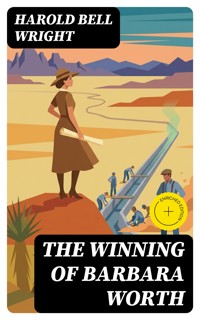
In "The Winning of Barbara Worth," Harold Bell Wright masterfully weaves a tale set against the backdrop of the American Southwest during the early 20th century. Through rich and evocative prose, Wright explores themes of love, ambition, and the inexorable pull of nature, all while presenting a vivid portrait of the desert landscape. The novel tells the story of a young man's quest to win the heart of Barbara Worth, a spirited and independent heiress, amidst the challenges posed by the harsh environment and societal expectations. The narrative is imbued with Wright's characteristic blend of naturalism and romanticism, which positions the novel within the literary tradition of American regionalism, showcasing both the beauty and brutality of the land that shapes its characters' fates. Harold Bell Wright, a pioneer of the inspirational fiction genre and one of the first authors to achieve widespread popularity in the American West, draws on his own experiences as a minister and a traveler throughout the region. His deep connection to the natural world and his understanding of human struggle inform his depictions of the protagonists and their relationships with their surroundings. This personal history imbues the novel with authenticity and a contemplative spirit that resonates with readers seeking meaning in their own journeys. This timeless work is highly recommended for readers who appreciate beautifully crafted narratives that delve into the complexities of the human heart. Wright's eloquent prose and compelling character development invite readers to reflect on the forces that shape their own lives and ambitions. "The Winning of Barbara Worth" is a profound exploration of love and resilience that remains relevant, making it a valuable addition to any literary collection. In this enriched edition, we have carefully created added value for your reading experience: - A succinct Introduction situates the work's timeless appeal and themes. - The Synopsis outlines the central plot, highlighting key developments without spoiling critical twists. - A detailed Historical Context immerses you in the era's events and influences that shaped the writing. - A thorough Analysis dissects symbols, motifs, and character arcs to unearth underlying meanings. - Reflection questions prompt you to engage personally with the work's messages, connecting them to modern life. - Hand‐picked Memorable Quotes shine a spotlight on moments of literary brilliance. - Interactive footnotes clarify unusual references, historical allusions, and archaic phrases for an effortless, more informed read.
Das E-Book können Sie in Legimi-Apps oder einer beliebigen App lesen, die das folgende Format unterstützen:
Veröffentlichungsjahr: 2022
Ähnliche
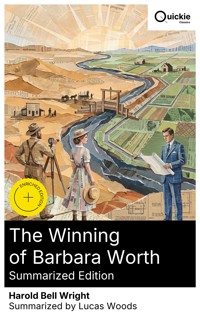












The Winning of Barbara Worth
Table of Contents
Introduction
This is a story about the audacity to make a desert bloom and the moral costs of deciding who deserves the water. Harold Bell Wright’s The Winning of Barbara Worth sets its compass by that audacity, following visionaries who imagine a green future where sand and sun once ruled. The novel’s horizon stretches beyond private yearning toward civic purpose, asking how individual loyalty, enterprise, and love can coexist with public responsibility. Without revealing its turns, one can say it balances romance with the hard arithmetic of risk, labor, and leadership, making the fate of a community inseparable from the choices of a few determined people.
First published in 1911, The Winning of Barbara Worth is an early twentieth-century American novel that blends frontier romance with social drama. Set in the arid reaches of the American Southwest, it draws on contemporary efforts to reclaim desert land through irrigation fed by the Colorado River. Wright writes squarely within the popular tradition of Western storytelling while rooting his narrative in the realities of engineering, finance, and settlement. The book arrives from a moment when national attention fixed on development, progress, and civic optimism, and it translates those public debates into a vivid, accessible tale shaped by place and purpose.
The premise begins with rescue and resolve: a child found in the desert is taken in by a steadfast guardian whose life is devoted to building a community where none yet exists. As Barbara grows, the settlement’s dream coalesces around bringing water to the wasteland, drawing surveyors, engineers, laborers, and investors who believe the river can be mastered for the common good. The arrival of Eastern expertise and outside capital introduces both opportunity and friction. Alliances form, rivalries sharpen, and affection complicates ambition, yet the novel stays close to its initial promise—watching a town define itself while a young woman’s character becomes a touchstone for competing ideals.
Readers encounter a brisk, omniscient narrative voice that favors clarity over ornament and moral argument over ambiguity, yet remains attentive to the beauty and severity of desert landscapes. Wright’s style alternates between panoramic descriptions of work and weather and intimate scenes of conversation, planning, and quiet resolve. The tone is earnest, occasionally didactic, but consistently humane, with conflicts framed as tests of character in the face of material and environmental pressures. The reading experience is cinematic in sweep yet grounded in practical detail, making boardroom decisions, survey lines, and irrigation gates as compelling as rides across open country or moments of tentative romance.
At its core, the book explores the tension between human ingenuity and the intransigence of nature, insisting that technical skill must answer to ethical purpose. It examines how communities are financed and governed, weighing local stewardship against distant speculation, and asks whether prosperity can be shared without diluting responsibility. Love, loyalty, and the meaning of worth itself—financial, civic, personal—are tested by drought, delay, and competing visions of success. Wright’s characters model differing ideas of leadership and trust, suggesting that progress requires more than capital and calculation; it demands courage, patience, and a willingness to bind one’s fate to neighbors as well as to plans.
For contemporary readers, its debates feel strikingly current. Water scarcity, infrastructure risk, and the complexities of public–private partnership echo in many regions today, and the novel’s insistence that engineering triumphs carry moral consequences anticipates ongoing conversations about environmental stewardship. Its portrayal of civic ambition highlights the costs of haste, the necessity of oversight, and the value of transparent leadership. Readers will also recognize the pull between local knowledge and imported expertise, and the way personal loyalties shape public outcomes. In an era of climate uncertainty, the book’s questions about who pays, who benefits, and who decides remain urgent.
The Winning of Barbara Worth rewards a historically minded yet forward-looking reading: as a Western, it dramatizes courage and self-reliance; as a social novel, it measures them against fairness and duty. Approached with awareness that some representations reflect the attitudes of its time, the work still offers a robust meditation on community-building under pressure. It invites readers to admire determination without overlooking consequences, to value innovation yet demand accountability, and to see romance as inseparable from civic choice. In charting how a desert might be remade, Wright asks how people might remake themselves, and why that struggle remains worth witnessing today.
Synopsis
Harold Bell Wright’s 1911 novel The Winning of Barbara Worth opens on a perilous desert crossing in the American Southwest, where a child survives catastrophe and is taken in by Jefferson Worth, a reserved but principled banker. The stark landscape, both hostile and alluring, frames the book’s central vision: reclaiming a vast dry basin through irrigation. As Worth raises Barbara among survey maps and ledgers, the idea of transforming waste land into homes takes root. The story’s foundation is laid in contrasts—hardship and hope, caution and daring—while the foundling’s future intertwines with an audacious plan to bring a river’s water to the sand.
Years later, a fledgling settlement rises on the rim of the desert, its families staking everything on canals that have yet to be completed. Engineers and surveyors arrive with instruments and optimism, backed by distant investors who measure progress in timetables and dividends. Willard Holmes, a highly trained engineer from the East, embodies technical mastery and corporate confidence. Abe Lee, a taciturn surveyor loyal to Worth, represents frontier persistence and local knowledge. Between them stands Barbara, now the community’s poised, capable center. Their varied loyalties and ideals set the stage for conflicts over method, responsibility, and the meaning of success.
The enterprise moves from dream to excavation, and the narrative details the practical and moral geometry of irrigation. The river to be tapped is powerful and erratic; the proposed intake and canal must withstand shifting sands, sudden rises, and scorching heat. Cost estimates tighten; schedules compress; expedients beckon. Eastern backers press for speed, while Worth argues that engineering must serve people, not merely paper calculations. Holmes, responsible for crucial decisions in the field, weighs orders against professional duty as unforeseen stresses appear. Barbara, watching workers and settlers alike, becomes a touchstone for judging motives, steadying ambition with humane concern.
Community life broadens the book beyond survey stakes and grade lines. Camps and a raw new town host dances, arguments, and alliances, while dust storms, mirages, and accidents remind everyone of nature’s prerogatives. Old hands prize integrity and competence; newcomers chase rumors of quick wealth. Barbara moves among them with practical kindness, learning the cost of each mile of ditch. Her suitors’ courtships—one shaped by precision and prestige, the other by loyalty and endurance—reveal competing definitions of manhood and leadership. These social currents, never far from the work itself, illuminate how personal choices can fortify or imperil a common undertaking.
As the canal nears critical stages, financial pressure mounts. Speculation inflates land values; corners are cut; and responsibility for risk drifts between offices and outposts. Jefferson Worth, convinced that control must be local and accountable, undertakes an independent course to protect settlers and stabilize development. He gathers trusted associates, including the steadfast surveyor, to chart routes and terms that prioritize permanence over display. The move challenges the dominance of absentee capital and focuses attention on who will answer when structures fail. Holmes, confronting the limits of directives from afar, begins to reconsider what it means to deliver a project faithfully.
Nature renders judgment when the river, swollen and unruly, defeats human calculations. A breach sends water rushing toward the basin, threatening homes, crops, and the promise of a valley reborn. Emergency works rise with desperate speed; men and machines strain to confine the torrent. Decisions made in boardrooms and on embankments alike converge into a single test of character: who accepts accountability, who perseveres, and who serves the community first. Relationships bend under the strain, and the question of Barbara’s future is tied to deeds rather than declarations. The novel intensifies without settling every fate until responsibilities are faced.
Without treating history as documentary, the novel mirrors early efforts to reclaim a desert valley and the perils of diverting a mighty river. Its lasting appeal lies in entwining romance with the ethics of public works, asking how ambition can be disciplined by duty and compassion. The desert becomes a moral landscape where calculation, courage, and community must align. By dramatizing clashes between speculation and stewardship, and by honoring those who build as well as those who finance, Wright anticipates enduring debates about water, infrastructure, and the public good. The story’s resonance endures wherever human designs meet implacable natural forces.
Historical Context
Harold Bell Wright’s The Winning of Barbara Worth appeared in 1911, amid the Progressive Era, and is set in the arid borderlands of the American Southwest. Its action unfolds around a desert basin patterned on California’s Imperial Valley and Salton Sink, below sea level near the Colorado River and the U.S.–Mexico line. The narrative engages institutions reshaping the region at the turn of the twentieth century: private land and irrigation companies, railroads, local banks and newspapers, county governments, and the new federal U.S. Reclamation Service created by the 1902 Reclamation Act. The novel follows settlers and engineers attempting to convert desert into farms.
In the late nineteenth century, western promoters and engineers sought to divert the Colorado River to irrigate the Salton Sink, long a dry lakebed. The California Development Company, organized in 1896 by Charles R. Rockwood, advanced the scheme and enlisted engineer George Chaffey in 1900 to design canals carrying water through Mexico into what became the Imperial Valley. These efforts drew on federal and state frameworks such as the Desert Land Act of 1877 and the Carey Act of 1894, which encouraged private irrigation enterprises. The National Irrigation Congress advocated reclamation, helping build popular momentum for settlement in newly watered lands.
By the early 1900s, rail access and telegraph lines linked the district to national markets, enabling townsites, colonization tracts, and intensive booster campaigns. The U.S. Geological Survey expanded hydrologic and topographic mapping, and the 1902 Reclamation Act created the U.S. Reclamation Service to finance and build federal projects. On the lower Colorado, the government launched the Yuma Project and constructed Laguna Dam beginning in 1905 to stabilize irrigation for lands near Yuma, Arizona and California. In this environment, private and public approaches to water development competed and overlapped, with settlers depending on expert surveys, canals, and credit to make agriculture viable.
The turning point for the region came in 1905–1907, when floods breached diversion works on the Colorado River and the uncontrolled flow poured into the Salton Sink, creating the modern Salton Sea. The California Development Company proved unable to halt the break, and the Southern Pacific Railroad undertook massive emergency construction—trestles, rock dumps, and levees—to close the gap and restore the river to its channel. The episode drew national headlines, caused heavy damage to farms and infrastructure, and led to lawsuits and the company’s financial ruin. This well-documented crisis provides the novel’s central historical backdrop and informs its conflicts over responsibility.
The book’s emphasis on surveying crews, levees, and canal design reflects Progressive Era confidence in scientific expertise. President Theodore Roosevelt’s administration promoted conservation and reclamation, while figures like Gifford Pinchot popularized the principle of managing natural resources for long-term public benefit. In the arid West, water allocation followed the prior appropriation doctrine, and in California the Wright Act of 1887 enabled formation of local irrigation districts financed by bonds. Professional engineers, federal officials, and local districts sought durable infrastructure and accountable finance, themes mirrored in the novel’s attention to standards, measurements, and the practical ethics of building in a volatile river system.
The period also featured intense debate over corporate power and speculative finance. Trust-busting politics, muckraking journalism, and state regulatory reforms scrutinized railroads, land companies, and banks. Western settlement campaigns relied on promotional literature and easy credit, but failures of undercapitalized irrigation ventures exposed settlers to ruin. The turmoil coincided with wider financial instability culminating in the Panic of 1907, which tightened credit and heightened public skepticism toward loosely supervised development schemes. The novel’s depictions of boosterism, risk-taking capital, and newspaper influence are grounded in this climate of scrutiny, as communities weighed the promises of rapid growth against the costs of failure.
Imperial Valley settlement brought migrants from the Midwest and elsewhere, while labor demands tied the region to cross-border communities. The California Development Company founded paired towns—Calexico in California and Mexicali in Baja California—in the early 1900s to anchor operations along the canal. Early crops included alfalfa, grains, and vegetables suited to irrigated desert agriculture, produced in extreme heat and below-sea-level conditions. The formation of the Imperial Irrigation District in 1911 signaled a shift toward public control of works in the valley, a development consistent with Progressive trends. These realities supply the novel with social texture: colonists, laborers, surveyors, and emerging civic institutions.
Upon publication, Wright’s novel quickly became a bestseller, and a notable 1926 film adaptation shot in the Imperial Valley helped cement its association with real events on the Colorado River. The book distills major questions of its era: whether private promoters or public agencies should control reclamation, how engineering standards and accountability can prevent disaster, and what obligations financiers owe to the communities they organize. Without detailing every historical figure, it draws on widely reported events and institutions to dramatize the stakes of desert development. In doing so, it reflects Progressive optimism while criticizing the reckless practices that produced the Salton Sea crisis.




