


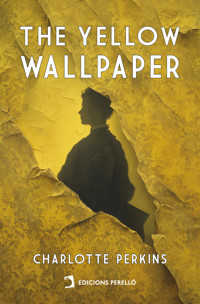
Erhalten Sie Zugang zu diesem und mehr als 300000 Büchern ab EUR 5,99 monatlich.
- Herausgeber: Edicions Perelló
- Kategorie: Gesellschafts- und Liebesromane
- Serie: Universals
- Sprache: Englisch
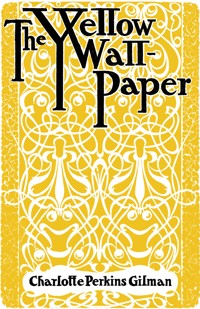
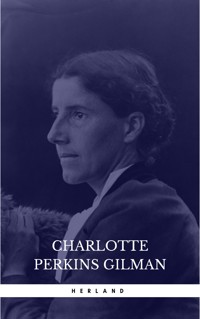
The Yellow Wallpaper (1892) recounts the experience of a woman subjected to a strict rest cure after a nervous crisis, confined to a room whose unsettling yellow wallpaper becomes the obsessive focus of her gaze. Isolated from intellectual activity and deprived of autonomy, the protagonist begins to perceive ambiguous shapes and presences within the wallpaper's patterns, as though they were coming to life. Charlotte Perkins Gilman crafts a tale of mounting psychological tension that transcends mere horror to denounce female oppression and the constraints imposed by a patriarchal society. Suspended between Gothic fiction and clinical study of the mind, The Yellow Wallpaper is a brief yet powerful work that explores the fragility of sanity and the silent violence of confinement.
Sie lesen das E-Book in den Legimi-Apps auf:
Seitenzahl: 32
Veröffentlichungsjahr: 2026
Das E-Book (TTS) können Sie hören im Abo „Legimi Premium” in Legimi-Apps auf:
Ähnliche
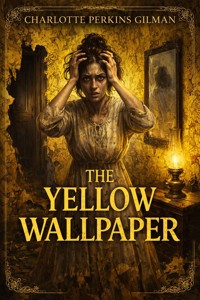








This collection treasures the most important works of universal literature, each one in its original language.
In the English Letters Series, the following stand out: The Great Gatsby, by F. Scott Fitzgerald; The Picture of Dorian Gray, by Oscar Wilde; Alice in Wonderland, by Lewis Carrol; A Christmas Carol, by Charles Dickens; The Autobiography, by Benjamin Franklin; The Best Adventures of Sherlock Holmes, by Arthur Conan Doyle; Self-Reliance, by Ralph Waldo Emerson; The finest story in the world, by Rudyard Kipling; Romeo and Juliet, by William Shakespeare; The Adventures of Tom Sawyer, by Mark Twain; Frankenstein; Or, The Modern Prometheus, by Mary Shelley; The shadow over Innsmouth, by H.P. Lovecraft; The Scarlet Plague, by Jack London; Carmilla, by Sheridan Le Fanu...
CHARLOTTE PERKINS GILMAN
THE YELLOW
WALLPAPER
© Ed. Perelló, SL, 2026
Carrer de les Amèriques, 27
46420 - Sueca, Valencia, Spain
Tlf. (+34) 644 79 79 83
http://edperello.es
I.S.B.N.: 979-13-70194-95-6
Photocopying this book or putting it online freely without the permission of the publishers is punishable by law.
All rights reserved. Any form of reproduction, distribution,public communication or transformation of this work can only be donewith the permission of its holders, except as otherwise provided by law.Contact CEDRO (Spanish Center for Reprographic Rights,www.cedro.org)if you need to photocopy or scan a snippet of this work.
The Yellow Wallpaper
It is very seldom that mere ordinary people like John and myself secure ancestral halls for the summer. A colonial mansion, a hereditary estate, I would say a haunted house, and reach the height of romantic felicity—but that would be asking too much of fate!
Still I will proudly declare that there is something queer about it.
Else, why should it be let so cheaply? And why have stood so long untenanted?
John laughs at me, of course, but one expects that in marriage.
John is practical in the extreme. He has no patience with faith, an intense horror of superstition, and he scoffs openly at any talk of things not to be felt and seen and put down in figures.
John is a physician, and perhaps—(I would not say it to a living soul, of course, but this is dead paper and a great relief to my mind)—perhaps that is one reason I do not get well faster.
You see, he does not believe I am sick!
And what can one do?
If a physician of high standing, and one’s own husband, assures friends and relatives that there is really nothing the matter with one but temporary nervous depression—a slight hysterical tendency—what is one to do?
My brother is also a physician, and also of high standing, and he says the same thing.
So I take phosphates or phosphites—whichever it is, and tonics, and journeys, and air, and exercise, and am absolutely forbidden to “work” until I am well again.
Personally, I disagree with their ideas.
Personally, I believe that congenial work, with excitement and change, would do me good.
But what is one to do?
I did write for a while in spite of them; but it does exhaust me a good deal—having to be so sly about it, or else meet with heavy opposition.
I sometimes fancy that in my condition if I had less opposition and more society and stimulus—but John says the very worst thing I can do is to think about my condition, and I confess it always makes me feel bad.
So I will let it alone and talk about the house.
The most beautiful place! It is quite alone, standing well back from the road, quite three miles from the village. It makes me think of English places that you read about, for there are hedges and walls and gates that lock, and lots of separate little houses for the gardeners and people.
There is a delicious garden! I never saw such a garden—large and shady, full of box-bordered paths, and lined with long grape-covered arbors with seats under them.




