


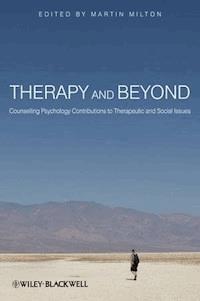
Therapy and Beyond E-Book
46,99 €
Mehr erfahren.
- Herausgeber: John Wiley & Sons
- Kategorie: Fachliteratur
- Sprache: Englisch
Therapy and Beyond: Counselling Psychology Contributions to Therapeutic and Social Issues presents an overview of the origins, current practices, and potential future of the discipline of counselling psychology.
- Presents an up-to-date review of the knowledge base behind the discipline of counselling psychology that addresses the notion of human wellbeing and critiques the concept of ‘psychopathology’
- Includes an assessment of the contributions that counselling psychology makes to understanding people as individuals, in their working lives, and in wider social domains
- Offers an overview of counselling psychology's contributions beyond the consulting room, including practices in the domain of spirituality, the arts and creative media, and the environmental movement
- Critiques contemporary challenges facing research as well as the role that research methods have in responding to questions about humanity and individual experience
Sie lesen das E-Book in den Legimi-Apps auf:
Seitenzahl: 595
Veröffentlichungsjahr: 2010
Ähnliche




















This edition first published 2010
© 2010 JohnWiley & Sons Ltd.
All pictures contained within the book were photographed by and belong exclusively to Dr. Martin Milton.
Wiley-Blackwell is an imprint of John Wiley & Sons, formed by the merger of Wiley's global Scientific, Technical, and Medical business with Blackwell Publishing.
Registered Office
John Wiley & Sons Ltd, The Atrium, Southern Gate, Chichester, West Sussex, PO19 8SQ, UK
Editorial Offices
The Atrium, Southern Gate, Chichester, West Sussex, PO19 8SQ, UK
9600 Garsington Road, Oxford, OX4 2DQ, UK
350 Main Street, Malden, MA 02148-5020, USA
For details of our global editorial offices, for customer services, and for information about how to apply for permission to reuse the copyright material in this book please see our website at www.wiley.com/wiley-blackwell.
The right of the author to be identified as the author of this work has been asserted in accordance with the UK Copyright, Designs and Patents Act 1988.
All rights reserved. No part of this publication may be reproduced, stored in a retrieval system, or transmitted, in any form or by any means, electronic, mechanical, photocopying, recording or otherwise, except as permitted by the UK Copyright, Designs and Patents Act 1988, without the prior permission of the publisher.
Wiley also publishes its books in a variety of electronic formats. Some content that appears in print may not be available in electronic books.
Designations used by companies to distinguish their products are often claimed as trademarks. All brand names and product names used in this book are trade names, service marks, trademarks or registered trademarks of their respective owners. The publisher is not associated with any product or vendor mentioned in this book. This publication is designed to provide accurate and authoritative information in regard to the subject matter covered. It is sold on the understanding that the publisher is not engaged in rendering professional services. If professional advice or other expert assistance is required, the services of a competent professional should be sought.
Library of Congress Cataloging-in-Publication Data
Therapy and beyond : counselling psychology contributions to therapeutic and social issues / edited by Martin Milton.
p. ; cm.
Includes bibliographical references and index.
ISBN 978-0-470-71547-5 (cloth) – ISBN 978-0-470-71548-2 (pbk.) 1. Counseling psychology.
I. Milton, Martin.
[DNLM: 1. Counseling–trends. 2. Psychology, Clinical–methods. WM 55 T398 2010]
BF636.6.T45 2010
158'.3–dc22
2010010271
To Stuart who lets me think and Jordan who stops me…
Contents
Cover
Title Page
Copyright
Notes on Contributors
Foreword
Acknowledgements
Introduction: Therapy and Beyond: Counselling Psychology Contributions to Therapeutic and Social Issues
Counselling Psychology
The World in Which We Exist
Therapy and Beyond
References
Section 1: Fundamentals of Counselling Psychology
1. Philosophical Pluralism: Navigating the Sea of Diversity in Psychotherapeutic and Counselling Psychology Practice
Defining Pluralism
The Challenge of Dialectical Pluralism
Towards a Reflexive Pluralism
Summary
References
2. Existential-phenomenological Contributions to Counselling Psychology's Relational Framework
In the Shadow of Descartes
Institutionalisation of Madness and the Rise of Mental Disorders
A Different Voice
The Primacy of the Lifeworld
‘Being-in-the-world-with’: Restoring the Psychological Subject
Being-in-the-space-in-between
Being-in-our-bodies: The Philosophy of the Flesh
‘Being-in-the-environment’: One Step Closer to a Conclusion
References
3. Counselling Psychology and Research: Revisiting the Relationship in the Light of Our ‘Mission’
Our Commitment to Research
Research in the Current Climate
Remembering Our Mission
Appreciating Methodological Difference: Methodological Pluralism
A Different Gaze: Community Psychology
Appreciating Difference: Collaboration
Summary
References
4. Understanding Human Distress: Moving beyond the Concept of ‘Psychopathology’
Psychological Distress across History: A Brief Sketch
The Rise of Psychological Accounts of Distress: Psychology as a ‘Child of Modernity’
Querying the Categorisation of Distress
The Impact on Practice
Living the Tension: Counselling Psychology in Action
Summary
References
5. Being with Humans: An Evolutionary Framework for the Therapeutic Relationship
Differing Views on the Therapeutic Relationship
Research on the Therapeutic Relationship
Counselling Psychology and the Therapeutic Relationship
The Evolved Mind and the Effects of Social Mentalities
Evolved Social Mentalities and the Therapeutic Relationship
Developing Ways of Being with Clients
Body Language
Being with Humans and Their Evolved Minds
References
6. Ethics: The Fundamental Dimension of Counselling Psychology
Ethics
Morality
Professional Complexity
Suggestions
Conclusion
References
Section 2: Models of Practice
7. Different Theoretical Differences and Contextual Influences
Differences between Theories
Conclusion
References
8. Humanistic Contributions to Pluralistic Practice
The Development of the Humanistic Approach
But … First to Counselling Psychology
The Humanistic Dimension of Assessment and Formulation
Humanistic Practice in its Pure Form
Humanistic Foundations of Pluralistic Practice
Humanistic Perspective on Contextual Issues
Conclusion
References
9. Psychodynamic Contributions to Pluralistic Practice
Therapy as an Art Form
The Emergence of Counselling Psychology
The Psychoanalytic Tradition
Counselling Psychology as Transmodal Practice
Counselling Psychology's Contribution to Acute Care
Conclusion
References
10. Cognitive-behavioural Contributions to Pluralistic Practice: Reflections on an Issue of Some Contention
So What is CBT?
Pluralistic Practice, Counselling Psychology and CBT
CBT and its Contribution to Pluralistic Practice: The Current State of Play
CBT and its Contribution to Pluralistic Practice: The Future
References
11. Amor Fati: Existential Contributions to Pluralistic Practice
Pessimism or Paradox?
Condemned to Living: An Existential ‘Life Sentence’
Nothingness and the Fragility of Being Human
The Being that is Mine
Time is of the Essence
‘Life is for Living’
And finally … Memento Mori
Ennio and I
References
Section 3: Counselling Psychology and the Wider World
12. The Counselling Psychologist Working in a Pain Context
The Development of Pain Perspectives
Mindfulness
Challenges and Issues
Differences in Conceptualising Pain
Therapeutic Context
Confidentiality
Autonomy and Informed Consent
Medical Complications
Summary
References
13. Working with Sport and Exercise Psychologists: A Winning Combination?
Counselling Psychology and Physical Activity
Historical Context
Interdisciplinary Collaboration
The Psychologist–Athlete Relationship
Therapeutic Models
Factors Influencing Goals and Interventions
Further Ethical and Professional Considerations
Physical Activity Intervention at a Global Level
References
14. The ‘R’ Word
What is ‘Race’?
History
‘Race’ and Power
Who is Racist?
Subtleties of Racism
Getting Stuck
Working with ‘Race’
References
15. Counselling Psychology Contributions to Understanding Sexuality
Contemporary Understanding of Sexuality
Working with Non-heterosexual Clients
‘Kinky’ Clients
Double Minority and Identity Confusion
Reflections
References
16. Counselling Psychology Contributions to Religion and Spirituality
Defining Terms: ‘Religion’ and ‘Spirituality’
Psychotherapeutic Psychologies, Religion and Spirituality
Working with Religious and Spiritual Issues in Counselling Psychology
From within to beyond the Therapy: Counselling Psychology and Religious/Spiritual Development
Conclusion
References
17. Counselling Psychology and the Media: The Highs and Lows
The Importance of a Working Relationship between Psychology and the Media
The Printed Media
Comments for Journalists
The Media of the Spoken Word
Involvement with Television Series
Guest Professionals on Radio Shows
In Summary
References
18. Coming Home to Roost: Counselling Psychology and the Natural World
Being Human: A Natural World Perspective
Evolved Traits
Contemporary Life
Advantages and Disadvantages
Counselling Psychology: The Consulting Room …
Beyond Therapy
Warnings
References
Epilogue: And Finally. . .
Index
Notes on Contributors
The Editor
Dr Martin Milton CPsychol, CSci, AFBPsS, UKCP Reg, is a chartered psychologist, a BPS psychologist specialising in psychotherapy and a UKCP registered psychotherapist. As a practitioner, Martin worked in the British National Health Service for over a decade and now runs his own independent practice.
Martin is Senior Lecturer on the University of Surrey practitioner doctorate in psychotherapeutic and counselling psychology and his research and specialist interests include lesbian and gay affirmative psychology and psychotherapy, and existential psychotherapy and new and burgeoning interests in ecotherapy and the therapeutic aspects of the natural world.
Martin is a former Chair of the BPS Division of Counselling Psychology and served on the Committee of the BPS Lesbian and Gay Psychology section. He remains active in these organisations as a member of the Editorial Board for Psychology and Sexuality and Counselling Psychology Review, and as a member of the International Advisory Board to Psychology of Sexualities Review. Martin is also on the editorial board of the international journal Ecopsychology and of Existential Analysis.
The Contributors
Dr Heidi Ashley obtained her doctorate in Psychotherapeutic and Counselling Psychology from the University of Surrey in 2005 and works in a secondary care (CMHT) setting with clients who have moderate to severe psychological difficulties. She has interests in supervision and in working therapeutically with people who experience longstanding difficulties with developmental origins. She is presently undertaking further training as an Advanced Schema Therapist.
Dr Lucy Atcheson obtained her doctorate in Psychotherapeutic and Counselling Psychology from the University of Surrey in 2002. As well as working in the NHS and in independent practice, Lucy has presented several television series that made psychological issues and therapy accessible for the public.
Dr Terry Boucher obtained his Practitioner Doctorate in Psychotherapeutic and Counselling Psychology from the University of Surrey in 2005. He works in a specialist pain management service within the NHS and is partner at Vivamus Psychologists in the independent sector.
Dr Adrian Coyle is Director of the MSc in Social Psychology at the University of Surrey, where he worked for 11 years as Research Tutor on the Practitioner Doctorate Programme in Psychotherapeutic and Counselling Psychology. He specialises in qualitative research approaches and his research interests include the psychology of religion and spirituality, identity and loss and bereavement.
Dr Mark Craven obtained his doctorate in Psychotherapeutic and Counselling Psychology from the University of Surrey in 2004. He is interested in social constructionist and collaborative forms of applied practice. He has worked for the NHS in adult acute psychiatric inpatient, community forensic and personality disorder services.
Dr Debora Diamond obtained her doctorate from the University of Surrey. Her areas of specialist interest run across acute care and recovery services and include psychosis, personality disorder, the social positioning of gender and group therapies. Debora is Consultant Counselling Psychologist, Joint Lead in Acute Care and Recovery at NHS Plymouth. She works on an acute psychiatric inpatient ward, in a low secure unit for men and in an open recovery unit for women.
Dr Riccardo Draghi-Lorenz is Director of the Practitioner Doctorate in Psychotherapeutic and Counselling Psychology at the University of Surrey. He is particularly interested in theoretical integration/eclecticism, cultural differences and psychotherapy, the processes underlying intersubjective connectedness and the social and emotional development of infants
Dr Frances Gillies obtained her doctorate in Psychotherapeutic and Counselling Psychology from the University of Surrey in 2004. She works for Devon Partnership Trust (NHS) in adult mental health and has a special interest in developing therapeutic interventions that can help clients with difficult relationship histories foster a sense of wellbeing.
Dr Natalie Hession obtained her doctorate in Psychotherapeutic and Counselling Psychology from the University of Surrey. She currently works in the area of Psycho-oncology and has a special interest in chronic pain. She holds a post as a Senior Psychologist at St Luke's Hospital, Dublin, where she works therapeutically with cancer patients and their families. She is also involved with ongoing research and lectures within affiliated universities and currently serves on the Counselling Psychology Divisional Committee of the Psychological Society of Ireland
Dr Colin Hicks obtained his doctorate in Psychotherapeutic and Counselling Psychology from the University of Surrey in 2006. His area of specialist interest is working with sexual minorities and also psychological distress in university students. He currently has an appointment with Dorset Healthcare Foundation NHS Trust where he works in an Improving Access to Psychological Therapies (IAPT) Service as a counselling psychologist/senior therapist and supervisor. He also works in private practice, where he provides psychological services for individuals and consultancy for businesses.
Dr Joanna Lofthouse obtained her doctorate in Psychotherapeutic and Counselling Psychology from the University of Surrey in 2006. Her area of special interest is psychosocial and cultural phenomena and their implications within the consulting room. She currently has an appointment with North East London Mental Health Trust where she works in a Community Mental Health Team as well as an intermediate psychological service for adult mental health.
Dr Elena Manafi, CPsychol obtained her doctorate from the University of Surrey. She is a Chartered Psychologist registered with the British Psychological Society and an HPC-registered counselling psychologist. She specialises in existential/phenomenological philosophy, psychology and clinical training and is currently the Programme Director on the Professional Doctorate in Counselling Psychology at Regent's College. Elena has also been teaching and supervising at the New School of Psychotherapy and Counselling (NSPC) and runs a private practice in north London.
Dr Donal McAteer obtained his doctorate in Psychotherapeutic and Counselling Psychology from the University of Surrey in 2006. His areas of specialist interest are the therapeutic process and relationship, and the philosophical foundations of counselling psychology. He currently has an appointment with a Psychological Therapies Team in the NHS in Derry, Northern Ireland, where he works with adults experiencing psychological and emotional distress. He is currently acting as Co-Chair of the group working to establish a Northern Ireland Branch of the Division of Counselling Psychology.
Dr Camilla Olsen obtained her doctorate in Psychotherapeutic and Counselling Psychology from the University of Surrey in 2000. Her area of specialist interest is the development of therapeutic relationships with clients suffering from severe and enduring mental ill health. She currently runs her own independent practice and is involved in the training of counselling psychologists as a supervisor and examiner.
DrJill Owen, CPsychol obtained her doctorate in Psychotherapeutic and Counselling Psychology from the University of Surrey in 1998 and then returned to the programme as a Professional Tutor for three years. She is an HPC-registered counselling psychologist and an HPC-registered sport and exercise psychologist. She currently runs a private practice and sport psychology consultancy in Guildford, Surrey.
Dr Deborah Rafalin, CPsychol is a practising HPC-registered counselling psychologist. She obtained her Doctorate in Psychotherapeutic and Counselling Psychology from the University of Surrey in 1998. Deborah is a Senior Lecturer on the Practitioner Doctorate in Counselling Psychology at City University, London and her areas of specialist interest include qualitative research methodologies and identity threat. Deborah also works as a consultant to the NHS and the Third Sector on various projects, is a professional member of the fitness to practice and competency panels at the HPC and runs her own private practice
Foreword
This book takes a fresh and vigorous look at counselling psychology and invites us to think carefully about the present state and future direction of our profession. It challenges current assumptions that counselling psychologists have to fit in with. It considers and questions the medical, economic and political agendas that oppress contemporary practice. It presents us with the many alternatives that are available and demonstrates the dangers of following a single established model. It sometimes cautiously and sometimes enthusiastically argues the case of pluralism, phenomenology, community, collaboration and ecology as ways of finding interesting new answers to the questions posed by our work with clients of diverse backgrounds and orientations. It proposes alternatives to the categorisation of distress and to the oppressive dichotomies of mental health and illness.
This book provides a stimulating and creative reappraisal of what we usually take for granted. Its chapters are always based in the interaction between theory and practice, drawing new ideas from disciplined thought about experience. It shows that it is only in a continuous exploration of new horizons and by opening a wide range of existential vistas that science and human understanding become validated by life itself. Many of the chapters are a good source of teaching materials to challenge new trainees. But they are even more relevant in the context of continuing professional development. For many of us have become complacent, jaded or battle-fatigued when constantly contending with increasingly tight professional boundaries and regulations. Some of these words will uplift us, some will rattle our cages and all will challenge the status quo.
This is a timely volume. What we are witnessing at the moment is a process of one-dimensional professionalisation which is more interested in quantitative than qualitative outcomes and favours approaches that can be rolled out across the board, tempting us into the shallows. What the contributors to this book are saying is that this short-sighted focus is dangerous and that we need to rethink our values and commitments as counselling psychologists and be true to the principles on which we founded this profession, making sure it remains fit for purpose.
In spite of its serious agenda, the book is light on its feet and easy to read. It will stimulate, intrigue and provoke thought in those who are willing to engage in this important professional debate. Its chapters have been written by the staff and alumni of the well-established doctoral programme in Psychotherapeutic and Counselling Psychology at the University of Surrey, demonstrating the breadth and depth of this school. Here is the rich harvest of fifteen and more years of research and debate. It speaks for itself and will reverberate with other courses, providing many counselling psychology students with new ideas for their own investigations. Each contributor explores the boundaries and borders of the territory of counselling psychology and refocuses the definitions and aspirations of our profession. Together, they formulate a call to our conscience. What is the original mission of our profession and what has become of it? How do we wish to continue to practise our profession in the current climate?
The book helps us to address these and other questions, as it reminds us of the paradigmatic changes our profession has been through and cautions us not to lose the essence of our profession, nor to lose touch with our commitment to help others in understanding their troubled lives. We can get too involved with research and technique and lose sight of what really matters. It is no solution to filter out the best bits of different therapeutic traditions and serve these up in a smorgasbord of tasty titbits, which are not sufficient to satisfy our clients' hunger for real nourishment. The kind of therapeutic integration proposed by low-grade cognitive behavioural therapies may be pragmatically sound but lacks philosophical clarity and depth. The objective should certainly not be simply to integrate established traditions in order to dissolve them. Disciplined pluralism is about working with diversity by holding on to the tensions and by making continuous efforts to creatively juxtapose, maintaining openness and flexibility. It is not about arriving at a dogmatic uniformity that suffocates our responsiveness to clients' predicaments.
As Riccardo Draghi-Lorenz, one of the contributors to this book, argues in his conclusion:
As is often the case, however, the scientific battle is between reductivists, who fail to understand how little we really comprehend, and those open to the ever-surprising complexity of the human condition. In this situation theoretical and epistemological differences are to be carefully nurtured, for if science were to proceed by consensus, it would not proceed at all.
Therapy and Beyond shows convincingly that the struggle with different perspectives is more important than reductionist unity of practice. We may be tempted to go along with the easy options and quasi-certainties currently offered us in our field, but we will only ignore the tensions and the perennial need to remain open to doubt and uncertainty at our peril. The entire field of therapy and counselling, and with it the field of counselling psychology, is currently undergoing transformation. We should not assume that change is necessarily change for the better. Important lessons have been learnt over the past decades of careful practice and these can easily be forgotten if we become complacent about homogenisation and too enamoured of evidence-based practices that merely cloak human understanding in an external mantle of knowledge.
This book reminds us that the evidence of good human living is far more complex than some would have us believe. It shows that we need to be prepared to engage with the facts and think about them carefully. Only if we are unafraid of opposing superficially attractive solutions can we develop the multidimensional approach that truly serves our clients. For this to happen we need to have the courage of our conviction that it is our clients' wellbeing that matters most. Then we can maintain a rigorously searching attitude, combine different perspectives and go beyond the quick-fix solutions or the shallow facts of economically driven practice. This book reminds us that life is more complex and precious than what outcome research captures. We owe it to our clients and to ourselves to look beyond the obvious and to keep challenging and renewing our understanding, not just of our profession but of the lives of the clients we set out to serve.
Acknowledgements
On behalf of all the contributors, a heartfelt ‘thank you’ to everyone who has influenced this book – our clients, research participants, teachers, therapists or supervisors in the field and friends and family in our personal lives. Your contribution to our thinking is very much appreciated.
Martin would like to thank all of the contributors for their hard work and clear thinking. He would particularly like to thank Lucy and Terry who came on board at short notice, excelled at time management and speedy delivery against impossible time-frames. Thanks also to Tania Dolley, Martin Jordan, Dale Judd, Carol Shillito-Clarke and Digby Tantam for your generosity with time and feedback. Thanks to Nickee Higley and Louise Brorstrom for making me think at crucial times in the preparation of this book.
Heidi Ashley would like to thank Veronika Braunton for her valuable feedback in preparing her chapter.
Camilla Olsen would like to thank her ‘bacon saver’. Apparently you know who you are.
Introduction
Therapy and Beyond: Counselling Psychology Contributions to Therapeutic and Social Issues
Counselling Psychology
British counselling psychology is well into its second decade, having formally come into being when the British Psychological Society established the Division of Counselling Psychology in 1994. Counselling psychology is postmodern and multi-modal in nature, with a bent towards a holistic perspective that is attentive to issues as they manifest in psychological therapy, research, individual lives and in the wider world.
During its development, counselling psychology has moved beyond the process of initial definition where much of the initial discourse – our own and that of others – was focused on making distinct its relationship between this discipline and those professions it was similar to or different from, models it used or did not use and contexts with which it engaged. Counselling psychology is now able to elucidate the significant contributions it makes, both to the practice of psychological therapy and to research, policy development and new and innovative contributions to society. In this regard the profession is a forward-looking one that is extending its domain of practice into areas other than the consulting room. And this is one of the functions of this book – to showcase the ways in which a mature use of the knowledge base and practice of counselling psychology is now firmly contributing to a range of therapeutic and social issues.
One perspective that was present at the birth of British counselling psychology and remains a core philosophical, academic, ethical and therapeutic priority for counselling psychology is the understanding of people as ‘relational beings’. While collaborating with people and contexts that draw on a range of perspectives, including the traditional views of people as independent entities, counselling psychology has always recognised that relational perspectives have an enormous contribution to make to understanding people and working towards greater wellbeing. This focus is obvious in terms of relationships between therapist and client, within families and between intimate partners; but it is one that extends to understanding the relationships people have with themselves in terms of identity, self-esteem and the like, and in terms of our wider cultural and socio-political wellbeing.
The World in Which We Exist
Life has always been challenging and modern life is no different. It is complex, multi-factored and for some of the time, terribly stressful. Not only do we suffer from such existential constants of anxiety, isolation, death and meaninglessness, but we also feel cheated when the seductive promises of contemporary life fail to remove the hurdles we face and when our world is different from the way we hope, expect or want it to be.
People struggle in a variety of ways, sometimes with themselves, sometimes with families and friends and often with the world at large. The struggles that people experience are wide-ranging and manifest physically, socially and in more intimate ways. This is not to mention the damage that affects us when we are caught up in war, genocide or poverty. The fact that mild to moderate mental health problems are now termed ‘common’ is suggestive of significant difficulty and it is also interesting that, despite the fact that there has been measurable decrease in actual physical harm to children in Britain recently, our sense of concern has grown enormously in the last few years.
While these experiences might be seen as ‘predictable difficulties’ (Deurzen, 2009, p. 80) they are often painful and debilitating, affecting us mentally and emotionally, physically and interpersonally. There are times when the distress is considered excessive or the isolation too extreme and people turn to the range of professionals to help make sense of their panic, pain and confusion, which they hope these professionals can make it better. It is reassuring to know that psychological interventions are effective and helpful for people with a range of difficulties.
Engaging with the painful side of human experience is a part of the work of counselling psychologists, but of course, human experience is not always stressful and counselling psychology is not only about engaging with distress; we are also interested in human wellbeing. It's not only about exploring the experience of an individual; counselling psychologists also explore a much wider range of relevant human phenomena.
People's day-to-day interactions are intimately linked to the huge advances we have made in social, political and economic areas. These developments have advantages for our quality of life as we enjoy great health benefits, longer lifespans, medical assistance to cure and rehabilitate us after infections and illnesses. Physically our lives have become easier as we suffer fewer illnesses, recover more quickly when we do get ill and our everyday exertions are limited. Actually, it is getting to the point where our comfort may be what is bad for us, with few of us needing to walk great distances to secure food or water – if we don't just jump in the car to nip to the supermarket, we order online. Instead of walking great distances across the savannah as our bipedal species is designed to do, we now utilise the more comfortable technologies of the car, bus or train.
So counselling psychology, the scientific and applied field that it is, is interested in a holistic view of humanity's experience, what makes us tick, what hurts us and what is helpful. Of course, it is interested in psychological therapy, but its knowledge base is equally relevant to research, social policy and understanding the effects of oppression and exploitation. It is engaged with the personal and political, its knowledge and skills mean it has contributions to make at a therapeutic and policy level and with the overlap of the ethical and the scientific.
Therapy and Beyond
Change is happening at a furious rate in the field of public sector health care provision. The contributors and I recognise that today's professional reality may simply be stepping stones en route to a variety of other future identities and practices. Keeping this in mind, this book takes a moment to stop and consider the profession, its current body of knowledge and array of practices and to look at innovative and potential new developments.
The contributors and I hope that readers will find this book useful for a variety of reasons – it might be used to inform people about the profession, but it can also be used to facilitate critical thinking about wider issues and practices that counselling psychology is involved with alongside other applied psychologists, mental health professionals and government bodies. As readers journey through the book, they are invited to reflect on – and debate – a number of therapeutic and social issues.
The book focuses on some of the main areas of psychotherapeutic and counselling psychology theory, practice and research and their application in a range of settings. Of course, there are inevitably domains that are not represented in this volume and while a complete encyclopaedia was not possible, we do regret the practical issues that mean we have had to limit the scope of this book … for now.
Section 1 provides the reader with an overview of the philosophical stances that underpin knowledge and practice and the ways in which counselling psychology engages with this rich spread of information. It addresses the ways in which this informs core aspects of the therapeutic professions, with attention to the therapeutic relationship, our understanding of human distress and consideration of what this means for the notion of ethical practice.
Section 2 looks at the contemporary use of traditional models of practice and the ways in which humanistic, psychodynamic, cognitive-behavioural and existential models are helpful in informative and innovative ways – not just as distinct ways of seeing the world or practicing therapy but also as perspectives to contribute to wider debates – therapeutic, social and political – as to what facilitates wellbeing and limits damage and distress.
Section 3 looks at new developments in the discipline and how counselling psychology is helping develop wider understandings of people and contributing to society in new and novel ways. It recognises that academic ghettos are limiting and draws on information and knowledge bases sometimes seen as the province of other sciences and other fields. In doing so, section three outlines the ways in which a counselling psychology perspective can assist individual and wider debates on such dimensions of human life as sport and spirituality, sexuality and the environment. In this way it is thought-provoking, provocative and highlights the importance of applying our knowledge base in creative ways.
References
Deurzen, E. van (2009). Psychotherapy and the quest for happiness. London, Sage.
Section 1
Fundamentals of Counselling Psychology
Martin Milton
There are some aspects of counselling psychology which underpin every aspect of the profession and the tasks that counselling psychologists undertake. These aspects are fundamental in character and ever present whether they are overt or covert. While aspects of our practice change over time — sometimes in quite significant ways — in light of the therapeutic model embraced, the research method used or the contexts in which we work, these fundamentals remain central to the integrity of the profession. What are these fundamental characteristics, so crucial to the profession and the contribution counselling psychology makes to therapy and to the wider world? This section looks at just a few of them, including pluralism, relational ways of understanding the world, the understanding of distress, research and enquiry, ethics and the therapeutic relationship.
Such fundamental aspects are not easy, clear-cut phenomena and certainly not unidimensional in nature. Quite the contrary, these are sometimes rather ethereal, complex domains, requiring open, ongoing and curious engagement. In some contexts (e.g., in the debates about statutory regulation, the setting-up of professional bodies and the writing of therapeutic ‘guidelines’) the debates can be characterised by conflict, reliance on the exercise of power and the influence of status. This array of responses highlights the crucial nature of these fundamentals.
In light of this, it will come as no surprise to readers that the contributors to section 1 approach their topics — and, I suspect, the profession — from different positions. And in doing so, these six chapters draw readers' attention to the complexity of human experience and the ways in which counselling psychology knowledge and practice engage with this complexity so as to be of benefit to all involved.
In Chapter 1, Donal McAteer introduces the reader to the concept of pluralism and the epistemological tensions with which we live today and in which counselling psychologists function. Donal reminds us that counselling psychology eschews dogma and encourages an attitude of curiosity and continuous questioning of the assumptions we make in our daily lives both as counselling psychology practitioners and as human beings. As in the wider world, this presents a challenge to the profession and its practitioners as we attempt to negotiate with different theoretical and professional perspectives and as we wrestle with our own certainties or biases. This chapter also considers one of the core tensions experienced in the profession: ‘directiveness and non-directiveness’. The chapter does not ask whether we influence people, but how we do, why we do, when we do, when we should, how we can communicate this, and what shapes the ways in which we influence.
This is followed by Elena Manafi's first chapter, which looks at counselling psychology's relational framework, well known when we think about therapy, but ever-present in all our professional activities and roles. The chapter outlines the different epistemological positions that counselling psychologists draw on and how these come together in a view of human experience as constructed and intersubjective. Counselling psychology shows just how crucial it is that we move beyond the traditional view of people as self-contained to understand them as intentional and relational in all aspects of our experience and behaviour. This has implications for understanding people, understanding ‘pathology’ and ways of preventing psychological distress.
In Chapter 3, Deborah Rafalin looks at one of our key activities – research – and the ways in which counselling psychology engages with the challenges and opportunities that psychological enquiry provides us. The discipline explicitly engages even-handedly with both quantitative and qualitative paradigms to answer its burning questions and to explore the nature of the questions being asked of it. This chapter explores how the counselling psychologist responds to the calls for ‘scientific evidence’ to support their clinical choices whilst valuing the subjective phenomenological experiences shared by their clients.
That emotional pain and distress are inescapable features of the human condition is not in doubt and when working with people experiencing this, the applied psychologies often have to engage with the notion of ‘psychopathology’. There is a social and cultural acceptance of the logic of a medical model of distress and has seen a steady increase in the pathologisation of everyday life. In Chapter 4, Mark Craven, Adrian Coyle and I take a different stance and consider human distress through a postmodern lens, to highlight the benefits of relational frameworks when meeting clients in pain and to remind us of some of the damage that can be incurred when using outmoded, individualistic ways of understanding people. The chapter looks at ‘psychopathology‘ in relation to the discipline of counselling psychology, which historically provides an alternative view of human functioning and dis-ease to that contained in the medical model.
As a profession, counselling psychology emerged from a desire to move towards a way of being with clients that would be non-directive, egalitarian and would take a holistic approach to understanding human wellbeing. So, in Chapter 5 Frances Gillies looks at one of counselling psychology's key foci – the therapeutic relationship — and suggests that this crucial aspect of practice benefits not only from being seen as a current relationship between the therapist and client in the consulting room, but also a relationship embedded in time. To this end, she shows how an evolutionary lens can usefully contribute to understanding the complexity of this key relationship.
The final chapter in this section is by Camilla Olsen, who considers ethics as a fundamental dimension of counselling psychology. In this chapter consideration is given to the ethical boundaries psychological therapy is governed by and the rationale for these boundaries. Attention is also given to how these same ethical boundaries can create difficulties between human beings, in particular where you as a person have contradictory ethical responsibilities. Many of us have experienced this in our workplace, and this can be particularly difficult when multidisciplinary input is required. It is also true for training institutions as well as for supervision.
These contributors show that whether thinking about epistemological positions, the ways individuals relate to self, others and the wider world, whether we explore a phenomenon in relation to the meaning it has for clients or the role it plays in the wider world, counselling psychologists draw on relational frameworks in an ever-changing landscape and this is done with an ethical mindset – how to do the best possible work so that people are helped and harm is avoided. The contributors also highlight the complexity in this endeavour and offer fruitful ways of orienting ourselves to this challenge.
Chapter 1
Philosophical Pluralism: Navigating the Sea of Diversity in Psychotherapeutic and Counselling Psychology Practice
Donal McAteer
‘Ever not quite’ has to be said of the best attempts made anywhere in the universe at attaining all-inclusiveness.
(James, 1909, p. 322)
This standpoint, articulated by the American philosopher William James in the first decade of the twentieth century, highlights a central tenet of the postmodern view: that there is no overarching truth to elucidate everything. Moreover, to aim for such certainty would inevitably leave some things unexplained, while excluding other legitimate explanations in the process. The concept of pluralism stems from such a view in that it puts forward a case for recognising the validity of multiple competing perspectives in answering the questions we are faced with in our personal and professional lives and in the wider world.
Lesen Sie weiter in der vollständigen Ausgabe!
Lesen Sie weiter in der vollständigen Ausgabe!
Lesen Sie weiter in der vollständigen Ausgabe!
Lesen Sie weiter in der vollständigen Ausgabe!
Lesen Sie weiter in der vollständigen Ausgabe!
Lesen Sie weiter in der vollständigen Ausgabe!
Lesen Sie weiter in der vollständigen Ausgabe!
Lesen Sie weiter in der vollständigen Ausgabe!
Lesen Sie weiter in der vollständigen Ausgabe!
Lesen Sie weiter in der vollständigen Ausgabe!
Lesen Sie weiter in der vollständigen Ausgabe!
Lesen Sie weiter in der vollständigen Ausgabe!
Lesen Sie weiter in der vollständigen Ausgabe!
Lesen Sie weiter in der vollständigen Ausgabe!
Lesen Sie weiter in der vollständigen Ausgabe!
Lesen Sie weiter in der vollständigen Ausgabe!
Lesen Sie weiter in der vollständigen Ausgabe!
Lesen Sie weiter in der vollständigen Ausgabe!
Lesen Sie weiter in der vollständigen Ausgabe!
Lesen Sie weiter in der vollständigen Ausgabe!
Lesen Sie weiter in der vollständigen Ausgabe!




