


Erhalten Sie Zugang zu diesem und mehr als 300000 Büchern ab EUR 5,99 monatlich.
- Herausgeber: THP Ireland
- Kategorie: Fantasy und Science-Fiction
- Sprache: Englisch
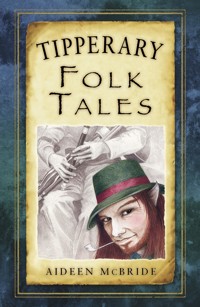
County Tipperary, the second largest county in Ireland, has a rich and colourful history that has inspired many myths and legends. A selection of the best are retold here, collected and reworked by professional storyteller Aideen McBride. Within these pages you will discover how the first settlers came to Ireland, what might happen if you join in the singing of the fairies of Knockgrafton and where treasure is said to be buried; you will learn how Lough Derg, the 'lake of the bloody eye', and Slievenamon Mountain, 'the mountain of the women', got their names; you will meet legendary Irish poets, pipers and shoemakers and the first King of Cashel, Conall Corc; and be told the stories of the legendary Battle of Widow McCormack's Cabbage Patch. From age-old legends and fantastical myths to amusing anecdotes and cautionary tales, this collection is a heady mix of bloodthirsty, funny, passionate and moving stories. It will take you into a remarkable world where you can let your imagination run wild.
Sie lesen das E-Book in den Legimi-Apps auf:
Seitenzahl: 270
Veröffentlichungsjahr: 2015
Das E-Book (TTS) können Sie hören im Abo „Legimi Premium” in Legimi-Apps auf:
Ähnliche









ACKNOWLEDGEMENTS
My thanks to the following for whose time, help, guidance and encouragement I am deeply grateful: my family – David, Ellen, Michael and Sarah McBride, Nicola and Laura Moore and David and Mark Sheehan; Críostóir Mac Cárthaigh and the staff of the Folklore Archives UCD; the staff of the National Library of Ireland, Kildare Street; Tom Whyte; Terry Cunningham; and fellow folk tale authors Richard Marsh, Steve Lally, Brendan Nolan, Joe Brennan, Anne Farrell and Nuala Hayes.
CONTENTS
Title
Acknowledgements
Introduction
About Tipperary
1. From Long Ago
2.
An Gobán Saor
3. Slievenamon
4. Cashel and its Kings
5. Saints of County Tipperary
6. Places of Tipperary
7. People of Tipperary
8. Joseph Damer
9. Rebels, Ruffians and Hard Times
10. The Battle of Mrs McCormack’s Cabbage Patch
11. Hunted Priests and Hidden Treasure
12. Fr Nicholas Sheehy
13. Fairytales and Lore
14. Knockshegowna
15. Knockgraffon
16. Bill Moroney’s Dream
17. Will Handrahan the Fairyman
18. The First Ever Brogue Maker
19. The Fairy Pipe
20. The Young Piper
21. Humour, Wit and Love
22. Pardon
23. Ghostly Goings On
24. The Dullahan
25. Cards with the Devil
Pronounciation Guide
Sources and Collectors
Bibliography
Copyright
INTRODUCTION
In 2013, my father and I were invited to write the Carlow edition for The History Press Ireland’s folk tales series. It was a very enjoyable experience, delving into local histories, discovering yarns and tales of local places and people, and learning new things about my county. I so enjoyed the results of those hours of research and discovery that afterwards I approached The History Press Ireland to see if there were any other counties still in need of an author in order to complete the planned series. My nearest neighbours were already in the process of being written but Tipperary, I was told, was still in need of an author. So, after a few initial enquiries, I took it on.
I am not a native of Tipperary, which I felt put me at a disadvantage. As a child, I had visited some of the well-known sites in the county; the Rock of Cashel, Cahir Castle and Holy Cross Abbey, but other than that I was not overly familiar with its geography or history.
This project has changed all that. I had to leave the motorway and main roads and take to the back roads, in a journey both physical and literary, to bring together this selection of stories and lore. What more enjoyable way can there be to learn about a place than to delve through its histories and stories? No more will I take the motorway to quicken my journey to another destination. Tipperary has become for me a destination in its own right, somewhere that, of a summer’s day, I can load the car with a picnic and say, ‘Come along and I’ll show you where …’. I hope that this book might have a similar effect on those of you unfamiliar with the county, that you too might be inspired to take the chance to visit a place steeped in history and folklore, and maybe discover some of those hidden places for yourselves.
To the natives of Tipperary, I am sorry I couldn’t tell every story. There were so many and not enough pages, and I know even now I haven’t heard them all yet. I hope this short selection goes some way towards supporting your pride for your county. And why not be proud? Tipperary is a county linked with the very beginnings of Ireland. The very first entry in the Annals of the Four Masters refers to the arrival of Cessair and her companions on the shores of Ireland, and her coming is linked to Tountinna in the Arra Mountains. Tipperary is a county that has seen its share of suffering; under the Danes and Vikings, under Cromwell, and through the famine. Yet, it has stories of hope, resourcefulness and determination throughout. It is a county which stood against the tyranny of unfair landlords and produced leaders who toiled for Irish freedom. It is a county of saints and kings, of wit and wonder.
This book is just a selection of the stories from across the county. There are places like Cashel, the Glen of Aherlow, and Slievenamon so steeped in Irish mythology and history that you could fill a book on them alone. Indeed others have, and in my searches I have come across My Clonmel Scrapbook, a 380-page volume by James White, first published in 1907, with stories and newspaper clippings of Clonmel, and John O’Neill’s Handerahan the Irish Fairyman and Legends of Carrick, first published in 1854, with stories from Carrick-on-Suir. Every signpost points to a story preserved in a name or events it has been witness to. I have tried here to pick a selection from across the generations and geography of Tipperary.
The majority of this material has come from the treasure trove accessible in the National Folklore Archives in UCD, from the Schools Collection in the 1930s and later collections made by Seosamh O’Dálaigh in the area around Two-Mile-Borris in the 1940s and ’50s. I can’t say enough about how valuable those collections are, nor how greatly I admire and appreciate the ideals of those responsible, who created and curated such an extensive collection. Materials from the Tipperary Schools Collection will soon be available to view online through www.duchas.ie. Other sources include old manuscripts of the first millennium, translations of which can be viewed online though UCC’s Copus of Electronic Texts at www.ucc.ie/celt.
There is another great source of local stories which I haven’t tapped on this occasion, and that is the many individuals living across the county who carry on the stories from generations past, adding to the folklore of a new generation. Every community has such men and women, and their position is an important one. I hope though, that this collection might feed a curiosity which will lead to a greater interest in our local stories, not just in Tipperary but right across the country, creating opportunities for those storytellers and lore-keepers to share their stories, wit and in-depth knowledge of their own localities.
ABOUT TIPPERARY
For those of you not already familiar with Tipperary, let me give you a picture. Tipperary is the second-largest county in Ireland. It is an inland county, surrounded by eight other counties and bordered by two main rivers: to the west, the River Shannon with Lough Derg and counties Galway, Limerick and Clare; to the north, County Offaly; to the east, counties Laois and Kilkenny; and to the south, counties Waterford and Cork with the River Suir. There are other smaller rivers which are tributaries either to the River Shannon or River Suir. The mountain ranges of the county include: the Galtee Mountains, which border counties Clare, Limerick and Cork; the Silvermine Mountains a little further north; the Arra Hills to the west, which lie between Killaloe and Nenagh; the Knockmealdown Mountains, which form part of the southern border with County Waterford; Slievenamon, which lies between Fethard and Carrick-on-Suir; and the Devil’s Bit up near the Offaly border. In the centre, lies the Golden Vale, a rich, fertile rolling pasture for which Tipperary is prized.
Tipperary has a rich and coloured history. The Danes were present from the ninth century and the Vikings came in the tenth century, ransacking the monasteries and causing havoc, leading to the emergence of leaders like Brian Boru. The Normans came in the twelfth and thirteenth centuries, building forts and strongholds, and dividing the county into its twelve baronies. Many of them remained, settling to become permanent features of the county’s history. Cromwell arrived in the 1640s, leaving his mark across many of the towns, communities and monasteries, both physically and psychologically. His name still sends a shiver through a person’s spine, with stories of hunted priests, murder and violence, and even some tales of hidden treasures still waiting to be found.
The famine affected Tipperary badly, and there are both horrific stories highlighting the indifference of absentee landlords (like Lord Portarlington, who came to feast while his people suffered and returned to England leaving only £100 to help the afflicted) and stories of great generosity and hope. The apathy those abusive landlords showed led to the formation of groups like ‘the Whiteboys’, some of whom could be just as ruthless as the landlords they were standing up to, and later inspired the likes of Thomas McDonnagh, Charles Kickham and Daniel Breen to work both politically and through revolution for better conditions and a free Ireland.
Like any other county, Tipperary also has its sports heroes and heroines, musicians, entrepreneurs, storytellers and advocates. The local websites and parish pages carry lists of the sons and daughters in whom they take pride. It is a county today famed for its historical and ecclesiastical sites and places of natural beauty. A county feared for its hurlers. Above all it is a place well worth visiting, and I hope some of the stories here might entice you to do so. You might even feel inspired to gather the ones I’ve missed.
Aideen McBride, 2015
1
FROM LONG AGO
So let’s start at the beginning. There was once a time when there were no people living on the island of Ireland, before it was ever called Ireland. There was a time before the rivers had sprung or the mountains were raised. In that beginning there came the very first settlers. Like most counties, Tipperary has a history which reaches back into the mythology of Ireland, but unlike most other counties Tipperary can claim a link with the very first settlers to Ireland. Here is that story.
FIONNTAN MAC BOCHAN TOUNTINNA OF THE ARRA HILLS
Back in biblical times, Noah was working on his ark. He gathered the wood and materials to build it and then collected together all the animals as God had told him, at the same time preparing his family for what lay ahead. However, not all of Noah’s children were permitted onto the ark; some it seems had chosen lives of theft and lies and there was no place for them in the new world Noah was to build. Noah’s son Bith was one of those denied passage on the ark, but Bith’s daughter Cessair promised to lead her father and friends to safety if they would follow her. She would take them west, to the edge of the known world, to a land where no people had ever been and no sin had ever been committed and hopefully there they could start a new life and escape the flood.
The group headed off, the journey was treacherous and there were storms and high seas. Cessair, Bith and their companions finally landed on the shores of Corca Duibhne, in County Kerry, shortly before the time of the Great Flood. But it had been a hazardous journey and two of their three boats were lost on the way. The group of travellers who had survived was made up of fifty women, including Cessair, but only three men, Bith, Ladhra and Fionntan mac Bochra. It is they who finally alighted on the shore of Ireland, tired and weary from their long journey.
These were the first people to inhabit Ireland and they brought with them the first sheep to come to this island. They began to build a new life for themselves, but as there were only three men, the women began fighting over which of them would get to be married. The women decided they would have to share husbands. While each man had a principal wife, they also had fifteen other wives. Cessair married Fionntan. It was a tough job caring for all those wives and Fionntan found it particularly difficult but he managed as best he could.
Ladhra died soon after at a place named Ard Ladhrann on the Wexford coast, he was the first person to die in Ireland and is remembered as the first person to be buried on the island. When he died his wives were divided between Bith and Fionntan. Bith died not long after Ladhra and is believed to be buried under the cairn that bears his name on Slieve Beatha in County Fermanagh. Fionntan was left to care for all the women. This was too much for poor Fionntan so he ran away, and hid in a cave in the Arra Hills.
Soon after that the flood came and covered all the land with water. Fionntan, hiding in the cave in the Arra Hills, escaped the worst, but he was the only one high enough to escape the water, he alone survived the flood, Cessair and the other women and their children all dying. The cave in which Fionntan had taken refuge became known as Tonn Tuinne, ‘the height of the flood’; today it is known as Tountinna and is the highest point on the Arra Hills.
Alone in the land, Fionntan passed his time changing form. Sometimes he was a salmon, swimming through the rivers; sometimes an eagle flying to great heights. He lived to a great age, 5,000 years, and saw the coming of other races to Ireland: the Fir Bolg, the Formorians, the Tuath Dé Dannan and the Milesians. Fionntan noticed and noted all that happened on the island during his long lifetime, and if ever a king needed advice or guidance Fionntan was there to give it, as he did for Diarmuid Mac Cearrbheoil, High King of Ireland, towards the beginning of his reign about the proper manner of procedure according to the ancient way of things; no one could remember but Fionntan, who had witnessed how things had been done long ago, was able to direct Diarmuid. Shortly after his meeting with Diarmuid, Fionntan passes out of Irish history. Some believe he left Ireland to the new beliefs in the safe hands of Christianity.
‘If I had lived Fintan’s years’ is a phrase that can still be heard said.
BODB DERG
During the time of Fionntan, but before the coming of our race, the Tuath Dé Dannan ruled over Ireland. The Tuath Dé Dannan were a race of gods, with near immortality, who ruled in Ireland after the Fir Bolg. It was they who defeated Balor of the Evil Eye and the Formorians who had come from the sea. They brought music and feasting, war and healing. And in the time when they held most power – before their defeat at the battle of Tailtin after which they removed themselves to homes beneath the earth, emerging only from time to time – they had their own places of importance and ritual in Ireland. Among those were the raths, dwelling places of theirs which were dotted across the county. One of these was Sidh-ar-Feman on Slievenamon, the home of Bodb Derg.
There are a number of stories which involve Bodb Derg, the grandfather of the Children of Lir. Bodb had fostered the three daughters of Oilell of Aran and two of these had married King Lir, the second turning her niece and three nephews into swans out of jealousy, in what is probably one of the most well-known stories of Irish mythology. But there are other stories involving Bodb and here are two of them, one with that familiar theme of turning into swans. Both are stories of love and longing.
CROTTA CLIACH – THE HARPS OF CLIACH
Cliach was a harper to Smirdubh MacSmal, king of the three Rosses in Connacht, and he was a good harper. He had fallen hopelessly in love with the daughter of Bodb Derg, but she had no interest in him. He came to Slievenamon where Sidh-ar-Femhin stood, and began to play his harp. He played his harp beautifully and sang sweetly, but to no avail. Bodb’s daughter was not interested, and Bodb was not impressed. He drew up a mist over the rath so that Cliach could not see it, and would not be able to enter. Cliach did not give up. He moved back a bit to the hills of the Galtee Mountains, nearly 30 miles away, and continued to play and sing. Sometimes he played two harps at the same time to show his skill, playing the most beautiful music, but still the daughter of Bodh showed no interest. She did not even acknowledge the beautiful music and she never came to him. He played for the whole of another year, but to no avail. Her heart was not softened; she had no love for Cliach.
Cliach was heartbroken. The earth on which he stood was not as hardened as Bodb’s daughter’s heart and it opened and cracked. A lake formed on the hill and from it came a dragon which took Cliach and dragged him down into its depths. The lake became known as The Mouth of the Dragon or in Irish Loch Béal Dragan, today known as Lough Muskry. Those hills were known as Crotta Cliach – ‘the Harps of Cliach’. Today we know them better as the Galtee Mountains, and sometimes on a quiet day, when the wind is soft, you can still hear echoes of Cliach playing on the wind.
There is a lovely walk through the Galtee’s up to Lough Muskry. The name Muskery comes from Cairbe Musc, son of Con of the Hundred Battles, who lived in that area at one time. Some come to see if they can hear the music of Cliach still in the air, some to see if there is any sign of the three times fifty beautiful maidens (who you’ll hear about in the next story), some just to admire the scene and find the lake hidden among the hills ready to surprise the unwary traveller. If you like walking and haven’t been there yet, then go.
If the lake was brought into being through a story of unrequited love, there is another story of the lake which has a happier ending.
AONGHUS’ LOVE SICKNESS
Aonghus was the half-brother to Bodb Derg by his father the Dagda. His mother was Boinn, who gave her name to the river Boyne. Aonghus lived at Brugh na Bóinne with his mother.
One night he had a dream, an aisling or vision. He saw a beautiful woman approach him, but just as he reached out to touch her she disappeared. The following night he had the same dream with the same result, just as he reached out to touch her she disappeared. Every night for a year he had this dream and he was growing sick with longing and love. A doctor was sent for and, after examining Aonghus, he called for Boinn.
‘Boinn,’ he said, ‘Your son suffers from a love sickness and unless the maiden be found of whom he dreams he is lost.’
Boinn lost no time and went at once to search all of Ireland for the maiden Aonghus described from his dream. At the end of a year she had had no luck. Boinn called for Dagda, Aonghus’ father.
‘Dagda,’ she said, ‘Aonghus suffers from a love sickness and unless the maiden be found he is lost.’
Dagda lost no time, he went to his son Bodb Derg at Sidh-ar-Femin on Slievenamon. He explained the story to Bodb and described the maiden Aonghus had seen in his dream. Hearing the description of the visionary woman, Bodb recognised her as a form who had been seen on Loch Béal Dragan. Bodb told Dagda to take Aonghus to Loch Béal Dragan (Lough Muskry) at Samhain (the night joining the last day of October and the first day of November), and that there he would see the vision of his dream.
The Dagda took Aonghus to Loch Béal Dragan at Samhain. There Aonghus saw three times fifty beautiful maidens with silver chains about them, and the one with a golden chain. She was the vision from his dream. But how to meet her? Who was she?
Aonghus was anxious to learn who this maiden was, that he might talk with her. When they returned to Bodb he was able to tell them that she was Caer, the daughter of Eathal Anbhuail of Sidh Uamhain in Connacht, and that she was not of this world but of the otherworld. Dagda went to Queen Maebh, the Queen of Connacht, told her the tale and asked if she could help them meet Caer. Maebh sent for Ethal Anbhuail; he arrived but explained that he had no power to grant his daughter to Aonghus as wife. She was under an enchantment, one year in one form, one year in another. If Aonghus had seen her that Samhain as a young maiden then the following Samhain she would be in the form of a swan.
The next year Aonghus returned to Loch Béal Dragan at Samhain. There on the lake were three times fifty swans with silver chains about them and among them one with a golden chain. Aonghus went to the water and called to Caer. She turned and came toward him, as she neared he too was turned into a swan. They flew three times around the lake and then left for Brugh na Bóinne.
There, their sweet singing sent everyone asleep. Aonghus and Caer remained there at Brugh na Bóinne, together.
SENCHÁN TORPEIST
Senchán was one of the great Irish poets from the seventh century. His father was from the Arra sept of the North Tipperary–Limerick border area, an area which Senchán’s surviving work shows he was familiar with.
Senchán was a much-travelled man; he was at the convention of poets in Derry in AD 575, and a favourite of King Guaire in Connacht. He was appointed chief ollamh – chief poet of Ireland – but my favourite story is of his visit to the Isle of Man. It wasn’t unusual for poets or poetesses to go travelling at this time; likely it was a way to gain inspiration and find muses. There had once been a famous poetess in East Limerick by the name of Ingen of the Uí Fidhgheinte clan who had gone on a circuit of Ireland, Scotland and the Isle of Man but who had never returned. No one knew what had happened to her.
Senchán though, wasn’t planning on going missing, he took a great retinue of poets with him, fifty in all, and they all set off. Just as their boat was pulling off however a man called to them from the shore to bring him with them. Senchán turned back and there on the shore was the ugliest man he had ever seen. The man had a great lump protruding from his forehead which was oozing puss, his clothes were filthy and torn and he was crawling with lice.
‘Bring me with you,’ called the man, ‘I’ll be better company for you than those haughty men who think they are poets.’ Senchán, amused by the man’s wit, decided to bring him along. When they reached the Isle of Man they met a tall old woman on the shore, gathering winkles. Senchán told her who they were and where they were from. She challenged them in poetry, and her words were so well formed that Senchán and his companions were hard pressed to come up with suitable replies and they soon gave up. But the stranger, the ugly old man crawling with lice and oozing puss, answered her, and spoke in such a poetical manner that he was declared winner of the contest. During the course of the dialogue between the old woman and ugly man, Senchán realised that the old woman was none other than the famous Ingen, the missing poetess of East Limerick and he invited her to return to Ireland in the boat with them. As they travelled back Senchán noticed that the old ugly man was changing. He was no longer crawling with lice, nor was the puss oozing from his head – in fact, the lump on his forehead seemed to be reducing in size. By the time the coast of Ireland had come into view he had transformed into a handsome young man. As soon as they reached the shore he disappeared, for he was the Spirit of Poetry who had accompanied them on their journey.
Senchán is probably best remembered as the one who found the lost story of Táin Bó Cúailnge – The Cattle Raid of Cooley. Now maybe you are one of the many who have heard the great epic tale, which tells how Queen Maebh, growing jealous of her husband’s acquired goods, sent her soldiers to take the great bull of Cooley for her own. This led to a great battle between the men of Connacht under Maebh and the men of Ulster. But the men of Ulster, finding themselves afflicted with a sickness at that time, had none to defend them but Cúchulainn himself. The great poem tells the story of the battle, the lead up to the battle and the fall-out afterwards. However, were it not for Senchán you would never have heard the story at all, for it was lost to the people of Ireland. A great sage had taken the manuscript to the east, leaving another manuscript in return, and other than snippets of the poem remembered by poets here and there in the country, the greater part of the story had been lost and forgotten.
One time, while a guest of King Guaire, Senchán tried the patience and generosity of the king. At that time poets had great power. Anyone who did not make them welcome or answer their requests, or give them what they wanted, could find themselves the subject of one of their satires and these satires were not only damaging to a person’s reputation, but were also, in some cases, believed to have a cursing effect; whatever ill a poet might wish upon a king or chieftain was sure to come to pass. For example, at one time it was said that Senchán, upset by the actions of rats who had gnawed or nibbled into his food, composed a satire of four lines which resulted in ten of the said rats falling dead immediately.
On this occasion Guaire’s patience and generosity were spent and exhausted. He was sick of Senchán and his demands, so he asked Senchán to recite a poem for him.
‘Of course your majesty,’ said Senchán, ‘What poem will I recite for you?’
‘Táin Bó Cúailnge!’ demanded Guaire.
But Senchán couldn’t; he didn’t know the poem and he was insulted. Guaire well knew the poem was not to be had but Senchán had no choice but to search for any remains of the lost poem. He visited many poets, some of whom remembered bits and pieces of the lost work, but still there were huge tracts missing. Then Senchán met with his half-brother, St Cillian of Fenagh, in County Leitirm. Senchán and Cillian had the same mother, but Cillian’s father was a direct descendant of King Fergus mac Róich. Fergus Mac Roích had been alive during the Cattle Raid of Cooley and part of the events of that time.
In fact, he had been king until his nephew Conor Mac Nessa tricked him out of it. When Naoise had run away with Conor’s intended bride Deirdre, Conor sent Fergus to tell them it was ok to return home; but when they did Conor killed them all. That was the last straw for Fergus and he defected from Conor and Ulster into the service of Queen Maebh in Connacht, the same Queen Maebh who sent the men to take the brown bull of Cooley.
Together, Senchán, Cillian and some saintly friends of Cillian including Colmcille, Ciaran of Clonmacnoise and Brendan of Birr went to the grave side of Fergus. They kept vigil there, fasting for three days and nights. On the third day Fergus appeared to them, sat with them and recited the story of Táin Bó Cúailnge in its entirety, and St Cillian wrote down all that Fergus said. Ciaran of Clonmacnoise gave the cow (his favourite) to provide the hide to make the velum onto which the poem was written and it is one of the passages included in the Book of Dun Cow, preserved today in the library of the Royal Irish Academy.
The next time you hear mention of the story of Táin Bó Cúailnge, remember just how close we were to never having a chance to hear it at all, and it being lost forever.
Sources
Fionntan Mac Bochan/Toutinne of the Arra Hills:Annals of the Four Masters, Myths Legends and Romance
Crotta Cliach – The Harps of Cliach and Aonghus’ Love Sickness:The Book of the Galtees and Golden Vein; local websites; ‘Myth Legends and Romance’ The Prose Tales in the Rennes Dindshenchas; The Book of The Galtees and Golden Vein by Paul J. Flynn (Hodges, Figgs and Co., 1926)
Senchán Torpeist:Source Book of Leinster
2
AN GOBÁN SAOR
In ancient times in Ireland there were many craftsmen of wood, metal and stone. Some were greater than others and were master craftsmen, and some were so skilled they were sought out not only in their own districts and counties, but from other countries and further afield as well.
The Gobán Saor was one of those highly skilled master craftsmen (Gobán is from the Irish word for ‘smith’ or ‘craftsman’ and an Gobán Saor was one of the best). He is said to have had a hand in some of the oldest and most impressive buildings in Ireland, including St Moling’s church and Ferns Castle. Mind you, there is probably many a building where people would like everyone to think that they were wealthy enough or sensible enough to have employed the Gobán Soar, and maybe he had no hand there at all.
The Gobán Soar, by all accounts, was not only a master craftsman but a sensible man too. He and his wife had been married a long time when she died, leaving the craftsman and his grown son Darra to fend for themselves. Now the Gobán Saor had no aversion to hard work, building and hauling, chiselling and hammering but cooking and cleaning did not come under his remit and it wasn’t long till they felt the want of a good woman about their place.
One day the Gobán Saor called his son to him. ‘Son,’ said he, ‘I could never replace your mother but if you were to find a good, hard-working woman for a wife, we could have our cooking and cleaning looked after.’ And he sent his son on an errand to find a good and clever wife for himself. Darra was to travel to the market with a sheep skin for sale. It was a beautiful soft skin with the wool still on it and Darra was to return with the skin and the price of it.
Darra thought this an impossible task, for who would buy the skin and then give it away again? But he did as his father asked and went to the fair. All day long many young women admired the sheep skin and asked the price of it, when they heard that the young man meant to be paid the price of the skin and yet take the skin away with him they soon walked away.
That evening Darra was returning home with the sheep skin and he fell into walking beside a young woman on the road. She too admired his sheep skin and asked him how much he wanted.
‘The price of the skin and the skin,’ he said expecting that she too would walk away. She handled the skin for a while, ‘Yes,’ she said, ‘I think we can agree on that, come to my father’s house and we’ll settle the bargain.’ And she brought the surprised son of the Gobán Saor to her father’s house.




