


Erhalten Sie Zugang zu diesem und mehr als 300000 Büchern ab EUR 5,99 monatlich.
- Herausgeber: Huia Publishers
- Kategorie: Gesellschafts- und Liebesromane
- Sprache: Englisch
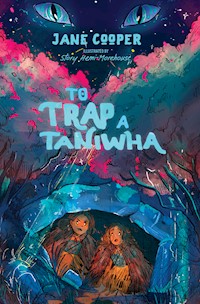
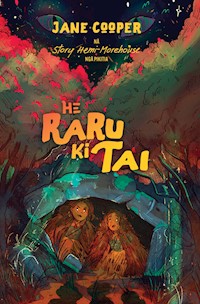
To Trap a Taniwha and He Raru ki Tai is an adventure story set in seventeenth-century Tāmaki Makaurau Auckland when the hapū of Ngā Oho/Ngā Iwi predominated. Armed with the courage of their convictions, two girls embark on a perilous journey to challenge their leaders' actions. Cousins, Te Kawenga and Kakati learn of a plan being hatched against a neighbouring iwi and strange activity occurring at a seasonal fishing camp. A huge trap is being built to snare and kill Ureia, the taniwha of Hauraki iwi. The cousins fear the retribution that will be taken on their people if Ureia is killed. So they take a dangerous journey to defy the decision of their people and try and save the taniwha.
Sie lesen das E-Book in den Legimi-Apps auf:
Seitenzahl: 52
Veröffentlichungsjahr: 2022
Das E-Book (TTS) können Sie hören im Abo „Legimi Premium” in Legimi-Apps auf:
Ähnliche



















First published in 2022 by Huia Publishers39 Pipitea Street, PO Box 12280Wellington, Aotearoa New Zealandwww.huia.co.nz
ISBN 978-1-77550-726-0 (print)
ISBN 978-1-77550-785-7 (ebook)
Text copyright © Jane Cooper 2022Illustrations copyright © Story Hemi-Morehouse 2022
This book is copyright. Apart from fair dealing for the purpose of private study, research, criticism or review, as permitted under the Copyright Act, no part may be reproduced by any process without the prior permission of the publisher.
A catalogue record for this book is available from the National Library of New Zealand.
To Trap a Taniwha was originally published by Huia Publishers in te reo Māori and was the winner of the Storylines Te Kahurangi Kāterina Te Heikōkō Mataira Award 2021 for a manuscript written originally in te reo Māori.
Published with the assistance of
Ebook conversion 2022 by meBooks
Dedicated to my fearless mokopuna, Hinauri
CONTENTS
1 The Curious Cousin
2 The Plot
3 The Riddle
4 Te Mānukanuka o Hoturoa
5 The Refuge
6 An Omen from the Depths
7 Captives
8 The Welling of Tears
Author’s Note
Glossary of Place Names
TĀMAKI-MAKAU-RAU
1
THE CURIOUS COUSIN
The first shafts of light streaked the dawn sky as Te Kawenga strapped three large tahā across her back. The trek to fetch water from the spring was her first chore of the day.
‘Our home may feel vulnerable, lying outside Te Ngutu,’ her grandmother reasoned, pointing to the pā entrance, ‘but at least it’s the closest dwelling to the clear waters of the puna.’ The logic failed to sweeten the daily drudgery.
Skirting the outer palisade, Te Kawenga scurried down the track that led to the gardens and the swamp beyond. The path was lined with whau trees in full bloom as if dusted with snow. She leapt out of the way as two workers, shouldering baskets laden with gravel, trudged around a bend in the narrow path. The pīpīwharauroa had been heard whistling in the treetops since Ōrongonui, when the moon traced a faint crescent in the night sky. Now as the days grew warmer, preparation of the gardens was well underway.
Te Kawenga knelt down at the water’s edge, greeting others who arrived as she trailed each calabash across the still surface.
‘Hey sis, has your father returned from Pūponga yet?’ her cousin Kakati asked.
‘No, he’s not expected back until the scrub is cleared and the soil’s ready.’
‘Well, I think there’s more than gardening going on over at that headland.’
‘What do you mean?’
‘Since when do you need lengths of supplejack to dig up roots? Te Tarata and his men have been soaking kareao vines in the swamp at Ngā Ana Wai. They plan to take them to Pūponga, but they refuse to tell me what they are for.’
‘Hey, they’re just getting ready for shark season. You know Te Tarata is always in charge of the fishing gear. So what do you reckon he’s up to?’
‘Not sure, just keep your ears open. Something fishy’s definitely up.’
‘Ha, ha. Maybe you’re a bit paranoid.’ The younger cousin grinned, fastening her shoulder straps.
Te Kawenga met her mother and sisters outside the gateway to the gardens. The air was fresh as they sat wrapped in their pākē rain capes, propped up against the stone perimeter wall, eating eel leftovers from the previous night.
‘Go easy now. Kia āta inu,’ her mother implored as they drank deeply from the tahā. ‘That water has to last the day. Shortly, you can all help me to carry up the ash and shell to mix into the soil, then the garden will be ready for Kui to plant our seed tubers.’
The shrill squawk of a pūkeko rang out as old man Hape came stumbling along, chasing the flapping bird through the entrance.
‘Blasted pests! Once the kūmara are in, we’ll erect the fences. That’ll stop them when they creep up from the swamp,’ he exclaimed.
‘I can help father shoo them away,’ Piri offered.
‘Talking of Matua, when is he due home?’ Te Kawenga quickly chimed in.
Their mother didn’t reply. She had already stored their kai away and was striding towards the row of kete lined up outside the guardian’s lean-to. The younger tamariki came straggling along behind, holding one handle each of the kete and lugging them over to their family garden plot.
‘Is Matua working with Te Tarata?’ Te Kawenga ventured.
‘Why do you ask?’ her mother inquired, eyeing her briefly as she dug furrows in the freshly turned soil.
‘Kakati wants to know what Te Tarata is up to at Pūponga.’
‘Your tuakana should mind her own business,’ her mother retorted. ‘Now go back and fetch some more baskets.’
*
By the time the sun was high in the sky, the work was done, and the tamariki were complaining of hunger.
‘Kui will have something ready for us.’ Their mother consoled them as they headed back to the pā. ‘Be patient, my little tītī.’
Halfway up the slope, Te Kawenga turned to look back to the distant shoreline. The tide was out and on this cloudless day, the rocks of Te Rōutu O Ureia were visible in the Waitematā. Te Kawenga had once seen the waters churning around the reef while the sea beyond glinted calm and undisturbed. She had convinced herself that Ureia, the tapu Hauraki taniwha, was scratching his back on his jagged comb.
It was on a winter’s evening when whānau had gathered for an evening of storytelling at the whare tapere that Te Kawenga had first heard the tales of Ureia. The beloved taniwha was said to have guided Tainui waka through the waters of Tīkapa Moana o Hauraki into the Waitematā when the voyaging canoe arrived from Hawaiki. The elders hinted that Ureia might occasionally still visit Tāmaki-makau-rau.
Ever since, Te Kawenga had trained her eyes to pick out every headland and rocky outcrop along the coast when descending their mountain settlement of Maungawhau. During summer fishing camps on the Waitematā, she was sometimes hesitant to go into the water for fear of encountering the taniwha. But her Kui was adamant that children who respected the tikanga of shellfish gathering would come to no harm.
‘In any case,’ she would reassure her, ‘Ureia is too busy protecting his Hauraki people.’
*




