


Erhalten Sie Zugang zu diesem und mehr als 300000 Büchern ab EUR 5,99 monatlich.
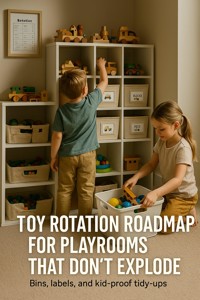
Turn chaotic playrooms into calm, creative spaces with Toy Rotation Roadmap for Playrooms That Don't Explode. This smart, parent-friendly guide shows you how to use bins, labels, and simple routines to keep toys organized—and kids happily engaged. Learn how to set up an easy toy rotation system that sparks excitement without overwhelming your children or your space. Discover labeling tricks that even toddlers can understand, kid-proof tidy-up methods that actually stick, and minimalist-inspired strategies for managing toy clutter in real family homes. Designed for busy parents, this roadmap helps you create order that lasts while teaching your kids independence, focus, and appreciation for what they have. With clear steps, before-and-after examples, and realistic maintenance routines, this book makes playroom calm possible—no fancy systems, no frustration, no explosions.
Sie lesen das E-Book in den Legimi-Apps auf:
Seitenzahl: 201
Veröffentlichungsjahr: 2025
Das E-Book (TTS) können Sie hören im Abo „Legimi Premium” in Legimi-Apps auf:
Ähnliche













Table of Contents
Chapter 1: Understanding the Chaos
The Nature of Toy Chaos
The Impact of Toy Overload
The Role of Routines
Understanding Child Development
Chapter 2: The Philosophy of Minimalism in Family Life
Understanding Minimalism
Benefits of a Minimalist Home
Minimalism and Child Development
Practical Steps to Achieve Minimalism
Chapter 3: The Benefits of Toy Rotation
Understanding Toy Rotation
Enhancing Creativity Through Rotation
The Impact on Focus and Attention
Research Insights on Reduced Toy Access
Chapter 4: Designing a Playroom That Works
Understanding Playroom Functionality
Choosing the Right Furniture
Effective Storage Solutions
Encouraging Independent Play
Chapter 5: Essential Supplies for Toy Rotation
Understanding Your Needs
Bins and Baskets Essentials
Effective Labeling Strategies
Storage Solutions Beyond Bins
Smart Cleanup Tools
Budget-Friendly Supply Options
Chapter 6: Creating a Simple Toy Rotation Schedule
Understanding the Benefits of Toy Rotation
Identifying Your Family’s Needs
Establishing a Rotation Schedule
Keeping It Simple with Tidy-Up Techniques
Evaluating and Adapting Your System
Chapter 7: Labeling for Success
The Importance of Labels
Creative Labeling Ideas
Best Practices for Labeling
Turning Tidying Up into a Game
Chapter 8: Kid-Proofing Your Organization System
Understanding Kid-Proofing Basics
Choosing the Right Storage Solutions
Effective Labeling Techniques
Building a Kid-Friendly Tidy-Up Routine
Encouraging Independence through Playroom Design
Maintaining Your Kid-Proof Organization System
Chapter 9: Implementing and Adjusting Your System
Introducing the Toy Rotation System
Setting Up the Routine
Monitoring the System’s Effectiveness
Making Adjustments as Needed
Chapter 10: The Role of Routines in Family Life
Understanding the Importance of Routines
Morning Routines: Setting the Tone for the Day
Evening Routines: Winding Down Together
Playtime Routines: Making Play More Meaningful
Chapter 11: Teaching Kids to Declutter
The Importance of Decluttering
Age-Appropriate Techniques
Creating a Decluttering Routine
Teaching Mindfulness in Toy Selection
Making Decluttering a Family Activity
Chapter 12: Maintaining a Calm Playroom Over Time
Establishing Routines for Tidying Up
Keeping Toys Engaging
Simple Labeling Strategies
Emphasizing Minimalism
Chapter 13: Fostering Creativity Through Organization
The Connection Between Organization and Creativity
Creating a Playroom Layout that Inspires
Easy Systems for Toy Management
Fostering Creativity with Minimalism
Chapter 14: Case Studies: Transformations in Real Family Homes
The Johnson Family: From Wreck to Zen
The Martinez Family: Simplicity and Comfort
The Robinson Family: A Playful Adventure
Chapter 15: The Long-Term Benefits: Skills for Life
Building Focus and Concentration
Encouraging Responsibility and Independence
Inspiring Creativity and Imagination
Fostering Emotional Development
Chapter 16: Conclusion: A Roadmap to a Calmer Home
Revisiting the Core Ideas
Celebrating Your Progress
Practical Tips for Maintenance
Encouraging Family Participation
Looking Ahead: The Future of Your Playroom
A Roadmap to a Calmer Home
Chapter 1: Understanding the Chaos
Every parent knows the feeling: toys sprawled across the floor, making any semblance of order seem impossible. In this chapter, we will explore the reasons behind toy chaos and why it often leads to frustration for both parents and children. By understanding the underlying issues, we can begin to craft solutions that bring peace and creativity back to our playrooms.
The Nature of Toy Chaos
Understanding the nature of toy chaos is the first step towards a more organized playroom. Many parents feel overwhelmed by the volume of toys their children accumulate. In this section, we will discuss the types of toys that contribute to clutter and how they interfere with a child's play experience.
1. Diverse Types of Toys
Toy chaos is often fueled by the variety of toy types that children accumulate. From action figures and building blocks to stuffed animals and puzzles, each category brings its unique challenges. A diverse collection can make it hard for children to focus and engage fully with any single toy, rendering playtime less effective. Instead of learning and exploring, they end up distracted by their overwhelming options.
Understanding this chaos includes realizing how these mixed types can lead to clutter and confusion. For instance, if building blocks are mixed with small figurines, children may struggle to find specific items or lose interest in imaginative play altogether. By categorizing toys into distinct groups, parents can create a more organized space that encourages targeted activities, enabling children to play with intention and creativity.
2. Emotional Attachment
Children often develop profound emotional connections to their toys, viewing them as meaningful companions or sources of comfort. This attachment can lead to resistance when it comes to decluttering or even parting with worn-out items. For many kids, each toy holds memories and experiences that enhance their playtime.
For parents, the challenge lies in balancing these emotional bonds with the necessity of maintaining an organized space. Helping children understand the concept of giving away toys they no longer play with can be beneficial. Creating a designated area for toys they love and using a rotation system can also make it easier for them to part with those they no longer engage with, while still respecting their feelings.
3. Overwhelm from Choice
One of the surprising effects of having too many toys is choice overload. When children are faced with a plethora of options, it can lead to indecision and frustration rather than creativity and exploration. In such environments, they might struggle to concentrate on play, as their attention is scattered among too many potential activities.
This overwhelm not only diminishes their ability to engage deeply with their toys but can also negatively impact their overall play experience. Simplifying their choices through a toy rotation system allows children to focus on a smaller selection of toys at a time, fostering deeper imaginative play and encouraging them to create their own scenarios and games.
4. Lack of Defined Play Areas
Chaos in playrooms often stems from a lack of defined play areas tailored for different activities. Without clear zones for arts and crafts, building, or pretend play, toys are likely to be scattered throughout the space, contributing to disorder and making cleanup difficult. When every toy lives in a single area, it becomes challenging to facilitate an organized play environment.
By creating designated areas for specific types of play, parents can promote better organization and help children understand where each toy belongs. Implementing clear boundaries not only reduces clutter but also enhances the play experience, allowing children to engage more fully in their chosen activities and learn the value of an organized space.
The Impact of Toy Overload
Toy overload can have significant effects on both children and parents. It's important to recognize how this clutter affects playtime and family dynamics. This section outlines the negative impacts of toy proliferation.
1. Decreased Engagement
When faced with an overwhelming number of toys, children often experience decreased engagement and creativity. Instead of playing with a few items and developing stories or scenarios, they may find themselves paralyzed by choice. The abundance of options can lead to indecision, causing them to overlook their toys entirely.
Research shows that children thrive in environments that promote focused and imaginative play. By having fewer toys available, kids are more likely to dive into their play, fostering deeper connections with their selected items. This encourages exploration, problem-solving, and critical thinking as they learn to use their imagination.
As parents, understanding this phenomenon can guide us in creating a playroom that enhances engagement. Thoughtfully curating toy selections, possibly cycling through them with a rotation system, can lead to a more enriching play experience where children can fully immerse themselves in playtime.
2. Increased Frustration
The presence of excessive clutter can lead to increased frustration for parents. Constantly managing toy disarray becomes a daunting task, creating a repetitive cycle of tidying and untidiness. This struggle often results in tension during clean-up sessions, as parents feel overwhelmed by the sheer volume of toys and children resist these efforts.
Moreover, the emotional toll of fighting against clutter can lead to negative interactions between parents and their children. When clean-up transforms into a battleground of arguments, it sows discord in family dynamics. Finding effective methods for addressing this clutter, such as establishing a consistent cleaning routine, can help alleviate stress and promote teamwork.
By implementing a toy rotation system, parents can minimize these frustrations. It not only simplifies the organization process but also strategies for tidying up can become a family bonding exercise rather than a source of conflict.
3. Difficulty in Teaching Responsibility
One significant challenge posed by excessive toy accumulation is the difficulty in teaching children about responsibility. With too many toys at their disposal, lessons about caring for belongings can become muddled or ineffective. Kids may struggle to understand the value of each item when they have countless options surrounding them.
Additionally, fostering a sense of ownership becomes a challenge in a cluttered playroom. Children may dismantle and neglect toys rather than engaging in thoughtful, responsible play. Teaching them to value their toys can lead to better maintenance and appreciation.
By curating their toy collection and introducing rotation, parents can make it simpler for children to grasp the concept of ownership. This encourages them to take pride in caring for fewer, cherished toys, reinforcing lessons of responsibility and mindfulness towards their possessions.
4. Distraction from Learning
A cluttered environment can significantly detract from children’s ability to learn and engage in productive play. When surrounded by a mass of toys, kids are often overwhelmed, which can diminish their capacity to focus on any single activity or experiment, disrupting their natural curiosity.
Creative play is crucial for child development, offering benefits such as improved cognitive skills, emotional regulation, and social interaction. However, when a room is cluttered, the stimulating environment turns chaotic, leading to distractions that diminish these developmental opportunities.
To cultivate a space that nurtures learning, simplifying toy availability is key. Implementing strategies such as rotating toys can create an organized yet stimulating environment that encourages focus and curiosity, allowing children to explore their interests more fully and reap the developmental benefits of meaningful play.
The Role of Routines
Establishing routines around toy usage and clean-up can mitigate chaos in the playroom. This section will discuss the necessity of routines and how they can foster independence and organization for children.
1. Clean-up Routines
Simple, fun clean-up routines help children grasp the importance of tidiness while integrating it into their play experience. When clean-up is approached as a game, children are more likely to engage positively. Use fun songs or timers to create a lively atmosphere during clean-up time. For instance, play a familiar tune and challenge your children to finish putting away toys before the song ends.
In addition, you can visually represent clean-up steps using picture charts. These charts make the process clearer and more intuitive for young children, reinforcing their ability to follow instructions. With consistent practice, clean-up routines not only reduce chaos but also instill habits that will benefit them beyond playtime.
2. Timed Play Intervals
Implementing timed play intervals is an effective way to encourage children to focus on the toys in front of them. When children know that their playtime is structured within certain limits, they learn to appreciate each moment and toy, reducing feelings of overwhelm.
For instance, using a timer to indicate when it's time to switch toys or take a break can create a sense of anticipation and excitement. Children can look forward to each play session, knowing it has a designated beginning and end. This approach not only promotes time management skills but also prepares them for transitions in other aspects of life.
3. Consistent Schedules
Maintaining consistency in schedules is key to helping children know what to expect during their playtime and tidy-up times. A set routine provides a framework that children can depend on, which aids in smoother transitions between activities.
For instance, establish a daily play schedule that includes specific times for play, clean-up, and other activities. Having this framework can significantly reduce anxiety around unexpected transitions. Children thrive on predictability, and when they know what comes next, they can shift their focus more easily, fostering independence and confidence.
4. Involving Children in Routines
Involving children in creating routines offers them a sense of ownership and control over their environment. When children participate in establishing their cleanup methods and schedules, they are more likely to adhere to the systems you've set up.
Encourage dialogue about what they think could make clean-up easier or more enjoyable. This collaboration fosters responsibility and buy-in, prompting children to feel more invested in keeping their space tidy. As children see the benefits of their contributions, they develop a sense of pride in maintaining their organized play environment.
Understanding Child Development
Understanding child development can help parents choose the right toys and encourage effective play styles. This section will touch upon developmental milestones and how they relate to toy choices and organization.
1. Age-Appropriate Toys
Selecting toys that align with your child's developmental stage is crucial in enhancing their engagement and learning. For instance, infants benefit from soft toys that stimulate sensory exploration, while toddlers thrive with building blocks that encourage basic motor skills and creativity. By understanding the age-appropriate milestones, you can minimize clutter from toys that are no longer suitable for your child.
When toys resonate with a child's current abilities and interests, they are likely to be used more frequently and effectively. This not only reduces the amount of unused toys but also fosters a deeper connection to their play experiences. As you curate a selection of toys tailored for specific age ranges, it's essential to evaluate both physical safety and educational value, ensuring a balanced and enriching playroom environment.
2. Encouraging Independent Play
Independent play is a vital aspect of child development, contributing to creativity and problem-solving skills. By understanding its importance, parents can create a play environment that encourages children to explore and learn on their own. A well-structured toy rotation system can help manage this independence by providing a selection of engaging options without overwhelming children with too many choices at once.
Fostering environments where children feel confident to play independently allows them to make decisions, learn from mistakes, and engage deeply with their toys. This promotes self-sufficiency and builds both confidence and resilience. To facilitate independent play, consider organizing toys into accessible bins and labeling them to empower children to choose what they want to play with, creating a balanced mix of guidance and freedom.
3. Toys that Promote Skills
Selecting toys that support essential developmental skills is an effective way to create a more educational play environment. Toys that encourage problem-solving, fine motor skills, and social interaction can engage children at various levels of their development. For example, puzzles can enhance cognitive abilities, while playsets can promote cooperative play and communication with peers.
By focusing on toys that serve dual purposes—providing entertainment while fostering critical skills—you can cultivate a more enriching playtime experience. Consider integrating toys that are versatile and can be used in multiple ways, allowing children to explore different skills as they grow. This approach not only enhances engagement but also ensures that your playroom remains a dynamic space conducive to learning.
4. Rotating Toys for Development
Implementing a toy rotation system is an innovative way to align play with developmental growth. As children progress through various stages of learning, exposing them to different sets of toys can stimulate their curiosity and developmental milestones. Rotating toys not only keeps the play environment fresh and exciting but also prevents the overload that can happen with too many toys at once.
By systematically introducing and removing toys, parents can observe and cater to their child's evolving interests and skills. This helps maintain a focus on quality interactions with toys rather than quantity. Additionally, a thoughtfully curated rotation can serve as a learning tool that aligns with specific developmental phases, ensuring that your child is both challenged and engaged without feeling overwhelmed.
Chapter 2: The Philosophy of Minimalism in Family Life
Minimalism isn't just about having fewer things; it’s about creating a space that supports your family’s well-being. In this chapter, we’ll discuss how adopting minimalist principles can help you reduce clutter in your home. We will also explore the benefits of a simplified environment on child development and family dynamics.
Understanding Minimalism
Minimalism is about more than just reducing the number of items in your space. It emphasizes the importance of intentionality in the things we choose to keep. By understanding what minimalism truly entails, families can begin to see the benefits of living with less.
Prioritize Value Over Quantity
In a world filled with endless options and possessions, it is crucial for families to prioritize value over quantity. Minimalism encourages a shift in perspective when it comes to the items we own. Instead of merely focusing on the number of toys, clothes, or furniture pieces, consider the value each item brings to your life.
Ask yourself how an item contributes to your family's lifestyle. Does it facilitate play, learning, or quality time together? Emphasizing quality items that foster creativity and connection can lead to a more meaningful environment. This approach not only reduces clutter but also teaches children the importance of choosing and caring for their belongings.
When families learn to prioritize value, they often find that fewer, high-quality items lead to greater satisfaction. Each space can become a curated collection of treasures that reflect your family’s needs and interests, fostering an environment of joy and engagement.
Recognize Emotional Attachment
Many families struggle with decluttering due to emotional attachment to certain items. It's common for children, and even adults, to form bonds with toys or sentimental objects that spark memories or feelings. Recognizing this emotional connection is the first step in the decluttering process.
Instead of abruptly discarding items, encourage open conversations about their significance. Ask your child to share memories associated with specific toys: Did they learn something valuable while playing with them? Such discussions can help children understand the distinction between cherished items and unnecessary clutter.
By validating feelings of attachment, families can engage in mindful decision-making. Consider using creative methods, such as taking photos of the items before letting them go, helping to preserve memories without creating physical clutter. This thoughtful approach nurtures emotional understanding while fostering a minimalist environment.
Understand the Role of Space
The space in which your family operates plays a significant role in how organized and peaceful your home feels. Minimalism not only involves decluttering but also optimizing space for functionality and tranquility. Families should evaluate their living areas to understand how space is utilized.
Begin by observing where clutter tends to accumulate. Are toys scattered throughout the house? Establishing defined zones for play, learning, and relaxation can help maintain order. Consider using storage solutions like bins and baskets that fit neatly into available spaces, promoting a sense of calm when tidying up.
A well-organized space can foster a sense of ownership and responsibility in children, allowing them to thrive within their environment. By prioritizing the arrangement of space, families can create areas that invite creativity and focus, ensuring that minimalism contributes positively to family life.
Define Minimalism for Your Family
Minimalism is not a one-size-fits-all concept; it must be tailored to fit your family’s values and needs. Defining what minimalism means for your family involves reflecting on your lifestyle, goals, and priorities. Start by engaging in discussions as a family about what is truly important to each member.
Determine which aspects of your life could benefit from simplification. Does it include committing to fewer activities or choosing quality time over numerous possessions? Creating a family manifesto that outlines your minimalism philosophy can provide clarity and motivation.
Moreover, involve your children in this process. By letting them express what minimalism means to them, you empower them to take ownership of their belongings and the family environment. Establishing a shared understanding will create a cohesive approach towards living deliberately with less.
Benefits of a Minimalist Home
A minimalist home can vastly improve a family's daily life. With fewer distractions and clutter, the environment can foster better focus, creativity, and relaxation. This section discusses how a simplified home leads to a more harmonious family dynamic.
Increased Focus and Productivity
A minimalist home is a sanctuary that promotes increased focus and productivity for all family members. By reducing visual clutter, individuals can better concentrate on the tasks at hand. For children, this means less distraction during play and homework, allowing them to engage more deeply with their activities.
In a simplified environment, parents can also find it easier to focus on work, whether it’s from home or managing household responsibilities. The clutter-free space minimizes the brain's tendency to become overwhelmed, fostering a mindset conducive to productivity. Parents can be role models for their children, demonstrating how an organized space can lead to efficient routines.
Establishing a minimalist lifestyle teaches everyone in the family to prioritize what matters most, whether it's time spent together or pursuing interests. This focus on the essentials creates an atmosphere where goals can be achieved, fostering a greater sense of accomplishment and satisfaction in daily life.
Improved Family Bonding
Embracing minimalism within the home significantly improves family bonding. With less clutter, families can engage in more meaningful interactions and activities. A clean, organized space encourages everyone to come together for games, discussions, and collaborative projects. This leads to stronger connections among family members.
When toys and materials are thoughtfully curated and organized, children find it easier to share and play together. Minimalism creates opportunities for cooperation rather than competition, as kids are not overwhelmed by choices. Parents can also use the extra time saved from cleaning to enjoy quality moments with their children, nurturing deeper relationships.
Moreover, a minimalist environment cultivates a sense of calm, which further enhances the bonding experience. Families can focus on enjoying each other's company without the distractions that clutter often brings, ultimately leading to a more harmonious home life.
Enhanced Creativity for Children
A minimalist home fosters an environment where children can explore and express their creativity more freely. With fewer toys and distractions, children are encouraged to engage with the items they have in imaginative ways. The simplicity allows them to think outside the box and use their resources creatively.
By implementing a toy rotation system, children can experience renewed excitement and inspiration with their playtime. This curated approach not only stimulates creativity but also teaches children to appreciate their possessions. Fewer toys lead to deeper exploration of concepts and ideas rather than superficial interactions.
As children have more space to move around and less clutter to navigate, they can concentrate better on their play, leading to inventive scenarios and innovative problem-solving. This creative development is crucial for their growth and learning, creating well-rounded individuals who can think independently.
Less Time Spent on Cleaning
One of the most immediate benefits of a minimalist home is the significant reduction in time spent on cleaning and organizing. With fewer belongings, maintenance becomes straightforward and manageable for the whole family. This allows parents to allocate more time towards meaningful activities rather than tidying up.
A well-organized toy rotation system minimizes mess while providing children with a designated space to play and learn. When everything has a specific place, children can learn to clean up after themselves, cultivating essential life skills and independence.
Additionally, less cleaning time means that families can focus on enjoying life together—spending time outdoors, engaging in hobbies, or simply relaxing at home. The joy of a streamlined home lies in the freedom it provides, paving the way for a more fulfilling family life.
Minimalism and Child Development
The physical environment plays a crucial role in children's development. By reducing clutter and distractions, parents can create spaces that encourage autonomy and learning. This section will explore how minimalism directly impacts child development.
Fostering Independence
Minimalism empowers children to develop a sense of independence by providing them with structured yet uncluttered environments. When toys and materials are intentionally chosen and organized, children can freely explore their interests and make decisions about their play. A minimalist playroom, free from excessive distractions, encourages children to engage deeply with fewer items, fostering self-initiation and problem-solving skills.




