


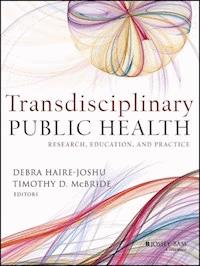
Transdisciplinary Public Health E-Book
80,99 €
Mehr erfahren.
- Herausgeber: John Wiley & Sons
- Kategorie: Fachliteratur
- Serie: Jossey-Bass Public Health/Health Services Text
- Sprache: Englisch
"This book makes a great leap in the conceptualization of transdisciplinary approaches, as well as provides concrete examples in practice, teaching, policy, and research."
From the Foreword by Edward F. Lawlor, dean and the William E. Gordon Distinguished Professor, the Brown School; and founding director, Institute for Public Health at Washington University in St. Louis
The complexity of public health and social problems is becoming more challenging. Understanding and designing solutions for these problems requires perspectives from multiple disciplines and fields as well as cross-disciplinary research and practice teams. Transdisciplinary Public Health fills a void in the literature and offers a comprehensive text that introduces transdisciplinary methods as a means for providing an innovative tool set for problem-solving in public health research and practice.
With contributions from leading experts, Transdisciplinary Public Health offers an understanding of interactions among the biological, behavioral, social, and public health sciences; shared disciplinary frameworks in analyzing health problems; and the integration and evaluation of transdisciplinary solutions to alleviate complex public health issues. Use of this important resource will promote transdisciplinary research and practice, resulting in novel solutions that positively impact human health.
Sie lesen das E-Book in den Legimi-Apps auf:
Seitenzahl: 690
Veröffentlichungsjahr: 2013
Ähnliche




















Table of Contents
Title page
Dedication
Figures and Tables
Figures
Tables
Foreword
Preface
Organization of This Book
Conclusion
Acknowledgments
The Editors
The Contributors
Part 1: Defining Transdisciplinary Research and Education
Chapter 1: Transdisciplinary Public Health: Definitions, Core Characteristics, and Strategies for Success
The Four Phases of a TD Initiative
Characteristics of TD Public Health
Summary
Key Terms
Review Questions
Chapter 2: Transdisciplinary Training and Education
Value of Transdisciplinary Approaches for Health Promotion
Attributes of Successful Transdisciplinary Teams
The Genesis of Interdisciplinary and Transdisciplinary Training
Summary
Key Terms
Review Questions
Chapter 3: Competencies in Transdisciplinary Public Health Education
Competencies for Transdisciplinary Public Health
Development of Transdisciplinary Competencies
Implementation of Transdisciplinary Competencies in the MPH Curriculum
Integrating Transdisciplinary Competencies into Nontransdisciplinary Coursework
Integrating Transdisciplinary Competencies into the MPH Culminating Experience
Development of a Transdisciplinary Public Health Professional
Summary
Key Terms
Review Questions
Chapter 4: Measuring Success: An Evaluation Framework for Transdisciplinary Public Health
Overview of TD Initiative Evaluation
An Ecological Evaluation Framework
Strategies for Implementing a TD Initiative Evaluation
Case Study: Applying the Framework to an Initiative
Summary
Key Terms
Review Questions
Part 2: Cross-Cutting Themes in Transdisciplinary Research
Chapter 5: Transdisciplinary Approaches: Sorting Out the Socioeconomic Determinants of Poverty and Health
Models of Health Behavior
Analytical Tools for Addressing Poverty and Health
Innovative Transdisciplinary Policy Interventions
Disseminating Results of Transdisciplinary Analysis
Summary
Key Terms
Review Questions
Chapter 6: Transdisciplinary Public Policy: The Roles of Law and Public Health in Creating Public Policy
Why Policy and Law Are Important to Public Health
Roles for Law and Public Policy in Public Health
A Public Health Perspective on Public Policy and Law
Summary
Key Terms
Review Questions
Chapter 7: Sociocultural Perspectives Applied to Transdisciplinary Public Health
Problem Analysis
Solution Analysis
Summary
Key Terms
Review Questions
Chapter 8: Evidence-Based Decision Making: Transdisciplinary Problem Solving to Improve the Health of the Public
Historical Background and Core Concepts
Key Characteristics of Evidence-Based Decision Making and Transdisciplinary Problem Solving
Analytical Tools and Approaches to Enhance Uptake of EBPH
An Approach to Increasing Use of Evidence in Trandisciplinary Public Health Practice
Barriers to EBPH and Potential Solutions
Summary
Key Terms
Part 3: Transdisciplinary Practice: Case Studies in Domestic Health
Chapter 9: Transdisciplinary Methods in the Prevention and Control of Maternal-Child Obesity
Application to Real-World Problems
Course Section 1: Introduction to Transdisciplinary Problem Solving
Course Section 2: Transdisciplinary Problem Analysis
Course Section 3: Transdisciplinary Solution Analysis
Course Section 4: Presentation of Team Solutions to Partners and Stakeholders
Systematic Evaluation Methods
Summary
Key Terms
Review Questions
Chapter 10: Transdisciplinary Approaches to Violence and Injury Prevention and Treatment among Children and Youth
Overview and Rationale
Injury Prevention, Causes, and Impacts
Problem Identification and Structuring
Solution Analysis and Evaluation: Case Examples
Dissemination of Findings
Measures of Collaboration and Change
Ongoing Needs
Summary
Key Terms
Review Questions
Chapter 11: Transdisciplinary Problem Solving for Integrating Public Health and Social Service Systems to Address Health Disparities
The Challenge
Course Overview
Lessons Learned
Summary
Key Terms
Review Questions
Part 4: Transdisciplinary Practice: Case Studies in Global Health
Chapter 12: Transdisciplinary Problem Solving for Global Hunger and Undernutrition
Brief History
Conceptual Framework
Content and Application of TPS Approaches
Evaluation Methods
Summary
Key Terms
Review Questions
Chapter 13: Implementing Public Health Interventions in Developing Countries: A Transdisciplinary Solution for Safe Drinking Water in Rural India
General Heuristic for Solution Analysis
Case Study: Water Contamination in Alakudi
Lessons Learned
Summary
Key Terms
Review Questions
Chapter 14: Indoor Air Pollution and Respiratory Health: A Transdisciplinary Vision
Household Air Pollution: A Complex Challenge
Ineffective and Failed Interventions: Explanations and Challenges
Household Air Pollution and Health Effects: A Transdisciplinary Approach
Transdisciplinary Framework for Examining Respiratory Health Outcomes from Clean Cookstoves
Summary
Key Terms
Review Questions
Name Index
Subject Index
Cover design by JPuda
Cover image: Copyright © B Sandlin/Veer
Copyright © 2013 by John Wiley & Sons, Inc. All rights reserved.
Published by Jossey-Bass
A Wiley Brand
One Montgomery Street, Suite 1200, San Francisco, CA 94104-4594—www.josseybass.com
No part of this publication may be reproduced, stored in a retrieval system, or transmitted in any form or by any means, electronic, mechanical, photocopying, recording, scanning, or otherwise, except as permitted under Section 107 or 108 of the 1976 United States Copyright Act, without either the prior written permission of the publisher, or authorization through payment of the appropriate per-copy fee to the Copyright Clearance Center, Inc., 222 Rosewood Drive, Danvers, MA 01923, 978-750-8400, fax 978-646-8600, or on the Web at www.copyright.com. Requests to the publisher for permission should be addressed to the Permissions Department, John Wiley & Sons, Inc., 111 River Street, Hoboken, NJ 07030, 201-748-6011, fax 201-748-6008, or online at www.wiley.com/go/permissions.
Limit of Liability/Disclaimer of Warranty: While the publisher and author have used their best efforts in preparing this book, they make no representations or warranties with respect to the accuracy or completeness of the contents of this book and specifically disclaim any implied warranties of merchantability or fitness for a particular purpose. No warranty may be created or extended by sales representatives or written sales materials. The advice and strategies contained herein may not be suitable for your situation. You should consult with a professional where appropriate. Neither the publisher nor author shall be liable for any loss of profit or any other commercial damages, including but not limited to special, incidental, consequential, or other damages. Readers should be aware that Internet Web sites offered as citations and/or sources for further information may have changed or disappeared between the time this was written and when it is read.
Jossey-Bass books and products are available through most bookstores. To contact Jossey-Bass directly call our Customer Care Department within the U.S. at 800-956-7739, outside the U.S. at 317-572-3986, or fax 317-572-4002.
Wiley publishes in a variety of print and electronic formats and by print-on-demand. Some material included with standard print versions of this book may not be included in e-books or in print-on-demand. If this book refers to media such as a CD or DVD that is not included in the version you purchased, you may download this material at http://booksupport.wiley.com. For more information about Wiley products, visit www.wiley.com.
Library of Congress Cataloging-in-Publication Data
Transdisciplinary public health : research, education, and practice / [edited by] Debra Haire-Joshu and Timothy D. McBride. – 1st ed.
p. ; cm.
Includes bibliographical references and index.
ISBN 978-0-470-62199-8 (pbk.); ISBN 978-1-118-41534-4 (ebk.); ISBN 978-1-118-41802-4 (ebk.); ISBN 978-1-118-55295-7 (ebk.)
I. Haire-Joshu, Debra. II. McBride, Timothy D.
[DNLM: 1. Public Health. 2. Evidence-Based Practice. 3. Interdisciplinary Communication. 4. Public Policy. 5. Socioeconomic Factors. WA 100]
362.1–dc23
2012046802
For Corrie, Joel, and Chris
For Shirley L. Porterfield
Figures and Tables
Figures
Figure 1.1. Four phases of a transdisciplinary initiative
Figure 3.1. Mapping transdisciplinary competencies to specific course assignments
Figure 3.2. Disciplines students identified as likely to be relevant to solving a particular public health challenge
Figure 4.1. Evaluation logic model for transdisciplinary public health
Figure 5.1. A social ecological model of health behavior
Figure 5.2. Investment and consumption in the health capital model
Figure 8.1. Transdisciplinary evidence-based decision making
Figure 8.2. Sources of evidence
Figure 8.3. A framework for evidence-based public health
Figure 9.1. A framework to prevent and control overweight and obesity
Figure 10.1. An ecodevelopmental perspective
Figure 10.2. Trends in intentional and unintentional injury rates per 100,000 children, 2001–2009
Figure 12.1. Maternal and child undernutrition
Figure 12.2. BCC messages
Figure 12.3. KickStart irrigation pump effects on nutrition and health
Figure 12.4. CDC logic model components
Figure 13.1. Water structures in Alakudi
Figure 13.2. Water tap distribution in Alakudi
Figure 14.1. Conceptual model of sociocultural, technological, market, and ecological drivers influencing sustained use of clean cookstove technologies
Figure 14.2. A framework for studying respiratory health outcomes from clean cookstove use
Tables
Table 1.1. Goals and processes of the four phases of a transdisciplinary initiative
Table 3.1. Examples of core competencies in twelve areas of public health for MPH graduates, as defined by ASPH
Table 3.2. Example of a matrix for assessing inclusion of TPS competencies in an MPH curriculum
Table 3.3. Questions to assess transdisciplinary aspects of group work
Table 4.1. Transdisciplinary program evaluation measures and sources
Table 4.2. Assessment tools for evaluation of TD students
Table 4.3. Mapping the evaluation framework onto the Washington University TD initiative
Table 5.1. Summary of effects of health capital model variables on health status
Table 6.1. Defining law and public policy
Table 6.2. Examples of interventional public health laws
Table 8.1. Contextual variables for intervention design, implementation, and adaptation
Table 8.2. Competencies in evidence-based public health
Table 8.3. Potential barriers and their solutions in evidence-based decision making
Table 10.1. Connecting age and developmental levels to prevention strategies
Table 10.2. Roles and expertise of selected disciplines in injury prevention and intervention
Table 12.1. Examples of program types for addressing undernutrition
Table 13.1. Key course elements
Foreword
Transdisciplinarity has become the academic and policy word of our time in public health. Research initiatives, teaching and degree programs, public health interventions, service delivery systems, even ideas about architecture, are being defined by the promise of this new approach to framing problems and solutions across disciplinary lines.
We are still at the beginning of this project, the hopeful stage. We still have more rhetoric than we have useful examples and evidence of the payoffs of this approach. This book makes a great leap in the conceptualization of transdisciplinary approaches and also provides concrete examples in practice, teaching, policy, and research.
There are many barriers between us and the ultimate success of this enterprise. Scholars select a particular discipline for deep personal and professional reasons, and they are socialized and reinforced early in their careers to achieve excellence within a relatively narrow band of research. Incentives, from funding to academic promotion, reinforce these boundaries. Organizations—from academic departmental structures to research institutes to public sector agencies to professional societies—define a certain scope of interaction and discourse. Outlets like professional journals and conferences by and large line up along traditional lines of disciplines and program interventions. More subtle barriers—like language, psychology, culture, status differences within the sciences, “town and gown” tensions between potential community and academic partners, and academic prejudices—also get in the way of the free flow of ideas and academic traffic that is envisioned by this field.
The good news is these barriers are breaking down at a furious pace. Funding is starting to reward transdisciplinary work in a serious way. Pioneer academics and practitioners—such as those contributing to this book—are conceptualizing the field, creating methods of transdisciplinary work, and training the next generation of scholars and practitioners. Organizational innovation and true partnerships are lagging behind, but the right relationships and conversations are emerging.
So I cannot help but think what the next generation, the second edition of this book, will look like. Let’s imagine that transdisciplinary time is like Internet time, and the pace of innovation and change in the field will occur at warp speed. The next edition of this book will not be a collection of individual chapters by individual authors, but rather team written, using a common language and replete with the kinds of innovative models, practice solutions, pedagogies, policy breakthroughs, and organizational inventions that are the promise of the transdisciplinary field. The teams will operationalize the kinds of scholarly, practice, and translational collaborations that are the vision of this book. As Daniel Stokols and his colleagues state in chapter 1 of this first edition in their definition of the field, “scholars and practitioners from both academic disciplines and nonacademic fields work jointly … to yield innovative solutions to particular scientific and societal problems” [emphasis added]. The next generation book will have evidence and evaluation not only of process approaches to transdisciplinarity but also of effective interventions, solutions, and outcomes.
In the meantime this book, Transdisciplinary Public Health, has given us the wherewithal to make great and rapid progress in advancing this field. We have new conceptual and definitional clarity and a roadmap for some of our intellectual and practice development, such as in systems science and cross-sector service delivery approaches. We have examples of early success and early innovations across teaching, research, and service delivery applications. Perhaps most important, the book conveys the sense of excitement and energy that this vanguard of academics and practitioners is bringing to this new field.
Edward F. Lawlor
Preface
As public health and social problems have become more complex, the understanding of these problems and the design of solutions to these problems requires both perspectives from multiple disciplines and fields and cross-disciplinary research and practice teams. This need to blur the boundaries between disciplines and between fields, to bring in scholars and perspectives from a range of disciplines, has led to the development of the field of transdisciplinary public health. Transdisciplinary collaborations require the creation of fundamentally new conceptual frameworks, hypotheses, and research strategies that synthesize diverse approaches and ultimately extend beyond them to transcend preexisting disciplinary boundaries and ultimately to translate research findings into practical solutions to real-world social problems.
In two path-breaking reports,1,2 in 2003 and 2006, that respond to the growth of the literature on transdisciplinary methods, the Institute of Medicine reviewed this literature and spoke to the need to expand beyond traditional educational methods that favor unidisciplinary approaches (focusing, for example, on epidemiology, behavioral science, or economics) and that teach students to focus on individual pieces of population health puzzles. These traditional approaches maintain the existing scientific knowledge “silos” that can limit the understanding of complex systems that affect population health. In contrast, transdisciplinary methods hold promise as an effective tool set for problem solving in public health research and practice. However, effective use of these methods requires the development of public health professionals who can understand the interactions among the biological, behavioral, social, and public health sciences; use this knowledge in the development of shared disciplinary frameworks for analyzing health problems; and then improve practice by integrating and evaluating transdisciplinary solutions. Thus, as with any new public health methodology, this approach requires the development of new knowledge and skills and their integration into public health education programs and schools. In the words of the reports:
The most striking change in public health research in the coming decades is the transition from research dominated by single disciplines, or a small number, to transdisciplinary research. … The practical ramifications of the transdisciplinary approach to education are that schools of public health may need to rethink their structure and modes of instruction in order to develop professionals that can interact synergistically when confronting health concerns. … Schools of public health have a primary responsibility for educating faculty, researchers, and senior-level practice professionals. The challenges of the 21st century require an educational approach that is ecological in nature, an approach that emphasizes the determinants of health and their interaction. Education for public health in the 21st century requires cultural competence, and broad new competencies in information technology, communication, and genomics, and a vast reemphasis on practical aspects of training.1
Through transdisciplinary research, we can achieve a far greater understanding of how the interactions of social, behavioral, and genetic factors affect health and illness. This knowledge, in turn, will enable major improvements in the well-being of individuals and populations. … Many intermediate steps are required, including the training of investigators in transdisciplinary research.2
Organization of This Book
Transdisciplinary Public Health: Research, Education, and Practice, provides a roadmap for educating students in public health programs in ways that develop competency in transdisciplinary research and practice. The book is divided into three sections.
Part 1 provides an overview of the concepts and practices involved in designing a public health education program. It begins with a chapter by Daniel Stokols, Kara Hall, and Amanda Vogel titled “Transdisciplinary Public Health: Definitions, Core Characteristics, and Strategies for Success.” This chapter provides a foundation by describing transdisciplinary research and practice as it is conceptualized in this book (and currently in the public health research community). The conceptualization reflects the unique characteristics of the approach. This is followed by a description of the four phases that make up a transdisciplinary initiative and the goals and processes that define each phase. This discussion takes into account the roles of individuals, teams, and organizations in carrying out an initiative. Finally, the important factors and characteristics specific to transdisciplinary public health are presented.
In chapter 2, Sarah Gehlert and Teri Browne describe best practices for training a new generation of scholars to function in a transdisciplinary way. They also provide a review of the literature on the components of successful transdisciplinary teams, discuss how this literature is incorporated into model transdisciplinary training programs, and offer recommendations for training.
Designing transdisciplinary education and training requires specific attention to the transdisciplinary competencies and skills needed by students, a subject explored by Lauren Arnold, J. Aaron Hipp, Anne Sebert Kuhlmann, and Elizabeth Budd in chapter 3. Building on the foundations of the previous chapters, they describe transdisciplinary competencies as important guiding principles for public health, and provide steps for ensuring that appropriate transdisciplinary skills are integrated into public health degree programs.
Chapter 4 presents an innovative evaluation framework, created by chapter authors Douglas Luke, Sarah Moreland-Russell, and Stephanie Herbers, that is useful for planning and implementing evaluations of transdisciplinary training programs in public health. This framework can be applied to the evaluation of transdisciplinary initiatives across any institution; it offers objective indices for assessing transdisciplinary training programs and institutional transdisciplinary integration in an academic setting. The chapter also provides an example of one such initiative and recommendations for future evaluations.
The chapters in part 2 address cross-cutting themes underlying transdisciplinary research and practice. They offer readers the opportunity to reorganize individual, team, and organizational thinking and practice around transdisciplinary research and practice, as a means of promoting long-lasting solutions to complex problems in human health. In addition, they present four diverse perspectives on transdisciplinary methods as applied to several public health issues.
In chapter 5, Timothy McBride, Lisa Pollack, Abigail Barker, and Leah Kemper focus on the issue of the social determinants of health, and particularly the role of economic inequality, from a transdisciplinary point of view. They present examples of innovative transdisciplinary theories from public health and economics that are being used to understand the impact of inequality on health, and then they offer a range of new empirical methods, drawn from the burgeoning field of simulation models, that mirror these transdisciplinary theoretical methods in order to illustrate how these methods can be used to understand complex public health problems. Finally, these authors explore how such methods are translated into policy, the final action step of transdisciplinary practice.
The use of law and public policy as prime tools for implementing transdisciplinary research is explored by Sidney Watson in chapter 6. Though such use is not widely understood or explored, Watson argues that law and public policy are at the core of transdisciplinary public health research and practice, and she describes methods that allow lawyers to work more effectively as part of transdisciplinary teams using public policy and law.
Chapter 7, by Bradley Stoner, describes ways in which anthropologists and other social scientists, working as members of transdisciplinary teams, examine cultural perspectives on health and integrate these cultural approaches into interventions designed to minimize health risks.
Finally, Ross Brownson describes integrating evidence-based public health practice into transdisciplinary methods, in chapter 8. He notes that the hallmark of transdisciplinary problem solving is its emphasis on the translation of research findings into practical solutions to social problems—that is, transdisciplinary action research. This requires using evidence-based methods to inform transdisciplinary approaches and translate scientific outcomes into practical applications. This chapter comprehensively addresses the transdisciplinary aspects of each part of the process of acquiring and applying scientific evidence, and the importance of this process to public health education and training.
Parts 3 and 4 introduce six case studies of transdisciplinary methods; these cases were designed to solve real-world problems through classroom learning. The chapters are divided between domestic and international experiences. The three chapters in part 3 focus on current domestic public health issues. In chapter 9, Debra Haire-Joshu explores integrating transdisciplinary methods into an inventive course on the prevention of maternal-child obesity, a major focus of current public health policy. The course demonstrates how to employ transdisciplinary methods while working with home-visiting organizations to prevent obesity, thus operating in a real-world setting.
Chapter 10, by Melissa Jonson-Reid, Nancy Weaver, Brett Drake, and John Constantino, describes a transdisciplinary course on developing approaches to violence and injury prevention in youth. This innovative course incorporates the use of theoretical perspectives from numerous disciplines in solving child maltreatment problems and explores how this learning can lead to new solutions.
Matthew Kreuter and Debbie Pfeiffer then offer, in chapter 11, a description of another innovative course, one that uses transdisciplinary skills to link public health and social service systems in order to promote tobacco control and treatment. Collaborations involving both food stamp offices and tobacco quitlines (telephone counseling) result in a real-world illustration of transdisciplinary problem solving.
The final three chapters, in part 4, present internationally focused courses on malnutrition, water sanitation, and air pollution. First, Lora Iannotti discusses a course that reviews the critical disciplines that should serve as a foundation to transdisciplinary problem solving in relation to global hunger and undernutrition in developing countries. In chapter 12, she shows how students can use these transdisciplinary methods to track the progress of three action domain working groups (in research, programming, and policy), and she offers methods to critically evaluate student performance.
In chapter 13, Ramesh Raghavan, Ravikumar Chockalingam, and Zeena Johar present a fascinating case study of a course implemented in rural India, where students using a transdisciplinary framework developed an understanding of real-life health problems facing communities and found ways to assist these communities in overcoming the problems. Students worked on transdisciplinary teams on one of five assigned public health challenges and integrated insights from a variety of disciplines into solutions, learning how the concepts of social ecology in public health and differing worldviews can be reconciled with the realities of life in the developing world.
Finally, Gautam Yadama, Kenneth Schechtman, Pratim Biswas, Mario Castro, and Nishesh Chalise add a unique perspective to transdisciplinary public health through their description of another intriguing case study, this one focused on the evolving and interlinking trajectories of household energy choices, local ecologies, and rural livelihoods in India. Using this real-world example, the authors offer examples of the transdisciplinary training of the next generation of public health practitioners so that they can effectively address environmental issues affecting the very poor.
Conclusion
This book combines an introduction to transdisciplinary methods and practice with new perspectives on transdisciplinary public health, and applies all this to a description of how these methods can be applied and implemented in public health education and training. The chapter authors offer a range of disciplinary perspectives and contributions, providing real-world examples of the importance of transdisciplinary approaches to public health practice and training.
A challenge to date in the public health profession has been how to effectively and practically apply transdisciplinary concepts to public health education and training. This book presents numerous case studies that address this challenge, along with evaluation of the approaches presented and methods for implementing these approaches. It is intended that readers will discover how to engage in education, policy, and practice that recognize the linkages between and across multiple aspects of our society and its environment, and that they will then be able to integrate these findings across multiple social perspectives and fields of knowledge into solutions that lead to the betterment of the public’s health. Transdisciplinary methods represent our best hope for solving complex public health and social problems, and it is crucial that our education programs, now focused largely on unidisciplinary approaches, be developed to incorporate these methods.
Acknowledgments
We would like to acknowledge the invaluable assistance of Lisa Pollack, Kimberly Freels, and Jamie Adkisson. Karen Emmons, Vincent Francisco, Laura Rasar King, Lynne MacLean, Kenneth R. McLeroy, Robin Lin Miller, and Daniel Stokols provided valuable feedback on the original book proposal. Lynne MacLean and Kenneth R. McLeroy also provided thoughtful and constructive comments on the complete draft manuscript. Thank you to all of these reviewers.
Debra Haire-Joshu and Timothy D. McBride
Notes
1. Gebbie K, Rosenstock L, Hernandez LM; Institute of Medicine, Committee on Educating Public Health Professionals for the 21st Century, eds. Who Will Keep the Public Healthy?: Educating Public Health Professionals for the 21st Century. Washington, DC: National Academies Press; 2003.
2. Hernandez LM, Blazer, DG, eds.; Committee on Assessing Interactions among Social, Behavioral, and Genetic Factors in Health, Board on Health Sciences Policy. Genes, Behavior, and the Social Environment: Moving beyond the Nature/Nurture Debate. Washington, DC: National Academies Press; 2006.
The Editors
Debra Haire-Joshu, PhD, is the Joyce Wood Professor and associate dean for research in the Brown School at Washington University in St. Louis, and holds a secondary appointment with the School of Medicine. She is an internationally renowned scholar of health behavior who develops population-wide interventions to reduce obesity and prevent diabetes, particularly among underserved youth. She directs the Center for Obesity Prevention and Policy Research and the Center for Diabetes Translation Research. Her current research is supported by a number of National Institutes of Health (NIH) agencies—including the National Cancer Institute, the National Institute of Diabetes and Digestive and Kidney Diseases, and the Centers for Disease Control and Prevention—and the Missouri Foundation for Health. Her studies include translation of evidence-based obesity prevention approaches through national organizations. Her work includes the development of a model statewide database for evaluating obesity-related policies in Missouri. This system is now being disseminated to other states across the country. She was recently a member of the Institute of Medicine Committee on Obesity Prevention Policies for Young Children, aged zero to five years. She served as a Health Policy Fellow in the office of Senator Barack Obama and as a Robert Wood Johnson Health Policy Fellow for the Committee on Health, Education, Labor and Pensions when it was chaired by Senator Edward Kennedy. Her work as chair of the Health Policy Committee of the Society of Behavioral Medicine led to her appointment as a Distinguished Fellow of that society. She is also a member of Delta Omega, the honorary society for public health. She has published and presented her research extensively, and reviews for numerous professional journals and NIH research review groups.
Timothy D. McBride, PhD, is a professor in the Brown School at Washington University in St. Louis, and a health policy analyst and leading health economist shaping the national agenda in rural health care, health insurance, Medicare policy, health economics, and access to health care. He is currently studying the uninsured, Medicare Advantage and Medicare Part D in rural areas, health reform at the state and national levels, access to care for children with special health care needs, and long-term Social Security and Medicare reform. In addition to his scholarly publications in leading journals, he has produced a collection of reports, white papers, and other policy products that have contributed to the national policy debate. He has testified before Congress and consulted with important policy constituents on Medicare and rural health policy. He is a member of the Rural Policy Research Institute Health Panel that provides expert advice on rural health issues to Congress and other policymakers. He serves as a member of several national committees and boards, including the advisory board of the American Society of Health Economists (ASHE), the editorial boards for the Health Administration Press and the Journal of Rural Health, and the methods council for AcademyHealth, and is cochair of the Health Policy Faculty Forum for the Association of University Programs in Health Administration.
The Contributors
Lauren D. Arnold, PhD, MPH, is assistant professor of epidemiology at Saint Louis University, St. Louis, Missouri. Trained in epidemiology, she has a long-standing interest in women’s health, chronic disease, and survey research and has conducted work in osteoporosis, vulvodynia, and breast cancer. She seeks to use biomarkers and genomic medicine to add to the understanding of risk stratification and health disparities and to direct prevention and control efforts on the screening, health communication, and policy levels. Her current research involves biomarker studies in multiple myeloma, HPV/cervical cancer vaccination survey work, and an examination of cancer health disparities using data from the American Cancer Society’s Cancer Prevention Study II cohort. She also works in health communication, focusing on an exploration of knowledge and perceptions of genomic medicine and how these play a role in community public health and ultimately policy.
Abigail R. Barker, PhD, is a statistical analyst for the Center for Rural Health Policy Analysis, Rural Policy Research Institute at Washington University in St. Louis. She received her PhD degree in economics at the University of Minnesota. Her past work includes econometric modeling of intergenerational poverty, studies of the US- and foreign-born science and technology workforce, and analysis of school-level data on racial and socioeconomic achievement gaps. Her current work focuses on understanding how markets can be successfully integrated into the health care sector, using Medicare Advantage and related data to analyze behavior and simulate outcomes and also incorporating insights from behavioral economics into the modeling process.
Pratim Biswas, PhD, is chairman of the Department of Energy, Environmental and Chemical Engineering at Washington University in St. Louis. He has expertise in aerosol science and engineering, with applications in environmental and energy nanotechnologies. He is interested in technological interventions that eventually lead to protection of public health and also greatly interested in environmental public health—both in terms of the engineered work environment and the natural environment. He has more than twenty-five years of teaching and research experience in this field.
Teri Browne, PhD, is assistant professor of social work at the University of South Carolina. Her research expertise and interests include nephrology social work and the understanding of kidney disease; kidney transplantation, especially in terms of social networks and racial disparity; social work and health care settings; patient navigation; oral medication self-management; African Americans’ knowledge and behavior regarding early detection of kidney disease; psychosocial issues of chronic illness, health, and disability; and clinical social work practice and skills.
Ross C. Brownson, PhD, is a professor in the Brown School and School of Medicine at Washington University in St. Louis. A leading expert in chronic disease prevention and an expert in the area of applied epidemiology, he is an intellectual, educational, and practice leader in the field of evidence-based public health. Brownson serves as a member of the faculty advisory council of Washington University’s Institute for Public Health, and codirects the Prevention Research Center—a major, CDC-funded center jointly led by Washington University and Saint Louis University—which develops innovative approaches to chronic disease prevention. He leads a large number of other major research and training projects funded by a broad array of federal and foundation sources, including the National Institutes of Health and the Robert Wood Johnson Foundation. He is an associate editor of the Annual Review of Public Health, serves on the editorial board of five other journals, and is a board member of the American College of Epidemiology. Active in the American Public Health Association and the Missouri Public Health Association, he is the editor or author of the books Chronic Disease Epidemiology and Control, Applied Epidemiology, Evidence-Based Public Health, and Community-Based Prevention.
Elizabeth Budd, MPH, is a doctoral student in the Brown School at Washington University in St. Louis.
Mario Castro, MD, MPH, is professor of pediatrics at the Washington University School of Medicine. With a background in research and public health, he is tackling the problem of respiratory disease from two angles. On the research side, he is following children from very early in life and looking at how their genetic, biological, and immune responses and their environment are coming together to cause some of them to develop asthma (NIH RSV Bronchiolitis in Early Life study). He is also studying causes of asthma (through an NIH Specialized Center of Research grant) and what makes severe asthma different from milder forms (Severe Asthma Research Program). He is the lead investigator for two major asthma networks—the NIH Asthma Clinical Research Network and the American Lung Association Asthma Clinical Research Center network—that are studying better ways to treat asthma. On the public health side, he is involved in a number of community-based efforts in St. Louis to improve delivery of asthma care, and to boost awareness of smoking’s health effects and respiratory diseases. Through a grant from the CDC, he is leading the Controlling Asthma in St. Louis project. This project aims to build on the collaborations and community-based participatory approach of the St. Louis Regional Asthma Consortium to improve asthma management in a defined urban population with a large and unmet asthma control need. Castro has spent the last seventeen years examining mechanisms of asthma and translating these results to clinical and public applications. This has resulted in ninety scientific articles, reviews, and book chapters.
Nishesh Chalise, BS, is a doctoral candidate and a research assistant in the Social Systems Design Laboratory in the Brown School at Washington University in St. Louis, where he assists with the qualitative data collection and analysis for the National Science Foundation and the Institute of Physics. In an independent study, he is working on a coupled natural and human systems (CNH) project, developing and administering household surveys, analyzing data, and building system dynamic models. He plans to continue conducting research in the CNH field and creating models of these complex interactions.
Ravikumar Chockalingam, MD, MPH, is one of the founders of a community health worker program in rural India, and uses his public health training to help improve health systems in India and beyond. He began working with the IKP Centre for Technologies in Public Health (ICTPH) in the rural Thanjavur district in India, serving as an associate vice president for ICTPH’s rural health system. Currently, he is a research assistant at Washington University in St. Louis. He continues to serve ICTPH from St. Louis in an advisory role.
John Constantino, MD, is the Blanche F. Ittleson Professor of Psychiatry and Pediatrics, Washington University in St. Louis, where he conducts a long-standing research program involving the primary prevention of child maltreatment, a program linked to a public home visitation program supported by the State of Missouri. The goal is to develop a feasible and effective public health program for the prevention of child abuse and neglect and also to link it to public mental health and social service systems. Constantino served on and chaired the Missouri Mental Health Commission for four years following his appointment by the state governor in 2004. In his clinical work he has emphasized the mental health care of children in public health settings; this work includes eight years at a psychiatric hospital for children (serving the eastern third of Missouri), and current consulting efforts at Grace Hill and the Family Support Network in St. Louis. Constantino also has a large autism research program in Missouri, where he is involved with public health efforts to improve early identification and appropriate intervention for affected children and their families and directs an ongoing autism prevalence surveillance program funded by the CDC.
Brett Drake, PhD, is a professor in the Brown School at Washington University in St. Louis. He researches matters of child welfare, focusing on early intervention cases of child neglect and the connections between socioenvironmental conditions and child neglect. His current research analyzes census and child protective data to assess the efficacy of protective and preventive services. His research focus and his many years of child welfare practice, at the direct and clinical levels, inform the master’s degree–level classes he teaches, which address topics ranging from diversity and human behavior to analysis of practice.
Sarah Gehlert, PhD, is the E. Desmond Lee Professor of Racial and Ethnic Diversity in the Brown School at Washington University in St. Louis; the principal investigator and director of the university’s NIH-funded Center for Interdisciplinary Health Disparities Research; and project leader of one of the center’s four interdependent research projects. She is also core leader of the Health Disparities and Communities Core of the CDC-funded Chicago Center for Excellence in Health Promotion Economics. She directed the University of Chicago’s Maternal and Child Health Training Program from 1992 to 1998 and was principal investigator on a National Institute of Mental Health–funded, community-based study of rural and urban women’s health and mental health from 1997 to 2001. She serves on the internal advisory committee of the University of Chicago’s Cancer Research Center and on the external advisory committee of the center’s Specialized Program of Research Excellence in Breast Cancer, the strategy team of the California Breast Cancer Research Program’s Special Research Initiatives, and the Metropolitan Chicago Breast Cancer Mortality Reduction Task Force. Her professional activities also include memberships on the site visit committee of the Social and Behavioral Research Branch of the National Human Genome Research Institute, the professional advisory board of the Epilepsy Foundation of Greater Chicago, the research advisory council of the Epilepsy Foundation of America, and the steering committee of the Washington Park Children’s Free Clinic in Chicago. She was chair of the 2007 NIH Summer Institute on Community-Based Participatory Research. Gehlert serves as president-elect of the Society for Social Work and Research, a member of the editorial board of Research in Social Work Practice, and a consulting editor for Social Work Research.
Kara L. Hall, PhD, is a health scientist, director of the Science of Team Science (SciTS) Team, and codirector of the Theories Project in the Science of Research and Technology Branch, Behavioral Research Program, Division of Cancer Control and Population Sciences at the National Cancer Institute (NCI). During her career she has participated in a variety of interdisciplinary clinical and research endeavors. Her research has focused on the development of behavioral science methodologies such as the design of survey protocols, meta-analytic techniques for health behavior theory testing, and applications of health behavior theory to multiple content areas and the development of computerized, tailored interventions to foster health promotion and disease prevention behaviors.
Stephanie Herbers, MPH, MSW, is assistant director of evaluation in the Center for Public Health Systems Science, Washington University in St. Louis. She currently serves as an evaluation lead on several projects, including the Missouri Foundation for Health’s nine-year Tobacco Prevention and Cessation Initiative and a multistate evaluation of the use of evidence-based guidelines by tobacco control programs. Her research and evaluation interests include mixed-method approaches, program sustainability, capacity building for evaluation, and translation and dissemination of results. In addition to her experience in tobacco prevention and control, she has been involved in the implementation and evaluation of community-based programs for older adults.
J. Aaron Hipp, PhD, is assistant professor in the Brown School at Washington University in St. Louis. His research, teaching, and service are grounded in the theories and scholarship of social ecology, environmental health, and social work and the inherently transdisciplinary investigation of people-in-environment. His novel interests and approach lie with how place, specifically public built environments, affects the people-environment interaction. His research asks how public built environments (parks, communities, streets) both promote and constrain healthy community behaviors and health outcomes. His teaching in geographic information systems, environmental health, public health and the built environment, and research methods focuses on local and global case studies, methodologies, and applications of material to advance student pedagogy. Much of his coursework uses a community-based learning model of applying in-class knowledge and skills to real-world challenges and opportunities.
Lora Iannotti, PhD, is assistant professor in the Brown School at Washington University in St. Louis. Her current research focuses on evaluation and impact modeling of programs addressing undernutrition, infectious diseases, and poverty. In two project sites in Haiti and East Africa, she is studying the combined effects of interventions designed to prevent undernutrition, improve water and sanitation, and foster economic development. She has expertise in the areas of infant and young child nutrition and micronutrient deficiencies (zinc, iron, and vitamin A) affecting resource-poor populations. She is actively involved in developing the global health components of the MPH program at Washington University’s Brown School and within the Institute for Public Health.
Zeena Johar, PhD, is president of the IKP Centre for Technologies in Public Health (ICTPH). She obtained her PhD degree from the Swiss Federal Institute of Technology (ETH Zurich) in molecular modeling and design, following receipt of a master’s degree in chemistry with a specialization in quantum chemistry from Panjab University. She joined the IKP Trust in 2007 to pursue her passion of translating basic science research into population-based applied research, and she is one of the founding members of ICTPH, a research institute working toward innovating sustainable, replicable, and scalable health care delivery models for rural India. As president she has played an instrumental role in conceptualizing the strategic alignment of ICTPH with the overall mission of the IKP Trust. Johar is currently spearheading the Tanjore Health Systems Pilot, a network of nurse-managed, rural, micro health centers facilitating diagnostic and curative services with a focus on community-based preventive care in conjunction with hamlet-based community health workers. Through supplying primary care coupled with relevant financing that supports critical referral networks and by pricing end-to-end health care delivery, ICTPH aims to provide optimal health outcomes with minimal health expenditure for rural beneficiaries.
Melissa Jonson-Reid, PhD, is a professor in the Brown School at Washington University in St. Louis, where she is coordinator of the school’s children, youth, and families concentration and teaches master’s degree–level courses on social work in the public school setting, the evaluation of programs and services, and the joint practice of social work and law. She studies outcomes associated with child and adolescent abuse and neglect and is particularly interested in how the relationship between child maltreatment and later educational, health, and sociobehavioral outcomes may be moderated by child welfare and educational services. She also has interests in school social work, early intervention with maltreating families, long-term service use patterns across systems, and the integration of theory with services research. She has practice experience in domestic violence counseling and also school social work, having been a school social worker and administrator with the California public school system, and is active in policy and professional development in school social work on regional and national levels. She currently serves as a program evaluation consultant for school social workers in three school districts, a children’s advocacy unit at Legal Services of Eastern Missouri, and various regional child welfare initiatives.
Leah M. Kemper, MPH, is a research analyst at Washington University in St. Louis and a statistical and policy analyst for the Rural Policy Research Institute’s Center for Rural Health Policy Analysis. Her research interests include Medicare and Medicaid policy, health reform, the uninsured, and access to health care services and health insurance for rural Americans. She regularly produces policy briefs and papers in these areas and her experience of working with policymakers in multiple states also serves to inform her research. Previously, she held a position as a research coordinator at the Center for Health Policy at Washington University.
Matthew W. Kreuter, PhD, is a professor in the Brown School and director of the Center for Cancer Communication Research, Washington University in St. Louis. A nationally known public health expert in the field of health communications, he also serves as a member of the faculty advisory council of the Institute for Public Health at the university and holds a secondary appointment at the Washington University School of Medicine. Founder and director of the Health Communication Research Laboratory, Kreuter has developed and evaluated a wide range of health communication programs to promote health, modify behavior, and prevent and manage disease. His book Tailoring Health Messages is the first comprehensive book on tailored health communication. He currently serves on the Institute of Medicine’s Board on Population Health and Public Health Practice. Other funders of his work include the National Institute of Child Health and Human Development, National Institute of Nursing Research, the CDC, the Office of Disease Prevention and Health Promotion, and the Susan G. Komen Breast Cancer Foundation.
Anne Sebert Kuhlmann, PhD, MPH, is assistant dean of public health in the Brown School at Washington University in St. Louis. She teaches public health and social work research methods and program planning and evaluation, as well as an undergraduate course in international public health. She has published on a wide range of issues related to health behavior, including family planning, injury prevention, weight management for pregnant and postpartum women, and HIV prevention in international settings. She also consults on the development, implementation, and evaluation of HIV/AIDS-related behavior change projects.
Edward F. Lawlor is the William E. Gordon Distinguished Professor and dean of the Brown School at Washington University in St. Louis, and founding director of the University’s Institute for Public Health. Lawlor’s academic and research interests are in access to health care, health care reform, policy analysis, and aging. A national Medicare expert, he is the author of Redesigning the Medicare Contract: Politics, Markets, and Agency. Prior to joining the Brown School in 2004 he served as dean of the School of Social Service Administration and director of both the Center for Health Administration Studies and the graduate program in health administration and policy at the University of Chicago. He is founding editor of the Public Policy and Aging Report. For ten years Lawlor was a member and secretary of the Chicago Board of Health, and he has served on numerous policy and advisory bodies in the fields of health care and aging.
Douglas A. Luke, PhD, is professor in the Brown School at Washington University in St. Louis. A leading researcher in the areas of health behavior, organizations, policy, and tobacco control and a top biostatistician and social science methodologist, he has made significant contributions to the evaluation of public health programs, tobacco control and prevention policy, and the application of new methods to community health interventions. He has expanded the repertoire of statistical methods, particularly in the use of social network analysis and hierarchical linear models, in the field of public health. He directs Washington University’s Center for Public Health Systems Science, has led the doctoral program at the Saint Louis University School of Public Health, and participates in key community health behavior study decisions at the National Institutes of Health. In addition to advancing the Brown School’s public health work, he supervises the work of doctoral students. He is active in the American Statistical Association, the International Network for Social Network Analysts, and the Society for Community Research and Action.
Sarah Moreland-Russell, PhD, is associate director of the Center for Public Health Systems Science, Washington University in St. Louis. She serves as the evaluation lead for Washington University’s Institute for Clinical and Translational Science project and the St. Louis County Department of Health’s Communities Putting Prevention to Work initiative. She also serves as principal investigator on the User Guide Project, an effort supported by the CDC and designed to translate guidelines from the CDC’s Best Practices for Comprehensive Tobacco Control Programs—2007 into practices and policies to be implemented at state and local levels. Her primary research interests include health policy analysis and evaluation, organizational and systems science and evaluation, and dissemination and implementation of public health policies, research ethics, and health communication among minority and non-English-speaking populations.
Debbie Pfeiffer, MA, is a project manager in the Health Communication Research Laboratory, Washington University in St. Louis. She also serves as project coordinator for the CDC- and NCI-funded Cancer Prevention and Control Research Network (CPCRN) at the university’s Brown School. She has been involved with the CPCRN project and other related projects in the Health Communication Research Laboratory since 2004. Over the past six years, she has been responsible for establishing and developing relationships with community organizations; working collaboratively with community and public health organizations to develop, implement, and evaluate programs that increase cancer awareness among minority and medically underserved populations; and developing and delivering evidence-based training for community organizations. Her research interests focus on cancer prevention and control in the St. Louis Hispanic community and in building community campus partnerships for health.
Lisa M. Pollack, MPT, MPH, is a doctoral student at Washington University in St. Louis. She previously worked as a statistical data analyst for the Rural Policy Research Institute’s Center for Rural Health Policy Analysis. Her experience includes measuring and understanding how lack of access to health care adversely affects low-income, underserved populations; examining the impact of health policy on the accessibility and organization of health services; and exploring ways to change policy to improve access to health care. She has coauthored several policy briefs, has made original contributions to the field through peer-reviewed presentations at academic conferences, and has several papers in progress for peer-review publications.
Ramesh Raghavan, MD, PhD, is associate professor in the Brown School and School of Medicine at Washington University in St. Louis, where he teaches courses on mental health policy and advanced statistics in the master’s degree program. A psychiatrist and health services researcher by training, he also serves as a faculty associate at the Brown School’s Center for Mental Health Services Research and the Washington University Center for Applied Statistics. Previously, he was policy director for the National Child Traumatic Stress Network, and before that he was a Public Health Fellow at the UCLA/RAND Center for Adolescent Health Promotion. His research focuses on mental health services and policies for vulnerable children, especially those in the child welfare system. He has studied the effects of Medicaid and Medicaid managed care on mental health service use, the longitudinal stability of health insurance coverage, and access to mental health care consistent with national standards among children in the child welfare system. His current work focuses on the economics of implementation of evidence-based mental health interventions and on the costs of child maltreatment. His work has received financial support from the Agency for Healthcare Research and Quality, the Administration for Children and Families, the National Institute of Mental Health, and the state of Missouri.
Kenneth B. Schechtman, PhD, is associate professor of biostatistics at the Washington University School of Medicine. An applied statistician with expertise in the design and analysis of clinical trials and with broad experience in the conduct of both small clinical trials and large multicenter clinical trials, especially in the areas of cardiology and exercise physiology, he currently directs all consulting activities in the division of biostatistics. He is director of the biostatistics core of Washington University’s Pepper Center, a multifaceted program project studying the effects of exercise and hormone replacement therapy in older adults. In collaboration with the School of Public Health at Saint Louis University, he also directs the biostatistics subcontracts of two NIH-funded randomized trials focused on improving the diet of inner-city youth and on encouraging women to have mammograms. He is actively associated with the data coordinating centers for several multicenter clinical trials and observational studies. Thus he has served as director of biostatistics and data management for the Diltiazem Reinfarction Study and as an investigator or coprincipal investigator at the data coordinating center of the HERITAGE Family Study, the Frailty and Injuries: Cooperative Study of Intervention Techniques, and the Collaborative Longitudinal Evaluation of Keratoconus Study. Schechtman is also the biostatistician for the Protocol Review and Monitoring Committee of the Alvin J. Siteman Cancer Center, directs the biostatistics core of an asthma program project, and is an investigator in a randomized clinical trial focused on exercise following hip fracture.
Daniel Stokols, PhD, is Chancellor’s Professor of Social Ecology in the Department of Psychology and Social Behavior and the Department of Planning, Policy and Design and dean emeritus of the School of Social Ecology at the University of California, Irvine. His research interests include the design and evaluation of community and worksite health promotion programs; factors that influence the success of transdisciplinary research and training programs; the health and behavioral impacts of environmental stressors such as traffic congestion, crowding, and information overload; and the application of environmental design research to urban planning and facilities design.
Bradley P. Stoner, MD, PhD, is associate professor of anthropology in Arts & Sciences and associate professor in the Division of Infectious Diseases, School of Medicine, Washington University in St. Louis. His research addresses issues at the interface of anthropology, public health, and medicine. Most recently his work has focused on social and behavioral aspects of sexually transmitted diseases (STDs). Other areas of interest include the study of health care access and decision making, biomedicine as a cultural system, alternative or heterodox medical systems, culture-bound syndromes, and the role of anthropology in clinical and public health research. He is currently conducting research on sociocultural aspects of STD control in developed countries, including analysis of sex partner networks, perception of symptoms and health-seeking responses, concordance and discordance in sexual partnerships, and the ethnography of community risk, and is working with colleagues in medicine and public health using ethnographic approaches to specific issues in STD/HIV transmission. This research has indicated that choice of sex partners within STD networks is not a random occurrence but rather a highly patterned phenomenon that varies by disease. This work draws from advances in epidemiology and mathematical modeling as well as medical anthropology.
Amanda L. Vogel, PhD, MHS, is a behavioral scientist with SAIC-Frederick, Inc., where she provides support to the office of the associate director in the Behavioral Research Program of the National Cancer Institute (NCI) at Frederick. Her research interests lie in three areas: program evaluation related to the implementation and outcomes of both large federal grant programs and community-based health interventions; the science of team science, including interdisciplinary collaborations and community-academic partnerships; and community-engaged scholarship, including community-based participatory research and community-engaged training of health professions students. She has expertise in the use of qualitative methods, including case study, interview, document review, and expert panel methods.
Sidney D. Watson, JD, is professor of health law at Saint Louis University. A specialist in health law and health care access for the poor, she has spent her legal career advocating on behalf of low-income people, both as a legal services lawyer and as a law professor. From 1977 to 1981, she was director of clinical education at Tulane University School of Law, where she founded both Tulane’s law clinic and its trial advocacy program. From 1980 to 1987, she was a legal services lawyer in Louisiana and Alaska. In Louisiana she served as managing and senior attorney in the health, welfare, and elderly units of the New Orleans Legal Assistance Corporation and also directed the Farmworkers Legal Assistance Project for migrant and seasonal farmworkers. In Dillingham, Alaska, she was the supervising attorney of the Alaska Legal Services Corporation Bristol Bay office, which served thirty-two native villages. Currently, Watson is advocating for improved access to Medicaid services for people with disabilities and others. A frequent speaker to consumer, disability rights, and children’s groups about Medicaid and access to care, she has also written extensively on racial and ethnic disparities in health care, health reform, physicians and charity care, and health care for the homeless. She is the editor of Representing the Poor and Homeless: Innovations in Advocacy, and the author of A Georgia Advocate’s Guide to Health Care, now in its third edition. She is a former member of the American Bar Association’s Commission on Homelessness and Poverty and also served on the National Health Law Program Task Force on Civil Rights and Health Care Reform during the Clinton-era health reform initiative.
Nancy Weaver, PhD, is associate professor of public health at Saint Louis University. She has been active in the areas of injury prevention, physical activity, and health communication for the past fifteen years and formerly directed the research methods and biostatistics core of a National Cancer Institute Center of Excellence in Cancer Communication Research. She has extensive expertise in combining qualitative and quantitative methods, developing measurement tools, and providing technical and training assistance to public health practitioners. Her work is largely multidisciplinary and involves partnerships with state and national agencies, community organizations, and various academic disciplines.
Gautam Yadama, PhD, is associate professor and director of international programs in the Brown School at Washington University in St. Louis. His research interests include micro-institutional strategies of development, social and economic development, international development, and the role of nongovernmental organizations in development. He helps train students to build new research and policy initiatives in order to foster greater participation of underserved populations throughout the world. He also serves as the Brown School’s liaison with the Open Society Institute, helping to educate social work professionals and to develop social policy infrastructure in Central Asia and the Caucasus. In addition he is actively engaged with the university community as a member of the steering committee for the McDonnell International Scholars Academy, and he is also the academy’s ambassador to Chulalongkorn University in Thailand.
Part 1
Defining Transdisciplinary Research and Education
Chapter 1
Transdisciplinary Public Health: Definitions, Core Characteristics, and Strategies for Success
Lesen Sie weiter in der vollständigen Ausgabe!
Lesen Sie weiter in der vollständigen Ausgabe!
Lesen Sie weiter in der vollständigen Ausgabe!
Lesen Sie weiter in der vollständigen Ausgabe!
Lesen Sie weiter in der vollständigen Ausgabe!
Lesen Sie weiter in der vollständigen Ausgabe!
Lesen Sie weiter in der vollständigen Ausgabe!
Lesen Sie weiter in der vollständigen Ausgabe!
Lesen Sie weiter in der vollständigen Ausgabe!
Lesen Sie weiter in der vollständigen Ausgabe!
Lesen Sie weiter in der vollständigen Ausgabe!
Lesen Sie weiter in der vollständigen Ausgabe!
Lesen Sie weiter in der vollständigen Ausgabe!
Lesen Sie weiter in der vollständigen Ausgabe!
Lesen Sie weiter in der vollständigen Ausgabe!
Lesen Sie weiter in der vollständigen Ausgabe!
Lesen Sie weiter in der vollständigen Ausgabe!
Lesen Sie weiter in der vollständigen Ausgabe!




