


111,99 €
Mehr erfahren.
- Herausgeber: John Wiley & Sons
- Kategorie: Wissenschaft und neue Technologien
- Sprache: Englisch
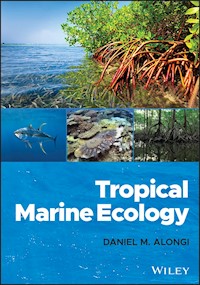
No realm on Earth elicits thoughts of paradise more than the tropics. The tropical marine realm is special in myriad ways and for many reasons from seas of higher latitude, in housing iconic habitats such as coral reefs, snow white beaches, crystal clear waters, mangrove forests, extensive and rich seagrass meadows and expansive river deltas, such as the exemplar, the Amazon. But the tropics also has an even more complex side: tropical waters give rise to cyclones, hurricanes and typhoons, and unique oceanographic phenomena including the El Niño- Southern Oscillation which affects global climate patterns. Tropical Marine Ecology documents the structure and function of tropical marine populations, communities, and ecosystems in relation to environmental factors including climate patterns and climate change, and patterns of oceanographic phenomena such as tides and currents and major oceanographic features, as well as chemical and geological drivers. The book focuses on estuarine, coastal, continental shelf and open ocean ecosystems. The first part of the book deals with the climate, physics, geology, and chemistry of the tropical marine environment. The second section focuses on the origins, diversity, biogeography, and the structure and distribution of tropical biota. The third part explores the rates and patterns of primary and secondary production, and their drivers, and the characteristics of pelagic and benthic food webs. The fourth part examines how humans are altering tropical ecosystems via unsustainable fisheries, the decline and loss of habitat and fragmentation, Further, pollution is altering an earth already in the throes of climate change. Tropical Marine Ecology is an authoritative and comprehensive introduction to tropical marine ecology for advanced undergraduate and postgraduate students. It is also a rich resource and reference work for researchers and professional managers in marine science.
Sie lesen das E-Book in den Legimi-Apps auf:
Seitenzahl: 1765
Veröffentlichungsjahr: 2021
Ähnliche



















Tropical Marine Ecology
DANIEL M. ALONGI
Tropical Coastal and Mangrove Consultants
Victoria, Australia
This edition first published 2022© 2022 John Wiley & Sons Ltd
All rights reserved. No part of this publication may be reproduced, stored in a retrieval system, or transmitted, in any form or by any means, electronic, mechanical, photocopying, recording or otherwise, except as permitted by law. Advice on how to obtain permission to reuse material from this title is available at http://www.wiley.com/go/permissions.
The right of Daniel M. Alongi to be identified as the author of this work has been asserted in accordance with law.
Registered OfficesJohn Wiley & Sons, Inc., 111 River Street, Hoboken, NJ 07030, USAJohn Wiley & Sons Ltd, The Atrium, Southern Gate, Chichester, West Sussex, PO19 8SQ, UK
Editorial Office9600 Garsington Road, Oxford, OX4 2DQ, UK
For details of our global editorial offices, customer services, and more information about Wiley products visit us at www.wiley.com.
Wiley also publishes its books in a variety of electronic formats and by print‐on‐demand. Some content that appears in standard print versions of this book may not be available in other formats.
Limit of Liability/Disclaimer of WarrantyThe contents of this work are intended to further general scientific research, understanding, and discussion only and are not intended and should not be relied upon as recommending or promoting scientific method, diagnosis, or treatment by physicians for any particular patient. In view of ongoing research, equipment modifications, changes in governmental regulations, and the constant flow of information relating to the use of medicines, equipment, and devices, the reader is urged to review and evaluate the information provided in the package insert or instructions for each medicine, equipment, or device for, among other things, any changes in the instructions or indication of usage and for added warnings and precautions. While the publisher and authors have used their best efforts in preparing this work, they make no representations or warranties with respect to the accuracy or completeness of the contents of this work and specifically disclaim all warranties, including without limitation any implied warranties of merchantability or fitness for a particular purpose. No warranty may be created or extended by sales representatives, written sales materials or promotional statements for this work. The fact that an organization, website, or product is referred to in this work as a citation and/or potential source of further information does not mean that the publisher and authors endorse the information or services the organization, website, or product may provide or recommendations it may make. This work is sold with the understanding that the publisher is not engaged in rendering professional services. The advice and strategies contained herein may not be suitable for your situation. You should consult with a specialist where appropriate. Further, readers should be aware that websites listed in this work may have changed or disappeared between when this work was written and when it is read. Neither the publisher nor authors shall be liable for any loss of profit or any other commercial damages, including but not limited to special, incidental, consequential, or other damages.
Library of Congress Cataloging‐in‐Publication Data
Names: Alongi, D. M. (Daniel M.) author.Title: Tropical marine ecology / Daniel Michael Alongi.Description: Hoboken, NJ : Wiley‐Blackwell, 2022. | Includes bibliographical references and index.Identifiers: LCCN 2021031560 (print) | LCCN 2021031561 (ebook) | ISBN 9781119568865 (cloth) | ISBN 9781119568889 (adobe pdf) | ISBN 9781119568926 (epub)Subjects: LCSH: Marine ecology.Classification: LCC QH541.5.S3 A453 2022 (print) | LCC QH541.5.S3 (ebook) | DDC 577.7–dc23LC record available at https://lccn.loc.gov/2021031560LC ebook record available at https://lccn.loc.gov/2021031561
Cover Design: WileyCover Images: © Chris & Monique Fallows/OceanwideImages.com, Mangrove photo courtesy of Dan Alongi
Preface
No realm on earth elicits thoughts of paradise more than the tropics. Such ideas often spring to mind when living through a snowy and icy winter. Many people living in temperate and boreal regions fulfil such dreams by holidaying in iconic places such as the islands of the Caribbean, the Great Barrier Reef, the Mediterranean and truly exotic locales such as Bali. When as a young man I left the United States to first visit Australia to work on the Great Barrier Reef, I truly felt that I had arrived at a tropical paradise. And the Great Barrier Reef is paradisiacal, being one of the greatest natural wonders on earth. Thousands of people the world over come to immerse themselves in its clear azure waters to observe the beauty and grandeur of many of its coral reefs. Also, if you think tropical rainforests are beautiful, then like me you can also enjoy the remarkable geometry and asymmetry of tropical mangrove forests.
But like all preconceived notions, dreams, and thoughts, the tropics also has a dark side, often subtle, but lurking in the shadows. Tropical waters give rise to cyclones, hurricanes, and typhoons, and the summer months can be unbearably hot and humid; closer to the equator, it is sticky, hot, and humid year‐round. This reality can best be understood in the first instance by reading any of the classic tales of early explorers of the tropics, such as James Cook or the part‐time pirate but intrepid explorer William Dampier or the great German scientist Alexander von Humboldt.
But as I will show in this book, the tropical marine realm is special in myriad ways and for many reasons from seas of higher latitude, in housing iconic habitats such as coral reefs, snow white beaches, crystal clear waters, mangrove forests, extensive and rich seagrass meadows and expansive river deltas, such as the exemplar, the Amazon. The reader will learn that from a global perspective it is in fact the great tropical rivers that have the most significant role to play in the cycles of nutrient and materials that help to foster life in tropical seas. These great conduits of mud, freshwater, and nutrients are the pumps that fuel the primary producers sustaining complex and beautifully intricate food webs. It is an irony that if it wasn't for these least photogenic of habitats, no (or exceedingly little) tropical marine life would exist. Even coral reefs have a tenuous, if important, functional connection to tropical rivers and estuaries; reefs are not quite as self‐sufficient as we once thought, and many rely on connectivity with life in adjacent coastal muddy waters. In a nutshell, coral reefs are not divorced from the waters that bathe them. Nowadays this connection is unfortunately becoming more of a curse than a blessing; destructive human activities on land such as land clearing and overuse of chemical fertilizers, pesticides, and herbicides are on the rise with concomitant increases in human population growth along tropical coastlines.
The purpose of this book is to document the structure and function of tropical marine populations, communities, and ecosystems in relation to environmental factors including climate patterns and climate change and patterns of oceanographic phenomena such as tides and currents and major oceanographic features, as well as chemical and geological drivers. The book focuses on estuarine, coastal, shelf, and open ocean ecosystems. No such book on the tropical marine realm exists for the advanced undergraduate and postgraduate student, researcher, or manager. Another reason for writing this book is to reorient and expand the knowledge base of marine ecology. Several excellent textbooks exist on marine biology and ecology, but they are inadequate in describing life in the tropics; iconic habitats such as coral reefs and mangroves are usually covered only briefly. Until recently, this perfunctory treatment was understandable considering that the study of marine ecology has focused on boreal and temperate seas near where the major oceanographic institutes and universities reside. Since the 1980s, however, there has been a drastic rise in the number of journal articles published on aspects in tropical marine ecology to the extent that a textbook focusing on the tropics is now warranted.
Such an authoritative work is timely given the increasing concern of the problems associated with rapid population growth in developing nations – nearly all of which reside in the tropics – and a growing awareness of the role of the tropical ocean as the heat engine for global climate and in regulating earth's biogeochemical cycles. Many students are still being taught basic principles of marine ecology based on research conducted primarily in high latitudes. This is unfortunate because the tropical ocean is in many ways different from colder seas both structurally and functionally. The tropical ocean contains the centre for marine biodiversity, is a major driver of earth's climate, and is where most freshwater and sediment from land are discharged into the sea, greatly impacting ocean chemistry, geology, and the structure and function of biota. Many major environmental characteristics and adaptive flora and fauna are endemic to or dominant in tropical seas.
A basic understanding of marine biology and ecology is assumed so the reader may be tempted to skip the first part of the book dealing with the climate, physics, geology, and chemistry of the tropical marine environment. I urge the reader not to do so as one cannot properly understand what drives tropical organisms without understanding the uniqueness of the physical milieu in which they live.
The second section focuses on the origins, diversity, biogeography, and the structure and distribution of tropical biota. The tropical marine realm started in the Tethys Sea where most phyla first evolved and radiated through time to produce the major latitudinal patterns we see today. Populations of organisms from the size of microbes to whales will be examined in terms of their population regulation, growth dynamics, fluctuations, and cycles over time, as well as life history traits and strategies, including aggregation and refugia, territoriality, and behaviour. Pelagic and benthic community structure and their drivers, such as adaptations to stress, competition, predation, symbiosis, and other trophic factors, will be dealt with to underscore the fact that ecosystems are not simply ‘black boxes’ but consist of a wide array of complex trophic groups and communities. The ecosystem chapter will deal with not only classification of types (sandy beaches, mangroves, coral reefs, continental shelf, open ocean) but also how they developed over time and how they connect to one another.
The third part explores the rates and patterns of primary and secondary productivity, their drivers, and the characteristics of food webs. All organisms play important roles in the cycling of carbon and macro‐ and micronutrients, and these biogeochemical cycles are considered from the intertidal zone out to the open ocean.
The fourth part examines how humans are altering tropical ecosystems via unsustainable fisheries and the decline and loss of habitat and fragmentation; pollution is altering an earth already in the throes of climate change. This book ends with a hopefully not‐too‐long list of dot points highlighting how tropical biota and their ecosystems are different to those of higher latitude and how their future is in our hands.
I would like to acknowledge the staff of Wiley for doing such a wonderful, professional job in stitching this book together. I thank colleagues Bob Aller, Josie Aller, Michelle Burford, Erik Kristensen, Janice Lough, Matsui Mazda, Dave McKinnon, John (Charlie) Veron, Gullaya Wattayakorn, and Bob Wasson for critically commenting on various chapters. I am grateful to Morgan Pratchett and Ciemon Caballes for the photos of crown‐of‐thorns and coral bleaching. Finally, I thank my loving wife Fiona for her beautiful illustrations that have made this book much better than I had hoped and both my daughters for reminding me that there is indeed life after science. Of course, any errors are mine and I would be grateful for students, faculty, and other readers to bring any errors to my attention.
Daniel M. Alongi, PhD
Email: [email protected]
CHAPTER 1Introduction
1.1 Definition of the Tropics
There is no standard definition of the tropics. It has been defined in so many ways, as a reflection of its complexity, that only an operational definition can suffice; there have been notable climatological and oceanographic exceptions to all definitions. No one definition meets with universal approval, and there have been many attempts to define it, first most simply, by the patterns of the trade winds of the “torrid zone” (Dampier 1699) to a rigid definition of the region between the Tropic of Capricorn and the Tropic of Cancer (Townsend 2012), that is, the most northerly and southerly position at which the sun may appear directly overhead at its zenith. In fact, the word ‘tropical’ comes from the Greek tropikos, meaning ‘turn’ referring to the fact that these latitudes mark where the sun appears to turn annually in its motion across the sky. Recent evidence indicates that the tropics have expanded due to climate change (Seidel et al. 2008).
Other definitions have recognised that the boundaries of the tropics sensu lato do not equate with rigid zones and have classified the tropics on the basis of terrestrial vegetation (the Kӧppen‐Geiger system) or seasonal patterns in rainfall, where the zonation is identified as ‘humid,’ ‘wet and dry,’ and ‘dry.’ Such definitions are functional, but none fit our requirement for an ocean climate‐based scheme.
The marine tropics is defined here as the area of ocean and coastline included within the annual isotherms of sea surface temperature (SST) of 25 °C (Figure 1.1). This area encompasses (i) most of the Indian Ocean including most of the east coast of Africa to Mozambique and the southern tip of Madagascar, (ii) the Red Sea and the Gulf of Aden, (iii) the Arabian Sea, (iv) the Bay of Bengal, (v) the waters of Southeast Asia, New Guinea, and northern Australia (the South China Sea, Java Sea, Coral Sea, Philippine Sea, Timor and Arafura Seas, and the Gulf of Carpentaria), (vi) most of the small island arcs of the northern and southern Pacific Ocean to the west coast of Mexico and down the Central American coast to Ecuador, (vii) most of the Caribbean Sea and the Gulf of Mexico and the coasts of Central and South America down to central Brazil, and (viii) a large portion of the West African coastline from Guinea‐Bissau to Gabon (Gulf of Guinea). The marine tropics is thus not a uniform or fixed region. There is a considerable degree of plasticity to these boundaries considering differences between the extremes of winter and summer which foster biological plasticity. The West African coast from Gabon to the Congo and down to the north coast of Angola, for instance, has an essentially tropical benthic biota (Longhurst 1959). Such variations are caused in part by the asymmetrical form and unequal size of the ocean margins, which strongly influences sea surface temperatures and current and nutrient regimes (Webster 2020).
FIGURE 1.1 Annual mean sea surface temperatures in the global ocean, 2005–2017.
Source: Image retrieved via public access from the NASA Scientific Visualization Studio. https://sus.gsfc.nasa.gov/3652 (accessed 7 June 2020). © John Wiley & Sons.
1.2 What Makes the Tropics Different?
What makes the marine tropics unique compared to seas of higher latitude? Tables 1.1 and 1.2 summarise many of the characteristics that this book will cover; clearly, there are many environmental attributes that are either unique to or are more common in the tropics. Several habitats attain peak luxuriance in the tropics, namely, mangrove forests, seagrass meadows, and coral reefs. Both ‘wet’ (or ‘humid’) and ‘dry’ tropical regions occur as do areas that undergo distinct ‘wet’ and ‘dry’ seasons. More research has tended to focus on what at first glance appears to be richer, wetter ecosystems, but areas and periods of aridity are more common than are reflected in the literature.
Spatial and temporal variations in rainfall and temperature are large in the tropics; daily thermal and precipitation changes increase away from the equator. The western boundaries of the tropical oceans are warmer, wetter, and more stable climatically than the eastern boundaries, caused by the asymmetrical form and unequal size of the ocean margins, which in turn strongly affect sea surface temperatures, currents, and nutrient regimes (Webster 2020) These geographic differences are of considerable ecological importance, influencing the distribution and abundance of shallow water habitats.
TABLE 1.1Major hydrological and climatological characteristics unique to or dominant in the tropical oceans. Summary from Chapters 2 and 3.
Hydrology
Climatology
37% of world ocean area
High and stable solar radiation
69.1% of freshwater discharge to the world ocean
Absorbed solar radiation exceeds long‐wave radiation so net radiation balance is positive
Lower mean tidal amplitudes
High and stable temperatures
Small Coriolis parameter in proximity to the equator
Lowest and highest rates of evaporation and precipitation
Large Rossby radius
Trade winds (easterlies and westerlies)
Weak rotational constraint on bottom boundary layer
Absent/uncommon frontal storms within 5° of equator
Large buoyancy flux
Interannual variation > seasonal variation
Wind‐produced homogenous layer deepest in equatorial waters
Monsoons (dry–wet or arid): Asian, African, Indo‐Australian, and South American systems
D
CRITICAL DEPTH
> D
WATER DEPTH
Tropical ocean absorbs most incoming solar energy
Seasonal upwelling
Tropical ocean‐atmospheric system is the heat engine of the global climate system
Permanently stratified thermoclines and haloclines; oxygen minimum layers
Hadley Circulation distributes equatorial winds in the low latitudes
Salinity and pH highly variable; acidic and hypersaline conditions common
Intertropical Convergence Zone, a belt of convective cloud about the equator. Zone of rising air and intense precipitation (accounts for 32% of global precipitation)
Estuarization of shelves by river plumes
Indo‐Pacific Warm Pool, an oceanographic/climatological phenomenon in the western Pacific Ocean; heat engine of the planet
Strong tidal fronts
Formation of tropical cyclones (typhoons, hurricanes)
Lutoclines (a front between two layers of comparatively high and low suspended sediment concentration) and high‐salinity plugs in estuaries and nearshore waters in dry season/arid regions
El Niño‐Southern Oscillation, large‐scale, global, coupled atmosphere–ocean system resulting in major surface climate anomalies throughout tropics
Tidal mixing, trapping, and complex small‐scale circulation in mangrove tidal waters
Indian Ocean Dipole, coupled ocean–atmosphere differences in convection, winds, sea surface temperatures, and thermocline causing large‐scale differences in rainfall patterns
Highly complex, small‐scale circulation on coral reefs and in hypersaline lagoons
Madden‐Julian Oscillation, a phenomenon that is a major source of intra‐annual variability in the tropical atmosphere, affecting monsoonal and cyclonic patterns
Indonesian Throughflow, unique feature passing warm and fresh Pacific waters into the Indian Ocean via the Indonesian Archipelago
Pacific Decadal Oscillation, dominant year‐round pattern of North Pacific sea surface temperature variability. Complex aggregate of different atmospheric and oceanographic forcings spanning the extratropical and tropical Pacific
The tropics form a band around the equator that comprises nearly 40% of the world’s open ocean area and over one‐third of its continental shelves (Table 1.1). As aforementioned, mangrove forests, coral reefs, and seagrass meadows constitute the richest habitats, but the drier tropical regions have hypersaline lagoons, stromatolites, and carbonate‐dominated shelf margins, the exemplar of the latter being the Great Barrier Reef shelf. Hydrological and climatological characteristics of marine tropical seas are in toto unique, reflecting proximity to the equator. Such physical characteristics include high and stable solar radiation and temperature, highest and lowest rates of rainfall, easterly trade winds, a large Rossby radius with low mean tidal amplitudes (one notable exception is the NW coast of Australia where mean tidal ranges can exceed 10 m), a small Coriolis effect resulting in a lack of cyclones, hurricanes, and typhoons close to the equator, permanently stratified shelf waters with strong tidal fronts, but with estuaries having high salinity plugs and lutoclines during the dry periods; interannual variation is greater than seasonal variability despite some regions having distinct ‘wet’ and ‘dry’ intervals.
At least 69% of all freshwater and 60% of all sediment discharged to the world’s coastal ocean do so via tropical rivers (Milliman and Farnsworth 2011; Laruelle et al. 2013). This phenomenon occurs primarily in the wet tropics and plays an important role as a driver of geological characteristics, oceanographic processes, and the structure and function of pelagic and benthic food webs. For instance, coastal waters receiving river water have a large buoyancy flux, and there are several regions where upwelled waters mix in a complex manner with discharged river water and associated materials, e.g. the southeast (the Gulf of Papua) and SW (the Aru Sea) coasts of New Guinea (Aller et al. 2004, 2008b; Alongi et al. 2012) producing an ‘estuarisation’ of the shelf margin with oxygen minimum layers and strong tidal fronts.
Geologically, intensely weathered silt and clay particles form muddy facies that dominate many inner and middle shelf margins, especially close to river deltas (Table 1.2); such shelves are ordinarily wide and shallow, and inshore areas have massive mud banks (‘chakara’) that migrate seasonally and annually as well as varying over decadal time scales (Gratiot and Anthony 2016). In drier regions where river discharge is small and/or highly seasonal, erosion is also highly seasonal but there is a high level of resolution of the geological record in which sedimentary facies are either carbonate‐dominated or mixed carbonate–terrigenous deposits, or both. Coral material and debris from other calcium carbonate‐bearing benthic organisms are most abundant in these areas; the extreme of this phenomenon is cementing dunes (‘sabhka’) in hypersaline lagoons. Throughout the ‘wet’ and ‘dry’ tropics, there are thus extremes of sediment accumulation and of burial of carbon and other elements. In many tropical regions, high rates of sediment erosion due to no or poor land‐use practices have resulted in rivers that are highly eroded with beds that are wide, shallow, and sand‐ and/or gravel‐dominated.
TABLE 1.2Major geological and chemical characteristics unique to or dominant in the tropical oceans. Summary from Chapter 4.
Geology
Chemistry
60% of world’s sediment discharge from tropical rivers
Lowest organic carbon and nitrogen content in carbonate deposits
Mud and coral most abundant on inner shelves
Highest organic carbon and nitrogen content in mangrove muds, mud banks, and off river plumes
Intense physicochemical weathering of bedrock and soils
Low (μM) concentrations of dissolved inorganic nutrients
Many shelves wide, shallow (<120 m depth), and carbonate‐dominated open shelves or protected (‘rimmed’) lagoons
NO
2
–
+ NO
3
–
and SO
4
–
present in interstitial waters
Mixed carbonate–terrigenous sedimentary facies on shelf margins
Low O
2
conditions (<5 mg/l) in estuaries, lagoons, and inshore waters
Migrating fluid mud banks (‘chakara’)
Benthic nutrient regeneration rates low
Cementing dunes (‘sabhka’) in hypersaline lagoons
Low interstitial water content, especially in carbonates
Highly seasonal erosion/deposition cycles
Dominance of iron and manganese reduction in sediment suboxic diagenesis
River beds highly eroded, wide, shallow, and gravel‐dominated
Particle coastings enriched in Fe‐, Mn‐, and Al‐oxides
Bioturbation mostly at sediment surface
Kaolinite and gibbsite common clay minerals
High resolution of geological record
Intense scavenging of dissolved oceanic components
Extremes in sediment accumulation and carbon burial rate
Photochemical processes important
Intense chemical and physical weathering of tropical soils results in their transfer to the marine environment, with the result being sediment particles rich in iron, manganese, and aluminium oxide coatings. The most common minerals in such highly weathered environments are kaolinite and gibbsite, and in the water column, there is intense scavenging of dissolved oceanic components as well as important photochemical processes. When fuelled by highly weathered but low concentrations of carbon and nitrogen (lignin‐rich) debris, this combination favours microbial decomposition pathways in sediments that are dominated by metal reduction. The latter is also fostered by high‐disturbance events especially near large tropical rivers where the seabed is shallow, and the benthos is dominated by near‐surface bioturbation and by small, opportunistic benthic infauna noticeably lacking in large, deep‐dwelling, equilibrium species of annelids and molluscs (Aller et al. 2008a), but with an abundant epifauna.
Distal to rivers, phytoplankton production and respiration can be just as high as in higher latitudes, but such production (mainly by small‐sized picoplankton rather than by larger diatoms and chlorophytes) is often displaced offshore due to high turbidity within plumes (Smith and DeMaster 1996; McKinnon et al. 2007). These rapid rates of productivity occur despite low (μM) concentrations of dissolved nutrients, comparatively low (≤ 5 mg/l) oxygen concentrations, and low rates of benthic nutrient regeneration. Pelagic food chains are arguably dominated by abundant macrozooplankton, mostly crustaceans such as penaeid shrimp, whose abundance and productivity yield a high percentage of crustaceans to finfish catch off tropical fishing grounds. Why crustaceans are so predominant in the low latitudes may lie in their genetics, competitive abilities with finfish or with life histories being simpatico with tropical oceanographic or climatological peculiarities, the latter of which we will explore in Chapter 2.
References
Aller, R.C., Hannides, A., Heilbrun, C. et al. (2004). Coupling of early diagenetic processes and sedimentary dynamics in tropical shelf environments, the Gulf of Papua deltaic complex.
Continental Shelf Research
24: 2455–2486.
Aller, J.Y., Alongi, D.M., and Aller, R.C. (2008a). Biological indicators of sedimentary dynamics in the central Gulf of Papua: seasonal and decadal perspectives.
Journal of Geophysical Research: Earth Science
113: F01S08.
https://doi.org/10.1029/2007JF000823
.
Aller, R.C., Blair, N.E., and Brunskill, G.J. (2008b). Early diagenetic cycling, incineration, and burial of sedimentary organic carbon in the central Gulf of Papua (Papua New Guinea).
Journal of Geophysical Research, Earth Science
113: F10S09.
https://doi.org/10.1029/2006JF000689
.
Alongi, D.M., Wirasantosa, S., Wagey, T. et al. (2012). Early diagenetic processes in relation to river discharge and coastal upwelling in the Aru Sea, Indonesia.
Marine Chemistry
140: 10–23.
Dampier, W. (1699).
Voyages and Descriptions, Volume II, Part 3, A Discourse of Trade winds, Breezes, Storms, Seasons of the Year, Tides and Currents of the Torrid Zone throughout the World; with an Account of Natal in Africa, its Product, Negro’s. etc
. London: J. Knapton.
Gratiot, N. and Anthony, E.J. (2016). Role of flocculation and settling processes in development of the mangrove‐colonized, Amazon‐influenced mud‐bank coast of South America.
Marine Geology
373: 1–10.
Laruelle, G.G., Dürr, H.H., Laurerwald, R. et al. (2013). Global multi‐scale segmentation of continental and coastal waters from the watersheds to the continental margins.
Hydrology and Earth System Sciences
17: 2029–2051.
Longhurst, A. (1959). Benthos densities off tropical west Africa.
Journal Conseil International pour l’ Exploration de la Mer
25: 21–28.
McKinnon, A.D., Carleton, J.H., and Duggan, S. (2007). Pelagic production and respiration in the Gulf of Papua during May 2004.
Continental Shelf Research
27: 1643–1655.
Milliman, J.D. and Farnsworth, K.L. (2011).
River Discharge to the Coastal Ocean: A Global Synthesis
. Cambridge, UK: Cambridge University Press.
Seidel, D.J., Fu, Q., Randel, W.J., and Reichler, T.J. (2008). Widening of the tropical belt in a changing climate.
Nature Geoscience
1: 21–24.
Smith, W.O. Jr. and DeMaster, D.J. (1996). Phytoplankton biomass and productivity in the Amazon River plume: correlation with seasonal river discharge.
Continental Shelf Research
16: 291–319.
Townsend, D.W. (2012).
Oceanography and Marine Biology: An Introduction to Marine Science
. Sunderland, USA: Sinauer.
Webster, P.J. (2020).
Dynamics of the Tropical Atmosphere and Oceans
. Hoboken, USA: Wiley‐Blackwell.




