


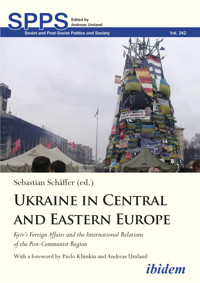
Ukraine in Central and Eastern Europe E-Book
25,99 €
Mehr erfahren.
- Herausgeber: ibidem
- Kategorie: Geisteswissenschaft
- Serie: Soviet and Post-Soviet Politics and Society
- Sprache: Englisch
The geopolitics of post-communist Europe are not only important for Ukraine itself, but ultimately also for the future of the continent as a whole. This concerns the interactions between Kyiv, on the one hand, and the capitals of East-Central Europe as well as the Southern Caucasus, on the other. Where does Kyiv currently stand geopolitically and how should it engage in the region between the Baltic, Adriatic, Black, and Caspian Seas? This volume examines which interests and motivations some select countries in East-Central Europe and the Caucasus have towards Ukraine and provides answers to the question which chances there are for new multilateral networks or structures. Such multilateralism around Ukraine could go beyond the already existing, yet geographically and functionally circumscribed Organization for Democracy and Economic Development (GUAM), the Visegrad Four, the Bucharest Nine Group, and the Three Seas Initiative. The volume also illustrates how the ever-present “elephant in the room”—Russia—shapes the international relations of the post-Soviet space. Researchers from several post-communist countries examine these issues from their specific points of view.
Das E-Book können Sie in Legimi-Apps oder einer beliebigen App lesen, die das folgende Format unterstützen:
Seitenzahl: 530
Veröffentlichungsjahr: 2022
Ähnliche




















ibidem Press, Stuttgart
Contents
Preface
Foreword European Colonial Experiences and Current Geopolitical Outlooks Deliberations on Re-Defining the Notion of “Central Europe”
The “Ukrainian Issue” in Russia’s Foreign Policy in 1990-1993
Belarus-Ukraine Relations
Azerbaijan-Ukraine Relations Multidimensional Cooperation in the Past and Future
Role and Place of Ukraine and Georgia in the Modern World Main Aspects of Cooperation between the Two Countries
Polish-Ukrainian Relations Prospects for Multilateral Cooperation in Central-Eastern Europe
Bilateral Relations between the Czech Republic and Ukraine
Ukraine as a Reflection of Slovakia’s Self-Identification in International Politics
Ukraine Between East and West A View from Hungary
The “Triangle” Austria—Ukraine—Russia
International Legal Aspects of the Relations Between Ukraine and Bulgaria in the Context of European Integration
Western Neighbors in Ukrainian History Textbooks Case Studies of the Republic of Moldova and Romania*
The EU Member States and the Crisis in Ukraine Towards an Eclectic Explanation*
The Intermarium Idea in the Post-Soviet Period Ideas and Institutions for a Security Alliance between the Baltic and Black Seas*
Idealism and Ambiguity of the Intermarium Historical and Contemporary Geopolitical Perspectives*
The EU’s Regional Approach in Ukraine Challenges and Perspectives
Preface
Editing a book is always challenging. With this volume, we tried to bring together authors from Ukraine’s neighborhood, which has been especially ambitious. I believe that with these contributions, a better understanding of the region and its countries’ policies in relation to Ukraine has been achieved. I am well aware of the fact that certain information might already be outdated by the time this book is published. The situation in the shared neighborhood is very volatile and will unfortunately remain so for the foreseeable future. The unprovoked attack of the Russian Federation on Ukraine on February 24, 2022 was and remains a shock for all of us. The idea for this publication derived from an international hybrid conference titled “Ukraine in East-Central Europe: Kyiv's Bilateral Relations and Prospects of Multilateralism in the Region”, which was held in Vienna at the Institute for the Danube Region and Central Europe (IDM) in September 2020. I would like to thank Andreas Umland for this initiative and am grateful for the support of the Paneuropa-Union, as well as the Ukrainian Institute for the Future, who co-organized this conference.
Bringing experts from the region together was already back then a demanding task, and I am very thankful that many of them have also contributed to this book. Among them are Agnieszka Legucka, who writes together with Daniel Szeligowski about Polish-Ukrainian relations, which have developed intensively in recent years. Many platforms for cooperation exist and also include other neighboring countries, such as the Lublin Triangle (Lithuania, Poland, Ukraine), the “Chișinău Format” (Poland, Romania, Moldova and Ukraine) born in 2021, among others.
Rusif Huseynov, together with Mahammad Mammadov, looks at one of Ukraine’s largest trading partners: Azerbaijan has been a large buyer of Ukrainian military supplies and Ukraine supports Azerbaijan’s territorial sovereignty over Nagorno-Karabakh, while Azerbaijan supports Ukraine’s territorial integrity vis-à-vis its separatist regions. After 2014, the two countries have had shared concerns about Russia and its support for separatism. Moreover, Azerbaijan seeks to rejuvenate GUAM and include Poland and Turkey.
Another participant of the conference evaluates the positive Czech-Ukrainian relations. David Stulík argues that Czechia will push for a differentiation in the EaP in favor of the Association Trio (Georgia, Moldova, Ukraine) during its EU Council Presidency in the second half of 2022.
The neighboring EU Member State, Austria, is tackled by Martin Malek, who has worked with me on this publication but ultimately decided not to function as co-editor. In his article, he believes that Austrian-Ukrainian relations are better viewed through the triangular Austria-Ukraine-Russia relations, as Russia has such a great influence on Austria’s policy vis-à-vis Ukraine. At the time the article was written, no help for Ukraine that is detrimental to Russia was to be expected from Vienna.
The importance of the Russian Federation for any discussion is also reflected in the first article of this book. Igor Gretskiy says “the Kremlin constantly emphasizes its continuity with the Soviet Union, and interprets Ukraine's break with Russia as temporary, laying on Kyiv full responsibility for the troubled bilateral relations. President Putin has repeatedly reiterated that Ukraine's true sovereignty is possible only in partnership with Russia.”
This is to a certain extent also applicable to Belarus and reflected by Aliaksei Kazharski, Tatsiana Kulakevich, and Katsiaryna Lozka: After independence, Ukraine began a process of contesting its Soviet past and reconceptualizing its own position in Europe. In Belarus, on the other hand, this same process stopped after Aliaksandr Lukashenka came to power in 1994.
Nika Chitadze looks at another country of the former Soviet Union that has been in a violent conflict with the Kremlin. Both Ukraine and Georgia have managed to sign an Association Agreement with the EU and establish Ukraine-NATO, Georgia-NATO Commissions, and U.S.-Ukraine and U.S.-Georgia Charters for strategic partnership. But despite the progress, he discusses in his contribution that there are important challenges which need to be overcome before Ukraine and Georgia can progress further.
We aimed to complete the chapter on the South Caucasus with the relations between Ukraine and Armenia, but especially with such a project, unplanned developments are part of the process. Ultimately and unfortunately, we were not able to include the contribution into the final manuscript.
Sergiu Musteața brings a unique perspective to the discussion from Moldova and completes the countries of the Eastern Partnership: Ukrainian history school textbooks emphasize the ethno-nation and often exclude minorities from their teaching. History textbooks in Ukrainian schools give a mythologized version of the Ukrainian nation’s origin and mix up the notions of ethnicity and nation, while references to neighboring countries included in the textbooks are not significant and mostly relate to wars and conflicts.
Further perspectives from EU Member States are also provided. Iryna Bratko and Inna Voroshylova write: “Among the promising mechanisms of cooperation between Ukraine and Bulgaria, it is worth highlighting municipal diplomacy, which provides an opportunity for mutually beneficial projects, as well as regional cooperation within the Black Sea and Danube region, as they have significant, but not yet fully realized potential.”
István Gyarmati describes the diplomatic point of view from Hungary: The previous approaches to conflict resolution in Ukraine have sought to “put an end to bloodshed”, which has involved granting concessions to the other side and, conversely, resulted in the prolongation of these territorial conflicts. The distinction between victim and aggressor needs to be taken into account during conflict resolution. They need to be resolved before any long-term Ukraine-wide democratic and rule-of-law reforms can be implemented.
From the neighboring country, Juraj Marušiak deals with the relations between Ukraine and Slovakia and characterizes them as “often complicated and conflicting processes after the fall of communism and forming a political and national state. At the same time, both countries are trying to identify their position on the international stage.”
The ongoing debate about sanctions, and especially the controversial role that has gained momentum regarding Germany at the beginning of 2022, has brought another division into the foreign policy capacities of the EU. Andre Härtel argues that the EU’s common approach to Russia is unsustainable. Germany's surprising leadership role during the crisis can be understood by personal, learning-based and normative factors, while Italy and Austria, in comparison, have not changed their own national policy toward Russia. They have given “critical consent” to EU sanctions based on their firm but increasingly fragile commitment to the European project.
A format of regional cooperation gaining more momentum recently is the so-called Intermarium. Kostiantyn Fedorenko, Vasile Rotaru, and Andreas Umland argue that a non-NATO security alliance between East European NATO members and GUAM members could provide an alternative security deterrent for Russia while not jeopardizing NATO. Similar to the Turkish-Azerbaijani alliance, it would be flexible and obligations would be interpreted differently by each country. Such alliances include the Bucharest 9 and Trimarium already – just extended to the Association Trio or GUAM.
Last but not least, Ostap Kushnir also deals with the idealism and ambiguity of the Intermarium and provides a historical and contemporary geopolitical perspective. He has also edited a book with Cambridge Scholars Publishing in 2019 called “The Intermarium as the Polish-Ukrainian Linchpin of Baltic-Black Sea Cooperation”.
The book concludes with Federica Mangiameli, who discusses together with me the prospect of Ukrainian EU membership, which represents a great challenge for the EU. Brussels is caught up in the delicate process of supporting Ukraine’s path towards Europe, the resolution of its internal conflict, and keeping its relations with the Kremlin open. Of course, here especially the current developments with Ukraine and Moldova becoming candidates for EU accession have changed the trajectory. We nevertheless decided not to change the content, as it would have also been unfair to the other authors, who almost certainly would have evaluated some aspects differently.
In their foreword, Pavlo Klimkin and Andreas Umland deal with the notion of Central Europe (as opposed to “Middle Europe”) and postulate that it is changing and moving eastward to encompass all the peoples who were dominated and colonized by the great empires of Austria, Germany, Russia, and the Ottomans. By broadening the meaning of “Central Europe”, even to include the South Caucasus, the authors are trying to provide an inclusive, post-colonial and political meaning: all the smaller countries between Russia and Germany and Austria, who can (and should) be more integrated.
This was also more or less the framework for the above-mentioned conference. Back then, the ongoing pandemic situation made it impossible for everyone to be physically present in Vienna. At IDM, as well as other institutions, that meant rapidly adapting to the new normal. While there have been several new formats established, this was the first conference for us to be held in a hybrid setting, streaming live for more than five hours. To be perfectly honest, it was not clear if this would be (technically) possible until it was implemented. That it ultimately could be done successfully was only possible due to the hard work of several people behind the screen and I would also like to thank them. With the lessons learned, it has been repeated in various settings since.
I am also very grateful to Oksana Ukrainets, who took the picture on the cover of this volume during the Euromaidan protests in 2014 and gave me permission to use it. Anton Lisnychenko recommended her to me and is a very dear friend.
Last but not least, I owe my gratitude to Jack Gill, who has been proofreading the articles and tremendously supported the compilation of the final manuscript. Without his continued efforts, this book would not have been ready to be published in this still relatively short period of time. I could not have found a better colleague to work together with, as he is not only experienced in editing but also has the necessary knowledge about the wider European neighborhood covered in this volume. In spite of the hardships that inevitably come with such an endeavor, the extended collaboration required to prepare this book had a welcome side-effect, namely the continuation of our cooperation beyond the book.
There are many things I have learned in the process, and one thing that was confirmed: I can always rely on Iris Rehklau, who has immensely supported me in finalizing the manuscript.
Despite all the circumstances, I hope that this book will nevertheless contribute to further regional cooperation!
Sebastian Schäffer
Vienna, October 2022
ForewordEuropean Colonial Experiences and Current Geopolitical OutlooksDeliberations on Re-Defining the Notion of “Central Europe”1
Pavlo Klimkin and Andreas Umland
This SPPS volume can be seen not only as an addition to Ukrainian studies. It can also be taken to constitute a contribution to an older and broader debate, already dealt with in this book series: What and where are the borders of Europe and of its various subsets?2 The dispute about the meaning, varieties and edges of European culture or civilization is an old and unresolved one. The de- and connotations of such terms as “Western,” “Central” and “Eastern Europe” have been defined in dissimilar ways by different commentators. These debates are largely philosophical but continue to be conducted to this date. They have had few concrete political repercussions, so far.
In contrast, a distinctly post-colonial notion of “Central Europe,” as we propose here, could today be seen to have not only philosophical but also practical dimensions. Central Europe could be understood to specifically encompass those European nations that emerged out of the former German, Austrian, Ottoman as well as Russian empires, and that were not imperial hegemons. Europe’s formerly colonized peoples’ involuntary past in multi-national empires can today be seen as the basis for a specifically “Central European” identity that is neither West nor East European. From the intra-European colonial experiences of numerous European nations results a common comprehension of Europe’s geopolitics by these post-colonial “Central Europeans.” This historically conditioned largely similar outlook on how international politics works and the Central Europeans’ common past experience could and should play a role in their deeper cooperation in the future.
From Middle to Central Europe
To be sure, the classical cultural-religious meaning of, in the German language, Mitteleuropa (literally, Middle Europe) is a different one. This older concept has typically focused on the Protestant and Catholic territories located to the east of the Romanic and to the west of the Orthodox worlds of continental Europe. Since World War II, the stretch of “Europe” as a political realm has gradually extended ever farther to the east. Landmarks were the accessions of Turkey (1950), Russia (1996) and Azerbaijan (2001) to the Council of Europe—the oldest such inter-governmental organization founded in 1949. As a result, the meaning of the word “European” has changed. The inclusion, moreover, of the five Central Asian states—Kazakhstan, Uzbekistan, Turkmenistan, Kyrgyzstan, Tajikistan—first, as Soviet republics (1973), and then as independent states (1995), into the Organization for Security and Cooperation in Europe (OSCE), has further diluted the notion of “Europe.”
Another consequential step arguably further relocating Europe’s midpoint was the EU’s conclusion, ratification and start of implementation, in 2014-2016, of three especially far-reaching Association Agreements with Moldova, Ukraine and Georgia. While not including clear membership perspectives, these treaties have again redefined where the center of Europe is. That is because these legally and politically novel pacts are of a principally different type than the similarly labelled agreements which Brussels has signed with various countries around the world, ranging from Chile to South Africa. The EU’s 2014 Moldovan, Ukrainian and Georgian contracts de facto constitute European integration treaties.
Brussels’s new associations with Chișinău, Kyiv and Tbilisi are forcing the three countries to incorporate into their domestic legislation most of the Union’s laws and regulations, the so-called acquis communautaire. The agreements are thus explicitly designed to incorporate the three countries into the EU’s economic, legal and trade area. The three mammoth contracts are thereby gradually putting Moldova, Ukraine, and Georgia on an equal economic footing with the EU’s member countries. They implicitly prepare the three hitherto “East European” nations for a future political accession to the Union.
All other things being equal, sooner or later each of the three countries should be getting an official accession invitation from the EU. Subsequently, they will start entry negotiations with Brussels. Eventually, they shall all join the Union as full members. The geopolitical dimension of the three understatedly titled Association Agreements has been partly lost in many European capitals. The one notable exception was Moscow, which understood the long-term consequences of Kyiv’s new treaty with Brussels, as the Kremlin’s actions since 2013 have continued to illustrate.
The notion of “Central Europe” today
These and other momentous recent developments in European affairs should, among other things, lead to a redefinition of the meaning of “Europe” and, in particular, of “Central Europe.” Various designations as “European” have been constantly moving eastwards over the last 50 years, and continue to do so. In view of this passage and against the background of modern continental European history, the term “Central Europe” can be geographically reassigned and semantically reformulated today. The predominance of the Orthodox religion in Romania and Bulgaria, which acceded to the Union in 2007, as well as in the now EU-associated republics of Moldova, Ukraine, and Georgia, undercuts Middle Europe’s older delineation with reference to the borderline between Western and Eastern Christianity.
Instead, today the concept of Central Europe can, in view of recent European “easternization,” be used to refer to the specifically colonial and shared historical experience of the peoples once ruled from Berlin, Vienna, Istanbul and Moscow. What makes the various peoples between Prague and Kyiv (or even Baku) similar to each other is that they were once all more or less suppressed nations within the German, Austro-Hungarian, Ottoman, Tsarist or Soviet empires. To be sure, the individual nations in question and the hegemonic powers that ruled them were widely different. In addition, each of them has developed over time. Yet the nationalities of Central Europe all experienced some form of prolonged alien rule.
Moreover, many of these different peoples lived side by side in the multi-national towns and cities of their once large land-empires. There were, of course, animosities, strife and pogroms between them. Still, in Riga, Krakow or Odessa, Protestants, Catholics, Orthodox Christian, Jews and representatives of other faiths, as well as ethnicities, once shared largely common fates.3Sometimes, they studied at multi-ethnic schools and universities.
There were, to be sure, significant differences in each empire’s policies towards minorities and in the individual experiences that the nationalities had vis-à-vis their western or eastern hegemonic nations. Yet, the specifically common “Central European” experience of having once been colonies is an important aspect of all of these nations’ historical formation. Arguably, traces of these commonalities in their past experiences can be still detected in the views and behavior of the “Central Europeans” today. They are different from the imperial nations of Western and Eastern Europe.
Utilizing Central Europe’s common identity
As is all too well known, this commonly experienced history ended abruptly after the First World War. As their host empires broke apart, several of the formerly suppressed people turned against each other. Once largely peaceful neighbors transformed into national competitors or even enemies. Some of them committed horrible crimes against their former compatriots—especially so against Central Europe’s Jewish minority. The memory of the nationalistic battles and crimes of the inter-war and Second World War periods is still reverberating today.
Yet these dark pages in their common history should not undo the various commonalities that brought Central Europeans closer together in the past, and that make many of them feel today as a specific kind of community. Today, the similar historical experiences of the once colonized peoples of Europe can even become a basis for political projects. Moreover, such initiatives can and should also be discussed with the post-colonial peoples of the South Caucasus. One day, they may even become of interest to the nations of Central Asia.
For now, this volume contributes to outlining a broad variety of past and possible future connections between the various nations of “Central Europe”, including the South Caucasus. It provides empirical detail and political assessments of Ukraine’s relations with its various neighbors and the EU. The Ukrainians are the largest of the Central European peoples not belonging to the imperial nations of Western and Eastern Europe, as well as Asia Minor. The book also does not leave out the two elephants in the room—Germany and Russia. We hope that the volume will trigger and enrich further discussions on the common aspects of the past and future of “Central Europe.”
Pavlo Klimkin was, among other things, Minister of Foreign Affairs of Ukraine in 2014-2019.
Andreas Umland is an Analyst at the Stockholm Centre for Eastern European Studies and Associate Professor of Political Science at the Kyiv-Mohyla Academy.
1 While the principal locus of the project that produced this paper collection was the Institute for the Danube Region and Central Europe (German abbrev.: IDM) in Vienna, the volume also concludes the activities of the 2019-2020 Program on European, Regional and Russian Studies of the Ukrainian Institute for the Future (Ukrainian abbrev.: UIM) in Kyiv, at which the foreword’s authors then worked.
2 In chronological order: Marcel Vietor, Europa und die Frage nach seinen Grenzen im Osten: Zur Konstruktion “europäischer Identität” in Geschichte und Gegenwart (Stuttgart: ibidem-Verlag, 2010); Michal Vit, The EU’s Impact on Identity Formation in East-Central Europe between 2004 and 2013: Perceptions of the Nation and Europe in Political Parties of the Czech Republic, Poland, and Slovakia (Stuttgart: ibidem-Verlag, 2022); Rumena Filipova, Constructing the Limits of Europe: Identity and Foreign Policy in Poland, Bulgaria, and Russia since 1989 (Stuttgart: ibidem-Verlag, 2022).
3 Eleonora Narvselius and Julie Fedor (eds.), Diversity in the East-Central European Borderlands: Memories, Cityscapes, People (Stuttgart: ibidem-Verlag, 2021).
The “Ukrainian Issue” in Russia’s Foreign Policy in 1990-1993
Igor Gretskiy
Ukrainian politics is a very special category of topics, about which literally every Russian citizen of the older generation always has his own opinion. If you ask them about what path of economic and political development Ukraine should follow, it is highly unlikely that the answer will be ‘I don’t know’. Usually, they attribute such a heightened interest in Ukrainian affairs to close economic, cultural and family ties between the two neighboring countries. But many Russians who were born and raised in the USSR, while discussing the Ukrainian ‘brotherly people’, used to adhere to a condescending and patronizing tone. They believe Kyiv turned in the wrong direction in 1991, and no matter how effective and successful its transformations were, since then Ukraine has never been a role model for Russia.
In the early 1990s, it seemed that relations between the two post-Soviet countries, which had made a similar choice in favor of democratic and market reforms, would be further characterized by mutual trust and support. However, contrary to expectations, after the collapse of the Soviet Union they turned to be extremely complicated and strained. Frequent disruptions in the supply of oil and natural gas, the legal status of the Sea of Azov, the conflict over the construction of a dam to Tuzla Island, the annexation of Crimea, and the war in Donbas are just some examples of what has caused deep divisions between Russia and Ukraine over the past 30 years. Besides that, Moscow and Kyiv have taken fundamentally different approaches on many issues in international politics, such as the reform of the United Nations Security Council, NATO enlargement, the participation of post-Soviet countries in European and Euro-Atlantic integration, the reasons behind the 2008 Russian-Georgian war, etc.
The extensive literature on the history of Russian-Ukrainian relations provides various explanations on what caused the constant confrontation between Kyiv and Moscow in the post-Soviet period. And although some authors (Szeptycki 2013, 11) consider this point of view to be a gross exaggeration, the overwhelming majority of researchers (Szporluk 2000; Wolczuk 2003; Kuzio and D’Anieri 2018; Sherr 2020) believe that the biggest stumbling block here was Ukraine's independence, which, in fact, had never been recognized by the Russian political establishment. The reference point here is the statement by Boris Yeltsin’s Press Secretary Pavel Voshchanov (Voshchanov 1991) that Russia had the right to claim territories from the neighboring Soviet republics in case the latter proclaimed their independence. In essence, it strongly contradicted Yeltsin's first speech after taking the presidential oath in July 1991, when he declared that ‘the political course chosen by the people [of Russia] is deeply alien to imperial ambitions’ (Syezd narodnykh deputatov RSFSR 1992, 10).
This chapter is an attempt to explain why relations between Kyiv and Moscow were always so tense and doomed to constant conflicts from the very moment the Soviet Union ceased to exist. In fact, the Ukrainian dimension of Russia's foreign policy has become hostage to short-term tactical considerations in the domestic struggle for power. At the same time, the present study attempts to correct an important methodological flaw in many works on this topic. The basic problem is that when it comes to studying Russian-Ukrainian relations, as a rule the policies of both states are presented as something that exclusively depends on the political elites’ will. It often happens when authors, overindulging in geopolitical reasoning, reduce international relations to confrontation between the great powers only. One can sometimes find the same simplistic approach in public opinion surveys on Russian-Ukrainian relations, where respondents clearly differentiate between the actions of the authorities and the perception of the population. That is, Russia’s impudent and hostile foreign policy comes entirely from the Government, which is fully responsible for the damage caused to bilateral relations, while ordinary Russians have nothing to do with the Kremlin’s aggression.
Such a reductionist approach seems to be fundamentally incorrect, since it oversimplifies the state of affairs too much and ignores the fact that the foreign policy of a state is a derivative of its domestic policy. For instance, it does not explain why, after the annexation of Crimea and the start of the war in Donbas, Vladimir Putin’s approval ratings increased sharply, but he didn’t continue with a military offensive on Kyiv to maximize Russia’s power, as Mearsheimer’s ‘offensive realism’ would suggest (Mearsheimer 2001, 29-32). Actually, the most valuable thing for the Kremlin’s decision-makers is not a ‘balance of power’ on the international arena, but making sure Putin’s political regime will survive. Hence, the Kremlin doesn’t play the grand geopolitical chess game, but it rather exploits the inertia of the perception of the older Russian population to stay in power as long as possible.
Two different sovereignties
After the Second World War, despite the triumphant statements of state propaganda, the Soviet economy had been in permanent crisis. The situation was especially difficult with the production of food, the shortage of which was invariably the subject of all kinds of government and the Communist Party meetings since 1965 (Slavkina 2016). But that problem became far less burning after the 1973 sharp rise in oil prices prompted by the reduction in oil supplies by Arab countries as OPEC introduced an embargo on Western countries, which supported Israel during the Yom Kippur War against Syria and Egypt. Unprecedented export revenues made the Soviet leadership so confident in its supremacy over the West that it decided to invade Afghanistan. However, in the early 1980s the oil price began to gradually decline, decreasing by more than 2 times in 1980-1986. Food shortages and the consumer goods deficit became visible again. Moreover, the government was failing to continue funding large-scale infrastructure projects, as well as to maintain huge military expenditures, which amounted up to 30% of the country's budget.
Yuri Andropov, who replaced Leonid Brezhnev as General Secretary of the Communist Party in 1982, quickly realized the critical need to significantly reduce the burden of enormously swollen military spending. He called on the West for immediate disarmament, although the international security environment did not require any urgent measures (Andropov 1984, 485). On the domestic front, Andropov initially tried to redress the economic situation through administrative methods of coercion. He fought against false statistical reporting and the low-quality of products by increasing the number of supervising personnel, but it only worsened the problem as soon as most supervisors used their official authority to get kickbacks. Bribery had become an ingrained element of the Soviet economy. As before, the state-owned businesses had no incentives to produce top-quality products and extensively centralized planning continued to result in colossal economic losses. For example, while between 1928 and 1987 the Soviet GNP grew by 50 times, but real incomes of the population grew only by 11-14 times (Shmelev and Popov 1989, 45). Thus, the methods of administrative coercion did not improve the situation in the economy. Andropov did not know how to save it from collapse and believed that a younger generation of managers would cope with the aggravating problems.
In 1985, Andropov’s protégé and a representative of a group of young Soviet managers, Mikhail Gorbachev, came to power in Moscow. He already knew that coercion was not an effective tool to foster scientific progress and productivity growth (Gorbachev 1989). Instead, the Kremlin’s new master was staking the Union’s future on creating positive economic incentives for workers and achieving sustainable resource management. Unlike his predecessors, he admitted that the USSR had long lagged behind the West in terms of new technologies and innovations and was in desperate need of radical structural reforms. Gorbachev had to somehow convince the population to keep patience and to calmly accept the inevitable costs of deep economic transformations. To legitimize his plan of Perestroika (Reconstruction), the new Soviet leader decided to do what Andropov, Brezhnev and Khrushchev did not even dare to imagine—to completely overhaul the political system, many elements and principles of which remained intact since they had been introduced by Vladimir Lenin, the founder of the Soviet state. Due to Gorbachev’s initiatives, for the first time in many decades, press censorship was eased, the government permitted open discussions on a wide range of political issues and started a mass rehabilitation of political prisoners. But against the backdrop of a continuing shortage of goods and deteriorating living conditions of citizens, this led to the strengthening of anti-Communist sentiments, and the political discussion went far beyond the framework designated by Gorbachev. Glasnost (Openness, Transparency) was supposed to provide socialism with a new shine and attractiveness, but in fact it had the opposite effect. The discussion of the past posed uncomfortable questions to the Soviet leadership, making it find excuses for the atrocities committed under Stalin’s rule, which was inevitably undermining the Soviet leadership’s credibility.
Perestroika exposed many problems that had been systematically suppressed, among which was the national question. Glasnost gave a powerful impetus to the development of Ukrainian national identity. Formerly censored episodes of Ukrainian history, such as the 1932-1933 famine (Holodomor), anti-Ukrainian repressions during Stalin’s Great Terror, degradation of the Ukrainian language and culture under Communist rule, became popular topics for debates among intellectuals in the media. In July 1987, considering the issue of ‘strengthening the interethnic and patriotic education of the population’, the Central Committee of the Communist Party of Ukraine acknowledged a drastic decrease in the use of the Ukrainian language. In Ukraine, at that time, only 18% of books were published in Ukrainian by the number of titles and 3% of the circulation, and at universities only 5% of lectures were delivered in Ukrainian. Meanwhile, in Lugansk, Odessa, Nikolaev, Donetsk, Kharkov and Chernigov, there were almost no schools in which teaching was conducted in Ukrainian (Boryak et al. 2016, 94–95). In December 1988, the Politburo of the Central Committee of the Communist Party of Ukraine adopted a plan to expand the use of the Ukrainian language. In accordance with it, the Ridna Mova (Mother Tongue) Society was established, and at the beginning of 1989 it was transformed into the Taras Shevchenko Society. In the fall of 1989, for the first time in Ukraine’s history, Ukrainian was officially recognized as the sole ‘state language’ on its territory.
Amid the growing popular discontent, Gorbachev’s power, as well as his ability to successfully complete economic transformation, was challenged by a charismatic leader of pro-democratic forces, Boris Yeltsin. The latter enjoyed enormous popularity in Moscow and other large Russian cities as a staunch proponent of the abolition of party privileges and an advocate of fair distribution of income between the center and the republics. Immediately after his election as chairman of the Supreme Soviet of the RSFSR, Yeltsin initiated the adoption of the Declaration of Sovereignty. He suggested that the First Secretaries of the republics would do the same in order to become real rulers in their republics. That is, on the issue of power decentralization, Yeltsin was ready to go much further than his counterpart, thereby seeking to reduce Gorbachev's power and to make sure that not the central government, but Russia would play the decisive role in the Union politics.
For most republic leaders, the potential expansion of their powers was not a step towards complete political independence, but rather, first and foremost, an effective means to address economic and social difficulties that the center was not able to solve. Among all the challenges Ukraine was faced with at that time, the most serious were regular coal miners’ strikes, food shortages, the scarcity of spare parts for agricultural machinery, disruption in petroleum supplies etc. Ukrainian Prime Minister Vitaly Masol believed that Ukraine’s Declaration of Sovereignty would allow Kyiv to bring all Ukrainian enterprises under the republic’s control, which would alleviate its economic situation (Verkhovna Rada Ukrainy 1990). Even the conservative majority in the Ukrainian parliament was ready to support the republic’s economic sovereignty and the decentralization of power without proclaiming independence. In this matter, the Ukrainian Communists followed Yeltsin’s formula—renegotiating the Union Treaty on new federal conditions without leaving the USSR. On the other hand, the ‘People’s Council’ opposition faction in the Ukrainian SSR’s parliament, led by Ihor Yukhnovsky, insisted that Ukraine’s real economic sovereignty would be impossible without the abolition of the Union’s centralized system of administrative control, and therefore they sought not only economic, but also full political sovereignty. They argued that the Soviet totalitarian political regime had never been economically effective and inflicted mass suffering on the Ukrainian people, who passed through the dreadful ordeals of the Holodomor, mass deportations, the Chernobyl disaster, and widespread poverty of the population.
These arguments, however, did not have any effect on the communist MPs, who constituted the majority in the Verkhovna Rada. They strictly followed the Kremlin’s ‘general line’ on decentralization of powers, which had been formulated by Mikhail Gorbachev in his address to the USSR Federation Council, during which he proposed to revive the Union by adopting republican declarations of sovereignty and immediately concluding a new treaty on the ‘Union of Sovereign Socialist Republics’. Importantly, he did not specify the permissible scope of sovereignty, which made the mainstream Ukrainian deputies think that whatever the outcome of the political struggle between Yeltsin and Gorbachev, the Kremlin would anyway take back all the privileges enshrined in republican declarations. Hence, they were ready to vote for any draft of Ukraine’s declaration of sovereignty that would meet two essential conditions: the title should not mention the word ‘independence’, and the text should contain a reference to Ukraine’s intention to sign a new union treaty. Members of the ‘People’s Council’ opposition block reluctantly accepted those two formal criteria, but constantly referring to Gorbachev’s thesis on the need to radically transform the super-centralized system of government, during the article-by-article discussion they managed to completely change the declaration’s content. For example, the initial draft, presented by the communist Sergei Doroguntsov, referred to the new Union Treaty 9 times, while the final version mentioned it just once.
In this regard, Doroguntsov’s draft had very much in common with the Russian declaration of sovereignty, which was adopted just one month before (Sovietskaya Rossiya 1990). It was predominantly aimed at revising Russia’s role within the renewed USSR, and therefore a significant part of the declaration was devoted to redistributing powers between Russia and the central authorities. Put differently, Russia’s declaration was mostly about enhancing Yeltsin’s bargaining power in the upcoming negotiations with Gorbachev. The Ukrainian declaration, amended by the opposition, was on the contrary a much more comprehensive document, which proclaimed a course on building a democratic society and establishing the rule of law in Ukraine without mentioning the USSR. In addition, Ukraine claimed the right to create its own army, currency, tax system, law enforcement agencies and customs, as well as to pursue its own policy in the field of science, culture, education and foreign relations. Thus, Ukraine claimed all the attributes of an independent state. This is also confirmed by the fact that in Ukraine’s Declaration of Sovereignty the word ‘independence’ and its derivatives were used as many as nine times, while in the Russian declaration—zero.
Moreover, the Ukrainian declaration made it an exclusive responsibility of the parliament to appoint the Prosecutor General, the head of the National Bank of Ukraine, as well as to oversee the activities of the army, police and special services. That is, Ukraine, in contrast to Russia, was going to adopt the West European model of parliamentary democracy. All of that illustrates the point that Ukraine’s declaration of sovereignty was essentially a declaration of independence and looked like the blueprint of a new constitution. But despite all the substantive differences between the Russian and Ukrainian declarations, the very adoption of these documents made Yeltsin and Ukraine tactical allies in the political confrontation with the ‘center’.
Ukraine’s independence: new Russia, old vision
In November 1990, the Russian-Ukrainian tactical alliance only strengthened after both sides mutually recognized the sovereignty of each other. In his address to the Ukrainian parliament on such an occasion, Yeltsin tried to distance himself as much as possible from the Soviet past, demonstrating much understanding of Ukraine’s concerns. Ukrainian parliamentarians applauded the Russian leader, when he stated that ‘Russia does not seek to become the center of a new empire and gain an advantage over other republics’ (Yeltsin 1990). Commenting on the issue of Crimea, Yeltsin said that this affair concerned only the people of Crimea and the Parliament of Ukraine (Dolganov 1990).
By the summer of 1991, Russia and Ukraine took a common stance on many issues in relations to the central Soviet government. The two republics jointly suspended payment of their contributions to the all-Union budget, advocated the complete abolition of Union taxes, refused to apply the USSR Customs Committee’s tariffs, and were the last ones to adopt Valentin Pavlov's anti-crisis program. However, when the Novo-Ogarevo process was approaching its final stage, and Boris Yeltsin, Nursultan Nazarbayev and Mikhail Gorbachev were going to eventually sign a new Union Treaty on August 20, 1991, it was not clear whether Leonid Kravchuk would join them. The Ukrainian Parliament decided to postpone consideration of this issue until the experts would examine the compatibility of the new Union Treaty with Ukraine’s Declaration of Sovereignty. Gorbachev was optimistic about it and hoped that Ukraine would sign the Treaty by the end of October 1991. The odds that this would happen were very low, but they totally disappeared once the radical conservative wing of the Soviet leadership attempted a coup d’état in Moscow on August 19-21, 1991. After the putsch failed miserably, it became obvious that the Soviet Union was living out its final days. The coup irrevocably undermined the authority of both Gorbachev as a political leader and the CPSU as the dominant political force. Journalists even began calling Gorbachev ‘an extraordinary and plenipotentiary ambassador of a non-existent country'.
Boris Yeltsin seemed to have achieved his goal—the putsch greatly weakened and practically eliminated his principal opponent, Mikhail Gorbachev. However, the proclamation of Ukraine’s independence on August 24, 1991, brought into question the future of the USSR—the very subject of the political struggle between Yeltsin and Gorbachev. By encouraging the republican leaders’ aspirations for sovereignty and independence, Yeltsin only intended to back Gorbachev into a corner, but, of course, he did not want the Soviet Union to collapse. He just needed Gorbachev to drag the republics into a new, highly decentralized Union, in which Yeltsin would play first fiddle.
In Ukraine, the proponents of independence actively sympathized with Boris Yeltsin, whom they perceived as a pro-democracy politician seeking to break down the empire and to create a fundamentally new Russian state. But such an image was at odds with reality. Russia's reaction to Ukraine’s independence turned out to be extremely negative. On August 26, 1991, Voshchanov issued a statement saying that, since the Soviet republics wanted to become independent, Russia allegedly had no objections to it, but it reserved the right to revise its borders with them, excluding Latvia, Lithuania and Estonia. Later, Voschanov confirmed that he had made that statement on the direct instructions of the Russian President, and, although it was not explicitly mentioned, this statement was directed primarily towards Ukraine (Voshchanov 2019, 187–190).
Voshchanov’s statement sparked a wave of aggressive and emotionally charged comments by Russia’s top officials. For instance, Russia’s Vice President Alexander Rutskoy said he was outraged by Ukraine's ‘attempt to secede’, while Oleg Rumyantsev, Executive Secretary of the Constitutional Commission of the Congress of People's Deputies of Russia, called Ukraine’s independence ‘a stab in the back of Russian democracy’ (Rumiantsev 1991, 3). The Mayor of Moscow, Gavriil Popov, was so blunt as to call Kharkov, Donbass, Crimea, Odessa and Transnistria Russian territories. Many Russian MPs treated Ukraine’s declaration of independence as a nominal and temporary phenomenon. Yet, when in autumn 1991, a small group of deputies led by Mikhail Astafyev tried to put forward official territorial claims to Ukraine, raising the issue of Crimea, it was not even included in the parliamentary session's agenda (Syezd narodnykh deputatov RSFSR 1992, 2:318–19). The overwhelming majority of Russian deputies still believed that the Union would be preserved, and territorial disputes with Ukraine could only hinder this process (Syezd narodnykh deputatov RSFSR 1992, 284–386).
As for Boris Yeltsin himself, he was in no hurry to come up with explanations, as he had gone on a short-term vacation to Jūrmala (Latvia). Indeed, the Russian President had a lot to think about. For him, as well as for Mikhail Gorbachev, it was of the utmost importance that the Union continued to exist in one form or another, and the independence of Ukraine did not help this cause at all. As Serhii Plokhy rightly noted, the two principal adversaries unexpectedly turned out to become occasional allies, united by the single mission of preserving the crumbling empire (Plokhy 2014, 187). From this point of view, it was not surprising that just two days after Ukraine proclaimed its independence, two delegations of the Soviet and Russian Parliaments simultaneously arrived in Kyiv pursuing one common goal—to bring Kyiv back on track to discussing the new Union Treaty. Since then, in his public speeches Boris Yeltsin reiterated points that were very consistent with Gorbachev’s position: ‘The collapse of the center is not the collapse of the country [...] Russia's position is unequivocal—we stand for the new Union …’ (Rossiyskaya Gazeta 1991, 1).
The proclamation of Ukraine’s independence radically changed Yeltsin’s behavior. In his telephone conversations with U.S. President George H. W. Bush, he no longer complained about Gorbachev. Instead, Russian leader talked about how he and his Soviet counterpart regularly call each other on the phone and work closely in a friendly manner ‘for the future of democracy and market reforms’ (The White House 1991a; 1991b). At the beginning of September, an unprecedented historical event took place in Moscow. Yeltsin and Gorbachev were sitting at one table in the Kremlin's St. George Hall, like equals, taking part in the teleconference with the American audience. When answering the question about what made them stop mutual confrontation, the presidents said that the ‘recent events’ made them reconsider their personal relationships and put aside disagreements for the sake of ‘unifying all democratic movements in the country’. Certainly, they meant the events in Ukraine, and the two presidents had already had a new plan on how to save the Union. Using the strong economic and administrative dependence of the republics on Russia and the central government, Yeltsin and Gorbachev first wanted to compel them to sign an agreement on economic integration, in order to then use this document to recreate a formal political union.
The Ukrainian leadership was appalled by the Kremlin’s inflammatory rhetoric after the August putsch and saw it as outright political blackmail, the purpose of which was to coerce Ukraine into renouncing its independence (Vasylenko 2010). Although the provocative statements by Voshchanov and other Russian politicians strengthened national-patriotic sentiments in Ukraine (Korotich 1991, 79), up until January 1992 Kyiv avoided responding in a tough and decisive manner. In the end of September 1991, when addressing the UN General Assembly in New York, Leonid Kravchuk said Ukraine had no territorial ambitions vis-à-vis any neighboring country, and rejected any claims on its own territory (UN General Assembly 1991).
Kyiv had several reasons to demonstrate its diplomatic restraint. First, although revisionist statements were regularly made by Boris Yeltsin’s close associates, he never publicly endorsed them himself. The Russian President kept on advocating the signing of a new Union Treaty, but he was not going to do this without Ukraine. It was extremely important for him to keep Ukraine as part of an albeit amorphous, but still functional political alliance under his symbolic control. Second, for the Ukrainian opposition in the Verkhovna Rada, Yeltsin was a hero who had defeated the conservative nomenklatura and delegalized the Communist Party in Russia, thereby making a huge contribution to the collapse of the Soviet empire (Verkhovna Rada Ukrainy 1991). Thirdly, the Ukrainian leadership believed that the threat to Ukraine's borders could come not so much from Russia as from the central Soviet government and its continuous attempts to salvage the USSR. But after the August putsch, its influence was greatly weakened, hence such a scenario became very unlikely. In fall 1991, the Ukrainian political establishment believed it was not the inviolability of borders that was the highest priority issue in Russian-Ukrainian relations, but a sharp decrease in crude oil and timber supplies from Russia. And fourthly, Leonid Kravchuk and his entourage were totally aware that Ukraine, at that moment, did not have enough resources to defend its independence in the event of a real military conflict, and Kyiv therefore preferred not to aggravate the situation, ignoring Russian provocations.
Throughout the fall, when asked about Ukraine’s independence, Yeltsin avoided straightforward answers and resorted to vague and general phrases. Until the very last moment, he, in tandem with Gorbachev, vigorously pressed Ukraine to sign the Treaty on the Economic Union. In the meantime, through his Minister of Foreign Affairs, Andrey Kozyrev, Yeltsin continued persuading George H. W. Bush not to recognize Ukraine’s independence, as this could have allegedly played into the hands of ‘extremists’. In response, the American President assured his Russian partners that, if the 1 December 1991 referendum confirmed the Declaration on Ukrainian Independence, the White House would not recognize it directly, but would instead make a statement about Ukraine’s independence (The White House 1991c). However, on the eve of the Ukrainian referendum, Yeltsin suddenly changed his mind, having said that without having Kyiv on board the Economic Union would not make any sense, and that Russia would immediately recognize Ukraine’s independence without any conditions so as not to strengthen the ‘extremists’ in Russia. Needless to say that President Bush was obviously not ready for such a turn and seemed to be very confused by this statement from his Russian colleague.
During the referendum, the overwhelming majority of Ukrainians confirmed that they wanted to see their country independent, and it caused an outburst of indignation in Russia. For instance, Anatoly Sobchak, Mayor of Saint Petersburg, told Le Figaro that Russia would reserve the right to territorial claims against Ukraine. In the Russian Parliament, led by Sergei Baburin, the ‘Russia’ faction demanded to denounce all the agreements with Ukraine, as well as to annex the Crimea peninsula together with the Black Sea Fleet. Kyiv mostly ignored those hostile statements because President Yeltsin, being among the first international leaders to endorse the independence of Ukraine, kept distancing himself from those revisionist statements.
Meanwhile, the economic situation in Russia was rapidly deteriorating. At the end of 1991, the system of goods distribution was on the brink of collapse, causing widespread shortages of food, fuel and medicines. To help the economy bounce back and return to a normal state, Yeltsin’s economic advisers proposed launching the liberalization of prices as of January 1, 1992. The problem was that the Russian government did not have enough money and time to saturate the market with imported goods, which would have made the process of transition much smoother. Without it, a sharp rise in inflation was inevitable. According to the most optimistic official forecasts, by the end of February average prices of goods were to triple. In factory canteens in Moscow, meat gradually began to disappear from menus and trade unions began to organize mass rallies (Kitaeva 1991). According to a VTsIOM poll, 43% of Muscovites were ready to take part in protests (Koneva 1991). The government was seriously preparing to harshly suppress possible riots and turmoil. To this end, on December 28, 1991, the Minister of Security and Internal Affairs of Russia, Viktor Barannikov, signed an order with the self-explanatory title ‘On strengthening the protection of public order and preventing violations of law in connection with the liberalization of prices for goods and services’ (Ivanov 1992).
In such a dangerous situation, when chaos and permanent instability did not seem to be that unrealistic, Russian political elites decided to reduce social tensions through confrontation with an external enemy. Despite the strong temptation to exploit anti-American conspiracies cultivated by the Soviet propaganda for decades, Moscow did not want to risk spoiling relations with Washington since the latter was the only real source of desperately needed financial and technical assistance. Hence, the Kremlin shifted the focus of attention to the post-Soviet area, where Ukraine seemed to be the most suitable target to cause a patriotic upsurge among the Russian population. In the end of 1991, Kyiv and Moscow were about to decide the future of the former Soviet Army regular units, the conventional and nuclear weapons, as well as the Black Sea Fleet. Ukraine demonstrated keen interest in solving those issues in order to accomplish the process of establishing its own army. Moscow, on the other hand, did everything possible to delay it to ensure maximum concessions from the ‘brotherly country’. Russia held all the cards in the forthcoming negotiations with Kyiv, since at that moment it was the Kremlin that exercised real operative command over almost all the ex-Soviet military units and nuclear weapon stationed on the Ukrainian territory.
Russia’s quest for Crimea
In January 1992, Moscow launched its diplomatic offensive. Ruslan Khasbulatov, the Chairman of the Russian Supreme Soviet (Parliament), said that all Soviet fleets belonged exclusively to Russia, while Anatoly Sobchak threatened to punish Ukraine by returning Crimea to Russia if the Ukrainian government decided to solve the Black Sea Fleet issue in a unilateral manner (Izvestia 1992). Shortly thereafter, Vladimir Lukin, the head of the International Affairs Committee of the Russian Supreme Soviet, as well as his deputy, Yevgeny Ambartsumov, claimed that Russia would even be ready to apply ‘forceful pressure’ if Ukrainian military officials continued offering the ex-Soviet military units deployed in Ukraine to take an oath of loyalty to Kyiv, which the Kremlin deemed to be a violation of the agreements on the CIS (Boulton 1992; Titko 1992). Three days later, President Yeltsin, while on a visit to Ulyanovsk, unexpectedly announced that the Black Sea Fleet 'was, is and will be Russian’ (Parkhomenko 1992).
Soon thereafter, on 11 January, a delegation headed by Sergei Shakhrai left for talks in Kyiv. The two parties agreed that almost all military units on the territory of Ukraine would remain under Kyiv’s control, as well as some of the warships of the Black Sea Fleet. Nevertheless, it did not tone down the intensity of the Russian information campaign, as politicians of every stripe kept on calling on the Kremlin to take Crimea away from Ukraine. It was quite a scandal when Russian newspapers published ‘the Russian admirals’ open letter’ to President Kravchuk (Smirnov et al. 1992). The authors considered Crimea to be a territory with a ‘refined Russian population’, as well as a ‘historical territory of Russia and the Russian people’, which had been illegally transferred to Ukraine in 1954 due to the ‘administrative Anschluss’.
Much more controversial was the All-Russian officers' meeting that took place in Moscow on 17 January 1992, attended by 5,000 delegates representing all segments of the military (Putko 1992). An overwhelming majority of them shared very strong conservative sentiments and expressed unwillingness to accept political realities, speaking out in favor of preserving the army under the centralized command of the CIS. Moreover, 71% of participants wanted the Soviet Union to be restored within its former borders, and 46% of them confessed that Leonid Kravchuk was a politician that caused the greatest antipathy. Hence, it would not be an overstatement to say that, among the Russian military officers, the Ukrainian President was the most despised and hated politician.
Representatives of the senior military brass close to Boris Yeltsin, such as General Konstantin Kobets and Marshal Yevgeny Shaposhnikov clearly understood that most Russian military commanders, faced with uncertainty and enormous hardships, were afraid of their own helplessness and simply let themselves wallow in nostalgic sentiments (Kobets 1992). Since the army was the critical institution to maintain power, the Kremlin sought not to leave it alone with its post-imperial phobias. Yeltsin used every chance to meet with the military community, always telling the officers only what they wanted to hear about the indivisibility of the CIS army and fleet, but he never commented on the territorial claims to Ukraine. A good illustration thereof was his spontaneous visit to Novorossiysk on January 28, 1992, where large-scale exercises were taking place at that time. He watched the maneuvers together with the commander of the Black Sea Fleet, Admiral Igor Kasatonov, one of the main opponents of the division of the Black Sea Fleet, who deliberately forbade the sailors from taking an oath to Ukraine.
However, in the struggle for the minds and sympathies of the military, Yeltsin had a strong rival—the Russian Parliament, which took a more radical stance toward Ukraine. On January 23, 1992, the Supreme Council of Russia adopted a resolution instructing the parliamentary committees to study the legal grounds of the transfer of Crimea in 1954 (Verkhovny Soviet RF 1992b). The Russian deputies were so bold as to propose their Ukrainian colleagues to do the same (Verkhovny Soviet RF 1992a). Furthermore, the parliament’s Speaker Ruslan Khasbulatov stated that Russia would find a way at any cost to keep the Black Sea Fleet indivisible. As Vladimir Lukin, the Chairman of the Committee on Foreign Affairs, explicated in his explanatory note on the draft resolution, challenging the constitutionality of the transfer of Crimea to Ukraine would allow Russia to improve its bargaining power on the Black Sea Fleet issue and would cause a ‘broad wave of support for the Russian leadership’, which would facilitate economic reforms. That is, by pushing territorial demands to Ukraine, the Supreme Council of Russia wanted to divert the attention of the population from internal troubles.
Despite the Russian foreign ministry trying to somewhat mitigate the consequences of these statements by pointing out their ‘non-confrontational tone’ and the call for dialogue with Ukraine (Rossiyskaya Gazeta 1992), an international incident was already inevitable. In Kyiv, the sweeping allegations of the Russian Parliament predictably raised concerns and were regarded as a manifestation of imperial illness, great power ambitions and chauvinism (Portnikov 1992b). Leonid Kravchuk believed the main reason behind the Kremlin’s arrogant behavior was that Russian political elites did not want to recognize the independence of Ukraine (Portnikov 1992a).
In early February 1992, the Supreme Council of Russia established an ad-hoc commission to examine the legal justification of the transfer of Crimea to Ukraine. Given the bellicose mood of deputies, there was no doubt about what the commission’s findings would be. Many of its members believed that once Ukraine decided to renounce three centuries of union with Russia, there must be negative consequences for Kyiv (Bychkova 1992), and Russia should take Crimea back ‘to prevent the threat of forced Ukrainization’ of the Russian-speaking population there (Rutskoy 1992). Based the commission’s report, on May 21, 1992, the Russian Parliament concluded that, since the very beginning, all the documents on Crimea adopted in 1954 had had no legal force. Notwithstanding the incendiary and bigoted tone of the Parliament’s resolution, Andrey Kozyrev called it a ‘balanced’ document and, in essence, agreed with it.
The Ukrainian authorities took the resolution on Crimea as a hostile step and blamed the Kremlin for exerting political dictate and violent pressure on neighboring countries. This was followed by anti-Russian mass rallies in Kyiv—something that happened for the first time since the collapse of the USSR. The Verkhovna Rada responded with a strong statement saying that Russia had no formal legal basis to challenge Ukraine’s territorial integrity and used the model of Nagorno Karabakh and Transnistria to force Ukraine to give up its independence (Verkhovna Rada Ukrainy 1992). Later on, Ukraine’s Foreign Minister, Anatoly Zlenko, warned that since under the Bolsheviks the republican borders had often been altered arbitrarily, any revision could ultimately lead to catastrophic consequences for Russia itself.
Boris Yeltsin preferred to keep distance with this war of words. Even after Kravchuk called him by phone and the two leaders agreed to meet in Dagomys in mid-June, the Russian President was still holding back on disclosing his thoughts on the Russian Parliament’s resolution. It was only in early August 1992, after the Russia-Ukraine summit in Mukhalatka, where significant progress was made in negotiations on the Black Sea Fleet, Boris Yeltsin clearly said that Crimea was an internal affair of Ukraine. This statement somewhat mollified the Ukrainian ruling circles, simultaneously sending a signal to pro-Russian politicians in Simferopol that officially Russia would not support separatism in Crimea. However, in the fall of 1992, when it seemed that the peak of the confrontation between Kyiv and the Supreme Council over the status of the peninsula was over, the situation escalated again. The problem was that, despite a number of decisions taken by the authorities of both the USSR and independent Ukraine regarding the return and rehabilitation of the Crimean Tatars, the Crimean authorities reluctantly implemented them and, in fact, sabotaged the process of providing the repatriated families with lands for housing.
In early October, on the direct order of the Chairman of the Crimean Parliament, Nikolai Bagrov, the police demolished the tent city of the Crimean Tatars, while beating dozens of people and looting their property. This illegal and devastating raid was met with an outcry among the Tatars, whose leaders called their people to start protesting against injustice and the police misconduct. As if waiting for that very reaction, the Crimean authorities immediately outlawed the Mejlis—the Crimean Tatar assembly—and related organizations. Apparently, the provocations staged by the Crimean authorities were supposed to once again demonstrate Kyiv's inability to exercise control over the situation on the peninsula and play along with the radical part of the Russian political establishment. This task was successfully accomplished when, on December 7, 1992, the Congress of People’s Deputies of Russia instructed the Supreme Council to consider the issue of the status of Sevastopol. Subsequently, the Russian Parliament established once again an ad-hoc commission headed by Yevgeny Pudovkin, which came to a conclusion that the transfer of Sevastopol did not fully correspond with Soviet legal procedures. In May 1993, building on the commission’s findings, the Russian Parliament denounced all the resolutions and laws which enabled the transfer of Crimea to the Ukrainian SSR. Ukraine, in its turn, requested the UN Security Council to hold an urgent meeting to discuss Russia’s territorial claims. The Council found the Russian Parliament’s demands groundless and unacceptable. However, that did not cool off hot heads in Moscow, and the topic of the allegedly unfair and illegal transfer of Crimea to Ukraine always resurfaced in the Russian political establishment’s public narrative, especially when the government was losing popular support amid economic slumps and crises.
Great-Russian chauvinism or political expediency?
Although among political scientists there will always be proponents of the ‘balanced approach’, it is beyond argument that the responsibility for the dramatic deterioration of Russian-Ukrainian relations in the early 1990s rests squarely on the Kremlin. Russia’s top officials had repeatedly made incendiary statements that cannot be interpreted as anything other than territorial claims against Kyiv. Importantly, such an antagonistic narrative was promoted not only by Russian communists and nationalists, but also by representatives of the democratic political groups. In his memoirs, Anatoly Zlenko referred to numerous cases of great-Russian chauvinism, when even Russian diplomats had made it clear that they considered Ukraine's independence as a fickle phenomenon (Zlenko 2004, 379).




