


8,49 €
Mehr erfahren.
- Herausgeber: Titan Books
- Kategorie: Gesellschafts- und Liebesromane
- Sprache: Englisch
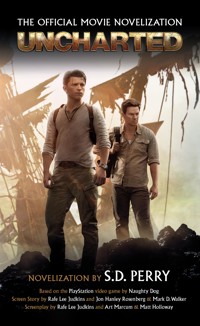
The official novelisation of the hotly anticipated Uncharted, the new movie featuring Tom Holland and Mark Wahlberg adapting the bestselling video game series. Novelisation of the upcoming Uncharted movie releasing 8th February 2022. This is the movie adaptation of the hugely successful video game franchise Uncharted. The film is an origin story for fortune hunter Nathan Drake and his mentor Victor Sullivan. The film is directed by Ruben Fleischer, written by Rafe Judkins, Art Marcum and Matt Holloway, and stars Tom Holland as Drake and Mark Wahlberg as Sully.
Das E-Book können Sie in Legimi-Apps oder einer beliebigen App lesen, die das folgende Format unterstützen:
Veröffentlichungsjahr: 2022
Ähnliche

















Contents
Cover
Title Page
Leave us a review
Copyright
Dedication
Prologue
Chapter 1
Chapter 2
Chapter 3
Chapter 4
Chapter 5
Chapter 6
Chapter 7
Chapter 8
Chapter 9
Chapter 10
Chapter 11
Chapter 12
Chapter 13
Chapter 14
Chapter 15
Chapter 16
Chapter 17
Chapter 18
Chapter 19
Chapter 20
Chapter 21
Chapter 22
Chapter 23
Chapter 24
Chapter 25
Chapter 26
Chapter 27
Chapter 28
Chapter 29
Chapter 30
Epilogue
Acknowledgements
About the Author
THE OFFICIAL MOVIE NOVELIZATION
NOVELIZATION BY
S.D. PERRY
SCREENPLAY BY
RAFE JUDKINS AND ART MARCUM & MATTHOLLOWAY
SCREEN STORY BY
RAFE JUDKINS
BASED ON THE PLAYSTATION VIDEO GAMEBY NAUGHTY DOG
TITAN BOOKS
LEAVE US A REVIEW
We hope you enjoy this book – if you did we would really appreciate it if you can write a short review. Your ratings really make a difference for the authors, helping the books you love reach more people.
You can rate this book, or leave a short review here:
Amazon.com,
Amazon.co.uk,
Barnes & Noble,
Waterstones,
or your preferred retailer.
Uncharted: The Official Movie Novelization
Print edition ISBN: 9781789097313
E-book edition ISBN: 9781789097320
Published by Titan Books
A division of Titan Publishing Group Ltd
144 Southwark Street, London SE1 0UP
www.titanbooks.com
First edition: February 2022
1 2 3 4 5 6 7 8 9 10
This is a work of fiction. Names, characters, places, and incidents either are the product of the author’s imagination or are used fictitiously, and any resemblance to actual persons, living or dead, business establishments, events, or locales is entirely coincidental. The publisher does not have any control over and does not assume any responsibility for author or third-party websites or their content.
™ & © 2022 Columbia Pictures Industries, Inc. All Rights Reserved.
No part of this publication may be reproduced, stored in a retrieval system, or transmitted, in any form or by any means without the prior written permission of the publisher, nor be otherwise circulated in any form of binding or cover other than that in which it is published and without a similar condition being imposed on the subsequent purchaser.
A CIP catalogue record for this title is available from the British Library.
“I know not all that may be coming, but be itwhat it will, I’ll go to it laughing.”—Herman Melville
“Oh man, I’m so tired of climbing shit.”—Nathan Drake
For Cyrus and Dexter, who are the coolest.
PROLOGUE
The sky was beautiful, a deep, dazzling blue. Nathan Drake opened his eyes and for half a second he saw only the wide empty void, only knew its cloudless beauty. A perfect day, the smell of salt on the breeze, the wind in his hair, Sam’s ring banging his forehead, his clothes flapping violently—
Wait, what?
He blinked, and the world spun. A thousand aches came to life as the wind blasted over him, as he turned his head and saw the endless sea, also blue, about 15,000 feet below wherever he was. Which appeared to be hanging upside down by one leg, whirling through the beautiful sky.
“Oh, crap,” he said, abruptly wide awake. His right foot was caught under heavy netting wrapped around a big crate, which was connected to more crates by various chains and cables, the whole string of boxes hanging out of the back of a roaring cargo plane. Which meant he was hanging out of the back of a roaring cargo plane.
The airdrop. Memory hit like a ton of bricks. The gold, the keys, the map! Sully was gone and—
Nate’s foot started to slip out from beneath the netting, that precious web of nylon that was the only thing keeping him from a very, very long fall.
“No no no no no—”
He reached up for the thick netting just as his boot slipped free, and the wind whipped him off the crate like he was a feather. Nate bounced into the crate whistling along behind him and scrabbled to hold onto it, but the wind had other ideas. He clawed at the next heavy box he slammed into, padded with equipment bags and smaller boxes, then a third, his eyes wide, his fingers grasping. He was nearing the end of the clumsy, waving line of crates and equipment streaming from the plane, could see the last crate, big and square, sturdy-looking, wrapped in nylon straps and dragging a dead, tangled bundle of flopping parachute—and past that, nothing but empty air and the sparkling sea far below. Far, far below.
He hit the box and his hands skittered across the thick netting, sliding over one of the bags strapped to the side. For a second he thought he was done for, but his grasping fingers caught the strappy net. He grabbed hold with a death grip and jerked to a halt, slammed down on top of the crate, immediately adding new aches to his battered body.
Nate hunched against the wooden slats. He was glued to the crate. He looked up and back to the yawning cargo hold, counting the boxes and bags between him and safety. Four? Five? He could climb back, he had to climb back, and fast, before one or more of the villains on board decided to cut their losses and ditch their hazardous tail.
He reached forward, keeping the death grip thing going with his left hand, grasping at the connecting cable with his right—
—and a hand came down on his left calf, thick fingers squeezing like a vise.
“Aaaah!”
Nate jerked around, saw he wasn’t the only rider to catch the last crate. One of the bad guys was hanging off the back, his thick ugly face contorted with terror and fury. The man raised his left hand, which held a great big gun, and pointed it at Nate.
Shocked, Nate kicked out, his work boot landing square in the man’s snarling face. The guy lost his grip on Nate’s leg and shrieked as he fell away, wheeling his arms and his useless weapon, plummeting to the sea far below.
“Oh my god, that was purely reactive, I really didn’t mean to—”
The man was already a flailing speck, too far away to hear Nate’s apology, the sound of his diminishing screams lost to the thunder of the plane’s engines and the blast of the wind. Nate shut up and turned back to face his climb, pulling himself across the top of the box, reaching again for the main connecting cable.
He’d just touched it when the entire daisy chain of boxes lurched down six feet, as another crate jounced out of the cargo hold to lengthen the whipping equipment tail. How many more were connected? How much weight was still on board, keeping the clumsy line from falling? How much longer before everything was yanked out into the sky, or the ropes gave way?
THINK LATER, GO NOW!
Nate grabbed the primary cable between his crate and the next, and pulled himself into a crouch. The crates were spaced just close enough for him to reach up and grab the netting on the one above, but he had to steel himself for the attempt, fully aware of his extremely precarious position. Up on the plane, someone was shooting. A lot. A couple of random lone crates flew out of the hold and plunged past him, disappearing into the blue void.
Nate stood, grabbed the net overhead, and jerked himself up, swinging his legs up after him. He shoved his feet into the nylon net of the penultimate box and threw himself at it, muscles clenched against the unyielding blast of wind that sought to peel him away and drop him into the sea like that poor jerk with the gun.
He edged forward to the top of the crate, making the next jump the same way he had the first, thankful for the millions of crunches he’d endured in his short life. Nothing like core strength to fight wind shear. He’d be at the top in no time and—
Ahead of him, near the top of the jostling chain, another mercenary leaned out from his own precarious perch and opened fire with a semi.
“Hey, whoa!” Nate shouted. “No need to shoot—I—”
Bullets slammed into the bulky equipment bags strapped to the box, dug divots into the thick gray plastic of the container. One of the rounds shredded the stabilizing line that kept Nate’s crate from being spun like a top, the inevitable result a dizzying spin through the open air, out of the shooter’s line of sight. Nate didn’t wait to swing back, he’d be a sitting duck—he launched himself at the crate overhead and clambered up the side facing away from the gunman. He could see the shooter’s boots sticking over the edge of the flapping net above, and threw himself upward again, deliberately not thinking of how easy it would be to plunge to his death, praying that the guy would blame the sudden shift of weight on the screaming wind.
Nate scaled the netting, coming to the crate’s top as the gunman rose into a crouch, his back to Nate as he stared down the line of spinning boxes. There was now only one crate between them and the cargo hold. The man started to turn, scowling through a bushy beard, his gun swinging around—
—and Nate threw himself forward, hitting the guy low, knocking him into the open air while he grabbed the netting, hanging tight to the bucking crate.
The gunman let out a cry and fell—onto the box right below. He clung to the crate’s side, padded with duffels and packs of equipment, and immediately started climbing.
Cut the cable!
Great idea, but no knife!
Nate squinted against the buffeting wind, taking in the straps twined through the netting of his crate, connecting it to the others. Amid the fluttering ropes was a flat buckle flush against the plastic, right along the primary cable. Nate flipped the connector and was immediately rewarded—the cable slid free of the netting, all the crates beneath his suddenly dropping away, the plane’s engines roaring.
Easy-peasy, only one more to go and I’ll be—
Beard-guy launched himself off the falling chain and snatched one of the flapping straps now hanging off Nate’s crate. He swung wildly, rocking what was left of the equipment train. Nate held on tight, stomach lurching.
The cargo hold was so close, only one crate above. He heard more shots on board, and shouting, but figured he’d rather take a bullet than fall to his doom with Beardo, who was already panting up the side of the heavy crate at his feet. At least he’d lost his gun.
Nate stood and launched himself at the top crate, grabbing the netting under a bulging zippered duffel roped to the side. He brought his feet up and dug them into the nylon on the bottom, pushing himself over the duffel bag. His clawing hands found the top edge of the crate and he hooked his fingers into the net, dragging his head level to the top, just in time to see one of the cable’s smaller connecting straps go zing, and disappear.
The box lurched to the right, suddenly unsteady in its cradle of net. Better, the primary cable, the line holding it all together, was sawing itself in half against the steel lip of the open cargo hold, and—
Ahh!
Nate’s body was jerked down by Beardo’s weight, the henchman suddenly hanging from his left ankle, gripping with both meaty hands. Nate flailed, left arm swinging out, nearly losing his grip.
“You are an asshole!” Nate screamed. “If we would just help each other, this would—Jesus!”
Beardo was trying to climb his leg, kicking off against his own crate, jerking Nate further off balance. Nate heard another high-pitched zing from whatever system of straps still connected them to the plane. He couldn’t kick the guy—he’d be hanging by his hands—and the weight was too much to lift and shake off. He hugged the wall of bags and boxes, hooking his right arm through the net, the answer right in front of his face: the zipper of the duffel bag.
He ripped it open, unleashing a small flood of random equipment—flashlights and hand radios, a shovel blade. The stuff smashed into Beardo, who clung ever tighter, ducking his head against the onslaught.
Nate fumbled deeper into the bag, grabbed what felt like a baseball bat, and jerked it out. A long black stick, maybe the shovel’s handle? Scaffolding? Who cared. He swung it at Beardo’s head, connecting with a solid whap. Instead of letting go, Beardo leaned back, still hanging on, pulling Nate’s body away from the diminishing safety of the crate’s netting and putting his noggin out of whapping range. Nate swung again and got air, the crate shifting along with another tiny, zipping snap.
Shit! Unless an act of God came along, he was in trouble. Beardo was strong and heavy and he wasn’t letting go.
A flash of movement over Nate’s head, a heavy scrape across the open ramp, and something big was barreling through the hold. Nate ducked and hung tight as a lone crate was sucked off the ramp and into the air, missing him by inches—before it smashed into Beardo’s upturned, grimacing face.
The iron grip fell away from Nate’s ankle, the crate and the henchman suddenly dwindling against the sparkling blue below. Nate felt like he’d lost a couple of hundred pounds.
Go go go!
He clambered up the sagging net, bent his knees, and jumped. He could feel the top crate’s surface drop away just as his feet left the surface, but his hands touched shuddering cold metal, gripped the rubber strip of insulation at the ramp’s edge.
Got it! The ramp felt shockingly stable after his wild climb. He shot a look down, saw the clumsy chain of boxes spinning into the distance, speeding away, then hauled himself up and out of the sky, gasping, with arms that felt like rubber. Air was somehow blasting from inside the plane, but it was mostly going past him, shuttling around an upended storage locker. Nate tucked his boot under a steel bar on the ramp and stood up. He’d made it, he was finally—
From the hold of the plane, a car revved its engine. Nate braced against the relentless push of the wind, and peered, blinking, into the shadowy hold. Guns were fired, flashes in the dark.
He saw it coming and felt the blood rush out of his face.
“This is just not my day.”
The red 1955 Mercedes Gullwing sped toward the open ramp, toward him, and there wasn’t time to get out of the way.
Nate jumped straight up and threw himself forward, some idea of shoulder-rolling over the hood his only play, but there wasn’t time for that either, the car was suddenly in his face, cherry-red and flying. He crashed flat across the hood—
—and then he was back outside, still thousands of feet above the sea, the Benz’s wheels spinning pointlessly as the car rocketed downward and the plane flew away.
BOSTON, ELEVEN YEARS AGO
Sam made the jump look easy. He leapt from the gnarled old tree branch to the museum’s open second-floor window and was through in a single motion, disappearing into the darkness inside.
Easy. Sam was already adult-sized, but Nate could hold his own against his big brother. He was fast and strong, too. Nate took a deep breath, the tree’s old bark rough against his hands, the night air cool and secret in the rustling leaves, and then kicked off from the heavy branch, hurtling for the open window. I’m a bullet, a rocket, I’m an arrow fired straight and—
AAH!
The window had moved away somehow, and gravity was real. Nate lunged and stretched, but only his fingers hit the painted sill. He scrabbled for a hold, his vision of landing in a cool pose next to Sam flushed away by the bright reality of plunging to his death.
“I got you!” Sam grabbed Nate’s right hand, warm fingers closing over his sweaty ones. Nate’s sneakers scuffed at the brick, his whole weight suspended by one arm. He looked down, saw the manicured grounds a million miles below, dark and bone-breakingly flat.
“Help! I’m gonna fall!”
“I said I got you, be cool,” Sam said, and grabbed his other hand. Sam’s grip was like steel.
Nate’s heart was hammering but he looked up into his brother’s face, tight with the strain, and forced his panic into submission. Sam had him. He leaned over to pull Nate in, the ring he always wore on a cord around his neck bonking Nate’s forehead lightly.
Sam held on until Nate was safely inside, both of them standing at the end of a shadowy corridor. The air was silent and infused with museum smell: age and dust and floor polish.
“What part of ‘wait for me in the tree’ did you not get?” Sam whispered.
“I said I’m coming with you,” Nate whispered back. He heard the quiver in his own voice and wished it wasn’t there. He was twelve, not a little kid anymore.
“Okay, okay,” Sam said. He pulled a slightly smooshed cube of gum out of his pocket, held it out. “Bubble Yum?”
Nate quickly unwrapped the gum, eager for something to take the sour taste of terror out of his mouth.
“It’s my last piece, so let’s split it,” Sam said.
Nate was already defiantly chewing. Sam gave him a look, but Nate could tell he wasn’t really mad… and he realized that his heart was finally slowing down. The familiar sweet pink taste of Yum made him feel better. Not breaking his neck was good, too.
Sam led them down the hall, past dozens of big oil paintings and a few small glass cases full of pottery and the like. All the little spotlights were turned off, but the light by the stairs was enough for Nate to see some of the stuff—a hand-thrown pot decorated with birds, a tattered piece of blue cloth, a painting of flowers along a forest trail… All of it had been created by people who’d probably been dead for hundreds of years. The idea was somehow awesome to Nate, and to Sam, too; they’d talked about it lots of times. The world was old and full of interesting things. Valuable things.
Downstairs was a hundred times better. The McKeown Museum’s main hall was a series of connected rooms, big and chock-full of glass cases and more paintings. The lighting was dim, but Nate saw a trio of antique cannons lined up in a big case near the front wall and just had to take a look. The biggest cannon was taller than him and made of heavy, pitted metal. It was on blocks. A ship’s cannon, maybe? He imagined manning a gunport, the air thick with smoke, blasting at the pirates coming in from starboard, the crash of the thundering cannon rattling the deck overhead…
“Badass,” he muttered, wishing he could touch the dark metal.
“Quiet,” Sam whispered, right in his ear, and Nate jumped. “Get down!”
Nate dropped and ducked his head, staring hard at his shoes. He’d been daydreaming, so he’d missed the approaching clack of footsteps echoing softly through the silent rooms. A flashlight’s beam passed right over their heads and Nate shut his eyes, willing himself to be invisible. He held his breath.
The steps paused for a scary long time… and then started up again, through the room and out, the museum’s security guard continuing his beat. When the last echoes died away, Sam nudged him.
“We’re looking for the Age of Explorers exhibit,” Sam whispered, and stood up, lighting his prized silver Zippo and holding it up like a torch, like they were explorers, too. The flickering light shimmered on his mop of reddish-brown curls, made his lean face look kind of haunted and spooky. Older. Sam wasn’t scared of anything, not jumping through windows or security guards or even Sister Bernadette. Nate crawled to his feet, exhaling his own fear, putting on a brave face.
Fake it ’til you make it. Sam said it was the trick to getting things done.
Sam led them through more big rooms, in the opposite direction to where the guard had gone. Nate saw a hundred things he wanted to stop for—an antique saber, a tarnished suit of armor, a huge pale statue of a Roman soldier on a rearing horse—but kept forcing his eyes back to Sam’s makeshift torch. He wasn’t going to miss hearing that guard again.
They stepped into some kind of lobby area, past a dark reception desk, and saw a massive gold and red banner hanging over the archway to another dimly lit exhibit hall, off to the left. Hidden Treasures: Lost Artifacts from the Age of Exploration. Nate’s guts tingled, and Sam was grinning as he snapped the Zippo closed, both of them hurrying for the entrance.
Right at the front of the exhibit was a pair of sailing ship replicas, perfect miniatures of carracks down to the way the sails were rigged, with triangular sails on the mizzenmast. Sam rested his hand on the glass of one of them, his gaze going dreamy for a beat.
“Think about what it was like, on one of these galleons,” he said. “No idea what’s ahead of you.”
“Technically they’re carracks,” Nate said. “Galleons came later.”
“Technically you’re a nerd,” Sam said, and started walking again, leading them toward one of the smaller adjoining rooms. Nate cracked his stolen gum and followed.
There was a painting at the entrance to the smaller room, a glowering, black-bearded face topped with a funky black hat. Sam put his hand over the gold name plate.
“Alright, smart guy, who’s this?”
“Too easy. Ferdinand Magellan, first guy to sail around the world.”
“Wrong. Magellan never made it all the way around, he just got the credit…”
Sam trailed off and walked to a tall case deeper in the room, the kind made to show off documents. Behind the glass was an old map of the world that looked like the artist had been drunk. The continents were smooshed and weirdly rounded. Tiny cherub faces were painted around the flattened globe shape.
Nate joined Sam just as he reached out to touch the glass, tracing the narrow black line that wavered across the misshapen seas, beginning and ending in Spain and spanning the entire map.
“First map of the whole world,” Sam said, following the line around the southern tip of South America and across the Pacific. “Know what he was looking for?”
He glanced back at Nate, who shook his head slightly.
“Gold. A shit ton of it.”
Wow. “Did he find it?”
“Legend says he did,” Sam said. “But he never made it back.”
“So all that gold, it’s just gone?”
“Lost, not gone,” Sam said. “There’s a difference. If something’s lost, it can be found…” He turned back to the map. “But you gotta be willing to risk everything. Even your life.”
Fake it ’til you make it, Nate repeated to himself. Sam wasn’t faking, though, he always meant what he said. Nate wished he was half as courageous.
“Lucky for us, we have pirate blood,” Sam continued. “Descended from Sir Francis Drake himself. At least, that’s what Mom and Dad used to say.”
Nate’s chest tightened a little. Sam never talked about their parents. He looked back at the map, at the weird blobs of land, the broad emptiness of the oceans. Before he knew he meant to, he was talking.
“You know, sometimes I think they’re out there somewhere. Like they’re just lost…”
“They’re not lost, they’re gone,” Sam said, firmly, and Nate suddenly couldn’t swallow, the pain a lump in his throat.
“But hey, we got each other, right?” Sam caught his gaze and smiled a little. “All you need is one person you can trust. Then you’re never alone.”
Nate nodded. Sam was right. St. Francis’ wasn’t home, just a stop on the way to their true destiny, to their real life. They were going to travel the world searching for lost things, they were going to have adventures and fights and see everything there was to see.
Sam flipped his Zippo open, chink, and spun the wheel. He held the wavering flame to the edge of the sealed case, to the putty or glue holding the glass together. When it was good and scorched, Sam took out his pocketknife and used the blade to pry at the seal.
“Wait, what are you doing?” Nate asked. Sam hadn’t said anything about trying to steal a map. What if the guard comes back?
“We’re pirates, remember?” Sam dug at the softened sealant. “This thing’s worth a fortune.”
A shrieking alarm went off suddenly and all the lights snapped on, the shadowy, dreamy silence wrenched away at dizzying speed. Nate turned for the exit and saw the security guard coming right at them.
“Oh crap!” Nate cried, even as Sam held up his hands, his knife clattering to the floor. They were busted.
* * *
The ride back to St. Francis’ was miserably silent. The back of the police car stank and Sam looked defeated, his head down and shoulders slumped. Being escorted up the steps to St. Francis’ Boys Orphanage by the grim-faced cop was bad enough, but when Sister B opened the door to let them in, Nate felt a thousand times worse. His face was on fire, and his heart thudded like a funeral drum. She was going to be so mad.
Nate stood next to him, staring down at the nasty old linoleum of the front hall, worn and scoured. St. Francis’ smelled like cafeteria food and hard work, like disinfectant and hopelessness. Even the lights were old, yellow, bathing everything in sickness. Sister B’s stern, lined face looked especially forbidding as the blustery middle-aged cop laid out the situation in no uncertain terms. Breaking and entering, attempted burglary, destruction of property.
“We came here first out of respect, Sister B, but it’s his third strike,” the cop said. “He’s the city’s problem now.”
Reform school. Sam would be eighteen soon, but that was a whole month and a half in a place where kids got stabbed and beat up, where you were locked in a room at night with actual criminals.
Nate waited. Sister Bernadette had told the last cop that she would personally see to it that Sam stayed out of trouble, then given Sam high hell and every kind of detention; she’d made him scrub toilets for two weeks straight and pray while he did it. And that was for shoplifting a book.
Sister B didn’t look mad, though. She nodded at the cop, then looked at Sam. Her eyes were almost sad.
“Go get your things, Sam.”
Shocked, Nate looked at Sam, who looked back at him with no real expression at all, only a kind of stony determination. Sam glanced at Sister B’s calm lined face and then turned for the stairs, jogging up the dented steps to the dorm.
Nate felt hot tears spring up. He couldn’t help it, and his stomach was in knots. What was even happening? Sister B watched Sam disappear into the upstairs hall, her mouth a pinched line.
“You can’t just let them take him away!” Nate felt the tears fall and didn’t care.
The old nun looked at Nate, her eyes hard. “Actions have consequences, Nate. You need to learn that or you’re going to end up just like him.”
He stared at her, unable to fathom her casual cruelty. Sam was his brother, he was all Nate had! If he even survived to eighteen, he’d be too old to come back to St. Francis’. How was Sam going to get a job and a place for them if he had a record?
Sister B’s gaze softened just a little. She tipped her head to the stairs. “Go on. Say your goodbyes.”
Nate ran up the stairs, wiping his cheeks. Sam couldn’t be leaving, none of this was real. I should have stopped him from trying to take the map, I should have said something—
He turned into their tiny, shared room, just the two of them, and saw Sam opening the window, his pack on his shoulder.
“What the hell?” Nate’s jaw dropped. “Where you going?”
Sam turned and shushed him with both hands, glancing at the doorway. “I’m not letting them lock me up. No way.”
“So you were just gonna leave?”
“No choice,” Sam said. “I gotta get out of Boston.”
“I’m coming with you,” Nate said. He could pack fast, he just needed a few things—
Sam unshouldered his backpack and crouched in front on Nate. He took off his necklace, the shining silver ring on its leather cord. “Nate, you ever see me go anywhere without this?”
Nate shook his head, not trusting himself to speak without sobbing.
“So you know I’d never leave it behind. I’ll always be with you.”
Sam spread the leather cord and put it over Nate’s head. The ring landed on his chest and he grabbed it, the silver cool on his fingers. It was heavy, perfectly smooth. He squinted to read the writing etched inside.
“It says Sic Parvis Magna,” Sam said. “Greatness from small beginnings. That’s you and me.”
Nate smiled a little through the tears. Sic Parvis Magna. Sam never lied to him, they were going to have the most amazing life once—
The cop’s growly voice bellowed up the stairs. “Let’s go, kid! Hurry it up!”
Nate could hear the boys in the next room stirring. In a minute there’d be a dozen curious faces leaning out to watch Sam get dragged away.
Sam scooped up his pack and hurried back to the window. He got one leg over the sill and looked at Nate, his gaze serious and fierce.
“I’ll come back for you, Nate. I promise.”
And just like that, Sam swung out and dropped from sight. Nate could hear him shuffle down the crumbling brick, heard him thump to the ground, and then nothing.
Wiping his tears, he turned back to the door—and saw a folded piece of paper on his bunk. He picked it up and Sam’s Zippo slid out. Like the ring, Sam always had it with him.
The paper itself was blank. Nate turned it back and forth, then remembered the trick Sam had shown him last week, from the code book. Homemade invisible ink. Sam had snuck down to the kitchen to steal lemon juice to see if it worked.
Nate lifted the weighty, well-made lighter and opened it, then flicked the wheel. It took him three tries before a flame appeared, burning steadily. He carefully held the paper over the fire, passing it back and forth as the paper started to singe.
The letters bloomed orange and then smoky brown on the blank page.
Never forget you’re a Drake.
Nate closed the lighter and put the secret message on his scratchy blanket. He could hear the heavy tread of the cop coming up the stairs and doors opening in the hall, but he only stared at the crooked letters, holding the ring tightly. He wouldn’t forget, and Sam was coming back. Just because it felt like the end of the world, didn’t mean that it was.
NEW YORK CITY, TEN DAYS AGO
A glance at his watch and Nate picked up his pace, hurrying through the bright, scattered nightlife of Manhattan’s Lower East Side. The well-dressed and wealthy were out in force, leaving theaters and fine restaurants, filing out of cabs and into bars, all enjoying their absolute right to conspicuous consumption.
Nate hung a left on Rivington and checked his watch again, hiking his bag over his shoulder. Carlos bitched about anybody who didn’t show up for their shift ten minutes early, which was patently ridiculous; if management wanted their workers to come in early, they could pay for those ten minutes. On the other hand, it was a good job, full of opportunity for an enterprising young man such as himself. No matter how good he was at mixology, pissing off the boss would get him fired.
He cut into the alley between the bar and the sushi place next door and hit the employee entrance with three minutes to spare, tapping in the access code, breathing through his mouth to avoid sucking in the charming back-alley smell. He hurried through the dim hall, hoping that Carlos was out front—
—but of course there he was, standing in the tiny downstairs kitchen, frowning severely as Nate burst in.
“The late, great, and formerly employed Nate. I said—”
“You got the great part right,” Nate interrupted. It never hurt to remind people of one’s worth. He smiled brightly to make sure Carlos knew he wasn’t being an asshole, unzipped his bag, and was dressed in a crisp white shirt and spotless black vest before his boss had time to write himself another clever quip. Carlos resorted to his “serious” frown, pulling the lines of his face into the very picture of disapproval, which Nate pretended not to notice.
Nate mussed his hair and rolled up his sleeves, grabbed a dishtowel and slapped it over his arm, then smiled again on his way to the floor. “See you upstairs, Carlos.”
Carlos shook his head, but in an exasperated, whaddaya-gonna-do? kind of way, rather than a you’re-definitely-fired way. All was well. Nate didn’t bend and scrape at work, but he projected honest, friendly optimism as hard as he could, and it generally paid off. People liked to give him the benefit of the doubt.
The Slaughterhouse was hopping, Chris and Tara on the floor, Rex ready to hand off behind the bar. Pulsing music and overloud chatter, plush seats and expensive drinks, the bar was buzzing with the ultra-cool and the tragically wealthy.
Nate glanced over the open tabs while Rex cashed himself out, and then turned to scan the bar, ready to work.
He smiled at a beautiful young woman as she stepped up to order. Early twenties, dirty blond, flawless skin and teeth, artfully distressed Gucci jeans. A diamond tennis bracelet was drooping on one slender wrist.
“What can I get you?”
The debutante smiled back. “Vodka tonic.”
“C’mon, my first drink of the night,” Nate said. “Test me a little.”
Deb’s smile widened, and she hesitated for a beat, looking at him more closely. All-American boy, that was him, and he let his eyes twinkle at her. Apparently, he passed muster; she picked up a drink card and gave it a once-over, her smile lingering.
“Oh, I don’t know,” she said, still scanning the card. “Negroni?”
“I’m sorry, a what?” Nate quipped, but her smile faded, her perfectly arched brows drawing together. What was it going to be? Puzzled? Annoyed?
“Kidding,” he added, before she could decide, and grabbed an old-fashioned glass off the bar, shoveling in ice. The trick to recovering from a bad joke was a good performance.
He tipped the Tanqueray 10 off the second shelf with his left hand, grabbing it low with his right, and turned back to the glass, pouring a healthy shot while he grabbed the vermouth rosso.
“The Negroni, first made in 1919 for Count Camillo Negroni…” He leaned back and plucked the Campari off the bottom shelf while the sweet Italian vermouth gurgled into the glass. He kept his eyes on the pour, determined to get the proportions exactly right. The flashy bottle-flipping stuff and the patter was all fine, and he was good at it and getting better, but making perfect drinks was where he shone.
“…who swapped the soda water in his usual drink, the Americano, for gin.”
Nate finished the pour, reached for an orange. “Haven’t seen you in here before,” he said, slicing the peel.
“Not really my neighborhood,” Deb said.
“Oh, yeah? What’s your neighborhood?”
“Greenwich.”
Nate raised his eyebrows. “That must be nice.”
“Bartenders in Greenwich don’t usually talk so much,” she said.
“Well, you can’t get a Negroni like this in Greenwich,” Nate said. Perfect. He garnished the glass and pushed it forward, anticipating another smile when he looked up.
Deb had turned to chat with her friends, a handful of honest-to-god clones—healthy good looks, artfully applied product, ripped items of clothing that cost more than a working person’s monthly rent. She reached back and took the drink without looking at it, dropping a titanium Amex black card on the bar in its place. The card clattered dismissively.
Nate swallowed his disappointment within a heartbeat. No place for hurt pride in his industry, bartending or otherwise. “Open or closed?”
Deb didn’t look back, or acknowledge his existence in any way. Nate scooped up the card and turned to the register, tapping at the screen. Okay then, open.
“Who cares, right?” he muttered. “It’s only money.”
There were more faces waiting. Nate did his thing, pouring and dancing, smiling, making jokes as he served up drink after drink. A sneering private-school type wanted a Vesper martini, wore a Chopard watch with a loose band. A tray of mojitos for the big group in Tara’s section. Whiskey sour to the older guy at the end of the bar, who carried a cane with a platinum inlay. Nate made a gimlet for a Japanese art student with a hammered gold brooch in her hair, definitely an heirloom. Edo period for sure, an aristocrat’s treasure.
“Haven’t made one of those in a minute, see what you think,” he said to the artiste, who didn’t bother to answer.
Next up, a pair of young bucks out of Jersey. Both wore bulky watches, Tag Heuers. $2,300 apiece retail, easy. Nate flipped bottles and nailed the pour, smiling brightly as he pushed the drinks out. “Two Long Island iced teas, extra Long Island.”
Nate sent out a round of various imported beers and was showing off his new martini spin to a nice older lady with a thick rope of 18K around her neck when Carlos walked behind him, scowling.
“Just pour the drinks,” his boss chided, real disappointed dad energy.
Killjoy.
The Slaughterhouse’s discreet front door slammed open wide enough to draw eyes, and in strode a handsome older guy in a tailored Tom Ford tuxedo. He carried himself like he was important, rugged chin up, shoulders back. Mid to late forties, dark hair with just a few silver threads.
The guy sauntered toward the end of bar, loosening his tie and the top button of his collar. The bar patrons returned to their respective conversations as the sharp-dressed man slid onto the stool left of Nate’s station. Closer, Nate could see the etched lines around his eyes. Either he laughed a lot or he spent a fair amount of time outdoors, squinting at the sun.
“Little young for a bartender, aren’t you?” the man asked, his gruff voice slightly raspy, with a hint of working-class background. Boston?
“I’ll take that as a compliment,” Nate said. “Little old for prom, aren’t you?”
The guy sighed. “Fundraiser across the street. 10K a seat, and they don’t know how to make a goddamn Hemingway daiquiri.”
Nate brightened, casually tossing a napkin down in front of the well-dressed patron. “One Papa Doble it is. You can have it by the book—splash of grapefruit, splash of maraschino—or you can have it the way the Old Man and the Sea actually drank it, professional alcoholic that he was: straight rum, extra cold, with just a few drops of lime.”
The rich guy actually made eye contact, and not in a creepy way. Just one human being actually seeing another one, a rare event for any server. His own gaze was sharp, eyes a clear green-brown hazel. “And a teaspoon of sugar, just like they do in the Floridita bar.”
Nate was already pouring the rum, and his eyebrows went up.
“You’ve been to the Floridita? Hemingway’s Floridita?”
The rich guy nodded. “Buncha times. Don’t always remember walking out.”
Nate grabbed a cut lime, unable to help a wistful ache of jealousy. “I always wanted to go to Havana.”
The guy fixed him with that sharp gaze. “Yeah? What’s stopping you?”
Nate felt a surge of defensiveness. He was barely twenty-one, had just started out and had bills to pay, he had an apartment that he could barely afford even with the side gig. He was going to travel, he was going to go around the goddamn world, but it wasn’t like he could just go.
Chill out, he’s just some guy.
“Put it this way,” Nate said, amiably. “I’m not dropping 10K at fundraisers.”
He set the completed drink down on the napkin. “Here you go. Just the way Papa liked it.”
The older man smirked in a friendly kind of way, and slid a fat money clip out of his jacket. Heavy gold, stuffed with bills. He pulled a fifty out of the folded wad and dropped it on the bar, then stood up, drink in hand.




