


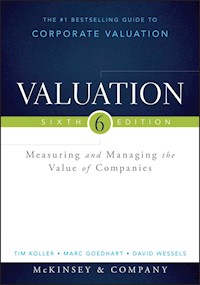
Valuation E-Book
60,99 €
Mehr erfahren.
- Herausgeber: John Wiley & Sons
- Kategorie: Fachliteratur
- Serie: Wiley Finance Editions
- Sprache: Englisch
McKinsey & Company's #1 best-selling guide to corporate valuation, now in its sixth edition Valuation is the single best guide of its kind, helping financial professionals worldwide excel at measuring, managing, and maximizing shareholder and company value. This new sixth edition provides insights on the strategic advantages of value-based management, complete detailed instruction, and nuances managers should know about valuation and valuation techniques as applied to different industries, emerging markets, and other special situations. Valuation lies at the crossroads of corporate strategy and finance. In today's economy, it has become an essential role -- and one that requires excellence at all points. This guide shows you everything you need to know, and gives you the understanding you need to be effective. * Estimate the value of business strategies to drive better decision making * Understand which business units a corporate parent is best positioned to own * Assess major transactions, including acquisitions, divestitures, and restructurings * Design a capital structure that supports strategy and minimizes risk As the valuation function becomes ever more central to long- and short-term strategy, analysts and managers need an authoritative reference to turn to for answers to challenging situations. Valuation stands ahead of the field for its reputation, quality, and prestige, putting the solutions you need right at your fingertips.
Sie lesen das E-Book in den Legimi-Apps auf:
Seitenzahl: 1262
Veröffentlichungsjahr: 2015
Ähnliche




















The Wiley Finance series contains books written specifically for finance and investment professionals as well as sophisticated individual investors and their financial advisors. Book topics range from portfolio management to e-commerce, risk management, financial engineering, valuation and financial instrument analysis, as well as much more. For a list of available titles, visit our Web site at www.WileyFinance.com.
Founded in 1807, John Wiley & Sons is the oldest independent publishing company in the United States. With offices in North America, Europe, Australia and Asia, Wiley is globally committed to developing and marketing print and electronic products and services for our customers' professional and personal knowledge and understanding.
VALUATION
MEASURING AND MANAGING THE VALUE OF COMPANIES
SIXTH EDITION
McKinsey & Company
Tim Koller
Marc Goedhart
David Wessels
Cover image: ©iStock.com/alzajac Cover design: Wiley
Copyright © 1990, 1994, 2000, 2005, 2010, 2015 by McKinsey & Company. All rights reserved.
Published by John Wiley & Sons, Inc., Hoboken, New Jersey. Published simultaneously in Canada.
No part of this publication may be reproduced, stored in a retrieval system, or transmitted in any form or by any means, electronic, mechanical, photocopying, recording, scanning, or otherwise, except as permitted under Section 107 or 108 of the 1976 United States Copyright Act, without either the prior written permission of the Publisher, or authorization through payment of the appropriate per-copy fee to the Copyright Clearance Center, Inc., 222 Rosewood Drive, Danvers, MA 01923, (978) 750-8400, fax (978) 646-8600, or on the Web at www.copyright.com. Requests to the Publisher for permission should be addressed to the Permissions Department, John Wiley & Sons, Inc., 111 River Street, Hoboken, NJ 07030, (201) 748-6011, fax (201) 748-6008, or online at www.wiley.com//permissions.
Limit of Liability/Disclaimer of Warranty: While the publisher and author have used their best efforts in preparing this book, they make no representations or warranties with respect to the accuracy or completeness of the contents of this book and specifically disclaim any implied warranties of merchantability or fitness for a particular purpose. No warranty may be created or extended by sales representatives or written sales materials. The advice and strategies contained herein may not be suitable for your situation. You should consult with a professional where appropriate. Neither the publisher nor author shall be liable for any loss of profit or any other commercial damages, including but not limited to special, incidental, consequential, or other damages.
For general information on our other products and services or for technical support, please contact our Customer Care Department within the United States at (800) 762-2974, outside the United States at (317) 572-3993 or fax (317) 572-4002.
Wiley publishes in a variety of print and electronic formats and by print-on-demand. Some material included with standard print versions of this book may not be included in e-books or in print-on-demand. If this book refers to media such as a CD or DVD that is not included in the version you purchased, you may download this material at http://booksupport.wiley.com. For more information about Wiley products, visit www.wiley.com.
Cloth edition: ISBN 978-1-118-87370-0 Cloth edition with DCF Model Download: ISBN 978-1-118-87368-7 University edition: ISBN 978-1-118-87373-1 Workbook: ISBN 978-1-118-87387-8 DCF Model Download: ISBN 978-1-118-87366-3
CONTENTS
About the Authors
Preface
Why This Book
Structure of the Book
Valuation Spreadsheet
Acknowledgments
Part One: Foundations of Value
1: Why Value Value?
What Does It Mean to Create Shareholder Value?
Can Stakeholder Interests Be Reconciled?
Shareholder Capitalism Cannot Solve All Social Issues
Consequences of Forgetting Value-Creation Principles
Short-Termism Runs Deep
This Book
Notes
2: Fundamental Principles of Value Creation
The Relationship of Growth, ROIC, and Cash Flow
Balancing ROIC and Growth to Create Value
Real-World Examples
Managerial Implications
Economic Profit Combines ROIC and Size
The Math of Value Creation
Summary
Notes
3: Conservation of Value and the Role of Risk
Conservation of Value
Risk and Value Creation
Summary
Notes
4: The Alchemy of Stock Market Performance
Why Shareholder Expectations Become a Treadmill
Real-World Effects of the Expectations Treadmill
Decomposing TRS
Understanding Expectations
Managerial Implications
Notes
5: The Stock Market Is Smarter Than You Think
Markets and Fundamentals: A Model
Markets and Fundamentals: The Evidence
What about Earnings?
Earnings Management
Diversification and the Conglomerate Discount
Size and Value
Market Mechanics Don't Matter
Value Creation Is More Important than Value Distribution
Summary
Notes
6: Return on Invested Capital
What Drives ROIC?
Competitive Advantage
Sustainability of Return on Invested Capital
An Empirical Analysis of Returns on Invested Capital
Summary
Notes
7: Growth
Drivers of Revenue Growth
Growth and Value Creation
Why Sustaining Growth Is Hard
Empirical Analysis of Corporate Growth
Summary
Notes
Part Two: Core Valuation Techniques
8: Frameworks for Valuation
Enterprise Discounted Cash Flow Model
Economic-Profit-Based Valuation Models
Adjusted Present Value Model
Capital Cash Flow Model
Cash-Flow-to-Equity Valuation Model
Other Approaches to Discounted Cash Flow
Alternatives to Discounted Cash Flow
Summary
Notes
9: Reorganizing the Financial Statements
Reorganizing the Accounting Statements: Key Concepts
Reorganizing the Accounting Statements: In Practice
Advanced Issues
Notes
10: Analyzing Performance
Analyzing Returns on Invested Capital
Analyzing Revenue Growth
Credit Health and Capital Structure
General Considerations
Notes
11: Forecasting Performance
Determine the Forecast's Length and Detail
Components of a Good Model
Mechanics of Forecasting
Additional Issues
Notes
12: Estimating Continuing Value
Recommended Formula for DCF Valuation
Continuing Value Using Economic Profit
Subtleties of Continuing Value
Common Pitfalls
Evaluating Other Approaches to Continuing Value
Advanced Formulas for Continuing Value
Closing Thoughts
Notes
13: Estimating the Cost of Capital
Weighted Average Cost of Capital
Estimating the Cost of Equity
Estimating the After-Tax Cost of Debt
Using Target Weights to Determine the Cost of Capital
Complex Capital Structures
Closing Thoughts
Notes
14: Moving from Enterprise Value to Value per Share
Valuing Nonoperating Assets
Valuing Debt and Debt Equivalents
Valuing Hybrid Securities and Noncontrolling Interests
Estimating Value per Share
Notes
15: Analyzing the Results
Validating the Model
Sensitivity Analysis
Creating Scenarios
The Art of Valuation
Notes
16: Using Multiples
Value Multibusiness Companies as a Sum of Their Parts
Use Forward Earnings Estimates
Use Net Enterprise Value Divided by Adjusted EBITA or NOPLAT
Adjust for Nonoperating Items
Use the Right Peer Group
Alternative Multiples
Summary
Notes
17: Valuation by Parts
Valuing by Parts: Mechanics and Insights
Building Business Unit Financial Statements
Cost of Capital
Testing the Value Based on Multiples of Peers
Summary
Notes
Part Three: Advanced Valuation Techniques
18: Taxes
Operating Taxes on the Reorganized Income Statement
Converting Operating Taxes to Operating Cash Taxes
Deferred Taxes on the Reorganized Balance Sheet
Valuing Deferred Taxes
Closing Thoughts
Notes
19: Nonoperating Items, Provisions, and Reserves
Nonoperating Expenses and One-Time Charges
Provisions and Their Corresponding Reserves
Closing Thoughts
Notes
20: Leases and Retirement Obligations
Operating Leases
Securitized Receivables
Pensions and Other Retirement Benefits
Closing Thoughts
Notes
21: Alternative Ways to Measure Return on Capital
Value-Based Returns on Capital: ROIC and CFROI
Capitalizing Expensed Investments
When Businesses Need Little or No Capital
Summary
Notes
22: Inflation
Inflation Leads to Lower Value Creation
Historical Analysis in Times of High Inflation
Financial Projections in Real and Nominal Terms
Summary
Notes
23: Cross-Border Valuation
Forecasting Cash Flows
Estimating the Cost of Capital
Incorporating Foreign-Currency Risk in the Valuation
Using Translated Foreign-Currency Financial Statements
Summary
Notes
24: Case Study: Heineken
Reorganizing Financial Statements
Analyzing Historical Performance
Forecasting Performance
Estimating Cost of Capital
Estimating Continuing Value
Calculating and Interpreting Results
Notes
Part Four: Managing for Value
25: Corporate Portfolio Strategy
What Makes an Owner the Best
The Best-Owner Life Cycle
Dynamic Portfolio Management
The Myth of Diversification
Constructing the Portfolio
Summary
Notes
26: Performance Management
Adopting a Granular Perspective
Choosing the Right Metrics
Organizational Support
Summary
Notes
27: Mergers and Acquisitions
Value Creation Framework
Empirical Results
Archetypes for Value-Creating Acquisitions
More Difficult Strategies for Creating Value from Acquisitions
Estimating Operating Improvements
How to Pay: In Cash or in Stock?
Focus on Value Creation, Not Accounting
Characteristics of Better Acquirers
Summary
Notes
28: Divestitures
Value Creation from Divestitures
Why Executives Shy Away from Divestitures
Assessing Potential Value from Divestitures
Deciding on Transaction Type
Summary
Notes
29: Capital Structure, Dividends, and Share Repurchases
A Practical Framework
Setting a Target Capital Structure
Deciding on Payout and Financing
Creating Value from Financial Engineering
A Comprehensive Case Example
Summary
Notes
30: Investor Communications
Objectives of Investor Communications
Intrinsic Value vs. Market Value
Which Investors Matter?
Communicating with Intrinsic Investors
Listening to Investors
Earnings Guidance
Meeting Consensus Earnings Forecasts
Summary
Notes
Part Five: Special Situations
31: Emerging Markets
Historical Analysis
Forecasting Cash Flows
Incorporating Country Risk in Scenario DCF Valuation
Estimating Cost of Capital in Emerging Markets
Calculating and Interpreting Results
Summary
Notes
32: Valuing High-Growth Companies
A Valuation Process for High-Growth Companies
Uncertainty Is Here to Stay
Summary
Notes
33: Cyclical Companies
Share Price Behavior
An Approach to Valuing Cyclical Companies
Implications for Managing Cyclical Companies
Summary
Notes
34: Banks
Economics of Banking
Principles of Bank Valuation
Complications in Bank Valuations
Summary
Notes
35: Flexibility
Uncertainty, Flexibility, and Value
Managing Flexibility
Methods for Valuing Flexibility
Four Steps to Valuing Flexibility
Real-Option Valuation and Decision Tree Analysis: A Numerical Example
Summary
Notes
Appendix A: Discounted Economic Profit Equals Discounted Free Cash Flow
Proof Using Perpetuities
Generalized Proof
Note
Appendix B: Derivation of Free Cash Flow, Weighted Average Cost of Capital, and Adjusted Present Value
Enterprise Discounted Cash Flow
Adjusted Present Value
Notes
Appendix C: Levering and Unlevering the Cost of Equity
Unlevered Cost of Equity
Levered Cost of Equity
Levered Beta
Appendix D: Leverage and the Price-to-Earnings Multiple
Step 1: Defining Unlevered P/E
Step 2: Linking Net Income to NOPLAT
Step 3: Deriving Levered P/E
Appendix E: Other Capital Structure Issues
Pecking-Order Theory
Market-Based Rating Approach
Leverage, Coverage, and Solvency
Notes
Appendix F: Technical Issues in Estimating the Market Risk Premium
Notes
Index
Advert
EULA
Guide
Cover
Table of Contents
Preface
Pages
ix
x
xi
xii
xiii
xiv
xv
xvi
xvii
1
3
4
5
6
7
8
9
10
11
12
13
14
15
17
18
19
20
21
22
23
24
25
26
27
28
29
30
31
32
33
35
36
37
38
39
40
41
42
43
44
45
46
47
49
50
51
52
53
54
55
56
57
58
59
60
61
62
63
65
66
67
68
69
70
71
72
73
74
75
76
77
78
79
80
82
83
84
85
86
87
88
89
90
91
92
93
94
95
96
97
98
99
100
101
102
103
104
105
106
107
108
109
110
111
112
113
115
116
117
118
119
120
121
122
124
125
126
127
128
130
131
133
135
136
137
138
139
140
141
142
143
144
145
146
147
148
149
150
151
152
153
154
155
156
157
158
159
160
161
162
163
164
165
166
167
168
169
170
172
173
174
175
176
177
178
179
180
181
182
183
184
185
186
187
188
189
191
192
193
194
195
196
197
198
199
201
202
203
204
205
206
207
208
209
210
211
212
213
214
215
216
217
218
219
221
222
223
224
225
226
227
228
229
230
231
232
233
234
235
236
237
238
239
240
241
242
243
244
245
246
247
248
249
250
251
252
253
254
255
256
257
258
259
260
261
262
263
264
265
266
267
269
270
271
272
273
274
275
276
277
278
279
280
281
282
283
284
285
286
287
288
289
290
291
292
293
294
295
296
297
298
299
301
302
303
304
305
306
307
308
309
310
311
312
313
314
315
316
317
318
319
321
322
323
324
325
326
327
329
330
331
332
333
334
335
336
337
338
339
340
341
342
343
344
345
346
347
348
349
350
351
353
354
356
357
358
359
361
362
363
364
365
366
367
368
369
370
371
373
374
375
376
377
378
379
380
381
382
383
384
385
386
387
388
389
390
391
392
393
394
395
396
397
398
399
400
401
402
403
405
406
407
408
409
410
411
412
413
414
415
416
417
418
419
420
421
423
424
425
426
427
428
429
430
431
432
433
434
435
436
437
438
439
440
441
442
443
444
445
446
447
448
449
450
451
452
453
455
456
457
458
459
460
461
462
463
464
465
466
467
468
469
470
471
472
473
474
475
476
477
478
479
480
481
482
483
484
485
487
488
489
490
492
493
495
496
497
498
499
500
501
502
503
504
505
506
510
513
514
515
516
517
518
519
520
521
523
525
526
527
528
529
530
531
532
533
534
535
536
537
538
539
540
541
542
543
544
545
546
547
548
549
550
551
552
553
555
556
557
558
560
561
562
563
565
566
567
568
569
570
571
572
573
574
575
576
577
578
579
580
581
582
583
584
585
586
587
588
589
590
591
592
593
594
595
596
597
598
599
600
601
602
603
604
605
606
607
608
609
610
611
612
613
614
615
616
617
618
619
620
621
623
624
625
626
627
629
630
631
632
633
634
635
637
638
639
640
641
643
644
645
646
647
648
649
650
651
652
653
654
655
656
657
658
659
660
661
662
663
665
667
668
669
671
672
673
675
676
677
678
679
680
681
682
684
685
686
687
688
689
690
691
692
693
694
695
696
697
698
699
700
701
702
703
704
705
706
707
708
709
710
711
712
713
714
715
716
717
718
719
720
721
722
723
724
725
726
727
728
729
730
731
732
733
734
735
736
737
738
739
741
742
743
744
745
746
747
748
749
750
751
752
753
754
755
756
757
759
760
761
762
763
764
765
766
767
768
769
770
771
772
773
774
775
776
777
778
779
781
782
783
784
785
787
788
789
790
791
792
793
795
796
797
798
799
800
801
802
803
805
806
807
808
809
810
811
812
813
814
815
816
817
818
819
820
821
822
823
824
825
826
827
About the Authors
The authors are all current or former consultants of McKinsey & Company's corporate-finance practice. Collectively they have more than 70 years of experience in consulting and financial education.
Tim Koller is a partner in McKinsey's New York office, where he leads a global team of corporate-finance expert consultants. In his 30 years in consulting, Tim has served clients globally on corporate strategy and capital markets, mergers and acquisitions (M&A) transactions, and value-based management. He leads the firm's research activities in valuation and capital markets. Before joining McKinsey, he worked with Stern Stewart & Company and with Mobil Corporation. He received his MBA from the University of Chicago.
Marc Goedhart is a senior expert in McKinsey's Amsterdam office and leads the firm's Corporate Performance Center in Europe. Over the past 20 years, Marc has served clients across Europe on portfolio restructuring, capital markets, and M&A transactions. He taught finance as an assistant professor at Erasmus University in Rotterdam, where he also earned a PhD in finance.
David Wessels is an adjunct professor of finance at the Wharton School of the University of Pennsylvania. Named by Bloomberg Businessweek as one of America's top business school instructors, he teaches courses on corporate valuation and private equity at the MBA and executive MBA levels. David is also a director in Wharton's executive education group, serving on the executive development faculties of several Fortune 500 companies. A former consultant with McKinsey, he received his PhD from the University of California at Los Angeles.
McKinsey & Company is a global management-consulting firm that serves leading businesses, governments, nongovernmental organizations, and not-for-profits across a wide range of industries and functions, helping them make distinctive, lasting, and substantial improvements in performance and realize their most important goals. McKinsey consultants serve clients in every region from a network of over 100 offices in more than 60 countries, advising on topics including strategy, finance, operations, organization, technology, marketing and sales, risk, and sustainability and resource productivity.
Preface
The first edition of this book appeared in 1990, and we are encouraged that it continues to attract readers around the world. We believe the book appeals to readers everywhere because the approach it advocates is grounded in universal economic principles. While we continue to improve, update, and expand the text as our experience grows and as business and finance continue to evolve, those universal principles do not change.
The 25 years since that first edition have been a remarkable period in business history, and managers and investors continue to face opportunities and challenges emerging from it. The events of the economic crisis that began in 2007, as well as the Internet boom and its fallout almost a decade earlier, have strengthened our conviction that the core principles of value creation are general economic rules that continue to apply in all market circumstances. Thus, the extraordinarily high anticipated profits represented by stock prices during the Internet bubble never materialized, because there was no “new economy.” Similarly, the extraordinarily high profits seen in the financial sector for the two years preceding the start of the 2007–2009 financial crisis were overstated, as subsequent losses demonstrated. The laws of competition should have alerted investors that those extraordinary profits couldn't last and might not be real.
Over time we have also seen confirmed that for some companies, some of the time, the stock market may not be a reliable indicator of value. Knowing that value signals from the stock market may occasionally be unreliable makes us even more certain that managers need at all times to understand the underlying, intrinsic value of their company and how it can create more value. In our view, clear thinking about valuation and skill in using valuation to guide business decisions are prerequisites for company success.
Today, after six years of sluggish recovery in the United States and stagnation in Europe, calls mount for changes in the nature of shareholder capitalism. We find that the blame for a poorly performing economy should not be placed on the pursuit of shareholder value creation, but on a misguided focus on short-term performance that is inconsistent with the value-creation principles we describe in this book. Creating value for shareholders does not mean pumping up today's share price. It means creating value for the collective of current and future shareholders by applying the techniques explained in this book.
Why This Book
Not all CEOs, business managers, and financial managers possess a deep understanding of value, although they need to understand it fully if they are to do their jobs well and fulfill their responsibilities. This book offers them the necessary understanding, and its practical intent reflects its origin as a handbook for McKinsey consultants. We publish it for the benefit of current and future managers who want their companies to create value, and also for their investors. It aims to demystify the field of valuation and to clarify the linkages between strategy and finance. So while it draws on leading-edge academic thinking, it is primarily a how-to book and one we hope you will use again and again. This is no coffee-table tome: if we have done our job well, it will soon be full of underlining, margin notations, and highlighting.
The book's messages are simple: Companies thrive when they create real economic value for their shareholders. Companies create value by investing capital at rates of return that exceed their cost of capital. These two truths apply across time and geography. The book explains why these core principles of value creation are genuine and how companies can increase value by applying them.
The technical chapters of the book aim to explain, step-by-step, how to do valuation well. We spell out valuation frameworks that we use in our consulting work, and we illustrate them with detailed case studies that highlight the practical judgments involved in developing and using valuations. Just as important, the management chapters discuss how to use valuation to make good decisions about courses of action for a company. Specifically, they will help business managers understand how to:
Decide among alternative business strategies by estimating the value of each strategic choice.
Develop a corporate portfolio strategy, based on understanding which business units a corporate parent is best positioned to own and which might perform better under someone else's ownership.
Assess major transactions, including acquisitions, divestitures, and restructurings.
Improve a company's performance management systems to align the organization's various parts to create value.
Communicate effectively with investors, including whom to talk with and listen to, and how.
Design an effective capital structure to support the corporation's strategy and minimize the risk of financial distress.
Structure of the Book
In this sixth edition, we continue to expand the practical application of finance to real business problems, reflecting the economic events of the past decade, new developments in academic finance, and the authors' own experiences. The edition is organized in six parts, each with a distinct focus.
Part One, “Foundations of Value,” provides an overview of value creation. We make the case that managers should focus on long-term value creation for current and future shareholders, not just some of today's shareholders looking for an immediate pop in the share price. We explain the two core principles of value creation: (1) the idea that return on invested capital and growth drive cash flow, which in turn drives value, and (2) the conservation of value principle, which says that anything that doesn't increase cash flow doesn't create value (unless it reduces risk). We devote a chapter each to return on invested capital and to growth, including strategic principles and empirical insights.
Part Two, “Core Valuation Techniques,” is a self-contained handbook for using discounted cash flow (DCF) to value a company. The reader will learn how to analyze historical performance, forecast free cash flows, estimate the appropriate opportunity cost of capital, identify sources of value, and interpret results. We also show how to use multiples of comparable companies to supplement DCF valuations.
Part Three, “Advanced Valuation Techniques,” explains how to analyze and incorporate in your valuation such complex issues as taxes, pensions, reserves, inflation, and foreign currency. Part Three also includes a comprehensive case valuing Heineken N.V., the Dutch brewer, illustrating how to apply both the core and advanced valuation techniques.
Part Four, “Managing for Value,” applies the value-creation principles to practical decisions that managers face. It explains how to design a portfolio of businesses; how to create value through mergers, acquisitions, and divestitures; how to construct an appropriate capital structure; and how companies can improve their communications with the financial markets.
Part Five, “Special Situations,” is devoted to valuation in more complex contexts. It explores the challenges of valuing high-growth companies, companies in emerging markets, cyclical companies, and banks. In addition, it shows how uncertainty and flexibility affect value, and how to apply option-pricing theory and decision trees in valuations.
Valuation Spreadsheet
An Excel spreadsheet valuation model is available via Web download. This valuation model is similar to the model we use in practice. Practitioners will find the model easy to use in a variety of situations: mergers and acquisitions, valuing business units for restructuring or value-based management, or testing the implications of major strategic decisions on the value of your company. We accept no responsibility for any decisions based on your inputs to the model. If you would like to purchase the model (ISBN 978-1-118-87366-3 or ISBN 978-1-118-87374-8), please call (800) 225-5945, or visit www.wileyvaluation.com.
Acknowledgments
No book is solely the effort of its authors. This book is certainly no exception, especially since it grew out of the collective work of McKinsey's corporate-finance practice and the experiences of its consultants throughout the world.
Lesen Sie weiter in der vollständigen Ausgabe!
Lesen Sie weiter in der vollständigen Ausgabe!
Lesen Sie weiter in der vollständigen Ausgabe!
Lesen Sie weiter in der vollständigen Ausgabe!
Lesen Sie weiter in der vollständigen Ausgabe!
Lesen Sie weiter in der vollständigen Ausgabe!
Lesen Sie weiter in der vollständigen Ausgabe!
Lesen Sie weiter in der vollständigen Ausgabe!
Lesen Sie weiter in der vollständigen Ausgabe!
Lesen Sie weiter in der vollständigen Ausgabe!
Lesen Sie weiter in der vollständigen Ausgabe!
Lesen Sie weiter in der vollständigen Ausgabe!
Lesen Sie weiter in der vollständigen Ausgabe!
Lesen Sie weiter in der vollständigen Ausgabe!
Lesen Sie weiter in der vollständigen Ausgabe!
Lesen Sie weiter in der vollständigen Ausgabe!
Lesen Sie weiter in der vollständigen Ausgabe!
Lesen Sie weiter in der vollständigen Ausgabe!
Lesen Sie weiter in der vollständigen Ausgabe!
Lesen Sie weiter in der vollständigen Ausgabe!
Lesen Sie weiter in der vollständigen Ausgabe!
Lesen Sie weiter in der vollständigen Ausgabe!
Lesen Sie weiter in der vollständigen Ausgabe!
Lesen Sie weiter in der vollständigen Ausgabe!
Lesen Sie weiter in der vollständigen Ausgabe!
Lesen Sie weiter in der vollständigen Ausgabe!
Lesen Sie weiter in der vollständigen Ausgabe!
Lesen Sie weiter in der vollständigen Ausgabe!
Lesen Sie weiter in der vollständigen Ausgabe!
Lesen Sie weiter in der vollständigen Ausgabe!
Lesen Sie weiter in der vollständigen Ausgabe!
Lesen Sie weiter in der vollständigen Ausgabe!
Lesen Sie weiter in der vollständigen Ausgabe!
Lesen Sie weiter in der vollständigen Ausgabe!
Lesen Sie weiter in der vollständigen Ausgabe!
Lesen Sie weiter in der vollständigen Ausgabe!
Lesen Sie weiter in der vollständigen Ausgabe!
Lesen Sie weiter in der vollständigen Ausgabe!
Lesen Sie weiter in der vollständigen Ausgabe!
Lesen Sie weiter in der vollständigen Ausgabe!
Lesen Sie weiter in der vollständigen Ausgabe!
Lesen Sie weiter in der vollständigen Ausgabe!
Lesen Sie weiter in der vollständigen Ausgabe!
Lesen Sie weiter in der vollständigen Ausgabe!
Lesen Sie weiter in der vollständigen Ausgabe!
Lesen Sie weiter in der vollständigen Ausgabe!
Lesen Sie weiter in der vollständigen Ausgabe!
Lesen Sie weiter in der vollständigen Ausgabe!
Lesen Sie weiter in der vollständigen Ausgabe!




