


13,99 €
Mehr erfahren.
- Herausgeber: John Wiley & Sons
- Kategorie: Wissenschaft und neue Technologien
- Sprache: Englisch
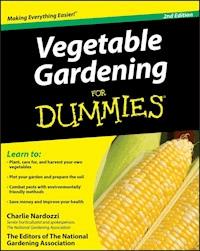
A hands-on guide to the ins and outs of raising and usingvegetables Want to grow your own vegetables? You can do it the fun and easyway with this practical guide. From selecting the right spot topreparing the soil to harvesting, Vegetable Gardening ForDummies, 2nd Edition shows you how to successfully raisevegetables regardless of the size of your plot or your dietaryneeds. You'll discover how to plot your garden and get the soil intip-top shape; select the types of vegetables you want to grow;plant the seeds properly; and care for them as they grow. You'llalso know the right time to pick your vegetables and the best waysto enjoy them. Plus, you'll get tips on preserving foods grown athome. * Expert advice on planting, caring for, harvesting, and enjoyingthe fruits of your own vegetable garden * Features environmentally friendly ways to combat pests in yourgarden * Charlie Nardozzi is senior horticulturist and spokesperson forthe National Gardening Association; he's also been the gardeningexpert on such programs as HGTV's Today at Home and Wayto Grow and the Discovery Channel's Home Matters Whether you have a green thumb or you've never grown a plantbefore, Vegetable Gardening For Dummies, 2nd Editionhas all the information you need to create a healthy garden.
Sie lesen das E-Book in den Legimi-Apps auf:
Seitenzahl: 614
Veröffentlichungsjahr: 2009
Ähnliche



















Vegetable Gardening For Dummies®, Second Edition
Table of Contents
Introduction
About This Book
Conventions Used in This Book
What You’re Not to Read
Foolish Assumptions
How This Book Is Organized
Part I: Digging Into the Basics of Vegetable Gardening
Part II: Vegging Out
Part III: Getting Down and Dirty in Your Vegetable Garden
Part IV: The Part of Tens
Icons Used in This Book
Where to Go from Here
Part I: Digging Into the Basics of Vegetable Gardening
Chapter 1: Vegetable Gardening 101
Why Have Your Own Vegetable Garden?
The Basics of Planning a Veggie Garden
A Cornucopia of Vegetables to Grow
Tomatoes
Peppers and eggplants
Carrots, onions, and potatoes
Peas and beans
Cucumbers, melons, pumpkins, and squash
Broccoli, Brussels sprouts, cabbage, and cauliflower
Lettuce, spinach, Swiss chard, and specialty greens
An assortment of other great veggies
Non-vegetable edibles
Getting Down to Growing
Choosing between seeds and transplants
Working the soil
Keeping your garden growing and enjoying the rewards
Trying tips for an even bigger bounty
Chapter 2: The Popularity and Benefits of Vegetable Gardening
Food Gardening: It’s Popping Up Everywhere
A Few Good Reasons to Grow Your Own Food
Improve your health
Save some cash
Help the environment
Increase your quality of life
Chapter 3: Planning Your Veggie Garden
Deciding Where to Put Your Vegetable Garden
Considering different sites
Letting the sun shine on your plot
Checking your soil’s drainage
Understanding Veggie Varieties
Timing Your Planting Wisely
Some like it cool, some like it hot
Frost dates and the length of the growing season
Designing Your Garden
Deciding on hills, rows, or raised beds
Spacing your plantings properly
Following the paths
Sketching it out
Part II: Vegging Out
Chapter 4: Tomatoes: The King of Veggies
Checking Out Tomato Varieties
Enjoying classic red, round tomatoes
Surveying all the other colors of tomatoes
Sweetening the pot with cherry, grape, and pear tomatoes
Studying some saucy tomatoes
Introducing the tomato’s relatives
Growing Tomatoes with Ease
Jump-starting tomatoes
Planting, trellising, and pruning
Fertilizing and maintaining your plants
Eliminating pests and other problems
Harvesting tomatoes
Chapter 5: Meeting the Tomato’s Cousins: Peppers and Eggplants
Producing Plenty of Peppers
Those sweet bells
Long and round sweet peppers
Peppers that turn on the heat
Pretty peppers: The ornamentals
Distinguishing Eggplants by Shape
Large and oval
Cylindrical
Small and round
Growing Peppers and Eggplants
A few guidelines for starting and planting
Fertilizing and watering tips
Pest patrol
Harvesting tips
Chapter 6: Growing Underground Crops: Carrots, Onions, and Potatoes
A Rabbit’s (and Gardener’s) Favorite Root: Carrots
Classifying carrots by type
Examining some carrot varieties
Onions: The Bulbs with Layers of Sweet and Pungent Goodness
Choosing your onion varieties
Looking at scallions and perennial onions
Potatoes: No Longer a Boring Spud
Potatoes classified
Selecting a few potato varieties
Growing and Gathering Root Crops
General guidelines for all your root crops
Cultivating carrots
Growing onions
Producing potatoes
Keeping Your Root Crops Healthy and Pest-Free
Chapter 7: Sweet and Simple: Beans and Peas
A Bevy of Beans: Filling Your Rows with Bean Family Plants
Bushels of bush beans
Pole beans: The long and tall crop
The versatile shell and dried beans
Miscellaneous beans not to be forgotten
More Peas, Please!
English peas: The reliable standby
Sweet and tender snap peas
An earlier harvest: Snow peas
Get ’Em in the Ground: Growing Beans and Peas
Planting legumes for an ample harvest
Thwarting pests and diseases
Keep on pickin’: Harvesting your crop
Chapter 8: Vigorous Vines: Cucumbers, Melons, Pumpkins, and Squash
Checking Out Cool Cukes
Before you choose: Brushing up on some cucumber vocabulary
Surveying common cucumber varieties
Melons: The Sweet, Juicy Vining Plant
Distinguishing different types of melons
Perusing popular melon varieties
Unearthing the Humble Squash
Different squash types
Popular squash varieties
Great Pumpkins: Counting the Uses for This Versatile Squash
Growing Those Vines
Planting and feeding
Water, water, water!
Ensuring proper pollination
Controlling pests and diseases
Harvesting your vining crop
Chapter 9: Cool Weather Staples: Broccoli, Brussels Sprouts, Cabbage, and Cauliflower
Paying Attention to the Often-Overlooked Cole Crops
Easing into cole crops with broccoli
Brussels sprouts: The little cabbages
Choosing cabbage: The age-old and dependable cole crop
Considering cauliflower in a rainbow of colors
Growing Your Own Cole Crops
Giving cole crops what they want
Nurturing cole crops
Putting a stop to pesky pest problems
Harvesting cole crops
Chapter 10: A Salad for All Seasons: Lettuce, Spinach, Swiss Chard, and Specialty Greens
Lettuce Get Together
Crisphead lettuce
Romaine lettuce
Loose-head lettuce
Loose-leaf lettuce
Popeye’s Pal: Spinach
Savoy spinach
Smooth spinach and some spinachlike friends
The Attractive and Hardy Swiss Chard
Going Wild with Specialty Greens
Growing Great Greens
Timing is everything: Determining when to plant your greens
Putting your greens to bed
Adding nitrogen-rich fishy fertilizer
Thin and bare it: Thinning your greens
Watering to win the war against wilt
Working out the bugs (and other common ailments)
Your bowl runneth over: Harvesting greens
Chapter 11: Sweet Corn and an A to T of Other Worthy Veggies
Sweet Corn and Its Relatives
Sweet corn
Popcorn
A Variety of Other Great Vegetables
Arugula
Asparagus
Beets
Broccoli raab
Celeriac
Celery
Chinese cabbage
Collards
Endive
Escarole
Florence fennel
Garlic
Globe artichokes
Gourds
Horseradish
Kale
Kohlrabi
Leeks
Mizuna
Okra
Pac choi
Parsnips
Peanuts
Radicchio
Radishes
Rhubarb
Rutabagas
Shallots
Sunflowers
Turnips
Chapter 12: Growing Berries and Herbs for an Edible Landscape
Sweetening Your Landscape with Berries and Fruits
Strawberries
Blueberries
Blackberries and raspberries
Unusual fruits
Spicing Up Your Landscape with Herbs
Basil
Chives
Cilantro
Dill
French tarragon
Mint
Oregano
Parsley
Rosemary
Sage
Thyme
Making Your Landscape Blossom with Edible Flowers
Part III: Getting Down and Dirty in Your Vegetable Garden
Chapter 13: On Your Mark, Get Set . . . Grow!
Choosing Seeds or Transplants
Deciding on Your Seeding Method and Decoding a Seed Packet
Starting Seeds Indoors
Picking a pot to plant in
Using a mix that doesn’t include soil
Sowing your seeds
Providing the right amount of light and heat
Watering your seedlings
Thinning and transplanting indoors
Feeding your seedlings
Transplanting Indoor Seedlings and Starter Plants
Buying starter plants
Toughening up all types of transplants
Making the big move to the ground
Sowing Seeds Directly in Your Garden
Deciding on a seed-planting method
Thinning seedlings in your garden
Chapter 14: Workin’ the Dirt
Razing Your Garden Spot
Killing weeds and aggressive grasses
Stripping sod
Analyzing and Improving Your Soil
Distinguishing different types of soil
Testing your soil
Adjusting soil pH
Adding organic matter (aka the dead stuff)
Turning Your Soil
Making Your Own Compost
Building a compost pile
Avoiding materials that don’t belong in a compost pile
Moistening and turning your compost pile
Chapter 15: Maintaining Your Vegetable Garden
Introducing Your Inner Gardener to the Watering Basics
Knowing when your veggies need a drink
Discovering ways to water your vegetable garden
Conserving water with a few handy tips
Keeping Your Plants Cozy and Weed Free with Mulch
Spreading organic mulch
Laying inorganic mulch
Deciding which mulch to use
Determining Important Nutrients Your Soil Needs
Macronutrients
Secondary nutrients and micronutrients
Fertilizing Your Vegetable Garden
Examining a fertilizer label
Choosing a fertilizer
Side-dressing
Give ’Em Something to Lean On: Supporting Your Vegetables
Beans and peas
Melons and cucumbers
Tomatoes
Fighting Weed Wars
Making a preemptive strike on weeds
Battling weeds after planting
Chapter 16: Surveying Some Cool Farmer Techniques
Adding Nutrients and Stability with Cover Crops and Green Manures
Choosing cover crops
Planting cover crops
Giving Your Plants Some Friends: Companion Planting
Making Your Garden Work Double Time with Intercropping
Succession Planting for an Extended Harvest
Rotating Crops to Preserve Soil Nutrients and Maintain a Pest-Free Bed
Planting by the Phases of the Moon
Chapter 17: Keeping Your Plants Healthy
The Good, the Bad, and the Ugly: Controlling Pests
In with the good bugs
The bad-bug roundup
Methods of attack
Gardening to Eliminate Diseases
Avoiding diseases with good habits
Watching out for common diseases
Keeping the Animal Kingdom at Bay
Chapter 18: Containing Your Veggies
Considering a Few Container Characteristics
Filling Up Your Container: Potting Soil Made Simple
Knowing Which Vegetables Grow Well in Pots
Some common container veggies
Some bee-u-tee-ful vegetable combos
Planting Your Veggies in Pots
Caring for Container Veggies
Experimenting with Greenhouses, Hoop Houses, and Hydroponics
Chapter 19: Harvesting, Storing, and Preserving Vegetables
Knowing When to Harvest
Putting Away Your Vegetables
Freezing, Drying, and Canning Veggies
Saving Vegetable Seeds
Part IV: The Part of Tens
Chapter 20: Ten Tools of the Trade
Watering Hoses and Cans
Hand Trowels
Hand Cultivators
Garden Hoes
Spades and Shovels
Garden Forks
Garden Rakes
Buckets, Wagons, and Baskets
Wheelbarrows and Garden Carts
Power Tillers
Chapter 21: Nearly Ten Ways to Extend Your Growing Season
Choose Clever Planting Locations
Time Your Planting Wisely
Protect Plants with Hot Caps
Add Elegance to Your Garden with Glass Cloches
Buy or Build Cold Frames
Drape Row Covers over Veggies
Place Wall O’ Waters around Plants
Try Portable Greenhouses and Hoop Houses
Appendix: Planning Guidelines and Other Resources
Vegetables, herbs, and flowers
Seed savers
Fruits and berries
Tools and supplies
State sites
Cyber veggies
Vegetable Gardening For Dummies®, 2nd Edition
by Charlie Nardozzi and the Editors of The National Gardening Association
Vegetable Gardening For Dummies, 2nd Edition
Published byWiley Publishing, Inc.111 River St.Hoboken, NJ 07030-5774www.wiley.com
Copyright © 2009 by Wiley Publishing, Inc., Indianapolis, Indiana
Published simultaneously in Canada
No part of this publication may be reproduced, stored in a retrieval system, or transmitted in any form or by any means, electronic, mechanical, photocopying, recording, scanning, or otherwise, except as permitted under Sections 107 or 108 of the 1976 United States Copyright Act, without either the prior written permission of the Publisher, or authorization through payment of the appropriate per-copy fee to the Copyright Clearance Center, 222 Rosewood Drive, Danvers, MA 01923, 978-750-8400, fax 978-646-8600. Requests to the Publisher for permission should be addressed to the Permissions Department, John Wiley & Sons, Inc., 111 River Street, Hoboken, NJ 07030, (201) 748-6011, fax (201) 748-6008, or online at http://www.wiley.com/go/permissions.
Trademarks: Wiley, the Wiley Publishing logo, For Dummies, the Dummies Man logo, A Reference for the Rest of Us!, The Dummies Way, Dummies Daily, The Fun and Easy Way, Dummies.com, Making Everything Easier!, and related trade dress are trademarks or registered trademarks of John Wiley & Sons, Inc. and/or its affiliates in the United States and other countries, and may not be used without written permission. All other trademarks are the property of their respective owners. Wiley Publishing, Inc., is not associated with any product or vendor mentioned in this book.
Limit of Liability/Disclaimer of Warranty: The contents of this work are intended to further general scientific research, understanding, and discussion only and are not intended and should not be relied upon as recommending or promoting a specific method, diagnosis, or treatment by physicians for any particular patient. The publisher and the author make no representations or warranties with respect to the accuracy or completeness of the contents of this work and specifically disclaim all warranties, including without limitation any implied warranties of fitness for a particular purpose. In view of ongoing research, equipment modifications, changes in governmental regulations, and the constant flow of information relating to the use of medicines, equipment, and devices, the reader is urged to review and evaluate the information provided in the package insert or instructions for each medicine, equipment, or device for, among other things, any changes in the instructions or indication of usage and for added warnings and precautions. Readers should consult with a specialist where appropriate. The fact that an organization or Website is referred to in this work as a citation and/or a potential source of further information does not mean that the author or the publisher endorses the information the organization or Website may provide or recommendations it may make. Further, readers should be aware that Internet Websites listed in this work may have changed or disappeared between when this work was written and when it is read. No warranty may be created or extended by any promotional statements for this work. Neither the publisher nor the author shall be liable for any damages arising herefrom.
For general information on our other products and services, please contact our Customer Care Department within the U.S. at 877-762-2974, outside the U.S. at 317-572-3993, or fax 317-572-4002.
For technical support, please visit www.wiley.com/techsupport.
Wiley also publishes its books in a variety of electronic formats. Some content that appears in print may not be available in electronic books.
Library of Congress Control Number: 2009932715
ISBN: 978-0-470-49870-5
Manufactured in the United States of America
10 9 8 7 6 5 4 3 2 1
About the Authors
Charlie Nardozzi has worked for more than 20 years bringing expert gardening information to home gardeners through radio, television, and the printed page. He delights in making gardening information simple, easy, fun, and accessible to everyone. His energy, exuberance, and love of the natural world also make Charlie an exciting public speaker and presenter. He currently is the senior horticulturist and spokesperson for the National Gardening Association (NGA). He also writes the National News as part of NGA’s online publications, conducts media interviews about gardening and NGA, and provides horticultural consultation to NGA programs.
For 12 years Charlie was an editor with National Gardening magazine, writing stories on a variety of gardening topics from roses to tomatoes. He also has written for national magazines such as Organic Gardening, authored the first edition of Vegetable Gardening For Dummies in 1999 and The Ultimate Gardener in 2009, and contributed to other books such as Gardening All-in-One For Dummies (2003) and the Better Homes and Gardens’ Yard and Garden Owner’s Manual (Meredith Books, 2004).
Charlie’s skills as a garden communicator extend beyond the printed page, however. In 2005, he was the host of PBS’s television program Garden Smart, which reaches more than 60 million households. He also has been a gardening expert on many nationally syndicated television shows, such as HGTV’s Today at Home and Way to Grow, Discovery Channel’s Home Matters, and DIY’s Ask DIY. He has appeared on QVC and the Home Shopping Network as well. At his home in Vermont, Charlie co-hosts the program “In The Garden,” which offers weekly gardening tips on the local CBS affiliate television station, a weekly call-in gardening radio show on a local AM station, and gardening commentaries on public radio. He also hosts national and international gardening tours.
The National Gardening Association, founded in 1972, is a national not-for-profit leader in plant-based education, esteemed for its award-winning Web sites and newsletters, grants and curriculum for youth gardens, and research for the lawn-and-garden industry. NGA’s mission is to advance the personal, community, and educational benefits of gardening by supporting gardeners, communities, and teachers with information and resources. For more information, please visit www.garden.org.
Dedication
I’d like to dedicate this book to everyone who has ever thought about vegetable gardening or tried to grow some of their own food. I particularly want to dedicate this book to my wife, Wendy, who is the best partner in the garden and in my life.
Author’s Acknowledgments
I’d like to thank Mike Baker and Stacy Kennedy for sticking with this book idea and pursuing it so it finally became a reality. A big thanks goes to Georgette Beatty for her keen insights when reading this book and her organizational ability to keep the ball rolling. I appreciated Jessica Smith’s thoughtful questions as the copy editor, especially because she’s a budding vegetable gardener herself! Jim Schmidt kept me honest in the horticultural realm with his suggestions as the technical reviewer. Kathryn Born provided excellent updated illustrations. Suzanne DeJohn, my colleague at NGA, provided many beautiful color photos of vegetables and gardening techniques that make the words come to life.
Publisher’s Acknowledgments
We’re proud of this book; please send us your comments through our online registration form located at http://dummies.custhelp.com. For other comments, please contact our Customer Care Department within the U.S. at 877-762-2974, outside the U.S. at 317-572-3993, or fax 317-572-4002.
Some of the people who helped bring this book to market include the following:
Acquisitions, Editorial, and Media Development
Senior Project Editor: Georgette Beatty
(Previous Edition: Kathleen M. Cox)
Acquisitions Editor: Stacy Kennedy
Copy Editor: Jessica Smith
(Previous Edition: Kim Darosett, Gwenette Gaddis, Wendy Hatch)
Assistant Editor: Erin Calligan Mooney
Editorial Program Coordinator: Joe Niesen
Technical Editor: James C. Schmidt
Editorial Manager: Michelle Hacker
Editorial Assistant: Jennette ElNaggar
Art Coordinator: Alicia B. South
Cover Photos: Brand X Pictures
Cartoons: Rich Tennant (www.the5thwave.com)
Composition Services
Project Coordinator: Katherine Crocker
Layout and Graphics: Christin Swinford, Christine Williams
Special Art: Illustrations by Kathryn Born, M.A.
Proofreader: Toni Settle
Indexer: Joan Griffitts
Publishing and Editorial for Consumer Dummies
Diane Graves Steele, Vice President and Publisher, Consumer Dummies
Kristin Ferguson-Wagstaffe, Product Development Director, Consumer Dummies
Ensley Eikenburg, Associate Publisher, Travel
Kelly Regan, Editorial Director, Travel
Publishing for Technology Dummies
Andy Cummings, Vice President and Publisher, Dummies Technology/General User
Composition Services
Debbie Stailey, Director of Composition Services
Introduction
Everyone loves good food. Fresh, tasty, nutritious food is our birthright. And what better way to have great food than to grow it yourself? You don’t have to be a farmer to do so either. Whether it be a plot of land in the yard that’s tilled up to grow vegetables, a few vegetables planted amongst your flowers and shrubs, or containers loaded with attractive, edible choices, growing your own food is a satisfying and rewarding activity.
Vegetable gardening isn’t rocket science either. Heck, people have been growing their own vegetables for thousands of years. Like any pursuit, you just need some direction, good advice, and inspiration to get started. Vegetable Gardening For Dummies, 2nd Edition, isfor anyone who already grows vegetables or who has ever dreamed of growing some of their own food. All it takes is some resolve to get started. You’re already halfway there just by picking up this book!
About This Book
In this book, you can find all the basic information you need to grow a vege-table garden. It’s great to read the book from front cover to back cover, but each section and chapter is complete in itself. So feel free to browse the vegetables or topics that you want to focus on first. I’ve been vegetable gardening my whole life, so throughout the book I try to impart some practical wisdom that’s easily accessible. I also include some special tips and tricks that I’ve learned over the years and information on hundreds of vegetable varieties, many of which are beautiful to look at as well as tasty to eat. Of course, none of this matters if you can’t grow the vegetables successfully. That’s why a large part of this book is devoted to building soil, starting seeds, maintaining the garden, controlling pests, growing through the seasons, and harvesting. I like to encourage happy, healthy, successful gardeners who are willing to experiment, make mistakes, and enjoy sharing their bounty with their friends, family, and neighbors.
Conventions Used in This Book
To help you navigate this book, I include the following conventions:
All references to temperature are in degrees Fahrenheit. As a reminder, I include the label with the first reference in each chapter. After that, I save space (and paper!) by leaving it out.
Variety names for each vegetable are indicated by single quotation marks. These are the common names you’ll see when buying vegetable seeds and plants.
Italics highlight new terms (which I define right away) and the Latin names of vegetables, which I use only when necessary.
Boldfaced text highlights the keywords of bulleted lists and the action part of numbered steps.
Web addresses appear in monofont.
When this book was printed, some Web addresses may have needed to break across two lines of text. If that happened, rest assured that I haven’t put in any extra characters to indicate the break. So, when using one of these Web addresses, just type in exactly what you see in this book, pretending as though the line break doesn’t exist.
What You’re Not to Read
I may think every word I’ve written on vegetable gardening in this book is intriguing, but I realize you have a life and may want to just get on with it. If you want only the basics, keep in mind that sidebars (in shaded gray boxes) and information tagged with the Technical Stuff icon aren’t necessary to your basic understanding of vegetable growing and can be skipped, if you really have to.
Foolish Assumptions
Before I even put one word to the page, I was thinking about who may read this book. Here’s what I assume about you, the reader:
You want to create a vegetable garden that’s filled with healthy, nutritious, beautiful plants to eat.
You want to understand the basics of vegetable gardening and, for experienced gardeners, find new tricks to help you garden better.
You want to grow vegetables in an environmentally friendly manner.
You want to try vegetable gardening even if you only have a deck or patio to grow a few plants.
You want to share your love of gardening with friends, family members, and neighbors because you feel that if more people grew some of their own food, the world would be a better place.
How This Book Is Organized
Like all For Dummies books, this book is broken into parts. Each part has a number of chapters related to a theme. Here’s an overview to get you oriented with the organization.
Part I: Digging Into the Basics of Vegetable Gardening
Vegetable gardening is about more than just growing tasty food. You can find many other reasons and benefits of vegetable gardening, and I explain them in this part. I also cover information you need to know to plan your garden, such as determining the importance of sun and soil, deciding what to grow, and exploring some sample garden designs.
Part II: Vegging Out
Each chapter in this part explores vegetables grouped by botanical family (such as the squash family) or commonality (such as root crops). Each chapter is loaded with the best varieties to grow and specifics on how to grow them. I also provide information to help combat specific pests that may attack each crop. Chapter 12 is all about other edibles, such as berries and herbs. Food comes in many forms, and berries and herbs are some of the easiest and most reliable producers in your yard.
Part III: Getting Down and Dirty in Your Vegetable Garden
Now for the good stuff: building your garden and getting it growing. In this part, I talk about starting seeds; improving your soil; maintaining your garden with proper watering, fertilizing, and mulching; using some extra-cool gardening techniques, such as succession planting; applying pest and disease controls; growing in containers; and harvesting and storage. Whew, that’s a lot of great information!
Part IV: The Part of Tens
This book wouldn’t be a For Dummies book without the always-popular Part of Tens. The final chapters in this book look at the ten best tools to get the job done and nearly ten great season-extending techniques that enable you to garden earlier in spring and later into fall.
Icons Used in This Book
Like all For Dummies books, this book has icons that highlight great tips, warnings, and other specific topics. Here are the ones in this book:
Are you interested in growing plants in containers? If so, look for these icons throughout the book.
One of the best parts of vegetable gardening is involving kids. This icon marks plants that kids love or special gardening tips you can try with your little ones.
This icon highlights important information that helps you garden better. Don’t forget this stuff!
If you want to go a little deeper in your knowledge of a plant or technique, read information marked with this icon.
This icon highlights information that saves time and money. Even experienced gardeners can learn something from these tidbits!
Sometimes you can make mistakes in the garden, and that’s okay. To help minimize your mistakes, this icon alerts you to potential pitfalls.
Where to Go from Here
Start with the basics by taking in the information in Part I about seeds, plants, soil, your site, and garden planning. Then dive into your list of dream vegetables that you want to grow in your garden. Come back to the book periodically throughout the growing season to find out more about pest solutions in Chapter 17 and season extending in Chapter 21. And don’t forget to keep harvesting the fruits of all your fine work.
This is just the beginning of your vegetable garden experience. Many resources are available for vegetable gardeners (the appendix can get you started). The key is to get started and keep learning. After tasting one of your first homegrown peas, you’ll be hooked for life.
Part I
Digging Into the Basics of Vegetable Gardening
In this part . . .
In this part, I get your vegetable gardening juices flowing. You first find out the environmental, social, and health reasons for growing some of your own food. Then you delve into planning your plot; I talk about the right sun, soil, and growing conditions for your vegetable garden and provide ideas for garden designs along with some samples.
Chapter 1
Vegetable Gardening 101
In This Chapter
Understanding why people grow veggies
Beginning with the basics of planning
Surveying some great vegetables to grow
Keeping your garden growing well
I’ve been vegetable gardening my whole life. I’ve followed my grandfather picking stones out of the potato patch, weeded my mother’s garden, taught my daughter to plant her first seeds, and built cold frames to maximize the amount of food my wife and I can grow in our yard with edible landscaping. I can attest that once you start, vegetable gardening becomes part of your life. It’s not surprising that it grows on you.
In this chapter, I start you off with basics on site preparation, and I tell you what to grow and how to grow it. All the details that follow in subsequent chapters build on the information you need to know to be a successful vege-table gardener. Along the way I hope you are inspired to get some dirt under your fingernails and start your own garden. Dig in!
Why Have Your Own Vegetable Garden?
Over the years people had drifted away from vegetable gardening in the spirit of progress and affluence. However, more recently people are once again realizing that growing their own food, although not as critical to survival as it once was, is an important part of a healthy body, mind, spirit, lifestyle, and community. More people are again turning to vegetable gardening as a means of food and as a hobby. Even the president and first lady have installed a vege-table garden at the White House. Vegetable gardening is officially back!
Who can resist the flavor, smell, and texture of food literally picked minutes before you eat it? It you’ve ever sunk your teeth into a sun-warmed, ripe tomato and felt the juices and flavors explode in your mouth, you’ll know what I mean.
Lesen Sie weiter in der vollständigen Ausgabe!
Lesen Sie weiter in der vollständigen Ausgabe!
Lesen Sie weiter in der vollständigen Ausgabe!
Lesen Sie weiter in der vollständigen Ausgabe!
Lesen Sie weiter in der vollständigen Ausgabe!
Lesen Sie weiter in der vollständigen Ausgabe!
Lesen Sie weiter in der vollständigen Ausgabe!
Lesen Sie weiter in der vollständigen Ausgabe!
Lesen Sie weiter in der vollständigen Ausgabe!
Lesen Sie weiter in der vollständigen Ausgabe!
Lesen Sie weiter in der vollständigen Ausgabe!
Lesen Sie weiter in der vollständigen Ausgabe!
Lesen Sie weiter in der vollständigen Ausgabe!
Lesen Sie weiter in der vollständigen Ausgabe!
Lesen Sie weiter in der vollständigen Ausgabe!
Lesen Sie weiter in der vollständigen Ausgabe!
Lesen Sie weiter in der vollständigen Ausgabe!
Lesen Sie weiter in der vollständigen Ausgabe!
Lesen Sie weiter in der vollständigen Ausgabe!
Lesen Sie weiter in der vollständigen Ausgabe!
Lesen Sie weiter in der vollständigen Ausgabe!
Lesen Sie weiter in der vollständigen Ausgabe!
Lesen Sie weiter in der vollständigen Ausgabe!
Lesen Sie weiter in der vollständigen Ausgabe!




