



0,49 €
Niedrigster Preis in 30 Tagen: 1,99 €
Niedrigster Preis in 30 Tagen: 1,99 €
Mehr erfahren.
- Herausgeber: DigiCat
- Kategorie: Geisteswissenschaft
- Sprache: Englisch
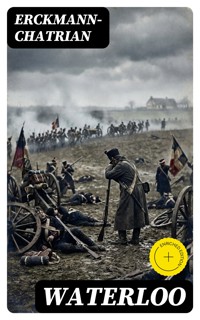
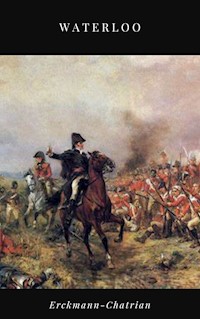
In "Waterloo: A Sequel to The Conscript of 1813," Erckmann-Chatrian deliver a poignant exploration of the human condition against the backdrop of the Napoleonic Wars. This historical novel masterfully intertwines personal narratives with significant historical events, providing a vivid portrayal of the 1815 Battle of Waterloo. The authors utilize a rich, descriptive literary style that immerses readers in the chaos of battle while simultaneously delving into the psychological states of their characters, showcasing the interplay between heroism and futility. Their nuanced approach presents a multilayered examination of loyalty and sacrifice, shedding light on the deeply personal costs of war. The collaboration between Émile Erckmann and Alexandre Chatrian was driven by their shared passion for history and literature, both men being products of the turbulent period of the 19th century in France. Their works often reflect their interest in the social implications of war, informed by their own experiences and the tumultuous backdrop of post-Napoleonic Europe. This sequel not only builds upon the narrative of its predecessor but also serves to amplify their collective voice, exploring themes of morality and destiny shaped by the chaos of conflict. Readers seeking an evocative blend of historical insight and character-driven storytelling will find "Waterloo" both compelling and enlightening. It stands as a significant contribution to the literature of war, offering timeless reflections on bravery, loss, and the haunting remnants of individual choices. This book is an essential read for anyone interested in the interplay of history and personal narrative, making it a valuable addition to both literary and historical collections. In this enriched edition, we have carefully created added value for your reading experience: - A succinct Introduction situates the work's timeless appeal and themes. - The Synopsis outlines the central plot, highlighting key developments without spoiling critical twists. - A detailed Historical Context immerses you in the era's events and influences that shaped the writing. - A thorough Analysis dissects symbols, motifs, and character arcs to unearth underlying meanings. - Reflection questions prompt you to engage personally with the work's messages, connecting them to modern life. - Hand‐picked Memorable Quotes shine a spotlight on moments of literary brilliance. - Interactive footnotes clarify unusual references, historical allusions, and archaic phrases for an effortless, more informed read.
Das E-Book können Sie in Legimi-Apps oder einer beliebigen App lesen, die das folgende Format unterstützen:
Veröffentlichungsjahr: 2022
Ähnliche















Waterloo: A sequel to The Conscript of 1813
Table of Contents
Introduction
Suspended between the intoxicating promise of national glory and the unyielding, intimate costs borne by conscripted villagers, Waterloo charts the collision of public legend and private endurance as a humble narrator follows the drum through roads, bivouacs, and the thunder of a decisive campaign, measuring ideals against mud and fear, friendship and loss, and the stubborn will to live, while history’s grand banners narrow to the width of a human heartbeat and the book’s steady gaze asks how loyalty, memory, and responsibility survive when empires rise, collapse, and demand—again and again—that ordinary people pay for extraordinary designs.
Written by the collaborative duo Erckmann-Chatrian, Waterloo is a historical novel set during Napoleon’s final campaign of 1815, continuing the story begun in The Conscript of 1813. Emerging from mid-nineteenth-century France, the book belongs to a popular current of realist, democratic storytelling that foregrounded provincial witnesses to national upheaval. Its geographical compass reaches from village streets to the Belgian frontier, with attention to the rhythms of marching columns and the tensions of mobilized communities. The authors, long associated with the borderlands of Alsace-Lorraine, bring a grounded sensibility to the era, favoring everyday observation over pageantry and presenting war as lived experience.
The premise follows a former conscript whose brief return to civilian life is overtaken by the sudden upheaval of Napoleon’s return, drawing him back onto roads crowded with soldiers, sutlers, and rumors. From the perspective of a modest, observant narrator, the book traces the move from home to mustering place, from marches to the outskirts of battle, and into the press of events that test endurance and judgment. The tone is steady rather than rousing, attentive to fatigue, weather, and chance meetings, and the plot advances by encounters and choices that illuminate how ordinary people navigate extraordinary days without foreknowledge.
Erckmann-Chatrian work through an intimate personal chronicle that privileges plain diction, specific detail, and the moral reflections of a narrator learning as he goes. Scenes are built from tactile impressions—boots, bread, mud, the smell of powder—and from the small negotiations that hold fragile communities together under strain. Dialogue is functional and humane, steering clear of oratory; descriptions prefer accuracy to flourish. The effect is documentary without pedantry, a lived-in realism that tempers suspense with patience. When violence intrudes, it is rendered as confusion and constraint rather than spectacle, inviting readers to think about perception, rumor, and the limits of control.
Central themes cohere around duty and conscience: the state’s summons is answered by individuals whose attachments to family, trade, and place do not disappear when uniforms are donned. The novel probes the gap between military legend and lived truth, showing how stories grow as they travel and how reputations shape decisions on the ground. It considers leadership not as charisma alone but as the capacity to recognize limits and protect lives. Borderland identity matters, too, as communities near frontiers weigh loyalties against survival. Memory becomes an ethical task, asking what it means to testify after confusion has hardened into narrative.
For contemporary readers, Waterloo offers a lens on how large political swings reverberate through households, workplaces, and friendships, modeling a civic attention that resists the seduction of slogans. Its skepticism toward spectacle anticipates today’s struggles with misinformation and the glamorization of conflict, while its compassion for conscripts speaks to debates about service, reintegration, and care. The book also resonates wherever border identities complicate central directives, reminding us that unity must be built rather than presumed. By honoring observation, patience, and responsibility, the narrative suggests habits of mind that counter polarization and help communities absorb shock without surrendering their capacity for judgment.
Approached as a sequel to The Conscript of 1813, Waterloo extends a human-scale chronicle of the Napoleonic era to its climactic campaign, not to exalt defeat or victory, but to understand how people carry themselves through peril. Readers can expect a measured, engrossing march that culminates in scenes where perspective tightens and the meaning of courage is negotiated moment by moment. Without relying on sensational turns, the book builds force from accumulation and honesty. It remains valuable as literature of witness and as a counterbalance to heroic myth, restoring history to the cadence of footsteps and the weight of choice.
Synopsis
Erckmann-Chatrian’s Waterloo: A sequel to The Conscript of 1813 returns to the aftermath of the Napoleonic disasters, resuming the perspective of a humble Alsatian conscript whose earlier service reshaped his life. The book opens in the uneasy calm that follows the campaigns of 1813–1814, when households in the borderlands measure absence and survival against the fragile peace of the Bourbon Restoration. Daily routines resume, yet conversations circle around empty chairs, unpaid debts, and the stubborn memory of marching drums. The authors situate private lives within public uncertainty, preparing a narrative in which the fate of a village entwines with the fate of Europe once again.
News of Napoleon’s landing spreads by rumor, proclamations, and the anxious talk of market squares. The Hundred Days divide neighbors and families: some welcome the Emperor’s return as a restoration of honor, others fear renewed conscription and reprisals. Summonses arrive, uniforms are refitted, and transport lists fill. The narrator—bound by obligation, habit, and a soldier’s knowledge—rejoins the colors. Farewells are brief; expectations contradict each other. The authors track conflicting loyalties with restraint, attentive to how policy filters down to bakeries, workshops, and fields. The march north begins, less a rush to glory than a movement of men and memories toward an uncertain reckoning.
The journey toward the Belgian frontier unfolds through billets, muddy roads, and the practicalities of rations, muskets, and worn shoes. Veterans swap measured advice while new recruits absorb camp discipline, songs, and silences. Rumors of coalition forces accumulate; officers promise speed and cohesion, yet shortages and fatigue persist. The narrative keeps close to the rank-and-file, registering the texture of barns, churchyards, and town gates rather than the abstractions of strategy. Passing through sympathetic and wary communities alike, the column becomes a moving cross-section of France—eager for stability, anxious about defeat—its hopes condensed into the tramp of feet and the creak of wagons.
As contact with opposing forces nears, the army bivouacs on soaked ground after heavy rains, the night punctuated by far cannon and the mutter of staff riders. Morning reveals a chessboard of hedges, ridges, and farm enclosures, where artillery teams labor through mud and infantry dress their lines. Confidence and foreboding circulate in equal measure, sharpened by the memory of prior campaigns. Orders filter down; formations stiffen; the landscape’s ordinary features—lanes, orchards, walls—become military facts. The narrator records preparations and omens without grandeur, attentive to the quiet rituals of tightening straps, checking flints, and exchanging glances that might be last.
The battle itself arrives not as a single moment but as a succession of shocks: prolonged artillery duels, sudden cavalry swells, and infantry squares that hold or waver under pressure. Assaults surge against farmsteads turned redoubts; smoke reduces vision to a few yards; messengers ride out and some do not return. Noise and confusion dominate, punctuated by brief clearings where commands carry. The narrative emphasizes endurance over spectacle, tracing how routine—the drill of loading, the cadence of wheeling—sustains men when certainty collapses. Individual acts of courage appear, yet the emphasis remains on collective experience and the steep price of every yard gained or lost.
When momentum falters, the lines loosen into confusion, and the long retreat begins under the weight of exhaustion and disbelief. The narrator threads the chaos of stragglers, wounded comrades, and abandoned guns, confronting questions about responsibility, luck, and the limits of obedience. The road home is slow, passing through villages counting their own losses, where official bulletins lag behind what survivors already know. Political order reasserts itself with the Restoration, but private reckonings continue in kitchens and workshops. The book offers no easy consolations—only the persistence of work, mourning, and the fragile comfort of having returned at all.
As a companion to The Conscript of 1813, this sequel completes a civilian-soldier’s arc through the Empire’s last gamble, translating a world-historical event into the scale of a province and its people. Erckmann-Chatrian’s plain style and careful observation unsettle triumphal narratives, asking what glory means when measured against hunger, absence, and the labor of starting over. By keeping strategy offstage and conscience in view, the novel invites readers to consider how nations remember defeat and how ordinary lives absorb policy’s consequences. Its restrained witness to Waterloo endures as a humane testament to resilience, duty, and the cost of history’s grand designs.
Historical Context
Waterloo, published in 1865 by the collaborative duo Émile Erckmann and Alexandre Chatrian, continues their popular cycle begun with The Conscript of 1813. Set primarily in eastern France and the Low Countries during 1815, it follows communities drawn into Napoleon's Hundred Days. The novel's world is structured by imperial institutions reinstated after the March return from Elba: prefectures directing mobilization, gendarmerie enforcing orders, and the reconstituted army mustering veterans and recruits. Municipal councils, parish life, and workshops anchor everyday routines, while roads toward Belgium become corridors of rumor and marching columns. The setting foregrounds how national decisions reach provincial households with immediate, often coercive, force.
In 1814, after defeats in Germany and France, Napoleon abdicated and accepted the Treaty of Fontainebleau, taking exile on Elba. Meanwhile, the Congress of Vienna redrew frontiers and sought to stabilize Europe. Napoleon landed in Provence on 1 March 1815 and entered Paris on 20 March, beginning the Hundred Days. The Seventh Coalition - Britain, Prussia, the Netherlands, Hanover, Brunswick, and others aligned with Austria and Russia - mobilized. Napoleon advanced into present-day Belgium to strike separated enemies. Fighting flared at Ligny and Quatre Bras on 16 June, and three days later at Waterloo, engagements that determined France's political fate within weeks.
The narrative turns on institutions shaped by the Jourdan-Delbrel law of 1798, which established universal male conscription in France. Communes received quotas; young men were enrolled and drew lots, with exemptions for infirmity and certain family circumstances, and with legal substitution practiced under the Empire. Mayors kept civil registers, while prefects and subprefects transmitted orders. The gendarmerie controlled travel, arrested deserters, and escorted levies to depots. These procedures, renewed in 1815, affected artisans, peasants, and clerks alike, disrupting households and trades. Veterans of earlier campaigns mixed with fresh conscripts, carrying memories of 1812-1814 into the reorganized battalions.
As a borderland, Alsace and neighboring Lorraine were bound tightly to Napoleonic administration. Since 1800, the prefectural system coordinated police, taxation, requisitions, and road building, while the Civil Code of 1804 governed property, marriage, and inheritance. German dialects remained common in villages, yet the schoolroom, notaries, and courts operated in French, reflecting centralized norms. Fortified cities such as Strasbourg and Metz anchored garrisons and depots, and customs barriers along the Rhine shaped trade. Parish calendars, fairs, and guild remnants ordered work and leisure. Such structures frame the story's households, highlighting how central policies met local languages, loyalties, and habits.
In 1815 the Armée du Nord, assembled rapidly by Napoleon, combined seasoned line regiments with newly raised battalions and recalled officers. Shortages of cavalry remounts and artillery teams, a legacy of earlier losses, constrained operations. Opposing forces were experienced: the Anglo-allied army under the Duke of Wellington and the Prussian army under Field Marshal Blucher. Campaign movements from Charleroi toward Brussels brought encounters across farms and villages. Infantry squares resisting cavalry, skirmishers screening advances, and massed artillery defined the tactical vocabulary familiar to participants. Communications, weather, and exhausted supply trains weighed heavily on timing and morale throughout the campaign.
Military defeat in June 1815 precipitated rapid political change. Napoleon abdicated a second time on 22 June; a provisional government negotiated while Allied armies entered Paris. Louis XVIII returned on 8 July, inaugurating the Second Restoration. The Second Treaty of Paris imposed a heavy indemnity and an Allied occupation, administered largely under Wellington, which lasted until 1818. Purges and prosecutions targeted committed Bonapartists, and the so-called White Terror saw royalist reprisals in several regions. In northeastern departments, quartering, requisitions, and the presence of foreign garrisons affected prices, employment, and movement, altering daily routines and intensifying postwar fatigue.
Erckmann and Chatrian wrote as Alsatian republicans under the Second Empire of Napoleon III (1852-1870). By the mid-1860s, censorship had eased, and a liberalized press fostered mass readership for historical fiction. The authors specialized in accessible narratives centered on artisans and villagers, using humor and documentary detail to teach civic memory. Their books circulated widely through inexpensive editions and reprints, shaping popular understandings of the Revolution and Empire. The Napoleonic legend was officially celebrated yet contested in public debate; against this backdrop, the duo's sober, demystifying tone - sympathetic to soldiers, wary of personal rule - found an audience across France's provinces.
Waterloo reflects its era by tracing the intersection of private duty and state power without romantic excess. It presents verifiable institutions - conscription lists, prefectural orders, military musters - and shows how they channel individuals toward momentous events. The book emphasizes endurance, household economies, and neighborly bonds rather than battlefield spectacle, implicitly criticizing the costs of charismatic leadership and expansionist glory. By grounding national history in provincial experience, it aligns with a civic, republican pedagogy that gained influence later in the nineteenth century. The result is a narrative attentive to fact and memory, inviting readers to weigh obedience, loyalty, and responsibility.




