


19,99 €
Mehr erfahren.
- Herausgeber: John Wiley & Sons
- Kategorie: Wissenschaft und neue Technologien
- Sprache: Englisch
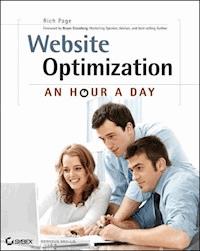
Step-by-step instructions for executing a website testing and optimization plan Website optimization is can be an overwhelming endeavor due to the fact that it encompasses so many strategic and technical issues. However, this hands-on, task-based book demystifies this potentially intimidating topic by offering smart, practical, and tested instructions for developing, implementing, managing, and tracking website optimization efforts. After you learn how to establish an optimization framework, you then dive into learning how to develop a plan, test appropriately and accurately, interpret the results, and optimize in order to maximize conversion rates and improve profits. * Zeroes in on fundamentals such as understanding key metrics, choosing analytics tools, researching visitors and their onsite behavior, and crafting a plan for what to test and optimize * Walks you through testing and optimizing specific web pages including the homepage, entry and exit pages, product and pricing pages, as well as the shopping cart and check-out process * Guides you through important optimization areas such as optimizing text and images * Addresses advanced topics including paid search optimization, Facebook fan page optimization, rich media, and more * Includes a companion website that features expanded examples, additional resources, tool reviews, and other related information Full of interesting case studies and helpful examples drawn from the author's own experience, Website Optimization: An Hour a Day is the complete solution for anyone who wants to get the best possible results from their web page.
Sie lesen das E-Book in den Legimi-Apps auf:
Seitenzahl: 650
Veröffentlichungsjahr: 2012
Ähnliche




















Table of Contents
Advance Praise for Website Optimization: An Hour a Day
Foreword
Introduction
Chapter 1: Setting the Website Optimization Scene
Introduction to Website Optimization
The Rise of Website Optimization: The Aftermath of the Dot-com Bubble Bursting
The Differences between Landing Page Optimization, Conversion Rate Optimization, Website Testing, and Website Optimization
The Difference between Website Optimization and Search Engine Optimization (SEO)
Chapter 2: Set Up and Improve Usage of Key Web Analytics and Testing Tools
Week 1: Learn the Importance of and Set Up an Analytics Tool
Monday: Understand the Need for Web Analytics Data to Help Website Optimization Efforts
Tuesday: Select a Web Analytics Tool for Your Website
Wednesday: Implement Your Web Analytics Tool and Test to Make Sure It’s Working Correctly
Thursday: Know How to Set Up Your Website Conversion Goals
Friday: Set Up Key Segments of Visitors to Monitor and Target
Week 2: Find Your Website Conversion Rate, Success Metrics, Benchmark, and Set Targets
Monday: Check Your Current Traffic Levels and Set Targets
Tuesday: Check Your Website’s Overall Conversion Rate and Set Targets
Wednesday: Check Your Repeat Visit Rate and Set a Target
Thursday: Find Specific Success Metrics for Your Website Type and Benchmark
Friday: Set Targets for Your Success Metrics
Week 3: Learn the Importance of and Set Up a Website Testing Tool
Monday: Understand the Importance of Having a Testing Tool
Tuesday: Familiarize Yourself with the Available Website Testing Tools
Wednesday: Determine a Budget and Understand Possible Technical Barriers for Tool Selection
Thursday: Implement Your Testing Tool, Setup, and QA Test Campaigns
Friday: Understand Web Testing Tool Terminology, Concepts, and Reports
Chapter 3: Lay the Foundations for Optimization Success
Week 4: Learn Key Optimization Fundamentals to Help You Succeed
Monday: Identify Your Company’s Current Website Optimization Performance
Tuesday: Evangelize and Create an Analytics and Optimization Culture
Wednesday: Prepare a Better Initial Website Optimization Strategy
Thursday: Create Detailed Test Plans
Friday: Consider Test Outsourcing—When and Why
Week 5: Understand and Create an Optimization Organization
Monday: Find an Executive Sponsor for Your Optimization Efforts
Tuesday: Gain Buy-in from Key Stakeholders
Wednesday: Assemble a Dedicated Optimization Team
Thursday: Integrate Testing and Optimization Web Processes into Your Company
Friday: Communicate, Review, and Iterate
Week 6: Learn Testing Best Practices to Improve Your Success
Monday: Use an Insightful, Hypothesis-Driven, and Iterative Testing Approach
Tuesday: Learn Strategies for Creating Effective Tests
Wednesday: Learn the Power of Targeting and Personalization for Improving Conversions
Thursday: Avoid Common Mistakes When Creating and Running Your Tests
Friday: Learn How to Analyze Results and Determine a Test Winner
Chapter 4: Understand Your Visitors and Their Needs—the Keys to Website Optimization
Week 7: Create Personas and Use Cases for Your Main Visitor Needs
Monday: Put Yourself in Your Visitor’s Shoes to Help Create Personas and Use Cases
Tuesday: Create Some Simple Personas for Your Visitors
Wednesday: Create Use Cases for Your Website
Thursday: Re-create the Use Cases on Your Website and Grade the Ease of Doing So
Friday: Learn How to Get Even Greater Value from Your Use Cases
Week 8: Create a Unique Value Proposition and Clearly Promote It
Monday: Understand Your Current Unique Value Proposition from Your Visitor’s Perspective
Tuesday: Survey Your Visitors to Help Create Your Value Proposition
Wednesday: Learn from Competitor Websites to Improve Your Value Proposition
Thursday: Create or Improve the Unique Value Proposition for Your Website
Friday: Effectively Promote Your Unique Value Proposition on Your Site
Week 9: Understand Your Visitors’ Intent by Visually Analyzing Them
Monday: Learn the Importance of Visually Analyzing Your Website Visitors
Tuesday: Check Click Heat Maps for Your Key Pages
Wednesday: Use Eye Tracking Tools to Understand Visitors’ Eye Flow
Thursday: Use Visitor Recording Tools to Gain a Complete View of Your Visitor’s Experience
Friday: Implement Tools and Gather and Review Visual Analysis for Insights
Week 10: Generate Insights from Visitor Satisfaction and Feedback Tools
Monday: Learn the Importance of the Voice of Your Visitors and Asking for Feedback
Tuesday: Survey Your Website Visitors to Gain Feedback and Insights
Wednesday: Use Website Feedback Rating Tools to Gain Further Insight
Thursday: Gain Feedback on the Usability and Task Completion Rate of Your Website
Friday: Make Use of Web Chat Tools to Gain Additional Insight
Chapter 5: Build the Foundation of a Better Converting Website
Week 11: Understand and Improve Your Website’s Layout
Monday: Understand the Impact of Your Web Page Fold
Tuesday: Understand the Impact of Your Website Design on Eye Flow
Wednesday: Check Your Website in Different Browsers and Resolutions
Thursday: Learn Other Website Layout Best Practices
Friday: Check How Your Email Marketing Efforts Look
Week 12: Improve Page Load Speed
Monday: Understand the Negative Impact of Slow Page Load
Tuesday: Check How Fast Your Web Pages Load and Diagnose Issues
Wednesday: Limit and Optimize Your Usage of Slow-Loading Website Elements
Thursday: Reduce the File Size of Your Images and Videos, and the Length of Your Page Code
Friday: Optimize the Delivery of Your Website Content
Week 13: Optimize Your Navigation Menus and Links
Monday: Learn the Importance of Navigation Menus and Links
Tuesday: Optimize the Contents, Usability, and Location of Your Navigation Menus
Wednesday: Optimize Your Usage of Navigation Drop-Down or Fly-Out Menus
Thursday: Improve Your Usage of Website Navigation Links
Friday: Learn Other Best Practices to Help Visitors Navigate Your Website
Week 14: Optimize and Learn from Your Internal Site Search
Monday: Offer a Good Internal Search Tool
Tuesday: Optimize Your Internal Site Search Location
Wednesday: Optimize Your Internal Site Search Functionality and Usability
Thursday: Optimize Your Internal Site Search Results
Friday: Analyze Your Top Internal Keywords for Additional Insights
Chapter 6: Learn the Power of Influence and Persuasion on Visitors and Conversions
Week 15: Influence Your Visitors by Optimizing Your Calls-to-Action, Headlines, and Text
Monday: Review and Optimize Your Headlines and Subheaders
Tuesday: Review and Optimize Your Call-to-Action Buttons and Links
Wednesday: Learn Other Best Practices for Improving Your CTAs
Thursday: Shorten Long Sections of Text and Convey Key Points
Friday: Make Sure Your Website Text Is Easy to Read, Understand, and Relate To
Week 16: Influence by Optimizing Your Images, Promotions, Videos, Rich Media, and Advertising
Monday: Optimize Your Usage of Images
Tuesday: Optimize Your Promotional Banners
Wednesday: Optimize Your Onsite Advertising
Thursday: Optimize Your Video Usage
Friday: Use Rich Media Website Greeters to Increase Engagement and Influence
Week 17: Harness the Power of Social Proof, Reciprocity, and Scarcity
Monday: Build Social Proof by Optimizing Your Testimonials
Tuesday: Build Social Proof by Optimizing Your Usage of Ratings and Reviews
Wednesday: Other Best Practices to Help Improve Your Social Proof
Thursday: Use Scarcity to Influence Your Visitors
Friday: Influence Your Visitors by Using Reciprocity
Week 18: Influence by Making Your Visitors Feel Safer and Building Trust
Monday: Optimize the Display of Security and Trust Seals and Symbols
Tuesday: Make Use of Supporting Text and Pages to Build Trust and Security
Wednesday: Reduce the Risk of Purchasing for the Visitor
Thursday: Optimize Your Customer Support and Contact Options
Friday: Learn Other Best Practices for Increasing Levels of Trust and Security
Chapter 7: Optimization Best Practices and Test Ideas for Different Page Types and Flows
Week 19: Focus On and Optimize Your Home Page
Monday: Learn How Your Home Page Is Being Judged and Check the Bounce Rate
Tuesday: Find Out What Your Visitors Click and Do on Your Home Page
Wednesday: Shorten and Declutter Your Home Page
Thursday: Give Your Visitors a Few Clear Choices to Meet Their Needs and Your Goals
Friday: Learn Other Testing Ideas for Your Home Page
Week 20: Optimize Your Product, Service, Lead Generation, and Other Key Pages
Monday: Optimize Your Product Pages
Tuesday: Optimize Your Service Pages
Wednesday: Optimize Your Lead Generation Pages
Thursday: Optimize Your Category Pages
Friday: Optimize Your Pages That Compare Product or Service Options
Week 21: Optimize Your Shopping Cart and Checkout Flow
Monday: Check Your Shopping Cart and Checkout Flow Conversion Rates
Tuesday: Optimize Your Shopping Cart Page
Wednesday: Optimize Your Checkout Flow
Thursday: Optimize Your Order Review and Confirmation Pages
Friday: Learn Other Advanced Shopping Cart Best Practices
Week 22: Identify Other Key Pages and Flows for Optimization
Monday: Identify Issues with Top Entry Pages and Optimize
Tuesday: Identify Issues with Top Exit Pages and Optimize
Wednesday: Identify Issues with Your Other Top Conversion Flows
Thursday: Look for Issues with Traffic Sources Leading to Your Conversion Flows
Friday: Identify Other Pages with High Impact on Conversion to Optimize
Week 23: Optimize Your Website’s Mobile Experience
Monday: Check the Percentage of Mobile Traffic, Conversion Rate, and Bounce Rates
Tuesday: Check What Your Website Looks Like on Mobile Devices
Wednesday: Understand the Need for a Mobile Version of Your Website
Thursday: Optimize the Mobile Version of Your Website
Friday: Consider Making an App Version of Your Website
Chapter 8: Keep Them Coming Back—Optimize for Repeat Visits
Week 24: Focus on and Generate More Repeat Visits
Monday: Learn the Importance and Benefits of Repeat Visits
Tuesday: Check Your Repeat Visits and Analyze for What Causes Them to Come Back
Wednesday: Obtain More Visitor Email Addresses to Market to and Encourage Repeat Visits
Thursday: Create Content That Encourages Visitors to Come Back More Often
Friday: Retarget Your Repeat Visitors via Contextual Banner Ads on Other Sites
Week 25: Optimize Your Registration or Sign-Up Pages to Get More Repeat Visits
Monday: Check the Performance of Your Registration or Sign-Up Pages
Tuesday: Focus on the Benefits of Signing Up or Registering
Wednesday: Optimize Your Sign-Up and Registration Forms and Pages
Thursday: Optimize Your Newsletter Sign-Up Forms
Friday: Test Other Ways to Increase Completion Rates on Your Registration or Sign-Up Pages
Week 26: Optimize Your Email Marketing Efforts to Get More Repeat Visits
Monday: Learn Best Practices and Test Ideas for All Email Marketing Methods
Tuesday: Run Email A/B Tests to Find the Most Engaging Emails
Wednesday: Create and Optimize Your Confirmation Emails
Thursday: Create and Optimize Your Follow-Up Emails
Friday: Try Using Advanced Email Optimization Techniques
Chapter 9: Review and Learn From Your Results, and Keep Testing and Optimizing
Week 27: Review and Learn from Your Optimization Efforts So Far
Monday: Revisit Your Success Metrics and Targets
Tuesday: Review Your Use Case Completion Rates and Resurvey Your Visitors
Wednesday: Rerun the Website Optimization Checklist
Thursday: Review What You’ve Learned from Your Test Results to Create Better Future Tests
Friday: Review and Improve Your Internal Testing Process Performance
Keep Optimizing and Testing: Your Website Is Never Perfect!
Appendix A: Website Optimization and Testing Tools
Appendix B: Test Idea Tracker
Appendix C: Test Results Tracker
Index
Advance Praise for Website Optimization: An Hour a Day
Attempting to achieve digital success without a robust experimentation and web analytics strategy is like trying to go to the moon on a bike. It will take a long time, might even be impossible. In nine exciting chapters Rich shows you, soup to nuts, exactly how to leverage usability, testing, and web analytics to transform your organization and achieve magnificent success!
—Avinash Kaushik, author of Web Analytics 2.0 and Digital Marketing Evangelist, Google
Rich Page has done the impossible with this book. Before reading it I'd have sworn no single book could explain conversion optimization and provide a road map for how to do it properly. I stand corrected. If you want to learn how to supercharge your website business performance, this is the book you've been waiting for. It’s practical, actionable advice from a master practitioner. You could pay an optimization consultant $100K, or you could buy this book.
—Lance Loveday, CEO of Closed Loop Marketing and author of Web Design for ROI
These days, there are thousands of guys who say they are “website optimization experts.” Ninety-nine percent of them couldn’t improve a web page—much less a site—if their lives depended on it. Rich Page is different. He’s among the one percent, and this “optimization bible” proves it. Jam-packed with proven tips and tricks on how you can improve your website without breaking the bank, you'll find everything you need to know about how to set benchmarks, develop meaningful tests, design shopping carts and lead forms for maximum conversion, enhance your performance, and much more. This isn’t a book from someone who did a bunch of research on Google; it’s written by someone who has done the work and knows the answers.
—Amy Africa, CEO, EighyByEight
The value of site optimization is clear. It is an absolute must for all companies serious about the digital channel, but most companies struggle with how to make it core to their digital strategy. Rich does a great job of identifying the needed steps to build a successful optimization strategy. This book is a must-read for companies serious about site optimization whether you are new to the game or have tried it with limited success in the past. Follow his steps and avoid the common mistakes that will derail your efforts!
—Jason Burby, Chief Performance Marketing Officer, ZAAZ/Possible Worldwide
Website Optimization: An Hour a Day should become a bible for any individual or business wanting to get maximum value from their own or their clients’ web properties. A focus on optimization is a no-brainer for companies at a time when competition for customers has never been greater. The an-hour-a-day approach is perfect for those who want to take a systematic and step-by-step approach to understanding how they can optimize their websites. The book is full of useful tips and insights, which will help you turn a sea of data into meaningful insights which will improve your business performance and bottom-line. The book will inform both the more experienced digital practitioner, as well as those who are new to the arts and science of conversion rate optimization.
—Linus Gregoriadis, Research Director, Econsultancy
Optimization is a hot topic in our industry today, and many people don't know where to begin. Choosing the right tool for the job is tough enough, let alone having to come up with the appropriate tests and strategies for your business. Fortunately, Rich has provided a fantastic resource in Website Optimization: An Hour a Day. This book has something for everyone, regardless of your level of familiarity with optimization. The amount of tips, action items for you to implement right away, and example tests will not only help you move forward but it will also help you build the business case internally for a successful testing program. If optimization is on your wish list this year in your organization, this is the book for you.
—Bill Bruno, CEO, Stratigent
Rich Page provides a detailed road map for creating a powerful conversion improvement practice at your company. Get this book before your competition does!
—Tim Ash, Chair of Conversion Conference, CEO of SiteTuners, and author of Landing Page Optimization
Page has done an outstanding job of thoroughly covering the landscape of the many aspects of measuring and improving the performance of your website. This is a must-read both for novices who need to understand the process and experts who want to ensure they aren’t missing anything. Solid and comprehensive!
—William Sears, Senior Manager, Search Engine Marketing, Walt Disney Interactive Media Group
Website Optimization: An Hour a Day is great for any online business that wants to learn how to better test and improve their website, and lays out some great foundations that optimization novices and even experts will find useful. It’s definitely worth a read if you are in online marketing—you'll find it hard to put down!
—Kimen Field, Senior Product Manager, Adobe
Ecommerce is changing the global economy and it’s amazing how few companies have deep insight into their web business. You can quickly identify the winners and losers based upon the emphasis they place on analytics. Rich carefully builds on this and creates a testing and optimization plan to help you take your business to the next level. With a combination of practical suggestions and current optimization theory, this book defines the basics that will help eliminate the guess work. The most important aspect that Rich clearly illustrates is that optimization is not a one-time activity, it’s a change in your website culture and process. Success can be hard to achieve, but Rich will give you the confidence to define a strategy that keeps your web business achieving goals.
—Brian Rogers, Director of Global eCommerce, 5.11 Tactical
You’ve got a website and you haven’t optimized yet? What are you waiting for?! Block off an hour a day and, for the next 27 weeks, follow Rich Page's detailed, step-by-step guide for getting started with website optimization. It could be the most profitable hour of your day.
—Chris Goward, President of WiderFunnel Marketing Optimization and author of You Should Test That!
About time! Optimization has been shrouded in a mist of ineffective tips and advice from people who think it's easy for way too long. Rich's book stands out by honestly stating that optimization is actually hard and that intent doesn't equate to success. He then breaks down the multiple required disciplines in a way that makes it accessible for any web/marketing practitioner to increase the ROI of their online business.
—Oli Gardner, Co-founder of Unbounce.com
Senior Acquisitions Editor: Willem Knibbe
Development Editor: Kathi Duggan
Technical Editor: Linda Bustos
Production Editor: Eric Charbonneau
Copy Editor: Adept Content Solutions
Editorial Manager: Pete Gaughan
Production Manager: Tim Tate
Vice President and Executive Group Publisher: Richard Swadley
Vice President and Publisher: Neil Edde
Book Designer: Franz Baumhackl
Compositor: Maureen Forys, Happenstance Type-O-Rama
Proofreader: Nancy Bell
Indexer: Jack Lewis
Project Coordinator, Cover: Katherine Crocker
Cover Designer: Ryan Sneed
Cover Image: © Lise Gagne/iStockPhoto
Copyright © 2012 by John Wiley & Sons, Inc., Indianapolis, Indiana
Published simultaneously in Canada
ISBN: 978-1-118-19651-9 ISBN: 978-1-118-22770-1 (ebk.) ISBN: 978-1-118-24060-1 (ebk.) ISBN: 978-1-118-26530-7 (ebk.)
No part of this publication may be reproduced, stored in a retrieval system or transmitted in any form or by any means, electronic, mechanical, photocopying, recording, scanning or otherwise, except as permitted under Sections 107 or 108 of the 1976 United States Copyright Act, without either the prior written permission of the Publisher, or authorization through payment of the appropriate per-copy fee to the Copyright Clearance Center, 222 Rosewood Drive, Danvers, MA 01923, (978) 750-8400, fax (978) 646-8600. Requests to the Publisher for permission should be addressed to the Permissions Department, John Wiley & Sons, Inc., 111 River Street, Hoboken, NJ 07030, (201) 748-6011, fax (201) 748-6008, or online at http://www.wiley.com/go/permissions.
Limit of Liability/Disclaimer of Warranty: The publisher and the author make no representations or warranties with respect to the accuracy or completeness of the contents of this work and specifically disclaim all warranties, including without limitation warranties of fitness for a particular purpose. No warranty may be created or extended by sales or promotional materials. The advice and strategies contained herein may not be suitable for every situation. This work is sold with the understanding that the publisher is not engaged in rendering legal, accounting, or other professional services. If professional assistance is required, the services of a competent professional person should be sought. Neither the publisher nor the author shall be liable for damages arising herefrom. The fact that an organization or Web site is referred to in this work as a citation and/or a potential source of further information does not mean that the author or the publisher endorses the information the organization or Web site may provide or recommendations it may make. Further, readers should be aware that Internet Web sites listed in this work may have changed or disappeared between when this work was written and when it is read.
For general information on our other products and services or to obtain technical support, please contact our Customer Care Department within the U.S. at (877) 762-2974, outside the U.S. at (317) 572-3993 or fax (317) 572-4002.
Wiley publishes in a variety of print and electronic formats and by print-on-demand. Some material included with standard print versions of this book may not be included in e-books or in print-on-demand. If this book refers to media such as a CD or DVD that is not included in the version you purchased, you may download this material at http://booksupport.wiley.com. For more information about Wiley products, visit www.wiley.com.
Library of Congress Control Number: 2012934988
TRADEMARKS: Wiley, the Wiley logo, and the Sybex logo are trademarks or registered trademark s of John Wiley & Sons, Inc. and/or its affiliates, in the United States and other countries, and may not be used without written permission. All other trademarks are the property of their respective owners. John Wiley & Sons, Inc. is not associated with any product or vendor mentioned in this book.
10 9 8 7 6 5 4 3 2 1
Dear Reader,
Thank you for choosing Website Optimization: An Hour a Day. This book is part of a family of premium-quality Sybex books, all of which are written by outstanding authors who combine practical experience with a gift for teaching.
Sybex was founded in 1976. More than 30 years later, we’re still committed to producing consistently exceptional books. With each of our titles, we’re working hard to set a new standard for the industry. From the paper we print on to the authors we work with, our goal is to bring you the best books available.
I hope you see all that reflected in these pages. I’d be very interested to hear your comments and get your feedback on how we’re doing. Feel free to let me know what you think about this or any other Sybex book by sending me an email at [email protected]. If you think you’ve found a technical error in this book, please visit http://sybex.custhelp.com. Customer feedback is critical to our efforts at Sybex.
Best regards,
Neil Edde
Vice President and Publisher
Sybex, an Imprint of Wiley
Acknowledgments
First of all, huge thanks go to my mentors and inspirations in the world of website optimization and web analytics. Without their words of wisdom and help, I would not be where I am now. First, a special “bow down” and big thanks to Tim Ash, who has been a great mentor to me and who also gave me the great privilege and honor of helping him write the 2nd Edition of Landing Page Optimization: The Definitive Guide to Testing and Tuning for Conversions (Sybex, 2012). Without first doing that, I don’t think I could have written this book!
Huge thanks and respect then go to the authors who kickstarted my passion for website optimization and web analytics: Bryan and Jeffrey Eisenberg (their Call to Action [Thomas Nelson, 2006] was a real optimization eye opener to me), Avinash Kaushik (who “converted” me into a web analyst with his fantastic Web Analytics: An Hour a Day [Sybex, 2007] and his blog), Steve Krug (for his pioneering Don’t Make Me Think [New Riders, 2005], and Jakob Nielsen (for his great books that began my love affair with website usability many years ago).
Thanks also to some of the genius website optimizers and bloggers whom I have learned a lot from: Linda Bustos (for her outstanding GetElastic blog and her fantastic tech editing on this book), Chris Goward at WiderFunnel, and Amy Africa at EightbyEight.
A big “cheers” also goes out to all the consultants, account managers, product specialists, and clients whom I have had the privilege of working with and learning from in my website optimization role at Adobe. Also a mention and thanks to my great boss at Disney Online, Erik Tarui, for the support and helpful knowledge of testing he gave me during my time there.
And last, I would like to express my great appreciation for the wonderful team at Sybex who helped me put this book together, including Willem Knibbe, Pete Gaughan, and Kathi Duggan. Without them, the words in this book would still only be in my head, itching to get out.
Oh, and I guess I should also give thanks to Starbucks for their free wireless Internet and also their good coffee keeping me awake during the countless hours I spent working there on this book!
About the Author
Rich Page has been analyzing and improving websites for over 10 years, and is currently a Conversion Solution Specialist at Adobe, where he helps major Fortune 500 clients improve their testing and optimization strategies. Before this, he worked for Disney Online in their web analytics and optimization team.
Rich comes from a background in online marketing, website usability, and web analytics, and has previously worked in roles like these for Z57 Internet Solutions, Gartner, and several startup web companies. He has considerable expertise with Adobe SiteCatalyst and Test&Target, in addition to Google Website Optimizer and Google Analytics.
Rich graduated with a master’s degree in Information Technology from the University of San Diego, where he did a thesis on website usability. Rich also holds a bachelor’s degree in Management from Royal Holloway University of London, where he did a pioneering thesis on e-commerce. For the last five years, he has been the author of a popular blog about web analytics and optimization topics at his website (www.rich-page.com) and is a regular speaker at the Conversion Conference and other industry conferences.
He has spent much of the last 10 years living and working in sunny Southern California and is currently living back in London, England, for a while. In his spare time, he is a passionate classic rock fan, loves to play tennis, and is a karaoke aficionado.
Foreword
When my brother Jeffrey and I first began evangelizing for conversion optimization in the late 1990s, most companies had dreams of the “new economy” and accompanying fantasies of “eyeballs” being the most important metric; we naively saw this as a C-suite responsibility. Today, most organizations have many people responsible for driving traffic but virtually no one responsible for converting that traffic into revenue. In the offline world’s equivalent, there is an executive responsible for sales (conversions) and an executive responsible for marketing, but online marketers have no counterpart.
E-commerce managers may be responsible for revenue, merchandisers for the product selection and presentation, user experience and development teams for the experience, and analytics for measurement; but it’s unclear who owns the crucial multi-disciplinary function of conversion.
I have seen a handful of companies with individuals who have conversion in their title, but they are quite rare. In those companies that do, their conversion people have access to tools and resources that demonstrate a very different corporate metabolism than those that don’t have them. These companies are also passionate about being customer-focused and data-driven, testing continuously, understanding lifetime value, and are quick to act.
Most companies aren’t structured to make conversions a core responsibility. They may assign “conversions” to the PPC manager or even the director of analytics, but they only look at it from their narrow vertical and they aren’t given the resources needed to gather the insights, to create and modify landing pages, and to set up personalization and go beyond landing pages into complex testing of customer paths.
Increasing sales conversion rates offers a greater ROI than what you can get from optimizing your traffic; either from paid or earned media. The math is simple— even if many never do the calculations. Companies with higher conversion rates almost always have better marketing efficiency ratios (net contribution/marketing expenses). The upside is that these companies make more money, and that’s a good thing. The downside is that it’s hard work to accomplish better marketing efficiency ratios. These companies are led differently; they have higher levels of collaboration and higher standards of accountability.
The top performing companies consistently convert visitors to sales at rates in the double digits. They’ve been doing that for years, while the vast majority converts at low single-digit rates. The gap between the top performers and the middle of the pack continues to grow.
However, there is great news. Over the last few years there has been an explosion of tools to help companies identify opportunities to improve, as well as tools to create landing pages and to do testing. In your hands is another critical component; Website Optimization: An Hour a Day is the resource you need to learn how to optimize your site daily. The final piece of the puzzle is, will you dedicate your time and resources to getting it done?
Bryan Eisenberg
Marketing Speaker, Advisor, and best-selling Author
Introduction
Website optimization is a newer art that tests and improves websites to better engage and convert their visitors, by combining website testing, analytics, usability, and online marketing best practices. Unfortunately, it’s not something that is quick or easy to do, and you need much more than just a testing tool. That’s where this book comes in!
Website Optimization: An Hour a Day will help you test and improve your website (no matter what type) by navigating you through important steps and common pitfalls and ultimately help you build a long-term successful website optimization program. From learning how to measure success and picking the right tools to learning best practices and high-impact test ideas for many common types of pages, you will develop a much deeper understanding of website optimization every week.
By implementing the best practices and test ideas in this book, you will stand a much better chance of improving your website in several ways, by engaging your visitors so that they come back more often, improving your conversion rates and success metrics, and ultimately increasing the bottom line revenue for your online business. Everyone wins!
And remember that testing and optimizing your website is a journey, not a destination—this unique book will ultimately serve as a great companion and compass to check while you head down the long winding road of website optimization.
Who Should Read This Book
This book is intended for anyone that wants to optimize a website for an online business and generate more revenue from it. Website optimization and testing beginners will find it very useful, in addition to those with more experience who will find advanced techniques to get even more juice from their optimization efforts.
It will be particularly useful for many types of web professionals who want to expand their understanding of the subject and help improve a website, including online marketers, web designers, web project managers, website optimizers, web analysts, web information architects, and web strategists. It will also be useful for web developers to understand the reasons why testing tools need to be implemented on websites.
It’s also beneficial for anyone who is considering moving into this newer website optimization field from a closely related online field like online marketing or web analytics (as I did). As you will read about in Chapter 1, previously there was little understanding of this field, let alone job titles relevant to it. But these days, there are many more opportunities for individuals who are skilled in website optimization and testing; for example, you can much more easily become a director of website optimization or a test manager. And it really is quite amazing to be able to influence what millions of visitors do and experience on websites.
Even “offline” business people will find it valuable to read this book and gain an understanding of optimizing online business, particularly as the line continues to blur between online and offline business worlds.
The best practices and test ideas found in this book are great for all kinds of businesses that are engaged in some kind of online business (or want to be), from individual startups to major Fortune 500 companies. It also doesn’t matter if you have a small real estate agent website or a huge multi-national online store—there are specific sections that cover test ideas for key types of pages found on many types of websites.
What You Will Learn in This Book
You will learn literally hundreds of test ideas and best practices that are designed to optimize any type of website. You will also discover how to make use of many website tools and techniques to become even more effective at optimization. Ultimately, you will learn how to better engage and convert your visitors, improve your website success metrics and conversion rates, and by doing so, make a big impact on revenue and profits for your online business.
What You Will Not Learn in This Book
You won’t learn perfect conversion rates, because there is no such thing—every online business is different and comparing is foolish. It’s much more important to beat your own current success metrics.
For the same reason, you also won’t discover a silver bullet test idea that will improve any website 100 percent of the time. While some tests have a higher chance of impact than others, there is no such thing as a perfect test—you will need to try running and iterating many of the tests found in this book before you find one that has greatest impact.
And although you won’t learn about search engine optimization (SEO) best practices in this book, you will learn about the key differences between website optimization and SEO in Chapter 1.
How Long until I See Good Results?
It’s possible to get some optimization results from using this book fairly quickly, and this can be as short as it takes for you to create and test different versions (plus a few weeks to gather some results). However, it may take much longer to get results (up to many months in the worst case), depending on how much effort is required to prioritize the test, create test variations for it, and implement.
Getting “good” results is another matter entirely. Just creating a test doesn’t ensure you will get good results, and you will need to continually iterate and learn from your tests to gain really good results. You may get lucky and get good results from one of your first tests—or you may have to wait until many more before you get your first good result. The key is to always learn from test results and to not give up!
Also, it’s not as simple as just setting up tests and waiting for results, either. As you will learn in this book, there are many internal processes you need to adopt and barriers to break down, and there are many testing best practices and fundamentals that you need to know before you can truly become effective with your website optimization efforts.
What You Need
Having an understanding of any of the major disciplines needed for effective website optimization is definitely very useful to increase the chances of success. These disciplines are web analytics, web usability, website marketing, and website testing. This book will definitely help plug some of those knowledge gaps that you might be lacking, though.
You will also need to use several tools, including web analytics tools, testing tools, usability tools, and survey tools. In order to use the more advanced tools that you will learn about in this book, you will need to obtain a budget for them (although there are some free options, which you will learn about in this book as well).
And last, you will need patience. Things won’t improve overnight, and as mentioned previously, there is no silver bullet test that will improve every website. You will require a great deal of persistence, innovation, and ability to learn from your test efforts, and by doing this, you will be rewarded with a much greater chance of website optimization success.
What Is Covered in This Book
How to Contact the Author
You can contact Rich Page on his blog at www.rich-page.com, and you can also contact him via Twitter at www.twitter.com/richpage.
Legal Disclaimer
The website optimization best practices and test ideas that are discussed in this book represent the views of Rich Page and his experience and knowledge, and not the views of any of the companies that he works for or has worked for, including Adobe Systems and Disney Online.
Chapter 1
Setting the Website Optimization Scene
Before diving into the many website optimization best practices and test ideas in this book, it’s important to first give you some background and history on this subject and also some key differences between this and other types of optimization relating to websites and search engines.
Lesen Sie weiter in der vollständigen Ausgabe!
Lesen Sie weiter in der vollständigen Ausgabe!
Lesen Sie weiter in der vollständigen Ausgabe!
Lesen Sie weiter in der vollständigen Ausgabe!
Lesen Sie weiter in der vollständigen Ausgabe!
Lesen Sie weiter in der vollständigen Ausgabe!
Lesen Sie weiter in der vollständigen Ausgabe!
Lesen Sie weiter in der vollständigen Ausgabe!
Lesen Sie weiter in der vollständigen Ausgabe!
Lesen Sie weiter in der vollständigen Ausgabe!
Lesen Sie weiter in der vollständigen Ausgabe!
Lesen Sie weiter in der vollständigen Ausgabe!




