


62,99 €
Mehr erfahren.
- Herausgeber: John Wiley & Sons
- Kategorie: Wissenschaft und neue Technologien
- Sprache: Englisch
Wetlands - swamp, marsh, bayou, tundra and bog - are places that are rarely visited and often misunderstood but they have, in fact, conspicuous roles in the physical, biological and cultural geography of the world. They are intrinsically beautiful environments where one may see the natural and essential values in the interaction of water, soil, vegetation, wildlife, and humans. Wetlands occur at the confluence of unique terrestrial, hydrological and climatic conditions that give rise to some of the most biodiverse regions of the world. They also play vital roles in the cycling and storage of key nutrients, materials and energy through the Earth?s system.
A complete study of wetland environments requires the assessment of their physical and biological attributes, properties and functions of these ecosystems, and the economic, political and social aspects that mediate their use globally. A systems approach is taken throughout this book which emphasizes the interactions between these elements of wetland ecosystems. Moreover, selected case studies from across the world are used to illustrate wetland characteristics and circumstances.
This book is intended to foster a greater awareness and appreciation of wetlands, promote a culture of conservation and wise management, and spread the knowledge that wetlands are important, indeed crucial, elements of the global environment. Our attempts to understand, manage and enhance wetlands in the twenty-first century are part of the larger effort to maintain a sustainable Earth.
Readership: Introductory or intermediate level undergraduates taking courses on wetland environments
Additional resources for this book can be found at: www.wiley.com/go/aber/wetland
Sie lesen das E-Book in den Legimi-Apps auf:
Seitenzahl: 836
Veröffentlichungsjahr: 2012
Ähnliche


















Table of Contents
Cover
Companion website
Title page
Copyright page
Dedication
Preface
Why wetlands?
Acknowledgements
Part I
1 Wetland overview
1.1 Introduction
1.2 How much and where
1.3 Wetland trends
1.4 Wetland preservation and protection
1.5 Wetland science
1.6 Book approach and outline
1.7 Summary
2 Wetland criteria
2.1 Definitions
2.2 Water
2.3 Soil
2.4 Vegetation
2.5 Wetland classification
2.6 Peatland
2.7 Anthropogenic dimensions of wetlands
2.8 Summary
3 Methods in wetland research
3.1 Introduction
3.2 Remote sensing
3.3 Maps and geographic information systems
3.4 Physical ground-based methods
3.5 Flora, fauna and ecological monitoring and survey methods
3.6 Social science methods and techniques
3.7 Summary
Part II
4 Wetland hydrology
4.1 Introduction
4.2 Surface and ground water
4.3 Floods and flooding
4.4 Hydrologic functions of streams and wetlands
4.5 Hydrochemistry
4.6 Summary
5 Wetland soil
5.1 Introduction
5.2 Brief history and soil classification
5.3 Hydric soil criteria
5.4 Mineral and organic hydric soils
5.5 Submerged wetland substrates
5.6 Summary
6 Wetland vegetation
6.1 Plant adaptations
6.2 Ecological categories
6.3 Indicator categories
6.4 Plant hardiness zones
6.5 Invasive plant species
6.6 Summary
7 Wetland wildlife
7.1 Introduction
7.2 Wetland invertebrates
7.3 Wetland vertebrates
7.4 Invasive animal species
7.5 Summary
Part III
8 Wetland change
8.1 Introduction
8.2 Hydroseral succession
8.3 Sea-level change and crustal movements
8.4 Climate change
8.5 Fire
8.6 Summary
9 Wetlands through time
9.1 Introduction
9.2 Coal
9.3 Amber
9.4 Pleistocene and Holocene wetlands
9.5 Summary
10 Environmental cycles and feedback
10.1 Biogeochemical cycles
10.2 Carbon cycle
10.3 Fossil fuels
10.4 Human experiment
10.5 Summary
Part IV
11 Wetland services, resources and valuation
11.1 Human use of wetland ecosystems
11.2 Ecosystem services
11.3 Hydrological services
11.4 Economic services
11.5 Wetland valuations
11.6 Summary
12 Conservation and management: Wetland planning and practices
12.1 The conservation movement
12.2 Wetland resource management
12.3 Wetland management plans
12.4 Wetland management practices
12.5 Summary
13 Wetland restoration, enhancement and creation
13.1 Introduction
13.2 Terminology
13.3 Wetland restoration, enhancement and creation design principles
13.4 Restoration and enhancement considerations
13.5 Approaches to wetland restoration and enhancement
13.6 Artificial treatment wetlands
13.7 Contaminated mine-water treatment
13.8 Summary
14 Wetlands governance and public policy
14.1 Wetlands governance and policy
14.2 International wetland policy
14.3 Wetland policy in the developed world
14.4 National wetland policy in the developing world
14.5 Shared wetlands
14.6 Summary
Part V
15 Low-latitude wetland case studies
15.1 Introduction
15.2 Sundarbans of South Asia
15.3 Okavango Delta of southern Africa
15.4 Pantanal of South America
15.5 Gulf of Mexico, United States
15.6 Summary
16 Middle-latitude wetland case studies
16.1 Introduction
16.2 Great Plains of North America
16.3 Coastal wetlands of Maine and Massachusetts, United States
16.4 Estonia, eastern Baltic region
16.5 Summary
17 High-latitude and high-altitude wetland case studies
17.1 Introduction
17.2 Andes Mountains, Venezuela
17.3 Southern Colorado, United States
17.4 The Arctic
17.5 Summary
18 Sustainability for wetlands
18.1 Introduction
18.2 Key risks to wetlands
18.3 Key opportunities in wetland conservation
18.4 Future directions
Glossary of wetland types and terms
References
Index
COMPANION WEBSITE
This book has a companion website:
www.wiley.com/go/aber/wetland
with Figures and Tables from the book
This edition first published 2012 © 2012 by James Sandusky Aber, Firooza Pavri and Susan Ward Aber.
Blackwell Publishing was acquired by John Wiley & Sons in February 2007. Blackwell’s publishing program has been merged with Wiley’s global Scientific, Technical and Medical business to form Wiley-Blackwell.
Registered office:
John Wiley & Sons, Ltd, The Atrium, Southern Gate, Chichester, West Sussex, PO19 8SQ, UK
Editorial offices:
9600 Garsington Road, Oxford, OX4 2DQ, UK
The Atrium, Southern Gate, Chichester, West Sussex, PO19 8SQ, UK
111 River Street, Hoboken, NJ 07030-5774, USA
For details of our global editorial offices, for customer services and for information about how to apply for permission to reuse the copyright material in this book please see our website at www.wiley.com/wiley-blackwell.
The right of the author to be identified as the author of this work has been asserted in accordance with the UK Copyright, Designs and Patents Act 1988.
All rights reserved. No part of this publication may be reproduced, stored in a retrieval system, or transmitted, in any form or by any means, electronic, mechanical, photocopying, recording or otherwise, except as permitted by the UK Copyright, Designs and Patents Act 1988, without the prior permission of the publisher.
Designations used by companies to distinguish their products are often claimed as trademarks. All brand names and product names used in this book are trade names, service marks, trademarks or registered trademarks of their respective owners. The publisher is not associated with any product or vendor mentioned in this book. This publication is designed to provide accurate and authoritative information in regard to the subject matter covered. It is sold on the understanding that the publisher is not engaged in rendering professional services. If professional advice or other expert assistance is required, the services of a competent professional should be sought.
Library of Congress Cataloging-in-Publication Data
Aber, James S.
Wetland environments : a global perspective / James Sandusky Aber, Firooza Pavri, Susan Ward Aber.
p. cm.
Includes bibliographical references and index.
ISBN 978-1-4051-9841-7 (cloth) – ISBN 978-1-4051-9842-4 (pbk.) 1. Wetlands. 2. Wetland ecology. I. Pavri, Firooza. II. Aber, Susan Ward. III. Title.
QH87.3.A24 2012
551.41'7–dc23
2012010853
A catalogue record for this book is available from the British Library.
Wiley also publishes its books in a variety of electronic formats. Some content that appears in print may not be available in electronic books.
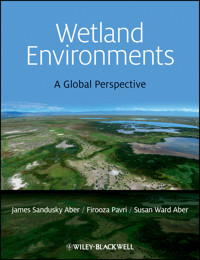
Cover image: Panorama of Russell Lakes State Wildlife Area with the Sangre de Cristo Range in the far background; south-central Colorado, United States. Saline lakes and marshes occupy hollows between low, mesquite-covered dunes. Blimp aerial photo by James Aber and Susan Aber.
Cover design by: Design Deluxe
DEDICATION
In memory of Kiira Aaviksoo (1955–2011), who pursued her passion for wetlands, stimulated a generation of students, and inspired our interest in Estonian bogs.
Preface
Why Wetlands?
This question is often asked of the authors. Swamp, marsh, tundra, bog – these are places that are rarely visited and as such, perceptions prevail over observations so that people cannot visualize how wetlands might figure into their everyday lives. Wetlands simply do not appeal to most people from a practical or aesthetic point of view. Among the large urban and rural human populations of today, few are familiar with wetlands and fewer still have an active interest in understanding, enjoying, or protecting wetlands. In fact, for most people wetlands are wastelands – in other words, places to be converted, drained, filled, or exploited for industrial and economic uses.
For us, however, wetlands are intrinsically beautiful environments where one may see the natural and essential values in the interaction of water, soil, vegetation, wildlife, and humans (Fig. 1). Furthermore, individual wetlands are small pieces within the Earth’s complex environment, a system that sustains us as well as all other life. At the transition from drylands to deep-water bodies, wetlands provide key links for the flux and temporary storage of energy and materials as well as crucial habitats for many plant and animal species. In addition to their modern environmental roles, wetlands also preserve in their sediments and fossils proxy records of past environments and climatic conditions, which help us to know how the present came to be and how the future might be. We are drawn to wetlands to observe and study their critical past and present environmental roles as well as to describe and enjoy their unique beauty.
Figure 1. Aerial overview of the Rachel Carson National Wildlife Refuge along the Atlantic coast of southeastern Maine, United States. The salt marsh, pools and tidal channels intervene between the beach front (right) and mainland (left), both of which have dense residential development. The human presence here has strong influence on the wetland water supply, vegetation and wildlife. View toward north;
blimp airphoto by J.S. Aber, S.W. Aber and V. Valentine.
The wetland-as-wasteland point of view may have been acceptable in the past, when human population was small and environmental effects were less understood and perceived to be insignificant. But this is no longer the case. Human population has surged from around one billion two centuries ago to seven billion today and will continue to grow rapidly in the near future. Population has more than doubled in the past half century, during which time global food and fresh-water consumption have more than tripled and use of fossil fuels has increased fourfold. Humans now co-opt at least one-third to as much as half of global photosynthesis (Foley 2010). In short, our exploitation of planetary resources has surpassed our quickly expanding population.
All aspects of the Earth’s environmental system are impacted by this human assault on the planet, which includes vast conversions of land use, massive extraction of mineral resources and fossil fuels, heavy use of surface and ground water, and uncontrolled exploitation of many other non-renewable land and marine resources. The natural flows of energy and materials within the environment have been altered or disrupted as a result of modern human development.
Rockström et al. (2009a and 2009b) identified key processes for maintaining a sustainable global environment (Table 1). The boundaries set for these factors represent “tipping points” beyond which uncertain or irreversible consequences may take place. Three processes have already exceeded their boundaries – biodiversity loss, nitrogen pollution, and atmospheric CO2 increase – and other factors are approaching their limits (Foley 2010).
Table 1. Critical environmental processes, their boundaries, potential consequences, and possible solutions. * process that has exceeded its boundary value; based primarily on Foley (2010).
Of these critical processes, fresh-water use is most directly related to the subject of this book, namely wetlands. Several others are tied directly or indirectly to wetland environments as well – biodiversity loss, carbon cycle, nitrogen and phosphorus cycles, land use, ocean acidification, and chemical pollution. Wetlands are not only unique as individual environments, they also form critical connections between drylands and deep-water bodies with complex interactions and feedback relationships involving the atmosphere, hydrosphere, biosphere and lithosphere.
Why wetlands? We hope this book will foster a greater awareness and appreciation of wetlands, promote a culture of conservation and wise management, and spread the knowledge that wetlands are important, indeed crucial, elements of the global environment. Our attempts to understand, manage and enhance wetlands in the twenty-first century are parts of the larger effort to maintain a sustainable Earth for all people.
Acknowledgements
Many colleagues, friends and students have encouraged, supported, and assisted our work on wetland environments in various ways over many years, which resulted in this book. We thank the following in particular: Inge Aarseth, Kiira Aaviksoo, David Ackerman, Susan Adamowicz, Karl Anundsen, Andrzej Ber, Max Bezada, Lawrence A. Brown, Marc Carullo, Dan Charman, Abraham Dailey, Gayla Corley, David Croot, Michele Dionne, Debra Eberts, David Edds, Tom Eddy, Elder family, Jack Estes, Mark Fenton, Darek Gałzka, Marco Giardino, Maria Górska-Zabielska, Lixiao Huang, Juraj Janoko, Volli Kalm, Hemant Karkhanis, Edgar Karofeld, Barbara Kosmowska-Ceranowicz, Peder Laursen, Brooks Leffler, Dave Leiker, Linda Lillard, Kam Lulla, Holger Lykke-Andersen, Maya Mahajan, Gina Manders, Viktor Masing, Robert Nairn, Atle Nesje, Kate O’Brian, Lida Owens, Robert Penner, Matt Nowak, Tinaz Pavri, Johannes Ries, Tom, Darius and Ethan Rotnem, Hanna Ruszczyska-Szenajch, David and Mary Sauchyn, Hans and Ingeborg Schlichtmann, Jean Schulenberg, Greg and Lynette Sievert, Rich Sleezer, Eva Stupnicka, Marsh Sundberg, Michele Tranes, Cheryl Unruh, Vinton Valentine, Steven Veatch, Elena Volkova, Ryszard Zabielski, Brenda Zabriskie, and Mark Zwetsloot.
We especially thank our colleagues and students who have contributed their excellent wetland photographs for this book: Jeremy W. Aber, Sara Acosta, Roy Beckemeyer, Ken and Marilyn Buchele, Peter Frenzel, Brian Graves, Nick Hubbard, William Jacobson, Paul and Jill Johnston, Scott Jones, Preben Jensen, Edgar Karofeld, Victor Krynicki, Margaret Martin, Irene Marzolff, Johannes Ries, Shawn Salley, Mel Storm, Elena Volkova and Brenda Zabriskie. We also thank Abraham Dailey for helping produce the maps used in the book. U.S. postage and duck stamps came from the collection of Jean Vancura. Special thanks to Lawrence A. Brown for his steadfast support and for providing the opportunity to learn from him.
Financial support and logistical assistance were provided by institutional grants from Emporia State University (USA), the University of Southern Maine (USA), the University of Tartu (Estonia) and the Technical University of Košice (Slovakia) as well as by NASA EPSCoR and JOVE awards. Additional financial support for JSA was given by the National Scholarship Programme of the Slovak Republic and the U.S. National Research Council’s Estonian Twinning Program.
Special thanks to our parents who encouraged us to follow our scientific ambitions: Sarajane S. and R. Kenneth Aber, Gool and Bomi Pavri, Marian M. and Henry A. Ward.
1
Wetland Overview
1.1 Introduction
Wetland. The name summons immediate images or experiences to most people – from the endless sand beach of Padre Island, Texas (Fig. 1-1), to wildlife in the Okavango Delta of Botswana (Fig. 1-2), to the deadly Great Grimpen Mire, as described in the Sherlock Holmes tale, The Hound of the Baskervilles by Sir Arthur Conan Doyle:
Rank weeds and lush, slimy water plants send an odour of decay and a heavy miasmatic vapor into our faces, while a false step plunged us more than once thigh-deep into the dark, quivering mire, which shook for yards in soft undulations around our feet.
Figure 1-1. Padre Island National Seashore, southern Texas, United States. View northward showing Padre Island (left) and the Gulf of Mexico (right). More than 70 miles (110 km) of island and beach are protected. Note person standing at bottom for scale.
Kite aerial photo by J.S. Aber and S.W. Aber.
Figure 1-2. Hippopotamus (Hippopotamus amphibius) displays its formidable jaws and teeth in a marsh of the Okavango Delta, Botswana, southern Africa.
Photo courtesy of M. Storm.
Whether real or fictional, wetlands have conspicuous roles in the physical, biological and cultural geography of the world. Wetlands are places where the ground is generally saturated or flooded for extended periods during the growing season such that distinctive soils form and specialized vegetation grows under conditions in which oxygen is depleted or absent. Such environments include marshes, fens, bogs, and swamps (see chapter 2). Wetlands occur at the confluence of unique terrestrial, hydrological and climatic conditions that give rise to some of the most biodiverse regions of the world. They also play a vital role in the cycling and storage of key nutrients, materials and energy through the Earth’s system. Wetland components include water, soil, vegetation, and wildlife. Since the first human hunter-gatherers camped by springs and shores, people have utilized, modified, exploited or impacted wetlands in various ways. Moreover, the early establishment of human settlements and subsequent expansion were based on irrigated agriculture along major river floodplain valleys – Nile (Fig. 1-3), Tigris–Euphrates, Niger, Indus, Mekong, etc.
Figure 1-3. Near-vertical view of the River Nile and Mediterranean coast in the vicinity of Alexandria, Egypt. The Nile supported one of the earliest agricultural civilizations. Linhof large-format film camera, March 1990, STS36-151-101;
image adapted from NASA Johnson Space Center.
Wetlands continue to be essential for modern human society; they represent the primary sources of fresh water for people in most places around the world. Wetlands minimize flooding and storm damage, nourish fisheries (Fig. 1-4), produce fur-bearing animals, sustain irrigated agriculture, support herding and grazing (Fig. 1-5), recharge aquifers, provide shipping waterways (Fig. 1-6), supply hydropower, grow timber, yield fossil fuels (Fig. 1-7), are incubators for gemstones, and provide many other resources. These functions are clearly evident, as they influence the daily lives of people living in and deriving economic benefits from wetlands.
Figure 1-4. Fishing nets and boats on the shore of Võrtsjärv, a large freshwater lake surrounded by marsh in southern Estonia.
Photo by J.S. Aber.
Figure 1-5. Cattle grazing in the páramo (alpine) grassland-shrub vegetation in the Andes Mountains of Venezuela. The páramo zone is almost constantly in the clouds, rain or fog, as shown in the background.
Photo by J.S. Aber.
Figure 1-6. Barges on the River Rhine at Andernach, Germany. Two loaded barges are moving upstream. The control house and living quarters are located at the stern of the barge.
Photo by J.S. Aber.
Figure 1-7. Traditional hand cutting of peat in Ireland. After drying, the peat is used for home heating and cooking.
Photo by J.S. Aber.
In spite of local recognition of wetland functions and values, however, the larger regional and global significance of wetlands is more difficult for many people to fathom. What is economically beneficial in upper portions of drainage basins – irrigation, timber harvesting, hydroelectric power, recreation and other human uses – is often deleterious for downstream inhabitants of wetlands and coastal regions. Upstream manipulations and exploitation of wetland water resources have resulted in serious degradation or dramatic changes lower in drainage basins (Fig. 1-8). In contrast, some exploitations of wetlands, for example pearl farming, actually add marine life and provide protected areas that are free from dynamite and cyanide fishing. It is safe to say, though, that few, if any, major wetland systems of the world have not been altered or changed in substantial or subtle ways by human activities.
Figure 1-8. Impact of water diversions in the High Plains of the central United States. A. Dry channel of the Arkansas River at Ingalls, southwestern Kansas. Upstream reservoirs and extraction of water for irrigation have dried up the river, even in the spring of a wet year when this picture was taken. B. Center-pivot irrigation system. The sprayers are set too high for the winter wheat crop, so that considerable water is lost to wind drift and evaporation. C. Center-pivot irrigation system with the sprayers set just above the winter wheat crop to minimize evaporative loss.
Photos by J.S. Aber.
Wetlands are situated at the transitions between dry uplands and deep-water lake and marine environments (Fig. 1-9). Wetlands, thus, may be viewed as the links that bind together all other habitats at the Earth’s surface, and they play key roles in the overall environmental system through transfer and storage of materials and energy. Numerous feedback relationships exist between wetlands and their surroundings. Wetlands are, for example, significant sinks for carbon stored in their organic soil and sediment. They are likewise important sources for carbon dioxide (CO2) and methane (CH4), both greenhouse gases, released from the stored organic mass. Thus, wetlands are critical components of the carbon cycle, which has significant implications for global climate.
Figure 1-9. Presque Isle is a sandy spit that extends from the mainland into Lake Erie in northwestern Pennsylvania, United States. The transition from sandy shore, to shallow water, to deep lake is depicted in this panoramic view looking toward the northeast.
Kite aerial photo by J.S. Aber and S.W. Aber.
The economic benefits and ecological functions of wetlands are numerous and varied, as noted above. For many people, nonetheless, wildlife is the most obvious and perhaps important aspect of wetlands. In some American and African wetlands, for example, millions upon millions of waterfowl and shorebirds visit briefly or remain seasonally during annual migrations. Such dramatic concentrations of wildlife have attracted hunters since prehistoric times, and hunting continues to be a major use of wetlands (Fig. 1-10). Wetlands are, in fact, among the most productive ecosystems in the world (Niering 1985).
Figure 1-10. Hunters in a camouflaged “duck boat” return from a venture in the marsh at Cheyenne Bottoms, central Kansas, United States.
Photo by J.S. Aber.
Wetlands also harbor some of the greatest biodiversity found on the planet. Many aquatic animals are endemic to isolated wetlands, such as the hundreds of fish species found in the lakes of eastern Africa (Dugan 2005). In other cases, wetlands represent the last refuges of animals forced out of other habitats by human development – the Bengal tiger in the Sundarbans of India and Bangladesh and the jaguar in wetlands of South and Central America. Endangered species, such as the whooping crane (Grus americana), are often foremost in the public eye as symbols for the need to preserve wetland habitats (Fig. 1-11).
Figure 1-11. U.S. postage stamp issued in 1957 depicts a family of whooping cranes. Original stamp printed in blue, brown, and green colors.
From the collection of J. Vancura.
Costanza et al. (1997) attempted to estimate the economic value of ecosystem services for major biomes of the world. They identified 17 ecosystem services (Table 1-1), many of which are connected to or interact with wetland environments, particularly those involving water, soil, gases, nutrients and climate. The value of these services was determined using market and non-market means, such as the willingness-to-pay method (see chapter 11). They found that wetlands in general and estuaries, seagrass/algae beds, coral reefs, tidal marsh/mangroves, and swamps/floodplains in particular have the highest values for providing a broad array of ecosystem services. Wetland values are considerably greater, in fact, than tropical forest or other biomes.
Table 1-1. Ecosystem services and functions used for estimating the value of major biomes of the world.
Based on Costanza et al. (1997, Table 1).
Ecosystem services
Ecosystem functions
Examples
Gas regulation
Atmospheric chemical composition
Oxygen, ozone, sulfur oxides, UV protection
Climate regulation
Global, regional and local weather and climate
Greenhouse gases, cloud formation
Disturbance regulation
Absorbing and damping ecosystem responses
Storm protection, flood control, drought recovery
Water regulation
Hydrological flows
Irrigation, transportation, industrial applications
Water supply
Storage and retention
Soil moisture, aquifers, streams and reservoirs
Erosion and sedimentation
Retention of soil and sediment
Prevention of soil loss, siltation in lakes
Soil formation
Soil-forming processes
Rock weathering, organic matter accumulation
Nutrient cycling
Storage, processing and transfer of nutrients
Nitrogen fixation, K and P cycles
Waste treatment
Nutrient recovery, removal of harmful substances
Pollution control detoxification
Pollination
Movement of floral gametes
Pollinators for plant reproduction
Biological control
Regulation of populations
Predator control of prey
Refugia
Habitat for resident and migratory populations
Nurseries, regional habitats, migratory routes
Food production
Gross primary production for food
Crops, fish, game, fruits and nuts, livestock
Raw materials
Gross primary production for materials
Timber, fiber, fuel, fodder, minerals and ores
Genetic resources
Unique biological materials and products
Medicines, plant and animal varieties, ornamental species
Recreation
Recreational opportunities
Ecotourism, sport fishing and hunting, bird watching
Cultural
Non-commercial uses
Artistic, aesthetic, spiritual, religious, or scientific values
1.2 How Much and Where
The total coverage of existing wetlands is estimated to range from at least 7 million km2 to about 10 million km2, or 5–8 percent of the land surface of the world, depending upon the definition for what is included (Mitsch and Gosselink 2007). Bog, swamp, marsh, fen, muskeg, and similar habitats are represented in this total. The broader definition of Ramsar (see chapter 2) includes lakes, rivers, and coastal marine water bodies (up to 6 m deep), which pushes the wetland coverage to more than 12 million km2. Peatland (mire) includes those types of wetlands that accumulate peat at least one foot (30 cm) in thickness (Fig. 1-12), which may happen in swamp, bog, muskeg, and fen environments. Peatlands cover approximately 4 million km2 worldwide (Dugan 2005).
Figure 1-12. Layer of postglacial peat (*) ∼1 m thick resting on glacial till in western Poland.
Photo by J.S. Aber.
Wetlands of diverse types are found in all land and coastal regions of the world; however, the distribution of wetlands is certainly not uniform (Fig. 1-13). The greatest concentration of wetlands is found in boreal and subboreal regions of high to middle northern latitudes, namely from about 50–70 degrees north (Matthews and Fung 1987; Matthews 1993; Mitsch and Gosselink 2007). Most of the wetlands north of 60° latitude are affected by permafrost (U.S. Department of Agriculture (USDA) 1996). This includes large areas in Alaska, Canada, Scandinavia, and Russia. A second concentration in wetland distribution is found in the tropics (±15° latitude) with a peak abundance just south of the Equator. Central Africa, northern South America, northern Australia, Indochina, and Indonesia possess substantial tropical wetland regions. Significant temperate wetlands are situated in middle latitudes (30–50°) in eastern China, the eastern United States, and central Europe (USDA 1996).
Figure 1-13. General distribution of wetlands around the world. Major wetlands (asterisk) and abundant wetlands (square).
Based on Mitsch and Gosselink (2007) and other sources. Map adapted from CIA World Factbook, version of June 2009.
This global pattern of wetland distribution occurs at the confluence of local terrestrial and hydrological conditions and general climatic circulation. Influential climatic conditions include heavy precipitation and evapotranspiration in the tropics and moderate precipitation with limited evapotranspiration at middle to high latitudes. The results in both cases are surplus surface waters. Parts of the subtropical zone (∼15–30° latitude), in contrast, are characterized by scarce precipitation and high rates of evapotranspiration, which lead to well-known deserts – Sahara, Kalahari, Gobi, southwestern United States, western Australia, etc. Still, major wetlands such as the marshes of southern Iraq are found in the subtropical zone, where the configuration of terrestrial, hydrological and local climatic conditions gives rise to wetland habitats. Many of these subtropical wetlands are affected by high salinity, especially in the Middle East, central Asia, and Australia (U.S. Department of Agriculture (USDA) 1996).
The general climatic pattern and distribution of wetlands are influenced substantially by the positions of continents, flow of ocean currents, prevailing winds, mountains, and other major geographic features. For example, the largest mangrove swamp in the world, the Sundarbans covering 6000 km2 (Dugan 2005), is located in the subtropics of Bangladesh and eastern India, where monsoons and runoff from the Himalaya combine to create a vast floodplain and delta complex (see chapter 15).
1.3 Wetland Trends
Humans have modified and exploited wetlands in many ways, most of which have led to loss of wetland habitats and their conversion to other land uses and covers. Draining wetlands is observed globally and for various purposes – agriculture, forestry, grazing, peat mining, etc. Water supply to wetlands may be reduced by levees, canals and dams as well as by extraction of ground water. Filling is another common means of converting wetlands for building construction, urban expansion, and industrial development (Fig. 1-14). Acid rain, shoreline erosion, and pollution (Fig. 1-15) are further factors for wetland loss. Such human development began with the advent of agriculture in the Neolithic, particularly once early civilizations arose, and the pace of wetland loss has accelerated since the Industrial Revolution in the eighteenth century.
Figure 1-14. Overview of Port Bienville, an industrial park built on the Pearl River delta in southwestern Mississippi, United States. A dredged canal provides a connection via the Pearl River to the Intracoastal Waterway along the Gulf of Mexico coast.
Kite aerial photo by S.W. Aber, J.S. Aber, and M. Giardino.
Figure 1-15. Huge chat piles are a legacy of lead-and-zinc mining at Picher, Oklahoma. Considered among the most seriously degraded sites in the United States, the landscape is essentially destroyed; toxic pollution of ground and surface water extends many kilometers downstream with severe impacts on human health and wetland habitats. View toward the southwest;
blimp airphoto by J.S. Aber and S.W. Aber.
Dugan (2005) emphasized the distinction between “hydraulic” and “aquatic” civilizations in terms of how they utilized wetland resources. Hydraulic civilizations usually developed in upstream or inland settings in which water resources were seasonal or limited. Storage and distribution of water were controlled via engineering structures such as dams, levees, reservoirs and canals for irrigating farm land, all of which degrade or eliminate wetlands. Aquatic civilizations, in contrast, were situated in downstream or coastal settings where water was generally abundant. These civilizations utilized the annual flood cycle to farm deltas and alluvial plains, which had lesser impacts on wetlands. During the European period of exploration and colonization, beginning in the late fifteenth century, the hydraulic approach ruled at home and was exported throughout the world.
It is generally agreed that worldwide at least half of all pre-development wetlands have been lost to human activities (Mitsch and Gosselink 2007). This global loss of wetland habitats may be attributed primarily to the hydraulic emphasis of the past five centuries (Dugan 2005). The same holds true for the coterminous United States since the birth of the country. The 20 northeastern states are representative of this trend (Table 1-2). In general, the relatively rocky New England states (Maine, New Hampshire, Vermont, Massachusetts) had lower losses, whereas the Midwestern corn belt (Ohio, Indiana, Illinois, Iowa, Missouri) had the greatest conversions of wetland along with the Atlantic states of Connecticut and Maryland. The western Great Lakes and Appalachian states experienced intermediate reductions in wetlands. The distribution of wetland losses from state to state reflects primarily the extent of agriculture and amount of urban development.
Table 1-2. Wetland losses in the 20 northeastern states of the United States from c. 1780 to 1980. Areas given in hectares;
based on Dahl (1990).
Elsewhere around the world, similar wetland losses range from over 90 percent in New Zealand (Dugan 2005) to minimal impacts in remote and little-developed regions (Table 1-3). However, oil-and-gas and diamond exploration and extraction threaten once pristine wetlands in the circumarctic region, and human encroachment on wetlands continues apace throughout the developing tropical world, both inland and offshore. The 2010 BP Deepwater Horizon oil spill in the Gulf of Mexico demonstrates that further degradation of wetland habitat may take place even in places already heavily affected by intensive human exploitation.
Table 1-3. Estimated wetland losses for selected regions of the world.
Adapted from Mitsch and Gosselink (2007, Table 3.2).
Region
% loss
United States
53
Canada
Atlantic tidal/salt marshes
65
Lower Great Lakes/St. Lawrence
71
Prairie pothole region
71
Pacific coastal estuaries
80
Australia
Swan Coastal Plain
75
Coastal New South Wales
75
Victoria
33
River Murray basin
35
New Zealand
>90
Philippine mangrove swamps
67
China
60
Europe
60
1.4 Wetland Preservation and Protection
Recognition of the importance of wetlands emerged gradually during the twentieth century, and now wetland conservation is a cause with considerable public support around the world. Early efforts focused on wildlife. As long ago as 1916 the United States and United Kingdom agreed to what became the Migratory Bird Treaty Act (1918), which protected birds migrating between the U.S. and Canada (Fig. 1-16). Specifically this act made it illegal for people to take migratory birds, their eggs, feathers or nests (U.S. Fish and Wildlife Service 2010a). Similar bilateral treaties were established by the United States with Mexico (1936), Japan (1972) and the Soviet Union (1976).
Figure 1-16. U.S. postage stamp marking the 50th anniversary of the convention on U.S.–Canada migratory birds. Original stamp printed in red, blue and black.
From the collection of J. Vancura.
Another early and quite successful program was the U.S. Migratory Bird Hunting and Conservation Stamp, commonly known as “duck stamps,” which began in the 1930s as a means to raise money for preservation of duck and goose habitat (Fig. 1-17). As of 2008, sales of duck stamps had generated US$700 million, which was used to purchase more than two million hectares (>5 million acres) of wetland habitat for the National Wildlife Refuge system.
Figure 1-17. U.S. Migratory Bird Hunting and Conservation Stamp. Above: First U.S. “duck stamp” issued in 1934. The original stamp was flat-plate printed in blue monotone and depicted two mallards. For valid use, the stamp had to be signed; original signature can be seen faintly across the top of this example. Below: U.S. postage stamp issued to recognize the 50th anniversary of the duck stamp program, in the same blue monotone.
From the collection of J. Vancura.
As wildlife protection efforts in North America spread to other parts of the world, an international consensus emerged for the preservation of wetlands. Negotiations between various countries and non-governmental agencies in the 1960s culminated with a treaty adopted in the Iranian city of Ramsar in 1971. This treaty, which came into force in 1975, dealt with conserving wetland habitats necessary for migratory waterbirds. The number of contracting parties (countries) has reached 160, representing all parts of the world, and nearly 1900 sites have been listed as wetlands of international importance covering more than 185 million hectares (Ramsar 2010a).
Wetlands are a high priority also for many science-based and non-governmental organizations (NGOs), such as Ducks Unlimited, Audubon, the Nature Conservancy in North America, the Wildfowl and Wetland Trust in the United Kingdom, and WetlandCare Australia, among others. As this list suggests, interested parties fall into two general categories – hunters and wildlife enthusiasts, again with wildlife conservation and sustainable management as the main themes. Such organizations have much in common; they strive in various ways to maintain, restore and protect native habitats for wildlife populations, so that future generations may enjoy the benefits of diverse wild animals thriving under natural conditions. In the case of migrating shorebirds and waterfowl, this means wetlands in summer and winter grounds as well as along the flyways during spring and autumn migrations.
These NGOs often work in close cooperation with local and national governmental agencies in order to complement or enhance efforts for wetland preservation. In the United States, the Environmental Protection Agency (EPA), Fish and Wildlife Service (FWS), Army Corps of Engineers (ACE), and Natural Resources Conservation Service (NRCS) are major agencies involved with wetland research, protection, and regulation. North of the border, Environment Canada is the lead national agency for various aspects of wetlands.
Wetlands International (WI) is the main global NGO concerned with restoring and sustaining wetland habitats, resources, and biodiversity. Headquartered in the Netherlands, WI deals mostly with wetlands in developing countries of South America, eastern Europe, southern and eastern Asia, and Africa. As a partner of Ramsar, WI has developed the Ramsar Site Information Service, which allows users to display map and statistical information about any Ramsar site online (see http://ramsar.wetlands.org/). Some WI projects highlight difficult situations; for example, efforts to protect wetlands in western Africa contradict attempts to control mosquito-borne malaria, which is epidemic in the region and a growing problem worldwide. West African malaria is a complex issue involving natural wetlands, rice agriculture, climate change, pharmacology, economic policy, and many other aspects with no easy solutions (Gwadz 2001; Touré 2001).
As global recognition of and support for environmental issues has expanded during the past half century, so has ecotourism, supported by a growing middle class with interests ranging from whale watching to tropical wildflowers. Exotic adventures into Amazonia (Fig. 1-18) or the Okavango Delta (Fig. 1-19) have brought many more people into direct contact with natural environments and wetlands. Governments and NGOs in developing countries recognize that wetland preservation makes good economic sense in order to gain further financial support.
Figure 1-18. Emergent wetland vegetation growing in shallow, muddy water of the Baía de Marajó, part of the Amazon Delta complex, near Belém, Brazil.
Photo courtesy of K. Buchele.
Figure 1-19. Ecotourism camp in the Okavango Delta of Botswana. The tent structures are elevated on wooden posts to minimize surface impact, and the interior accommodations are quite comfortable.
Photo courtesy of M. Storm.
1.5 Wetland Science
The scientific study of wetlands was traditionally considered to be part of biology, and this is still often the case. Terms such as “wetland ecology” or “mire ecology” reinforce this biological emphasis. However, wetlands are integrated systems based on water, soil, climate, vegetation and wildlife as utilized and modified by human activities. Focusing mainly on biology, thus, may overlook many other fundamental aspects of wetlands (Fig. 1-20). Mitsch and Gosselink (2007) identified four factors that are unique to wetland science.
Wetlands have many special properties not adequately covered in biological specialties.
Wetlands of disparate types do have some common properties.
Wetland studies require an interdisciplinary approach that may involve several subdisciplines not commonly included in university academic programs.
Strong scientific understanding of many facets is necessary for the development of policy, regulation, and management of wetlands.
Figure 1-20. S. DeGraaf prepares to place a soil-temperature logger into a water-filled hole ∼1/2 m deep in a subalpine bog at ∼3200 m elevation, Colorado, United States. Study site is part of a long-term climate investigation.
Photo by J.S. Aber.
Several wetland scientific societies and publications support this multidisciplinary approach. A major organization in North America is the Society of Wetland Scientists (SWS), which publishes the journal Wetlands. According to its own description, it is “an international journal concerned with all aspects of wetlands biology, ecology, hydrology, soils, biogeochemistry, management, laws and regulations” (SWS 2010). This description certainly highlights the many disciplines and subjects of wetland research.
The International Peat Society (IPS) was constituted in Canada and is now based in Finland. The International Mire Conservation Group (IMCG) is likewise based in Europe. Together IPS and IMCG publish Mires and Peat, an online journal (see http://www.mires-and-peat.net/). Recent articles spanned the globe from ecohydrology of mires in Tierra del Fuego, Argentina (Grootjans et al. 2010) to a carbon-fiber-composite Byelorussian peat corer (Franzén and Ljung 2009). The open-access nature of this journal illustrates the desire of some societies to make their publications freely available to everybody.
The scientific organizations noted above are large and international in character. Wetlands exist throughout the world, so many smaller scientific organizations deal with local or regional interests in more specialized ways. A good example is Suoseura, the Finnish Peatland Society. It serves as the Finnish National Committee of the IPS, organized the 12th International Peat Congress in 2004, and publishes the journal Suo. The society has a membership of approximately 450, clearly indicating that wetlands in general and peat in particular are major scientific issues for the small country of Finland.
1.6 Book Approach and Outline
In this book, we recognize that a complete study of wetland environments requires the assessment of the physical and biological attributes, properties and functions of these ecosystems, and the economic, political and social aspects that mediate their use globally. We adopt a systems approach, which emphasizes simultaneously examining component parts of a system in the context of the whole. Such an approach allows us to consider the interactions between the physical, biological and human elements of wetland ecosystems. Moreover, selected examples from across the world are used to illustrate wetland characteristics and interactions. Collectively, these provide a broad understanding of the global scope of wetlands, their contributions to natural processes and human societies.
Part I of the book provides a general overview and introduction to the study of wetlands. Chapter 2 considers the physical and social components of wetland systems, while chapter 3 discusses the methods used to study and monitor these systems. Part II focuses on the fundamental physical and biological aspects of wetlands including wetland hydrology (chapter 4), soils (chapter 5), vegetation (chapter 6) and wildlife (chapter 7). In Part III, we consider short- and long-term changes in wetland environments and their roles in environmental cycles and feedback. Autogenic and allogenic change and the influence of climate, fire, tectonic activity, sea-level fluctuation, and animal activity on wetlands are addressed in chapter 8, while chapter 9 provides a long-term record of wetland formation and development through geologic time. The important role of wetlands in biogeochemical cycles and climate regimes by acting as carbon reservoirs is addressed in chapter 10.
Part IV of the book focuses on the human use and governance of wetland environments. Topics addressed in this section of the book include wetland services, resources and methods for valuation (chapter 11), wetland conservation planning and management practices (chapter 12), wetland restoration, enhancement and creation (chapter 13), and finally global wetland governance and public policy (chapter 14). The final section of this book (Part V) provides regional case studies focusing on the unique social and physical characteristics of both large and internationally renowned as well as smaller wetland sites from the low latitudes (chapter 15), middle latitudes (chapter 16), and high altitudes and latitudes (chapter 17).
1.7 Summary
Wetlands include water, soil, vegetation and wildlife, as modified and exploited by human activities. Early civilizations arose in fertile river valleys, and wetlands continue to be essential for modern human society. Wetlands provide many resources for people who live in or derive economic benefits from them. In addition, wetlands serve important, but less tangible functions for water supplies and high levels of biological productivity and biodiversity. As major sources and sinks for carbon, wetlands play critical roles in the global carbon cycle with significant consequences for greenhouse gases and potential climate change.
In spite of these direct and indirect values, people have a difficult time balancing their own, local, economic gains with broader regional or global issues concerning wetland development. Humans modify wetlands for various purposes in many ways, most commonly by artificial draining, filling, and reducing inflow or extracting water. What may be good for upstream water users, however, often leads to undesirable effects for downstream wetland habitats, water resources, and the people who depend on them.
The total extent of existing wetlands is estimated to range from 7 to 12 million km2, depending upon the definition for what is included. These wetlands are found primarily in two latitudinal zones – boreal and sub-boreal (50–70°N) and tropical (±15°), and many more wetlands of diverse types are found in all other parts of the world. Aquatic civilizations adapt to seasonal resources in wetlands, such as annual flood cycles, in order to practice agriculture and extract resources with lesser impacts on wetland environments. Hydraulic civilizations, in contrast, undertake intensive modifications of water supplies, which lead to degradation and loss of wetlands. The hydraulic approach has been dominant around the world for the past five centuries; as a consequence, the modern wetland total is no more than half of pre-development coverage.
Wetland conservation began about a century ago with initial emphasis on protecting habitats for migrating waterbirds. The United States undertook bilateral treaties with the United Kingdom (Canada), Mexico and other countries. Among the most successful early programs was the U.S. Migratory Bird Hunting and Conservation Stamp, commonly known as “duck stamps,” which still continues today. Many federal agencies are involved in wetland research and management in the United States, and similar agencies exist in many other countries. Likewise several non-governmental wetland organizations are active in North America and other parts of the world. International efforts culminated with the Ramsar Convention on Wetlands in 1971; to date, the number of contracting parties has reached 160, and nearly 1900 sites covering more than 185 million hectares have been listed as wetlands of international importance.
Given the broad range of wetland functions, their feedback relationships with other environmental factors, and human impacts, it is not surprising that scientific investigations of wetlands have become important for many reasons. So-called wetland science involves biological, physical and cultural aspects of environments and human impacts on wetlands. Several scientific societies and publications are devoted to multidisciplinary wetland science and management. In addition, ecotourism to wetlands has emerged as a popular leisure activity, thereby exposing many more people to the beauty and values of wetlands.
2
Wetland Criteria
2.1 Definitions
Many definitions for wetlands have been proposed and utilized over the years. In fact, more than 50 wetland definitions may be cited (Dugan 2005), ranging from the broadly inclusive definition of the Ramsar Convention to much more specific and restricted definitions. The approach taken by Ramsar is simply to name typical kinds of wetlands with common words familiar to the public.
Wetlands are areas of marsh, fen, peatland or water, whether natural or artificial, permanent or temporary, with water that is static or flowing, fresh, brackish or salt, including areas of marine water the depth of which at low tide does not exceed six metres
(Ramsar 1971).
Many terms derived from several languages have come into English usage to describe wetlands of various types in different geographic settings – bayou, billabong, bog, fen, mangrove, marsh, muskeg, playa, pocosin, sabkha, slough, swamp, and wad – to name just a few (see Glossary). Many of these names are now united under the general term mire, which refers to any wetland that accumulates peat. Equivalent words in other European languages include mose (Danish), tourbière (French), Moor (German), bagno (Polish), suo (Finnish), soo and raba (Estonian), pântano (Portuguese) and boloto (Russian). At least 19 words refer to different kinds of mires in dialects of northern Finland, including the terms aapa, palsa and tundra, which are used internationally in ecological research nowadays (Aapala and Aapala 1997).
Lesen Sie weiter in der vollständigen Ausgabe!
Lesen Sie weiter in der vollständigen Ausgabe!
Lesen Sie weiter in der vollständigen Ausgabe!
Lesen Sie weiter in der vollständigen Ausgabe!
Lesen Sie weiter in der vollständigen Ausgabe!
Lesen Sie weiter in der vollständigen Ausgabe!
Lesen Sie weiter in der vollständigen Ausgabe!
Lesen Sie weiter in der vollständigen Ausgabe!
Lesen Sie weiter in der vollständigen Ausgabe!
Lesen Sie weiter in der vollständigen Ausgabe!
Lesen Sie weiter in der vollständigen Ausgabe!
Lesen Sie weiter in der vollständigen Ausgabe!
Lesen Sie weiter in der vollständigen Ausgabe!
Lesen Sie weiter in der vollständigen Ausgabe!
Lesen Sie weiter in der vollständigen Ausgabe!
Lesen Sie weiter in der vollständigen Ausgabe!
Lesen Sie weiter in der vollständigen Ausgabe!
Lesen Sie weiter in der vollständigen Ausgabe!
Lesen Sie weiter in der vollständigen Ausgabe!




