


6,99 €
Mehr erfahren.
- Herausgeber: THP Ireland
- Kategorie: Fantasy und Science-Fiction
- Sprache: Englisch
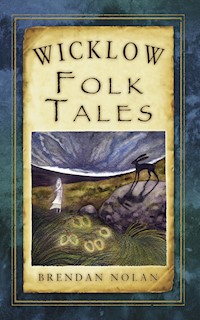
Wicklow is full of stories, from the farmer returned from market to find he was dead and buried, to the mysterious bird who turned into a beautiful wife long missing from the glens. In this rich collection of tales from the county, you may find the cure for baldness, or learn if it is wise to leave a sleeping army lie in Rathdrum. You will find smugglers in Bray, and a maiden who set her cap at a saint in the making in Glendalough. Wicklow has as many stories as there are people travelling its roads, and a wealth of them are gathered together here in this unique volume.
Das E-Book können Sie in Legimi-Apps oder einer beliebigen App lesen, die das folgende Format unterstützen:
Veröffentlichungsjahr: 2013
Ähnliche















For Dolores
CONTENTS
Title Page
Dedication
Acknowledgements
Introduction
1 An Army of Stones
2 A Hand in the Night
3 The Resurrection of Sean
4 The Travels of Davy
5 Not Gone and Not Forgotten
6 A Shower of Stones
7 Moving About
8 Wise Man Paddy Stevens
9 Warring Spirits
10 Taken by the Fairies
11 A Fleeting Bird
12 The Long Walk to Crois Úna
13 Milk Profit
14 A Cure for Baldness
15 Now You See it, Now You Don’t
16 Shriven Souls
17 Wicklow Foxes
18 Of Water and Stone
19 Féar Gortach
20 Derrybawn Cow
21 Bedding St Kevin
22 Dargle Lovers
23 The Devil is in the Glen
24 Bray Smugglers
25 Gold-Mine Mountain
26 Priest Hunters
27 Hempenstall Military Road
28 Wicklow Avalanche
29 Glencree
30 Surviving the Snow Storm
31 Tall Tales
Copyright
ACKNOWLEDGEMENTS
Sean Ó Cinneide and Cáit, Margaret Byrne, Mick Whelan, John and Molly Keogh and family, Pidge Byrne, Pat Fleming, Danielle Allison, Liz Weir, Nuala Hayes, Niall Reddy, Aideen McBride, John Gaffney and John Keane, for their help, and encouragement; not forgetting Rita, Rachel, Josh, Holly, Leo and Luci.
INTRODUCTION
In Wicklow you may come across a storyteller on a quiet road, at a crossroads, in a library, at a storytelling event, or in many other places, and when you least expect it. Long ago, when people did their week’s shopping after church on Sundays to avoid another long journey into town, stories tumbled out of the back of the church after Mass and along village streets, in and out of tiny shops crammed with neighbours all buying in for the week ahead and looking for something to reflect on in the quiet countryside of the everyday.
You may not at first recognise a storyteller if you meet one, for they can be of any age, gender, or disposition. They will listen to you for a while, with respect for your own told tales, before gently launching into a narrative drawn from their own seasoned store of traditional stories. Many will lightly tell a tale of a recent happening to someone you may well recognise, though slightly disguised to allow for a little creativity in the telling. Or, they may recall a story that has come through the oral tradition of the county.
During the story, you may smile at authority that has been got the better of; sigh at a wrong done to someone else; delight in evil outdone or in the escape of the virtuous. You may wonder whether, if you were to seek for gold in the Gold Mines river, you would become rich, or would you find that the treasure turns to leaves in your hand, a trick of the Good People? Would the sudden appearance of a demonic figure above cause you to throw your heels in the air as you fled? Or, would you return when all was quieted, once more?
Even a doubting listener will pay attention to the teller when he recounts a tale of valour or duplicity that happened perhaps in the year of insurrection, or in the hunted years following failed rebellion, or perhaps in a winter snowstorm, or on a drowsy summer’s day in the high hills, in the century just past.
The May Day tradition may be recalled of a bush dressed up with gathered egg shells, with wild yellow flowers and ribbons placed upon it. Candles or rush lights would light up the bush and, when the lights burnt out, the bush itself, usually a dry gorse bush pulled from the soil of the mountain, would be set alight.
May Day was a significant time in community life. Many contracts for work and land began on this day. For some, the sight of a May bush brought a feeling of protection against unseen forces that might visit from an earlier time and different beliefs.
One tradition holds that snow lying on Croghan Kinsella (the gold mountain) on May Day is so bad an omen that local farmers would expect their landlord to forego the rent for the coming half-year.
Whatever story is told it will be energised by the teller until both listener and teller are almost transformed into the subject and time, without knowing how or why. Perhaps, the listener will see an ephemeral light floating towards them on a dark road in a glen where no person has lived in a few hundred years, and will wait to hear their fate.
Of course, neither they nor the person in the story will consider putting a world of space and time between them and the oncoming brightness; for to do so will mean they will not hear the story.
What happens?
Even if the story has been heard before, the listener’s memory slips. A skilled tradition-bearer will make the story sound as if it is the first time it has been told, and only to the present ears of the gathered-in listeners.
For it will be the only time that the story is told in this form. The oral tradition is such that while the essence of the story remains true, the nuances of the story will sough and sigh according to time and circumstance. A brief moment of telling will include only the essence of the story, longer time will allow for more profuse elucidation.
And while Irish culture abounds with new storytellers, and stories are being recalled in many places, there is an onus on the present generation to gather stories from older tellers to carry along the tradition of storytelling. For, no matter how wise a storyteller may be, all are humanly fallible and voices will be stilled in time.
Two of the stories in this collection came from Mick Whelan, a melodious storyteller who lived deep in the glens of Wicklow.
Mick would say that two stories are twice as good as one, and one better than none at all, for he was a joyful storyteller; but his was an oral collection committed to memory and his store of stories lies with him. Ar dheis Dé go raibh a anam dílis.
Storytelling is from memory; for storytellers do not read out stories, which is a different pastime and skill. But stories need to be collected and the history of a people kept safe for those yet to be born. And to echo the voices of those now silent. It is said that every great storyteller is also a great listener. It behoves those of us now alive to listen and to gather stories as a people’s treasure.
If any of the stories in this collection move you to tell them to someone else, then do so, for you will have joined a long line of storytellers through the millennia, for story is all.
Tell true, tell well, and enjoy the story.
Brendan Nolan
www.irishfolktales.com
1
AN ARMY OF STONES
When a mist rolls across a Wicklow hill and clings to every rock and wind-battered tree on the bare hillside, and all is silent for miles around, it is all too easy to believe that a shape looming out of the fog is not an inanimate object but a fellow human being.
There is a foothill on the way up to the brooding mass of Lugnaquilla Mountain at the head of the Ow Valley that is called Farbreaga, from the Irish expression fear bréige, meaning a false man, in the sense of not being real. The term is commonly applied to a rock or heap of stones resembling a man, though some call scarecrows that they make with their own hands by the same name.
Michael Dwyer, one of the leaders of the resistance following the failed 1798 insurrection, sought refuge in the almost impenetrable natural fortress of wild hill and woodland that was the Wicklow of his day. John Sheil of Carrignamuck, many years later, recalled a local story of that time, when Dwyer was being hunted by Yeomen, civilian volunteers who used government arms and uniforms to police their seditious neighbours. Dozens of loyalist Yeomanry corps had been raised in Wicklow to put down nationalist unrest.
Dwyer was headed over Farbreaga on the way to his redoubt in his native Glen of Imaal on the far side of Lugnaquilla, with Yeomen in pursuit. When he was part of the way up the foothill he put hats on the rocks that were scattered across it. He then commenced firing down the slope and, by moving about, fooled the pursuers into thinking he had a number of associates with him on the hillside. The Yeomen fled.
His is not the only story of mistaken identification to do with Farbreaga.
Julia Doyle of nearby Ballygobbin recalled for the Schools Folklore Commission, in 1938, that one dark moonless night, a man coming alone from Farbreaga through the soft slippery bog saw a light coming towards him. Thinking it might be someone he knew, he halted in readiness to greet the bearer of the light, which he took to be a lantern in the hand. But, to his unsettled surprise, the light went out when it reached him and lit up once more once it had passed. He stared and stared but could see no human form to the side of the moving light. There was no one to whom he could ascribe a neighbourly trick being playing on him.
Such are the tricks of light that can betray the mind on a dark Wicklow hillside. And who is to say who is moving about there?
September is, on average, the month with most sunshine on Farbreaga. Rainfall has no distinct peak month, which means that in any part of the year it is never far from rain and a great many swirling mists. People may see things that might or might not be there.
In 1913 two men were out ferreting rabbits on the mountain. They shouldn’t have been doing so for they were on private land. The ferret most used in Ireland then was descended from the European polecat; the ferret was encouraged into the rabbit hole from where it chased the rabbit out and into a trap or net spread by the human trapper who then killed it and the rabbit was taken either for personal use or sold to a local butcher.
There was not much of a mist that night but it was dark from the clouds scudding across the moonlit sky. One of the men straightened up from setting a trap and started in surprise, for through the gloom there on a rock higher up the slope of the hill, he saw a man standing looking down at them. There might have been nothing unusual, except that he recognised the man and knew that he had been dead for twenty years. He remembered being at his wake as a lad, gadding about the kitchen trying to steal pipes of tobacco.
The man was dressed just as he had been on the night when he was laid out on the way to the grave. He wore corduroy trousers and a white flannel jacket, and his whiskers were shaved off. A youngish man then, he was father to the man who now owned the mountain and kept sheep on it. There was no doubt in both the poachers’ minds as to the man they saw standing on the slope above them. But, truth to tell, they were poachers, and, technically speaking, if they took the matter further it would be they themselves who ended up in the Petty Sessions in Rathdrum. The poachers had no desire to see the inside of the courthouse in the matter of rabbits and the appearance of a fear bréige.
Just as they had no desire to argue with any living man on the rights or wrongs of what they were about, so neither of them had any interest in discussing the issue with a ghost from the other world.
They ran as fast as their slithering feet would carry them, across the sheep tracks of the hill, leaving the rabbit traps and ferret to their own devices. They ran and ran, not reaching their homes until day was beginning to break.
One of the men took to his bed for three days and would not stir, no matter what was said to him, or what cajoling was put to him or what was offered to him.
His accomplice was made of sterner stuff in daylight and felt emboldened to return the next day to retrieve the ferret and the tools of their nocturnal trade. He did so, and returned home with no further incident to report. For safety sake, they moved onto other ground in their hunt for rabbits, for it was an onerous enough task without having to engage with ghosts on the hill.
Others also had experiences in the hunt for rabbits on Farbreaga. However, while there is no preternatural report of how the following incident came about, it is chastening to think of the strength of character that compelled local man James Whelan to drag his injured self across the hill in the winter of 1930.
The 58-year-old family man was out rabbit hunting in the area and found his way up onto Farbreaga, an area with which he was very familiar. He knew where the rabbit burrows were located that were to be seen by the casual hunter; but he also knew where other entrances were hidden by rocks and folds of the land.
He prised up rocks to let his ferret get down to the rabbits and all went well for a time. But rocks on the mountain sometimes seem to be governed by a different agency. One rounded rock that he moved seemed to have settled safely in its new place and so he took his hands away from it to catch hold of the ferret, and to let it slip down into the revealed hole. But no sooner had he turned away than the rock slid down the incline towards him, according to his son Mick Whelan who related the story, many years later.
The rock shifted and in the ensuing tumbling of stone and body the rock broke the man’s hip and rolled on to settle in a new hollow. It was a simple accident, perhaps, but life-threatening in consequence; for James was on his own, except for his ferret and his sheepdog who was never far from his heels on his walks across the hills of his native county.
He lay there in agony as darkness surrounded him on the hill and the temperature dropped, as rapidly as a stone tumbling down the cliff face on Lugnaquilla in the distance. It grew colder as darkness spread and a frost formed, the darkness bringing a shivering cold to the helpless man.
Painfully he took off his tie and draped it around the dog’s neck and tried to send it home so that his family would recognise the tie and come searching for him. But the dog refused to leave him; it chose to stay with its master rather than go home without him.
While this was going on, the ferret emerged from the rabbit’s hole. James reached over to the squirming animal. He caught it and placed it back into his bag in a moment of calm not unknown at times of great peril.
James lay and considered his options: it was a choice of lying there on the hill and freezing to death from shock and low temperature, or trying to get himself across to a farmhouse he had passed on the way up the valley.
Steeling himself against the excruciating pain, he began to drag himself across the ridge of the hill on his way to assistance. His legs were not only useless to him, but the banging against scree and rock sent shafts of pain running through his tormented body.
His hands and upper body were all that could help him on his never-ending journey across the hard frozen ground. His progress was slow as he measured his path inch by inch, with long breaks in between as the pain threatened to overcome him and knock him unconscious.
Daylight came slowly and he was still on the hill, keeping to the high ground so he could drift downwards when he came to the house; for he feared that climbing upwards dragging a broken-hipped body would be beyond his strength and ability. If he lost height he would not be able to rise up again and would most likely perish among the boulders strewn about the undulating surface of the hill.
All day long he kept going as best he could. If his family and neighbours were out looking for him they were searching in the wrong places, not surprisingly, since he had wandered about somewhat in his quest for rabbits on the previous day.
Night came on once more as he made his way down to the yard of the farmhouse. By then he was unable to call out, or, even to make it as far as the door of the house.
He came to a halt in the farmyard as a fatal coldness spread through his body. To have come so far and to feel his life ebbing away must have been hard to contemplate for this man of the mountains.
However, just as all hope seemed lost, fortune turned in his favour for the farmer came out with a lantern to check his animals before the family retired for the night. He did his rounds and was on his way back inside the house when he saw or heard, or sensed, something unusual in the darkness. His light held aloft showed him the battered and exhausted body of James lying in a dark heap on the ground.
He was immediately brought into the house, where the welcoming warmth of the homestead began his recovery. They tended him there overnight, having first sent word to his anxious family that he had been found alive after two nights on the hillside of Farbreaga.
When daylight came, they placed him on a cart and brought him down the rugged track to the public road and his home. Many years later, when his ordeal and courage had rolled itself into local folklore, a recovered James said that the bumping and swaying of the cart on the rutted track caused more pain than had the dragging odyssey across the hill.
2
A HAND IN THE NIGHT
Some humans show a remarkable bravado when dealing with matters beyond their ken, like digging for gold in a fairy rath or playing tricks on others in a graveyard at a time of internment, or encountering the Devil while searching for a missing daughter.
There is a rath on Ballygobbin hill in the south of Wicklow county where a number of men, a few years ago, decided it would be a fine idea to dig down and to take for themselves some of the gold that was reputed to be there.
The men dug down into the ground and soon had a decent sized depression hollowed out, but not a sight of anything remotely resembling gold to be found. Disheartened, the gold seekers decided to take a short rest on the surrounding soft grass. One of the men, however, would not give up so easily and continued with his labour.
Imagine his surprise when, looking up from his digging, he saw a dark figure on the bank, staring down at him without a stir or a word out of him.
In many folktales a devil or some such other-worldly manifestation is often depicted as a frightful image of a being who is black from head to foot, and with red eyes. Thus it was that the man in the hole was naturally fearful and immediately leapt out of the declivity and took off running, all the way home, a race he won from his equally terrified companions who followed him down the hill, in some haste.
Word soon spread as to what had happened. Others who were a little less fearful, not having seen the apparition in the first place, wandered up to the site to see if any gold had been disturbed in the men’s flight and if it might be lying around the place.
They did not stir in that direction until the next morning, however, until light had touched all parts of the glen and few shadows remained. For if they were avaricious they were not foolish with it. However, when the first people arrived at the spot, they found the hole already filled in, by whom not one person alive could or would say, ever afterwards.
It had been the image of the strange and unexpected that had caused the rout of the gold diggers; that, and the certainty somewhere in their collective folk memories of strange beings lurking at the edge of darkness.
The rath was left undisturbed for a long time after that and may be undisturbed yet, for who knows who stands guard over such things, in the remote parts of the county.
There was a farmer in a different place in Wicklow who had a high-spirited and beautiful daughter who needed careful guarding. She needed to be kept away from the amorous advances of the local bucks who, given half a chance, were bent on mischief with the enthralled teenager.
Electricity was not long come to that part of the country as part of the rural electrification scheme that saw most houses hooked up to the national grid, for better or for worse. The farmer had installed electric lighting in the barn as well as in the family dwelling, for he was a far-seeing man. The switch was placed on the wall next to the old tin door. The door was troublesome in that it had never quite fitted the space given over to it, but it meant that a hand could come through a gap and switch the light on or off from the outside, depending on whether a person was coming or going.
On this particular night, the daughter and her latest boyfriend were sporting themselves inside the building, out of the winter darkness and snowy wind. The farmer heard a noise as he was passing through the yard and turned to investigate. He called out advance warning to any tramp or thief who might be inside the barn.
His daughter was surprised to hear her father’s voice calling out in the darkness and her beau, not wishing to be caught in such a compromising situation and face the wrath of an angry father, looked around wildly for means of escape, but there was none. He could but wait for discovery and reckoning, not to mention banishment from the girl’s company. Quite unexpectedly, however, providence took a hand.
The farmer, apprehensive of who or what might be lurking inside his barn, sneaked his hesitant hand into the gap beside the ill-fitting door to reach for the electricity switch. At that moment, in a spontaneous attempt to delay the inevitable, the young man reached out and grabbed the farmer’s wrist.
The man outside the barn only knew that a grip had closed around his wrist in the darkness. He howled out in fear, for who knew if a red-eyed being was inside trying to draw him in, for who knew what? The young man inside held his breath so as not to cry out in fear himself, for he was in the dark as to what was happening, albeit on the inside of the old draughty building with a willing companion who was by now hanging onto him in her own paroxysm of fear (and something else). The man that was her father was outside howling in dread and the younger man inside was struggling with a hand that had appeared through the gap.
Freeing himself suddenly, her father ran for the house and his legally held shotgun to discharge a shot into the air to see if that might redress the balance of terror. If what was inside the barn was human it would be scared by the loud report of the gun going off. If not, then the farmer’s neighbours would be alerted to the state of affairs and might be expected to come to his call for assistance.
The couple in the barn heard the farmer running away and the girl realised all too quickly that her father had left only to return with some other stratagem to deal with the being in his barn.
She told the boy to open the door, leaving the light off for safety, and to make his getaway home across the fields and out of harm’s way, for a shotgun, while deadly at close quarters, would do little enough harm to a fleeing lover a few fields away from the scene.




