


9,99 €
Mehr erfahren.
- Herausgeber: Daniel Zaborowski
- Sprache: Englisch
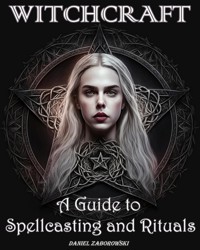
"Witchcraft: A Guide to Spellcasting and Rituals" is a comprehensive e-book that provides an introduction to the basics of spellcasting and ritual work in witchcraft. The book includes over 60 spells and rituals that cover a range of topics, including protection, love, money, and health. The e-book covers key concepts such as the role of intention, visualization, and the use of tools and materials in spellcasting, as well as the differences between spells and rituals and the importance of setting an intention for a ritual. The book also explores the basics of working with the elements, energy, and intention, and the role of the lunar cycle in witchcraft. The book includes tips for creating effective spells and rituals, spells and rituals for common needs and goals, and spells and rituals for special occasions and celebrations. This e-book is designed for beginners looking to learn about spellcasting and ritual work in witchcraft and provides a solid foundation for further study and exploration of the craft.
Das E-Book können Sie in Legimi-Apps oder einer beliebigen App lesen, die das folgende Format unterstützen:
Veröffentlichungsjahr: 2023
Ähnliche







Witchcraft: A Guide to Spellcasting and Rituals
Daniel Zaborowski
Published by Daniel Zaborowski, 2023.
While every precaution has been taken in the preparation of this book, the publisher assumes no responsibility for errors or omissions, or for damages resulting from the use of the information contained herein.
WITCHCRAFT: A GUIDE TO SPELLCASTING AND RITUALS
First edition. February 4, 2023.
Copyright © 2023 Daniel Zaborowski.
Written by Daniel Zaborowski.
10 9 8 7 6 5 4 3 2 1
Table of Contents
Title Page
Copyright Page
Introduction
The basics of spellcasting
The basics of ritual work
Working with the elements
Working with energy and intention
The lunar cycle and its role in witchcraft
Creating your own spells and rituals
Spells and rituals for common needs and goals
Spells and rituals for special occasions and celebrations
Conclusion
Introduction
The world of witchcraft is one that is shrouded in mystery and magic, and this e-book, "Witchcraft: A Guide to Spellcasting and Rituals," is designed to help demystify this fascinating practice. This book provides an introduction to the basics of spellcasting and ritual work in witchcraft and includes many spells and rituals that cover a range of topics, including protection, love, money, and health.
This e-book is divided into several chapters, each of which covers a different aspect of spellcasting and ritual work in witchcraft. The book begins with an introduction to the basics of witchcraft and spellcasting, including the role of intention, visualization, and the use of tools and materials. It then goes on to cover the differences between spells and rituals and the importance of setting an intention for a ritual. The book also explores the basics of working with the elements, energy, and intention, and the role of the lunar cycle in witchcraft.
What is Witchcraft?
Witchcraft is a spiritual practice that involves the use of intention, visualization, and symbolism to bring about desired changes in the world. It is a practice that is centered around the idea that we are all connected to the energy of the universe, and that we can harness that energy to bring about the changes we desire in our lives.
Witchcraft is often associated with the worship of goddesses and gods and with the natural world, and it has roots in many different cultures and traditions. Some of the oldest recorded forms of witchcraft come from ancient civilizations such as the Babylonians, Egyptians, and Greeks, where witchcraft was used for a variety of purposes, including to bring about good crops, fertility, and protection.
In contemporary witchcraft, practitioners use a range of tools and materials, such as candles, crystals, incense, and herbs, to help focus their intention and visualization. They also often use symbols, such as pentagrams, runes, and sigils, to help embody and channel their desired outcome.
Witchcraft is often seen as a form of magic, and it is often used to bring about desired outcomes in a variety of areas, including love, money, health, and protection. However, it is important to note that witchcraft is not about manipulating others or the world around us, but rather about working with the natural energies of the universe to bring about change.
In addition to spells and rituals, witchcraft also involves the practice of meditation, visualization, and energy work. This may involve visualizing a desired outcome, focusing on the energy of the universe, or working with the elements (such as earth, air, fire, and water) to tap into their power.
Witchcraft is a highly personal practice, and each practitioner may have their own unique approach and beliefs. Some practitioners work within a specific tradition or path, such as Wicca, while others prefer to create their own eclectic practice.
The history and origins of witchcraft
Witchcraft, also known as Wicca or the Old Religion, has a rich and complex history that dates back thousands of years. Although its origins are difficult to trace, there is evidence that witchcraft was practiced in various forms in many cultures throughout history, from ancient civilizations like the Egyptians and the Greeks, to indigenous cultures in Africa, the Americas, and Australia.
In Europe, witchcraft was widely practiced prior to the arrival of Christianity. It was often associated with the worship of goddesses and nature spirits, and was seen as a way of connecting with the natural world and the divine.
However, with the rise of Christianity, witchcraft became increasingly demonized and associated with evil and sorcery. The Church saw it as a threat to their power, and in the late Middle Ages, the Inquisition was established to root out and prosecute witches. Thousands of people, mainly women, were executed or imprisoned on charges of witchcraft during this time.
Despite this, witchcraft survived in secret, passed down from generation to generation in families or through initiations into secret societies. In the 20th century, the modern pagan revival movement emerged, and witchcraft became more widely accepted and practiced once again.
Today, witchcraft is seen as a diverse and inclusive spiritual practice that embraces the reverence for nature, the worship of the divine in both female and male aspects, and the use of magic and spellwork to bring about desired change in the world.
An introduction to spellcasting and ritual work
Spellcasting and ritual work are two of the core practices in witchcraft. Spellcasting involves the use of intention, visualization, and symbols to bring about desired changes in the world. This can involve a variety of tools, such as candles, herbs, crystals, and incense, to help focus and direct the energy of the spell.
Ritual work, on the other hand, is a more structured form of spellcasting. It often involves specific steps or actions, such as lighting candles, calling upon the elements or deities, and using symbols and gestures, to create a powerful energy field that can help bring about desired changes.
The key to successful spellcasting and ritual work is to have a clear intention and to focus your energy and attention on that intention. This requires practice and concentration, as well as a deep understanding of the energies and symbols you are working with.
One of the benefits of spellcasting and ritual work is that they allow you to tap into the power of the universe and to work with the natural energies around you. This can help you bring about desired changes in your life, whether that be finding love, improving your health, or attracting abundance.
However, it is important to remember that spellcasting and ritual work should always be used with respect and intention. They should not be used to manipulate or control others, or to cause harm in any way.
In "Witchcraft: A Guide to Spellcasting and Rituals," you will learn about the basics of spellcasting and ritual work, including how to choose and prepare materials, how to set and focus your intention, and how to perform a variety of spells and rituals for different purposes. You will also learn about the different symbols, elements, and deities commonly used in witchcraft, and how to incorporate them into your practice.
The basics of spellcasting
Spellcasting is an integral part of the practice of witchcraft. It involves harnessing the power of intention, energy, and natural elements to manifest change in the world. Whether you are seeking to bring love into your life, to heal a physical or emotional wound, or to achieve a specific goal, spellcasting can be a powerful tool for manifesting your desires.
In this section of "Witchcraft: A Guide to Spellcasting and Rituals," we will explore the basics of spellcasting, including the key components of a spell, how to choose the right ingredients and tools for your spells, and how to focus your intention and energy for maximum effect.
We will also delve into the various types of spells, including candle spells, herbal spells, and crystal spells, and will provide step-by-step instructions for casting each type of spell. Whether you are a beginner just starting out on your spellcasting journey, or an experienced practitioner looking to deepen your understanding and practice, this section will provide you with the knowledge and skills you need to create effective and powerful spells.
The role of intention
Intention is a critical component of any spell. It is the energy behind your words, actions, and thoughts that gives a spell its power. In essence, intention is what sets the spell into motion and directs its energy towards the desired outcome.
When casting a spell, it is essential to have a clear and specific intention in mind. Your intention should be focused and concise, and should clearly state what it is that you wish to achieve. For example, if you are casting a love spell, your intention might be to attract a loving partner into your life. If you are casting a healing spell, your intention might be to heal a specific physical or emotional wound.
The power of your intention is directly proportional to the clarity and strength of your thoughts and feelings. The more you believe in what you are doing, the stronger the spell will be. This is why it is essential to tap into your emotions and feelings when casting a spell. Whether you are using visualizations, affirmations, or ritual gestures, the goal is to focus your mind and spirit on your intention.
Another key aspect of intention is the timing of your spell. Different phases of the moon, as well as the astrological influences of the planets, can impact the power of your spell. Understanding the role that timing plays in spellcasting can help you choose the right moment to cast your spell for maximum effect.
Finally, it is important to be mindful of the ethical considerations of spellcasting. Spellcasting should always be focused on the greater good, and should never be used to harm or control others. This is why it is essential to set clear boundaries and to practice self-reflection when casting spells.
The importance of visualization
Visualization is a powerful tool in spellcasting, as it helps to focus the mind and tap into the subconscious. By visualizing the outcome of your spell, you create a mental image of what you want to manifest. This image becomes a powerful magnet that attracts the energy you need to manifest your intention into reality.
Visualization works by tricking the brain into believing that the desired outcome has already happened. When you visualize, your brain sends signals to your body that create the feelings and emotions associated with the outcome. This process releases positive energy into the universe and helps to manifest your intention.
One of the most important aspects of visualization in spellcasting is to create a vivid and detailed image in your mind. This means using all of your senses to create an experience as if the desired outcome has already happened. For example, if you are casting a spell for wealth and prosperity, you might visualize yourself holding a large stack of money or counting out coins from an overflowing piggy bank.
In addition to creating a vivid image, it is also important to feel the emotions associated with the desired outcome. For example, if you are casting a spell for love, you might imagine the feeling of happiness and joy that you would experience if your spell was successful. This emotional connection helps to anchor the visualization and makes it more powerful.
Visualization is also a useful tool for overcoming obstacles and setbacks. When you face challenges or obstacles, it is natural to feel discouraged or to lose faith in your spell. By visualizing the outcome of your spell, you can refocus your mind and tap into the positive energy that you need to overcome these challenges.
There are many different techniques that you can use to enhance your visualization skills in spellcasting. Some common methods include using affirmations, visualizing with your eyes closed or open, or using props such as candles, crystals, or images to help focus your mind. Experiment with different methods to find what works best for you.
The use of tools and materials in spellcasting
In spellcasting, tools and materials can be used to help focus the mind and tap into the energy of the universe. These tools serve as a physical representation of your intention and help to create a powerful connection between you and the energy of your spell.
One of the most commonly used tools in spellcasting is candles. Candles are often used to represent the elements of fire, and their flame symbolizes the energy of transformation and manifestation. Candles can be used to focus your mind during visualization, and their flame can help to amplify the energy of your spell.
Crystals are another popular tool in spellcasting. Crystals are believed to hold certain energetic properties and can be used to help focus the mind and tap into the energy of the universe. For example, amethyst is believed to help with emotional healing, while citrine is believed to promote abundance and prosperity. When using crystals in spellcasting, it is important to choose a crystal that resonates with your intention.
Herbs and oils are also commonly used in spellcasting. Herbs and oils can be used in spells to help focus the mind, create a powerful connection to the elements, and tap into the energy of the universe. For example, lavender is often used in spells for peace and relaxation, while frankincense is often used in spells for spiritual growth and protection.
Another important aspect of using tools and materials in spellcasting is symbolism. When you use a certain tool or material in a spell, it takes on a symbolic meaning that represents your intention. For example, if you are casting a spell for love, you might use rose petals or a rose quartz crystal, as these symbols represent love and emotional healing.
It is important to note that tools and materials are not essential for spellcasting, and many practitioners choose to cast spells without them. However, for those who find them helpful, using tools and materials can enhance the energy and power of your spell and make it more effective.
When using tools and materials in spellcasting, it is important to be mindful of their properties and how they are used. It is also important to be respectful and to cleanse and recharge your tools regularly to ensure their energy remains strong and positive.
Tools and materials can play an important role in spellcasting. Whether you choose to use them or not, it is important to understand their symbolism and the energetic properties they hold. By using tools and materials mindfully and with intention, you can enhance the power and effectiveness of your spells and tap into the energy of the universe.
How to choose and prepare a space for spellcasting
When it comes to spellcasting, creating a space that is conducive to the practice is just as important as the spells and rituals themselves. The right environment can greatly enhance the effectiveness of your spellcasting and help you to better connect with the energy and intent you are working with.
One of the first things to consider when choosing a space for spellcasting is privacy. You want to be sure that you are not disturbed during your practice, so choose a space that you can close the door on, if necessary. It can also be helpful to choose a space that is dedicated solely to your spellcasting practice, as this can help you to create a strong energy connection to the area.
Another important factor to consider when choosing a space is lighting. Soft, low lighting is ideal for spellcasting, as it helps to create a calming and relaxing atmosphere. Candles are a popular choice, as they can be used to represent the elements and to add an extra layer of energy to your practice.
Once you have chosen a space for your spellcasting, it is important to cleanse and purify the area. This can be done using a variety of methods, such as smudging with sage, using a salt scrub, or sprinkling holy water. Cleansing the space helps to remove any negative energy that may have accumulated and to create a blank slate for your spellcasting.
It can also be helpful to create an altar for your spellcasting practice. An altar can be as simple or as elaborate as you like and can include items such as candles, crystals, tarot cards, and other tools that have personal significance to you. The purpose of an altar is to provide a physical representation of the energy and intent that you are working with during your spellcasting.




