


Women's Imaging E-Book
159,99 €
Mehr erfahren.
- Herausgeber: John Wiley & Sons
- Kategorie: Fachliteratur
- Serie: Current Clinical Imaging
- Sprache: Englisch
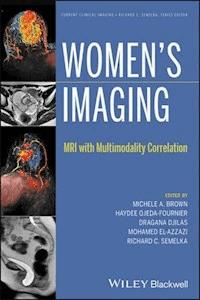
The first complete reference dedicated to the full spectrum of women's imaging topics "Women's imaging" refers to the use of imaging modalities (X-ray, ultrasound, CT scan, and MRI) available for aiding in the diagnosis and care of such female-centric diseases as cancer of the breast, uterus, and ovaries. Currently, there is no single reference source that provides adequate discussions of MRI and its important role in the diagnosis of patients with women's health issues. Thoroughly illustrated with the highest-quality radiographic images available, Women's Imaging: MRI with Multimodality Correlation provides a concise overview of the topic and emphasizes practical image interpretation. It makes clear use of tables and diagrams, and offers careful examination of differential diagnosis with special notes on key learning points. Placing great emphasis on magnetic resonance imaging (MRI), while providing correlations to other important imaging modalities, the comprehensive book features the latest guidelines on imaging screening and includes in-depth chapter coverage of: * Pelvis MRI: Introduction and Technique * Imaging the Vagina and Urethra * Pelvic Floor Imaging * Imaging the Uterus * Imaging the Adnexa * Imaging Maternal Conditions in Pregnancy * Fetal Imaging * Breast MRI: Introduction and Technique * ACR Breast MRI Lexicon and Interpretation * Preoperative Breast Cancer Evaluation and Advanced Breast Cancer Imaging * Postsurgical Breast and Implant Imaging * MR-Guided Breast Interventions Providing up-to-date information on many of the health issues that affect women across the globe, Women's Imaging will appeal to all general radiologists - especially those specializing in body imaging, breast imaging, and women's imaging - as well as gynaecologists and obstetricians, breast surgeons, oncologists, radiation oncologists, and MRI technologists.
Sie lesen das E-Book in den Legimi-Apps auf:
Seitenzahl: 397
Veröffentlichungsjahr: 2014
Ähnliche




















Table of Contents
Title page
Copyright page
Contributors
Preface
Chapter 1: Pelvis MRI: introduction and technique
Imaging evaluation of the female pelvis
Indications for MRI
Patient preparation for MRI
Sequence protocols
Image optimization at 3T
Image interpretation
Chapter 2: Imaging the vagina and urethra
Vagina
Female urethra
Chapter 3: Pelvic floor imaging
Anatomy
Physiology
MR imaging of the pelvic floor
Pathology
Chapter 4: Imaging the uterus
Normal anatomy
Congenital uterine anomalies
Benign disease of the uterine corpus
Benign disease of the cervix
Malignant disease of the uterine corpus and cervix
Chapter 5: Imaging the adnexa
Normal anatomy
Benign disease of the adnexa
Malignant disease of the adnexa
Malignant disease of the fallopian tube
Adnexal mass characterization algorithm
Chapter 6: Imaging maternal conditions in pregnancy
Safety
Pain in pregnancy
Obstetrical complications
Postpartum uterus
Placental imaging
Chapter 7: Fetal imaging
Indications
Safety
Normal anatomy
Fetal anomalies
Chapter 8: Breast MRI: introduction and technique
Breast cancer
Rationale for the use of breast MR
Advancements in breast MRI
ACR appropriateness guidelines for the use of breast MRI
Screening
Adjunctive evaluation for extent of disease
Additional evaluation of clinical or physical finding
Technique
American College of Radiology accreditation [42]
Patient preparation and positioning
Safety (contraindications)
CAD for breast MRI
BI-RADS assessment
Difficulties in breast MR image interpretation
Chapter 9: ACR breast MRI lexicon and interpretation
Breast MR lexicon
Breast MR interpretation
Reporting breast MR
Breast MR lexicon lesion type
Associated findings
Extramammary findings
Kinetic assessment
BI-RADS Assessment categories
Common benign breast lesions
Chapter 10: Preoperative breast cancer evaluation and advanced breast cancer imaging
Preoperative breast cancer MR evaluation
Invasive ductal carcinoma (IDC)
Ductal carcinoma in situ (DCIS)
Invasive lobular carcinoma (ILC)
Medullary carcinoma
Colloid carcinoma
Tubular carcinoma
Papillary carcinoma
Paget's disease
Locally advanced breast cancer
Chapter 11: Postsurgical breast and implant imaging
Introduction
Breast conservation surgery
Mastectomy
Reconstruction
Radiation therapy
Axillary node sampling/dissection
Benign procedural changes
Chapter 12: MR-guided breast interventions
Introduction
Percutaneous guided core biopsies
Imaging protocols
Equipment
Patient selection and preparation
Patient positioning
Lesion localization
Procedure
Complications
Pearls and pitfalls
What to expect
3T biopsy experience at UCSD
Index
Copyright © 2014 by John Wiley & Sons, Inc. All rights reserved
Published by John Wiley & Sons, Inc., Hoboken, New Jersey
Published simultaneously in Canada
No part of this publication may be reproduced, stored in a retrieval system, or transmitted in any form or by any means, electronic, mechanical, photocopying, recording, scanning, or otherwise, except as permitted under Section 107 or 108 of the 1976 United States Copyright Act, without either the prior written permission of the Publisher, or authorization through payment of the appropriate per-copy fee to the Copyright Clearance Center, Inc., 222 Rosewood Drive, Danvers, MA 01923, (978) 750-8400, fax (978) 750-4470, or on the web at www.copyright.com. Requests to the Publisher for permission should be addressed to the Permissions Department, John Wiley & Sons, Inc., 111 River Street, Hoboken, NJ 07030, (201) 748-6011, fax (201) 748-6008, or online at http://www.wiley.com/go/permissions.
The contents of this work are intended to further general scientific research, understanding, and discussion only and are not intended and should not be relied upon as recommending or promoting a specific method, diagnosis, or treatment by health science practitioners for any particular patient. The publisher and the author make no representations or warranties with respect to the accuracy or completeness of the contents of this work and specifically disclaim all warranties, including without limitation any implied warranties of fitness for a particular purpose. In view of ongoing research, equipment modifications, changes in governmental regulations, and the constant flow of information relating to the use of medicines, equipment, and devices, the reader is urged to review and evaluate the information provided in the package insert or instructions for each medicine, equipment, or device for, among other things, any changes in the instructions or indication of usage and for added warnings and precautions. Readers should consult with a specialist where appropriate. The fact that an organization or Website is referred to in this work as a citation and/or a potential source of further information does not mean that the author or the publisher endorses the information the organization or Website may provide or recommendations it may make. Further, readers should be aware that Internet Websites listed in this work may have changed or disappeared between when this work was written and when it is read. No warranty may be created or extended by any promotional statements for this work. Neither the publisher nor the author shall be liable for any damages arising herefrom.
For general information on our other products and services or for technical support, please contact our Customer Care Department within the United States at (800) 762-2974, outside the United States at (317) 572-3993 or fax (317) 572-4002.
Wiley also publishes its books in a variety of electronic formats. Some content that appears in print may not be available in electronic formats. For more information about Wiley products, visit our web site at www.wiley.com.
Library of Congress Cataloging-in-Publication Data:
Women's imaging : MRI with multimodality correlation / edited by Michele A. Brown, Haydee Ojeda-Fournier, Dragana Djilas, Mohamed El-Azzazi, Richard C. Semelka.
p. ; cm.
Includes bibliographical references and index.
ISBN 978-1-118-48284-1 (cloth)
I. Brown, Michele A., editor of compilation. II. Ojeda-Fournier, Haydee, editor of compilation. III. Djilas, Dragana, editor of compilation. IV. El-Azzazi, Mohamed, editor of compilation. V. Semelka, Richard C., editor of compilation.
[DNLM: 1. Magnetic Resonance Imaging–methods. 2. Women's Health. WN 185]
RC386.6.M34
616.07′548–dc23
2013042717
Cover design by Wiley
Contributors
Chayanin Angthong, MD
Department of Radiology
University of North Carolina at Chapel HIll
Chapel Hill, NC, USA
Jasmina Boban, MD
Center for Diagnostic Imaging
Oncology Institute of Vojvodina
Novi Sad, Serbia
Dragana Bogdanovic-Stojanovic, MD, PhD
Assistant Professor of Radiology
Center for Diagnostic Imaging
Oncology Institute of Vojvodina
Novi Sad, Serbia
Michele A. Brown, MD
Professor of Clinical Radiology
UC San Diego Health System
San Diego, CA, USA
Julie Bykowski, MD
Assistant Professor of Clinical Radiology
Moores Cancer Center
UC San Diego Health System
La Jolla, CA, USA
Jade de Guzman, MD
Assistant Professor of Clinical Radiology
Moores Cancer Center
UC San Diego Health System
La Jolla, CA, USA
Dragana Djilas, MD, PhD
Associate Professor of Radiology
Center for Diagnostic Imaging
Oncology Institute of Vojvodina
Novi Sad, Serbia
Mohamed El-Azzazi MD, PhD
Clinical Research Scholar, MRI Section, Department of Radiology
University of North Carolina, Chapel Hill, NC, USA;
Professor of Radiology, Al-Azhar University
Cairo, Egypt;
Associate Professor of Radiology
Dammam University, Saudi Arabia;
Consultant in Radiology
King Fahad University Hospital, Saudi Arabia
Randy Fanous, MD, BHSc
Department of Radiology
UC San Diego Health System
San Diego, CA, USA
Michael J. Gabe, MD
Department of Radiology
UC San Diego Health System
San Diego, CA, USA
Vladimir Ivanovic, BSCEE
Center for Diagnostic Imaging
Oncology Institute of Vojvodina
Novi Sad, Serbia
Reena Malhotra
Department of Radiology
North Shore-LIJ Health System
New Hyde Park, NY, USA
Mary K. O′Boyle, MD
Clinical Professor of Radiology
Chief of Ultrasound
UC San Diego Health System
San Diego, CA, USA
Haydee Ojeda-Fournier, MD
Associate Professor of Clinical Radiology
Medical Director, Breast Imaging Section
Director Medical Student Education in Radiology
Moores Cancer Center
UC San Diego Health System
La Jolla, CA, USA
Dag Pavic, MD
Associate Professor of Radiology
Department of Radiology
Medical University of South Carolina
Charleston, SC, USA
Natasa Prvulovic Bunovic, MD
Consultant in Radiology
Center for Diagnostic Imaging
Oncology Institute of Vojvodina
Novi Sad, Serbia
Steven S. Raman, MD
Professor of Radiology, Surgery and Urology
David Geffen School of Medicine at UCLA
Los Angeles, CA, USA
Katherine M. Richman, MD
Clinical Professor of Radiology
UC San Diego Health System
La Jolla, CA, USA
Ryan C. Rockhill, MD
Body and Breast Imaging
Naval Medical Center San Diego
San Diego, CA, USA
Lorene E. Romine, MD
Assistant Clinical Professor of Radiology
UC San Diego Health System
San Diego, CA, USA
Laura E. Rueff, MD, MPH
Department of Radiology
University of California Los Angeles
Los Angeles, CA, USA
Richard C. Semelka, MD
Director, Magnetic Resonance Services
Professor, Vice Chairman of Clinical Research and
Vice Chairman of Quality and Safety
Department of Radiology
University of North Carolina at Chapel Hill
Chapel Hill, NC, USA
Shannon St Clair, MD
Department of Radiology
UC San Diego Health System
San Diego, CA, USA
Preface
Women's health issues consume a large portion of medical resources and healthcare dollars. Proper management requires a team of physicians from various specialties. Within the field of Radiology, there has been a trend toward developing a subspecialty dedicated to comprehensive imaging of women's healthcare needs, including gynecological, obstetric, genitourinary, and breast conditions. The term “Women's Imaging” is used differently in different contexts; for the purpose of this textbook, the term is used to describe imaging of the female reproductive system, including the pelvis and breast. An effective women's imager must work closely with clinical colleagues of various specialties and maintain a current understanding of diagnostic strategies, clinical implications of imaging findings, and the appropriate use of imaging tests to detect and monitor treatment.
The use of magnetic resonance imaging (MRI) for evaluation of gynecological, obstetric, and breast conditions has increased in recent years. MRI provides excellent tissue contrast resolution in the female pelvis and breast without ionizing radiation. Used together with complementary modalities, such as ultrasound and mammography, MRI has been shown to add important information to help guide patient care. The current text aims to provide the essentials of MRI in Women's Imaging, including indications, technique, and interpretation. For a number of entities, we illustrate the companion imaging studies of computed tomography, ultrasound, or mammography. Hopefully this text serves to redress the considerable underutilization of MRI in these settings. Used appropriately, MRI is cost-effective and singularly informative. There are other textbooks on the separate topics of pelvic and breast MRI; the goal of this text is to combine and update the essentials of Women's Imaging MRI into a comprehensive and succinct overview.
The present volume is separated into two main sections: female pelvis (chapters 1–7) and breast (chapters 8–12). The first chapter presents current common indications and sample protocols for female pelvis MRI. Chapters 2–5 address pathology and respective imaging findings of the vagina and female urethra, pelvic floor, uterus, and adnexa. Chapters 6 and 7 focus on issues specific to pregnancy. Chapter 8 discusses rationale and technique for MRI of the breast. Chapters 9–12 are dedicated to the imaging features of breast disease and the role of MRI-guided intervention in the care of women with abnormal breast imaging findings.
This text is the collective effort of many individuals. I would like to thank the co-editors and contributors for their hard work. In addition, I am indebted to my radiology colleagues at the University of California San Diego for their help and support, with special thanks to every member of the body imaging and breast imaging divisions.
Michele A. Brown, MD
Chapter 1
Pelvis MRI: introduction and technique
Michele A. Brown & Richard C. Semelka
Imaging evaluation of the female pelvis
Imaging plays an important role in the management of gynecological diseaseUltrasound is often the initial imaging testPoor tissue contrast of CT limits gynecologic applicationsMRI benefits from excellent tissue contrast and lack of ionizing radiationIncreased experience and availability have led to increased role of MRIMRI deemed appropriate by American College of Radiology for gynecological conditions, especially pre-treatment assessment of endometrial and cervical cancer, work-up of suspected adnexal mass, and evaluation of acute pelvic pain in reproductive-aged women in the setting of indeterminate ultrasound [1–4]Numerous gynecological and obstetric conditions are depicted by MRI, which may provide initial imaging (e.g., suspected urethral diverticulum) or problem-solving after ultrasoundIndications for MRI
(Table 1.1)
Table 1.1. Indications for MRI of the female pelvis
IndicationProtocolNotesPelvic painGeneralFS T1WI for endometriosisUrethral diverticulmUrethraContrast if known/visualized massVaginal massUrethraContrast if known/visualized massPelvic floor symptomsPelvic floorSagittal images with ValsalvaUterine anomalyUterine anomalyTrue coronal to uterine fundusAdenomyosisGeneralBright myometrial foci on T2WIFibroidsGeneralAdd contrast if pre-embolizationFibroid versus adnexal massGeneralVessels extending from uterus to mass suggest uterine originEndometrial cancerUterine malignancyHigh resolution T2WI and T1WI + contrast oblique to endometrium for tumor invasionCervical cancerUterine malignancyHigh resolution T2WI oblique to cervix for parametrial invasionAdnexal mass characterizationGeneralFS T1WI for dermoid, endometriomaAbdominal pain in pregnancyMaternal abdominal painSS-ETSE (+ FS), and steady-state GE for appendix, monitor if possibleFetal anomalyFetalSS-ETSE oriented to region of interest, monitor if possibleFS = fat saturated; T1WI = T1-weighted images; T2WI = T2-weighted images; SS = single shot; ETSE = echo-train spin-echo; GE = gradient echo
Patient preparation for MRI
Empty bladderFasting 4 hoursOptional Antispasmotic (e.g., glucagon 1 mg)Intra-vaginal gel [20]Supine position, or decubitus in late pregnancyPhased-array coil positioned over pelvisTo reduce artifact, may utilize Saturation band over anterior abdominal wall for non-fat-saturated sagittalSupplemental anteroposterior frequency-encoding direction for axial imagesIntrauterine contraceptive devices are safely imaged [21]Sequence protocols
Many protocol optionsAppropriate choice depends on Specific clinical questionAvailable equipment and expertiseFor known or suspected uterine disease/anomalies, T2-weighted sequences are obtained in an oblique plane oriented to uterus (Figure 1.1)Figure 1.1. Imaging planes oriented to the uterus. Multiple T2-weighted images in a patient with septate uterus. Large field-of-view single-shot sequence (a) is obtained first and is used to plan an oblique sagittal T2-weighted sequence (b) obtained parallel to the endometrium (line, a). The oblique sagittal is used to plan an oblique axial (c) obtained perpendicular to the endometrium (line, b). The oblique axial may then be used to plan a true coronal of the uterus (d) obtained parallel to the endometrium (line, c). In the absence of 3D T2-weighted imaging, this process assures appropriate imaging planes regardless of angle/tilt of the uterus.
Table 1.2. General female pelvis
Table 1.3. Urethra
Table 1.4. Pelvic floor
Table 1.5. Uterine anomaly
Table 1.6. Uterine malignancy
Table 1.7. Maternal abdominal pain
Table 1.8. Fetal
Image optimization at 3T
Potential advantages Increase in signal-to-noise ratio (SNR), orSimilar SNR at a faster speedChallenges Signal shading magnified by dielectric effectsIncreased specific absorption rates (SARs)Changes in optimal TR and TEIncreased signal inhomogeneities Greater shimming challenge for extrinsic magnetic fieldIntrinsic field distortion due to increased susceptibility/chemical shiftSolutions [23–28] Dialectric effect: dialectric pad (= radiofrequency cushion) placed between patient and surface coilSusceptibility: use shorter TE/higher receiver bandwidth, higher spatial resolution3D GE and ETSE sequences may benefit from higher field strengthConsider individual patient Pregnant patients less suitable for 3T due to standing wave effects from amniotic fluid and safety concerns [26]Non-pregnant patients may be imaged safely and effectively at 3T using optimized parameters [28]Image interpretation
Large volume data acquisitionMay be useful to employ a systematic checklist (Table 1.9) Several gynecological conditions have MRI features that allow definitive diagnosisTable 1.9. Diagnostic checklist for female pelvis MRI
StructureMRI features evaluatedGynecologicalUterine corpusSize and positionPresence of myometrial massEndometrium thicknessJunctional zone thicknessCervixPresence of cystic massPresence of solid tumor Size of lesion Parametrial involvementVaginaPresence of cystic massPresence of wall thickening/solid tumorAdnexaOvarian sizePresence of ovarian mass Cystic or solid Fat containing Blood containing Enhancement features Unilateral or bilateralParaovarian cystic or solid massNon-gynecologicalBladderPresence of solid massPresence of cystoceleUrethraPresence of diverticulum Size and configuration Solid/enhancing componentsPresence of hypermobilityBowelCaliberPresence of rectoceleMusculoskeletalBone marrow signalDegenerative changesTraumatic injuryLymphaticEnlarged lymph nodesReferences
1. Lee, J.H., Dubinsky, T., Andreotti, R.F., et al. ACR Appropriateness Criteria(R) pretreatment evaluation and follow-up of endometrial cancer of the uterus. Ultrasound Quarterly 2011; 27(2):139–45.
2. Siegel, C.L., Andreotti, R.F., Cardenes, H.R., et al. ACR Appropriateness Criteria(R) pretreatment planning of invasive cancer of the cervix. Journal of the American College of Radiology 2012; 9(6):395–402.
3. Harris, R.D., Javitt, M.C., Glanc, P., et al. ACR Appropriateness Criteria(R) clinically suspected adnexal mass. Ultrasound Quarterly 2013; 29(1):79–86.
4. Andreotti, R.F., Lee, S.I., Dejesus Allison, S.O., et al. ACR Appropriateness Criteria(R) acute pelvic pain in the reproductive age group. Ultrasound Quarterly 2011; 27(3):205–10.
5. Kinkel, K., Kaji, Y., Yu, K.K., et al. Radiologic staging in patients with endometrial cancer: a meta-analysis. Radiology 1999; 212(3):711–18.
6. Wakefield, J.C., Downey, K., Kyriazi, S., deSouza, N.M. New MR techniques in gynecologic cancer. AJR. American Journal of Roentgenology 2013; 200(2):249–60
7. Frei, K.A., Kinkel, K., Bonél, H.M., et al. Prediction of deep myometrial invasion in patients with endometrial cancer: clinical utility of contrast-enhanced MR imaging – a meta-analysis and Bayesian analysis. Radiology 2000; 216(2):444–9.
8. Sironi, S., De Cobelli, F., Scarfone, G., et al. Carcinoma of the cervix: value of plain and gadolinium-enhanced MR imaging in assessing degree of invasiveness. Radiology 1993; 188(3):780–97.
9. Subak, L.L., Hricak, H., Powell, C.B., Azizi, L., Stern, J.L. Cervical carcinoma: computed tomography and magnetic resonance imaging for preoperative staging. Obstetrics and Gynecology 1995; 86(1):43–50.
10. Hricak, H., Powell, C.B., Yu, K.K., et al. Invasive cervical carcinoma: role of MR imaging in pretreatment work-up – cost minimization and diagnostic efficacy analysis. Radiology 1996; 198(2):403–9.
11. Flueckiger, F., Ebner, F., Poschauko, H., et al. Cervical cancer: serial MR imaging before and after primary radiation therapy – a 2-year follow-up study. Radiology 1992; 184(1):89–93.
12. Hricak, H., Swift, P.S., Campos, Z., et al. Irradiation of the cervix uteri: value of unenhanced and contrast-enhanced MR imaging. Radiology 1993; 189(2):381–8.
13. Weber, T.M., Sostman, H.D., Spritzer, C.E., et al. Cervical carcinoma: determination of recurrent tumor extent versus radiation changes with MR imaging. Radiology 1995; 194(1):135–9.
14. Yamashita, Y., Harada, M., Torashima, M., et al. Dynamic MR imaging of recurrent postoperative cervical cancer. Journal of Magnetic Resonance Imaging 1996; 6(1):167–71.
15. Hertel, H., Köhler, C., Grund, D., et al. Radical vaginal trachelectomy (RVT) combined with laparoscopic pelvic lymphadenectomy: prospective multicenter study of 100 patients with early cervical cancer. Gynecologic Oncology 2006; 103(2): 506–11.
16. Hricak, H., Chen, M., Coakley, F.V., et al. Complex adnexal masses: detection and characterization with MR imaging – multivariate analysis. Radiology 2000; 214(1):39–46.
17. Sohaib, S.A., Sahdev, A., Van Trappen, P., Jacobs, I.J., Reznek, R.H. Characterization of adnexal mass lesions on MR imaging. AJR. American Journal of Roentgenology 2003; 180(5):1297–304.
18. Birchard, K.R., Brown, M.A., Hyslop, W.B., Firat, Z., Semelka, R.C. MRI of acute abdominal and pelvic pain in pregnant patients. AJR. American Journal of Roentgenology 2005; 184(2):452–8.
19. Oto, A., Ernst, R.D., Shah, R., et al. Right-lower-quadrant pain and suspected appendicitis in pregnant women: evaluation with MR imaging – initial experience. Radiology 2005; 234(2):445–51.
20. Brown, M.A., Mattrey, R.F., Stamato, S., Sirlin, C.B. MRI of the female pelvis using vaginal gel. AJR. American Journal of Roentgenology 2005; 185(5):1221–7.
21. Pasquale, S.A., Russer, T.J., Foldesy, R., Mezrich, R.S. Lack of interaction between magnetic resonance imaging and the copper-T380A IUD. Contraception 1997; 55(3): 169–73.
22. Shiraiwa, M., Joja, I., Asakawa, T., et al. Cervical carcinoma: efficacy of thin-section oblique axial T2-weighted images for evaluating parametrial invasion. Abdominal Imaging 1999; 24(5): 514–19.
23. Kataoka, M., Kido, A., Koyama, T., et al. MRI of the female pelvis at 3T compared to 1.5T: evaluation on high-resolution T2-weighted and HASTE images. Journal of Magnetic Resonance Imaging 2007; 25(3): 527–34.
24. Martin, D.R., Friel, H.T., Danrad, R., De Becker, J., Hussain, S.M. Approach to abdominal imaging at 1.5 Tesla and optimization at 3 Tesla. Magnetic Resonance Imaging Clinics of North America 2005; 13(2):241–54.
25. Hussain, S.M., van den Bos, I.C., Oliveto, J.M., Martin, D.R. MR imaging of the female pelvis at 3T. Magnetic Resonance Imaging Clinics of North America 2006; 14(4):537–44.
26. Merkle, E.M., Dale, B.M. Abdominal MRI at 3.0 T: the basics revisited. AJR. American Journal of Roentgenology 2006; 186(6):1524–32.
27. Cornfeld, D., Weinreb, J. Simple changes to 1.5-T MRI abdomen and pelvis protocols to optimize resuts at 3T. AJR. American Journal of Roentgenology 2008; 190(2):W140–50.
28. Morakkabati-Spitz, N., Schild, H.H., Kuhl, C.K., et al. Female pelvis: MR imaging at 3.0 T with sensitivity encoding and flip-angle sweep technique. Radiology 2006; 241(2):538–45.
Chapter 2
Imaging the vagina and urethra
Shannon St. Clair, Randy Fanous, Mohamed El-Azzazi, Richard C. Semelka, & Michele A. Brown
Vagina
Normal anatomy
Key facts
Fibromuscular tube between bladder and rectum, 7–9 cm long (Figure 2.1) Embryological origin [1] Upper one-third = Müllerian ductLower two-thirds = urogenital sinusLayers [2] Inner = mucosaMiddle = submucosa and muscularisOuter = adventitia, containing vaginal venous plexusFornices: anterior, posterior, lateral Portion of vagina that surrounds the cervixBest visualized on sagittal and transverse imagesFor descriptive purposes, vagina may be divided into thirdsLesen Sie weiter in der vollständigen Ausgabe!
Lesen Sie weiter in der vollständigen Ausgabe!
Lesen Sie weiter in der vollständigen Ausgabe!
Lesen Sie weiter in der vollständigen Ausgabe!
Lesen Sie weiter in der vollständigen Ausgabe!
Lesen Sie weiter in der vollständigen Ausgabe!
Lesen Sie weiter in der vollständigen Ausgabe!
Lesen Sie weiter in der vollständigen Ausgabe!
Lesen Sie weiter in der vollständigen Ausgabe!
Lesen Sie weiter in der vollständigen Ausgabe!
Lesen Sie weiter in der vollständigen Ausgabe!




