


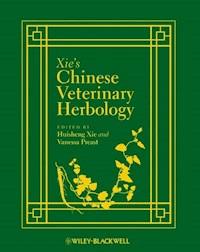
Xie's Chinese Veterinary Herbology E-Book
151,99 €
Mehr erfahren.
- Herausgeber: John Wiley & Sons
- Kategorie: Fachliteratur
- Sprache: Englisch
Xie's Chinese Veterinary Herbology serves as a practical guide to the theory and application of Chinese Herbal Medicine into veterinary practices. Divided into three parts, the book covers herbal materia medica used in treating various disorders and diseases, herbal formulas, and the clinical application of treatments. The book also outlines each herb's history, the formulation of herbal recipes, energetic actions, indications and contraindications of each formula, dosages, and clinical and pharmacological studies performed with herbal treatments. This text serves as an invaluable reference to veterinarians looking to expand treatment options.
Sie lesen das E-Book in den Legimi-Apps auf:
Seitenzahl: 1588
Veröffentlichungsjahr: 2011
Ähnliche




















Contents
About the Editors
Contributors
Preface
Acknowledgments
Part 1: Chinese Veterinary Materia Medica
Introduction to Chinese Herbal Medicine
HOW TO UNDERSTAND CHINESE HERBS
COMBINATION OF CHINESE HERBS
CHINESE HERBAL FORMULAS
FORMS AND ADMINISTRATION OF CHINESE HERBAL PRODUCTS
STORAGE REQUIREMENTS AND CONDITIONS
DOSAGE OF FORMULAS
REFERENCES
1: Herbs to Tonify Deficiency
INTRODUCTION
HERBS TO TONIFY QI
HERBS TO TONIFY BLOOD
HERBS TO NOURISH YIN
HERBS TO TONIFY YANG
SUMMARY OF HERBS THAT TONIFY DEFICIENCY
REFERENCES
2: Herbs to Release the Exterior
PUNGENT-WARM HERBS TO RELEASE THE EXTERIOR
PUNGENT-COOL HERBS TO RELEASE THE EXTERIOR
SUMMARY OF HERBS THAT RELEASE THE EXTERIOR
REFERENCES
3: Herbs to Transform Phlegm and Relieve Cough and Asthma
HERBS TO TRANSFORM COLD-PHLEGM
HERBS TO TRANSFORM HEAT-PHLEGM
HERBS TO RELIEVE COUGH AND ASTHMA
SUMMARY
REFERENCES
4: Herbs to Clear Heat
HERBS TO CLEAR HEAT AND DRAIN FIRE
HERBS TO CLEAR HEAT AND COOL BLOOD
HERBS TO CLEAR HEAT AND DRY DAMPNESS
HERBS TO CLEAR HEAT AND RELEASE TOXINS
HERBS TO CLEAR HEAT DUE TO YIN DEFICIENCY
HERBS TO CLEAR SUMMER HEAT
SUMMARY
REFERENCES
5: Purgative Herbs
HERBS TO DRAIN THE FECES DOWNWARD
HERBS TO LUBRICATE THE INTESTINES
HERBS TO PURGE WATER DOWNWARD
SUMMARY
REFERENCES
6: Herbs to Warm the Interior
SUMMARY OF HERBS THAT WARM THE INTERIOR
REFERENCES
7: Herbs to Dispel Damp
HERBS TO DISPEL WIND-DAMP
AROMATIC HERBS TO TRANSFORM DAMP
HERBS TO BENEFIT URINATION AND DRAIN DAMP
SUMMARY
REFERENCES
8: Herbs to Regulate (Stagnant) Qi
SUMMARY OF HERBS THAT REGULATE (STAGNANT) QI
REFERENCES
9: Herbs to Relieve Food Stagnation
SUMMARY OF HERBS THAT RELIEVE FOOD STAGNATION
REFERENCES
10: Herbs to Stop Bleeding
SUMMARY OF HERBS THAT STOP BLEEDING
REFERENCES
11: Herbs to Invigorate Blood and Break Blood Stasis
SUMMARY OF HERBS THAT INVIGORATE BLOOD AND BREAK BLOOD STASIS
REFERENCES
12: Herbs to Calm Shen
LIGHT HERBS TO NOURISH THE HEART AND CALM SHEN
HEAVY SUBSTANCES TO ANCHOR, SETTLE, AND CALM SHEN
SUMMARY OF HERBS THAT CALM SHEN
REFERENCES
13: Herbs to Pacify the Liver and Extinguish Endogenous Wind
SUMMARY OF HERBS THAT PACIFY THE LIVER AND EXTINGUISH ENDOGENOUS WIND
REFERENCES
14: Herbs to Stabilize and Bind (Astringents)
SUMMARY OF HERBS THAT STABILIZE AND BIND
REFERENCES
15: Herbs to Open Orifices (Senses)
SUMMARY OF HERBS THAT OPEN THE ORIFICES
REFERENCES
16: Herbs to Expel Parasites
SUMMARY OF HERBS TO EXPEL PARASITES
REFERENCES
17: Herbs for Topical Application
SUMMARY OF HERBS FOR TOPICAL APPLICATION
REFERENCES
Part 2: Chinese Veterinary Herbal Formulation
18: Herbal Formulas to Tonify Deficiency
FORMULAS TO TONIFY QI
FORMULAS TO TONIFY BLOOD
FORMULAS TO TONIFY BOTH QI AND BLOOD
FORMULAS TO TONIFY YIN
FORMULAS TO TONIFY YANG
FORMULAS TO TONIFY YIN, YANG, AND JING
REFERENCES
19: Herbal Formulas to Release the Exterior
REFERENCES
20: Herbal Formulas to Transform Phlegm and to Relieve Cough and Asthma
REFERENCES
21: Herbal Formulas to Clear Heat
REFERENCES
22: Herbal Formulas to Warm the Interior
FORMULAS TO WARM THE MIDDLE BURNER TO DISPEL COLD
FORMULAS TO WARM THE MERIDIANS TO DISPEL COLD
FORMULAS TO REVIVE YANG FOR RESUSCITATION
REFERENCES
23: Herbal Formulas to Eliminate Dampness
FORMULAS TO DRY DAMP AND HARMONIZE THE SPLEEN AND STOMACH
FORMULAS TO CLEAR DAMP-HEAT
FORMULAS TO DRAIN DAMP AND PROMOTE URINATION
FORMULAS TO DISPEL WIND-DAMP
FORMULAS TO WARM THE YANG TO DISPEL COLD-DAMP
REFERENCE
24: Herbal Formulas to Regulate Stagnation
REFERENCES
25: Herbal Formulas to Relieve Food Stagnation
REFERENCES
26: Herbal Formulas to Stop Bleeding
REFERENCES
27: Herbal Formulas to Invigorate Blood and Break Blood Stasis
REFERENCES
28: Herbal Formulas to Stabilize and Bind (Astringents)
REFERENCES
29: Herbal Formulas to Calm Shen
REFERENCES
30: Herbal Formulas to Open the Orifices (Senses)
REFERENCES
31: Herbal Formulas to Expel Wind
REFERENCES
32: Purgative Herbal Formulas
REFERENCES
33: Herbal Formulas to Expel Parasites
REFERENCES
34: Herbal Formulas for External Application
REFERENCES
35: How to Integrate Chinese Herbal Medicine into Veterinary Practice
HOW TO START
TRADITIONAL CHINESE VETERINARY MEDICINE—PATTERN DIFFERENTIATION
HERBAL ADMINISTRATION
FIVE MOST COMMON MISTAKES
TOP 10 HERBS TO START AN HERBAL PHARMACY
OTHER TIPS TO HELP BEGINNERS START AN HERBAL PHARMACY AND HERBAL PRACTICE
GENERAL EXAMPLES OF HOW TO INTEGRATE HERBAL MEDICINE INTO PRACTICE
REFERENCES
Part 3: Clinical Application of Chinese Veterinary Herbology
36: Clinical Application of Chinese Herbal Medicine for Companion Animals
CARDIOVASCULAR CONDITIONS
DERMATOLOGICAL CONDITIONS
GASTROINTESTINAL CONDITIONS
HEMATOPOIETIC AND HEMOLYMPHATIC DISORDERS
ENDOCRINE CONDITIONS
NEOPLASIA
MUSCULOSKELETAL CONDITIONS
NEUROLOGICAL CONDITIONS
OPHTHALMOLOGICAL CONDITIONS
RESPIRATORY CONDITIONS
UROGENITAL CONDITIONS
37: Clinical Application of Chinese Herbal Medicine for Horses
RESPIRATORY DISEASES
GASTROINTESTINAL DISORDERS
ENDOCRINE DISEASES
REPRODUCTIVE PROBLEMS
NEUROLOGIC DISORDERS
MISCELLANEOUS DISEASES
REFERENCES
Appendix A Chronicle of Chinese History and Traditional Chinese Veterinary Medicine (TCVM)
Appendix B Map of China and the Top Provinces/Regions Where Herbs Are Produced
Appendix C Guide to Pronunciation of TCVM Terms
Appendix D Glossary
Appendix E Forms of Herbal Medicine Available in the U.S. Market
Appendix F Herbal Suppliers
Index
Edition first published 2010© 2010 Blackwell Publishing
Blackwell Publishing was acquired by John Wiley & Sons in February 2007. Blackwell’s publishing program has been merged with Wiley’s global Scientific, Technical, and Medical business to form Wiley-Blackwell.
Editorial Office2121 State Avenue, Ames, Iowa 50014-8300, USA
For details of our global editorial offices, for customer services, and for information about how to apply for permission to reuse the copyright material in this book, please see our website at www.wiley.com/wiley-blackwell.
Authorization to photocopy items for internal or personal use, or the internal or personal use of specific clients, is granted by Blackwell Publishing, provided that the base fee is paid directly to the Copyright Clearance Center, 222 Rosewood Drive, Danvers, MA 01923. For those organizations that have been granted a photocopy license by CCC, a separate system of payments has been arranged. The fee codes for users of the Transactional Reporting Service are ISBN-13: 978-0-8138-0369-2/2010.
Designations used by companies to distinguish their products are often claimed as trademarks. All brand names and product names used in this book are trade names, service marks, trademarks, or registered trademarks of their respective owners. The publisher is not associated with any product or vendor mentioned in this book. This publication is designed to provide accurate and authoritative information in regard to the subject matter covered. It is sold on the understanding that the publisher is not engaged in rendering professional services. If professional advice or other expert assistance is required, the services of a competent professional should be sought.
NOTICEThis book is intended to be a reference for veterinarians trained to practice Traditional Chinese Veterinary Medicine (TCVM). This text is not a substitute for a sound medical education. Veterinarians are strongly advised to seek a comprehensive TCVM training program before using herbal medicine. Several certification programs in the United States and other countries are available to veterinarians. Nonveterinarians should not practice medicine on animals, unless permitted by law. Individuals who are untrained or inadequately trained in TCVM are unable to accurately assess a patient’s health status or make appropriate therapeutic recommendations.
Library of Congress Cataloging-in-Publication Data
Xie’s Chinese veterinary herbology / edited by Huisheng Xie, Vanessa Preast ; illustrated by Barbara Beckford.p. ; cm.Includes bibliographical references and index.ISBN 978-0-8138-0369-2 (hardback : alk. paper)1. Alternative veterinary medicine. 2. Herbs–Therapeutic use. 3. Herbs–Therapeutic use–China. 4. Traditional veterinary medicine–China. 5. Medicine, Chinese. I. Xie, Huisheng. II. Preast, Vanessa. III. Title: Chinese veterinary herbology. [DNLM: 1. Phytotherapy–veterinary. 2. Veterinary Medicine–methods. 3. Drugs, Chinese Herbal. SF 745.5 X6 2010]SF745.5.X543 2010636.089'5321–dc222009041420
About the Editors
Huisheng Xie, DVM, PhD, MS
Dr. Xie is an associate professor at the University of Florida (UF), director of the Veterinary Acupuncture Program at the UF Veterinary Medical Center, and president and head instructor of the Chi Institute. He has been teaching and practicing Traditional Chinese Veterinary Medicine (TCVM) since 1983.
Huisheng Xie (pronounced “shay”) is a third-generation Traditional Chinese Medicine (TCM) practitioner. He grew up watching his father and grandfather treat people using traditional Chinese herbal medicines. He thought he was going to follow in his father’s footsteps, but his plans changed when his beloved dog Shan-Shan (meaning “mountain”) died. The heartbroken 8-year-old boy decided that he would pursue veterinary school rather than medical school when he entered college.
Dr. Xie received his Doctor of Veterinary Medicine at the Sichuan College of Animal Science and Veterinary Medicine in Sichuan, China, in 1983. He worked as a faculty member in TCVM at the Beijing Agricultural University College of Veterinary Medicine from 1983 to 1987. After receiving his Master of Veterinary Science in Veterinary Acupuncture in 1988, he served as an associate professor in the college until 1994. During this time, he continued his advanced training in human acupuncture at the Beijing College of Traditional Chinese Medicine and the National Academy of Traditional Chinese Medicine. He completed his advanced training in 1992.
To explore different approaches for studying and advancing TCVM, he moved to the United States in 1994 and began his doctoral training at the University of Florida. He investigated using acupuncture as pain control mechanisms in horses and received his PhD in 1999. Believing that TCVM should be available to more veterinarians, Dr. Xie founded the Chi Institute of Chinese Medicine in 1998. The Chi Institute trains veterinarians in the various branches of TCVM, including acupuncture, herbal medicine, Tui-na, and food therapy.
Dr. Xie’s academic accomplishments are extensive. He has received Achievement Awards from several Chinese institutions including the Ministry of Agriculture, the National Science and Technology Committee, and the Beijing Agricultural University. As an invited speaker in the United States, Japan, Thailand, Mexico, Brazil, and Europe, he has lectured about veterinary acupuncture and herbal medicine around the world. He has authored 10 books and 100 scientific papers. His textbooks, including Xie’s Veterinary Acupuncture and Traditional Chinese Veterinary Medicine—Fundamental Principles, have been used for TCVM training programs in China, Japan, Europe, South America, and the United States.
Vanessa Preast, DVM, CVA
Dr. Preast received her DVM from the University of Florida in 2000. As a graduate of the Chi Institute, she became certified in small animal acupuncture. She incorporated acupuncture into her practice of small animal medicine and surgery until returning to school as a full-time doctoral student in Curriculum and Instructional Technology at Iowa State University (ISU). She is interested in using her training in teaching and learning methods to improve college-level education, especially veterinary medicine.
Her professional accomplishments include coauthoring and editing Xie’s Veterinary Acupuncture and Traditional Chinese Veterinary Medicine—Fundamental Principles with Dr. Xie. She also helped design a computer-based interactive tutorial to teach veterinary students how to make blood smears. Her study reporting the tutorial’s effectiveness was published in Veterinary Clinical Pathology.
She has applied her instructional design skills to a wide range of topics, including teaching classes on Servant Leadership to ISU honors students and developing a hands-on workshop teaching community members how to make effective sandbag levees. Along with three other graduate students, she cofounded an instructional design service center, Learning Design Solutions. This student-led center provides services such as evaluation, assessment, usability, and instructional design and development.
CONTRIBUTORS
Michael Bartholomew, DVM, CVA, CVCH, CVTP, CVFTSouth Salem, NY
Barbara Jean Beckford, BSAlachua, FL 32615
Kelly Chandler, DVM, CVAForesthill, CA
Cheryl Chrisman, DVM, MS Eds, DACVIM-neurology, CVAGainesville, FL
Xiaolin Deng, MD, OMDGainesville, FL
Constance DiNatale, DVM, CVA, CVCH, CVFTWinter Park, FL
Bruce Ferguson, DVM, MS, CVA, CVCH, CVTP, CVFTMurdoch, WA, AUSTRALIA
Elizabeth Fernandez, DVM, CVANewbury Park, CA
Songhua Hu, DVM, PhDHanzhou, Zhejiang, CHINA
Min Su Kim, DVM, PhDDuckJin-dong, DuckJin-gu, JeonJu Jeonbuk, KOREA
Li Lin, PhD, OMDMerritt Island, FL
Hanru Liu, DVM, MSChongqing, CHINA
Chaoying Luo, DVMLanzhou, Gansu, CHINA
Vanessa Preast, DVM, PhD, CVAAmes, IA
Tiffany Rimar, DVM, CVA, CVCH, CVFTSt. Petersburg Beach, Fl
Dayou Shi, DVM, MS, PhDGuangzhou, Guangdong Province, CHINA
Justin Shmalberg, DVM, CVA, CVCH, CVFTGainesville, FL
Sara Jane Skiwski, DVM, CVA, CVCHSan Jose, CA
Dalu Song, DVM, ProfessorNanjing, Jiangsu CHINA
Lisa Trevisanello, DVM, CVAReddick, FL
Xiujun Wang, DVM, MSZhengzhou, Henan, CHINA
Huisheng Xie, DVM, PhDReddick, FL
Yasu Xie, MDGaoxin District, Chongqing, China
Xuguang Yang, OMD, MDGainesville, FL
Preface
Traditional Chinese Veterinary Medicine (TCVM) has been practiced routinely in China for more than 2,000 years. This medical system incorporates both acupuncture and Chinese Herbal Medicine (CHM). Although many people associate Chinese therapies with acu-puncture only, most patients in China (about 70%) are actually treated with Chinese herbs or a combination of herbs and acupuncture. Only about 30% of all traditional Chinese medicine patients receive acupuncture alone.
As early as 4,000 years ago, the Chinese recorded their knowledge of herbal medicines on bones and tortoise shells. Because archeologists excavated ancient bones from the Shang Dynasty (16th to 11th century BCE) containing inscriptions for “herbal wine,” they believe herbal wine was one of the earliest ways to use Chinese herbal medicine. Today’s modern preparation methods, which are still guided by the historical wisdom underlying CHM, effectively release the healing powers stored within the herbs. Many clinical studies have indicated that CHM is extremely effective for treating medical disorders in a wide variety of areas including cardiology, dermatology, endocrinology, gastroenterology, reproduction, oncology, behavior, respiratory problems, and sports medicine. For example, new evidence supports using herbal remedies to treat and even prevent gastric ulcers in horses. Herbal medicine has helped increase the quality of life in geriatric patients, especially those diagnosed with terminal cancer, because CHM can help shrink the tumor when chemo-therapy is not an option.
As more veterinarians learn about TCVM and use acupuncture, they are seeking Chinese Herbal Medicine texts to increase their TCVM knowledge and to expand their treatment options with herbal medicine. Unfortunately, the literature about veterinary Chinese herbal medicine is primarily written in Chinese. Furthermore, the few English-language CHM books that are available focus on human rather than veterinary patients. Thus, we created this text to provide Western veterinarians with a clear, practical guide to the theory and application of CHM in veterinary hospitals.
This book is intended to serve as a quick reference for practicing veterinarians and as a textbook for continuing education courses in TCVM. To assist the readers, the book is presented in three parts: Part 1, Chinese Veterinary Materia Medica; Part 2, Chinese Veterinary Herbal Formulation; and Part 3, Clinical Application of Chinese Veterinary Herbology.
Chinese Veterinary Materia Medica: Part 1 discusses 381 herbs and divides them into chapters by herbal categories. The actions, properties, and applications of the herbs are compared at the end of each chapter. This section lists the original reference, part used, name (pharmaceutical, common, Wade-Giles, translation), energy/taste, channel-organ, actions, form and preparation, dosage, cautions and contraindications, and side effects for every herb. Additional details and illustrations are provided for the 133 most commonly used herbs. The illustrations help readers visually identify the herbs. These herbs include information about their clinical applications, history, related research, and pharmaceutical ingredients.
Chinese Veterinary Herbal Formulation: Detailed information is provided in Part 2 for 222 herbal formulas including nomenclature, source, ingredients, preparation, actions, indications, dosage and usage, formula analysis, and cautions and contraindications. Additionally, Dr. Xie provides commentary on most of the formulas. Some of the herbal formulas also list recent clinical and pharmacological studies related to those formulas.
Some classical formulas contain ingredients that were used historically but are not available for use in modern times. For example, the ingredients Xi Jiao (Rhinoceros) and Hu Gu (Tiger bone) come from endangered species, so their use is prohibited. In these cases, the classical formulas are included in the text for educational purposes, but acceptable substitutes for the unavailable ingredients are also listed with the formula.
Clinical Application of Chinese Veterinary Herbology: The three chapters within Part 3 present detailed information on how to apply Chinese herbal medicine in veterinary practice, especially for the most common diseases in dogs, cats, and horses. This section also teaches how to select an herbal formula based on the TCVM Pattern diagnosis.
Acknowledgments
This book was born from a superb team’s work. We greatly appreciate the efforts of all who helped make this book possible. First, we recognize the chapter contributors: Drs. Michael Bartholomew, Kelly Chandler, Cheryl Chrisman, Xiaolin Deng, Constance DiNatale, Bruce Ferguson, Elizabeth Fernandez, Songhua Hu, Min Su Kim, Lin Li, Hanru Liu, Chaoying Luo, Tiffany Rimar, Dayou Shi, Justin Shmalberg, Sara-Jane Skiwski, Dalu Song, Lisa Trevisanello, Xiujun Wang, Yasu Xie, and Xuguang Yang. They wrote about their subjects with exceptional skill. We also thank Drs. Cheryl Chrisman, Kelly Chandler, Linda Boggie, Elizabeth Fernandez, Chester Wheeler, Anita Weiss, Maria Gore, and Dazhi Xie for intensively proofreading and editing all the chapters. Thank you to Drs. Wen Liu and Dayou Shi, Allen Dong, and Wei Zhang for translating the historical stories for each herb. We acknowledge Dr. Minsu Kim for adding the pharmaceutical ingredients for each herb. We sincerely appreciate the patience of Wiley-Blackwell as we have slowly brought this text together. Finally, special thanks go to Barbara Beckford and Zhen Zhao for their wonderful illustrations.
Part 1
Chinese Veterinary Materia Medica
Introduction to Chinese Herbal Medicine
Huisheng Xie, Vanessa Preast
HOW TO UNDERSTAND CHINESE HERBS
By understanding the properties of Chinese herbal medicines, a practitioner can predict their actions and prescribe the appropriate herbal formula for a particular clinical condition. A variety of characteristics is used to describe Chinese herbal medicines. These include an herb’s temperature/energy, taste, direction of energy, and Channels entered.
Temperature/Energy of Herbs
Chinese herbal medicines are placed into five temperature or energy categories: 1) Cold, 2) Hot, 3) Warm, 4) Cool, and 5) Neutral (Table I.1). These herbal energy categories are based on Yin/Yang theory. Warm and hot herbs are associated with Yang and are used to treat Cold conditions (Yin diseases). Meanwhile, cold and cool herbs are associated with Yin and are used to treat Hot conditions (Yang diseases). An herbal medicine’s ability to warm or cool also falls along an energy level continuum so that hot herbs are stronger than warm herbs and cold herbs have greater cooling energy than cool herbs.
Traditional Chinese Medicine (TCM) classifies diseases into temperature categories such as Heat or Cold. Treatment generally attempts to balance the disease “temperature” by using herbs with the opposite temperature properties. Thus, herbs with “cold” energy are used to treat conditions where Heat is present. For example, the Yin herbal medicine Coptis Huang Lian is very cold and is commonly used for Large Intestine Heat conditions (bloody diarrhea or inflammatory bowel disease). Likewise, herbs with “hot” energy are typically used to remedy Cold conditions. For example, the Yang herbal medicine dry Zingiberis Gan Jiang is commonly used for Stomach Cold (abdominal pain, vomiting, and abdominal discomfort). In cases where a disease is neither hot nor cold, herbs with neutral energy are usually recommended.
The choice of herbal treatment will also depend on the depth of the disease condition. Although opposite temperature herbs are appropriate for deeper diseases, superficial conditions may require a different approach. If a patient has an Internal Heat condition (Yang), cool or cold herbs are recommended and warm or hot herbs are avoided. However, if the Heat condition is in the Exterior (Superficial Heat), using warm herbs can actually relieve fever and Heat on the body surface through diaphoresis, which opens the pores and releases the pathogenic Heat from the body. Similarly, a patient with an Internal Cold condition (Yin) should be treated with warm or hot herbs, and cool or cold herbs are avoided.
The energetic properties of the component herbs are also considered when creating herbal formulas (Table I.1). Herbs with different temperatures may be combined to produce a formulation with a more balanced temperature. For example, a formula predominately consisting of warm herbs often contains some cool herbs, or a few warm herbs may be found in a predominately cool-herb formulation. This is because the patient’s system may not be able to accept an herbal formula that is too cold or too hot. For example, the administration of herbs that are too cold may induce discomfort such as nausea or vomiting.
Five Tastes of Herbs
Chinese herbal medicines are divided into five taste categories: 1) Sour, 2) Bitter, 3) Sweet, 4) Pungent and 5) Salty (Table I.2). The taste is determined by the herb’s clinical effect along with the sensation that it produced long ago on an ancient Chinese healer’s tongue. The taste is influenced by the blend of phytochemicals present in any given herbal specimen. For example, Crataegus Shan Zha tastes sour because it contains a high percentage of acids including flavanoids. Coptis Huang Lian tastes bitter because it contains berberine, an isoquinilone alkaloid. High concentrations of sodium chloride, potassium, and magnesium salts in Sargassum Hai Zao make this herb taste salty. Pungent or acrid herbs, such as Cinnamomum Rou Gui, usually contain high percentages of terpenoid volatile oil or complex aromatic compounds from which essential oils can be distilled. Glycyrrhiza Gan Cao and Ginseng Ren Shen, which are rich in saponin glycosides, have a sweet taste.
Table I.1. Five types of energy and their actions.
Table I.2. Five tastes and their actions.
Tastes can also be described as 1) Light and 2) Bland. Herbs with a light taste, such as Poria Fu Ling and Polyporus Zhu Ling, will excrete Damp and cause diuresis. Herbs with a bland taste, such as mushrooms, have calming, soothing, and diuretic actions.
Four Directions of Herbal Energy: Ascending, Descending, Floating, and Sinking
Herbs send their energy in a specific direction in the body. Chinese herbal medicines are described by four directions of herbal energy: 1) Ascending (up) or toward the head in animals, 2) Descending (down) or toward the tail in animals, 3) Floating (toward the Exterior of the body) or 4) Sinking (toward the Interior of the body. These energy directions affect the herb’s activity and how it can treat disease.
Generally speaking, herbs with a warm/hot temperature and pungent/sweet taste possess ascending/floating tendencies, and herbs with a cold/cool temperature and sour, bitter, or salty taste possess descend-ing/sinking tendencies. The herbs with ascending and floating tendencies have upward and outward effects and are categorized as Yang. These herbs are effective for elevating Yang Qi, causing diaphoresis, dispersing Wind or Cold, warming the body’s Exterior, and inducing vomiting. On the other hand, herbs with descending and sinking tendencies have downward and inward effects, which relate to Yin. These inhibitory herbs will have an astringent effect, stop coughing and asthma, eliminate Heat, excrete Damp, and purge accumulations from the intestines. In some cases, herbs may have both ascending/floating and descending/sinking tendencies. For instance, Ephedra Ma Huang is able to disperse Wind-Cold (diaphoresis, ascending) and is able to stop asthma and excrete water (descending).
The herbal energy direction is also related to which parts of the plant, animal or mineral are used for the herbal medicine. The light parts of a plant, such as flowers (Chrysanthemum Ju Hua) and leaves (Perilla leaf Zi Su Ye), have ascending/floating energy. The herbs with ascending/floating energy can elevate Yang Qi to warm the Exterior, and have a diaphoretic effect to disperse Wind or Cold. On the other hand, the heavy parts of a plant, such as the fruit (Immature bitter orange Aurantium Zhi Shi) and seed (Perilla seed Zi Su Zi), have descending/sinking energy.
Minerals have descending energy. The Chinese herbal medicines with descending/sinking energy have an astringent effect, which can stop cough/asthma, eliminate Heat, excrete Damp, and purge the intestines.
The processing technique used while manufacturing the herbal medication can alter the herbal energetic properties. Cooking an herb in wine or with ginger will cause its energy to become ascending and floating. On the other hand, herbal energy becomes descending and sinking when herbs are cooked in a salt or vinegar solution.
When treating specific conditions, a practitioner may select medications based on the herbal energy direction. A practitioner may choose an herb that moves energy in the opposite direction of that which the disease moves. In this case, herbs that move the energy down are indicated for diseases that move upward in the body, and herbs with an ascending tendency are used to treat diseases with a downward direction. Alternatively, a practitioner may choose herbs whose energy acts in the same region as the disease condition. In this case, herbs with floating tendencies may treat anterior/upper body or exterior/superficial conditions while descending herbs may assist lower body or interior conditions.
The following conditions illustrate herbal selections based on the disease and herbal energy direction. When Liver Yang is rising and the patient has red eyes and dizziness, the disease energy is upward. Thus, herbs such as Ostrea Mu Li and Coptis Huang Lian, are appropriate selections because they move the energy downward and inward (sinking and descending). For uterine prolapse, which results from pathologic sinking of Zhong Qi, herbs to raise the Zhong Qi and hold up the inner organs, such as Astragalus Huang Qi and Codonopsis Dang Shen, are used. Ephedra Ma Huang and Cinnamomum Gui Zhi have floating tendencies and are used for external Wind-Cold problems. On the other hand, the descending tendency of Rhubarb/Rheum Da Huang is used for lower body problems such as constipation (Tables I.3, I.4).
Table I.3. Four directions of the herbal energy.
Table I.4. Clinical application of herbal energy directions.
Table I.5. Entering Channel-Organ (Gui Jing) of the herbs.
Entering Channel-Organ
Herbal formulas are capable of targeting specific Channels or body areas. Some herbs have physiological effects primarily on the internal organs associated with a specific Channel. The Channel that an herb specifically affects is that herb’s “entering Channel” (Table I.5). Because Gentian Long Dan Cao acts only on the Liver and Gallbladder Channels without affecting the other Channels, it is “entering the Liver and Gallbladder Channels.”
Some herbs in a formula are able to coordinate the other herbs’ activities and direct them to a particular Channel or Burner (Jiao) and their associated organs. For example, Bupleurum Chai Hu directs all the herbs in the formula to the Liver, Gallbladder, and Pericardium Channels, and Anemarrhena Zhi Mu directs the whole formula to the Upper Burner (Shang Jiao). Other herbs can direct the formula to a specific anatomical area. For example, Achyranthes Niu Xi directs herbal actions to the stifle.
COMBINATION OF CHINESE HERBS
Chinese herbal medicine generally involves combining two or more herbs into a formula that treats a specific disease Pattern. The herbs within a formula may combine to produce four different effects: 1) summative, 2) synergistic, 3) antagonistic, and 4) toxic (side effect). A summative effect occurs when the formula’s activity equals the sum of each component herb’s activity. A synergistic effect occurs when the activity of the formula exceeds the sum of the component herbs. An antagonistic effect occurs when the activity of the formula is less than the activity of one or more component herbs. A toxic effect occurs when there is an undesirable side effect of the herbal formula. Figure I.1 demonstrates the four possible effects when two herbs with a certain effect on their own are combined into a formula. When formulating a Chinese herbal recipe, an herbalist tries to attain the summative or synergistic effect and avoid any antagonistic or toxic effects.
Figure I.1Possible outcomes when combining two herbs.
Seven Types of Combinations
Traditionally, herbs are combined in seven different ways, which are called the Seven Features or the Seven Effects of Herbs. These combinations are as follows: 1) Potentiation, 2) Enhancement, 3) Antagonism, 4) Suppression, 5) Counterdrive, 6) Incompatibility, and 7) Single Action.
Potentiation (Xiang Xu)
Xiang Xu literally means mutual necessity. In this case, two or more Chinese herbs that are similar in effect, nature, or taste are combined so that they can enhance each other. When Gypsum fibrosum Shi Gao and Anemarrhena rhizome Zhi Mu are combined, they have an increased ability to eliminate Heat and Fire. Combining Rheum Da Huang and Mirabilitum Mang Xiao can enhance the formula’s ability to purge accumulation from the intestines.
Enhancement (Xiang Shi)
Xiang Shi literally means mutual employment. Herbs are combined in such a way that one herb is the main ingredient while the other herbs act to enhance the primary herbs’ effect. A formula with Astragalus root Huang Qi as the main ingredient may include Poria Fu Ling, which excretes water and Dampness in order to enhance the Astragalus root’s ability to tonify Qi and excrete water. Combining the purging effect of Rheum Da Huang with the diuretic effect of Akebia stem Mu Tong into a formula containing Scutellaria root Rheum Huang Qin will enhance the Scutellaria root’s ability to eliminate Heat and Fire.
Table I.6. Nineteen traditional antagonisms.
Chinese HerbHerbal AntagonistGinseng Ren ShenTrogopterus dung Wu Ling ZhiCinnamomum Rou GuiHalloysite Chi Shi ZhiAconite Chuan WuRhinoceros horn Xi JiaoAconite Cao WuRhinoceros horn Xi JiaoCaryophylli Ding XiangSparganium San LengCroton Ba DouPharbitis Qian Niu ZiSulphur Liu HuangMirabilitum Mang XiaoMercury Shui YinArsenic Pi ShuangStellera chamaejasme Lang DuLithargyrum Mi Tuo SengAntagonism (Xiang Wu)
Xiang Wu literally means mutual aversion. This occurs when one herb in a formula decreases or eliminates the curative effects of another. For instance, Scutellaria root Huang Qin can decrease the warming effect of fresh ginger Zingiberis Sheng Jiang, and Radish seed Raphanus Lai Fu Zi can decrease the ability of Ginseng Ren Shen to tonify Qi. Generally, using herbs that demonstrate antagonism in a formula is contraindicated. Table I.6 lists the 19 traditional antagonisms; however, many of the herbs in this group are no longer used.
Suppression (Xiang Sha)
Xiang Sha literally means mutual killing. One Chinese herb can decrease or eliminate the toxicity or side effects of another herb in the formula. For example, Zingiberis Sheng Jiang can eliminate or decrease the toxicity and side effects of fresh Pinellia Ban Xia and Arisaema tuber Tian Nan Xing. Similarly, Ledebouriella root Fang Feng suppresses the toxic effect of Arsenic Pi Shuang, and Mung bean Phaseolus Lu Dou can suppress the toxic effect of Croton seed Ba Dou. Suppression is similar to Counterdrive, but Suppression is active and Counterdrive is passive.
Counterdrive (Xiang Wei)
Xiang Wei literally refers to mutual fear. One herb counteracts or eliminates the toxic or side effects of another herb. The toxic effects of fresh Pinellia Ban Xia and fresh Arisaema tuber Tian Nan Xing are counteracted by Zingiberis Sheng Jiang. Again, Counterdrive (Xiang Wei) is the same as Suppression (Xiang Sha), but Counterdrive is passive while Suppression is active.
Incompatibility (Xiang Fan)
Xiang Fan literally means mutual opposition. Incompatibility occurs when an herb can cause severe toxicity or side effects when used with another herb. For instance, Licorice root Glycyrrhiza Gan Cao causes toxicity when combined with Kansui root Euphorbia Gan Sui. When creating herbal formulas, a practitioner should avoid incompatible herbs. The ancient veterinary practitioners identified 18 herbs that could be incompatible with some others (Table I.7); however, recent clinical trials indicate that this list may not be accurate for certain herbs.1,2 For example, no side effects or discomfort were noted in bovine cases of respiratory diseases1 and gastrointestinal disorders2 after orally administering the water extract of Licorice Glycyrrhiza Gan Cao combined with Kansui Euphorbia Gan Sui or Euphorbia Da Ji.
Table I.7. Eighteen incompatibilities (Shi Ba Fan).
HerbIncompatible HerbsGlycyrrhiza Gan CaoEuphorbia Gan SuiEuphorbia Da JiGenkwa Yuan HuaSargassum Hai ZaoAconite Wu Tou (including Chuan Wu and Chuan Wu)Pinellia Ban XiaTrichosanthes Gua LouFritillaria Bei MuBletilla Bai JiAmpelopsis Bai LianVeratrum Li LuGinseng Ren ShenGlehnia Bei Shan ShenSalvia Dan ShenAsarum Xi XinSophora Ku ShenPaeonia Bai Shao YaoSingle Action (Dan Xing)
Dan Xing literally means single action. In this case, a single herb is used to treat a disease. For instance, Licorice root Glycyrrhiza Gan Cao alone is used to eliminate a poisonous disease, and Dandelion Taraxacum Pu Gong Ying is the only ingredient in a prescription for hot swelling of the skin.
Contraindications During Pregnancy
Some herbs might harm a fetus or result in miscarriage. These toxic or very strong herbs should be avoided during pregnancy (Table I.8).
Interaction and Incompatibility of Western and Chinese Medicine
Chinese herbal medicines can usually be used safely with Western pharmaceuticals. In fact, treatment with Western medications can cause imbalances in the body, so herbal formulas may be used to treat the Patterns resulting from the side effects of the pharmaceutical. However, there are some situations in which Chinese herbal and Western medicines should not be used together (Table I.9).
Table I.8. Herbs contraindicated during pregnancy.
Herb NameCategoryCommonly Used?Persica Tao RenBlood Stasis–breaking herbs+++ yesCarthamus Hong HuaBlood Stasis–breaking herbs+++ yesAkebia Mu TongDampness-dispelling herbs+++ yesTetrapanax Tong CaoDampness-dispelling herbs+ yesDianthus Qu MaiDampness-dispelling herbs+ yesPinellia Ban XiaPhlegm-transforming herbs++ yesAconite Fu ZiWarming herbs++ yesCinnamomum Rou GuiWarming herbs+++ yesZingiberis Gan JiangWarming herbs+++ yesMirabilitum Mang XiaoPurgative herbs+ yesPharbitis Qian Niu ZiPurgative herbsnoSparganium San LengBlood Stasis–breaking herbsnoArisaema Tian Nan XingPhlegm-transforming herbsnoMylabris Ban MaoTopical application herbsnoHirudo Shui ZhiBlood Stasis–breaking herbsnoHorsefly Meng ChongBlood Stasis–breaking herbsnoCroton Ba DouPurgative herbsnoEuphorbia Da JiPurgative herbsnoGenkwa Yuan HuaPurgative herbsnoMoschus She XiangOrifice-opening herbsnoTable I.9. Cautions of combination of herbs and Western pharmaceutical drugs.
Herbs containing flavonoids (Scutellaria Huang Qin, Lonicera Jin Yin Hua, Citrus Chen Pi, and Inula Xuan Fu Hua) should not be used with aluminium hydroxide, magnesii trisilicas and calcium carbonate. The metal ions in these Western medications interact with the flavonoids in the herbs to form metal complexes. This changes the herbs’ original properties and can significantly reduce their effect.
Charred herbs (Sanguisorba Di Yu, Acacia Er Cha, Melaphis Wu Bei Zi, Polygonum Hu Zhang, and Rheum Da Huang) should not be used with vitamin B because the herbal charcoal combines with the vitamin B, and this complex is then eliminated from the body. Therefore, efficiency of both the herbs and the vitamin B is decreased.
It is important to carefully monitor patients who are receiving Western cardiac drugs, diuretics, antidiabetic drugs, antihypertensive medications and blood thinners in addition to herbal formulas with similar actions. These patients are more susceptible to overdose.3,4
Cautions and Contraindication with Food
Generally, any herbal medicine should be cautioned with raw, spicy, or greasy foods, and with poultry and fish because they could irritate the Stomach, and retain the Xie Qi (Evil Qi). Selected foods should be avoided in patients with certain Traditional Chinese Medicine disease diagnoses (Tables I.10, I.11).5
Federal Drug Administration (FDA) Regulations
In the United States, the federal government regulation of Chinese Herbal Medicines falls under the Dietary Supplement Health and Education Act (DSHEA), which was initiated by the 103rd Congress in 1994 and signed into law by President Clinton. According to this law, herbs are considered a dietary supplement and are regulated as such by the new law. Unlike pharmaceuticals, dietary supplements are regulated using food standards for adulteration, and the burden of proof rests with the federal government when finding a product or ingredient to be adulterated or having an unreasonable risk of injury.6,7 The FDA does not approve the safety and effectiveness of dietary supplements before they are available to consumers.8
Table I.10. Food contraindications for special Patterns.
Special PatternContraindicated FoodsSpleen Qi Deficiency patientsRaw, cold, fried, or oily foods, hard and solid foods, cheese or other dairy productsCold PatternCold and raw foodsYang excess (Heat) PatternPungent, hot, oily or fried foods, wine (alcohol)Liver Yang RisingGarlic, liquor (Chinese white wine), pepperCongested chest disordersFatty foods, alcohol, coffeeLiver Yang risingHot pepper, onion, alcohol, coffeeSpleen/stomach deficiencyDeep-fried food or hard, cold frozen foodSkin disordersFish, shrimp, crabExterior PatternOily or greasy foodCancer or tumorsShrimp, crab, poultryTable I.11. Food contraindications for special herbs.
Special HerbContraindicated FoodsSalvia Dan Shen, or Poria Fu LingVinegarRehmannia Shu or Sheng Di Huang or Polygonum He Shou WuOnion, garlic, or horseradishGinseng Ren ShenRadish, or horseradishMentha Bo HeCrabSmilax Tu Fu Ling, or Quisqualis Shi Jun ZiTeaHoney Feng MiOnionSince this law passed, some herbal ingredients have come under scrutiny of the FDA. On May 16, 2000, the FDA posted a warning to the industry about herbs containing aristolochic acid.9 Products containing aristolo-chic acid were associated with life-threatening adverse effects due to its nephrotoxicity. On April 9, 2001, the FDA posted a revised list of botanical ingredients, which are known or suspected to contain aristolochic acid (http://www.cfsan.fda.gov/~dms/ds-bot2.xhtml).
The following are examples of herbs that definitely or possibly contain aristolochic acid:
1. Aristolochia spp. (Guan Mu Tong or Guang Mu Tong)
2. Aristolochia contorta (Ma Dou Ling or Tian Xian Teng)
3. Aristolochia debilis (Ma Dou Ling, Tian Xian Teng, or Qing Mu Xiang)
4. Aristolochia fangchi (Guang Fang Ji or Fang Ji)
The following are examples of Chinese herbal medications that may be adulterated by aristolochic acid:
1. Akebia spp. (Mu Tong, Ku Mu Tong, Zi Mutong, or Bai Mu Tong)
2. Asarum heterotropoides (Bei Xi Xin or Xi Xin)
3. Asarum sieboldii (Xi Xin or Hua Xi Xin)
4. Clematis chinensis (Wei Ling Xian)
5. Sinomenium acutum (Xun Feng Teng or Da Feng Teng)
6. Stephania tetrandra (Fen Fang Ji, Fang Ji, or Han Fang Ji)
Another herbal medication that came under federal scrutiny is Ephedra Ma Huang, which had often been used in weight loss supplements. Ephedra Ma Huang can cause increased heart rate and blood pressure and may cause a stroke or heart attack. At least 155 death reports were associated with Ephedra Ma Huang. In 2004, the FDA issued a final rule that prohibited the sale of dietary supplements containing ephedrine alkaloids due to the unreasonable risk of illness those products presented to the consumer.10
CHINESE HERBAL FORMULAS
During the early development of herbal medicine, the ancient practitioners used individual Chinese herbs (Zhong-yao) to treat diseases. When the herbal healers later found that combining several Chinese herbs was more effective, the concept of Chinese herbal formulas was born. A traditional Chinese veterinary formula contains different quantities of several Chinese medicinal components as guided by TCM principles. Although minerals and animal-origin products may be components in some formulas, the formulas are comprised primarily of plants or herbs; thus, these formulas are labeled as Chinese herbal formulas. A typical Chinese herbal formula contains between 4 and 15 herbs, each of which may have an assigned role within the formula.
There are four roles in an herbal formula: 1) King (Emperor), 2) Ministers, 3) Adjuvant (Assistant), and 4) Messenger (Servant or Transporter) (Table I.12). The King (Emperor) is the main part of a formula. These roles generate the formula’s major therapeutic effects in addressing the primary Patterns or causes of disease. Ministers are the Chinese medicine components that assist or enhance the effects of the King. The Adjuvant (Assistant) plays three roles: 1) treating adjunct Patterns or complications, 2) suppressing the toxic or extreme activities of the King and Minister, and 3) counteracting. Counteracting is adding small quantities of cool or cold herbal components to warming or heating formulas or warm or hot herbs to cool or cold formulas. This helps to balance the formula’s overall temperature. The Messenger (Servant or Transporter) is the component of the formula that distributes the formula’s effects to the diseased areas or organs and coordinates the effects of the other ingredients in the formula. Table I.13 demonstrates how each of the components of the formula Ping Wei San takes on one of these four roles.
Table I.12. Roles of a Chinese herbal formula.
MemberRoles/Actions# of MembersKing JunAddress the major cause of a disease or major Pattern1–2Minister ChengAssist/enhance the King1–5Adjuvant ZuoAddress the minor cause of a disease or a secondary PatternSuppress toxic or drastic activities of King/MinisterBalance the energy of the whole formula1–6Messenger ShiTransportationHarmonization; a peacemaker and coordinator among herbal components1–3Table I.13. The analysis of Ping Wei San (neutralizing-stomach powder).
FORMS AND ADMINISTRATION OF CHINESE HERBAL PRODUCTS
Processed herbs are available in various forms, including powder, capsule, decoction, patent pill and extract granule, paste, and wine.
Powder, San
The herbs are ground into powder, which can be administered orally or applied topically. Simple preparation, easy administration, and rapid absorption make herbal powders one of the most commonly used forms in veterinary clinics.
Oral Administration
Tubing: Mix the powder with hot water and administer with a gastric tube. This approach may be used for large animals.
Top-dressing on food: Use this method for either small or large animals.
Topical Application
Mix the herbal powder with wine, vinegar, or honey and apply to the surface of wounds, boils, swellings, or locally affected areas.
Decoction, Tang
The herbs are mixed with an appropriate amount of water, added to a metal or porcelain container, and boiled for about 1–2 hours. Next, the liquid is poured or filtered out so that the herbs are kept inside the container. More water is added to the herbs and they are again boiled for 1–2 hours and drained twice more in the same way. The final result is a mixture of the filtered liquid from all three boilings, and this is stored in a refrigerator 4°C/39.21°F for later use. It can be stored for up to 7 days and still be effective.
A decoction can be administered orally by tubing (horses) or syringing (small animals), or can be applied topically. Because of its fast absorption with superior therapeutic outcomes, this form is commonly used to treat acute or severe diseases. However, as it is very time consuming to prepare and palatability is a big problem, this form is not commonly used in the veterinary practice (Fig. I.2).
Figure I.2Diagram of formulation of an herbal decoction.
Patent Pills or Extract Granules
Patented pills (teapills) or extract granules are the modern form of the Chinese herbal medicine (Fig. I.3). Teapills are the popular forms used in small animal practice because the teapill is easy to administer orally due to its small size and palatable coating. Extract granules, often concentrated, are easily disguised in food with less. However, potency may be lost during processing of either teapills or extract granules so it requires prolonged administration to achieve good clinical results.
Figure I.3Diagram of formulation of an herbal pill or extract granules.
Table I.14. Comparison between the different forms of Chinese herbs.
Capsules, Jiao Nang
When powder forms or extract granules are given in small animals, including cats and dogs, palatability is always a major challenge. Thus, powder or extract granules can be encapsulated. Capsules can be administered orally in a similar manner to either powder or extract granules.
Paste, Gao
Pastes are used only topically. Beeswax is added to sesame seed, cottonseed or peanut oil. This is heated until it melts, and then finely powdered herbs are added while stirring constantly to form a paste as it cools. This is mostly used to treat skin lesions such as wounds, boils, and swellings.
Herbal Wine/Alcohol Tincture
Herbal wine is commonly used for arthritis, Bi syndrome, chronic pain, or as a general tonic. This form can be used topically and rubbed in around the pain area in veterinary practice. When it is given orally, boiling water is used to dispel and dilute the alcohol for 10–15 minutes. The obtained low-alcohol herbal tea can then be added into food or directly administered into the patient’s mouth.
Regardless of the herb’s form, palatability is always a major consideration in veterinary practice. Pills, powder, and capsules can be administered in a similar manner as typical pharmaceuticals. Honey, molasses, clam juice, tuna juice, or other highly palatable foods may help to conceal the taste and texture of the herbal medicine from the patients.
Decoction used to be the most commonly used form of Chinese herbs in ancient times (Table I.14). Due to the inconvenience in administration, decoction is now used only for acute or severe problems, such as high fever and acute infections in horses. The oral administration of raw herbal powder placed in capsules is widely accepted by patients in small animal practice.
Today’s busy lifestyle also favors the “pop-a-pill” approach. The Chinese herbal patent pill is popular. The patent pill, however, contains a high percentage of excipient and risks losing the effectiveness of the ingredients during processing. Extract granules also have a similar high risk of losing the effective agents during their processing.
STORAGE REQUIREMENTS AND CONDITIONS
In general, the powder form of herbal formulas has a minimum 1-year shelf life, if stored in a dry and air-conditioned room. The capsule form has a minimum 2-year shelf life and the teapill form should have a minimum 3-year shelf life.
Dryness
Without water, microorganisms are unable to grow and reproduce. Dryness is the most important requirement for storage of herbs and herbal productions. This is especially true of herbs containing high concentrations of sugar. For example, Rehmannia Di Huang, Astragalus Huang Qi, Codonopsis Dang Shen and Achyranthes Niu Xi need very dry conditions. Hydroscopic agents such as silicon gel can help herbs keep dry.
Low Temperature
The storage place for herbs and herbal products should be air-conditioned (20°C/68°F or lower with adequate ventilation).
Avoiding Direct Sunlight
Direct sunlight can cause the herbs to change color and deteriorate.
Sealed Container Herbal containers may be made of glass, wood, or pottery. To prevent deliquescing and oxidizing, herbs should be stored in sealed containers.
DOSAGE OF FORMULAS
The correct dosage is critical for the successful use of Chinese herbal medicines in the treatment of veterinary patients. Giving the appropriate dose of herbal medicines at an appropriate frequency of administration is as important as making an accurate diagnosis and selecting the appropriate herbal formula. Healing will not start unless the patient gets an adequate amount of the herbal medication and at the appropriate time of the day. This may be true for other pharmaceutical medications as well.
Generalizing the amount of any particular ingredient in an herbal formula is very difficult, because the amount needed varies with the part of the plant part, the herbs’ actions, the disease’s characteristics, the species of the patient, and individual animal differences in response to therapy. Flowers, leaves, and aromatic herbs are used in relatively small amounts. Roots, fruits, heavy substances, minerals, and shells are added in larger amounts.
Excessive Patterns (Heat, Yang conditions) need relatively higher dosages; whereas, Deficient Patterns need lower dosages. Sensitive individuals may need lower dosages initially and gradually have the dosage increased to the optimal amount. Also, some species are sensitive to specific herbs. For example, feline patients are very sensitive to Lily Bai He; thus, avoid using Lily Bai He in cats or use very small doses if necessary.
Small Animal Herbal Dosage Instructions
When beginning a new herbal formula in a small animal patient, it is recommended to begin at one-third the dose and slowly increase it. For the first 2 days, 33% of the recommended herbal dose is administered twice a day. If the patient has no adverse signs (nausea, vomiting, diarrhea, lethargy, anorexia, or drooling) after 2 days, the dose is increased to 66% of the recommended dosage twice daily for 3 days. If the patient still has no adverse signs after 3 days, the standard recommended dose is administered twice daily for 2–4 weeks.
If there is improvement, but some clinical signs are still present after 4 weeks, the standard dose is continued twice daily until the clinical signs resolve (up to 6 months). If there is no improvement in one month or sooner, or if new clinical signs appear, the patient is reevaluated to detect the presence of an underlying previously undiagnosed Pattern or a misdiagnosis of the original Pattern. Then an appropriate different herbal medication is selected and administered at 33% of the dose and increased as described above.
If the patient exhibits adverse effects (nausea, vomiting, diarrhea, lethargy, anorexia, or drooling) in the first 2–5 days of beginning a new herbal formula at 33% or 66% of the recommended dose, the herbal medication is discontinued for 2 days and the patient is evaluated for other problems not related to the herbal medication. If the signs resolve after 48 hours off the herbal medication, a second attempt is made and 33% of the standard dose twice daily is again administered. If the patient appears to have no adverse effects this time, the medication is increased after 2–3 days and continued as described above.
If the adverse signs (nausea, vomiting, diarrhea, lethargy, anorexia, or drooling) improve when the herbal medication is discontinued but reappear when the medication is reintroduced at 33% or 66% of the standard dose, another herbal formula is selected and administered at 33% of the standard dose and slowly increased, as described above.
Table I.15. General standard dosage of herbal formulas for large and small animals.
Equine Herbal Dosage Instructions
For equine patients there is no need to begin at 33% of the dose as in small animals (Table I.15). The total recommended dose is begun twice a day in horses. If the medication is administered as a top-dressing on grain, it is usually continued for at least 4–8 weeks. If the medication is administered by nasogastric tube, it is usually continued for only 5–7 days.
If a patient on herbal medication administered with the top-dressing with food has improved after 2 weeks, but clinical signs are still present, the standard dose is continued twice a day for 4–8 weeks. If the patient completely recovers in 4 weeks, the herbal medicine with the top-dressing with food is often continued at 50% of the recommended dose for another 4 weeks to ensure that healing is complete.
If the horse has not improved within 1 month or has more clinical signs within 2 weeks, the patient should be reevaluated to detect another Pattern or a Pattern misdiagnosis, and an additional or different herbal therapy is prescribed.
REFERENCES
1. Gong QL. Study on eighteen incompatibilities (Shi Ba Fan). Journal of Traditional Chinese Veterinary Medicine 1983; 1:14–16.
2. Editorial. Clinical application of eighteen incompatibilities in veterinary medicine. Journal of Traditional Chinese Veterinary Medicine 1974;2:33.
3. Bensky D, Clavey S, Stoger E. Chinese Herbal Medicine Materia Medica (3rd Edition). Seattle, WA: Eastland Press, Inc., 2004.
4. Xu XY. Pharmacology of Chinese Herbal Materia Medica. Beijing: People’s Health Press, 2005.
5. Gao XM. Chinese Herbal Materia Medica. Beijing: China Traditional Chinese Medicine Publishing House, 2002:39–41.
6. http://www.fda.gov/opacom/laws/dshea.xhtml#sec4
7. http://www.health.gov/dietsupp/ch1.htm
8. http://www.cfsan.fda.gov/~dms/ds-oview.xhtml#safe
9. http://www.cfsan.fda.gov/~dms/ds-botl1.xhtml
10. http://www.cfsan.fda.gov/~lrd/fpephed6.xhtml
1
Herbs to Tonify Deficiency
Huisheng Xie, Min Su Kim, Cheryl Chrisman
INTRODUCTION
Identifying a Deficiency Pattern
Treating a Deficiency with herbs first requires recognizing which Deficiency Pattern is present. Deficiency Patterns are collections of disease signs that occur when there are certain kinds of imbalances in the body. As stated in the ancient text, Huang Di Nei Jing, “no disease occurs if Yin and Yang maintain a relative balance” but “disease occurs when there is loss of the balance between Yin and Yang.” The Eight Principles method further characterizes disease by using pairs of opposite Patterns, which include Exterior or Interior, Heat or Cold, Excess or Deficiency, and Yang or Yin. Deficiency Patterns are then divided into four categories: Qi Deficiency, Blood Deficiency, Yin Deficiency and Yang Deficiency (Table 1.1).
Deficiency Patterns are often seen in geriatric patients with chronic illnesses. Patients with Deficiency Patterns usually exhibit general weakness, fatigue, lethargy, a weak pulse, and a pale or red tongue. An individual patient’s specific combination of clinical signs, tongue appearance, and pulse quality help pinpoint which of the four Deficiency categories are occurring in the patient, indicating which treatments are most appropriate.
Treating a Deficiency Pattern
According to the Huang Di Nei Jing, “Deficiency is treated with tonification” to restore the equilibrium of Yin and Yang. There are four categories of Chinese herbs that tonify Deficiency: Qi Tonic, Blood Tonic, Yin Tonic and Yang Tonic (Table 1.1). Each herb category treats a specific Deficiency Pattern because the properties of the herbs counteract the particular deficiencies within that Pattern.
A Qi tonic focuses on the Upper Burner (Shang Jiao) and Middle Burner (Zhong Jiao) Deficiencies (Lung, Heart, and Spleen), which are often present in a Qi Deficiency Pattern. The Spleen generates Qi and the Lung distributes the Qi, so strengthening these two organs will promote the production and distribution of Qi, counteracting the Qi Deficiency. The herb Astragalus Huang Qi falls in the Qi Tonic category because it can tonify Spleen Qi, Lung Qi, and Heart Qi. A Blood tonic focuses on the Lower and the Middle Burners (Kidney and Liver) because the Kidney stores Essence (Jing) and the Liver stores Blood. This herbal tonic strengthens the Kidney and enriches the Jing stored there, and then the Jing transforms into Blood. This strengthening of the Liver further increases its supply and availability of Blood. The herb Rehmannia Shu Di Huang is a basic Blood tonic, because it tonifies Kidney Jing and Liver Blood, resulting in increased Blood. A Yang tonic, such as Morinda Ba Ji Tian, uses warm tonification because it needs to replace the missing Heat due to insufficient Yang. A Yin tonic, such as Lily Bai He, uses cool tonification because it replaces the missing coolness due to insufficient Yin. In all these cases, the tonic herbs increase the deficient component in order to bring it back into balance with the other components.
Generally speaking, tonifying herbs have several possible actions, including 1) enhancing the physiological activities of internal organs (Qi tonic), 2) moistening and nourishing the body (Blood and Yin tonic), 3) increasing disease resistance, 4) improving the healing process, 5) enhancing the immune response, and 6) promoting absorption of and better utilization of nutrients. Some of these herbs act similarly to western pharmaceuticals such as epinephrine, corticosteroids, hormones, and digoxin.
Tonic herbal formulas frequently include other herbs in addition to the tonic herbs. First, a pure tonic may generate Stagnation because it increases essential substances (Qi, Blood, Yin, or Yang). For this reason, tonic herbs are often combined with one or more herbs that move Qi-Blood to resolve Stagnation. For example, Si Wu Tang, a basic Blood tonic herbal formula, consists of Rehmannia Shu Di Huang, Angelica Dang Gui, Paeonia Bai Shao Yao, and Ligusticum Chuan Xiong. In this formula, Rehmannia, Angelica, and Paeonia act as Blood tonics while Ligusticum prevents Stagnation by acting as a Blood mover. Second, Deficiency Patterns are often combined with Excess Patterns. Thus, a tonic herbal formula will often contain one or more herbs that address the pathogenic Excess factors (Damp, Heat, Cold, Dryness, Summer Heat and Wind). For example, the basic Qi tonic formula Si Jung Zi Tang contains the herb Poria Fu Ling to drain Excessive Dampness.
Table 1.1. Tonic and indications.
HERBS TO TONIFY QI
Qi Tonic Herbs treat Qi Deficiency Patterns by stimulating and invigorating the Zang-fu organs, especially the Spleen and Lung. Qi Deficiency Patterns are most commonly found in the Spleen and Lung because these two Zang organs are primarily responsible for 1) forming Qi (including Gu Qi and Zong Qi) from the food and air (universe) and 2) transporting and distributing Qi within the body. Table 1.2 describes the clinical signs of Spleen and Lung Qi Deficiency Patterns.
Most Qi tonic herbs have a neutral or warm temperature and a sweet taste, and they affect the Spleen and Lung Channels. Some Qi tonic herbs taste bitter and work to clear Heat or dry Dampness. Because Qi is partly responsible for generating and moving Blood, Qi tonic herbs are also used in treating Blood Deficiency Patterns. However, if a patient has a Qi Deficiency Pattern accompanied by Blood, Yin, or Yang Deficiency, additional herbs are combined with the Qi tonic herbs to tonify these other substances.
Table 1.2.Qi Deficiency and Qi tonic herbs.
PatternClinical SignsExamples of Qi Tonic HerbsSpleen Qi DeficiencyPoor appetite, fatigue or lethargyDiarrheaMuscle atrophy, or body weight lossAbdominal distention or fullnessEdema, prolapsed rectumAtractylodes Bai ZhuLung Qi DeficiencyCough/asthma, dyspnea, shortness of breathWeak voiceExercise intoleranceRecurrent influenzas, spontaneous sweat in horsesAstragalus Huang QiUse caution when administering Qi tonic herbs because they can promote several side effects, including 1) Qi Stagnation in the Upper Burner or the Middle Burner, 2) loss of appetite or nausea, and 3) creation or aggravation of Heat. Qi tonic herbs are contraindicated in patients with Heat conditions or Excess exogenous conditions. These herbs are also not recommended for patients with signs of Exterior conditions unless they are combined with herbs to release the Exterior.
Ginseng Ren Shen
Original Reference:Shen Nong Ben Cao Jing (Shen Nong’s Materia Medica, 1st century BCE)
Part Used: Root
Name:
Pharmaceutical: Ginseng, Radix
Botanical: Panax ginseng
Common: Chinese ginseng
Wade-Giles: Jen-Shen
Translation: Man Root or Root of Person
Energy/Taste: Warm, sweet, slightly bitter
Channel-Organ: Spleen, Lung, Heart
Actions:
1. Replenish Qi, rescue Yuan Qi collapse, and strengthen Yang
2. Tonify Spleen, Lung, and Heart Qi
3. Promote fluid and relieve thirst
4. Calm Shen
Form and Preparation: Powder or decoction; when administering this herb alone, it is best to double-boil and save the fluid instead of boiling it off.
Dosage:
Use double the dose for patients in shock.
Horses and Cattle: 15–30 g
Llamas, Alpacas, Goats, Sheep, and Pigs: 5–10 g
Dogs: 1–3 g
Cats and Rabbits: 0.2–1 g
Cautions and Contraindications:
1. Avoid in patients with Heat, False (deficient) Heat, or Damp-Heat.
2. Avoid in patients with Yang rising clinical signs, including high blood pressure. Instead, use Codonopsis Dang Shen as a substitute.
3. The herb is incompatible with iron, tea, caffeine, and turnips, so avoid diets that contain these substances.
4. Rhaphanus Lai Fu Zi or Trogopterus Wu Ling Zhi may reduce Ginseng Ren Shen’s effect.
Side Effects:
1. Bleeding is a common sign of acute toxicity.
2. Overdose or mistakenly using this herb for patients with Yin Deficiency or Yang rising can lead to headache or head-shaking, sweating, nosebleeds, insomnia (behavior issues at night), palpitations, and elevated blood pressure.
3. Skin rash
4. Restlessness; barking or behavior changes at night
5. Depression or mania
Clinical Applications:
1. Collapse of Qi, Yuan Qi, and Yang due to severe Deficiency, loss of Blood, severe vomiting, or severe diarrhea
Clinical signs: Sweating, cold limbs, shortness of breath, weak and fading pulse
Use: Use alone or combine with Aconite Fu Zi Classical herbal formula: Shen Fu Tang
2. Weakness of Stomach and Spleen Qi
Clinical signs: Poor appetite, lassitude, abdominal distension, diarrhea
Combine with: Atractylodes Bai Zhu




