


Erhalten Sie Zugang zu diesem und mehr als 300000 Büchern ab EUR 5,99 monatlich.
- Herausgeber: The Lilliput Press
- Kategorie: Wissenschaft und neue Technologien
- Sprache: Englisch
An exploration of urban wildlife published by the Lilliput Press.
Das E-Book Zoology wird angeboten von The Lilliput Press und wurde mit folgenden Begriffen kategorisiert:
Sie lesen das E-Book in den Legimi-Apps auf:
Seitenzahl: 286
Veröffentlichungsjahr: 2015
Das E-Book (TTS) können Sie hören im Abo „Legimi Premium” in Legimi-Apps auf:
Ähnliche




















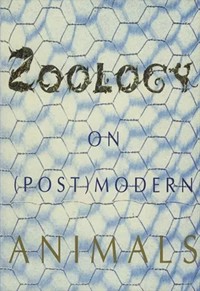
ZOOLOGY. ON (POST) MODERN ANIMALS
EditedbyBartVerschaffel&MarkVerminck
THE LlLLlPUT PRESS
CONTENTS
Title Page
Editors’ preface
The Authors
The Zoological Gardens
RogerAvermaete
Animal garden for today’s children: third series
KrisHumbeeck
Pense-bête
MarcelBroodthaers
To the realm of fables: the animal fables from Mesopotamia to Disneyland
MarcHolthof
Modern, postmodern and archaic animals
StephenR.L.Clark
The thinking animal
MartheKiley-Worthington
Animals à la carte
Ulrich Melle
When the King learns to do it his own way: animals in the age of Englightenment
PaulPelckmans
The borderlines
AnneCauquelin
The grandeur of the horse
FerandoSavater
Cows
WitoldGombrowicz
My bestiary in instalments
JacqVogelaar
Pig near Cassel: tableau
LuukGruwez
The man with the swine’s head
PaulvanOstaijen
Copyright
EDITORS’ PREFACE
Man has an ambiguous relationship with animals. He classifies and studies them, adopts them as pets, or rather, he anxiously keeps them outside, he lets them be of service or manipulates them, cuddles them, eats them …
The place where all these ambiguous and contradictory attitudes are found at the same time, is undoubtedly the zoological garden: a place where the animal is caged because we love it, but also because it frightens us and fascinates us, amuses us and distinguishes us from them. The ‘zoo’, that nineteenth-century metropolitan area of town for animals, is at the same time Garden of Eden and Noah’s ark, circus and amusement park, ghetto and jail …
What is the place of the animals in our times? How do we relate to them — in the media, for instance? Has a new imagination with regard to the animals come into existence? Is the lion still ‘courageous’, the fox still ‘sly’, and the owl still ‘wise’ as the mythical animals in olden days? Are animals individuals or is that one of our inevitable projections?
The contributions to this book are about the zoo and modernity, the fable beasts from Aesop to cartoons, antique imagination about animals, ‘natural histories’, the horse’s grandeur, bestiaries, designer chicken and swine fever, respect for animals.
This book or ‘cahier’ — a workbook — is published on the occasion of Ant-werpen 93, Cultural Capital of Europe, and is part of the Discourse and Literature programme. It offers a selection of original contributions by European novelists, poets, artists, essayists, literary critics, historians, sociologists, anthropologists, and philosophers. It also contains previously published materials and classic European texts.
Zoology. On(post)modernanimals functions as a meeting-point and welcomes authors from numerous countries. Its purpose is to blend and merge into one the many genres which constitute Western written culture. Poetry and literary criticism, short story and essay, textual commentary and image, new and classic texts, share a propinquity, and supplement each other.
This book cannot be allocated to one single discipline. Its theme reaches beyond literature, sociology or philosophy. It is thematically open and can be approached in many different ways. It is not tied to topicality, but touches it obliquely — as will be observed in the contributions.
B.V. & M.V.
Antwerp,September1993
THE AUTHORS
ROGER AVERMAETE (Belgium/1893–1988) — Essayist and cultural publicist of mainly art monographs. Published a.o. JamesEnsor (1949), RikWouters (1962), HenryvandeVelde (1963). Wrote dozens of books in both Dutch and French. Became member of the Institut de France in 1981. Wrote two books on Antwerp: Synthèsed’Anvers (1932) and Anvers (1942)
MARCEL BROODTHAERS (Belgium/1924–76) — Made his début as a poet in 1957 with Monlivred’ogre. In 1964 his exhibition Moiaussi, jemesuisdemandésije ne pouvaispasvendrequelquechoseetréussirdanslavie… did not pass unnoticed. It was the start of a plastic œuvre, language-wayward and very Belgian-iconoclastic, that, together with the works of René Magritte, would dominate nearly all artistic movements of the seventies and eighties, both in and outside Belgium. His controversial Muséed’ArtModerne.DépartementdesAigles.SectionXIXèmesiècle. (1968–9) caused an especial commotion. His compelling attendance at Dokumenta V (1972) canonized Broodthaers as one of the most influential artists of the century.
ANNE CAUQUELIN (France) — Novelist and philosopher. Published a.o. Potomar (1978), Cinévilles (1979), LesprisonsdeCésar (1979), EssaidePhilosophieurbaine (1982), Lamortdesphilosophesetautrescontes (1992), L’artContemporain (1992).
STEPHEN R. L. CLARK (Great Britain) — Professor of Philosophy at Liverpool University. Published a.o. Aristotle’sMan (1975), TheMoralStatusofAnimals,TheNatureoftheBeast,God’sWorldandtheGreatAwakening (1991).
WITOLD GOMBROWICZ (Maloszyce, Poland-Paris/1904–69) — Novelist and playwright. Published a.o. Ferdydurke,Pornography,Cosmos,Diaries (2 vols).
LUUK GRUWEZ (Belgium) — Neo-romantic poet, made his début in 1973 with Stofzuigergedichten (‘Vacuum cleaner poems’). DikkeMensen (‘Fat people’, 1990) and the ‘siamese’ diary he wrote together with Eriek Verpale, Ondervierogen (‘Face to Face’, 1992), got unanimous praise by critics both in the Netherlands and Flanders.
MARC HOLTHOF (Belgium) — Member of the editorial staff of the periodical AndereSinema, screenwriter of a.o. the television series Beeldcultuur (‘Visual Culture’, Bert Leyzen-prize 1988). Numerous publications on film, visual arts and literature.
KRIS HUMBEECK (Belgium) — Literary theoretician and publicist. Member of the editorial staff of the periodical for the study of Louis Paul Boon DeKantiekeSchoolmeester and of the literary magazine Restant. He wrote a reference work in seven volumes on the steam engine and is (co-)editor of a.o. De/constructie.Kleinediergaardevoorkinderenvannu (‘De/construction. Small Zoological Garden for Children of Today’, 2 vols, 1987), Discontinuities.EssaysonPaulDeMan (1989), Schrikkelijkspoorwegongeluk (‘Terrifying traincrash’, 1991).
MARTHE KILEY-WORTHINGTON (Great Britain) — Biologist. Became what she dreamed to be on the age of six: someone who understands (or at least wants to understand) animals and communicates with them. Did much fieldwork in circuses and zoological gardens. Author and animal consultant.
ULRICH MELLE (Belgium/Germany) — Philosopher and eco-activist. Numerous publications in different magazines on eco-philosophy and phenomenology. Published a.o. DasWahrnehmungsproblemundseineVerwandlunginphänomenologischenEinstellung (1984).
PAUL PELCKMANS (Belgium) — Literary theoretician. His field is the overlapping of literary studies with the history of mentality and antropology of modernity. Published a.o. Lerêveapprivoisé (1986), Concurrencesaumonde.Propositionspourunepoétiqueducollectionneurmoderne (1991). Editor of Denieuwehistorischeroman (‘The new historical novel’, 1988).
FERNANDO SAVATER (Spain) — Novelist, playwright and philosopher. Collaborator of ElPais. Received the ‘Premio Nacional de Literatura’-prize for his essay Latareadelhéroe. Wrote over forty books, a.o. the recent Eticacomoamorproprio,Humanismoimpenitente,EticaparaAmador.
PAUL VAN OSTAIJEN (Belgium/1896–1928) — Flemish modernist poet and essayist. Published a.o. MusicHall,DefeestenvanAngstenPijn (‘Feasts of Fear and Pain’), BezetteStad (‘Occupied City’). Collected Work: Poëzie/Proza (Poetry/Prose, 2 vols).
JACQ VOGELAAR (The Netherlands) — Novelist, poet and essayist. Contributor to the weekly DeGroeneAmsterdammer and the periodical Raster. Numerous publications since 1965. Recent work includes: Hetgeheimvandebolhoeden (‘The Secret of the Derby Hats’, children’s book, 1986), Proces-verbaalvanFranzKafka (‘The booking of Franz Kafka’, a reader, 1987), Verdwijningen.Oefeningen (‘Disappearances. Exercises’, short prose, 1988), Dedoodalsmeisjevanacht (‘Death as an 8-Year old Girl’, novel, 1991), Sripteasevaneenui (‘Striptease of an Onion’, essays, 1993).
The Zoological Gardens
RogerAvermaete
It pleases man to look upward: he surveys a world beyond his grasp. (Except a few poets from a bygone age, no one has ever dreamt of seizing the stars.) If man chooses to pay attention to his own scientific knowledge, below him there is a world in action whose existence his imperfect senses cannot discern.
All the same, man is king. That goes back to the time he invented the creation. The fable may be puerile, yet he does play the leading part (did he not fashion God in his own image?) and that makes up for a fair number of errors. One does not give up a role one has made to one’s own measure. To the moon, the stars! To nothingness, the atoms! Behold man. And the beings that would match him had better beware! He accepts vassals (but only to reduce them to slavery). He exterminates the recalcitrant, except — supreme arrogance — those specimens he keeps in cages.
The eagle, that haughty predator, unable to spread its wings. The lion, that great traveller, obliged to wear out his paws in a spot a penpusher would deem too narrow. And all those others — claws and fangs — known to be ferocious and sanguinary, that you are free to go and scoff at your leisure, protected by solid bars, behind which all those untamed beasts slowly die of boredom, of nostalgia and of impotent rage.
This is just to tell you that, even if you consider it to be in extremely bad taste, the Zoological Gardens have been invented so that man’s omnipotence may be attested by all the species whose representatives languish in its gaols.
PosterofAntwerpZoo(RoyalSocietyofZoology,Antwerp)
Some can now assert that the Zoological Gardens in Antwerp are among the most beautiful in the world. I cannot — thank God! —judge whether this is so. I have never seen any other. My childhood has wobbled there on an elephant’ back. I have straddled ponies and dromedaries there. Animals from all the corners of the globe have seen me running and playing in front of their steel bars. The only memory I have kept of them is their display-dummy posing, behind the white enamel label bearing their family name in Latin. And the smell that radiated from them was to me like the very expression of the boredom exhaled by their bodies.
Boredom, sovereign god of the ‘Zoo’! From the marabou with its appearance of an old solicitor in its morning coat of faded black, to the elephant which resembles an old gentleman in disheartened trousers. Enormous yawn of the lion finishing in a roar. Owls like well-imitated curios. Giraffes, with a ceiling on their heads, astonished at their disproportionate necks. Immobile tigers you would put just as they are in furrier’s window display. A fox — ah, those useless mischievous eyes — in a cubic metre of space. The snake you would mistake for the fire brigade’s thick hose. Kangaroos, ostriches, bison. You are perfect models for the animal sculptors. They find you each day in the same place, immobile, stunned.
There are the agitated ones. The polar bears overcome with the heat. The sea-lions that have water to swim in. The monkeys. Great attraction, the monkeys. Is it perhaps natural sympathy? They are so close to us. Their gestures are more impish, but their face is graver. The most sullen of our official expressions appear hilarious next to their mask fashioned for a tragedy whose theme is unknown to us. Are they really cheerful, those agitated animals who amuse themselves without laughing?
It was a monkey who ate my nanny’s hat. A beautiful hat, a fair imitation of a vegetable garden.
Only the hippopotami seem happy with their fate. When their large head emerges from the water and they snort complacently they carry the satisfied expression of a fat middle-class couple that can afford holidays at the seaside. In fact, if they were wearing swimming trunks I could give you their name, I mean the name of the satisfied fat bourgeois who resemble them like brothers.
AntwerpZoo:thehumanfauna(RoyalSocietyofZoology,Antwerp)
There are not only animals in the ‘Zoo’, there are also people. I am not talking about the visitors but about the members. For the ‘Zoo’ is part of an association to which it is proper to belong. Many Antwerp citizens are interested in this branch of the natural sciences. Some do not hesitate to cut down on their daily eating habits so as to have the right to frequent this useful institution assiduously. In fact, the true member never visits the animals. He occupies in that part of the gardens where only the human fauna stroll around in liberty. It is there, around the bandstand, and to the encouraging sounds of the music, that new dresses and original hats are worn for the first time; it is there that the learned assembly of mothers auscultates, judges, decides; it is there that romances and intrigues begin and end. Bait and hooks. Around the bandstand, young men and young girls, turn, always turn — do not fear, sooner or later it will bite! Watch your parents, young men, young girls: they are skilful anglers, at the right moment they will pull up the line and the game will be over. Others will replace you in the circling circle, and you will watch the game until the day when, gently, you will lower a line for your children so that a gentle fish may come and swallow it, a gentle fish of the circling circle of the ‘Zoo’.
The visitors are not very interesting. They only have eyes for the beasts which they watch as if they had never seen them before. Which is, after all, quite possible.
What I like most about the Zoological Gardens are the deer and the mouflon: they regularly spit in your face.
TranslatedfromtheFrenchbyOrtwindeGraef
Animal garden for today’s children: third series
KrisHumbeeck
AnEscape
Five o’clock. Mr Telleke, though no marquis, leaves the Book. It closes behind him on the endless susurrus of 313 satin ball-gowns on a sultry summer evening. Notary Public Telleke turns the corner. ‘I’ll find him’, the attentive reader still hears this strange person mumble.
This is Telleke, a gentleman, and he’s on the move. He’s searching. He goes a-searching towards the station — or rather, he is being moved: thirty-three trains inside him are coming and going. Coming-and-going. This gentleman, Telleke, escaped from a Collected Works (Volume III, GrotesquesandOtherProse),1 resembles an automaton. People pass him by unnoticed, he pays only mechanical attention to things. Cars glide past with the soft whisper of windscreen wipers, trams screech on their glistening rails, the bells of the old railway cathedral strike 13:02. 13:02? Gentleman Telleke comes to a halt. The trams are dead animals. The cars close their eyes. On the dome of the impressive building a Belgian flag is dripping next to a multicoloured pennant: ANTWERP 93. Only a little girl with a hoop is still out on the streets. All extremely melancholy. ‘L’union fait la force’, thinks O.D.P. Telleke. And he starts moving again — or rather, something inside him starts moving again. The powerful wheels are thrown back into gear. Trams are sounding their bells, cars are bellowing, letters are being delivered again. From under the station roof a locomotive screams, O alluring motif. It sounds like an animal from the days of yore.
AntwerpCentralStation(BelgianNationalRailwayCompany)
Gentleman Telleke enters the station, an enormous arcade. His instinct drives him to the Zoological Gardens. The gardens are next to the station, that’s logical. ‘In the Zoological Gardens,’ hopes something deep inside Telleke, ‘I will meet someone. Someone who will rid me of all my anxieties.’ That, too, sounds logical, for today’s children.
Deracination, the staggering multitude of things and an ever-increasing confusion in time and space, we live through it day by day — joining the movement in a valueless world. Ostensibly, we have learnt how to live with it all, in merry acceptance: sure enough an accident more or less doesn’t matter! With an ease and a casualness that verge on the obscene, we make use of telephone, fax, train and motor car. Mindlessly, we yield to the civil law, which is the law of progress. And fathers no longer fill us with fear, they are simply there — or quite simply not: who cares?
This is what gentleman Telleke means: delivered from an age-old fear, man allows himself to float on free waves of ether and he tunes in to the vain chatter of opinion-makers as to the truth of the day. One feels secure: ‘We are being looked after.’ Notary Public Telleke, who is pathologically afraid of going off the rails and regularly falls prey to a sense of complete disorientation, is now looking for his spiritual father. He is a-looking for his father. Oh! oh! that is considerably less logical, in these postmodern times. Yet classical. ‘And anything classical is good’, says our beloved mayor Fuckle in his office at the same moment. Amedée Fuckle loves what is classical. He is classical, an archetype even. For 313 years to the day he has been the keeper of this city. This high official is just on the point of breaking into a song of self-praise, when his loyal servant Engelbert Druyventruyt rushes in with alarming news: the Notary Public has escaped! Or has he perhaps been kidnapped?
Uniforms rise behind their desks, blue light and sirens take over the port, alien elements are subjected to violent interrogations. Mayor Fuckle is personally in charge of the Operation: ‘No matter how classical one may be, the possible abduction of a modern hero is no trifling matter. And van Ostaijen, too, belongs to our cultural heritage, to be sure!’ Thirteen out-of-the-blue paparazzi hold a gigantic microphone under the mayor’s olfactory organ: ‘Presumably we are dealing here with some sort of bad joke, gentlemen. Fi! Those young foreigners had better stay home and do their homework in peace and quiet!’ At the other side of the metropolis meanwhile, brown-shirted gangs are running around, plundering, raping and starting fires. Their leader, going by the name of Staf Fillokok, has spoken hard words in the Atupalian parliament. Blood is in the air, the sun sets. ‘Van Ostaijen must be avenged!’ sounds from 3113 hoarse throats in a neglected suburb. About this Amedée Fuckle is of course not in the know; that, too, is classical. At the moment the first non-Atuplian dies in the run-down working-class district of Orthouberg, gentleman Telleke enters the Zoological Gardens.
ZoologicalGardensandstation
‘In the Zoological Gardens and the station’, thought Notary Public Telleke, ‘the nineteenth century experiences its greatest triumph.’ Behind the apery, the stone dome of the railway cathedral rose up high. So much splendour had never been beheld; gentleman Telleke raised his enraptured eyes to heaven and spoke: ‘In this colossal house, modern man tames his worst nightmare, the monster incarnate of the iron road. Thus he allays his most primitive fear, the fear of losing himself along the way.’
‘CENTRAL STATION’, O.D.P. Telleke had read upon entering this sanctuary. The words rose in capitals from his memory, and a beatific smile appeared on the Notary Public’s otherwise quite impassive face: everything breathed out liberation. ‘The station is alpha and omega of modern man. Here he departs to arrive at a Better World, here he surpasses his physical constraints.’ The citizen-schlemiel Telleke, suddenly a philosopher, drew a deep breath and spoke: ‘Transcendence, revelation and finality, those are the things man has always longed for. But only with the advent of the train did these essentially human, purely Utopian, desires become real. The fairy tale came true, the dream of paradise regained became a concrete project. Like a golden terminus this paradise has begun to shine ever since on the horizon of our history.’ Only now did Telleke really warm to his subject: ‘The steam horse is history, and our modern history is a secular apocalypticism: man destroys what is, so as to rebuild the world to his own divine likeness. It is called progress. And progress is sacred, our history is a modern eschatology.’ Gentleman Telleke approached the apery, the sun sank blood-red behind the station: ‘Under this much too high roof we appropriate the world.’ Then Notary Public Telleke looked at the ape. The ape, a chimpanzee, looked back in sadness. Intently, Telleke nibbled a nut.
This is the man Telleke and his thoughts start soaring.
In the advent of the train, man lived through his mystical rebirth: he became modern. As a child of God, a reader of the Book of Nature, man belonged as of old to a history which seemed writtenin advance, once and for all, only to unravel itself slowly to believers under the watchful eye of a Higher Being. L’amorchemoveilsoleel’altrestelle!
Many years passed by in Notary Public Telleke’s mind’s eye.
Up until the first half of the preceding century our cities rested in scenic seclusion behind their old, oft-times crumbled, yet still symbolic walls and bulwarks. In the small picturesque port of Antwerp, for instance, which in 1800 counted a mere 56,000 souls, toll collection remained customary well into the century. Antwerp, 1832, the last Dutchman has been chased away. God is in his heaven and peace reigns once more, merry Middle Ages. Not that there were no paupers or destitute around, on the contrary, but riches or needs are not ordained by man — one merely helps where possible. Apart from that, the affluent Sinjoor2 drowses and swoons in ancient blandness, revelling in a petty merchant happiness. Steam engines can still be counted on the fingers of one hand. On the ramparts, mills are grinding interminably slowly, to the rhythm of the wind. Within these walls reigns an antique espritdeclocher. At ten in the evening, when the citizens pull nightcaps over their ears and only a few dead drunk paupers still hobble down the narrow streets of the city, the entrance gate is closed. All those who still want to get in with horse and cart have to pay a high levy. Sentinel and night watchman keep an eye on things. Military force there is no further need to fear, but fire remains a dreadful adversary. Oh! oh! that red brute. And suddenly the train was here, the fiery salamander: totally and bewilderingly new, producing strange noises, oh! never heard. A green eye — and a red — in the dark. Thunder — smoke — and spark. All very confusing, sir. Please tell me, don’t you like to see it lap the Miles? Listen! oh! listen: it shatters an ancestral silence with its shrieks and squeals. Don’t you hear the rumbling and rattling in the bowels of this terrible space-gobbling beast? Its hot breath still lingers in the frightened firmament when its thud and thunder are already dying down behind the horizon. Where art thou, Time? Where art thou, Space? It acknowledges no limits, this puffin’ Colossus of Steam, pulling into old fortified cities, one by one, in royal triumph, smoking and snorting, conquering the world at a speed which only to us moderns (train travellers in our deepest thoughts) is incongruous with the accompanying stench and dirt and smother. Lo! isn’t it truly diabolical, this roaring ‘wild thing’: it moves too swiftly, accidents will happen …
Then everything went purple in Notary Public Telleke’s imagination. The man of the law pricked up his ears, blew frankincense and myrrh from his nose. Rustling. Crackling. Sizzling. Was there a sound? This is Telleke, a gentleman, he hears Pope Gregory XVI in a piping and creaking voice (as if 3113 knives were being honed at the same time or a train stretching for miles were braking hard) curse the godless steam engine and the iron road: vade retro, Ferrovias! For a moment the beatific smile on Brother Telleke’s thought-furrowed face disappeared; he realized: the creator of the steam horse no longer yields meekly to the quirks of Nature, he violates the divine order of things and spurns heavenly mercy.
Oldtrain(BelgianNationalRailwayCompany)
What the train-man cultivates, he no longer does in the name of a Supreme Being. In his demonic pride he rewrites the Book of Nature. He makes the most of forces that are only secretly present in the world, that rest inside Mother Earth’s belly or are engendered artificially, yes unnaturally. Black gold, the diabolical force of compressed steam, these herald a second Copernican revolution. As a potential ruler of a nature-in-full-movement, man henceforth writes history himself, in his own name. The Central Station, pride of this city, is a visible sign of this.
The ape looked stupidly at Notary Public Telleke. The latter, by no means out of breath yet, resumed his monologue.
The station is a metaphor. It is the monumental idea that man moves freely and on his own, and preferably in concord, toward a hoped-for terminus: his paradise on earth. In the station, where trains ceaselessly come and go, modern man celebrates the imminent end of his own history, his self-made destiny. Here he rises to heaven on the wings of his bourgeois imagination. The station is magnificent. The Zoological Gardens are also magnificent. Station and Zoological Gardens are both magnificent, each in their own ways. In the station, man cancels all distance — the station is order and perfect communication, not counting minor accidents. The Zoological Gardens are also order, but they are of a totally different order. Smaller in a way, more childlike, ridiculous almost. The Zoological Gardens evince a bookkeeper’s order, no Egyptian pavilion can alter that. In the Zoological Gardens, modern man is secretly ashamed of the littleness he unintentionally puts on show and displays as the king of creation — after all, he is in the open air. In the station, a covered space, on the contrary, this insignificant worm imagines himself a hero, a lion or eagle. It is more magnificent to tame the monster of the iron road than to lock up wild animals great and small in cages or aviaries. Nevertheless, station and Zoological Gardens continue to be inextricably bound up with each other in our imagination as well, like the labyrinth and the Minotaur. The phantom and the opera.
AntwerpCentralStation(BelgianNationalRailwayCompany)
Again the Notary Public looked at the ape. And again the ape looked back, in endless sadness. ‘This chimpanzee is sick of the sea’, the attentive reader was still able to hear the melancholy gentleman Telleke whisper, before his thoughts once more slipped down to the train.
We’re in the latter half of the nineteenth century: Hear! Everything labours, everything sings. A beehive is the Nation — everywhere the soft buzz of industry and prosperity is heard, nowhere do peace and quiet still reign. Like a gigantic web the iron road is spun over the fatherland. One big maze of rails, that’s what life from now on is. And see how the winged steam steed floats above these glistening rails, hither-and-thither, lo! hither and, lo! thither …
Here gentleman Telleke indulged in one or two dance steps. It resembled a Viennese waltz and stopped as abruptly as it had started. Telleke, not a little startled by himself, plunged into his memory.
Even though the iron horse at first still bent to the oddities and irregularities of the land, now modern rationality wins out. Expropriations occur in massive numbers: houses, indeed churches, are torn down. Soils are levelled and the land is raised. Tunnels are bored and viaducts built. Then railway workers in Fochania dug up a bizarre creature, half ape (an ape in Fochania?), half human.
Petrified, gentleman Telleke, a one-time dancer, stood before the pit. In the pit was something that should always have remained hidden, a grotesque monstrum, barely five feet, with enormous cheekbones and an excessively flat head. ‘How incongruous,’ sighed the old man Telleke, ‘a misprint in the Book of Nature!’ He closed his eyes in terror. Lime and loam were supplied, the monster was hidden from view. To this very day the rails on this spot swerve strangely.
But what does a small layer of earth avail: man is curious, his memory fatal. He is unable to efface the recollection of the ape-man. At night he wakes up, bathed in sweat: is he an animal, then! Never again will man know peace if he cannot find a solution to this problem: for his divine origin, and with it his whole being, is at stake.
Man racks his brains — not since the Sphinx had his thoughts been so profound. He looks, and looks, and finds a solution. He demotes himself to ape — oh! to a worm or a fish if need be — only to be able to ascend heaven as an Übermensch.
This quasi-oedipal ambiguity he acclaims with all his dialectical ingenuity as evolutionary principle: this is where I come from (‘from still black waters deep under the earth’), that is where I am going (‘like an eagle straight upwards’). With this disposition man also studies his body and woman’s — which he experiences, in all its bestiality, both despised and fondled, as an essential shortcoming — only so as to ingeniously escape this corporality, the shortcoming incarnated by woman, and shame: he is no beast. Or is he? Man hides his shame, literally — especially that of woman, eternal keeper, like it or not, of an ineffable secret. Much is suppressed and forgotten by man, much he declares sacred or taboo: for not everything is meant for the ordinary ear or eye. But look, these peculiar blades on our backs: used we not to have wings there? Oh! oh! man wants to become a bird of paradise, the mythical creature he used to be before his imagined ‘Fall’ to earth. Seven walls were pushed away, much became suddenly clear to the archaeologist Telleke:
That’s why modern man scratches about in the earth so much, to be able to flee it as quickly as possible. That’s also why he invents sources of energy that have no place in the Bible and why he resolves forces whose origin remains unclear, whose effects are incalculable — so as to transcend this world as fast as possible, and with it his own, imaginary shortcomings. Chimpanzees are sent into outer space by modern man — then he himself leaves. Feverishly he feels his way, away from this terrible labyrinth. He sighs but for one thing: the world has to become orderly and transparent again, a second Eden.
Then, Notary Public Telleke dwelt in glass buildings entrussed with cast steel from which was suspended, shockproof: future Man, a computer-controlled winged phallus. ‘We must abolish lack’, mumbled Telleke.
To that end knowledge is required: where do I come from, where do I have to go to? But along with this knowledge, confusion and insecurity grow, too. Everything turns to ashes and is blown away. In his laboratories, nervous man searches for the ultimate antidote, a remedy against, excuse me, for life — and its endless diffusion: the canker of our daily existence. But modern alchemy disappoints and in the heart doubt rises. Man, therefore, to set his mind at ease, builds Zoological Gardens. He means: look, the animals have already been conquered — we’re on the right track.
Gentleman Telleke fed a nut to the ape, which was in violation of all the rules of the gardens. Not a mouse stirred, only the zebras got nervous — or was that an illusion? O.D.P. Telleke, innocently, wound up his argument.
In the Zoological Gardens man reigns like a demigod over the world, his private domain. He manages his own history and structures the endless differences to which this history gives sense, aim and direction, with an ease and an obviousness as if only one combination of the so-called facts were thinkable, only one narrative. Man says: Behold, that is an ape — and this is me. From that ape I descend. At the same time, in Zoological Gardens this modern man draws an advance on his promised paradise. He confirms himself as the Other, who is yet to come: the mythical god-man he would have been once. He sees a bird majestically flying heavenwards, higher and higher, apparently weightless, moving in the welkin. Man realizes: this is the way to do it, freely and on one’s own, totally of one’s own accord.
Lo! here is a modern man, Telleke, he arranges things in accordance with his own views. He imprisons the wild animals and studies them — all quite objectively. If necessary, he cuts the animals open: he will fathom! Then he sets the seal on his work and builds, next to the Zoological Gardens, a station. In this station the beast of the future lives, the vapour steed. Like a god, man has created this animal out of iron and water, to conquer space. The train is the likeness of man. It is reliability itself, even if in railway accidents everything returns, that modern man in his youthful recklessness represses and denies. Yet, in spite of all minor accidents and derailments, this man-beast is not bound by nature. It can handle all climates. It links coasts and continents, bridges mountain passes and explores the darkest heart of Africa. When it sleeps, it is because its master is tired. It is itself indefatigable.
Then night fell. In the station dome, the last lights were extinguished, the Zoological Gardens were sunk in a sound sleep. Even the night watchman was snoozing. Not at all surprised, Notary Public Telleke found the door of the apery unlocked. With an infectious yawn he laid his head down to rest. ‘It all began here’, the attentive reader was still able to hear this strange person mumble, before he entered another world.
Thefirstday:yetanotherescape
That first morning something strange happened. Somebody must have been scandalously negligent, for a zebra had escaped its cage and in the morning rush had run onto the street. Across the entrance of the Central Station the animal lay oddly folded up underneath a small, bright red Japanese car. It seemed asleep, its head peaceful on its broken forelegs — not a drop of blood in sight. The lady owner of the conspicuous vehicle stood watching and crying. Typists buried their faces in their hands, mothers roughly pulled their pointing offspring from the scene of the calamity. The tormented policeman Benny Dorm, who had seen it all happen, wrote out a ticket in his logbook, his seventh already this week. The Zoological Gardens opened their doors half an hour later than usual. Apart from that it was a summer’s day like any other. Notary Public Telleke, woken up by the dogged sound of an ambulance, had, upon seeing the first keepers, retreated into the apery’s deepest darkness. The somewhat full-bosomed lady who had been feeding the animals had failed to notice him. These were holidays. Trains were ceaselessly supplying tourists. Colourful balloons and children’s cries filled the gardens. Gentleman Telleke peeled a banana and, as always, lost himself in speculation.
‘Well then, here I am,’ Telleke thought, ‘among primates. And nobody noticing anything, because that’s how I want it.’




